Cloud Photography
There is a particular irony embedded in the earliest decades of photography's history: the technology that promised to record the visible world with unprecedented fidelity was, for much of the nineteenth century, almost completely blind to half the sky. The luminous cloudscapes that painters had been rendering with increasing ambition since the Romantic era — the billowing cumulus formations of John Constable, the incandescent atmospheric dissolves of J.M.W. Turner — were precisely the subjects that photography could not capture.
Not for want of trying, and not for any failure of artistic ambition, but because the chemistry of early photographic emulsions made the cloud-filled sky effectively invisible. Where the painter could look up and choose what to record, the early photographer looked up and found only white.
The cause was the sensitivity profile of orthochromatic emulsions. These plates responded strongly to blue and violet light and were largely insensitive to the warmer wavelengths — green, yellow, red. Blue sky, intensely bright and dominated by short-wavelength light, struck the plate with enormous force; clouds, white and reflective across the full visible spectrum, registered with almost equal intensity.
The practical consequence was brutal: expose correctly for the landscape, and the sky burned to featureless white; expose for the sky, and the landscape collapsed into blackness. Even when exposure was carefully judged, the tonal separation between white cloud and blue sky that makes a cloudscape visually compelling was effectively absent on the plate. Both registered as near-white, and the sky became a void. The blank sky in a nineteenth-century landscape photograph was not an aesthetic choice. It was a technical defeat.
That defeat drove photographers to remarkable ingenuity. It also, in due course, drove them to a discovery that could not have been predicted: that clouds, once they could be photographed, turned out to be subjects of inexhaustible depth — formally complex, philosophically loaded, and peculiarly suited to exploring the most fundamental questions about what a photograph is and what it can do.
The history of cloud photography is partly the story of the technical struggle to render the sky, and partly the story of what happened when Alfred Stieglitz pointed his camera upward in 1922 and refused to stop.
Why Early Photography Had No Sky
The chemistry of nineteenth-century photography is inseparable from the visual character of its images. When Louis Daguerre and William Henry Fox Talbot independently developed workable photographic processes in 1839, the silver-based compounds at the heart of their techniques shared an intrinsic limitation: they were sensitive primarily to the blue and violet end of the visible spectrum. This was not a minor inconvenience but a structural feature of silver halide chemistry as then understood, and it determined what could and could not be photographed reliably.
For portraiture and architecture, the limitation was manageable, if not always convenient. For landscape — and especially for landscape with sky — it was devastating. Blue sky is not merely bright: to an orthochromatic emulsion, it is almost overwhelmingly so, registering with an intensity that bears no relation to how the human eye perceives it in a scene.
A sky that appears, to the photographer standing in a field, as a moderately bright backdrop to the landscape is, to the plate in the camera, a source of light barely distinguishable from the sun itself. Expose correctly for the grass, the trees, and the distant hills, and the sky burns to pure white in the time the shutter remains open. Expose for the sky, and the landscape — reflective in green and yellow wavelengths, largely invisible to the emulsion — disappears into darkness. There was no exposure that could satisfy both demands simultaneously.
The problem was compounded by the nature of clouds themselves. A white cloud reflects light across the full visible spectrum, but the proportion that reaches an orthochromatic emulsion is dominated, like everything else in daylight, by the blue end.
The result was that a cloud and a blue sky often registered at nearly the same tonal value on the plate: both appeared as pale grey or white, destroying the contrast that makes a cloudscape readable. A correctly exposed landscape was not merely missing a dramatic sky — it was missing any sky at all, replaced by an undifferentiated pale wash that in the print would simply be blank paper.
Combination Printing & Its Discontents
Photographers of the 1850s and 1860s arrived, with varying degrees of acknowledgement, at the same solution: make two separate negatives — one exposed for the landscape, one for the sky — and combine them in the darkroom during printing.
The process required masking, careful registration, and considerable skill in matching the tonality of the two elements, but it worked. The composite landscape with a cloud-filled sky was technically convincing and, for a period in the mid-Victorian era, was standard practice.
The solution was, however, philosophically uncomfortable, and it introduced problems of its own. The clouds in a composite print were real photographs of real clouds — there was no fabrication in that sense — but they were not necessarily the clouds that had been above the particular landscape on the particular day the landscape negative was made.
A photographer might maintain a stock of cloud negatives and deploy whichever suited the tonal requirements of the landscape at hand. The image was authentic in its parts but constructed in its totality. Critics who believed that photography's primary virtue was its indexical relationship to reality — its capacity to record what was actually in front of the camera — found this troubling. The debate about combination printing in the 1860s and 1870s anticipates in precise terms arguments that continue to be made about digital compositing today.
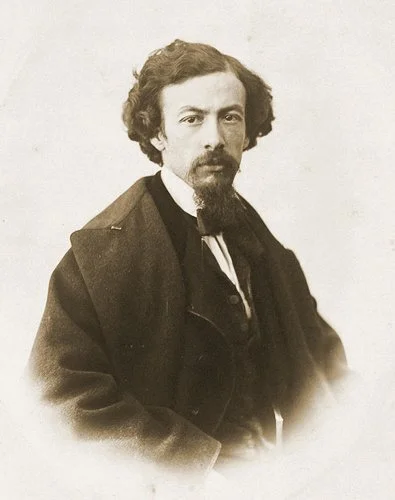
Gustave Le Gray (1820–1884) was the figure who brought combination printing to its highest technical and artistic achievement in the medium's first generation. Born near Paris and trained as a painter in the studio of Paul Delaroche, Le Gray turned to photography in the 1840s and became one of the most technically innovative practitioners of his era.
His development of the waxed-paper negative process, introduced around 1851, enabled negatives to be prepared in advance and developed hours later — a significant practical advantage over the wet collodion process, which required immediate on-site development. Le Gray's contribution to photographic chemistry alone would secure his historical significance. But it is his marine studies that constitute his enduring artistic legacy.
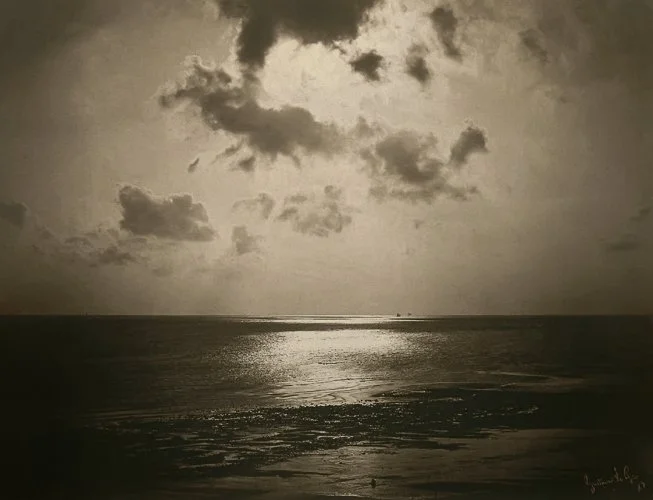
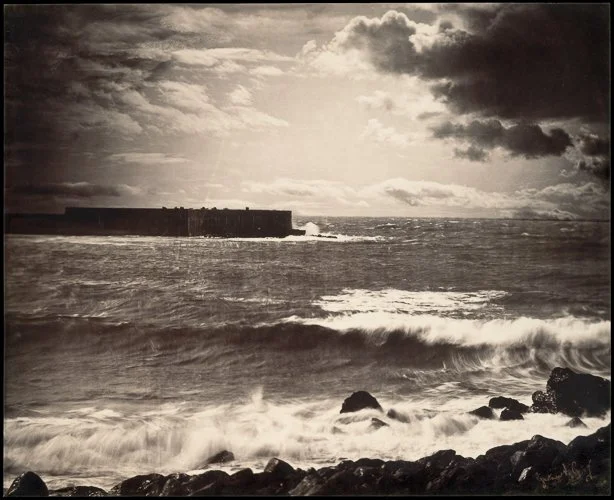

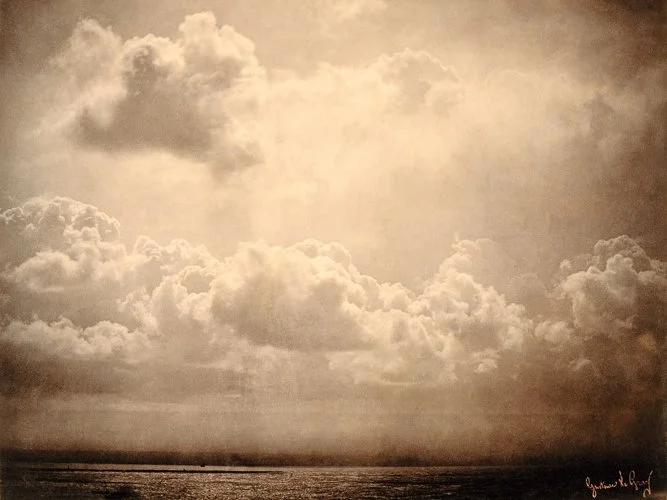

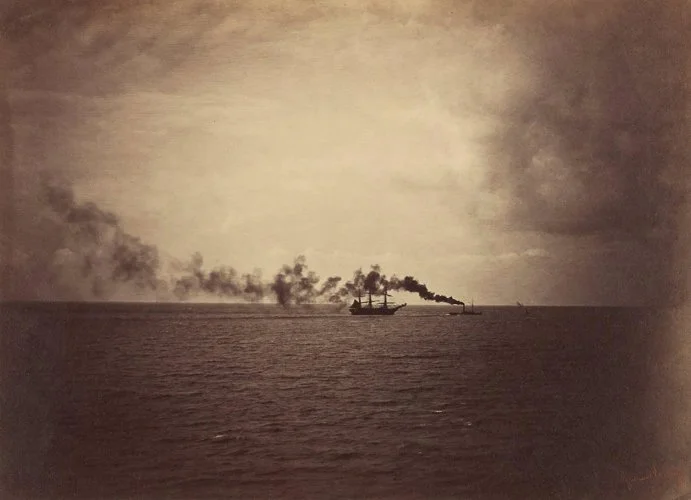
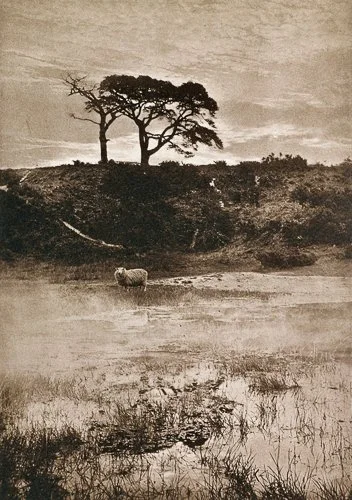
Between 1856 and 1857, Le Gray made a series of seascape photographs on the Mediterranean coast near Sète, in the south of France, that astonished contemporary audiences across Europe. The prints were exhibited in London and Paris to enormous acclaim: one early edition sold some eight hundred subscriptions within two months, and Queen Victoria was among the purchasers.
What stunned viewers was not merely the compositional boldness of the images but their apparent technical impossibility. Le Gray had done what the chemistry of photography was supposed to preclude: he had captured, in a single image, both the turbulent surface of the sea — with waves breaking against dark rocks in what appeared to be a brief instant of exposure — and a sky full of richly differentiated cloud formation. The tonal range was extraordinary.
The secret remained unacknowledged during Le Gray's lifetime. These images — including Brig on the Water (1856) and La Grande Vague (The Great Wave, 1857), both made at Sète — were combination prints assembled from two separate negatives: one exposed for the sea, another for the sky. The seam between the two, just barely visible on close examination of surviving prints in collections at the Metropolitan Museum of Art and elsewhere, was sufficiently concealed to deceive contemporary audiences and even later critics.
Le Gray never admitted the technique. The posthumous revelation that he had used combination printing did nothing to diminish the images' formal power, but it introduced, retrospectively, the question of authenticity that would become one of the central preoccupations of photographic theory.
La Grande Vague is now recognised as one of the canonical photographs of the nineteenth century: an albumen print conveying, in Souren Melikian's phrase, "the threatening atmosphere of the early stages of a tempest at sea" — storm clouds massing to the left, breaking wave in the foreground, dark breakwater anchoring the composition. That the sky and the sea were photographed separately, and possibly on different days, only sharpens the philosophical interest of the image.
Le Gray's career ended in financial ruin: his photographic studio failed, and he disappeared from the Paris photographic world around 1860, eventually resettling in Cairo, where he spent the remainder of his life teaching drawing.
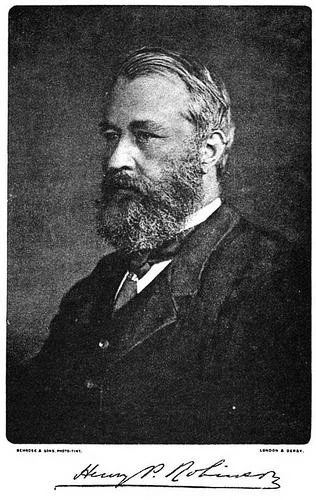
Henry Peach Robinson (1830–1901) was the British counterpart to Le Gray in the use and theoretical defence of composite photography. Born in Ludlow and originally trained as a bookseller, Robinson took up photography professionally in the 1850s and developed a practice centred on large, elaborately staged composite prints assembled from multiple negatives.
His Fading Away (1858) — a deathbed scene assembled from five separate negatives — was both a popular success and a critical scandal, provoking a debate about whether such manufactured images could be considered photographs in any legitimate sense.
Robinson's clouds were an integral part of this project. He believed, as he argued in Pictorial Effect in Photography (1869) — his influential treatise on photographic aesthetics, the first such text to address composition, tonal balance, and pictorial organisation in systematic terms — that the sky was the most expressive element of the landscape photograph. He wrote with genuine rhetorical force about the infinite artistic possibilities of clouds, and his own composite works typically feature skies of considerable drama, made from cloud negatives selected and deployed for their tonal and compositional contribution.
For Robinson, the cloud was a tool of artistic construction; the question of whether it was the specific cloud above the specific landscape on the specific day was aesthetically irrelevant. His critics disagreed, and the disagreement was never fully resolved. Robinson's position anticipates precisely the arguments made by defenders of Photoshop compositing a century and a quarter later.
The technical solution to the exposure problem gradually emerged from chemistry. Panchromatic emulsions — sensitive to the full visible spectrum, including green, yellow, and red — were developed in the 1870s and became increasingly practical in the 1880s and 1890s.
The panchromatic plate responded to blue sky and green landscape in proportions closer to those the human eye perceived, allowing single-exposure images with both sky and foreground correctly rendered. The effect was still imperfect — blue sky remained proportionately brighter to even panchromatic film than it appears visually — but the use of yellow and red filters to absorb blue light before it reached the emulsion allowed photographers to darken the sky relative to the clouds, making dramatic cloud formations visible against a genuinely differentiated background.
By the early years of the twentieth century, the composite sky was largely obsolete as a technical necessity, though it persisted as an aesthetic option. The sky was no longer necessarily blank. Cloud photography, as a genre unconstrained by technical defeat, could begin in earnest.
Luke Howard & the Naming of Things
Before clouds could be systematically photographed, they needed to be named. The history of cloud photography is intertwined with the history of cloud taxonomy in ways that are easy to overlook but are in fact fundamental: without a shared vocabulary, neither the meteorologist nor the photographer can describe what they are seeing with any precision, and without precision, systematic study is impossible.
Luke Howard (1772–1864) was the man who gave clouds their names. An industrial chemist by profession and an amateur meteorologist by vocation, Howard presented a paper to the Askesian Society in London in 1802 that proposed the first systematic classification of cloud types using Latin nomenclature. The paper was published in expanded form in 1803 as the Essay on the Modification of Clouds — a text remarkable both for its scientific rigour and for its literary quality.
Howard was acquainted with the Linnaean tradition of biological classification, and he applied its principles to phenomena that most of his contemporaries considered too transient and variable to be classified at all. General scientific opinion held that clouds were shapeless, unstable, and therefore scientifically intractable. Howard disagreed, and his Essay demonstrated why.
His classification established three principal types — cumulus (from the Latin for a heap or pile: "convex or conical heaps"), stratus (a horizontal sheet), and cirrus (from the Latin for a wisp of hair: thin, fibrous formations at high altitude) — together with compound forms such as cirrostratus and cumulonimbus, and the rain cloud nimbus.
The Latin nomenclature was deliberate: it was internationally legible, free of national association, and precise in its reference to physical form. Howard's system, adopted with modest modifications, is still in use today. He has been variously called "the Godfather of Clouds," "the namer of the clouds," and "the father of meteorology." The poet Goethe, who was captivated by Howard's work, wrote a poem in his honour.
The significance of Howard's taxonomy for the history of cloud photography cannot be overstated. Naming is a precondition for systematic observation. Once a photographer could specify that the formations they were recording were cirrus, or cumulonimbus, or altocumulus, they were no longer merely making pictures of the sky: they were contributing to a shared, accumulating body of knowledge.
The International Cloud Atlas, first published in 1896 under the auspices of the International Meteorological Organisation and arranged by Hugo Hildebrand Hildebrandsson, Albert Riggenbach, and Léon Teisserenc de Bort, extended Howard's taxonomy into a photographic canon — an authoritative reference work in which standardised photographs defined what each cloud type was supposed to look like.
The earliest attempt to use photography for cloud classification had been made by H. Hildebrandsson in Uppsala in 1879; the 1896 Atlas, containing twenty-eight colour plates and text in three languages, was the definitive codification of that project. The meteorological cloud atlas tradition and the artistic cloud photography tradition developed in parallel, occasionally crossing, always drawing on Howard's foundational vocabulary.
The artistic tradition had its own precedent in the generation before photography. Constable, who was personally familiar with Howard's work and owned a copy of the Essay, undertook between 1820 and 1822 an extraordinary campaign of sky studies that he described as "skying" — making dedicated oil sketches of cloud formations, often on small boards, annotated with date, time, and weather conditions, as reference material for his finished landscapes.
He produced more than fifty such studies, treating the sky as subject matter in its own right long before the invention of photography. Turner's approach was less systematic but no less committed: his atmospheric effects, particularly in the works of the 1830s and 1840s, dissolve the boundary between cloud, light, and paint in ways that contemporary critics found either sublime or incomprehensible.
Art critic Roberta Smith, writing of Turner's cloud-filled canvases, described the complex cloudscapes as "almost abstract paintings within paintings, nearly obliterating the realistic setting with a grand display of gestural force." When photographers of the Pictorialist era looked for artistic precedents for their cloud work, Constable and Turner were the points of reference they invariably invoked.
The Pictorialists & the Artistic Sky
The Pictorialist movement — which dominated art photography from approximately 1885 to 1915, and lingered in various forms long after its ostensible decline — was founded on the conviction that photography deserved recognition as a fine art equal in expressive potential to painting, drawing, and printmaking.
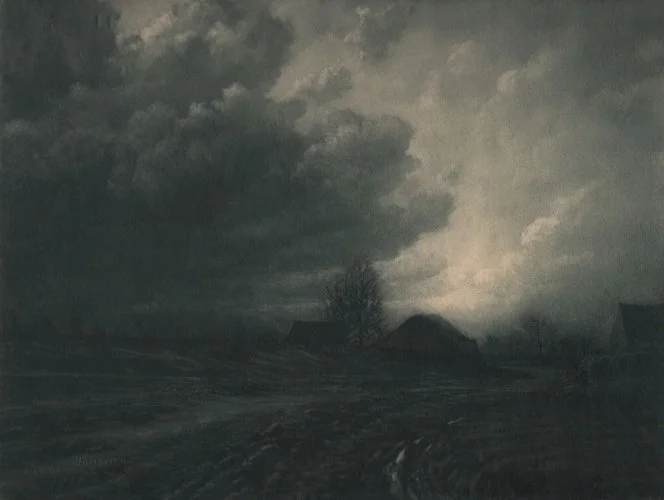
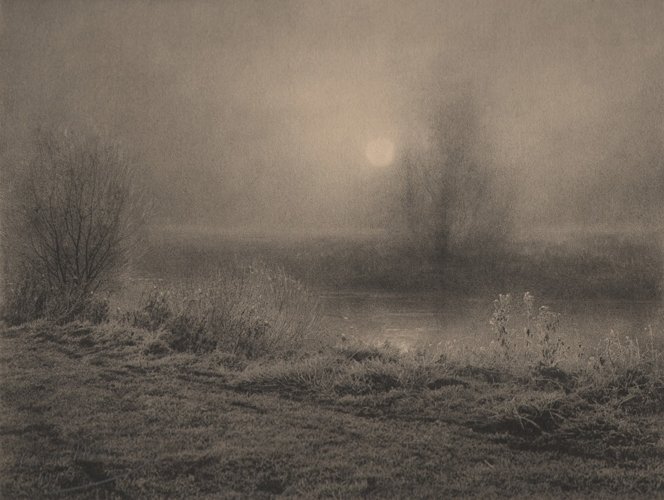
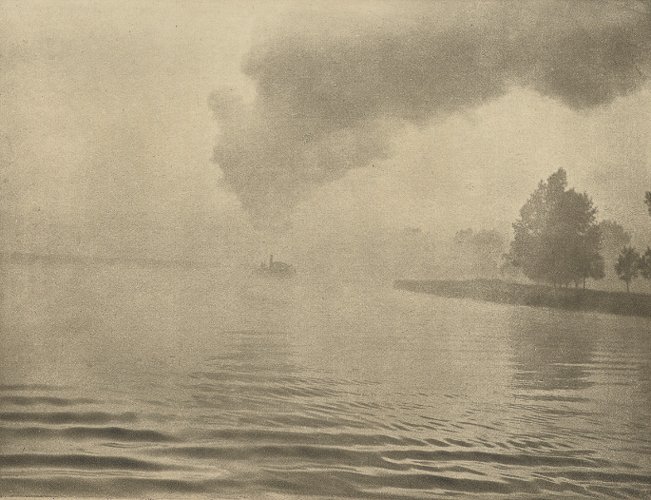
Its practitioners pursued this conviction through technical means: soft focus, alternative printing processes, careful tonal manipulation, and above all the selection of subjects and moods associated with fine art traditions. The sky, and clouds specifically, were central to the Pictorialist aesthetic programme. Misty, heavily atmospheric skies were not obstacles to be overcome but conditions to be sought.
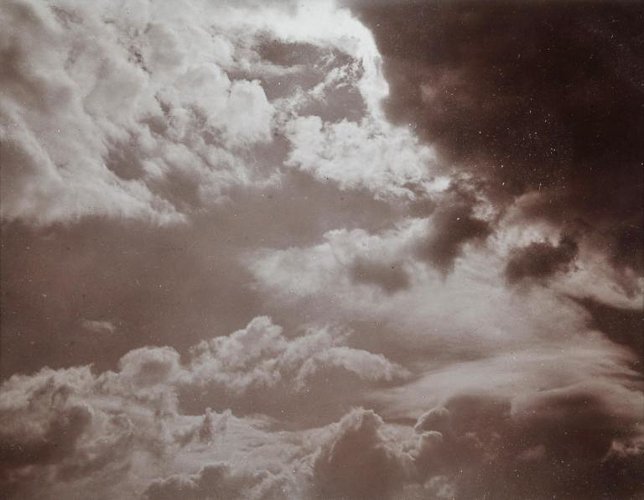
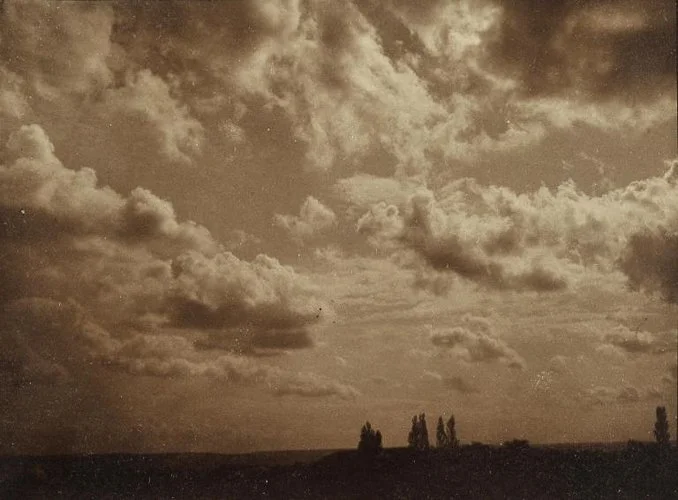
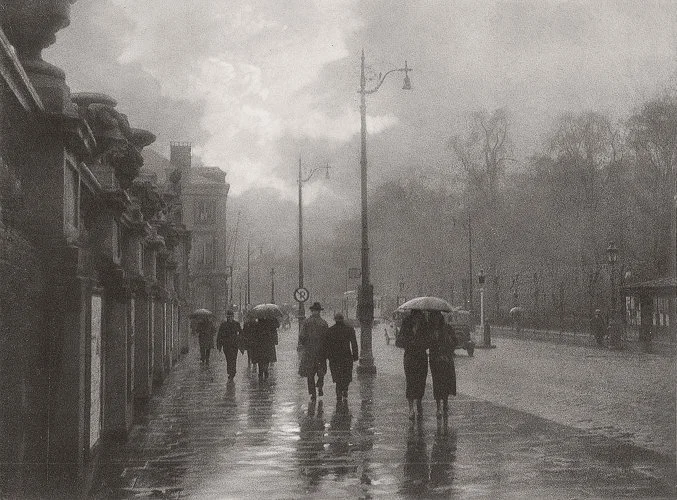
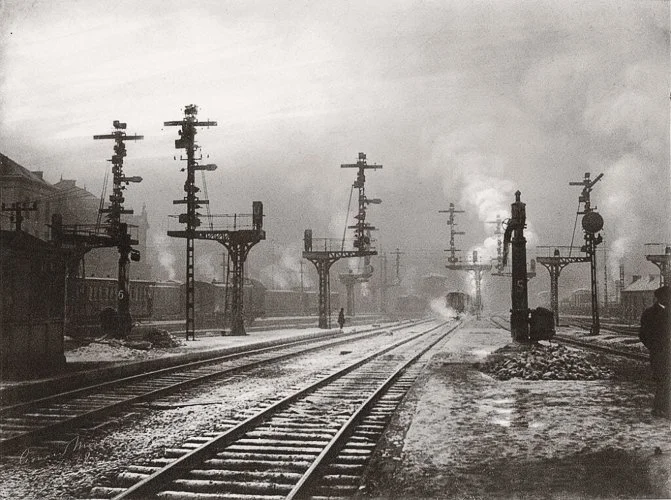
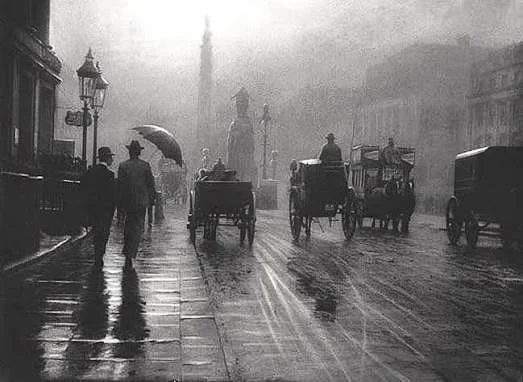
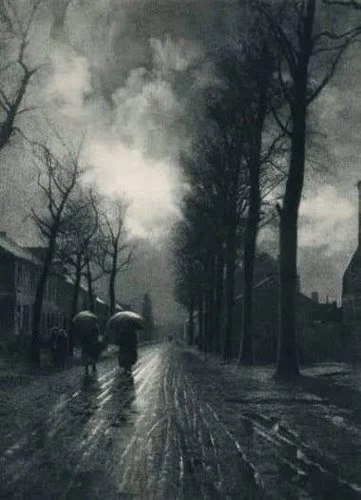
Léonard Misonne (1870–1943) was perhaps the most thoroughgoing and technically accomplished of the Pictorialist cloud photographers. Born in Gilly, Belgium, on 1 July 1870, he trained initially as a mining engineer — a background that gave him a methodical, process-oriented approach to problems that would serve his photographic practice well. He turned to photography exclusively in 1896, joined the Belgian Photography Association in 1897, and rapidly established himself as a leading figure in the Pictorialist movement in Belgium and beyond.
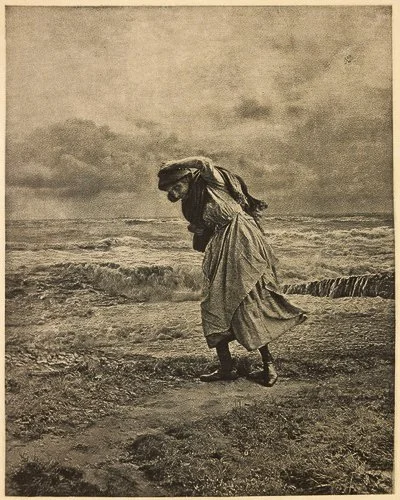
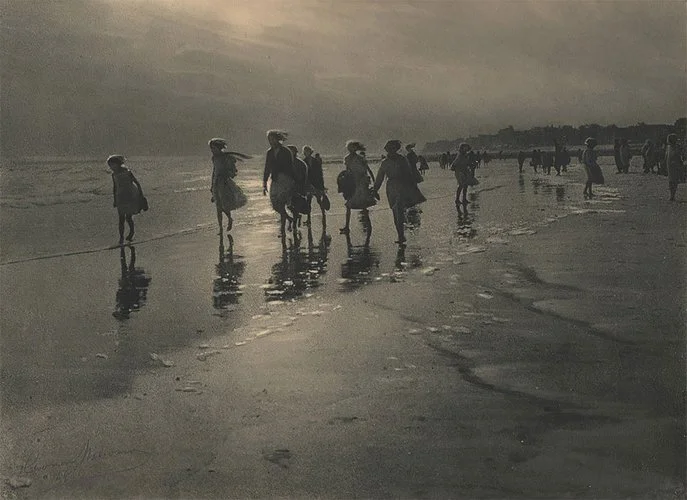
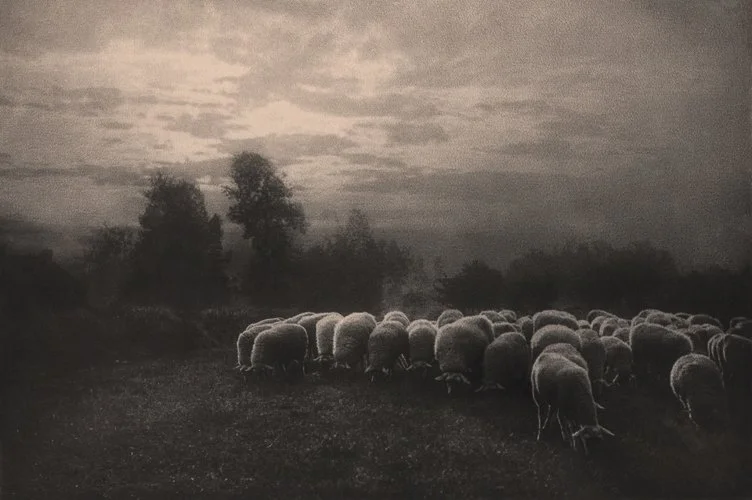
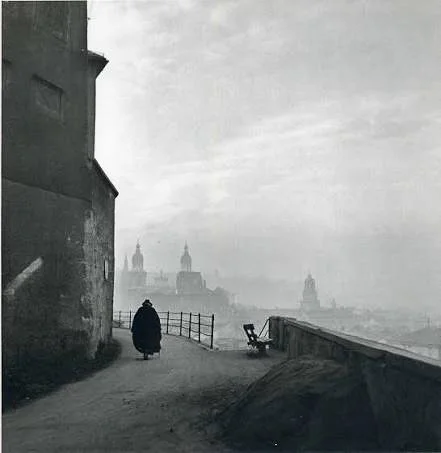
Misonne's subjects were, by the standards of the period, deliberately unspectacular: rural and suburban Belgian and Dutch landscapes, streets in rain and mist, peasants and farm workers in overcast light. What he sought was not the dramatic or the picturesque but the atmospheric — the quality of Northern European weather as aesthetic material in its own right. Grey, leaden skies, the diffused flat light of an overcast afternoon, the luminous glow of backlit mist: these were his conditions of choice.
His most famous dictum, "The sky is the key to the landscape," was not a prescription for dramatic cloudscapes but an assertion that the sky determines the emotional character of every photograph made beneath it. He also declared, with characteristic directness, "The subject is nothing, light is everything." For Misonne, the cloud was primarily a vehicle for light — a means of shaping the quality of illumination that fell on the world below.
His technical processes were as varied as his compositions. He worked extensively with bromoil transfer — a process in which a silver bromide print is bleached, hardened, and then inked with lithographic brushes, allowing selective control of tone and the suppression of unwanted detail.
He learned the bromoil technique from Émile Constant Puyo in Paris around 1910. He also worked with the Fresson process, a secretive carbon-based method known for its matte surfaces and extraordinary tonal depth.
Most notably, he developed his own hybrid processes: mediobrome, a combination of silver gelatin and pigment printing; photo-dessin, which blended charcoal and pencil drawing with photographic imagery; and flou-net, which combined overall softness with selective areas of sharpness. The result was prints of warm, painterly quality, closer in visual character to mezzotint than to conventional photography. He has been called, with some justice, "the Corot of photography."
Much of Misonne's photography was made in Belgium and the Netherlands, with additional excursions to England, France, Germany, and Switzerland. The German occupation of Belgium during the Second World War severely restricted his movements and his practice in the final years of his life. He died in Gilly on 14 September 1943. His influence on the Pictorialist movement's treatment of weather as aesthetic condition — the idea that the grey day is not a failed photographic opportunity but a specific and reproducible mood — was profound.
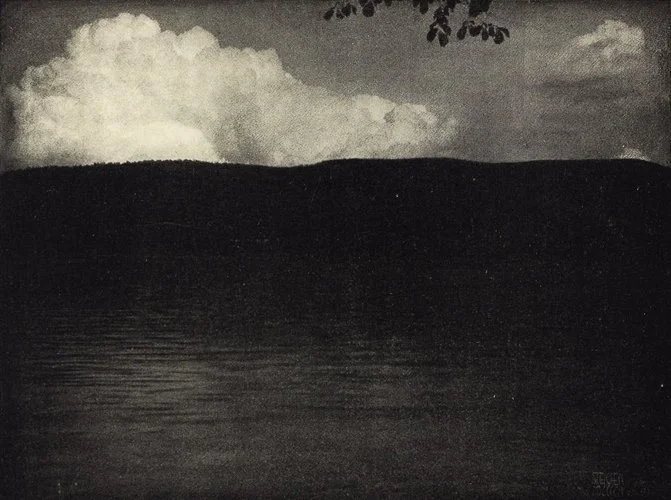
Alvin Langdon Coburn (1882–1966), whose career as a Pictorialist and early modernist photographer is more fully treated in the companion history of silhouette photography, made cloud and sky studies a recurring element of his broader investigation of tonal values and atmospheric mood.
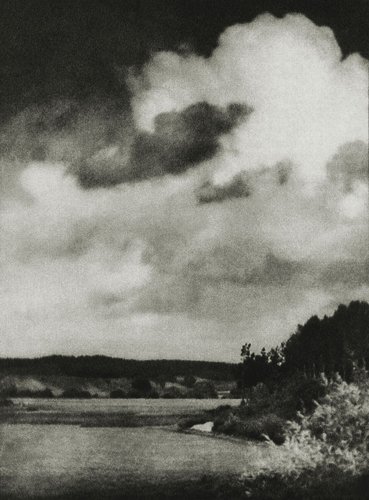
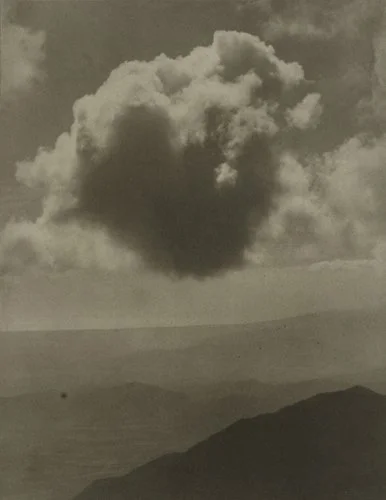
His 1912 photograph The Cloud — a dominant cloud formation centred against a mountainous landscape — demonstrates his characteristic attention to the interplay of light, shadow, and natural form, and to the scale relationship between human landscape and the sky above it. Coburn's Pictorialist training gave him a sensitivity to tonal gradations and a compositional preference for the monumental that suited cloud photography particularly well.
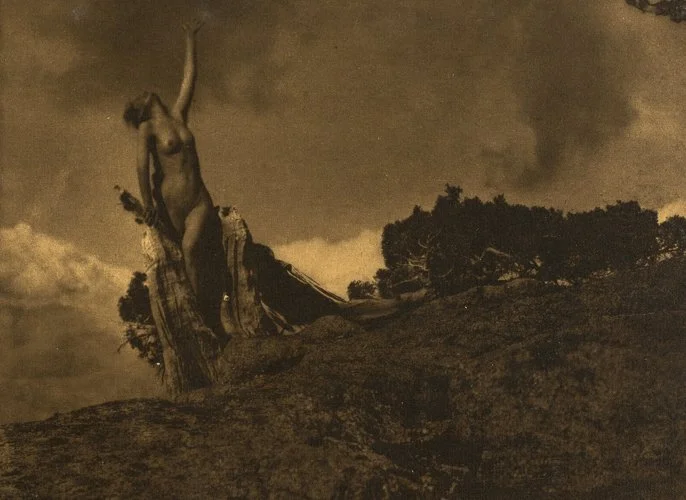
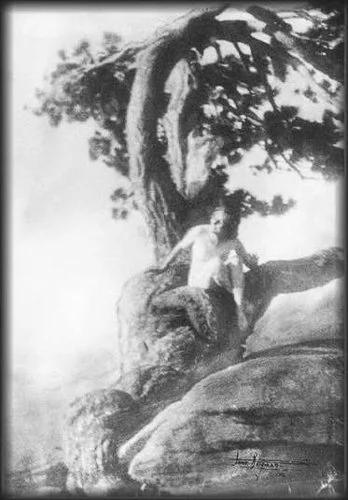
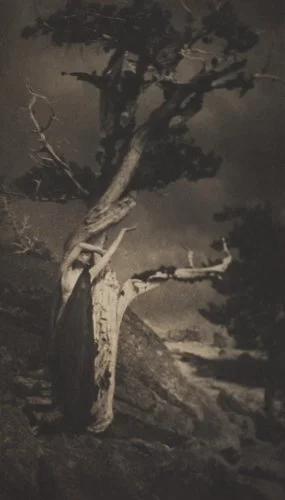
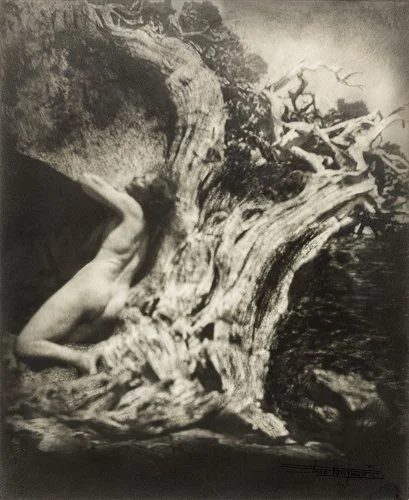
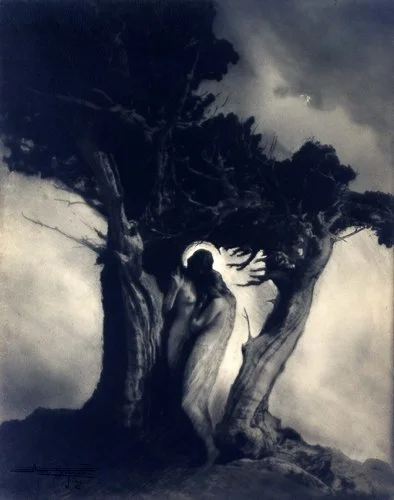
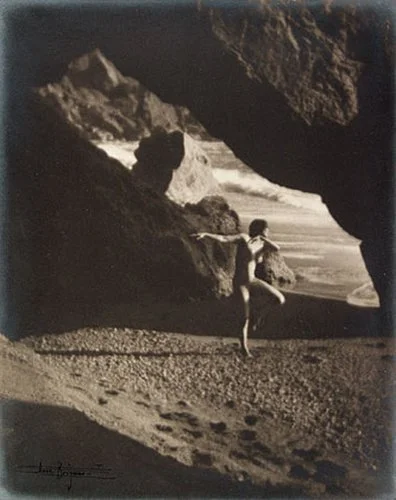
Anne Brigman (1869–1950) approached the cloud from a direction distinct from the European Pictorialists. Born in Hawaii and raised in California, she combined a serious practice of mountaineering with an equally serious practice of photography in the Sierra Nevada, making images in which human figures — typically herself or her friends, nude or draped — were placed against the dramatic landscapes and skies of the High Sierra. Her work was deeply literary and self-consciously poetic; she wrote verse as well as making photographs, and treated the two as parallel activities.
Brigman became a member of the Photo-Secession, Alfred Stieglitz's organisation for the promotion of photography as fine art, which is a mark of her standing in the American Pictorialist world. Stieglitz published her work in Camera Work, the Photo-Secession's influential journal. Her cloud work was not primarily meteorological or even atmospheric in the way of Misonne's: the clouds in her Sierra Nevada photographs are backdrops for figurative drama, their billowing forms complementing the postures and gestures of the figures below.
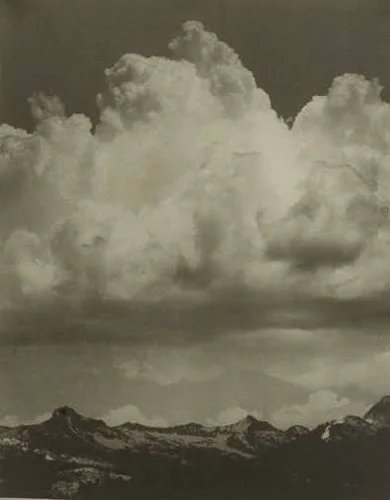
The High Sierra sky — its particular quality of high-altitude light, the rapid formation of cumulus cloud in summer afternoons, the way weather moves visibly across the range — gave her imagery a physical specificity that distinguishes it from the studio-derived Pictorialism of many of her contemporaries. Her photographs were described in lyrical terms as imaging "the glories of rainbows spun from the tears of the storm." The mountains and their skies were not a backdrop; they were the subject of which the human figure was the living expression.
Peter Henry Emerson (1856–1936) occupies a complicated and fascinating position in the history of photographic aesthetics generally, and his relationship to clouds and the sky illustrates the complexity. Born in Cuba of English and American parentage, educated in England, and trained as a physician, Emerson came to photography through his scientific background and his naturalistic commitment to careful observation.
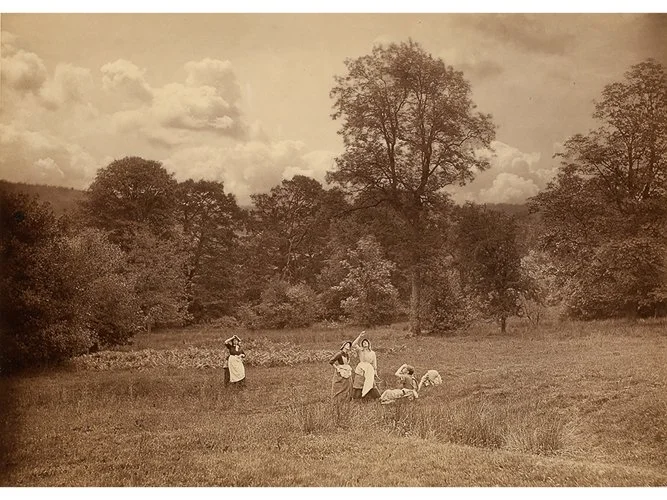
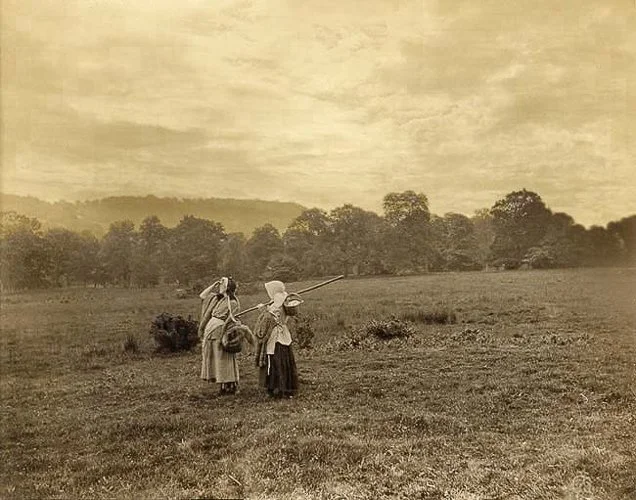
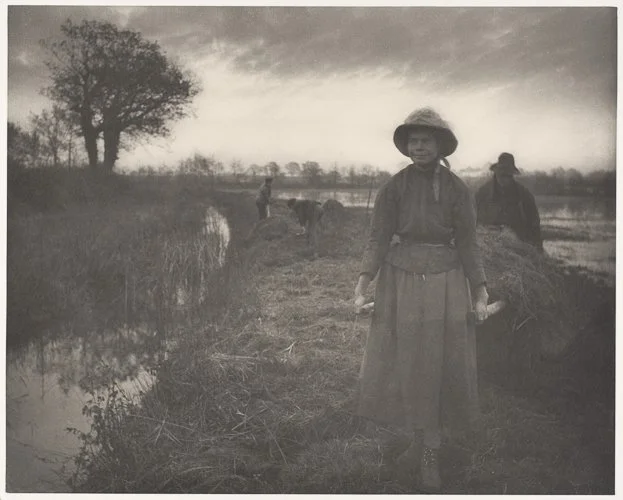
His photographs of the Norfolk Broads — the flat, water-threaded landscape of East Anglia — made between 1883 and 1891 established him as one of the foremost landscape photographers of the Victorian era. In the flat Norfolk landscape, where the sky is often the dominant element of any view and horizon lines are low and distant, clouds are unavoidably central to the composition; Emerson's photographs reflect this with their characteristic soft, luminous skies and mist-hung distances.
In 1889, he published Naturalistic Photography for Students of the Art, a treatise as ambitious in its theoretical reach as it was combative in its tone. Emerson argued that photography should faithfully represent nature "as seen by the normal human eye" — specifically, that the controlled soft focus produced by selective differential focusing more accurately reproduced human visual experience than the uniform sharp definition of the lens.
The book caused immediate controversy and attracted fierce opposition from practitioners who valued technical sharpness and those who objected to his dismissal of combination printing as "contrived and artificial." The debate it provoked ran for years through the British and American photographic press.

The sequel to Naturalistic Photography was one of the genuinely dramatic moments in the history of photographic thought. In the winter of 1890/1, while living on his houseboat The Maid of the Mist on the Norfolk Broads, Emerson underwent what appears to have been a genuine crisis of theoretical confidence.
On returning briefly to London in December 1890, he produced a short pamphlet bordered in black — modelled on a death notice — titled The Death of Naturalistic Photography. In it, he recanted his most important claim: that photography could be considered an art form.
He cited the recent research of chemists Ferdinand Hurter and Vero Charles Driffield demonstrating a fixed relationship between exposure and the density of silver deposits on a negative, which he interpreted as proof that tonal control was mechanically constrained in ways that made artistic expression through photography fundamentally limited. "I throw in my lot with those who say that photography is a very limited art," he wrote, with evident pain. He mailed copies to every major British and American photography journal and returned to the Broads.
Emerson continued to make photographs after this reversal, and published two further books, but produced virtually no new images after 1891. His complicated trajectory — radical advocate of photography-as-art, then spectacular public apostate — positioned him as a hinge between Victorian and modernist photographic sensibilities, and his ideas about naturalistic softness and the faithful representation of visual experience were influential on the Pictorialists who followed him, even as they refused his central conclusion.
Southworth & Hawes — the partnership of Albert Sands Southworth (1811–1894) and Josiah Johnson Hawes (1808–1901) — stand apart from the other practitioners in this section as the earliest and most technically refined attempts to photograph the sky in the daguerreian era.
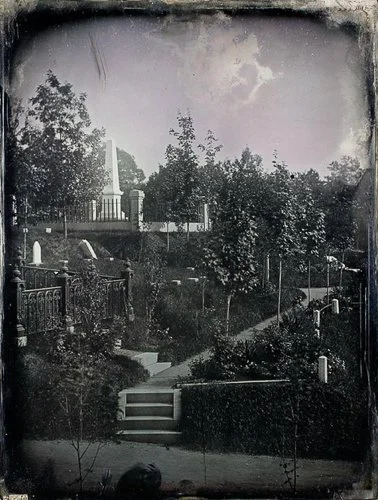
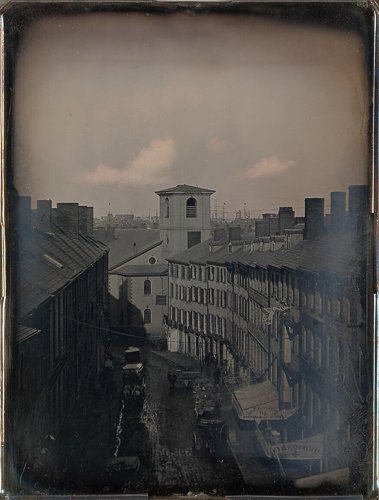
Their studio, established in Boston in 1843 and active until 1863, was the most accomplished daguerreotype practice in nineteenth-century America. Southworth and Hawes were technically innovative in ways unusual even among the ablest practitioners of the period: they developed an electroplating technique that applied an additional layer of silver to commercially available daguerreotype plates, producing images of exceptional tonal range, clarity, and three-dimensionality. Their studio was equipped with the first skylight in Boston, the sunlight directed with calculated precision onto their subjects.
Their sky studies and cloud daguerreotypes are among the earliest surviving photographs of the sky as subject matter rather than incidental background. The daguerreotype process — sensitive, like later orthochromatic emulsions, primarily to blue and violet light — made sky photography technically demanding in ways similar to those faced by later photographers, but Southworth and Hawes's technical mastery enabled them to produce sky images of considerable quality.
Their cloud work is modest in scope compared to what came later, but its significance as documentary evidence of the earliest sustained attempt to photograph the sky should not be understated.
The Theory of Equivalence
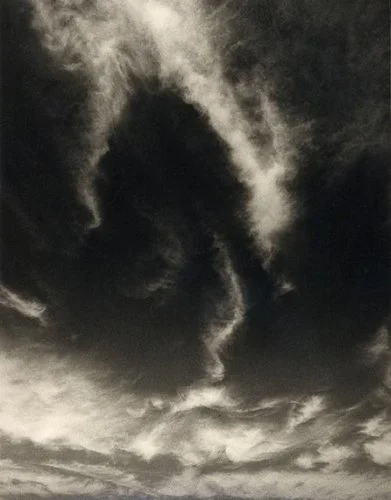
No account of cloud photography can avoid the Equivalents. Alfred Stieglitz's series of cloud photographs, begun in 1922 and continued until 1931, is the philosophical and artistic centre of the genre — the body of work around which all subsequent serious cloud photography orbits, whether in agreement, reaction, or deliberate divergence. The Equivalents did not merely expand the repertoire of cloud photography; they proposed a theory of what a photograph is, what it can do, and what its relationship to its subject should be, and in doing so they changed the terms of discussion for the entire medium.
Alfred Stieglitz (1864–1946) was already, by 1922, one of the most influential figures in the history of American photography. His work as a portrait photographer, his editorship of Camera Notes and then Camera Work, his organisation of the Photo-Secession, his galleries — 291 and later An American Place — and his role in introducing European modernist art to American audiences had made him a central figure in the New York cultural world for three decades.
His broader career and his significance as a portrait photographer are treated elsewhere in this series. What concerns us here is the cloud work specifically: the Equivalents, and the theoretical framework in which Stieglitz placed them.
Stieglitz had been interested in the sky since his first photographic experiments in the late 1880s. He made early cloud photographs at Lake Como in 1887. But the major series began in the summer of 1922, when he was fifty-eight years old, at the family home at Lake George in New York's Adirondack region.
There, on the porch, he began tilting his hand camera towards the sky and making photographs that excluded the horizon entirely — pure cloud form against sky, without reference to landscape, architecture, or human figure. Over the following years, and primarily at Lake George during the summers he spent there with Georgia O'Keeffe, he produced some 350 cloud studies, printed largely as contact prints on gelatin-silver postcard stock.
The formal decision to exclude the horizon was fundamental. By removing the only reliable spatial reference in the sky, Stieglitz made photographs in which there is no way to determine which way is up. The image can be viewed in any orientation without becoming obviously wrong. The clouds float free of gravitational logic, and their forms become genuinely abstract — not in the sense of being removed from nature, but in the sense of being released from spatial context.
The disorientation this produces in the viewer is not accidental but deliberate. By the late 1920s, the occasional sliver of tree or hillside that appears in some earlier examples had been entirely eliminated; the late Equivalents are, as critic Andy Grundberg wrote of a 1983 retrospective, "photography's most radical demonstration of faith in the existence of a reality behind and beyond that offered by the world of appearances."
The theory was explicit. Stieglitz used the word "equivalent" in a precise and specific sense. The cloud photographs, he said, were not representations of clouds in any documentary or descriptive sense. They were visual equivalents of emotional states and philosophical positions — each image corresponded not to the cloud formation it depicted but to the inner experience from which it arose. "My cloud photographs are equivalents of my most profound life experiences, my basic philosophy of life," he said. "Through clouds [I wanted] to put down my philosophy of life — to show that my photographs were not due to subject matter — not to special trees, or faces, or interiors, to special privileges — clouds were there for everyone — no tax as yet on them — free." The photograph and the feeling that produced it were equivalent to each other; the image externalised an inner state.
The relationship to music was explicit in Stieglitz's earliest titles for the series. Music: A Sequence of Ten Cloud Photographs (1922) and Songs of the Sky (1923) declared the analogy directly: Stieglitz wanted cloud photography to do what music does — to move the viewer without depicting anything recognisable, to generate emotion through pure formal organisation rather than subject matter.
This was not a modest ambition. It claimed for photography a capacity for non-representational expression that many contemporary critics denied was possible in a medium so tethered to its physical subjects.
Stieglitz's summers at Lake George were also the period of his most intensive collaboration with Georgia O'Keeffe, whose paintings — particularly her large-format flower studies and her New Mexico landscapes — were pursuing related questions about abstraction, natural form, and the sky.
Between 1917 and 1937, Stieglitz made more than forty-five portrait photographs of O'Keeffe, a sustained and remarkable body of work in which her physical presence becomes over the years inseparable from her artistic identity. His cloud photographs and her paintings from the same period form what many art historians have described as a sustained dialogue about abstraction, nature, and the sky — two artists, working in different media, circling the same set of problems.
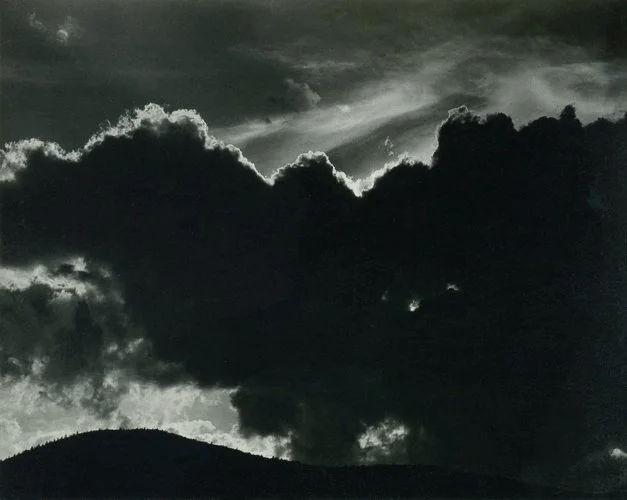
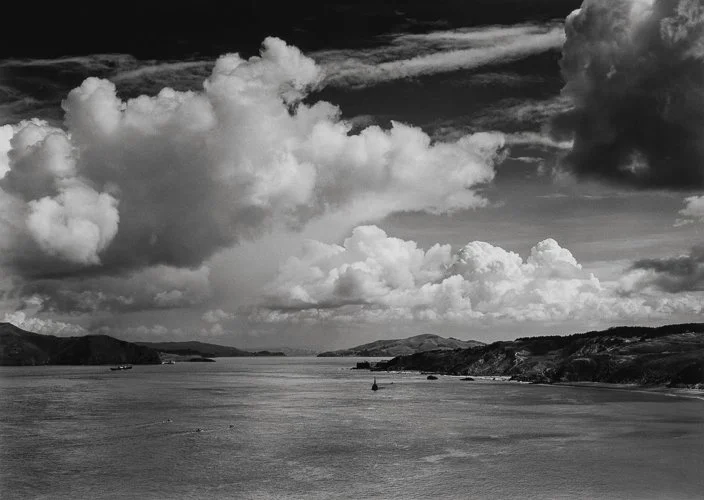
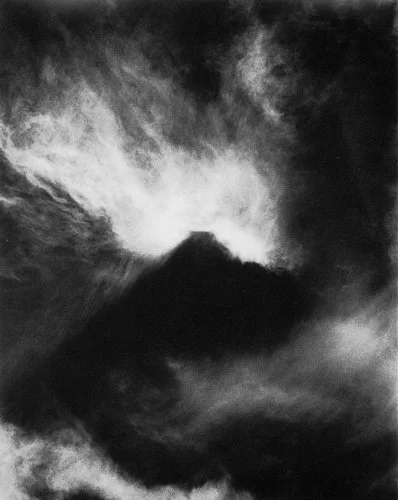
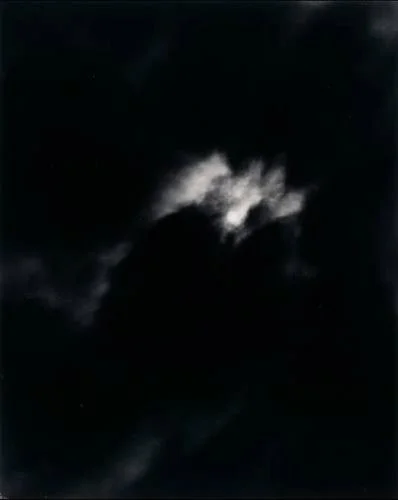
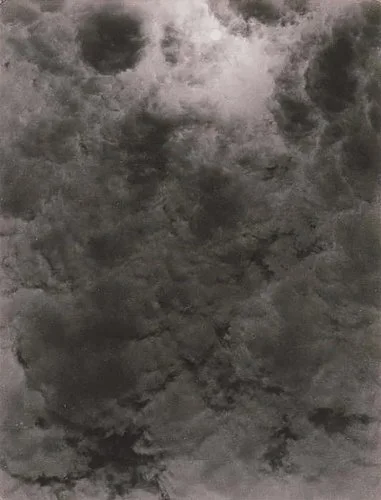
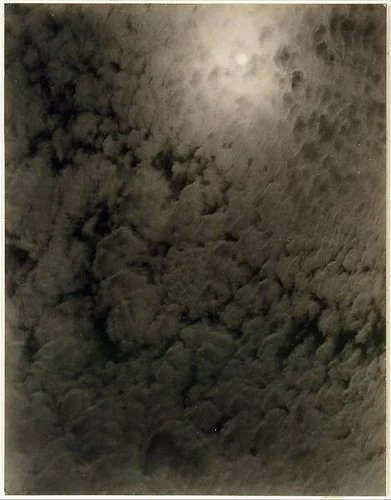
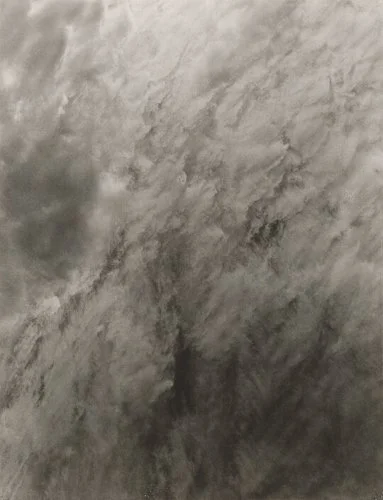
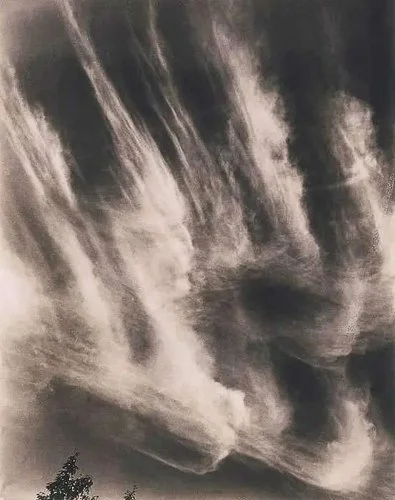
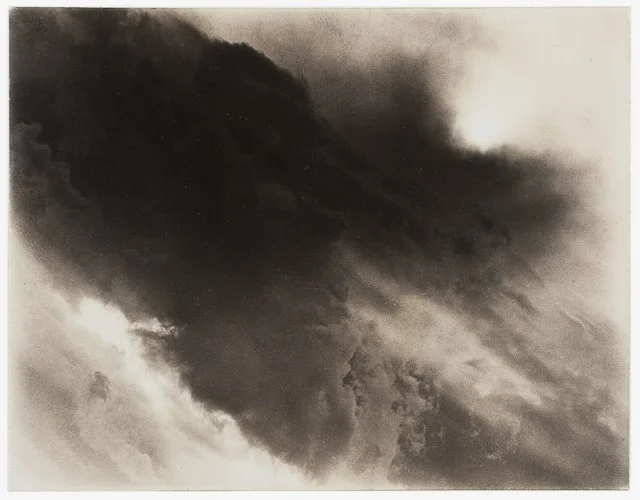
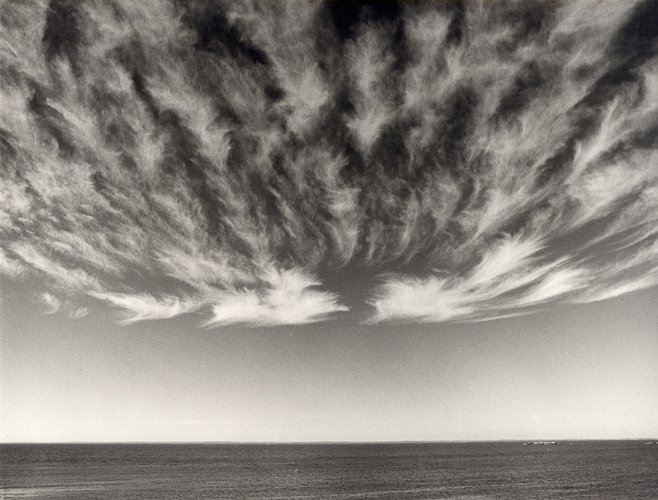
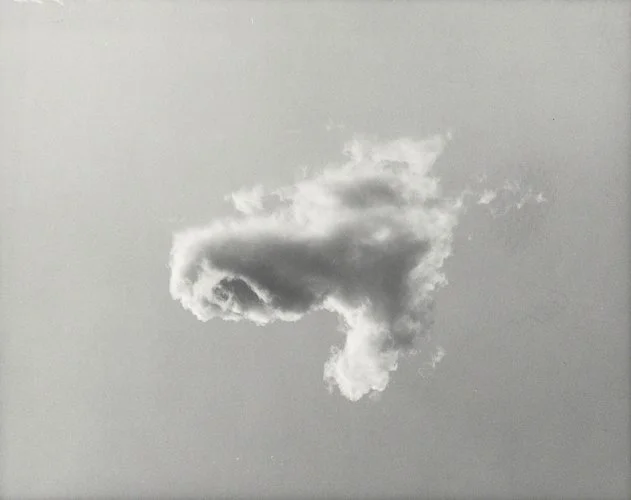
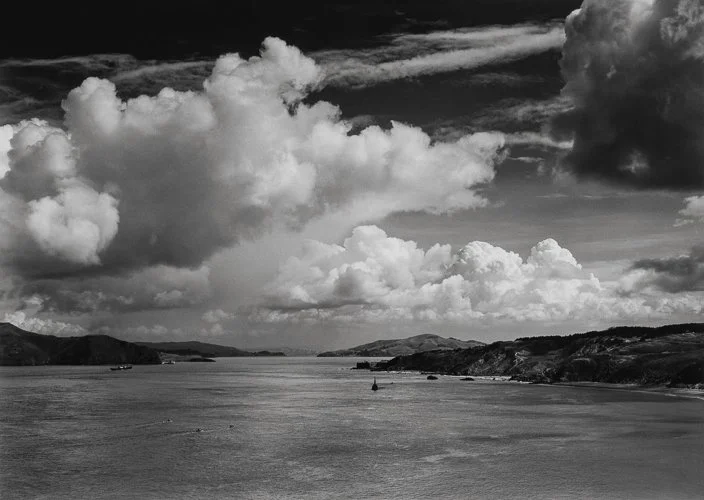
The Equivalents have generated an extraordinary critical literature. Rosalind Krauss's influential formalist reading treats them as photography's most rigorous statement of its own mediality — the clouds as a "non-subject" that directs attention to the act of cropping, framing, and cutting that defines the photographic operation.
Transcendentalist readings, drawing on the tradition of Emerson and Whitman, find in the cloud photographs a project of self-world integration — the photographer seeking not transcendence from the physical world but a deeper immersion in it.
Susan Sontag read them as expressions of Stieglitz's subjective inner life. What is not in dispute is their significance: the Equivalents are among the most philosophically discussed photographs in the history of the medium, and their influence on abstract photography, on the idea that the medium can aspire to pure expression rather than representation, has been enduring and pervasive.
Ralph Steiner (1899–1986) was among the American photographers of the next generation who engaged most directly with the issues Stieglitz had raised. Born in Cleveland and educated at Dartmouth College and the Clarence H. White School of Photography in New York, Steiner worked initially as a commercial and advertising photographer before developing an independent artistic practice focused on natural form as abstract visual material. His 1929 film H₂O — a documentary short recording the surface patterns of water under varying light conditions — is an early and important example of abstraction in American cinema.
Steiner's cloud series, characteristically left untitled, consists of monochrome photographs of cloud formations isolated against sky, with no horizon, landscape, or reference point — compositions that invite direct formal comparison with the Equivalents, though Steiner's approach was more explicitly concerned with pattern and texture and less with psychological equivalence.
His deliberate refusal to title the photographs was itself a statement: by keeping them "open to interpretation," he acknowledged both the clouds' formal self-sufficiency and the viewer's contribution to meaning. Steiner was a member of the Film and Photo League during the 1930s, and his later career moved increasingly toward documentary filmmaking. His cloud work, relatively modest in scale compared to Stieglitz's, nevertheless represents a lucid and formally elegant contribution to the genre's development.
Adam Clark Vroman (1856–1916) is known primarily for his documentary work with Native American peoples and Pueblo communities of the American Southwest — systematic, respectful, and technically accomplished photographs made over two decades of travel through New Mexico, Arizona, and California. His approach to indigenous subjects was unusual for his time in its evident respect for the people he photographed, and his work in this field stands as an important early example of documentary photography conducted with ethical attentiveness.
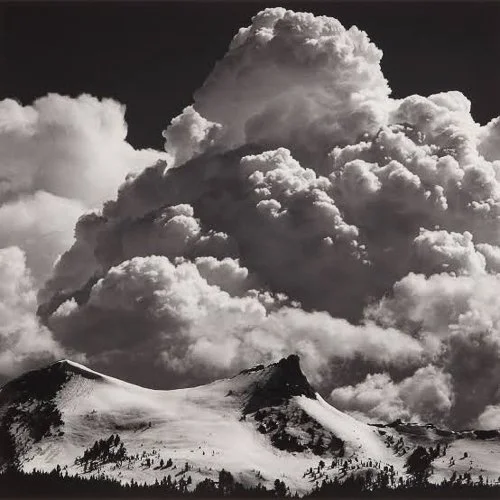
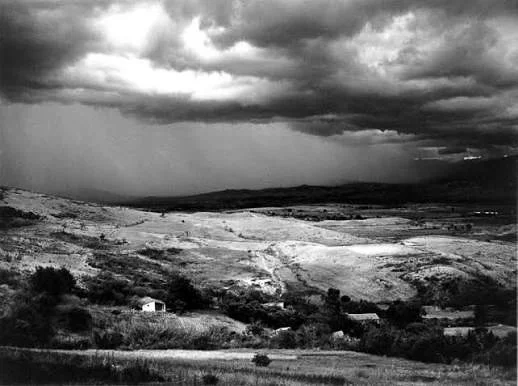
Less well known is Vroman's cloud photography, which is nevertheless some of the most striking of its period. The high desert landscape of the Southwest — the Colorado Plateau, the Navajo and Hopi lands — produces a sky unlike almost anywhere else in North America. Monsoon clouds in summer are visible for fifty miles in every direction, their bases flat and their vertical development enormous.
Vroman photographed on orthochromatic plates, and unlike many of his contemporaries, he did not use combination printing; he captured both landscape and sky in single exposures, exploiting the improving sensitivity of orthochromatic emulsions to register the dramatic contrast between desert floor and thunderhead.
His own description of the experience is memorable: "All day long these fleecy rolls of cotton-like vapour have tempted you, until you are in danger of using up all your… plates the first day out. You think there never can be such clouds again — but keep a few for tomorrow, they are a regular thing in this land of surprises." The irresistibility of the Southwest sky to a photographer working in the 1890s and 1900s is well conveyed in those lines.
Colour, Cinema & the Aerial View
The arrival of practical colour transparency film — Kodachrome, first available in 35mm format in 1936 — transformed cloud photography in ways as fundamental as the shift from orthochromatic to panchromatic emulsions. Orthochromatic and early panchromatic photography had necessarily made a virtue of the tonal richness available in black-and-white rendition: the subtle gradations from near-white to deep grey in a cloud formation, the contrast between sun-illuminated cumulus and shadowed underside.
Colour introduced an entirely different vocabulary. The precise blue of sky at altitude, the luminous white of sunlit cloud against it, the sulphurous yellow-grey of a storm building over a hot landscape — these were now available as photographic material, and the genre expanded to accommodate them.
The most prominent venue for colour cloud photography in the mid-twentieth century was neither the gallery nor the art photography journal but the pages of National Geographic, which had been publishing colour photographs since the 1910s and had developed an institutional aesthetic around the dramatic, saturated image of the natural world.
The National Geographic cloud photograph — vast cumulonimbus formations over open landscapes, the kind of sky that a pilot or a sailor would read as a weather forecast — became a recognisable genre in its own right: technically accomplished, often strikingly beautiful, and oriented toward the spectacular rather than the contemplative. The tradition produced some extraordinary images and had an enormous popular audience, though it sat at some remove from the artistic cloud photography that descended from Stieglitz.
The aerial view introduced a perspective entirely unavailable before powered flight. Balloon photography had existed since Nadar's pioneering ascents of the late 1850s, but the sustained, repeated, and controllable view from aircraft — available to photographers from the 1920s onward — transformed the visual language of cloud photography by inverting its fundamental spatial relationship.
A cloud viewed from above is categorically different from the same cloud viewed from below. The underside visible from the ground is dark, often threatening, shaped by convective forces and laden with moisture. The upper surface, seen from an aircraft, is a brilliant white, sculpted by wind into forms of remarkable architectural complexity — domes, towers, anvils, ridges — lit by direct sunlight with no atmospheric softening.
The same cloud that appears to the person on the ground as a sign of approaching bad weather appears to the person above it as a luminous, almost abstract, white solid against the deep blue of the upper atmosphere.
This perceptual inversion has aesthetic and philosophical implications that photographers and writers have found endlessly interesting. From below, the cloud conceals: it obscures the sun, threatens rain, and represents weather as an external condition imposed on human activity. From above, the cloud reveals: it displays its own internal structure, demonstrates the physical processes of condensation and convection in three-dimensional form, and presents itself as an object to be examined rather than a condition to be endured. The aerial view fundamentally changed the cloud from a sign of something else into a subject in its own right.
The meteorological tradition of cloud photography — the systematic documentation of cloud formations for scientific purposes, for weather forecasting, for the ongoing revision of the International Cloud Atlas — continued in parallel with artistic cloud photography throughout the twentieth century and developed its own institutional apparatus, equipment, and aesthetic.
The two traditions occasionally produce images that are visually indistinguishable: a meteorological photograph of a developing cumulonimbus formation, taken to record the convective structure for analysis, may be as formally compelling as anything in the artistic tradition. The same cloud, the same light, the same organisation of form against sky — different purposes, different contexts, different readings.
Contemporary Practice
Tzeli Hadjidimitriou is a Greek fine-art photographer born and raised on the island of Lesvos, who has been photographing and filming the lives of the island's inhabitants since 1990. Her work is rooted in a sustained, decades-long engagement with a specific place: the landscape, the light, the people, and the atmosphere of the Eastern Aegean. She is an award-winning photographer whose work has been exhibited in solo and group shows in Australia, China, Italy, Turkey, and Greece, and published across ten books.
Her 2003 book Time Fading into Clouds represents her most sustained engagement with cloud photography as a subject in its own right. Hadjidimitriou's approach to clouds draws on a range of cultural references well beyond photography — she has cited Renaissance painting and the work of El Greco as informing her visual sensibility, an influence visible in the warm, almost smoky luminosity of her images and their sense of clouds as presences with psychological weight.
She has described capturing clouds "solitary and silent, on their odd journeys" — a formulation that treats the cloud as a subject with agency, moving through its world as her human subjects move through theirs. Her work functions as a form of environmental portraiture, in which the atmosphere — the quality of the air and light above the sea — is as much a subject as any person.
Claire Droppert is a Dutch fine-art photographer based in Rotterdam, whose work encompasses landscape, still life, and a series of projects exploring the intersection of human movement and natural environment. She has exhibited internationally in New York, Paris, Brussels, and Rotterdam, and her work has been commissioned by Adobe, Canon, and BMW, among others.
Her Gravity series takes its name from the physical force it explores: the series captures subjects in states of dynamic suspension — sand thrown into the air, figures in motion — with the sky and its clouds as backdrop. The conceptual approach in Gravity places equal compositional weight on the suspended human or material subject and the cloud formations behind and above: neither is background to the other.
Droppert works exclusively with natural light and fast shutter speeds, producing images of precise formal clarity in which the cloud's own shapes — often closely echoing the shapes of the airborne figure or material below — are as deliberately composed as any other element.
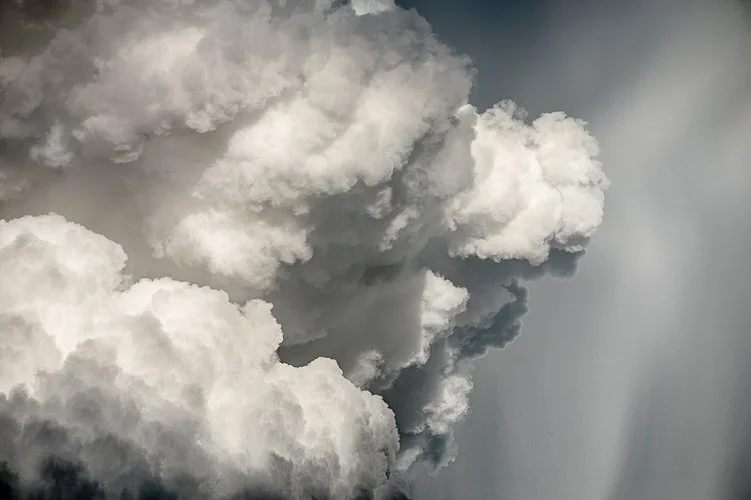
Her Cloudscapes series is more purely devoted to cloud observation. Comprising ten photographs made over the course of a single ten-minute storm, Cloudscapes is a record of attentiveness rather than a planned project: Droppert saw the clouds begin to form over the flat Dutch landscape near Rotterdam, took her camera to the nearby fields, and photographed with a zoom telephoto lens as the storm developed. "I am continually fascinated by the weather," she has said, "and luckily here in the Netherlands, we are surrounded with flat landscapes that allow you to see for many miles, all around."
The flat polder landscape of Holland — where the sky is visually dominant in a way it rarely is in hillier terrain — has been producing cloud photographers with unusual frequency for centuries; there is a continuous, if indirect, line between the skies of Jacob van Ruisdael's seventeenth-century paintings and Droppert's contemporary work.
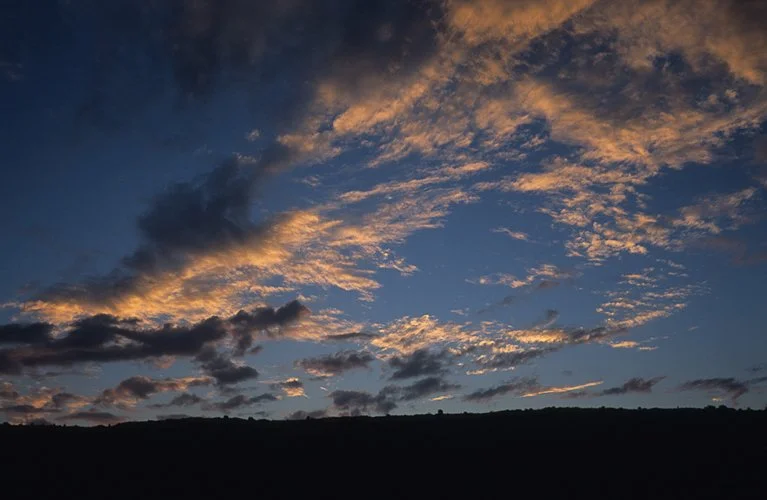
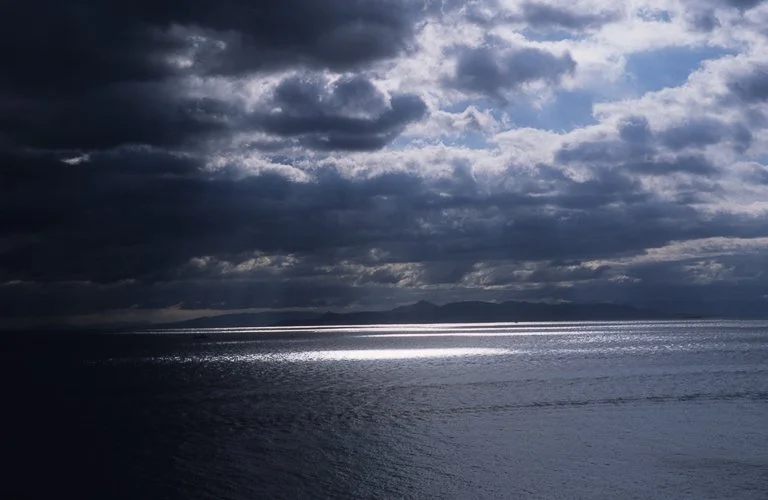
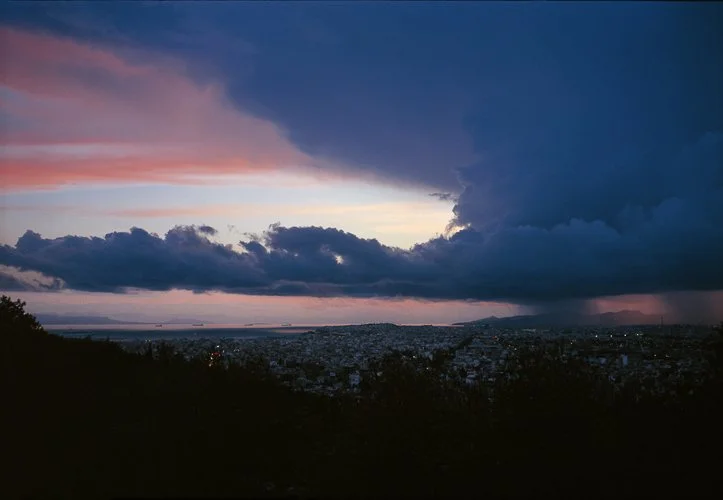
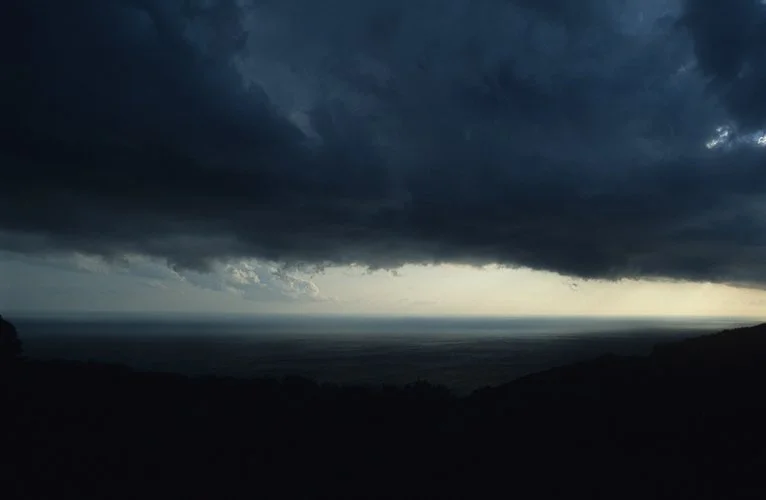
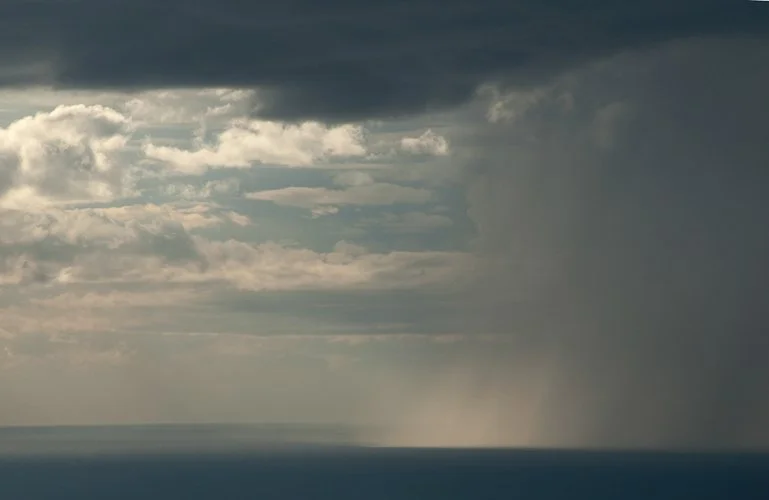
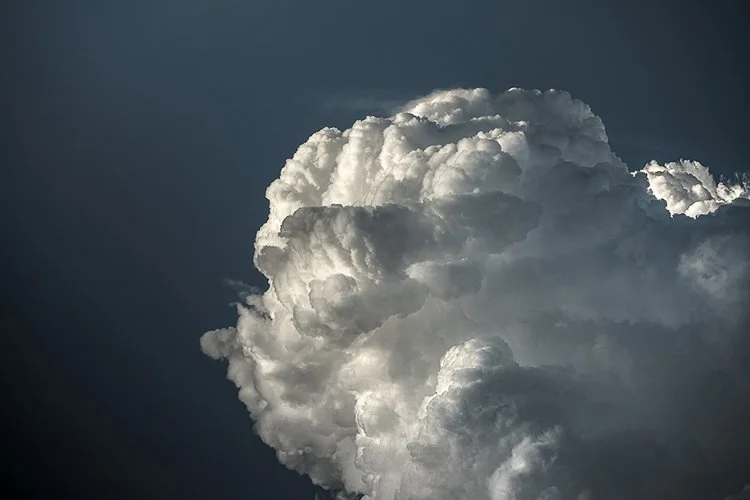
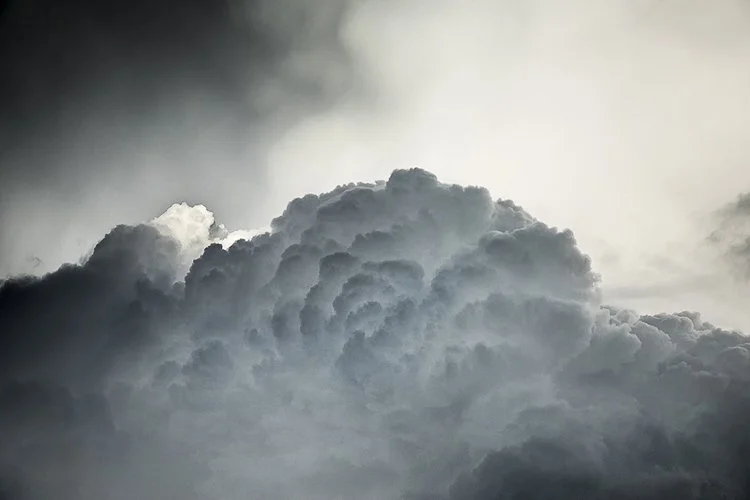
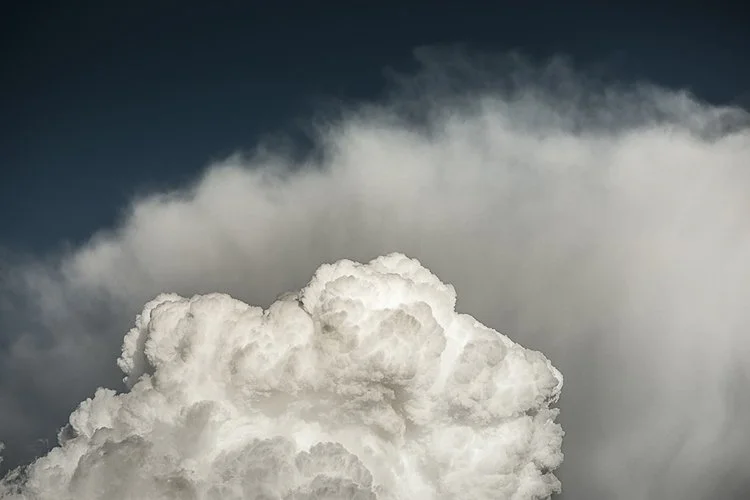

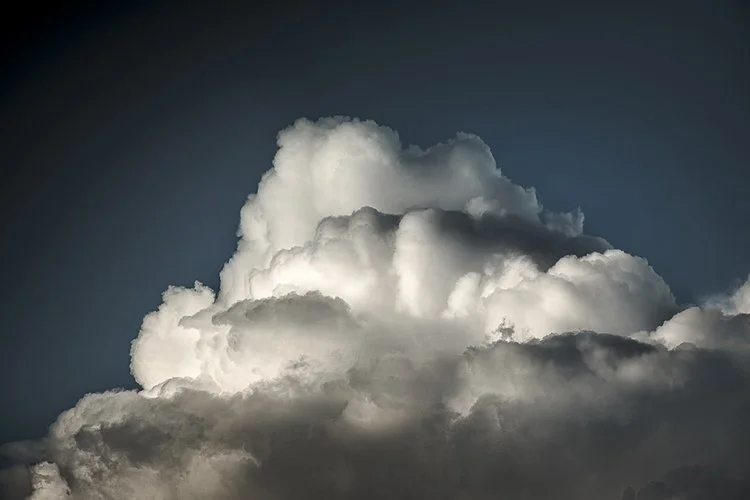
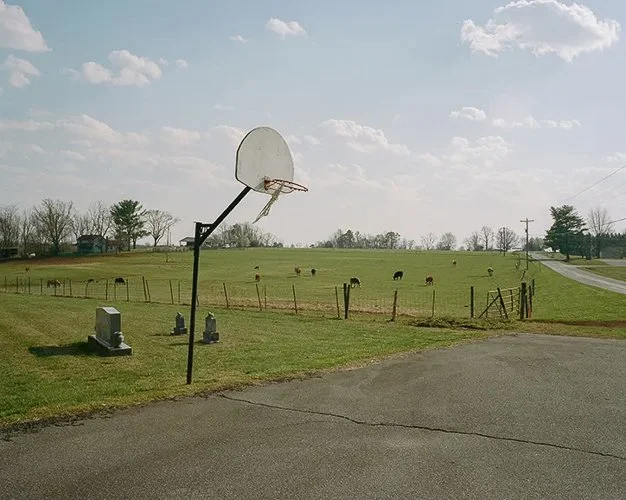
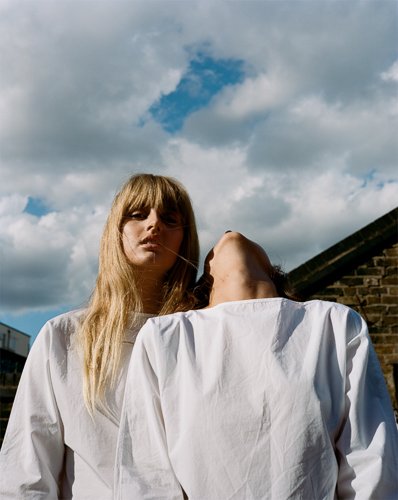
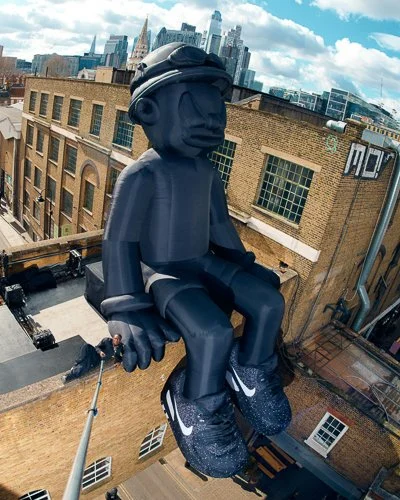
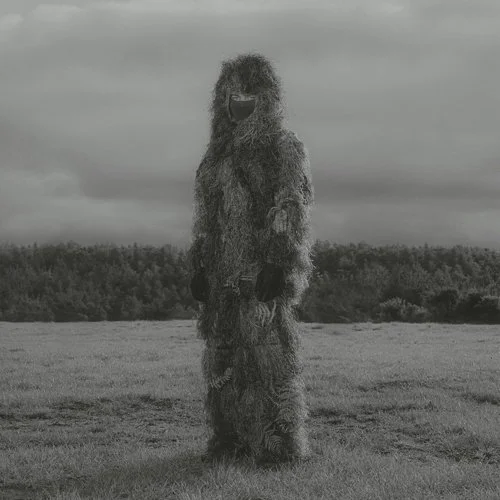
George Muncey is a British photographer and director whose Lonely Cloud series is, ostensibly, a project about British identity rather than about clouds as such — and yet the cloud persists throughout it as an insistent visual motif, which says something about the relationship between British weather and British self-understanding. The project grew from Muncey's recognition that, after years of photographing abroad in search of the visual language of the American road trip tradition, he had been overlooking the subject matter available in his own country. Lonely Cloud is the result: a wide-ranging documentary project photographed across the British Isles, an "organic study of contemporary British identity" developed through chance encounters and carefully planned routes.
The cloud in Muncey's work functions neither as abstract form (in the manner of Stieglitz) nor as meteorological subject (in the manner of Vroman) but as atmosphere and condition — the grey British sky as a character in the visual narrative, shaping the light, the mood, and the sense of place that pervades the series.
His treatment of the sky is documentarian rather than idealist, but it is not incidental: the particular quality of British cloud — its frequency, its variability, its tendency toward a soft, diffused grey rather than the dramatic blacks and whites of more continental weather — is as much a subject of Lonely Cloud as the people and places Muncey photographs beneath it.
The Cloud as Symbol
Clouds carry cultural meaning far in excess of their meteorological content. Across many of the world's major traditions of thought and belief, the cloud has been used to figure the presence of the divine, the condition of the sublime, the nature of impermanence, and the relationship between the visible and the invisible. This symbolic weight is not incidental to the history of cloud photography; in many cases, it is the reason cloud photography has attracted the theoretical attention it has.
In Greek mythology, clouds were the medium through which the gods made themselves known — Zeus manifesting in thunder and storm clouds, the divine presence signalled by formations in the sky. In the Hebrew Bible, clouds attend moments of divine communication: the pillar of cloud that leads the Israelites through the desert, the cloud that descends on Sinai when the law is given, the cloud of the Shekinah that fills the Temple.
Christian iconography inherits this tradition and extends it: the Ascension is depicted with clouds, the Last Judgment is preceded by clouds, and the Resurrection is confirmed by an angel sitting on a cloud of rolled-back sky. In Eastern philosophical traditions — Daoist and Buddhist — cloud is a recurring image for impermanence, for the transience of all appearances, for the way form arises and dissolves without fixed identity. The cloud appears, takes a shape, and is gone; what it was yesterday cannot be recovered, and what it will be tomorrow cannot be predicted. As an image for the fundamental instability of phenomena, it is almost universally applicable.
The Romantic tradition gave this symbolic vocabulary a new philosophical framework. Edmund Burke's Philosophical Enquiry into the Origin of Our Ideas of the Sublime and Beautiful (1757) established the category of the sublime as specifically applicable to experiences that exceed human comprehension or control — the experience of something vast, powerful, and potentially threatening that produces, paradoxically, a kind of pleasurable terror.
The storm cloud, the thunderhead, and the breaking squall were paradigm cases for Romantic writers and painters. Kant's elaboration of Burke's categories in the Critique of Judgement (1790) gave the sublime explicit philosophical standing, and the Romantic generation — Constable, Turner, Friedrich, Wordsworth, Byron, Shelley — made weather, cloud, and atmospheric turbulence central to their artistic programmes. The sky was the Romantic sublime's most reliable theatre.
Photographers who came after Pictorialism inherited this visual and conceptual tradition, whether they knew it or not. The Pictorialist preference for atmospheric skies and overcast conditions was partly an aesthetic preference and partly a statement about photography's capacity to engage with the same emotional and symbolic registers that Romantic painting had claimed for itself. But the tradition also arrived with a critical concept attached — John Ruskin's pathetic fallacy, first described in Modern Painters (1843–60) and later systematised in the third volume (1856).
The pathetic fallacy is the attribution of human emotions to natural phenomena: the "cruel, crawling foam" of the sea, the "angry sky," the "mournful cloud." Ruskin regarded it as a defect of sensibility, produced by intense or disordered emotion, that leads the observer to project their own state onto the world around them rather than observe it accurately. It was, for Ruskin, a form of subjective distortion.
The peculiarity of Stieglitz's Equivalents is that they take the pathetic fallacy and make it a rigorous artistic programme. Stieglitz was not projecting onto the clouds inadvertently, as a symptom of emotional excess; he was explicitly asserting that the cloud photograph was a materialisation of inner experience, that the image and the feeling were equivalent to each other.
This was the pathetic fallacy elevated to a theoretical principle and pursued with systematic intentionality over nine years. Whether this is a subversion of Ruskin's critique or a confirmation of it depends on how one reads the relationship between intentionality and validity — whether the knowing embrace of a pathetic fallacy transforms it into something else, or simply makes it a more deliberate error.
Photography's particular relationship to clouds as subject carries its own philosophical tensions. A photograph of a cloud is an index of a specific formation at a specific moment: the image records the precise configuration of water droplets in the atmosphere at the fraction of a second the shutter opened.
That specific formation will never recur. Clouds are unrepeatable in a way that most photographic subjects are not: the landscape, the building, the person can be returned to and rephotographed, and the resulting images can be compared with each other. The cloud that existed at 4.17 p.m. on a Tuesday over Lake George in August 1929 is gone without trace. The photograph of it is the only surviving evidence that it ever existed.
At the same time, every cloud is an instance of a type. It is cumulus or cirrus or cumulonimbus; it exemplifies the physical processes of convection or advection or radiative cooling; it belongs to the taxonomic system that Luke Howard established in 1803 and that meteorologists and photographers have been elaborating ever since. The particular cloud is unique and unrepeatable; the type it represents is stable, recurrent, and scientifically defined.
The photograph holds both the particular and the universal in tension simultaneously: it is a record of something that no longer exists and a representation of something that will exist again tomorrow. This tension between the singular and the typical, between the irreversible moment and the recurring pattern, is one of the things that makes cloud photography philosophically richer than almost any other photographic subject.
Closing Thoughts
The blank white sky of the nineteenth-century landscape photograph was a failure of chemistry, not of ambition. It represented the gap between what photographers could see and what their technology could record — the same gap that drove Gustave Le Gray to his two-negative seascapes, Henry Peach Robinson to his assembled composite skies, and an entire generation of technical innovators to panchromatic emulsions and coloured filtration.
When the sky was eventually recoverable as photographic material, it turned out to contain more than anyone had bargained for. The technical problem, once solved, revealed a philosophical one: not how to photograph a cloud, but what it meant to do so. That question, posed with particular force by Stieglitz in the summers of the 1920s and never fully answered, is still being worked through. The cloud that was once an embarrassment — the overexposed void in the corner of the frame — became, in his hands, the purest subject in photography: free, unrepeatable, common to everyone, and inexhaustible.