Photography has never been a neutral act. From the moment the first stable image was fixed upon a polished pewter plate in 1826, the question of what, exactly, constitutes a photographic truth has remained stubbornly, productively unresolved. The history of image editing is not the story of a pure medium corrupted by technological temptation. It is, more accurately, the history of photography itself: a record of every interpretive choice made between the moment of exposure and the moment a viewer confronts a finished image.
Those choices have always been made. Which negative to print. How long to leave the paper in the developer. Which shadows to deepen, which highlights to hold back. Which face in the background to soften, and which blemish on which cheek to remove before a paying customer took the portrait home. The darkroom was never a passive space where objective reality was simply developed into existence. It was a workshop — a site of craft, judgement, and, occasionally, deceit.
What has changed across nearly two centuries of photographic practice is not the existence of these choices but the speed and scale at which they can be made, the degree of technical skill required to make them convincingly, and the breadth of the population now capable of making them. The introduction of each new technology — the airbrush, the enlarger, the digital scanner, the smartphone, the generative neural network — has shifted that balance, sometimes dramatically. Each shift has provoked a version of the same anxiety: is this still photography? Is this still true?
At the current moment, in the mid-2020s, that anxiety has reached a pitch that has not been heard since the 1830s, when critics debated whether the daguerreotype could possibly be what it seemed. Generative artificial intelligence now enables any user with an internet connection to produce or modify an image of virtually anything — without a camera, without a subject, without any referential relationship to the physical world. Whether that represents the end of photography as an evidential medium, or merely the latest iteration of a very old argument, is genuinely open. Understanding where this moment comes from requires returning, with some care, to the beginning.
The Darkroom as Craft
The romantic mythology of early photography — the camera as an instrument of pure, mechanical objectivity — was always largely fiction. Nineteenth-century photographic processes required intensive manual labour at every stage, and the concept of the finished print as an untouched record of reality was understood by practitioners, if not always by their audiences, to be a convenient simplification.
The Photograph as a Hand-Crafted Object
Albumen printing, the dominant process from the 1850s to the 1890s, involved coating paper with egg white and silver nitrate, then printing from a glass negative by contact — a process requiring careful chemical control, judgement of light levels, and extended washing to prevent fading. Platinum and palladium prints, favoured for their warmth and archival stability, were even more demanding. Carbon printing, introduced commercially in the 1860s, offered exceptional tonal range and permanence but required considerable darkroom skill to execute. In each case, the negative was a starting point. The print was the result of a series of decisions — about paper, chemistry, exposure time, and development — that shaped the tonal character, contrast, and apparent luminosity of the finished image in ways wholly invisible to the viewer.
Retouching was not a later corruption of this process; it was part of its normal practice from the medium's earliest decades. Portrait photographers working with glass-plate negatives routinely applied lead pencils, fine brushes, and etching knives directly to the emulsion surface, reducing wrinkles, softening skin texture, brightening eyes, and removing blemishes. The negative, once retouched, would produce every contact print with the improvement already baked in. Clients expected it; studios advertised it. The distinction between capturing an image and improving it was understood as a matter of degree rather than kind.
Hand-Colouring
Before the practical availability of colour photography — which, though demonstrated scientifically from the 1860s, did not reach reliable commercial viability for general use until the early twentieth century — the gap between photographic monochrome and the coloured world was filled by hand. Hand-colouring of photographs was a widespread commercial practice from the 1840s onwards, applied particularly to portrait formats: the carte de visite, the cabinet print, the large-format studio portrait.
Skilled colourists, often working under magnifying lenses, applied translucent oil paints or watercolours in precise, layered washes, building up flesh tones, gilding jewellery, introducing the blue or grey of an eye, and simulating the texture of fabric. The aim was typically naturalism — to make the result look as though it had always been in colour — though the inherent artificiality was understood by all parties. In London's Regent Street studios and their equivalents across Europe and America, hand-colouring was an additional service offered on a sliding scale, with the finest work involving hours of labour on a single portrait.
The airbrush offered a further refinement. The history of its development is somewhat contested, but the earliest device that might reasonably be called an airbrush was patented in 1876 by Francis Edgar Stanley of Newton, Massachusetts — better known, with his twin brother Freelan, as the future co-inventor of the Stanley Steamer steam automobile. Stanley's patent described an atomising device for the application of watercolours and India ink, specifically intended for photograph retouching. His device did not, however, supply a continuous stream of compressed air, and it never reached commercial production. The lineage of the commercially successful airbrush runs through Abner Peeler's 1882 'paint distributer', the Walkup brothers' subsequent refinements, and finally Charles Burdick's internal-mix airbrush of 1891–93, which became the commercial standard after its presentation at the 1893 World's Columbian Exposition in Chicago. By the 1890s, studios employed airbrush specialists to produce the seamless tonal gradations and flawless complexions that portrait clients demanded — an aesthetic that presaged, in some ways, the skin-smoothing algorithms of modern portrait-mode cameras.
Hand-colouring declined with the introduction of practical colour photographic processes, particularly Autochrome (1907), and then accelerated further with the mass adoption of colour negative film after the Second World War. By the late 1960s, hand-colouring survived primarily as an artistic choice rather than a commercial necessity.
Composite Photography & Early Manipulation
The impulse to composite separate photographic elements into a single image is as old as the technology of multiple-negative printing, which photographers mastered in the 1850s. The Victorian appetite for narrative, allegory, and moral spectacle found in composite photography a medium well suited to its ambitions.
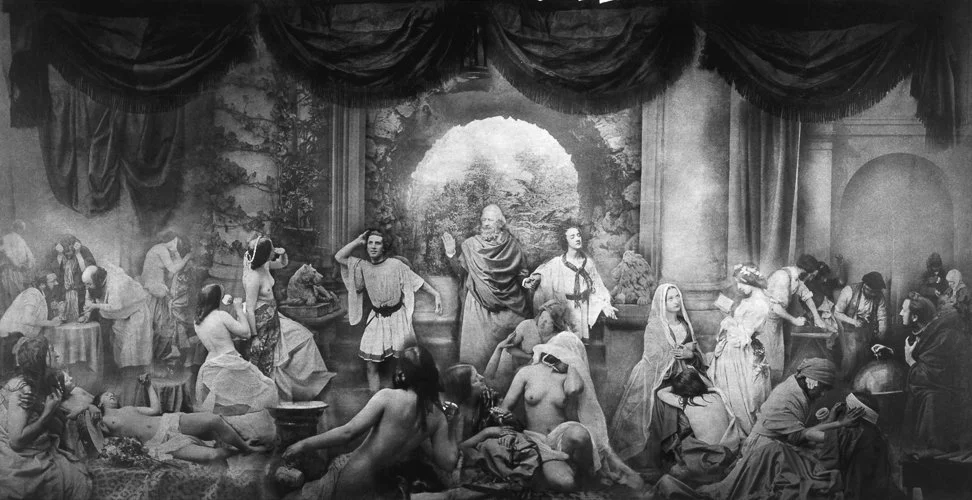
Oscar Gustave Rejlander's The Two Ways of Life (1857) — assembled from over thirty separate negatives into a large allegorical tableau showing a young man choosing between virtue and dissipation — is generally cited as the first major work of photographic combination printing. It also looks like a pretty good night out. Its technical achievement was considerable: the seamless integration of so many separate elements, each separately lit and posed, demanded extraordinary skill in the darkroom as well as at the camera. Rejlander presented the work to Queen Victoria at the Manchester Art Treasures Exhibition, where it was both admired and condemned — some critics objecting to the nudity among the allegorical figures, others questioning whether the construction of images from multiple sources was legitimate photography at all. The debate has never entirely ended.
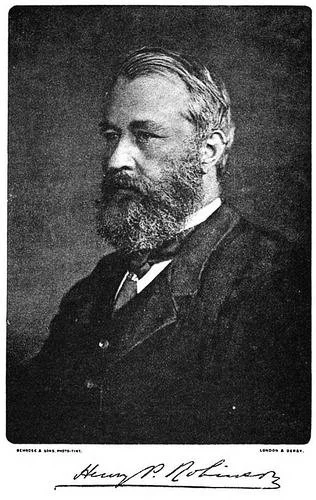
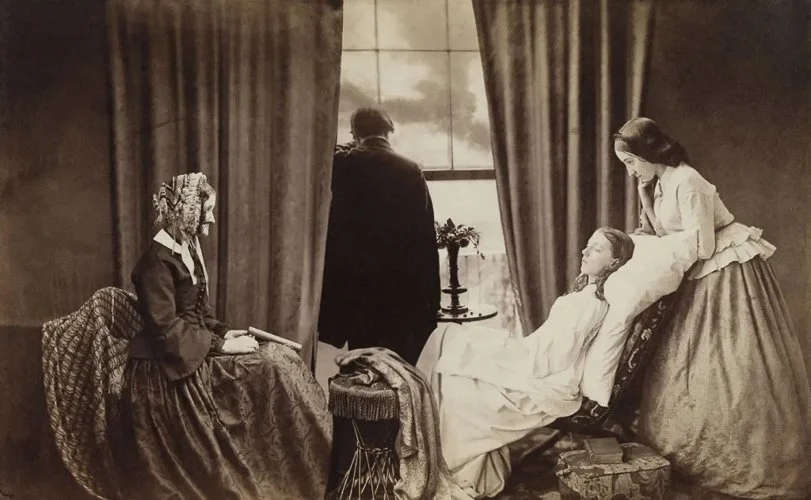
Henry Peach Robinson's Fading Away (1858), assembled from five separate negatives, depicted a young woman dying of consumption, surrounded by mourning family. It provoked considerable controversy on the grounds that it used the photographic medium — commonly assumed at the time to record only what actually existed before the lens — to depict a scene that had been staged and assembled from separate sittings. Robinson subsequently published Pictorial Effect in Photography (1869), articulating an aesthetic theory that positioned the photographer as an artist who assembled reality rather than merely recording it. His work represents the first systematic defence of image manipulation as artistic practice.
The figure of Abraham Lincoln provides the earliest documented case of politically motivated photographic composite. A portrait widely circulated in the United States around 1860 — later used in painted and engraved portraits of Lincoln — transposes Lincoln's head onto the body of John C. Calhoun, the South Carolina senator and pro-slavery theorist. The original Calhoun daguerreotype was well known; Lincoln's head, taken from a Matthew Brady photograph, was substituted in a composite print. The manipulation was not immediately apparent to contemporary viewers, and the image circulated as a Lincoln portrait for years. The work is anonymous; the intention behind it — whether political, commercial, or merely pragmatic — is unknown.
Dodging, Burning, and the Darkroom as Performance Space
Within the darkroom, the techniques of dodging and burning were developed as practical methods for managing the tonal inequalities inherent in early photographic media. Dodging — holding back light from a part of the paper during the enlarger exposure, typically by interposing a hand or a shaped card attached to a wire — lightened areas that would otherwise print too dark. Burning — giving additional exposure to specific areas after the main exposure — deepened shadow and added detail to highlight regions.
These techniques transformed the darkroom into something closer to a performance space. Each print required the photographer to work quickly, precisely, and from memory or careful notes about what the negative demanded. No two prints were necessarily identical. The physical skill involved — maintaining the correct rate of movement to avoid visible boundaries, memorising exposure times, developing an intuitive sense of when a print had received enough — was cumulative, built up over hundreds of sessions, and was not transferable between practitioners without significant training. The darkroom print, in this sense, was not a mechanical reproduction of a negative. It was a skilled artefact, analogous in some respects to a musical performance from a written score.
The Zone System
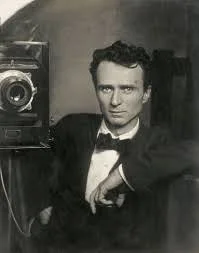
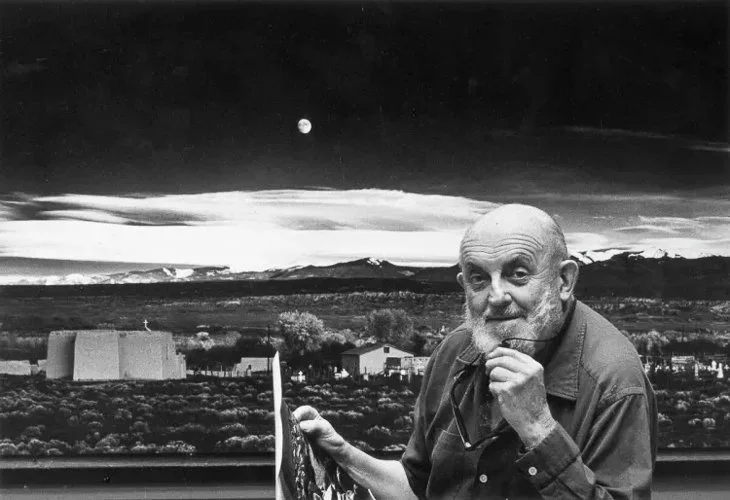
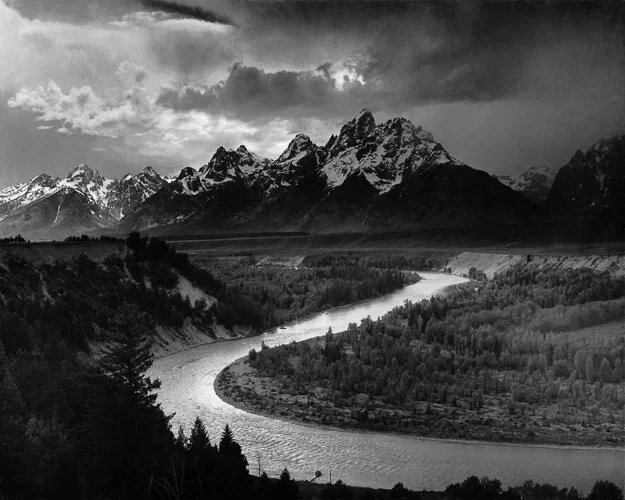
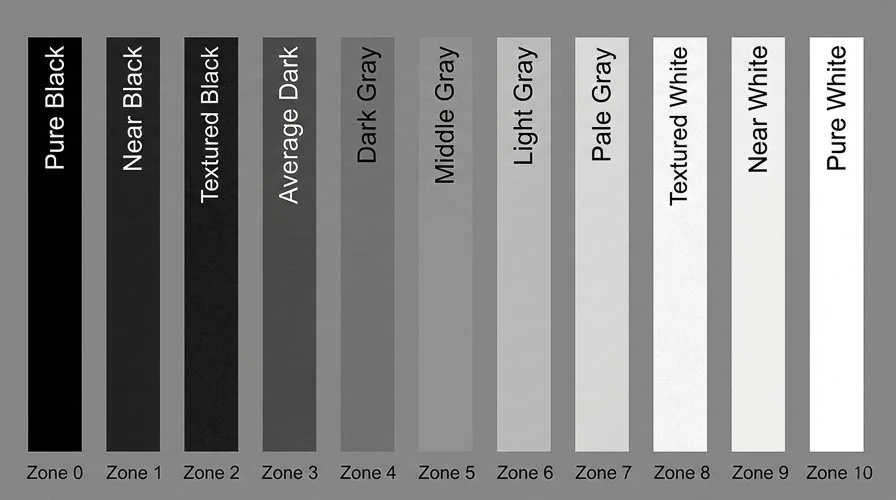
The clearest theoretical articulation of the darkroom as a space of creative interpretation — rather than mere mechanical processing — came from Ansel Adams and Fred Archer, who developed the Zone System around 1940 at the Art Centre School in Los Angeles. The System divided the tonal range of a photographic image into eleven zones, from Zone 0 (pure black, no paper texture) to Zone X (pure white, no detail), and provided a method for relating those zones to specific reflected light values measured at the subject. The photographer could, by adjusting development time and exposure, place any subject tone at any position in the final print's tonal scale, with a high degree of predictability.
Adams articulated the underlying philosophy in a formulation that has been widely quoted and occasionally misattributed: the negative is the score, the print is the performance. Whether or not these precise words are authentic, the sentiment is central to Adams's published methodology. The negative recorded information; the print expressed an interpretation of that information. The photographic process was not merely reproductive but compositional. This idea — that capture and interpretation are distinct acts, each with its own creative logic — would resurface, decades later, as the philosophical justification for RAW file processing in digital photography.
Jerry Uelsmann and Post-Visualisation
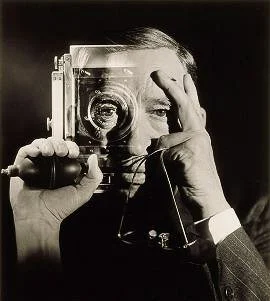
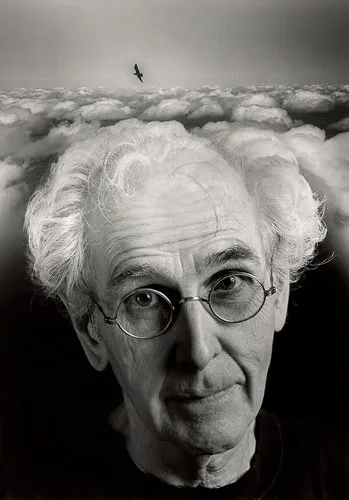
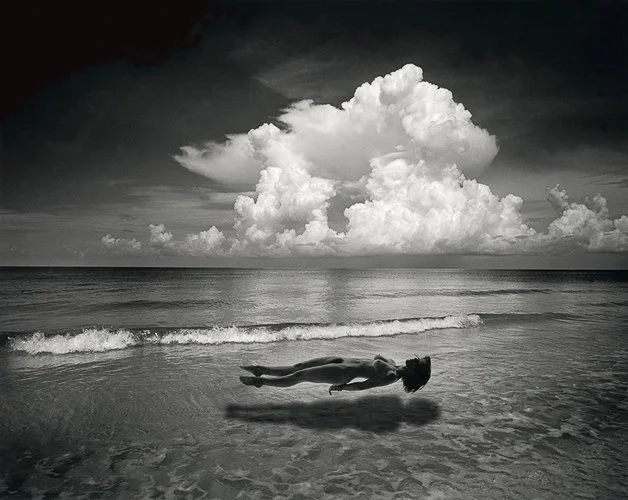
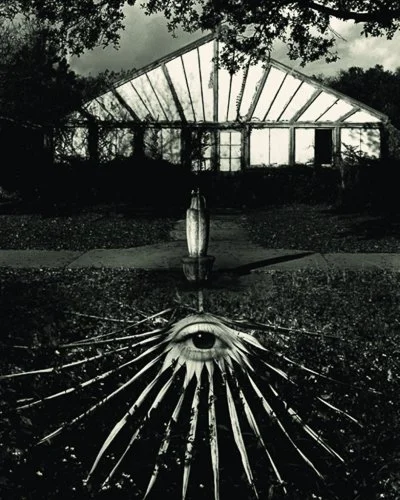
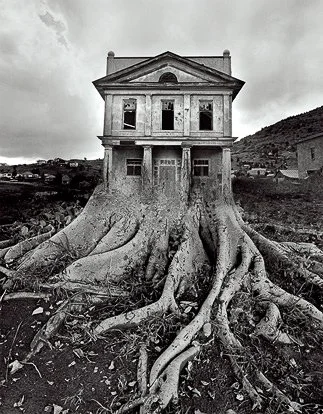
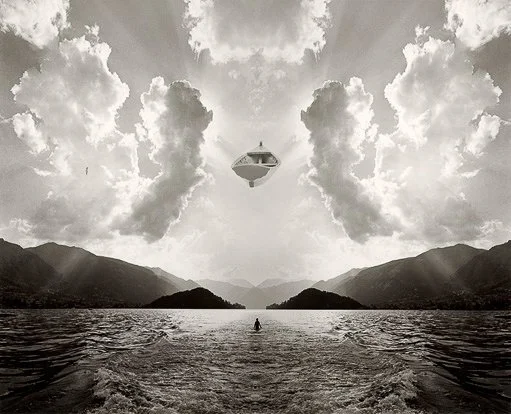
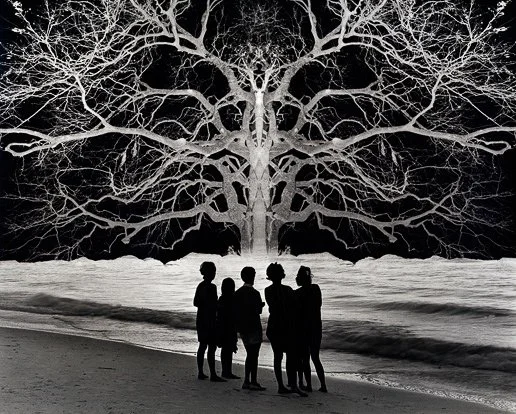
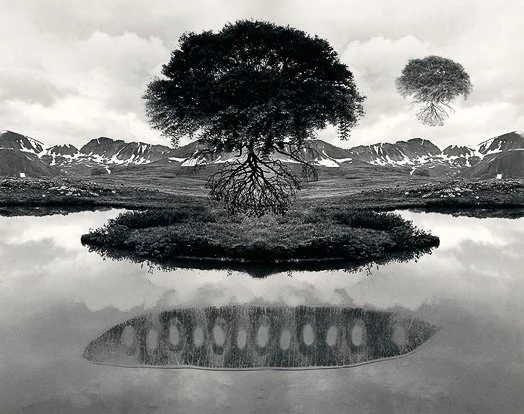
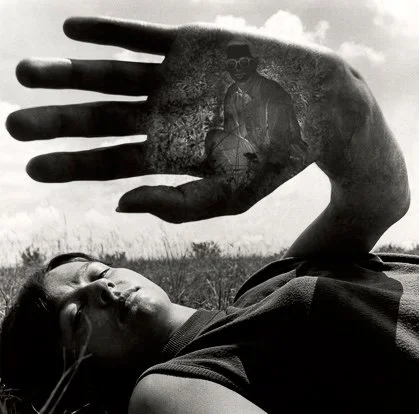
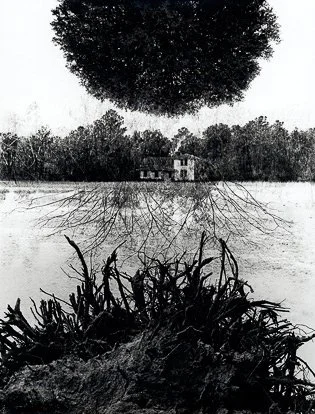
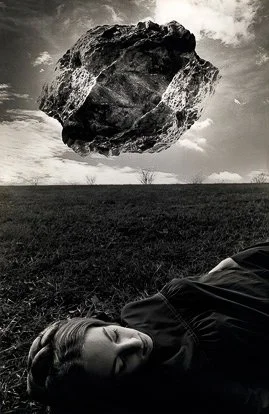
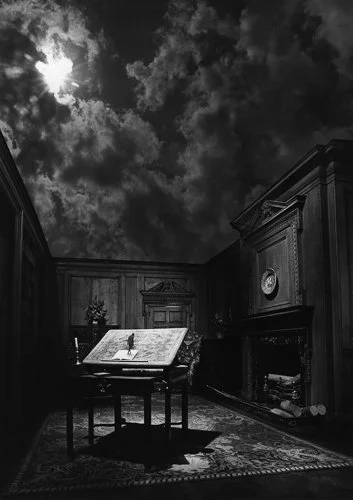
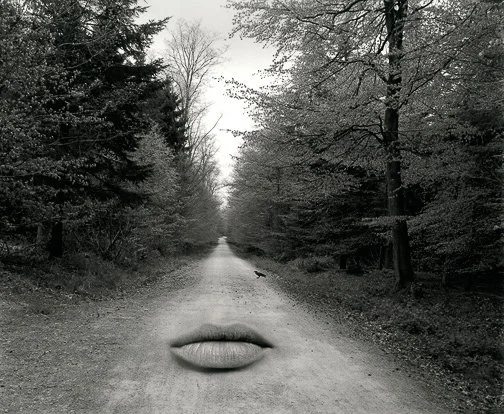
No account of the darkroom as a creative medium would be complete without acknowledging Jerry Uelsmann, the American photographer who, from the early 1960s, developed an extraordinary practice of photomontage using multiple enlargers working in sequence — sometimes as many as twelve — to combine elements from separate negatives onto a single sheet of paper. The results were seamless, surreal, and technically demanding to a degree that few practitioners ever mastered.
Uelsmann's theoretical contribution was the concept of 'post-visualisation': a deliberate inversion of Adams's pre-visualisation, in which the creative process was understood to begin at the camera. For Uelsmann, the darkroom itself was where the image was made, the camera producing only raw material. His photographs — trees reflected in water, figures suspended in impossible landscapes, architectural and natural elements fused without visible seam — demonstrated that the darkroom could be a space of complete creative invention rather than skilled reproduction.
He remained committed to analogue processes throughout his career, resisting the digital tools that might have made his compositional goals easier to achieve. His significance in the history of image editing lies precisely in this paradox: his methods anticipated, in laborious analogue form, virtually every capability that Photoshop would later provide at the click of a mouse. The conceptual territory was already mapped. The digital revolution simply changed the cost of admission.
Manipulation, Propaganda & Ethics
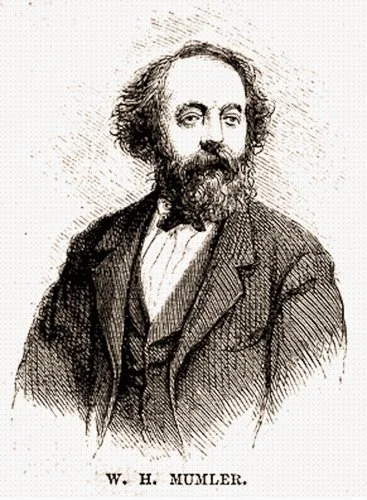
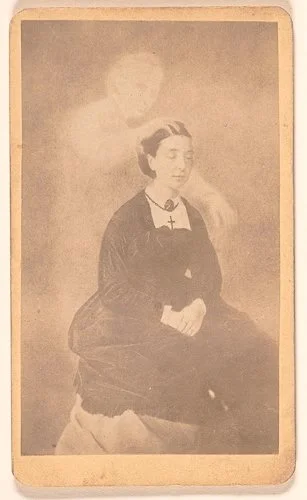
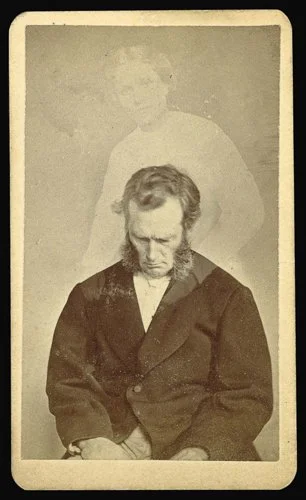
The same photographic technology that Rejlander and Robinson were using for artistic tableaux was being used by others for outright fraud. William Mumler, a Boston-based engraver with no formal photographic training, discovered in 1861 — apparently by accident, through the double exposure of a glass-plate negative — that he could produce portraits in which ghostly second figures appeared alongside the living sitter. He developed this into a commercial practice, advertising himself as a spirit photographer and attracting clients who wished to receive likenesses of their deceased relatives.
Spirit Photography and the Victorian Credulity
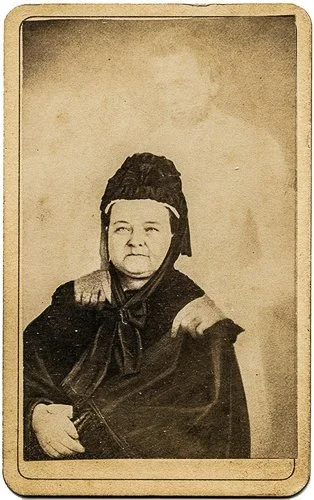
Mumler's most notorious portrait shows Mary Todd Lincoln, the former president's widow, with a ghost-like figure of Abraham Lincoln standing behind her with his hands on her shoulders. The image was taken sometime in the early 1870s. By then, Mumler had already faced legal proceedings: he was brought to trial in New York in April 1869, charged with obtaining money under false pretences. P. T. Barnum testified against him. The prosecution could not, however, prove beyond doubt that the images were fabricated by fraudulent means — which was technically difficult, given the plausible mechanisms of accidental double exposure — and Mumler was acquitted. He continued to practise spirit photography until his death in 1884.
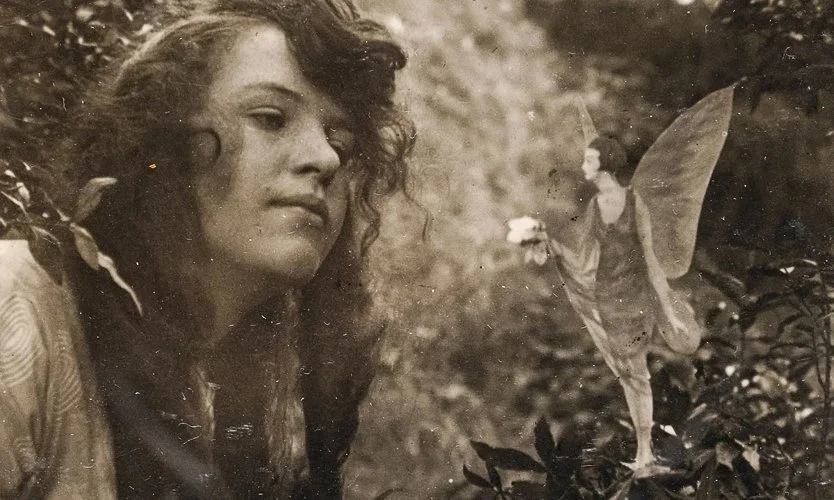
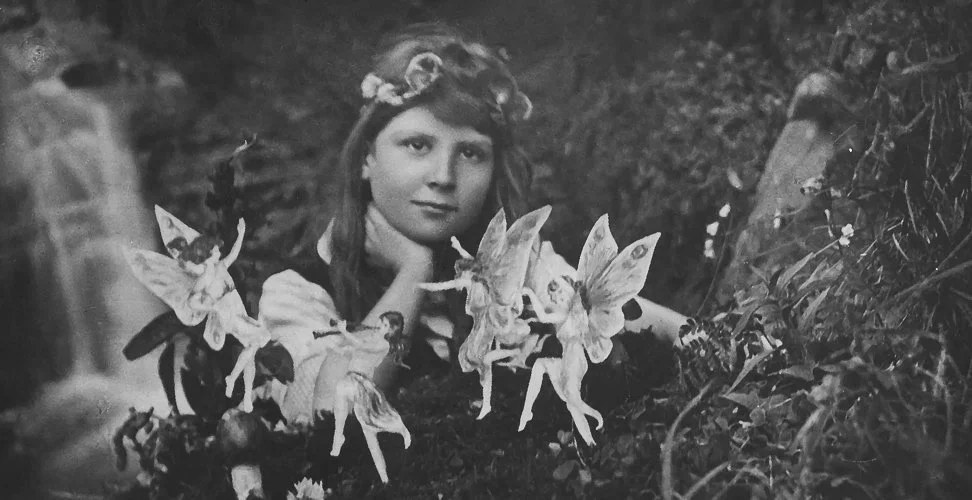
The Cottingley fairy photographs represent a later and, in terms of cultural impact, more significant episode in the history of photographic fabrication. In the summer of 1917, two cousins living in the West Yorkshire village of Cottingley — Elsie Wright, then sixteen, and Frances Griffiths, then nine — produced a series of photographs appearing to show them in the company of fairies and a gnome. The photographs attracted little attention initially, but came to the notice of the writer Arthur Conan Doyle, who used them to illustrate an article in the Christmas 1920 edition of The Strand Magazine and subsequently published The Coming of the Fairies (1922), treating the images as genuine evidence of supernatural entities.
The techniques involved were, by later analysis, straightforward: the fairies were paper or card cutouts, probably based on illustrations from Princess Mary's Gift Book (1914), propped against the grass with hatpins and photographed alongside the girls. The exposures are technically unremarkable. That the images fooled Doyle — who had written the most celebrated detective fiction of his era — is less a testament to their quality than to the strength of his prior beliefs. In 1983, both Elsie Wright and Frances Griffiths finally admitted in an interview published in The Unexplained that the photographs had been fabricated; Frances maintained until her death that the fifth photograph, taken in 1920, was genuine.
John Heartfield and Photomontage as Weapon
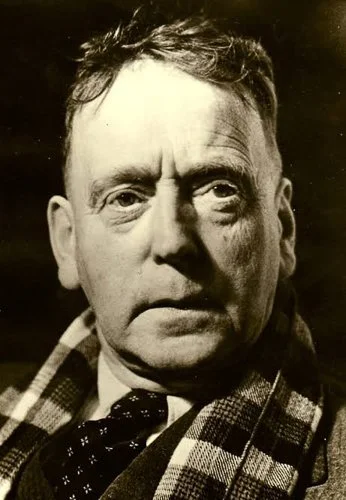
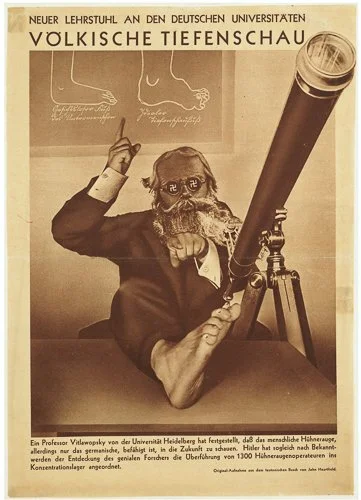
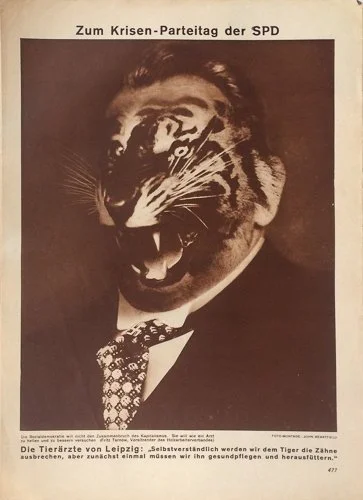
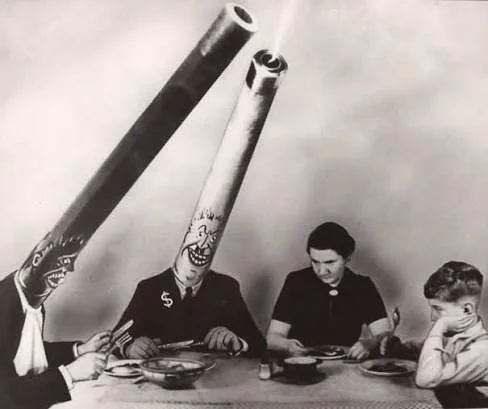
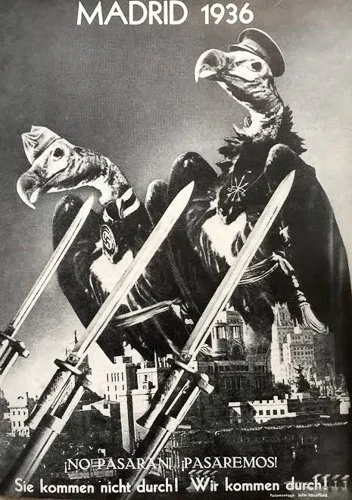
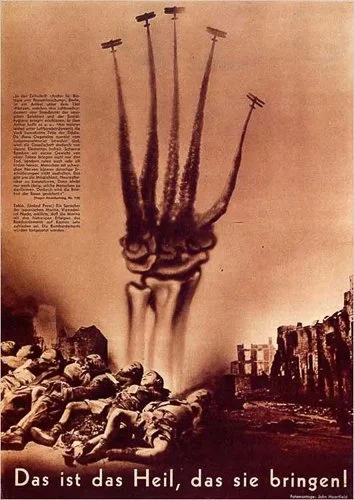
While the Cottingley fairies represent photographic fabrication in the service of credulous yearning, the work of John Heartfield (born Helmut Herzfeld; 1891–1968) represents its deployment as explicit political instrument. Heartfield was a founding member of Berlin Dada and a committed communist who developed the photomontage — a technique of cutting and reassembling photographic elements pioneered in Berlin in the years around 1920 — into a form of political satire of unusual directness and power.
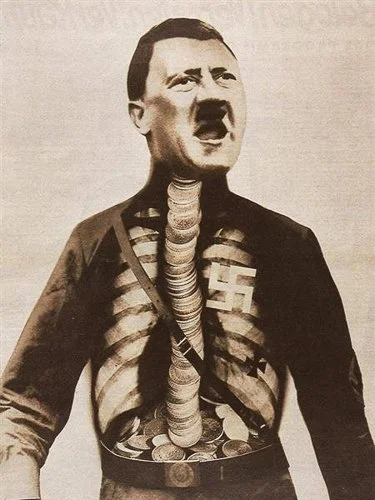
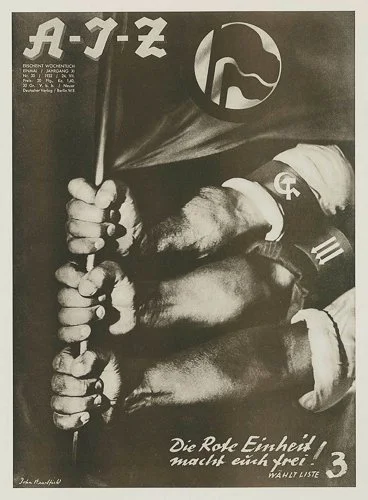
From the early 1930s, as the Nazi Party consolidated power in Germany, Heartfield produced a succession of covers for the Arbeiter-Illustrierte-Zeitung (AIZ), the workers' illustrated newspaper, that used photographic fragments assembled into hallucinatory, violently logical compositions. Adolf the Superman: Swallows Gold and Spouts Junk (1932) x-rayed Hitler's torso to reveal a column of gold coins descending to his stomach and a swastika where his spine should be. As in the Middle Ages... So in the Third Reich (1934) superimposed a figure crucified on a swastika over a medieval torture scene. The images were understood by Heartfield's audience as montage — their artificiality was the point — but their photographic components gave them a visceral authority that drew-illustration could not match.
Heartfield escaped to Czechoslovakia in 1933 and continued his work until the German occupation in 1938, at which point he fled to Britain. His work demonstrates that photographic manipulation is not inherently deceptive. When the artificiality is declared — when the viewer is invited to read the image as a constructed argument rather than an evidential record — the manipulation becomes a rhetorical act rather than a fraudulent one. The distinction between Heartfield's montages and the propaganda images produced by the Soviet state at the same period is precisely this: Heartfield's images announced themselves as images. Stalin's retouchers worked to ensure their work was undetectable.
Stalin's Retouchers
No history of image manipulation can proceed far without confronting the systematic photographic falsification practised by the Soviet state under Stalin. This was not incidental or occasional manipulation but an organised, institutionalised practice: the erasure from official photographic records of individuals who had been executed, imprisoned, or otherwise removed from political favour.
The case of Nikolai Yezhov is the most extensively documented. Yezhov was head of the NKVD — the Soviet secret police — and the chief operational architect of the Great Terror of 1936–38, during which approximately 750,000 people were shot and millions more sent to labour camps. He was arrested in April 1939, tried in secret, and executed in February 1940. Almost immediately, the state photographic apparatus began the systematic removal of his image from official records. The most famous instance involves a photograph taken on the banks of the Moscow–Volga Canal, in which Stalin and other officials walk with Yezhov in clear view at Stalin's right side. In the retouched version, subsequently published and widely reproduced, Yezhov has been replaced by an apparently unremarkable section of canal wall. The retouching is skilled but visible on close examination; the visual logic of the canal bank has been subtly disturbed by the removal.
Yezhov was not alone. The Soviet archive was populated by an ever-shifting population of officially disappeared persons — Old Bolsheviks, military commanders, party officials, cultural figures — whose images were progressively removed from group photographs, trimmed from official portraits, and painted over on public murals. The work was carried out by staffs of skilled retouchers, working from lists of names and faces and applying their craft to photographic prints, glass plates, and the printing blocks of encyclopaedias and official histories. The encyclopaedias themselves were subject to a peculiar supplementary protocol: subscribers were periodically sent replacement pages to cut into volumes, with instructions to remove and destroy the pages bearing the names and portraits of the newly disgraced.
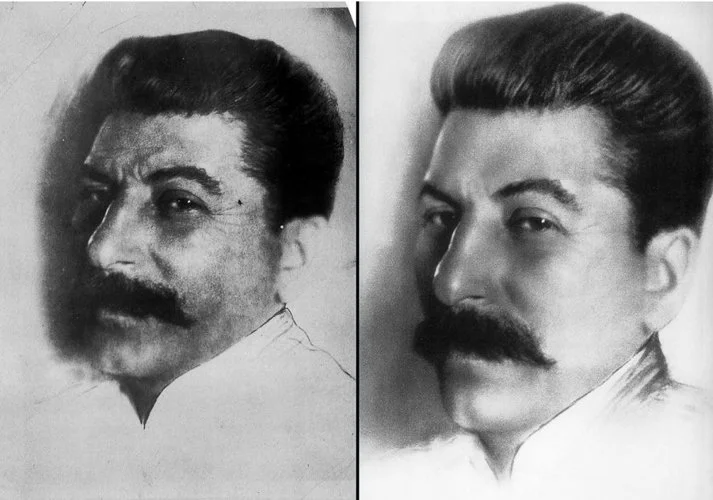
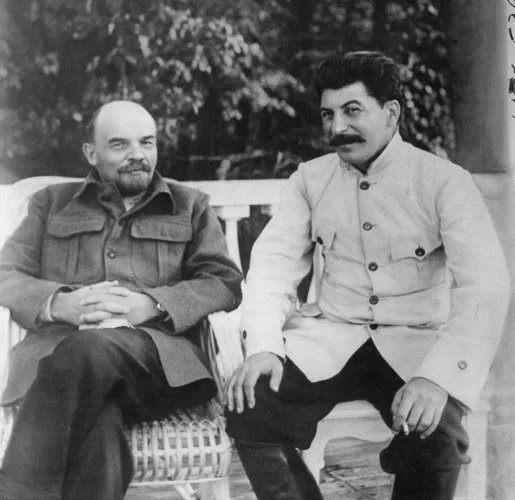
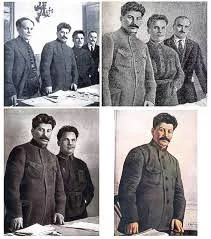
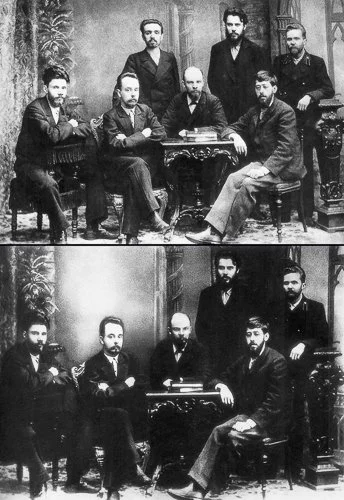
A parallel and earlier episode concerns the manipulation of photographs depicting Lenin and Stalin together. Following Lenin's death in 1924, and during the subsequent struggle for succession, images of the two men together were altered to suggest a closer political relationship than contemporaneous evidence supported. Lenin had, in fact, written in a confidential letter to the Party Congress in 1923 that Stalin was 'intolerably rude' and should be removed from the position of General Secretary — a letter suppressed for decades. The retouching of photographs to portray Lenin as endorsing Stalin was one element of a broader programme of historical revision. The Metropolitan Museum of Art's collection includes documented examples of such images, in which Stalin's complexion has been smoothed, his stature increased relative to Lenin, and compositional elements adjusted to imply greater equality and warmth between the two men.
David King's The Commissar Vanishes (1997) is the definitive study of this material, tracing the progressive alterations made to official Soviet photographs across the Stalin period and demonstrating the cumulative effect of systematic erasure on historical memory. King, who spent decades collecting original Soviet photographic materials, found instances in which the same image had been altered in different ways in different editions of the same official publication — each alteration reflecting a different moment in the political fortunes of the individuals depicted. The archive, he showed, was not a record of the past but a continuously revised instrument of the present.
The Ethical Thread
The Stalin example raises a question that recurs throughout the history of image editing, and to which no entirely satisfying answer has been found: when does photographic manipulation become falsification, and when does falsification become harm? Heartfield's montages, designed to satirise and expose, were as deliberately unreal as any image produced under Stalin's direction. The difference lies in authorial intent, audience knowledge, and the political use to which the image was put.
Press photography developed its own ethical standards across the mid-twentieth century, in part as a response to the documented abuses of the previous decades. The central proposition — that a news photograph should represent what a photographer actually witnessed — was articulated in the editorial standards of the major wire services by the 1940s and had become formalised by the 1970s. These standards permitted certain darkroom adjustments (dodging, burning, cropping) on the grounds that they merely managed what the medium already contained, while prohibiting the addition or removal of elements on the grounds that these misrepresented reality. The line between permissible and impermissible was always, and remains, contested.
The Digital Revolution
The technology that would eventually render photographic film commercially irrelevant was invented at Bell Laboratories on 17 October 1969, when Willard Boyle and George Smith conceived the charge-coupled device (CCD) — a semiconductor structure capable of transferring electronic charges along a surface in a controlled sequence, and, critically, of converting incoming light into electrical charges that could be read out as an image signal. The Nobel Prize in Physics was awarded to Boyle and Smith in 2009, forty years after their invention. By 1974, Fairchild had commercialised the first two-dimensional CCD array — 100 × 100 pixels — and the foundations of digital imaging were in place.
The CCD and the Electronic Image
Michael Francis Tompsett produced the first colour digital photograph using CCD sensor technology in 1972, demonstrating that the principle could be extended to colour capture. Steven Sasson, a twenty-four-year-old electrical engineer at Eastman Kodak, translated these components into the first self-contained portable digital camera in December 1975. It weighed 3.6 kilograms (approximately eight pounds), used a Fairchild 100 × 100 pixel CCD sensor to capture black-and-white images at 0.01 megapixels, and stored each image on a digital cassette tape after a process that took twenty-three seconds. The camera had no rear screen; images were reviewed by connecting a playback unit to a television.
The institutional reaction at Kodak was, by multiple accounts, sceptical to the point of hostility. The company derived approximately eight billion dollars per year from film sales and processing. Sasson's prototype was classified as a proprietary development; his findings were not published; and the camera was presented to management as an interesting curiosity with no foreseeable commercial application. The irony — that Kodak suppressed the invention that would eventually bankrupt it — is well established in the historical record.
Photoshop and the Digital Darkroom
The origin story of Adobe Photoshop has become one of the canonical narratives of the digital age, and it is, for once, a story that improves on acquaintance with the facts. Thomas Knoll, a doctoral candidate in computer vision at the University of Michigan, wrote a program in 1987 to display greyscale images on a monochrome bitmap monitor — a capability his Macintosh Plus lacked. When he demonstrated the program to his brother John, who was working at George Lucas's Industrial Light & Magic, John recognised its commercial potential and persuaded Thomas to develop it into a more comprehensive image-editing application.
After approaches to several companies proved unproductive, John Knoll reached an agreement with Barneyscan, a Berkeley, California-based manufacturer of desktop colour scanners. Barneyscan saw that their high-quality 24-bit scanner — which could digitise 35mm slides and colour negatives with genuine professional fidelity — was commercially limited without software capable of doing anything useful with the resulting image files. The Knolls' program, in version 0.87, was bundled with Barneyscan scanners under the name Barneyscan XP. Approximately two hundred copies were shipped in this form in 1989. The software introduced histogram adjustment and gamma correction to desktop computing for the first time in an accessible form, and it attracted more attention than the scanner it accompanied.
Adobe's art director Russell Brown encountered Photoshop at a demonstration in 1988 and became its most enthusiastic internal advocate. Adobe licensed the software from the Knoll brothers — an agreement, not a purchase; the brothers retained royalty rights — and released Adobe Photoshop 1.0 in February 1990 for the Apple Macintosh. The initial market was scientific imaging and the prepress industry: at $895, it was not priced for casual use. Adobe did not purchase outright ownership of the software until 1995, by which point Photoshop had become the dominant image-editing application in the world.
The conceptual breakthrough that Photoshop introduced — and which was formalised progressively across subsequent versions, with editable layers arriving in Photoshop 3.0 in 1994 — was the separation of editing from irreversibility. Darkroom work was committed: dodging a print, or applying additional exposure, physically altered the paper. The result was permanent. The layering system, conceptually borrowed from the celluloid overlays used in animation production, allowed edits to be stacked, individually modified, hidden, and discarded without affecting the underlying image data. The term 'non-destructive editing' may have been coined somewhat later, but the principle was present from the earliest versions of the software. Gerard Holzmann of Bell Labs had already coined the phrase 'digital darkroom' to describe the emerging practice of software-based image adjustment; Photoshop gave that darkroom its definitive set of tools.
The hardware required for serious digital imaging work in the early 1990s was formidable. Sun workstations or high-end Macintosh systems, 24-bit colour display cards, calibrated CRT monitors with professional colour profiles, and SCSI storage arrays capable of handling the large file sizes of uncompressed colour images were collectively beyond the budget of all but well-funded studios, newspapers, and institutions. The democratic implications of the technology were apparent in principle but remained, for most of the decade, economically inaccessible.
JPEG and the Compression Revolution
The mathematics that would eventually make digital images transmissible over networks had been developed independently of the imaging industry. Nasir Ahmed, working at Kansas State University, published the theoretical basis for the discrete cosine transform (DCT) in 1972 — a mathematical technique for representing a signal as a sum of cosine functions of varying frequencies, and one which happened to be exceptionally efficient at compressing photographic data without introducing perceptible artefacts at moderate compression ratios. The DCT became the mathematical core of the JPEG standard, formalised by the Joint Photographic Experts Group in 1992.
JPEG compression allowed photographic images that would otherwise require several megabytes of storage to be represented in files of tens of kilobytes, at quality levels that were adequate for screen display and, at low compression settings, for print reproduction. The trade-off — a lossy compression algorithm that discards information on each save — introduced its own complications for professional use, but the practical effect was to make digital images transmissible via the internet and storable on the modest hard drives of early 1990s personal computers. Without JPEG, the transition from film to digital would have been considerably slower.
The Camera Hardware Transition
The consumer digital camera market developed through the 1990s in a series of recognisable stages. The Logitech Fotoman (1990), sold in the United States as the Dycam Model 1, captured monochrome images at 376 × 284 pixels and stored them in internal flash memory — a device of historical interest more than practical utility. Apple's QuickTake 100 (1994), produced in collaboration with Fujifilm, offered VGA-resolution colour photography at $749 and a storage capacity of eight images at full resolution. It was accessible and, within its limitations, functional; it was also clearly inadequate for professional use.
The Kodak DCS series, beginning in 1991, offered the first digital camera backs compatible with professional 35mm SLR bodies, addressing the professional photojournalism market. Early models were expensive, physically cumbersome, and limited in resolution, but they enabled photographers to transmit images electronically — via satellite phones, in field conditions — in ways that gave them competitive advantages in deadline-driven situations. The market found practical applications for digital imaging several years before the technology matched film on purely technical grounds.
The Nikon D1, announced in June 1999 at $5,499, is generally identified as the point at which digital SLR photography became genuinely competitive for professional use. With a 2.7-megapixel sensor (sources vary between 2.7 and 2.74 megapixels; Wikipedia records 2.7), continuous shooting at 4.5 frames per second, and compatibility with the full range of Nikon F-mount lenses already in professional service, it offered a combination of quality, responsiveness, and workflow advantages that made film's residual technical superiority — still real, at the high end — commercially irrelevant for news and sports photography.
The resistance to digital among portrait, landscape, and fine-art photographers was slower to dissolve. The 'clinical' aesthetic of early digital captures — their particular rendering of colour, their mechanical noise pattern, their different relationship to the tonal scale — was not merely a matter of unfamiliarity. Silver halide processes produced images with a proven archival stability of many decades; early digital storage media had no such track record, and the question of format obsolescence (could a hard drive from 1999 be read in 2050?) remains unresolved in ways that the photographic print does not.
The RAW File Revolution
The concept of RAW photography is more philosophically significant than its name suggests. A RAW file is not, technically speaking, an image. It is the raw output of a digital sensor — an array of luminance values recorded at the moment of capture, before any demosaicing, white balance adjustment, noise reduction, sharpening, or tonal curve has been applied. The in-camera processor of a digital camera performing JPEG capture applies all of these processes automatically at the moment of shutter release, baking the results permanently into the image file. RAW capture defers every one of these decisions to post-processing.
The analogy with analogue photography is direct and instructive. A JPEG capture is, in this respect, similar to buying a commercial print from a photo laboratory: the lab's machine has made all the processing decisions, and the result, whatever its qualities, cannot be substantially revised. A RAW file is closer to an undeveloped negative: the information is there, but the interpretation has not yet been made. Adjusting the white balance of a RAW file in post-processing — even to values wildly different from those intended at capture — introduces no quality degradation, because the colour interpretation was never written into the file. Adjusting the white balance of a JPEG resamples image data that has already been processed, with commensurate quality loss.
This distinction restored to photographers something analogous to what Adams's Zone System had offered analogue workers: the explicit separation of capture and interpretation as distinct creative acts. A landscape photographer shooting in difficult mixed lighting could capture a RAW file and decide later, at the desk, how to render the sky relative to the foreground. A portrait photographer could correct a problematic colour cast without losing highlight detail. A photojournalist in unpredictable lighting could expose for shadow retention, knowing that the highlights could be recovered in RAW processing.
The early history of RAW photography was, however, unnecessarily chaotic. Each major camera manufacturer developed its own proprietary RAW format: Canon's CRW (and later CR2, CR3), Nikon's NEF, Sony's ARW, Olympus's ORF. These formats were undocumented, or documented only partially, and required either manufacturer-supplied software or third-party reverse engineering to process. Photographers were hostage to manufacturer support decisions: if a camera manufacturer stopped updating its RAW processing software, older cameras became dependent on third-party converters of variable quality.
Adobe proposed a solution in 2004 with the introduction of DNG (Digital Negative) — an open, documented RAW format intended as an archival standard that any software developer could implement without licensing fees. The adoption of DNG by camera manufacturers was slow and partial; most major manufacturers continued to use proprietary formats, though some — including Leica and Pentax — adopted DNG as a primary or secondary format. DNG is now well established as an archival interchange format, if not yet as a universal capture format.
Adobe Camera Raw, introduced as a plug-in for Photoshop CS in 2003, provided professional-quality RAW processing integrated into an established workflow. Lightroom 1.0, released in January 2007, represented a more fundamental reconception: rather than treating RAW processing as a preliminary step before the 'real' work in Photoshop, Lightroom built its entire architecture around the non-destructive catalogue workflow. Images were imported and their original files were never modified; all adjustments were stored as a set of instructions that were applied to the original file only at the point of export. The concept of the virtual copy — an apparently separate image that shared its source file with others — allowed photographers to explore multiple interpretations of the same capture without any duplication of file data. Preset adjustments could be applied to hundreds of images simultaneously.
The practical effect was to democratise a set of workflows that had previously required considerable Photoshop expertise. Competent RAW processing did not require an understanding of Photoshop's layer system, selection tools, or adjustment layer architecture. It required, rather, an understanding of tonal response, colour temperature, and the relationship between capture data and intended output — skills closer in their logic to those of an analogue darkroom printer than to those of a graphic designer.
The philosophical implication was circular and satisfying. Digital photography had, in its early years, often been framed as a break from the interpretive tradition of analogue craft: faster, more immediate, less mediated. The RAW workflow reintroduced mediation — deliberately, as a feature rather than a limitation. Photographers who had never stood in a darkroom began to think, for the first time, like darkroom printers.
Mobiles & the Democratisation of Editing
The first commercially available camera phone was the Sharp J-SH04, released in Japan in November 2000, equipped with a 0.1-megapixel CMOS sensor and an in-built JPEG encoder. It produced images that were, by any meaningful standard, inadequate for photographic purposes; but it demonstrated the commercial viability of the combination, and the market responded with extraordinary speed. By 2003, Sharp's model had been succeeded by devices from Nokia, Samsung, and Sony Ericsson offering progressively higher resolutions, and the Japanese market had established the cultural habits — sharing images immediately, casually, without archival intent — that would define the global smartphone era a decade later.
The Nokia N95 (2007) is often cited as the first camera phone capable of producing results that were technically comparable, in limited conditions, to those of a low-end compact digital camera: five megapixels, Carl Zeiss optics, and autofocus. Its introduction coincided, almost exactly, with the launch of the original iPhone in June 2007.
The iPhone was not, at its launch, a technically superior camera device. Its two-megapixel camera was modest by comparison with contemporary competitors. Its significance lay elsewhere: in the App Store ecosystem, announced with the iPhone 3G in 2008, which created for the first time a commercial infrastructure through which third-party developers could sell software to run on a device that was in the pockets of tens of millions of people. The photographic applications that followed — including, critically, Instagram and Snapseed — created a new category of image editing: mobile-native, gesture-based, immediate, and designed for images that were viewed on small screens rather than printed at large formats.
Snapseed and the Mobile Editing Paradigm
Snapseed, developed by Nik Software and initially released for the iPad in June 2011 (iPhone version following in August of the same year), represented the first serious attempt to bring a professional-grade editing toolkit to mobile photography. The application's gesture-based interface — swiping vertically to select a parameter, horizontally to adjust it — was genuinely novel, and its range of tools, including a selective adjustment system that operated by placing control points on the image and adjusting by colour and tone similarity, went considerably beyond the filter-and-crop model that most mobile editors offered.
Google acquired Nik Software in September 2012 and released Snapseed for Android in December of the same year, making it freely available across both major mobile platforms. The Nik Collection, which had included professional-grade plug-ins for Photoshop and Lightroom — notably Silver Efex Pro for black-and-white conversion and Analog Efex Pro for film emulation — was subsequently made available without charge. The non-destructive 'Stacks' system introduced in Snapseed 2.0 (2015) brought a version of layered, revisable editing to the mobile platform, allowing individual adjustments to be revisited, modified, or deleted after the fact without repeating the entire editing process.
Instagram and the Filter as Cultural Currency
Instagram, launched in October 2010 and acquired by Facebook in April 2012, introduced a different relationship between editing and social meaning. Its filters — Valencia, Mayfair, Lo-Fi, X-Pro II — were not primarily tools for improving photographs in any technical sense. They were a shared visual vocabulary: a set of aesthetic signals whose function was partly stylistic and partly social. Applying a particular filter indicated membership in a community of users who valued that aesthetic; the edited image was a social act as much as a visual one.
The long-term cultural effect of Instagram's success was significant: it normalised the edited image as the default form of photographic sharing. The unfiltered, unedited snapshot — the direct output of a camera or phone — became the exception rather than the rule in social contexts. This normalisation had complex implications for questions of photographic authenticity. On the one hand, the widespread awareness that photographs were edited removed some of the naïve evidential authority the medium had claimed in its early history. On the other hand, it created new expectations of visual polish whose gap with reality could itself become a form of misrepresentation.
Computational Photography
Adobe Lightroom Mobile, launched in 2014, extended the professional RAW processing workflow to smartphones, enabling photographers to import, catalogue, and edit RAW files from camera systems on a device that would also synchronise automatically with their desktop catalogue. The gap between professional and mobile photographic workflows, which had seemed technically unbridgeable in 2009, had by 2015 become largely a matter of optical quality and sensor size.
The more fundamental shift, however, was taking place not in editing applications but within the capture process itself. Computational photography — the use of multiple captured frames, machine learning models, and on-device processing to produce images that no single frame could yield — had been developing since the mid-2000s in research contexts, but reached consumer awareness with two specific announcements.
Google Night Sight, released for Pixel phones in November 2018, demonstrated the principle most dramatically. In conditions of very low light, Night Sight captured a sequence of frames over an extended exposure window, aligned them to correct for camera movement and subject motion, and merged them using a neural network trained to distinguish signal from noise. The results exceeded what any camera with a lens of comparable size could achieve by conventional optical means. The image presented to the user was not a single exposure but the output of an alignment-and-fusion process involving dozens of individual captures.
Apple's Deep Fusion, introduced with iOS 13 in September 2019, applied a related but differently prioritised process: the simultaneous capture of several frames at different exposures, processed by the Neural Engine to optimise texture detail and noise characteristics at a pixel level, prioritising different exposures for different regions of the image based on their local tonal characteristics. The exposure decision, in this system, was not made by the photographer at the moment of capture. It was distributed across a computational process that made it hundreds of times, simultaneously, and combined the results.
The critical conceptual shift here is that computational photography does not merely edit images after the fact: it makes editorial decisions during capture in ways that are wholly invisible to the photographer and entirely inaccessible to any form of post-processing review or revision. The image that appears on the screen is already the output of an interpretive process — not merely a record of what was in front of the sensor, but a constructed synthesis of what the camera's software has determined should be visible given the available data.
Portrait mode on modern smartphones exemplifies the same logic in a different domain. Background blur — the shallow depth of field associated with large-aperture optics in portrait photography — is generated, in portrait mode, by depth mapping using multiple lenses or time-of-flight sensors, followed by a segmentation algorithm that separates subject from background, followed by a simulated Gaussian blur applied to the background layer. The result resembles, and is intended to resemble, the optical effect of a wide-aperture lens. But it is not that effect. It is a simulation of that effect — an image that has been edited to appear as though it were captured with equipment it was not captured with.
The Moon and the Line of Truthfulness
The Samsung moon controversy of 2023 brought the implications of computational photography into unusually sharp public focus. Samsung's Galaxy S23 Ultra offered a Space Zoom feature capable of producing apparently detailed images of the moon at 100× magnification. In March 2023, a Reddit user conducted a controlled experiment: they photographed a blurred, unrecognisable image of the moon on a screen and found that the Samsung's zoom algorithm appeared to add plausible-looking lunar surface detail — craters, ridges, texture — that was not present in the source image. The experiment attracted widespread attention, and Samsung subsequently confirmed that its 'Scene Optimiser' used an AI model trained on lunar imagery to enhance moon photographs, applying trained detail to what the optical system could not resolve.
The episode was significant not because it was unique — computational photography routinely makes inferences and additions that exceed the optical data available — but because it made visible, in an unusually clear case, the nature of those inferences. The Samsung camera was not recording the moon. It was, in those cases, producing a statistically plausible representation of the moon based on training data. The distinction between recording and generating, which the digital revolution had already made increasingly blurry, had in this instance disappeared entirely.
The AI Editing Moment
The photographic editing tools of the pre-AI era, however sophisticated, shared a common characteristic: they operated on what the camera had captured. Dodging and burning redistributed tone within the existing image. Photoshop's healing brush cloned texture from one part of a photograph to replace another. Lightroom's gradient filters adjusted exposure across a defined region. Even the most elaborate compositing workflow in Photoshop — combining ten separate images into a single seamless scene — began with actual photographic captures. The image content was, ultimately, referential.
From Adjustment to Generation
Generative AI tools introduced in the early 2020s broke this constraint. Adobe Firefly's generative fill, released in 2023, enables a user to select a region of a photograph and replace it with photographic-quality content generated by a diffusion model in response to a text prompt. A sky can be replaced not with another photographed sky, as in Luminar's sky replacement tool, but with a sky that has never existed. A person can be removed from a scene and the background seamlessly reconstructed. Elements can be added — people, objects, architectural features — that were never present in front of the lens.
Google's Magic Eraser and, subsequently, Magic Editor, applied the same generative capability to smartphone editing: removing unwanted objects, repositioning subjects, extending backgrounds beyond the original frame boundary. The tools were presented as convenient, time-saving features. They were also, in a strict sense, the introduction of content generation into a workflow that had previously been restricted to content adjustment.
Text-to-image models — Midjourney, DALL-E, Stable Diffusion — raise a more fundamental question. These tools produce photographic-quality images from text descriptions, with no camera, no subject, and no referential relationship to the physical world. They are not photography in any conventional sense of the term. But they produce images that, to an untrained eye, are indistinguishable from photographs. The question of whether this constitutes a new medium, a new tool for photographers, or the end of photography as a distinct practice is actively debated and genuinely unresolved. Photographers and photography institutions are themselves divided.
AI-native editing environments — tools designed from the ground up around large language and vision models rather than treating AI as a feature added to existing workflows — are developing rapidly. The landscape of specific products is moving fast enough that any comprehensive product list will date within months; what can be said with confidence is that tasks that previously required substantial Photoshop expertise — complex masking and compositing, photorealistic retouching, style transfer — are being made accessible to non-specialists at a rate that mirrors, in compressed time, the democratisation that Photoshop itself represented relative to the professional darkroom.
Deepfakes and the Provenance Crisis
The ability to produce photorealistic images of people in situations they were never in, or saying things they never said, was identified as a potential problem — theoretically — as soon as the neural network architectures that enabled it became publicly understood in the mid-2010s. The release of accessible deepfake tools from 2017 onwards transformed this theoretical concern into a practical reality. The technical barrier to producing a convincing altered image of a real person fell dramatically; the barrier to distributing such an image, via social media at global scale, was essentially zero.
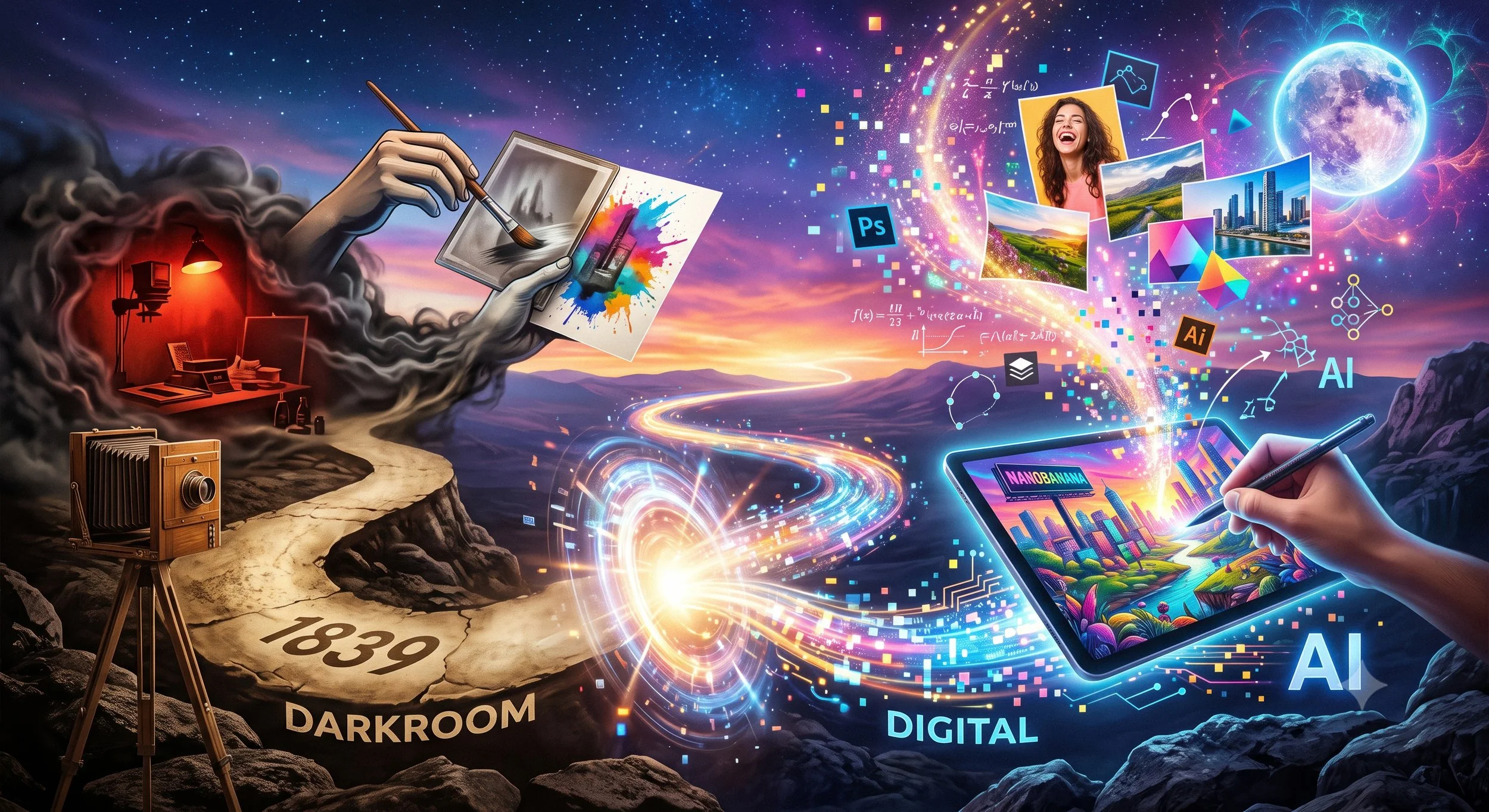
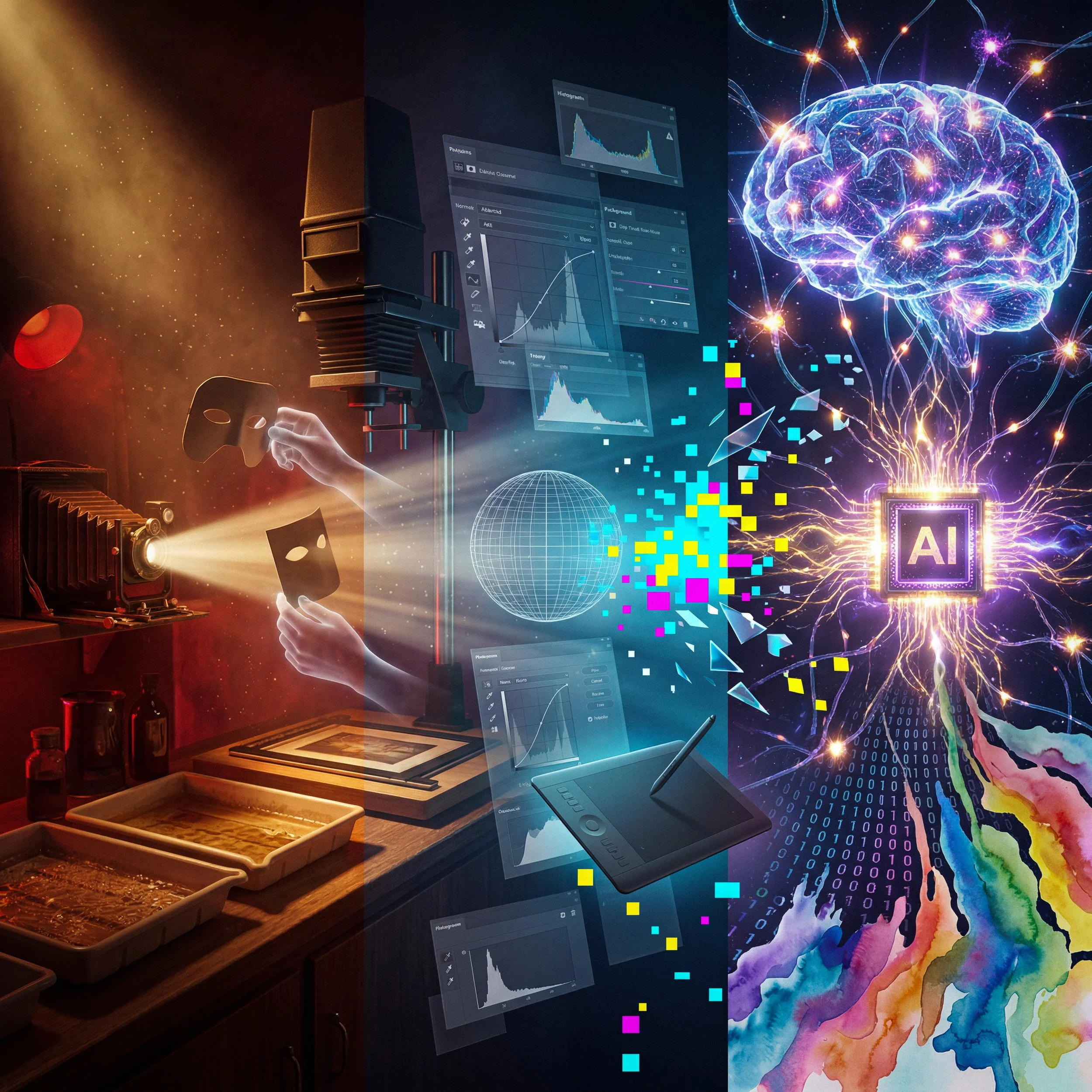

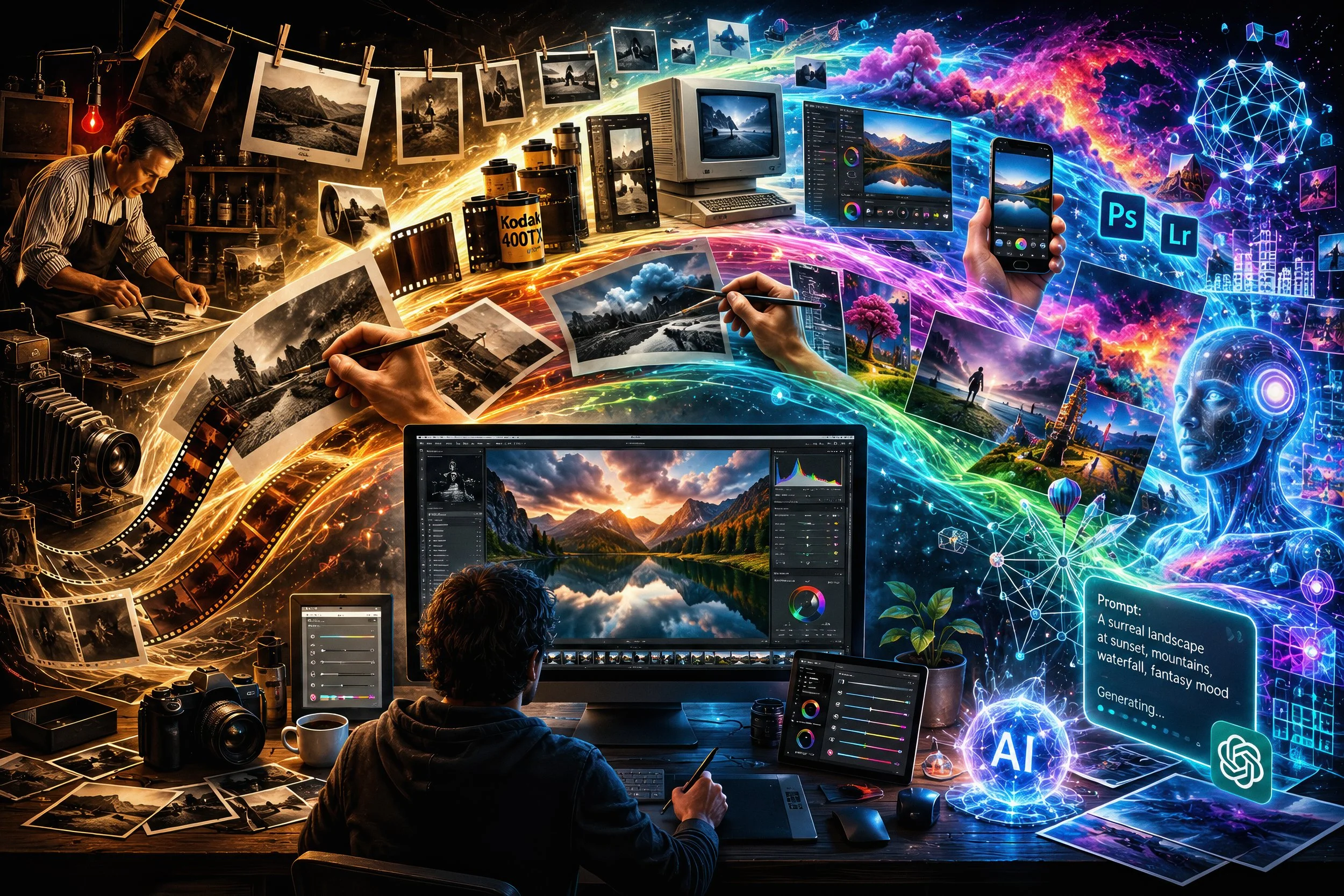
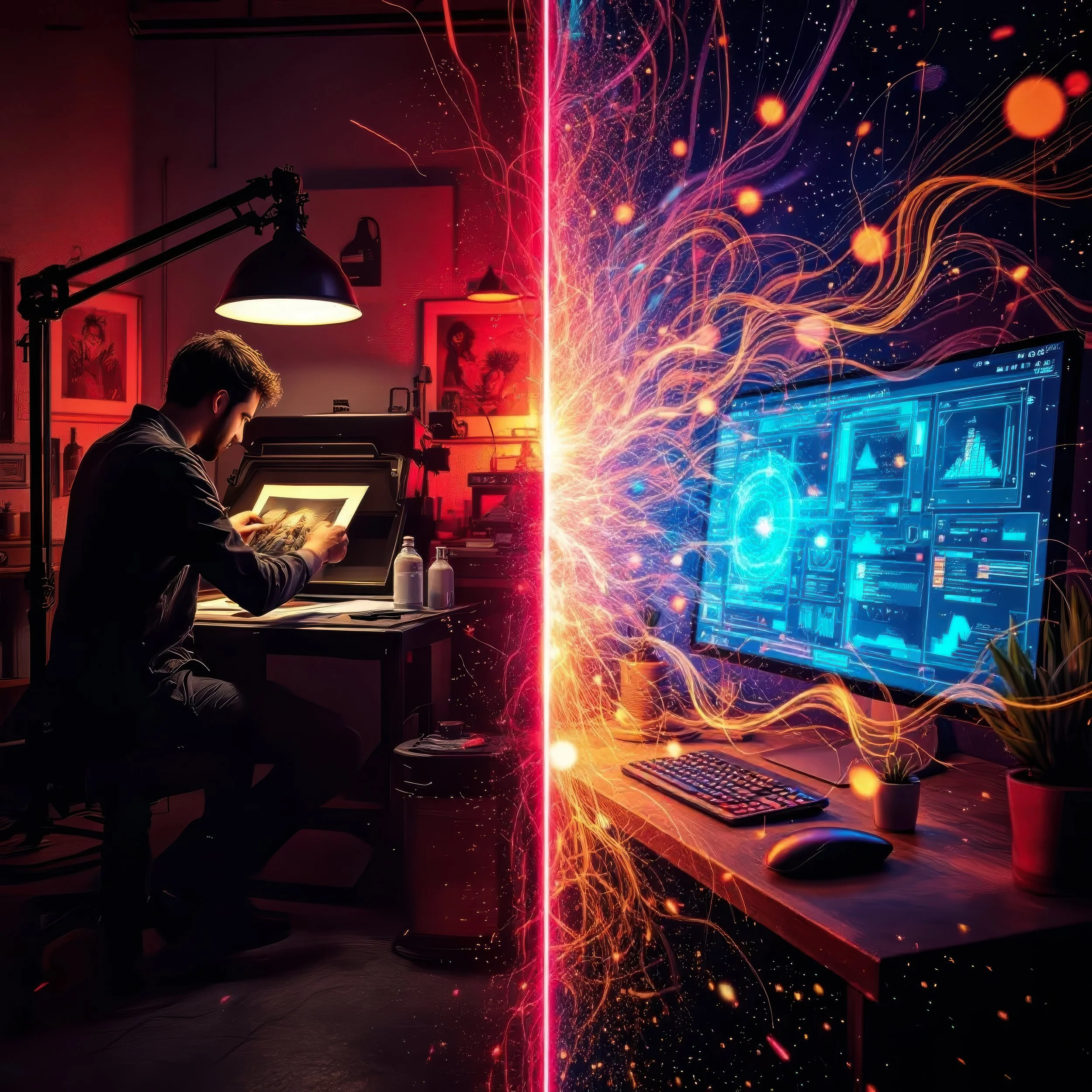
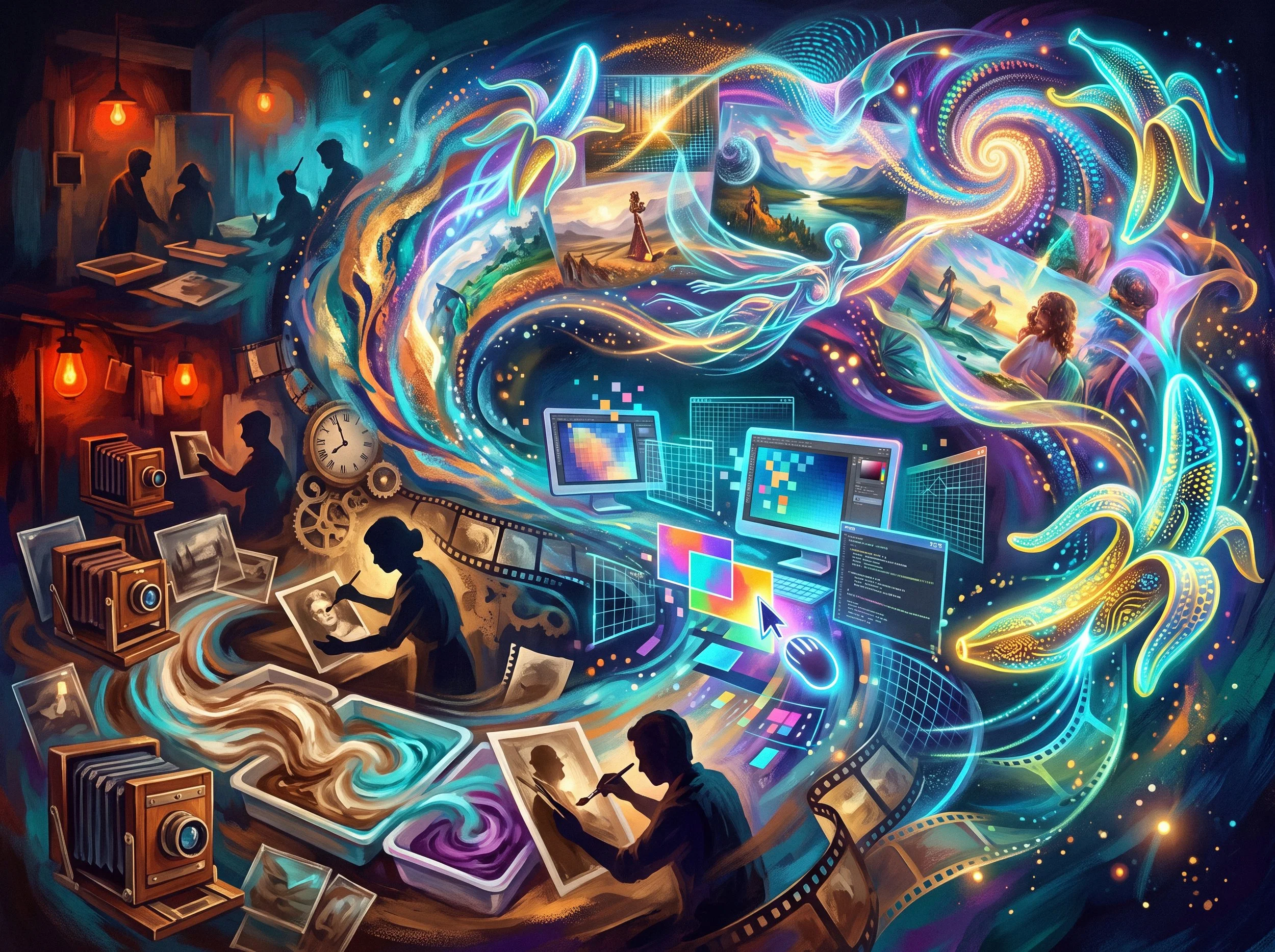
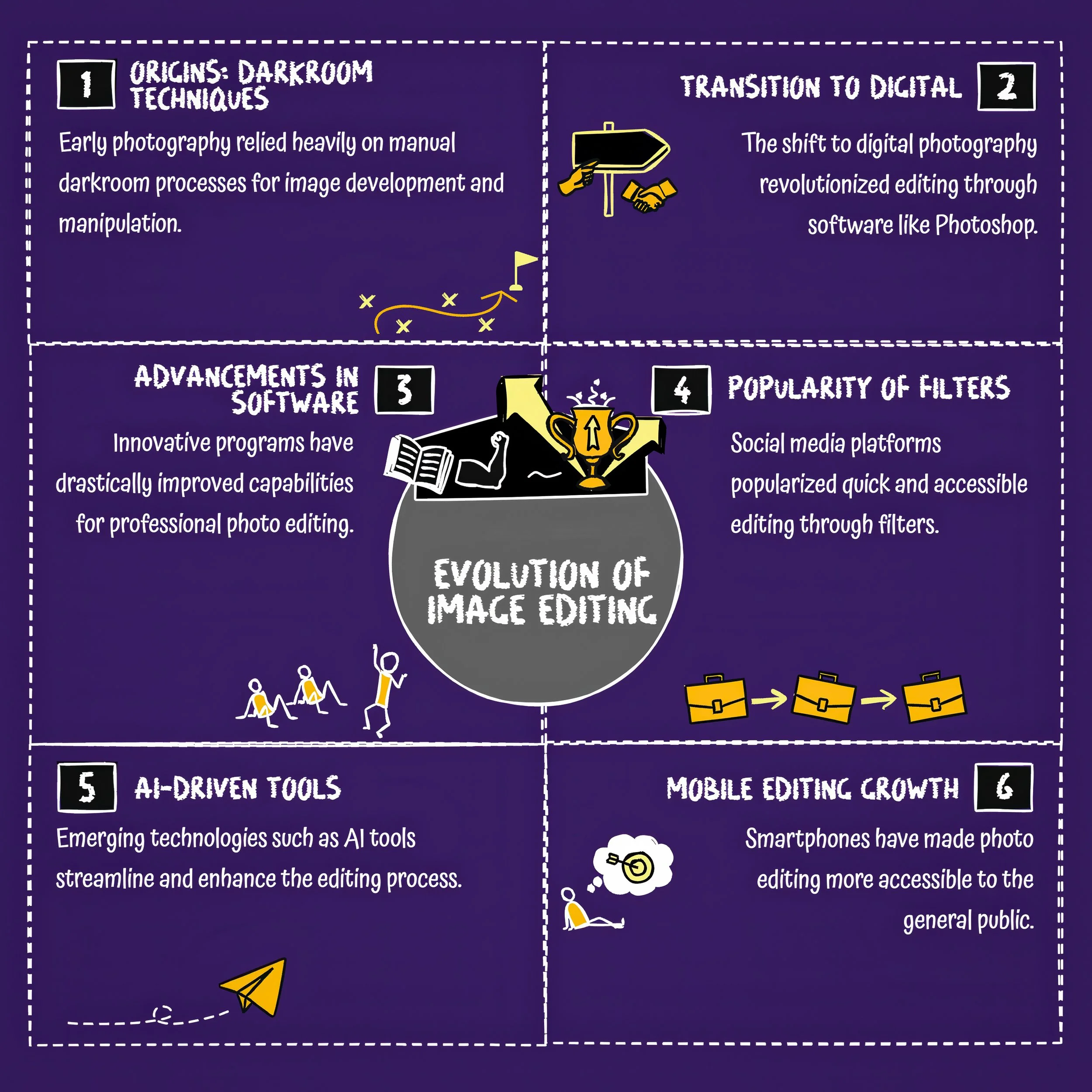

For photojournalism, the implications are acute. The evidential authority of the press photograph — its capacity, within the established conventions of documentary photography, to be treated as a record of something that actually happened — depends on a chain of custody from camera to publication that has traditionally been maintained by institutional practices: editorial review, photo editors who knew photographers personally, archiving systems that preserved metadata. None of these practices is technically difficult to circumvent in an era of generative AI.
In 2023, Reuters and the Associated Press both updated their editorial standards on AI-generated and AI-assisted imagery, in each case prohibiting the publication of AI-generated content as photojournalism and requiring explicit disclosure of any AI-assisted post-processing that altered the visual content of an image beyond conventional adjustment. These standards represent a practical attempt to maintain the distinction between the photograph as an evidential record and the image as a generative construction. Their enforceability, in an environment where the tools are freely available and the technical markers of AI generation are increasingly difficult to detect, is an open question.
The Content Authenticity Initiative
A technical response to the provenance problem has been developed, with considerable institutional backing, through the Content Authenticity Initiative (CAI) — a coalition founded by Adobe in 2019 and subsequently joined by the BBC, Reuters, Microsoft, Intel, Nikon, Canon, and numerous other organisations. The CAI's technical work is implemented through the C2PA (Coalition for Content Provenance and Authenticity) standard, which provides a protocol for attaching cryptographically signed metadata to image files, recording the capture device, editing software, editing actions, and identity of the creator at each stage of the image's production history.
The principle is straightforward: a C2PA-compliant camera records a cryptographic signature at the moment of capture; a C2PA-compliant editing application records any subsequent modifications; the resulting credential — a 'Content Credential' — can be verified by any compatible viewer, showing the image's complete provenance chain. The practical difficulties are considerable. C2PA compliance is not required of any device or platform; widespread adoption among consumer smartphone platforms, social media, and messaging applications has been slow; and the cryptographic signature attached to an image can, in principle, be stripped by anyone with technical knowledge. The system depends on a sufficient density of adoption to be useful, and that density has not yet been achieved.
The limitation is not primarily technical. It is economic and political: building provenance infrastructure into a photography ecosystem in which the overwhelming majority of images are produced and shared through platforms owned by companies with no obvious interest in provenance is a structural challenge that metadata standards alone cannot resolve.
Closing Thoughts : The Enduring Question
The impulse to alter photographs is as old as photography itself, and has never been either purely innocent or purely sinister. The retouching of a Victorian portrait was a commercial service sold to customers who understood what they were buying. The erasure of Nikolai Yezhov from official Soviet photographs was a state crime against historical memory. John Heartfield's montages were acts of political courage. The Cottingley fairies were a children's prank that escaped its original context. These acts share the same technical category — the alteration of a photographic image — but they differ in almost every other respect that matters: intent, audience, context, and consequence.
What has changed across the past two centuries is not the human desire to shape visual perception. That desire is constant. What has changed is the speed, scale, and accessibility of the tools through which it is exercised, and the degree to which computational processes are now invisible within the image. When Ansel Adams spent a day in the darkroom making ten carefully considered prints from a single negative, his interpretive choices were visible — in a sense, they were the point. When a smartphone's neural engine makes ten thousand processing decisions in the 150 milliseconds between shutter release and the image appearing on screen, those choices are entirely invisible, entirely automatic, and entirely unreviewed.
The challenge posed by generative AI to photography as an evidential medium is real and serious. But it is continuous with challenges the medium has always posed, not a rupture caused by AI alone. The photograph has never been the purely objective record it was once claimed to be. What has changed is that the gap between image and reality — always present, always managed differently at different moments of the medium's history — has become, for the first time, essentially unlimited. An image can now be produced that bears no referential relationship whatsoever to any event in the physical world, and that is indistinguishable, by visual inspection, from a photograph of an event that occurred.
Photography, as a consequence, is in the process of a renegotiation of its social contract — the implicit agreement between maker and viewer about what a photographic image claims to represent. That renegotiation is ongoing, uncomfortable, and necessary. Its outcome will depend not on the resolution of any particular technical problem but on the collective decisions of photographic institutions, platforms, journalists, and publics about what they want the medium to mean, and what they are prepared to do to ensure that meaning is maintained.
The question of what editing even means — where, in the chain from photons hitting a sensor to an image being viewed, the line between record and interpretation falls, and whether that line can any longer be reliably located — is genuinely open in a way it has not been since the earliest photographers looked at their first daguerreotypes and debated, with a freshness we cannot entirely recapture, what exactly they had made.