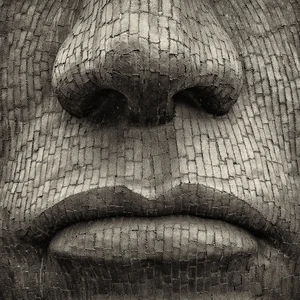
Muse Falls, Rivals Persist
The UK Competition and Markets Authority's conditions proved a barrier too far: the Getty–Shutterstock merger was abandoned on 6 July 2026.
Week of 19 July 2026
It has been a week with more than its share of upheaval in the software and business landscape of photography. Meta launched and withdrew an AI image-generation feature within the space of three days after a swift and significant backlash from creative unions and privacy advocates; the long-anticipated merger between Getty Images and Shutterstock was quietly abandoned after the UK's Competition and Markets Authority made conditions that proved unacceptable; and photographers who use Capture One gained, at last, native support for Hasselblad medium format RAW files — a historic rivalry finally put to rest. Adobe Camera Raw, meanwhile, arrived with a useful set of updates for everyday photographic work.
The Digital Darkroom
Getty–Shutterstock Merger Abandoned
The $3.7 billion merger between Getty Images and Shutterstock — agreed in January 2025 and subject to regulatory scrutiny since — was abandoned on 6 July 2026. The UK Competition and Markets Authority insisted that Shutterstock divest its entire editorial photography business as a condition of approval; Getty and Shutterstock had previously offered to sell only the Backgrid and Splash agencies, which the CMA deemed insufficient. Getty's board voted unanimously to allow the merger agreement to lapse after the deadline was extended and the CMA held its position.
The outcome for editorial photographers is, on balance, preferable to the alternative: two competing agencies continue to operate independently, rather than a single entity controlling the dominant share of the editorial stock market. Australian Photography has reported the story in some depth.
Getty Images separately announced a strategic partnership with OpenAI in the same period. Licensed Getty content now appears in ChatGPT search results with watermarks, and contributors are to be compensated under a revenue-sharing arrangement — the precise terms of which have not been disclosed. The framing is broadly consistent with Getty's existing approach to AI licensing: institutional negotiation rather than litigation, with some contributor compensation built in. More detail is available from The Munich Eye.
Meta launched — then withdrew — an AI image generator that used public Instagram photos without consent. The backlash was swift.
Meta Instagram Muse — Launched and Pulled in Three Days
Meta introduced a feature to Instagram on or around 7 July 2026 that allowed any user to @mention a public Instagram account in Meta AI and request AI-generated images using photographs from that account — without notifying the account holder and without requiring their consent. Adults with public accounts were opted in by default.
The feature was withdrawn within three days, on approximately 10 July, following coordinated objections from the Creative Artists Agency (CAA), SAG-AFTRA, Malwarebytes, Proton, and the Electronic Frontier Foundation. The CAA's statement was direct: "no one can use a person's name, face, voice and work without clear, verifiable authorisation — AI models included." SAG-AFTRA stated that it requires explicit opt-in, without exception.
Meta's response acknowledged the criticism: "We heard the feedback; this feature didn't meet expectations, it is no longer available." The @mention entry point has been removed, though the underlying Muse Image model remains operational within Meta AI and is reportedly being integrated into Facebook, Messenger, and advertising tools. The episode is a clear illustration of where the boundary sits for photographers who maintain a public presence on social media.
Adobe Camera Raw — July 2026 Update
The July update to Adobe Camera Raw (version 18.4.1) arrived with a collection of genuinely practical additions for still photographers, with the headline feature being Generative Expand — now available as a Technology Preview within the RAW processor itself. To try it, navigate to Preferences → Technology Previews → New AI Features. The tool extends the canvas beyond the frame and uses Firefly-powered generative fill to complete the new areas; it draws on Firefly credits as usual.
The remaining changes are less dramatic but thoughtfully considered. Bidirectional gradient feather control introduces triangle handles that allow the top and bottom of a gradient mask to be feathered independently — previously this required a workaround. Anamorphic lens desqueeze now supports squeeze ratios up to 2.0×, which will be of interest to photographers shooting on vintage anamorphic glass. A face distortion correction tool has been added for wide-angle group shots, addressing the stretching and distortion that affects faces near the frame edges. And the colour temperature slider now extends down to 1500K, giving finer control over candlelight and very warm light scenes where the old 2000K floor was often too restrictive.
A walkthrough of the update is available on YouTube via the official Adobe channel.
Adobe Firefly Image 3 — Retirement
Adobe has confirmed that Firefly Image 3 — previously the default model for Generative Fill and Generative Expand in Photoshop — was removed from the model picker in Photoshop 27.6 on 28 April 2026. The model will be withdrawn from service entirely in August 2026, affecting all Creative Cloud plans and versions of Photoshop from 26.0 through 27.5. Photographers still running older versions of the application will lose access to generative features at that point, regardless of their plan. The newer Firefly Image 4 model is the current default; Image 4 Ultra is available to those on higher-tier plans.
An historic rivalry finally put to rest — photographers who use Capture One gained, at last, native support for Hasselblad medium format RAW files.
Capture One 16.8.3 — Hasselblad Partnership and Leica Reconciliation
The announcement on 2 July was straightforward enough: Hasselblad and CaptureOne have entered a strategic partnership, bringing native support for Hasselblad .3FR RAW files to Capture One 16.8.3 and Capture One Mobile 3.3.4. From day one, the three 100-megapixel Hasselblad bodies are covered — the X2D II 100C, the X2D 100C, and the CFV 100C digital back — along with lens profiles for 19 XCD lenses that automatically handle distortion, chromatic aberration, and vignetting. Tethered capture, which would allow live image transfer from camera to Capture One during a shoot, is promised later in 2026.
The history here is worth a moment's consideration. Capture One was born within Phase One, a Danish medium-format camera company and a direct competitor to Hasselblad. For years, the rivalry meant that Hasselblad RAW files were simply not supported — a conspicuous gap in a product that otherwise covers over 550 cameras. That rift is now closed. Photographers who shoot on Hasselblad medium format no longer need a separate conversion step; their files open natively, with camera-specific colour profiles rather than generic rendering.
The Leica reconciliation, reported separately by AI-AP and covered in more depth in last week's roundup, has also taken effect — native Leica support and integration is re-enabled in the current build. Canon wireless tethering on Capture One Mobile was added alongside these changes, a practical addition for studio and location photographers.
It would be incomplete not to note the commercial context: Capture One's owner, Axcel, has been running an auction process, and a 6% price increase took effect on 7 July, bringing the annual subscription to approximately $18 per month. A free seven-day trial remains available for those who want to evaluate the software before committing.
AI Copyright: Policy Movements
The broader legislative landscape around AI training and copyright continued to develop this week. In Australia, the government signalled a strong preference for a framework in which creative material is not available for AI training without creator control — the Prime Minister publicly committed to meaningful protections for creative workers. In Ireland, Sinn Féin tabled a Dáil motion calling for a fair remuneration framework, transparency and accountability in AI training. In Germany, the Commission for Licensing and Supervision indicated it may treat AI-generated answers from platforms such as Google AI Overviews as platform-created media content, potentially triggering German media law obligations. The International Press Telecommunications Council (IPTC) also published a plain-language FAQ on C2PA Content Credentials aimed at broadcasters, publishers and news agencies — a useful practical resource for those working with provenance metadata in their photography workflow.
RawTherapee 5.13
RawTherapee 5.13 has been released, with an RC1 available and the stable build listed on the official downloads page. The open-source RAW processor has expanded its camera compatibility, adding or improving support for recent models from Canon, Nikon, Sony, Fujifilm, Panasonic, Hasselblad and OM System. The Lensfun database has been updated with additional lenses and improved correction profiles. Notably, this release also introduces official ARM builds for both Windows and Linux — an indication that the project is keeping pace with changing hardware. An active macOS test build is available that fixes a Finder file-opening issue present in the main release. Marc R's write-up offers a thorough overview.
RapidRAW 1.5.9
The independently developed RapidRAW — a local-first RAW editor notable for its privacy-oriented, subscription-free model — updated to version 1.5.9 this week. The update focuses on the denoising pipeline, with improvements to both speed and quality. For photographers who prefer to keep their editing workflow entirely on-device rather than reliant on cloud-based AI tools, RapidRAW continues to develop at a measured pace.
Also This Week
Gear & Glass had an unusually close relationship with the Digital Darkroom this week, given that the Capture One–Hasselblad and Capture One–Leica stories sit at the intersection of both themes. The most significant purely gear-side development is the firming of the Fujifilm X-T6 announcement window. Multiple independent sources now point to the first week of September 2026 as the likely announcement date, with a sensor rumoured at 40 megapixels (X-Trans CMOS 6 HR BSI), a new X-Processor 6, a 200MP pixel-shift multi-shot mode, internal 8K/30p recording and ProRes RAW / Blackmagic RAW output over HDMI. These are still unconfirmed specifications, but the level of convergence across leak sources is notable. Pricing estimates run from $2,199 to $2,399 for the body.
On the arts side, the Rencontres d'Arles public programme continues to run through 4 October with no major new announcements this week. The Earth Photo exhibition at the Royal Geographical Society in London closes on 24 July — worth a visit for those within reach of the city before then.
Film had a quieter week. Light Lens Lab's B&W film stock and 35mm f/2 APO remain described as imminent but without a confirmed release date. Reflx Lab's 110 stocks — the Fortuna C200 and 100R Color Reversal — are shipping.
Looking Ahead
The Fujifilm X-T6 announcement is the most anticipated near-term event in the photography calendar — assuming the first-week-of-September window holds, details should begin to emerge officially within weeks. Capture One's tethering support for Hasselblad remains on the roadmap for 'later in 2026', with no more specific date given. Adobe's phased withdrawal of Firefly Image 3 is a fixed point: August 2026, regardless of software version. For photographers using older Photoshop builds, that is a date to act on. The ongoing CMA-cleared landscape for stock photography will be worth watching as Getty and Shutterstock chart their separate paths — pricing and contributor terms may shift in the coming months as both agencies respond to the changed situation.