Portrait Photography
Photography has always been about the face. Within months of Louis-Jacques-Mandé Daguerre's process being announced to the French Academy of Sciences in January 1839, practitioners were turning their instruments on themselves and on one another, attempting something that painting had managed for centuries and that the new medium seemed uniquely equipped to accomplish: the preservation of human presence. The technical difficulties were formidable, the results often surprising, and the ambition occasionally exceeded the means. Yet the impulse was immediate, urgent, and has never abated.
The paradox at the heart of portrait photography is one that nearly two hundred years of practice has not resolved. The camera records a face — the precise arrangement of light falling on bone and skin and eye at a given fraction of a second. The portrait, if it is doing its work, records something else entirely: a person, with all the interiority, history, and particularity that word implies.
Those are not the same thing. A photograph of a face is evidence; a portrait is an interpretation. The entire history of portrait photography is, at bottom, the story of photographers working out how to close that gap — through technique, through patience, through force of personality, through deliberate artistic strategy, and occasionally through inspired accident.
That gap has never been closed entirely, and perhaps cannot be. But the attempts to close it constitute one of the richest bodies of work in the visual arts. The daguerreotypist coaxing a merchant to hold still for twelve minutes; Julia Margaret Cameron tilting her glass plate into the light and watching her portrait of Tennyson emerge from silver and shadow; Richard Avedon watching a Wyoming drifter forget, for one moment, that there was a camera pointed at him — all of them were working on the same problem. What follows is an account of how they went about it.
The Portrait Tradition
Before photography existed, the portrait had a clearly defined social function. Painting and sculpture were its exclusive media, and portraiture was accordingly the preserve of those wealthy enough to commission them. A painted portrait established identity, confirmed status, projected an image of self across social space, and — crucially — survived the subject.
A man who sat for Holbein or Van Dyck was purchasing a form of legibility: the portrait declared who he was, what he owned, and what he wished posterity to think of him. For the vast majority of the population, no such declaration was possible. They died unrecorded.
The late eighteenth and early nineteenth centuries produced two partial solutions to this social inequity. The silhouette — a profile cut from black paper, requiring no artistic skill to produce beyond a steady hand and a lamp to cast the shadow — offered the middle classes a recognisable likeness at a fraction of the cost of a painted miniature.
The miniature portrait itself, a small painting in watercolour or gouache on ivory, occupied the social tier immediately above the silhouette: more expensive, more skilled, but still accessible to a clerk, a minor merchant, or a soldier's wife. Both forms served the same purpose as their grander equivalents — memory, identity, love, grief — compressed into a format that could be carried in a pocket or worn around the neck. When photographic portraiture arrived, it did not displace these traditions so much as fulfil them at still greater scale and still lower cost.
The intellectual context that gave portraiture its quasi-scientific authority was the physiognomic tradition, most prominently codified by the Swiss theologian and author Johann Caspar Lavater (1741–1801), whose Physiognomische Fragmente (1775–1778) — translated into English, French, and multiple other languages, illustrated in part by William Blake and Henry Fuseli, and widely read across Europe and America — argued that the moral and psychological character of a person was legible in the fixed features of the face.
The nose, the brow, the set of the jaw, the shape of the eye: all carried information, Lavater claimed, that the trained observer could read with something approaching scientific certainty. The claim was dubious in its foundations and pernicious in many of its applications, but its cultural influence was enormous. It meant that the face was not merely a face: it was a document.
When photography arrived with its unprecedented capacity for facial detail, it inherited this entire tradition — the assumption that likeness was legible, that character could be read from appearance, that looking closely at a face was a form of knowledge. The portrait photograph, from its earliest days, carried the weight of that assumption.
On 7 January 1839, the astronomer and politician François Arago presented Daguerre's process to the French Academy of Sciences, and the modern age of the image began. The announcement was made on behalf of the French state, which had purchased the rights in exchange for a pension for Daguerre and the late Nicéphore Niépce's son; the process was made freely available to the world.
The speed with which it was applied to the human face was remarkable. By 1842, the first purpose-built photographic portrait studio had opened in Boston, Massachusetts. By 1853, New York City alone counted 86 daguerreotype studios, producing an estimated three million portraits per year. The portrait had ceased to be an aristocratic privilege. It was becoming a democratic fact.
Stillness & the Democratic Gaze
The technical constraints of daguerreotype portraiture were severe enough to constitute a minor ordeal for anyone who submitted to them. Exposure times ranged from three to fifteen minutes depending on available light — bright summer sun in a purpose-built skylit studio at the short end; overcast winter afternoons at the long. During that interval, the subject had to remain absolutely motionless.
Early portraits show the evidence of failure: blurred hands where a finger twitched; smeared features where a subject could not hold their gaze steady. Studios responded with engineering. The posing chair was a purpose-built device with padded rests for the forearms and a discreet iron head clamp that gripped the back of the skull, fixing the sitter's head in position without the clamp appearing in the resulting image. The neck brace performed the same function more visibly.
Subjects were instructed not to blink. To look directly into a bright skylight for ten minutes without blinking is not a natural human behaviour, which partly explains the characteristic expression of early daguerreotype portraits: a kind of fixed, resigned endurance that later generations would misread as Victorian solemnity.
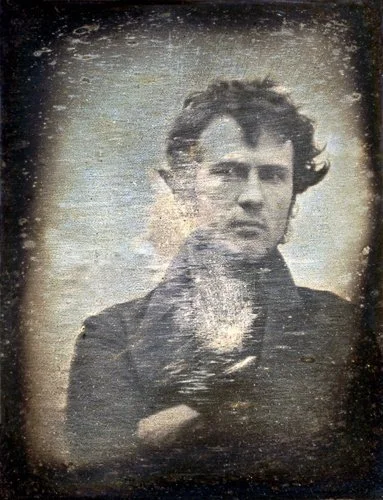
Robert Cornelius (1809–1893) was none of these things when he made what historians accept as the earliest surviving intentional photographic portrait in the United States. In October 1839 — within months of Arago's announcement, and before Cornelius had anything resembling a commercial studio — he set up a makeshift camera in the yard behind his family's gas lamp and chandelier business on Chestnut Street in Philadelphia.
The camera was a simple box fitted with a lens fashioned from an opera glass. He uncapped the lens, walked into the frame, stared at the camera for somewhere between ten and fifteen minutes, then recapped the lens and removed the plate. The resulting quarter-plate daguerreotype shows a young man with dark, somewhat dishevelled hair and an upturned collar, looking directly at the lens with slight self-consciousness. On the reverse, he wrote, in his own hand: "The first light picture ever taken. 1839."
The image is more than a historical curiosity. It is the founding act of an entire tradition of self-examination through the photographic medium, one that runs in unbroken continuity from that Philadelphia yard in 1839 through the Polaroid self-portraits of Andy Warhol, the late self-portraits of Robert Mapplethorpe made in full knowledge of his imminent death, and the billion daily images uploaded by smartphone users in the twenty-first century. The word selfie would not be coined for another 164 years. The act it names is, in photographic terms, as old as photography itself.
Cornelius went on to establish one of Philadelphia's first commercial portrait studios, but it is the accidental pioneer aspect of his self-portrait that history has fixed upon. He stumbled into one of the defining gestures of the medium, then left photography within a few years to run the family business.
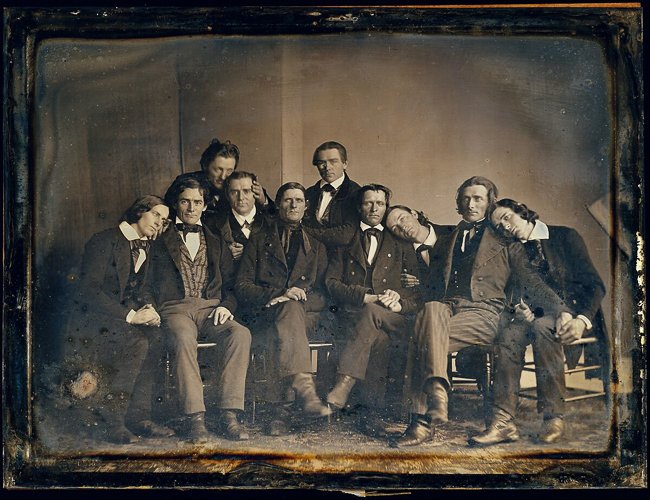
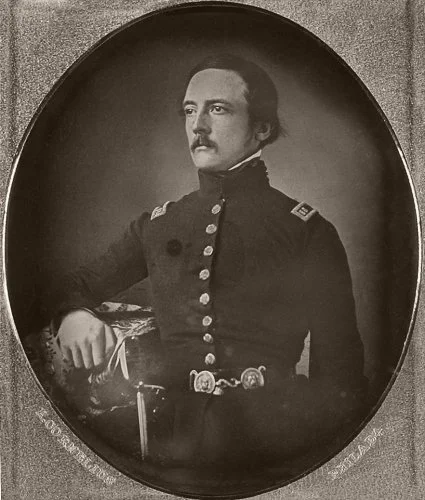
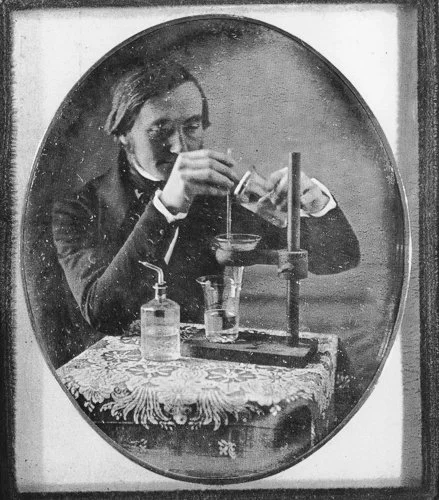
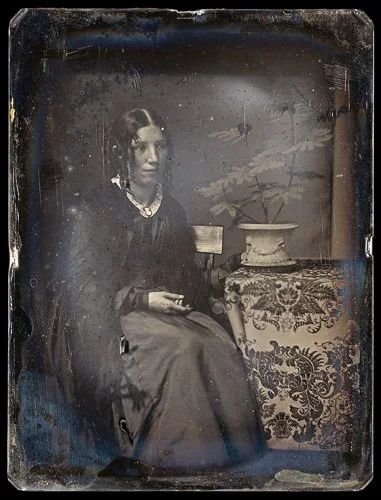
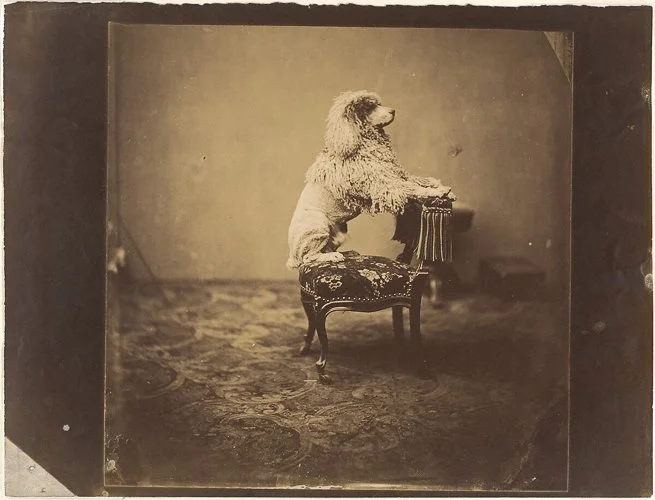
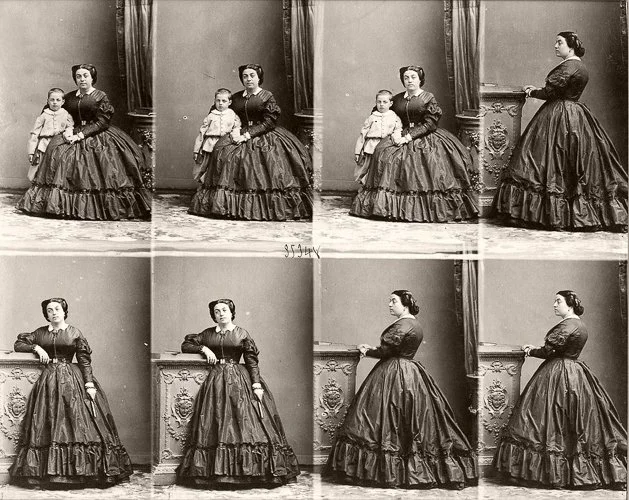
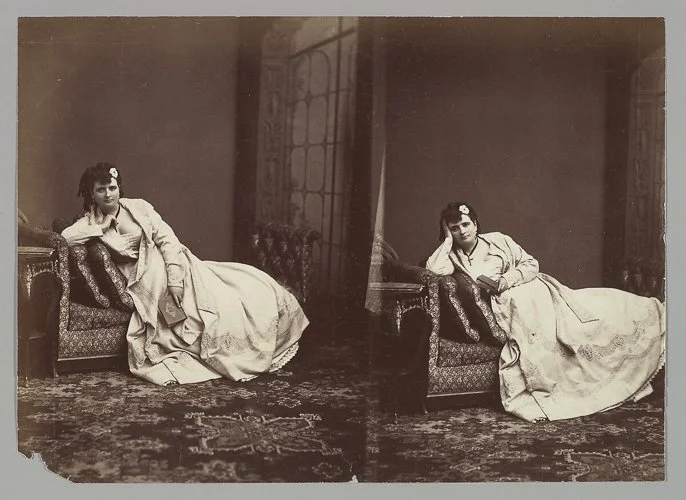
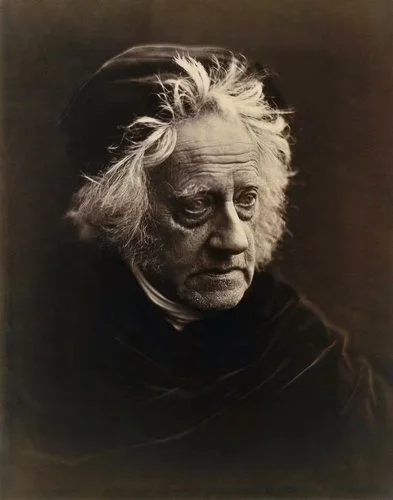
The daguerreotype portrait democratised the likeness in a way that had no precedent. A sitting at a commercial studio cost between twenty-five cents and five dollars in 1840s America, depending on the size of the plate and the quality of the establishment — within reach of a skilled worker, if not an unskilled one. For the first time in human history, a person of modest means could possess an accurate likeness of themselves, their parents, their children, or their spouse.
The social implications were not merely sentimental. The portrait had previously functioned as a marker of status and consequence — it confirmed that a person mattered enough to be recorded. The daguerreotype extended that confirmation downward through the social hierarchy with extraordinary speed, and with it came a new form of identity, one that was photographic rather than painted, mass rather than exclusive, indexical rather than interpreted.
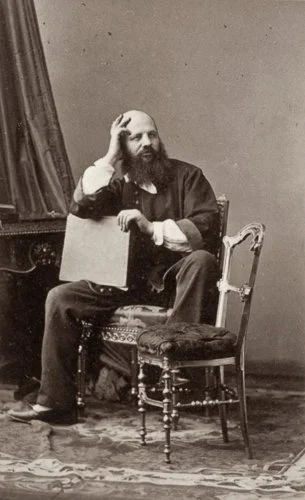
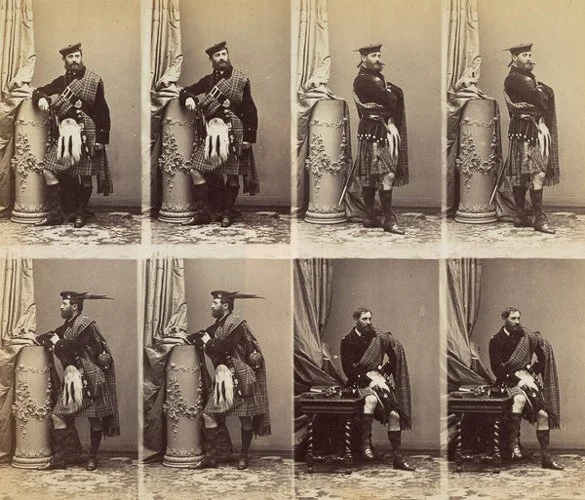
The next technical development to accelerate this process was the carte de visite, a small albumen print (approximately 6 × 10 cm) mounted on a card, produced in multiple copies from a single session using a camera fitted with multiple lenses. The format was patented in France by André Adolphe Eugène Disdéri (1819–1889) in 1854, and within a decade it had become a genuine mass phenomenon.
Collecting cartes de visite of celebrities, politicians, and royalty became a fashionable pastime among the middle classes across Europe and America. When Queen Victoria and Prince Albert sat for carte de visite portraits in the early 1860s, the resulting images circulated in the millions. The public appetite for photographic portraits of famous people — an appetite that shows no sign of diminishing in the age of social media — was born here, in the albumen print studios of Paris, London and New York, where the queue for a sitting sometimes stretched around the block.
The studio portrait itself was, by the 1860s, a highly refined theatrical operation. Elaborate painted backdrops depicted columns, balustrades, draped curtains, and imaginary landscapes. Posing furniture — chairs, stands, tables, bannisters for the sitter to grip — was designed to suggest domestic comfort whilst subtly constraining the subject's movement.
Natural light was managed with skylights, adjustable blinds, and reflectors, producing an approximation of studio control decades before electric lighting made it unnecessary. The photographer's role was partly technical, partly directorial, and partly psychological: getting a self-conscious sitter to relax enough that their face did not assume the frozen expression of someone awaiting a painful medical procedure.
Julia Cameron’s Artistic Portraits
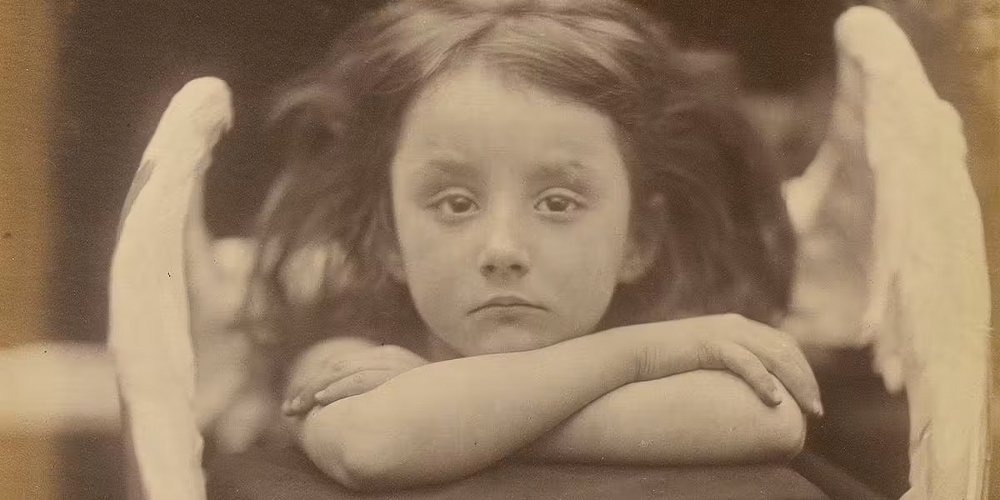
Against this background of commercial efficiency and democratic expansion, Julia Margaret Cameron (1815–1879) arrived in photography as something entirely other: a practitioner who had no interest in technical correctness, no patience with commercial convention, and an absolute certainty that what she was doing was art.
Cameron was born in Calcutta to a British colonial family and spent much of her adult life in intellectual and social circles of the highest reach — her friends and neighbours on the Isle of Wight included Alfred Tennyson, G.F. Watts, and later Charles Darwin. She received her first camera as a gift from her daughter and son-in-law in 1863, when she was forty-eight years old. Within a year, she had converted the coal shed next to her house, Dimbola Lodge at Freshwater Bay, into a darkroom and glasshouse studio and was pursuing her sitters with a tenacity that became locally legendary. Over the following twelve years, she produced approximately 900 photographs.
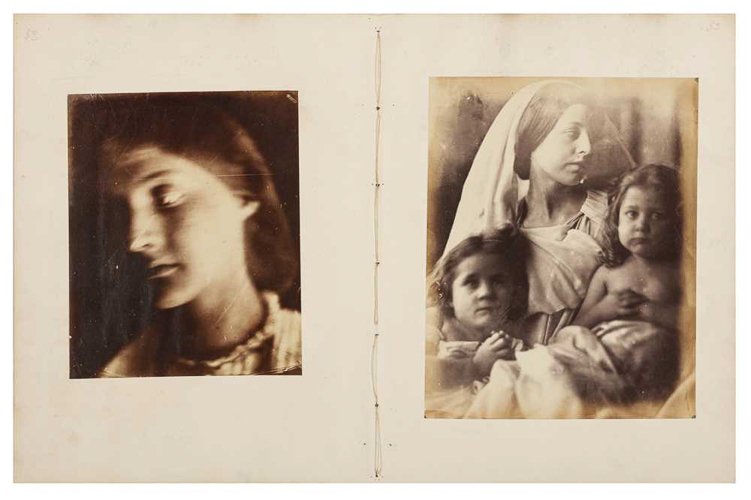
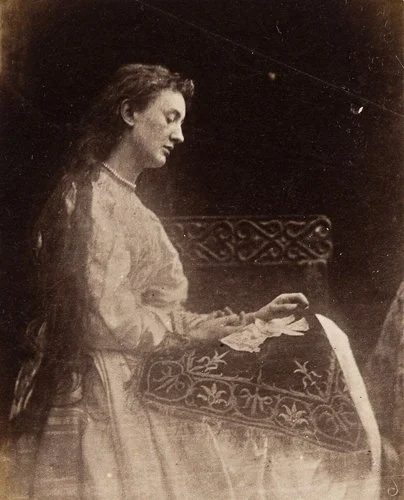
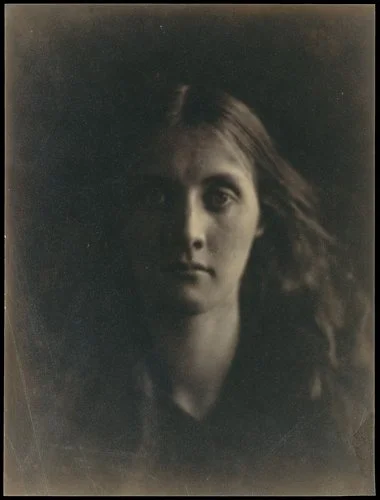
The technical characteristics of her work alarmed contemporaries who took photographic sharpness as the measure of photographic quality. Her large glass plates, processed by the wet collodion method (a physically demanding and temperamentally unforgiving technique requiring the plate to be coated, exposed, and developed before the collodion dried), were frequently blurred — not accidentally, but by design.
Cameron worked with a lens whose focusing she controlled deliberately, choosing to render faces with a softness that emphasised contour and tonal mass over precise detail. Her prints often showed fingerprints, chemical marks, and other artefacts of the process. She considered these not defects but evidence of the photograph's handmade, particular character.
As she wrote in her memoir Annals of My Glass House (1874): "My first successes in my out-of-focus pictures were a fluke. That is to say, that when focusing and coming to something which, to my eye, was very beautiful, I stopped there instead of screwing on the lens to the more definite focus which all other photographers insist upon."
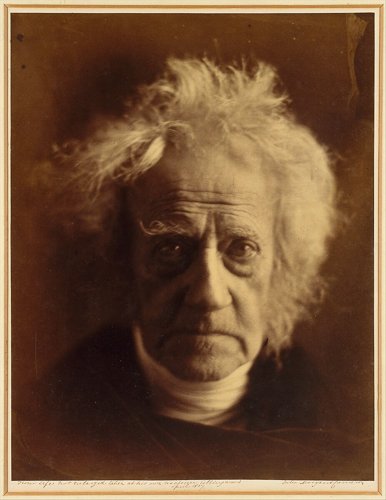
The subjects she chose were those she could compel to sit for her — which, given her social world, included some of the most intellectually distinguished people in Victorian England. Her portraits of Alfred, Lord Tennyson; Charles Darwin; the astronomer Sir John Herschel; the historian Thomas Carlyle; the painter G.F. Watts; and the scientist and polymath Henry Taylor are among the most powerful photographic portraits of the nineteenth century.
Where the commercial studio photographers of the period produced careful, sharp, decorous records of their sitters' appearances, Cameron produced something that her contemporaries lacked the critical vocabulary to fully describe: images in which light and shadow, focus and softness, the direction of a gaze or the set of a jaw, combined to suggest an inner life rather than merely record an outer one. She described her aim as capturing "the greatness of the inner as well as the features of the outer man."
Contemporary critics were largely unkind. The photographic societies of the period judged work by its technical precision, and by that standard Cameron's prints were simply incompetent. She was accused of sloppy technique, ignorance of the proper methods, and a general inability to control her medium. Her response, consistent throughout her career, was total indifference. She exhibited widely, published extensively, and continued to make exactly the kind of photographs she had always made.
Cameron moved to Ceylon (now Sri Lanka) with her husband in 1875, where she continued to photograph — the luminous series of Ceylonese subjects she made in the final years of her life represents a third body of work alongside her portraits and her allegorical compositions — and died there in 1879.
Her influence was enormous, if somewhat delayed: the Pictorialist movement that dominated fine-art photography from the mid-1880s onward owed a direct and acknowledged debt to her argument, made in practice if not always in words, that the photographer's vision and intention mattered as much as technical accuracy. She was, in the most precise sense, the first photographer to make that argument convincingly, and to prove it with her work.
The Pictorialist Portrait (1885–1915)
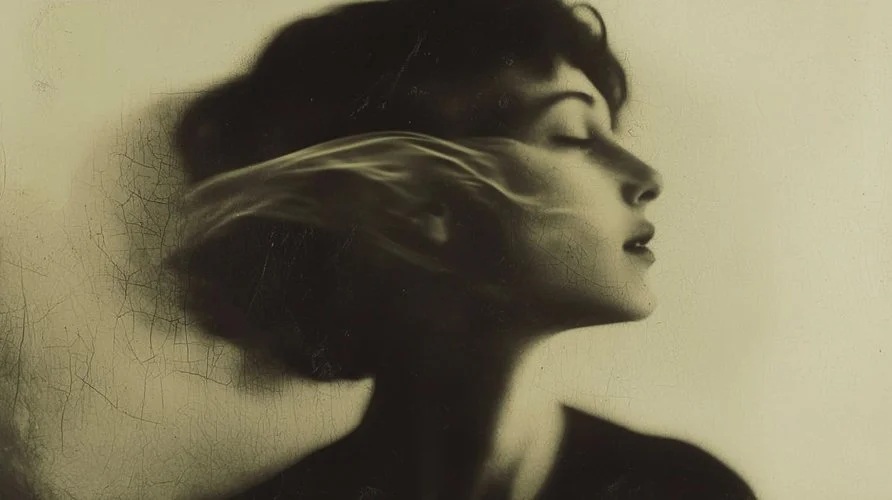
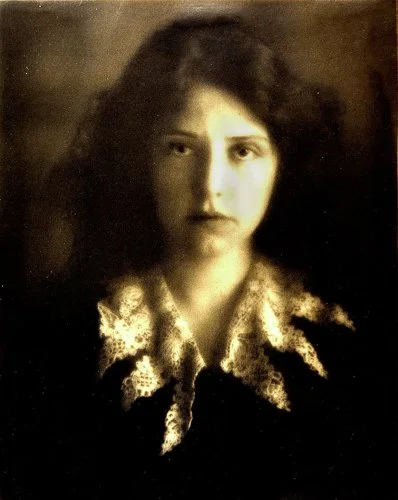
The Pictorialist movement represented a sustained collective argument about the status of photography as a medium. Its central claim was straightforward: photography should function as a vehicle for personal expression equivalent to painting or drawing, and photographers who aspired to make art should employ every available means — soft focus, hand manipulation of prints, carefully composed allegorical subjects, deliberate tonal richness — to demonstrate that their work was imaginative rather than merely mechanical.
The technical arsenal of Pictorialism was impressive. Photographers working in the gum bichromate process could retouch and rework their prints with brushes, adding grain and painterly texture to the surface. Platinum prints offered a tonal range and a matte surface that resembled charcoal drawing more than the glossy commercial photograph. Bromide prints allowed further manipulation and enlargement.
The results were images that looked, deliberately and pointedly, more like Whistler or Corot than like a daguerreotype. Whether they were, for that reason, better art than a technically pristine photographic print is a question the movement itself never quite resolved, and whose irresolution contributed to its eventual decline.
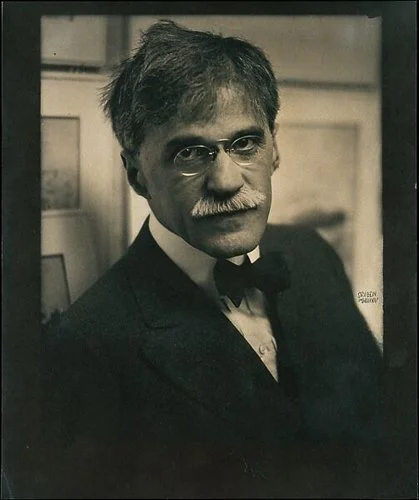
Alfred Stieglitz (1864–1946) was Pictorialism's most energetic advocate, organiser, and polemicist, and in the second half of his career its most searching critic. Born in Hoboken, New Jersey, and educated in Germany, where he studied mechanical engineering before abandoning it for photography, Stieglitz returned to America in 1890 convinced that photography was capable of being art and equally convinced that most of what passed for photographic fine art was not.
He edited Camera Notes from 1897 and founded Camera Work in 1903, a quarterly journal of such extraordinary production quality — the photogravure reproductions remain among the finest ever made — that the journal itself became an artwork. He ran it until 1917.
His founding of the Photo-Secession group in 1902 brought together the most significant American and European Pictorialists into a loose coalition whose name deliberately echoed the Secession movements in Vienna and Munich — an assertion of a new, progressive artistic identity against established academic convention.
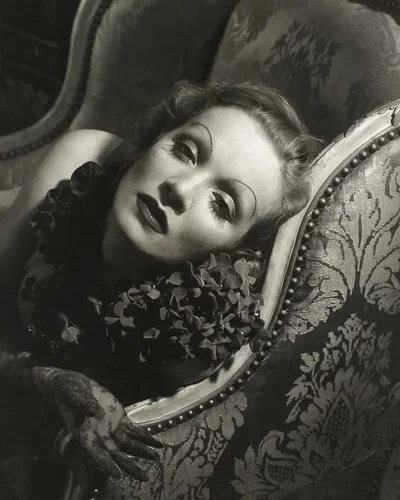
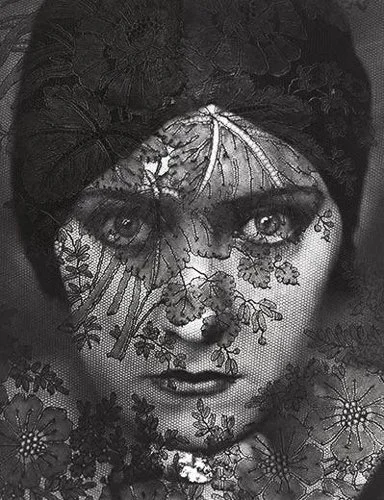
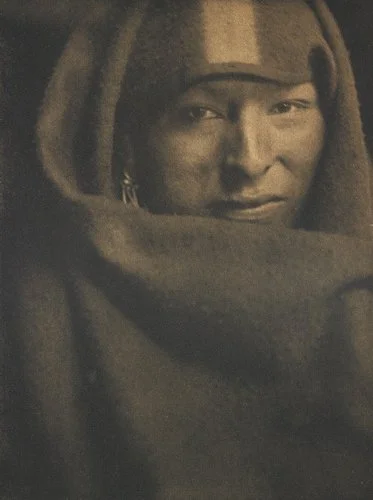
The group's key figures included Edward Steichen (1879–1973), the Luxembourg-born photographer and painter who was Stieglitz's closest collaborator in the early years and who would later, in an almost exactly opposite direction, create the Family of Man exhibition (1955) as curator of photography at MoMA; Gertrude Käsebier (1852–1934), whose portraits of Native Americans and of motherhood — particularly Blessed Art Thou Among Women (1899) — combined genuine formal sophistication with a sentimental symbolism that now reads as distinctly Victorian; and Clarence White (1871–1925), whose soft, contemplative domestic interiors and figure studies exercised considerable influence on American photographic education through the school he founded in New York.
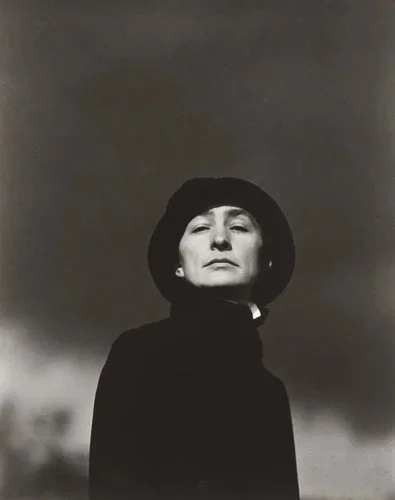
Stieglitz's most sustained photographic achievement was his portrait series of Georgia O'Keeffe, the painter with whom he was romantically involved from 1916 until his death in 1946. Over two decades, Stieglitz made more than 300 photographs of O'Keeffe — of her hands, her face, her body, her working environment — constituting one of the most extended and intimate portrait series in the history of the medium.
The series as a whole is explicitly about the relationship between photographer and subject, and about photography's capacity to accumulate meaning over time: any single image is a portrait; the entire archive is something closer to a sustained act of attention.
His 291 gallery at 291 Fifth Avenue, New York, which he ran from 1905 to 1917, showed not only photography but painting, drawing, and sculpture, explicitly positioning photography as an equal participant in the contemporary visual arts. In this, he was partly successful: Camera Work and 291 created the intellectual and institutional conditions within which American fine-art photography would develop throughout the twentieth century, even after Pictorialism's particular aesthetic had been displaced.
The tension within Pictorialism — between its desire to be recognised as art and its increasing aesthetic distance from what photography uniquely could do — was noticed by practitioners and critics alike. By the 1910s, Stieglitz himself had moved away from Pictorialist soft focus towards a sharper, more precise vision, and the movement's most energetic young photographers were moving with him, or past him, towards what would become known as Straight Photography and, eventually, Modernism.

August Sander & the Typological Portrait
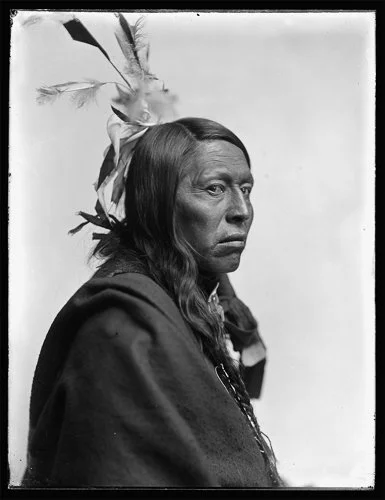
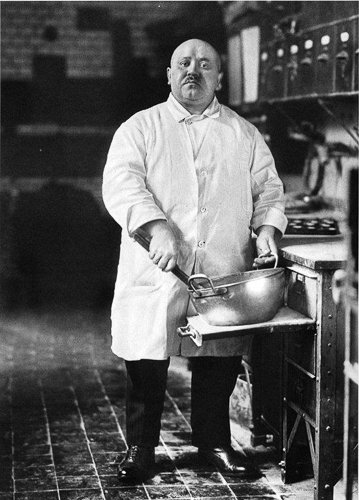
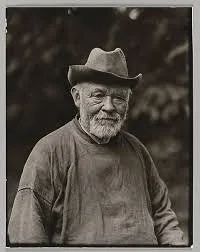
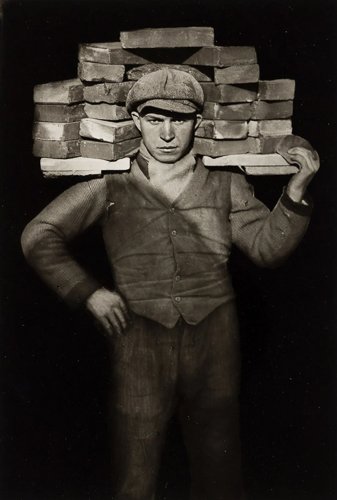
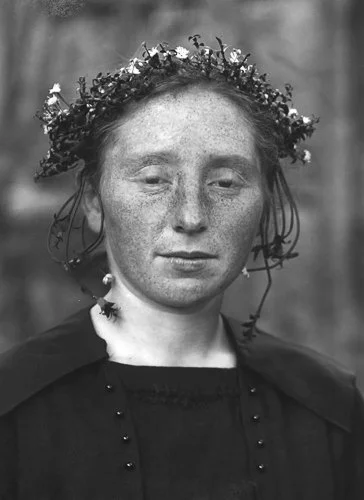
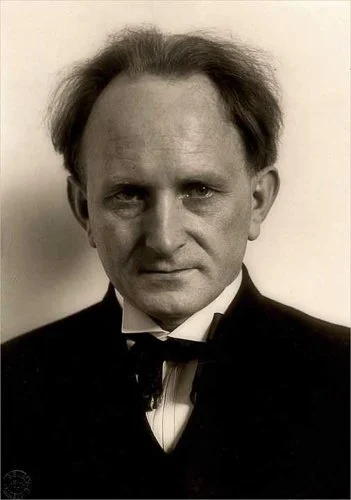
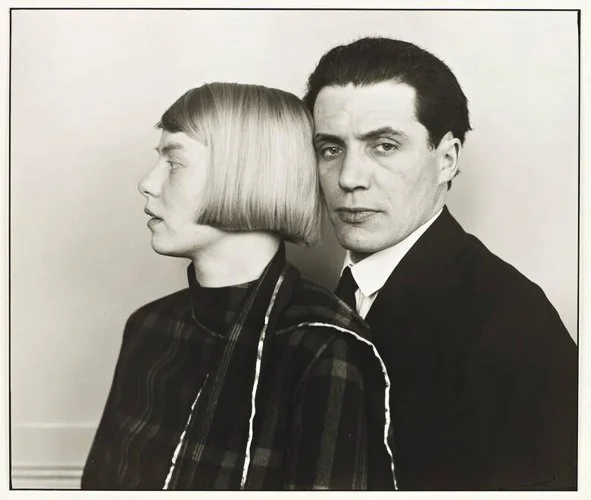
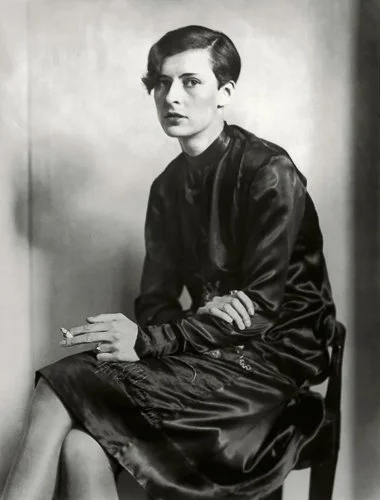
If Pictorialism represented one response to the question of what photography could do beyond commercial portraiture, August Sander (1876–1964) represented another, equally ambitious and, in some respects, more radical. Where the Pictorialists asked whether photography could be elevated to the condition of painting, Sander asked a different question: whether photography could constitute a form of social science.
Sander was born in Herdorf in the Siegerland, the son of a mining carpenter, and worked initially as an itinerant portrait photographer across central Germany before settling in Cologne. Around 1910, he conceived the plan that would occupy the remainder of his working life: a systematic, comprehensive portrait survey of German society, organised by occupation and social class, that he titled Menschen des 20. Jahrhunderts — People of the 20th Century.
The ambition was extraordinary: not to photograph individuals as individuals, but to create a typological archive of German society, in which each person stood simultaneously as themselves and as a representative of their social category. Farmers, craftsmen, industrialists, artists, officials, women, and the last representatives of a passing social order — all were to be photographed with the same frontal directness, the same unhurried attention, the same formal respect.
The project's first public manifestation was Antlitz der Zeit (Face of Our Time), published in 1929. The book contained sixty portraits, and its introduction by the writer Alfred Döblin identified the project's central ambition: to produce, through the accumulated weight of individual faces, a collective portrait of an entire society.
The critical response was substantial, and included Walter Benjamin's analysis in A Short History of Photography (1931), in which Benjamin argued that Sander's work constituted a training exercise in the reading of faces — a physiognomic education that prepared the viewer to perceive the social structures inscribed in personal appearance.
Five years after publication, in 1934, the Nazi regime had the printing plates of Antlitz der Zeit destroyed and copies of the book confiscated. The reasons were partly political — Sander's son Erich, a committed Communist, was imprisoned — and partly ideological. The project's indiscriminate democratic gaze, its refusal to hierarchise or glamorise, its insistence on treating a Cologne bricklayer and a Rhineland farmer with the same formal seriousness as a professor or a politician, was incompatible with National Socialist ideas about race, social order, and the proper function of the photographic portrait.
Sander continued to work through the Nazi period, largely on landscape photography; some of his portrait archive was destroyed when his son's apartment was bombed in 1944.
After Sander's death in 1964, his son Gunther worked to preserve, catalogue, and publish the remaining archive. The full scope of Menschen des 20. Jahrhunderts — ultimately comprising approximately 600 photographs organised into seven groups and forty-five portfolios — was finally published in 2002.
The project's influence on subsequent photography has been profound and multidirectional. It informed the Düsseldorf School of conceptual photography, particularly the work of Bernd and Hilla Becher; it established the typological survey as a legitimate and serious form of photographic art; and it demonstrated that the portrait photograph could function as social document, evidence, and analysis rather than as a record of individual subjectivity.
Modernism, Psychology, & the Close-Up
The interwar period transformed portrait photography in ways that Pictorialism had foreseen but not achieved. The movement's desire to make photography function as art was realised, but by quite different means: not through soft focus and tonal manipulation that imitated painting, but through a new sharpness — formal, psychological, and sometimes brutal — that was distinctly photographic.
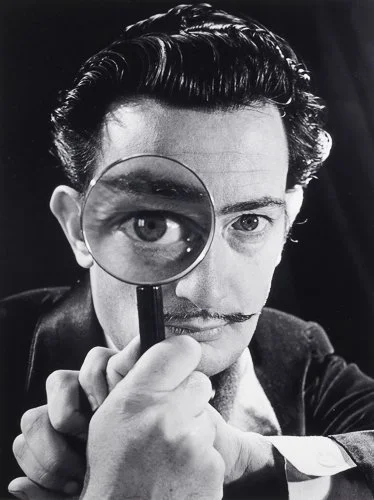
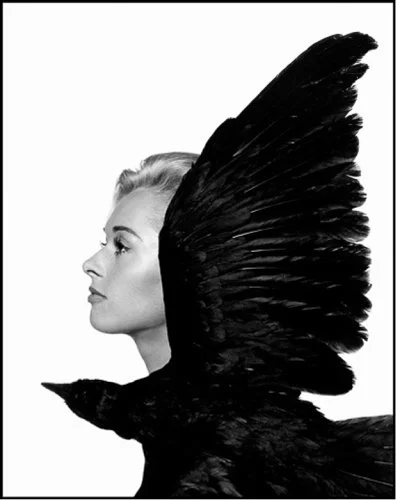
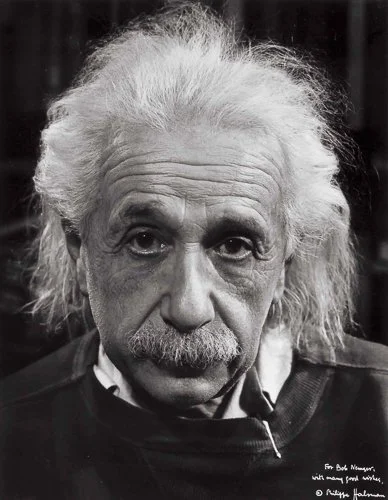
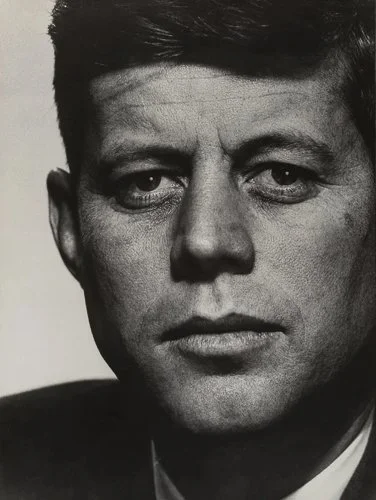
Philippe Halsman (1906–1979) brought to portrait photography a background that would have destroyed most careers before they began. Born in Riga, Latvia, to a Jewish family, he was studying electrical engineering in Dresden when, in 1928, he was accused of the murder of his father during a hiking trip in the Austrian Alps. The circumstantial evidence was thin and contradictory; the prosecution's case rested largely on the prejudices of a rural Austrian community in an era of widespread anti-Semitism.
Halsman was convicted of manslaughter and sentenced to ten years' imprisonment. The injustice of the conviction attracted international attention: Albert Einstein and Thomas Mann were among those who campaigned publicly for his release. After serving two years, he was pardoned under a general amnesty for young offenders and released. His criminal record was finally expunged by Austria in 1973, forty-five years later.
Halsman moved to Paris, where he established himself as a portrait photographer, and then to the United States in 1940, after the fall of France. In New York he built one of the most extraordinary careers in the history of commercial portraiture: 101 covers for Life magazine, a record that has never been surpassed, featuring virtually every significant cultural and political figure of the mid-twentieth century.
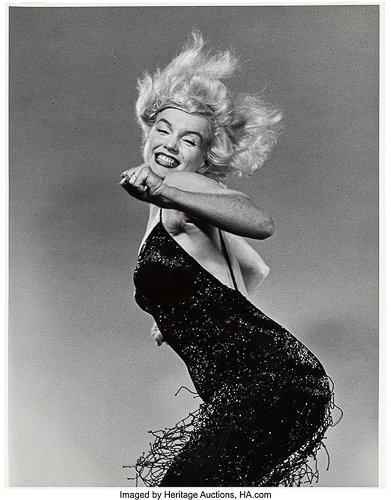
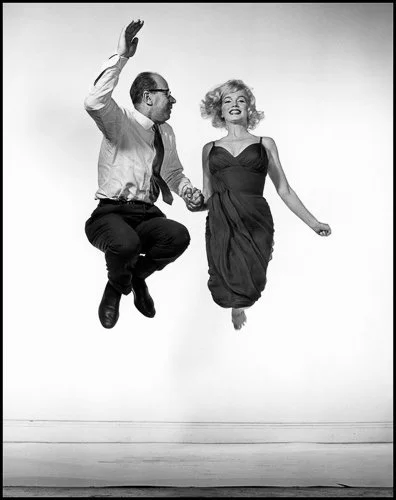
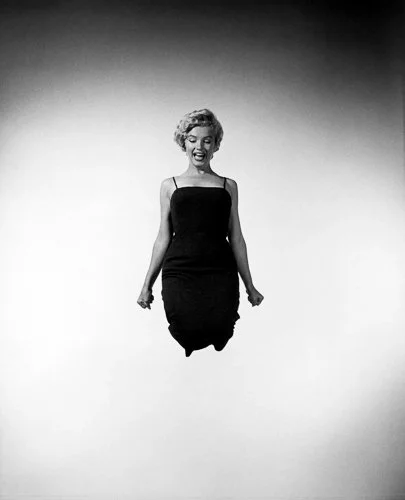
His methods were unconventional. His theory of "jumpology" — the idea that asking subjects to jump while being photographed would disarm their habitual self-presentation and reveal their true character — produced his Jump Book (1959), a collection of photographs of famous people in mid-air that is simultaneously a study in personality, a meditation on gravity, and a very good joke.
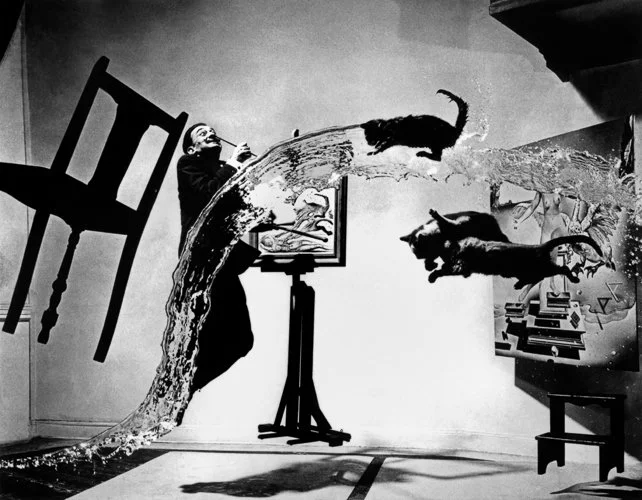
More technically demanding was his long collaboration with the surrealist painter Salvador Dalí, which produced, among other things, Dalí Atomicus (1948): a photograph in which Dalí, three cats, a bucket of water, and a painting are all suspended in mid-air simultaneously.
The image required twenty-eight attempts, all made without digital manipulation, with a crew of assistants hurling the cats into the air on the count of three. The resulting photograph, surreal and precisely observed, impeccably composed and completely bonkers, is one of the most celebrated portraits in the medium's history.
Halsman's ambition — to reveal "the mystery of another human being" — informed a body of work that treated celebrity not as a condition of glamour but as a surface to be penetrated. His subjects appear genuinely themselves rather than performing themselves: a quality that was partly the result of technical skill, partly the effect of the jumping technique, and partly a function of Halsman's extraordinary personal warmth and curiosity.
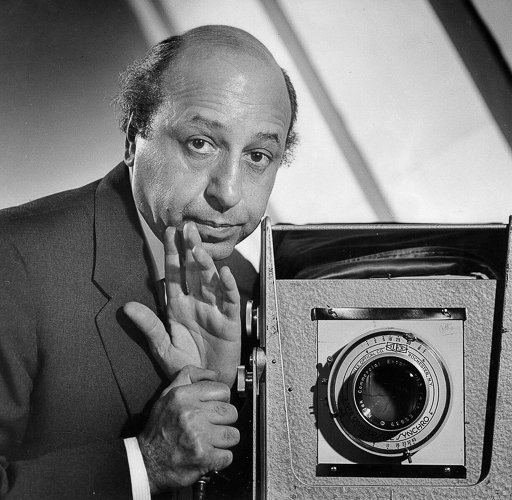
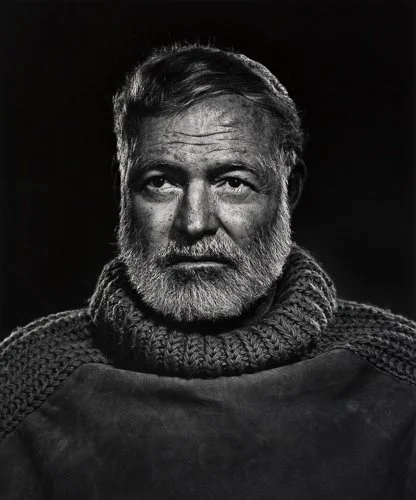
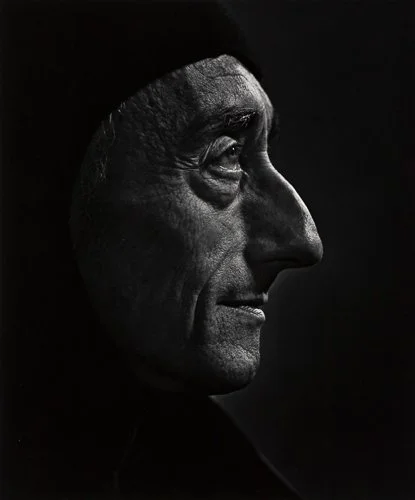
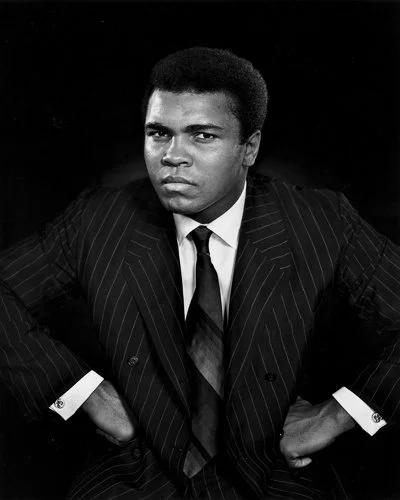
Yousuf Karsh (1908–2002) arrived at his art via a route even more devastating than Halsman's. Born in Mardin, in what is now southeastern Turkey, Karsh was a survivor of the Armenian Genocide of 1915–1916, which killed an estimated 1.5 million Armenians and left the survivors scattered across the Middle East and the wider world.
His parents sent him to Syria as a child; an uncle arranged for him to travel to Canada, where he settled in Sherbrooke, Quebec, and eventually apprenticed with the Boston portrait photographer John Garo — himself an Armenian immigrant — who recognised his pupil's talent and shaped his approach to lighting.
Karsh established his studio in Ottawa at the Château Laurier hotel in 1932, where it remained for decades. His Ottawa connections led him to prime ministers and governors-general, and eventually to the portrait that made him internationally famous.
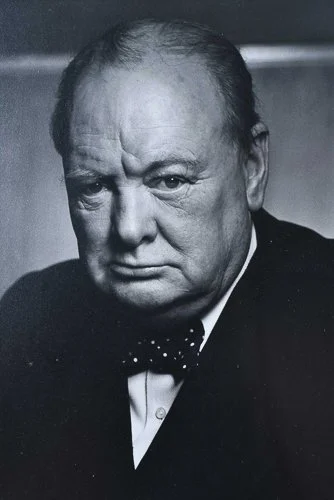
In December 1941, Winston Churchill visited Ottawa for a wartime conference and sat briefly for Karsh in a committee room of the Canadian House of Commons. Accounts of what happened next are consistent: Karsh, displeased with Churchill's combative expression — the Prime Minister was smoking a cigar and regarded the session as an interruption — reached forward and removed the cigar from Churchill's mouth without asking permission.
Churchill's response, a look of profound indignation and bulldog defiance, was exactly what Karsh wanted. He exposed the plate at that moment. The resulting image, The Roaring Lion, became possibly the most reproduced portrait photograph in history. It appeared on the cover of Life magazine, was distributed worldwide by the British government as a symbol of wartime resolution, and has rarely been out of print since.
The Churchill portrait is remarkable not merely as a historical artefact but as a demonstration of Karsh's central approach: the manipulation of circumstance to produce an expression that reveals rather than conceals character.
Karsh was not interested in flattery in the conventional sense. He was interested in what he called the "inward power" of his subjects — the quality that distinguished them from ordinary people — and he was prepared to be, if necessary, briefly impertinent to a sitting Prime Minister in order to find it.
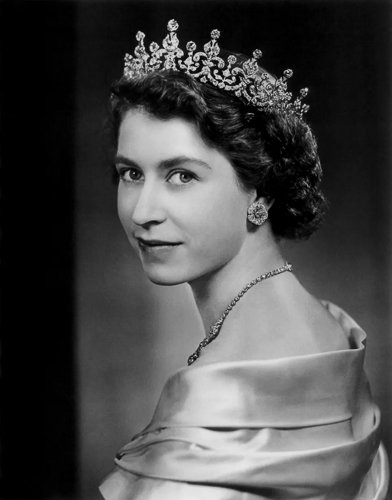
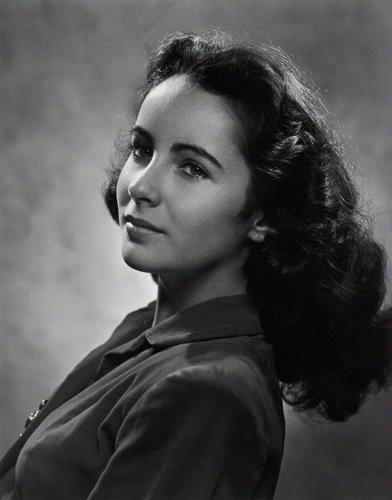
His subsequent career was a systematic survey of the century's significant figures: Hemingway, Picasso, Einstein, Schweitzer, JFK, Fidel Castro, and dozens of others, photographed in Karsh's characteristic style — rich tonal contrast, directional lighting that sculptured the face, dark backgrounds that focused all attention on the subject. By 2000, he had photographed 51 of the 100 individuals listed in the International Who's Who as the century's most notable people, and was himself the only Canadian on that list.
The Portrait as Confrontation
Post-war American portrait photography inherited both the psychological seriousness of the interwar period and, from wartime photojournalism, an understanding of the face as evidence. The photographers who defined the New York School's approach to portraiture shared a formal severity and a psychological directness that was quite different from either the humanism of wartime documentary or the glamour of commercial photography. They were interested in confrontation — between photographer and subject, between subject and viewer, between the image and whatever it could be said to mean.
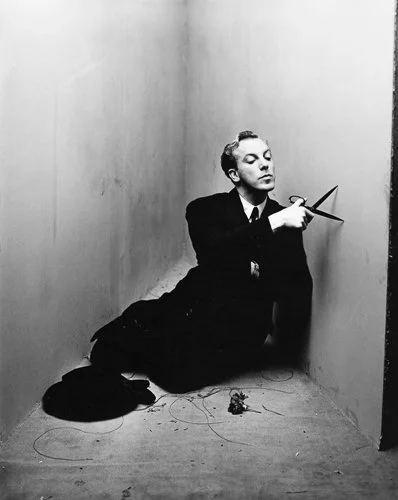
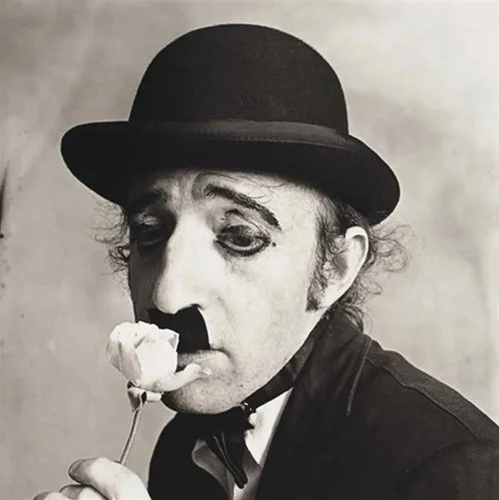
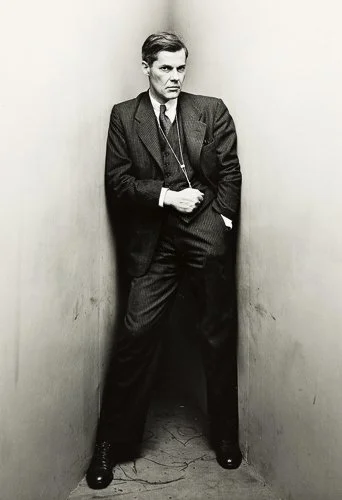
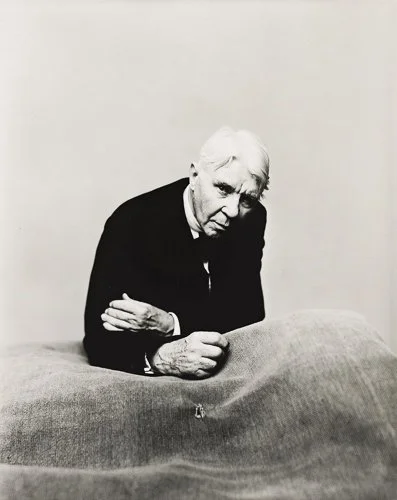
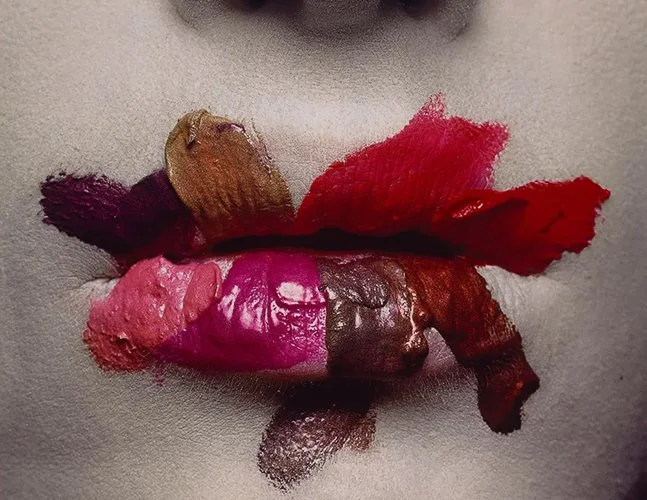
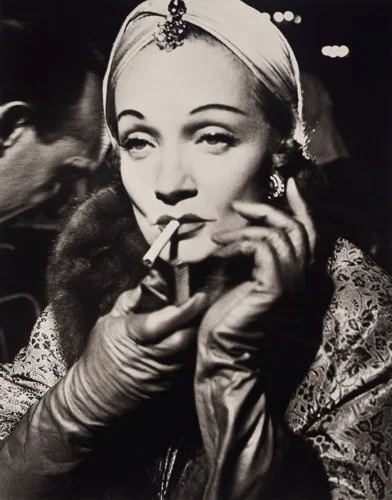
Irving Penn (1917–2009) had studied graphic design under Alexey Brodovitch at the Philadelphia Museum School of Industrial Art before turning to photography, and it shows in the structural precision of his work. He joined Vogue in 1943 and spent his career producing work of extraordinary formal rigour in both fashion and portrait photography.
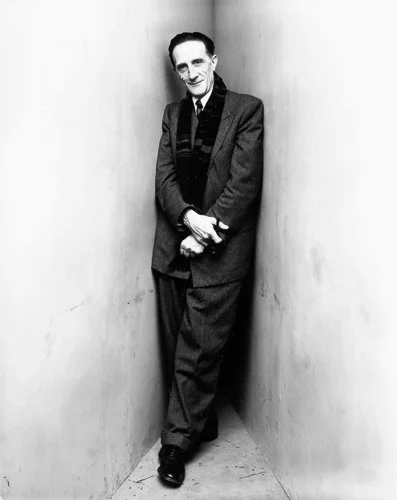
His distinctive studio portrait method — placing subjects in the corner formed by two angled studio flats, creating a compressed wedge of space with no room for comfortable positioning — was a deliberate piece of spatial psychology. The corner offered nowhere to retreat to, no props to lean on, no background to relate to. The subject was simply there, in the space between two converging walls, required to present themselves with nothing but themselves.
The discomfort was intentional: Penn believed that the slight awkwardness of the corner arrangement produced a more truthful presentation than the relaxed studio portrait, because it denied the subject the option of settling into a performed ease.
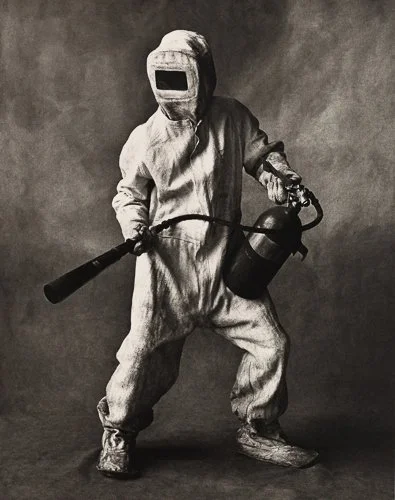
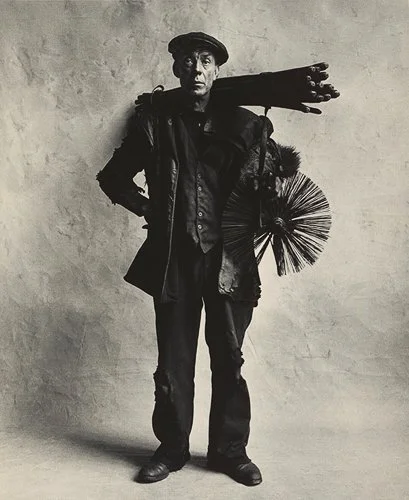
His Small Trades series (1950–1951), photographed in New York, Paris, and London, applied the same formal rigour to working people photographed in their work clothes: a pastry chef, a coal man, a fishwife, a window cleaner. Penn brought to each subject precisely the same camera, the same neutral background, the same careful light that he brought to Picasso or Marlene Dietrich. The democratic intent was explicit, and the formal results were startling: faces of ordinary working people rendered with the same grave attention as the century's cultural monuments.
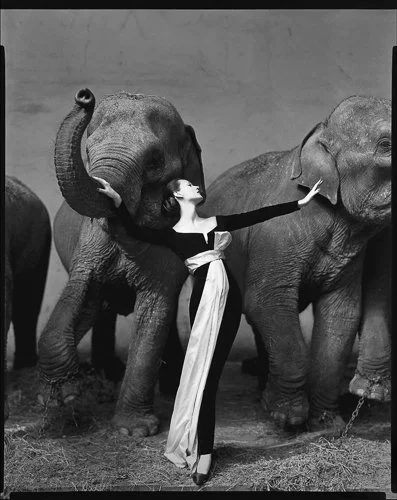
Richard Avedon (1923–2004) studied under Alexey Brodovitch at the Design Laboratory in New York, and, like Penn, he spent his early career in fashion photography — in his case at Harper's Bazaar, where Brodovitch was art director from 1945. But where Penn's fashion work was static, architectural, and formal, Avedon's was kinetic: models laughing, jumping, running, turning mid-stride, photographed as if caught in a moment of genuine animation. The images were theatrical constructions rather than candid documents, but they looked alive in a way that transformed the conventions of fashion photography.
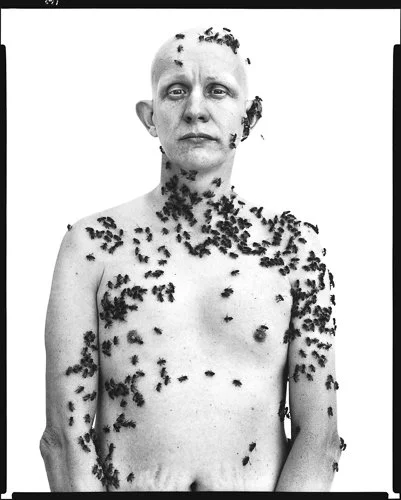
His portrait work was shaped by a different impulse. Avedon's portraits are confrontational not in the aggressive sense but in the topological one: they place the viewer directly in front of the subject's face with nowhere to look except at that face. His trademark plain white background — achieved with a seamless roll of white paper, sharply lit to eliminate shadow — removed every visual cue except the subject's body and expression. There was no environment to read, no props to interpret, no context to deflect attention: only the person.
The In the American West project (1979–1984), commissioned by the Amon Carter Museum in Fort Worth, Texas, was the most systematic application of this approach. Over six years, Avedon travelled to 189 towns across 17 western states and made 752 sittings, working with a large-format Deardorff 8 × 10 camera and exposing 17,000 sheets of film.
His subjects were not celebrities or public figures: they were drifters, miners, slaughterhouse workers, carnival hands, a man covered in bees, an unemployed oil worker with a look of absolute vacancy in his eyes. Each was photographed against the same white paper backdrop — taken from studio to location — with the same rigorous attention to the plane of the face and the quality of the light.
The 124 resulting prints, some as large as four feet high, were exhibited at the Carter in 1985 and published the same year. They were controversial: critics from the American West felt that Avedon, a privileged New Yorker, had gone looking for suffering and found what he expected.
Avedon acknowledged the accusation without retracting the work. As he had observed in relation to all his portraiture: "My photographs are more about me than about the people I photograph." It was a statement of unusual honesty about the nature of the portrait and the photographer's inescapable role in its construction.
His final project, undertaken on assignment for The New Yorker in 2004 in the weeks before his death from a cerebral haemorrhage in San Antonio, Texas, was an unfinished portrait of a young soldier. He died at work, which seems appropriate.

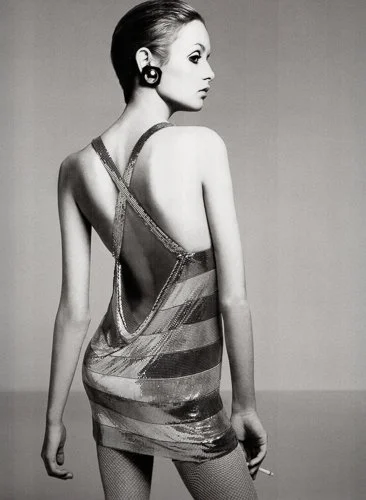
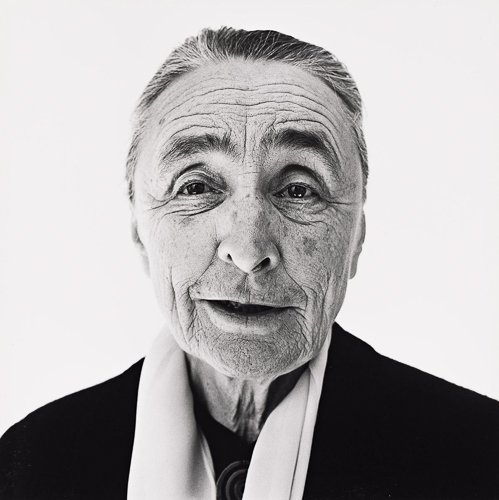
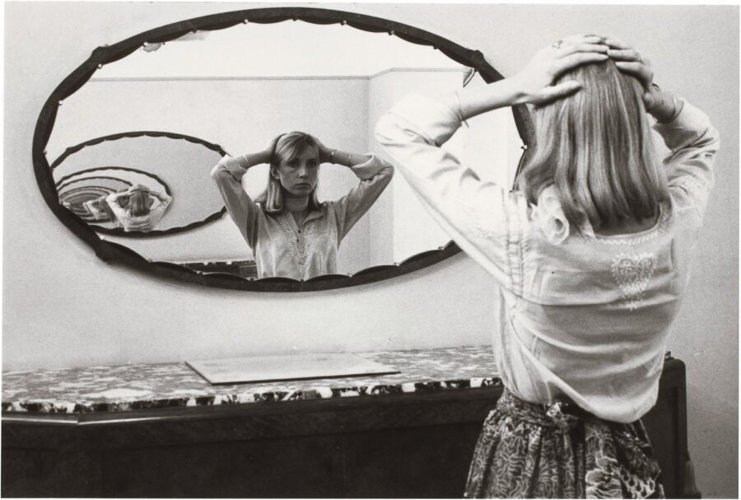

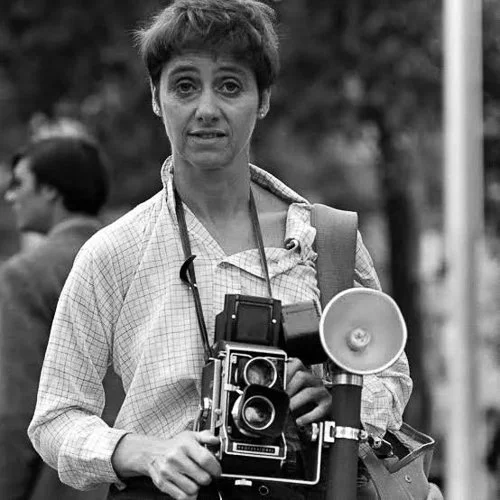
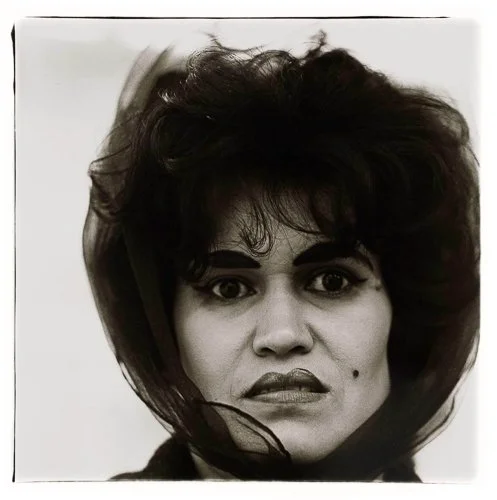
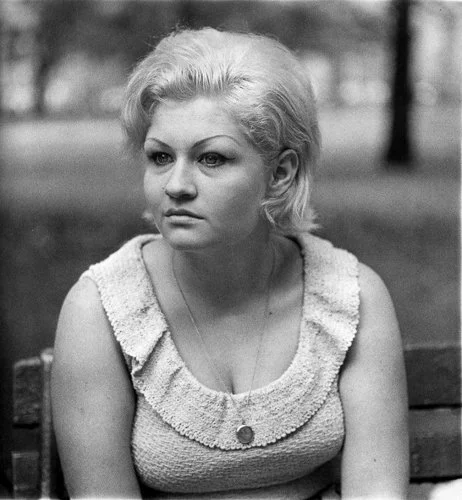
Diane Arbus (1923–1971) began her career in the most conventional photographic territory possible: commercial fashion photography, working alongside her husband Allan Arbus for Glamour, Vogue, Harper's Bazaar, and other magazines throughout the 1940s and 1950s. In the late 1950s, she began, with gathering urgency, to turn away from that world entirely. The direction she turned was not simply away from glamour: it was towards the specific, the overlooked, the marginalised, and the categorised-as-strange.
Her subjects — twins, nudists, circus performers, transgender individuals, people with dwarfism, those who would then have been described as mentally retarded (a term she did not use), couples in hotel rooms, men in women's clothes, a Jewish giant at home with his parents — were photographed with an absolute directness that was inseparable from an absolute respect.
She did not photograph around her subjects, implying some larger social context or systemic analysis. She photographed them. Her Rolleiflex, held at waist height and producing a square format, gave her images a slightly disorienting frontality: the direct flash, filling the frame with even, clinical light, created an effect of exposure that was simultaneously harsh and tender.
The subjects look back at the camera — nearly always directly, meeting the viewer's gaze without appeal or evasion — because Arbus had established with them a sufficient degree of trust for them to do so. She spent time with her subjects. She returned. She was not a drive-by observer.
The controversy that surrounds her work — whether it exploits or dignifies its subjects, whether it constitutes a form of voyeurism dressed as empathy, whether the photographer's evident affection for the unusual was itself a form of othering — has not been resolved and is not likely to be. What is not in dispute is its formal power and its historical influence.
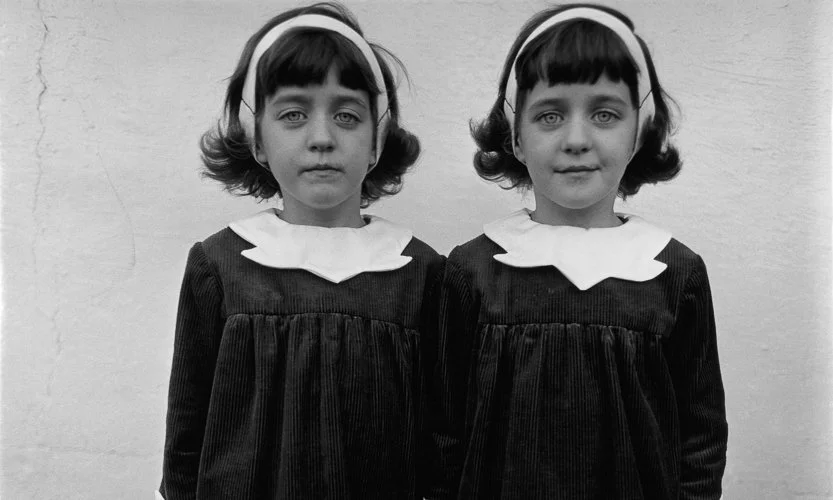
Identical Twins, Roselle, New Jersey, 1967 is one of the most unsettling images in the photographic canon, precisely because its formal symmetry (two girls, photographed straight-on, in identical clothes, against a plain wall) is undermined by the barely perceptible differences in their expressions: one slightly more open, one slightly more guarded, and between those micro-differences the entire problem of individual identity condensed.
Arbus took her own life in July 1971. The posthumous publication of Diane Arbus: An Aperture Monograph in 1972, and the inclusion of her work in the Venice Biennale that same year — the first American photographer to be so honoured — established her retrospective reputation as one of the most significant portrait photographers of the twentieth century.
The Environmental & Documentary Portrait
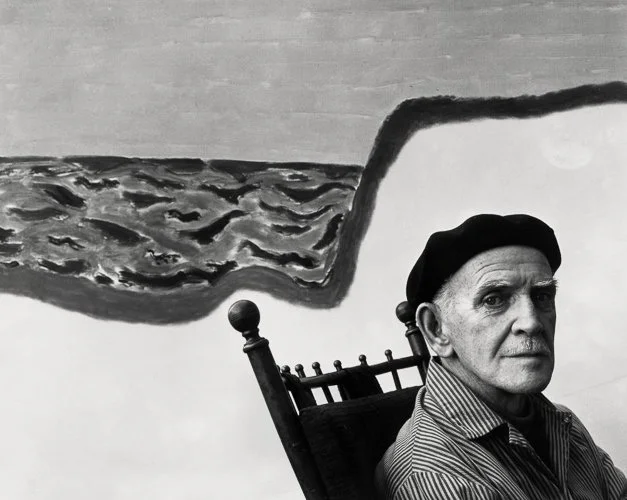
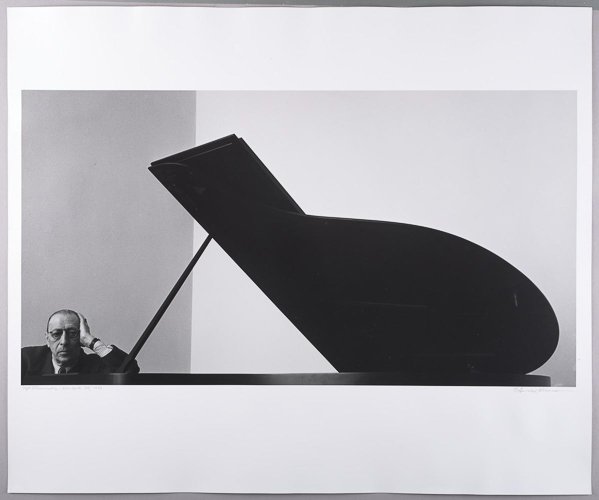
Arnold Newman (1918–2006) invented, or at least named and systematised, a form that had been implicit in photography from the beginning: the environmental portrait. The principle is simple to state — place the subject in the context of their work or life, so that the background functions as information rather than neutral ground — but its execution demands a compositional sophistication that goes well beyond the standard portrait setup. Newman's portraits work because the relationship between figure and environment is never merely illustrative. It is structural, sometimes ironic, and occasionally savage.
His 1946 portrait of Igor Stravinsky at the piano is the canonical example. The composer occupies the lower-right corner of a radically divided composition; the raised lid of the grand piano dominates the frame, its massive black arc filling two-thirds of the image. The piano dwarfs the man. The visual effect is of a human being who has created something that now exceeds him in scale — which is, in any reasonable assessment, one of the most accurate observations you can make about Stravinsky's relationship to his own music. The portrait works not because it records what Stravinsky looked like, but because it describes what he had done.
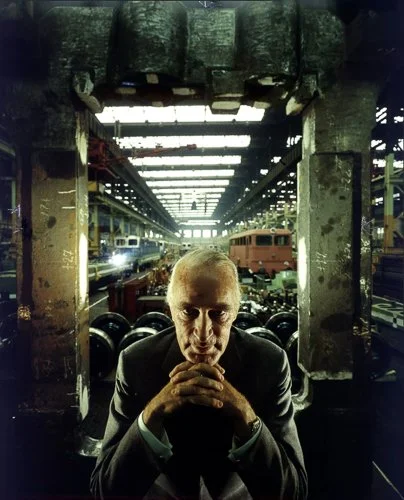
Newman's portrait of Alfred Krupp (1963) — made when the German industrialist, who had employed concentration camp prisoners as forced labour in his armaments factories and had been convicted of war crimes at Nuremberg, was seventy-six years old — uses the same method to entirely different moral effect.
Photographed in his steelworks at Essen, Krupp is shown in three-quarter profile against a background of industrial darkness shot through with the hellish glow of a furnace. The composition is technically accomplished, and the lighting is deliberately Mephistophelean. Newman, who was Jewish, later acknowledged that he had used his art as a form of controlled revenge: the portrait tells you precisely what it thinks of its subject, and does not require you to read the caption to understand.
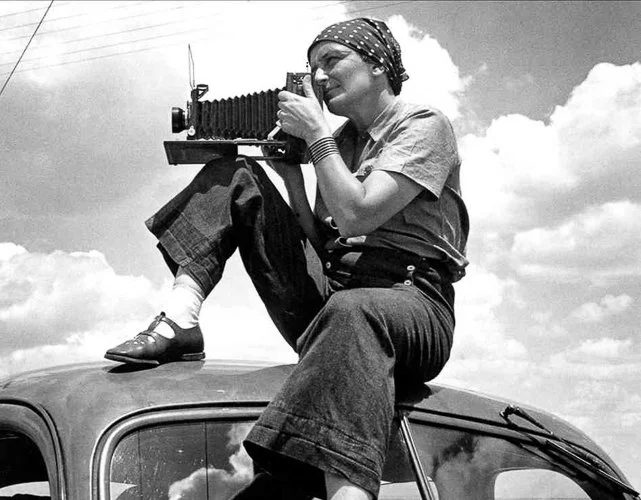
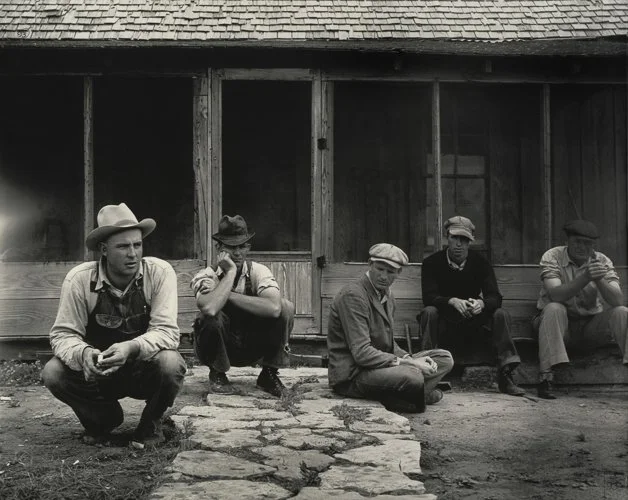
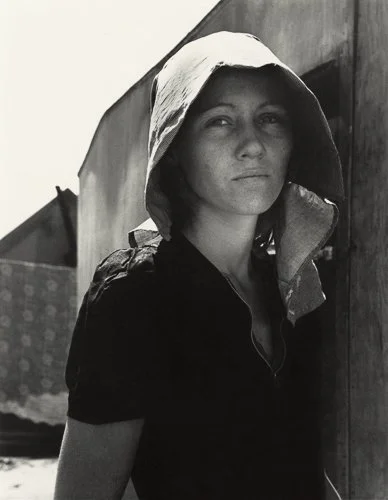
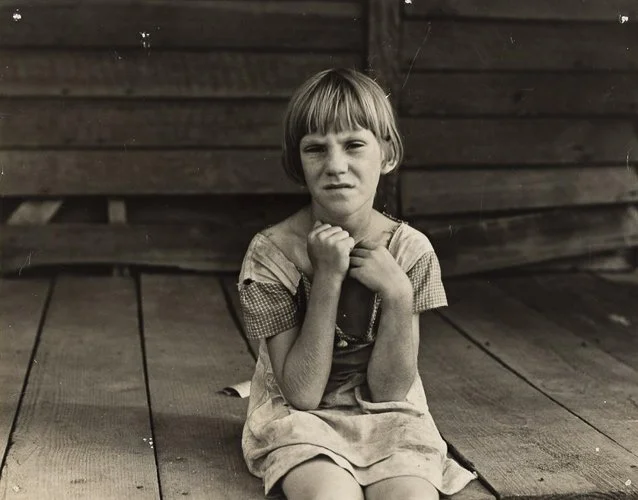
Dorothea Lange (1895–1965) came to portrait photography through a different route: social conscience and documentary necessity. Trained as a portrait photographer, she had run a successful commercial studio in San Francisco before the Depression forced her out of the studio and onto the streets. Working for the Farm Security Administration (FSA) from 1935, she documented the human effects of agricultural collapse and mass displacement across California and the American South, producing a body of work that constitutes the most important visual record of the Great Depression.
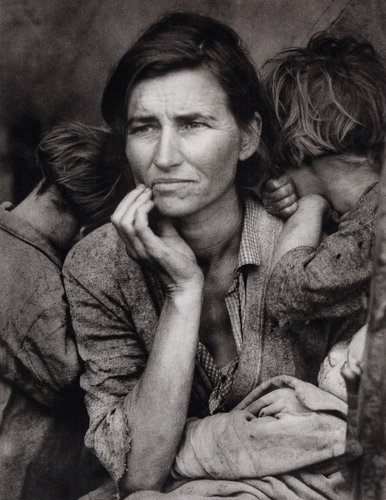
The image known as Migrant Mother, made in March 1936 in a pea-pickers' camp near Nipomo, California, is one of the most recognised photographs ever made. Its subject, Florence Owens Thompson, was thirty-two years old, a widow with seven children, and had recently sold the tyres of her car to buy food.
Lange made seven exposures, working progressively closer with each frame until she found the composition that would become iconic: the mother's face turned away, her expression combining worry, resignation, and a fierce protectiveness; two of her children burying their faces against her shoulders.
The image draws, probably unconsciously, on the visual tradition of the Madonna and Child, lending it a weight of association that transcended the specific circumstances. That Lange, in at least some accounts, did not ask Thompson's full name and did not tell her exactly how the images would be used is one of the uncomfortable complications in the history of documentary portraiture — the tension between the photographer's need to record and the subject's right to control their own representation.
Lange received a Guggenheim Fellowship in 1952 and continued to work until shortly before her death. Her later work on the Japanese American internment of the Second World War — photographs made under a US government commission but then suppressed by that same government as too sympathetic — is less celebrated than the FSA work but equally important.

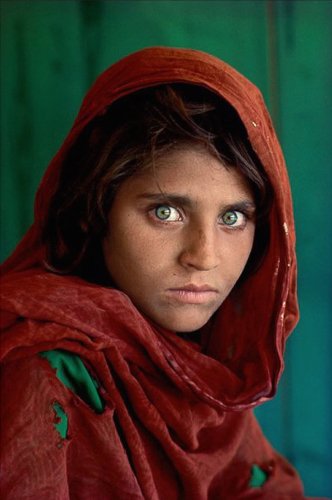
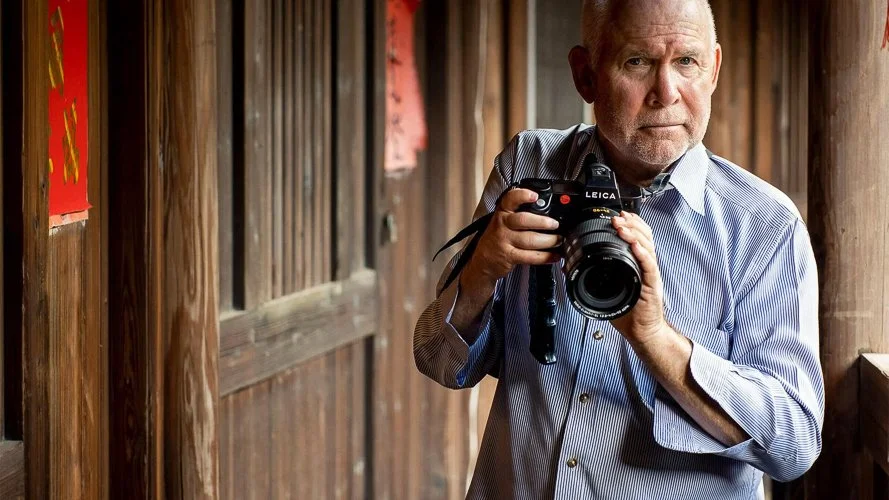
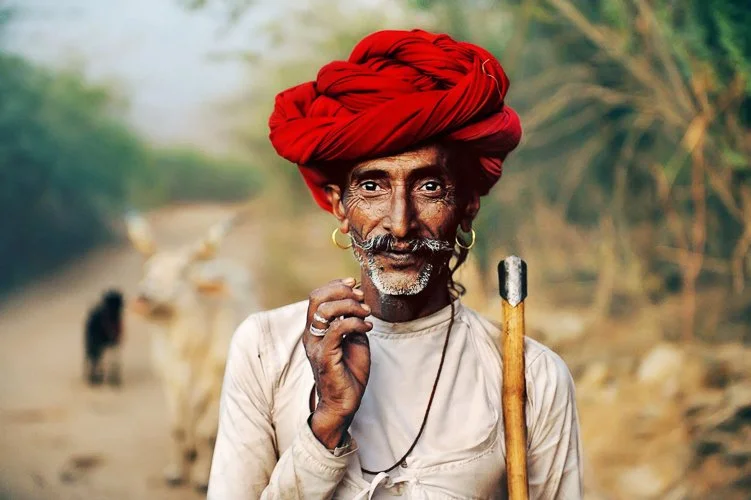
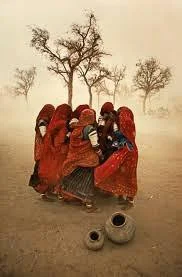
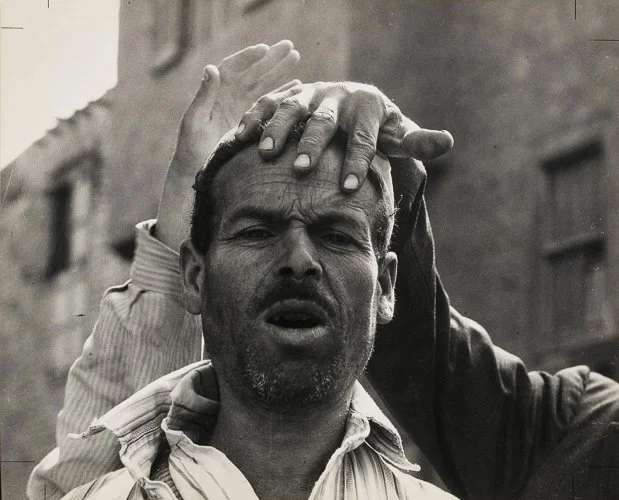
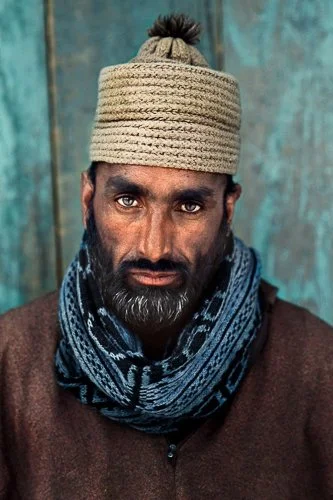
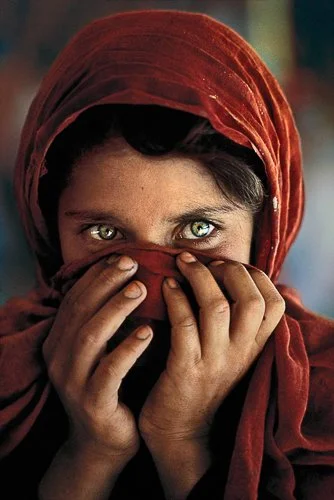
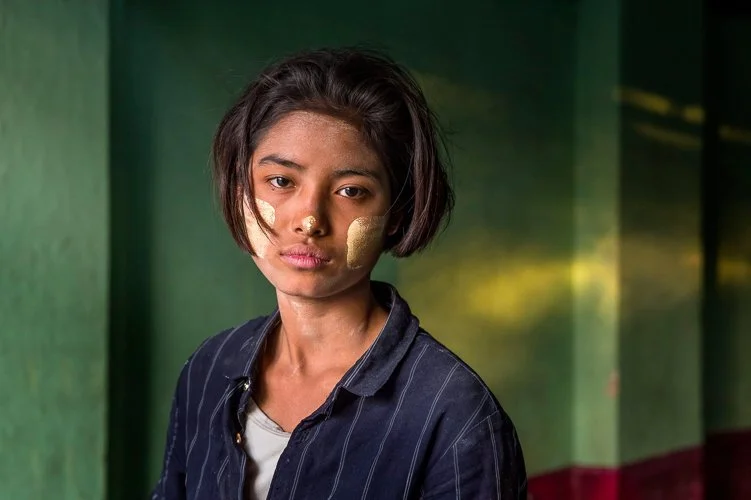
Steve McCurry (born 1950) is the photographer who, more than any other, defined the visual aesthetic of National Geographic portraiture in the late twentieth century: vivid colour, formal composition, direct eye contact, and a quality of psychological intimacy achieved through patience and physical closeness rather than telephoto distance.
His most famous photograph was made in 1984 at the Nasir Bagh refugee camp near Peshawar, Pakistan, in a makeshift school tent during the Soviet-Afghan War. His subject was a girl of approximately twelve — McCurry did not know her name — whose green eyes looked directly at the camera with an expression of such composed, unflinching intensity that the image was immediately recognised, on its publication on the June 1985 cover of National Geographic, as extraordinary. According to some calculations, it became the most published magazine cover photograph in history.
The image's ethical afterlife has been complex. In 2002, seventeen years after publication, McCurry and a National Geographic team located the woman, identified as Sharbat Gula, still living in Afghanistan. The story of the identification was itself a major news event. The debates about documentary portraiture that the image provoked — about the ethics of photographing refugees, about the relationship between aesthetic beauty and political context, about what it means to make an iconic image of a subject who has no say in its distribution — have not been settled.
McCurry's more recent career has been further complicated by a 2016 controversy over digitally altered photographs, which called into question the documentary integrity of images presented as unmanipulated. The questions raised are not specific to McCurry; they are structural questions about the relationship between photography, truth, and representation that the medium has never fully answered.
The British Portrait Tradition
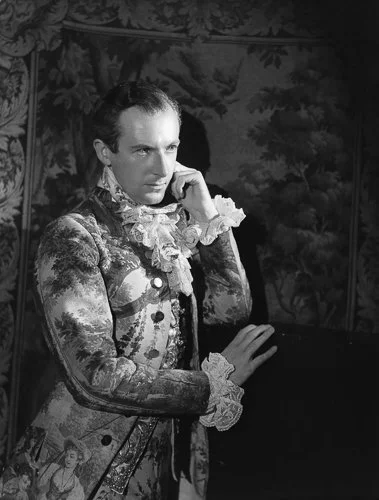
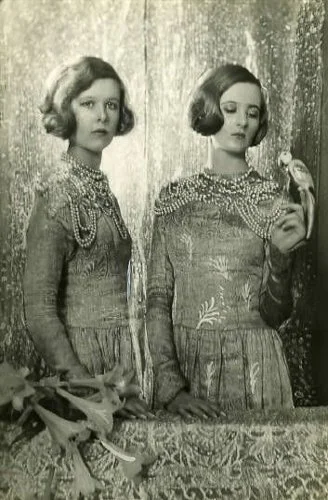
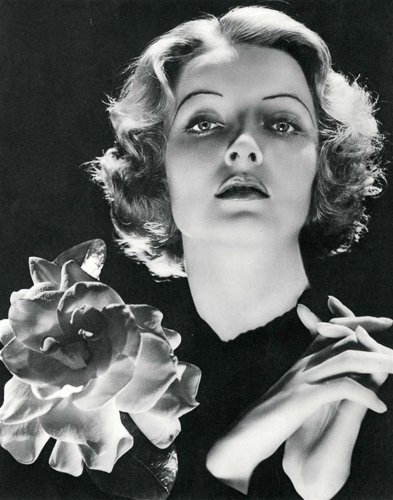
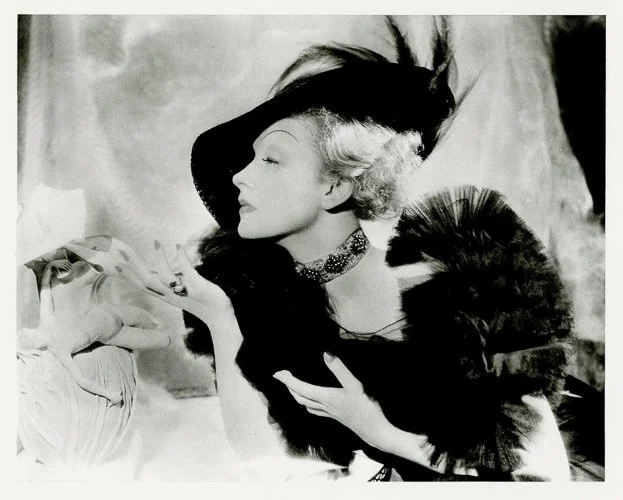
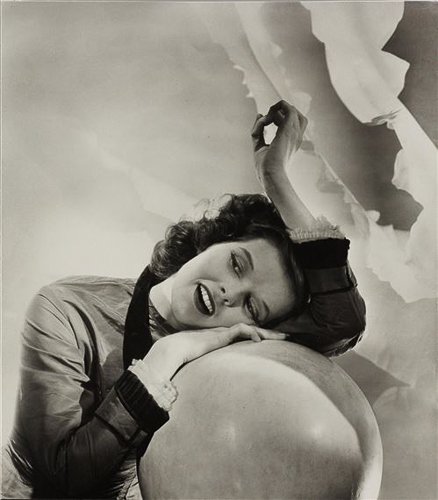
Cecil Beaton (1904–1980) understood portraiture as theatre before he understood it as photography. From his earliest work in the 1920s — portraits of his sisters Nancy and Baba, and of the bright young things of Mayfair, made with homemade equipment and elaborate improvised backdrops — through his six decades of work for Vogue and Vanity Fair, his approach to the portrait was that of a stage designer confronted with a single scene: costume, setting, light, and performance were all variables to be controlled.
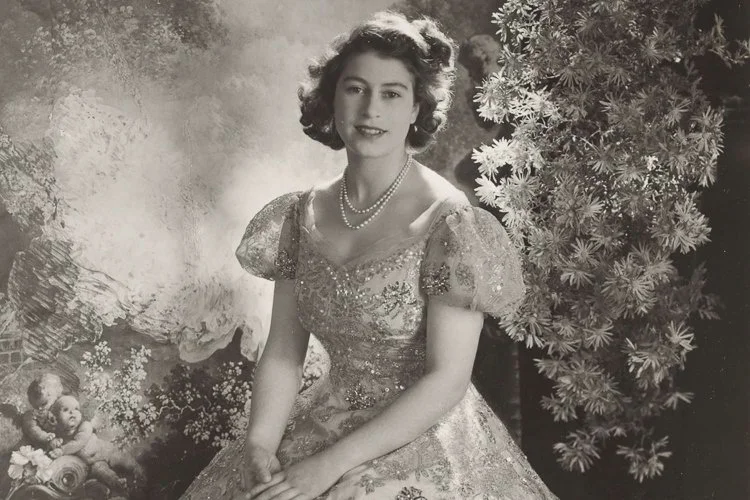
His royal portraits, begun in the 1930s and continuing for decades, were his most influential and most technically accomplished work. The 1939 photographs of Queen Elizabeth (later the Queen Mother), taken at Buckingham Palace in Cecil Beaton's signature style of elaborate garden settings and Tudor-revival clothing, established a visual language for royal portraiture that persisted for a generation.
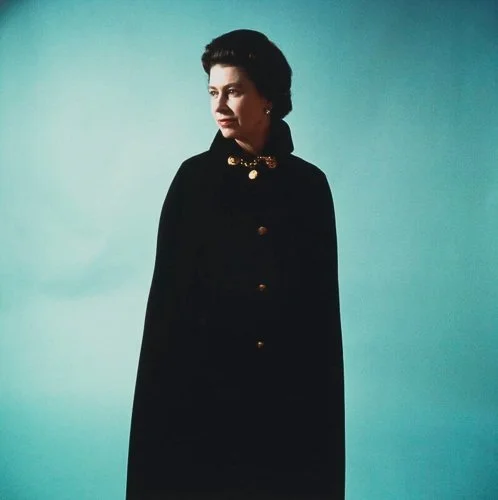
His later portraits of the young Queen Elizabeth II, particularly the coronation photographs of 1953, balanced formal splendour with a quality of genuine portraiture that went beyond mere pageantry. His 1968 portrait of the Queen, photographed in the Admiral's Boat Cloak against a simple blue background, stripped away all the conventional regalia and produced something unexpected: a contemplative, slightly remote image that was entirely unlike the usual declarative confidence of official portraiture.
Beaton was also, through his wartime photography for the Ministry of Information — pictures of the Blitz, of bomb damage, of civilian determination — a serious documentary photographer whose fashion persona sometimes obscured his range. His record of Blitz-damaged buildings, made as propaganda, endures as historical documentation. His costume and production design for Gigi (1958) and My Fair Lady (1964) demonstrate the completeness of his visual imagination beyond the portrait.
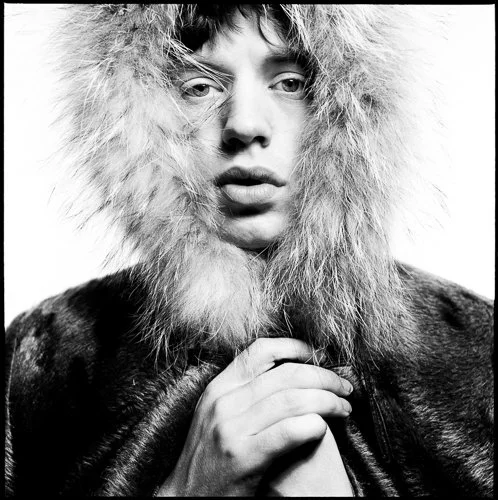
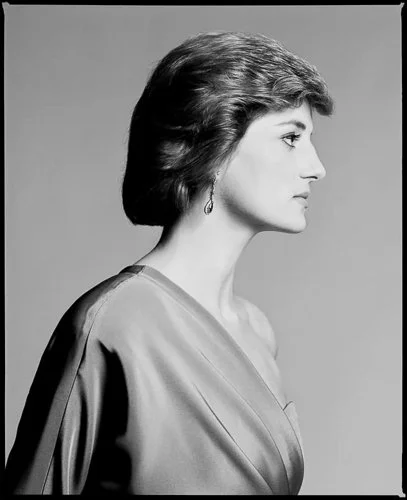
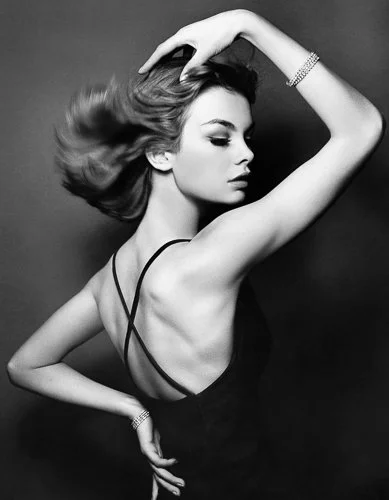
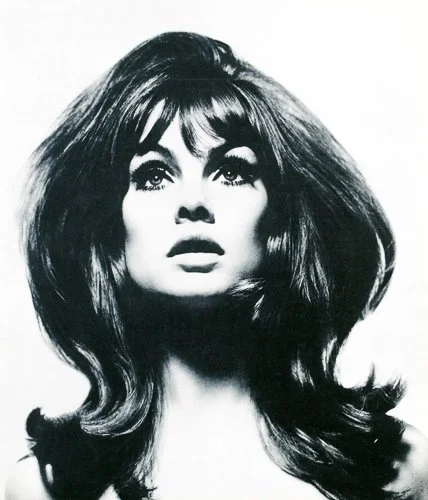
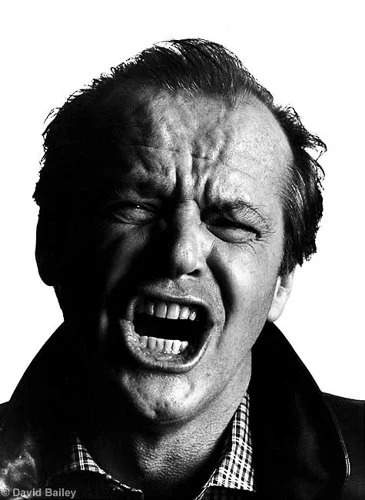
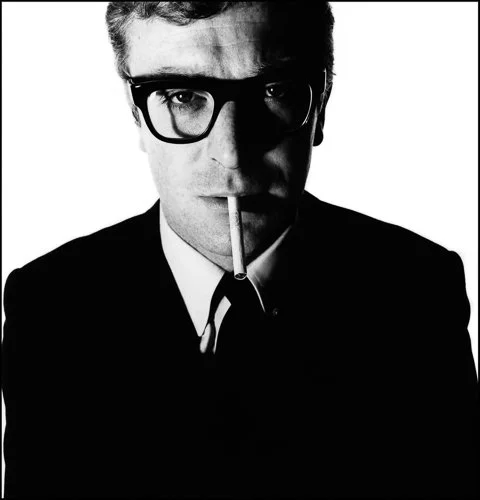
The social disruption represented by David Bailey (born 1938) is difficult to convey fully in retrospect, when the democratisation of fashion and media has made it merely normal. In 1960, a working-class boy from the East End of London, who became the most fashionable portrait photographer in Britain — photographing the Beatles, the Rolling Stones, Jean Shrimpton, Mick Jagger, and the entire cast of the swinging sixties with a directness and lack of deference that made his images feel like dispatches from a genuinely new world — was not normal. It was, for the period and the establishment, somewhat disturbing.
Bailey's technique was, in formal terms, relatively simple: stark backgrounds, direct light, close framing, kinetic energy. The magic was relational. Bailey's subjects, whether rock stars or dock labourers, responded to him as an equal rather than as an employer, and the equality showed in the images.
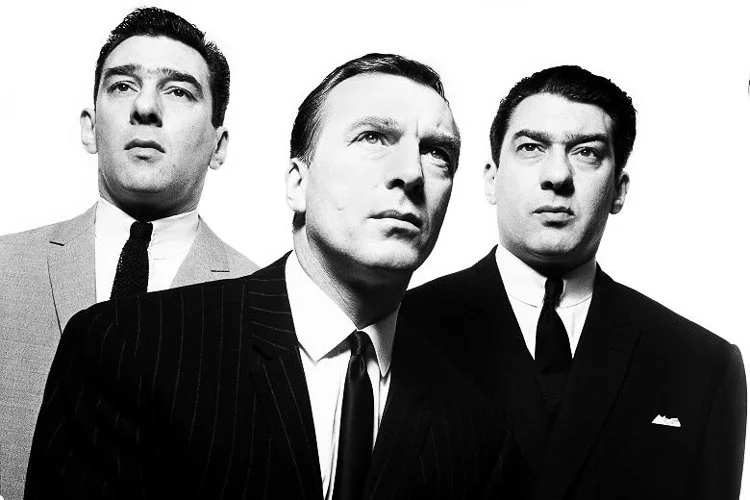
His 1965 Box of Pin-Ups — a boxed set of thirty-six 16 × 12 inch portraits of figures from London in the mid-1960s, ranging from Jagger and McCartney to the Kray twins — is a document of a cultural moment as much as a body of portrait work. The fact that the Krays sit in the box alongside the Beatles without apparent irony is, in retrospect, one of the more unsettling aspects of the period's self-image.
Bailey has continued to work across six decades, adapting his aesthetic without abandoning its fundamental directness, and producing in later life a series of environmental portrait projects — particularly his work in New Guinea, which sits in instructive comparison with Penn's — that demonstrate a range beyond the sixties iconography he is most readily identified with.
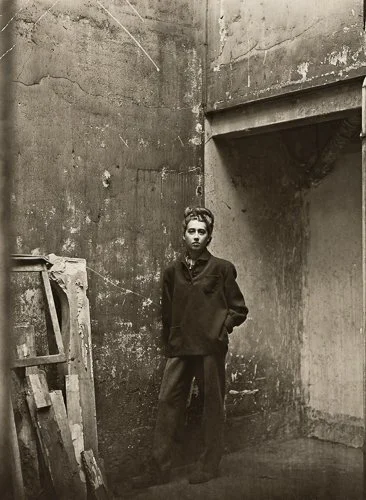
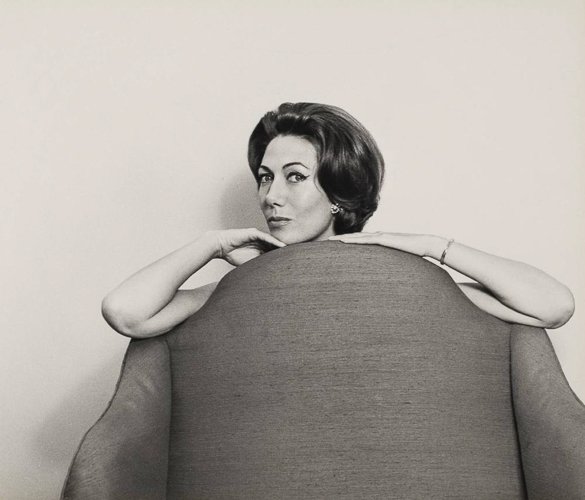
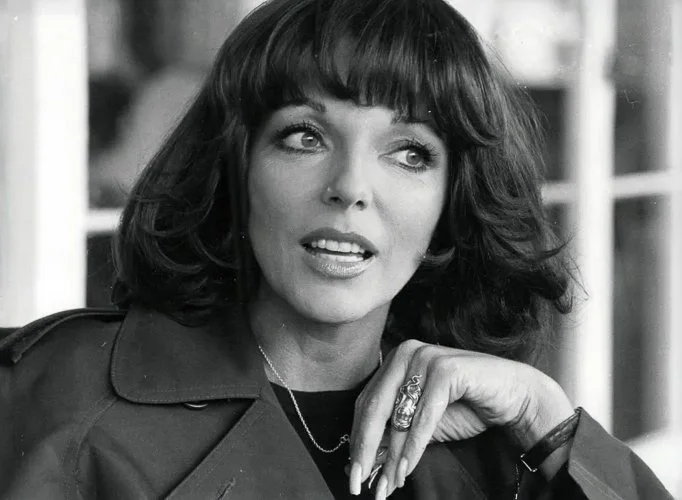
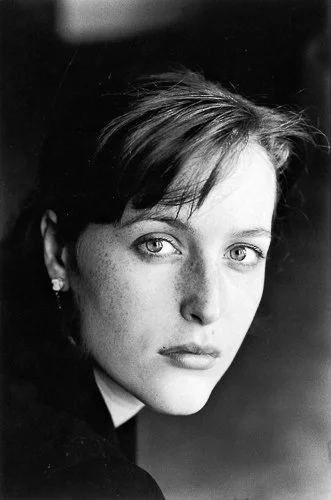
Jane Bown (1925–2014) occupied a position in British portrait photography that was the antithesis of Beaton's theatrical elaboration and Bailey's swaggering modernity. For sixty years she worked as a staff photographer for The Observer, making portraits with an Olympus OM-1, available light, a single 50mm lens, and no assistant. She never used a light meter. She rarely shot more than two rolls of film per sitting. She worked fast, quietly, and with a self-effacement that put subjects so thoroughly at ease that they often forgot she was there.
The results were portraits of an intimacy that more elaborately equipped photographers struggled to achieve. Her photograph of Samuel Beckett (1976) — made in a Paris hotel room with window light — is one of the finest portrait photographs ever made in Britain: a face of such accumulated severity and intelligence that the lens seems almost to flinch.
Her portraits of the Queen, made across multiple decades, show a woman variously composed, weary, and — in the later sittings — something approaching frank. Lord Snowdon described her work as comparable to "the British Cartier-Bresson", which is accurate in its implication: like Cartier-Bresson, Bown had such an instinctive sense of the decisive moment that her images look discovered rather than made.
One of her most celebrated portraits was not made at all. She arrived for a forty-five-minute session with John Lennon to find that he had already left. The photographs she made that day — of Lennon having returned, reading a newspaper in a corridor — were taken in approximately five minutes, with Lennon barely aware she was there. They are among the most natural images of him in existence.
Fashion, Commerce & the Celebrity Portrait
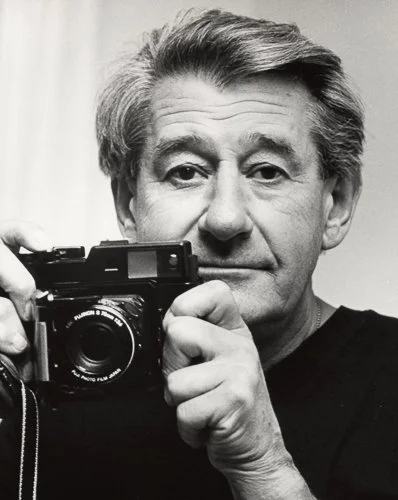
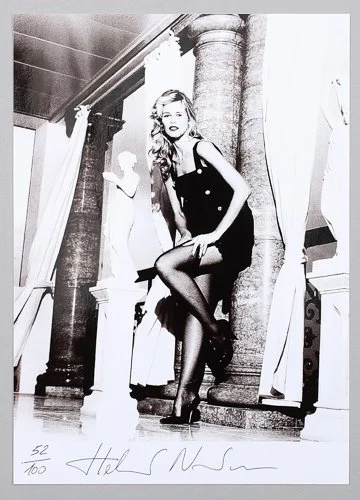
Helmut Newton (1920–2004) was born Helmut Neustädter in Berlin, the son of a prosperous Jewish button manufacturer, and was photographing the city's nightlife as a teenager when the National Socialists came to power. In 1938, following the November pogrom, he left Germany for Singapore via Australia, eventually settling in Melbourne after the war and then, in the 1950s, moving to Paris, where his work for Vogue Paris and other fashion magazines established him as one of the most technically and conceptually distinctive photographers in commercial fashion.
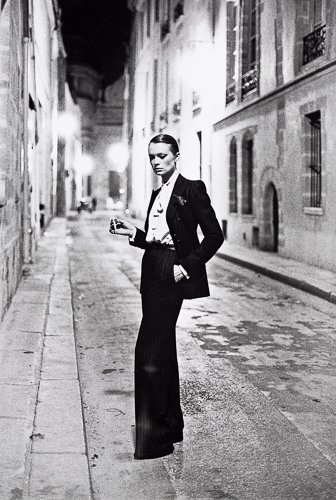
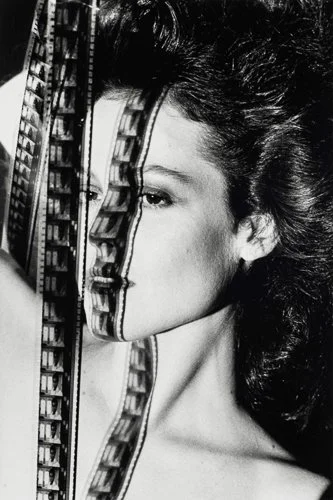
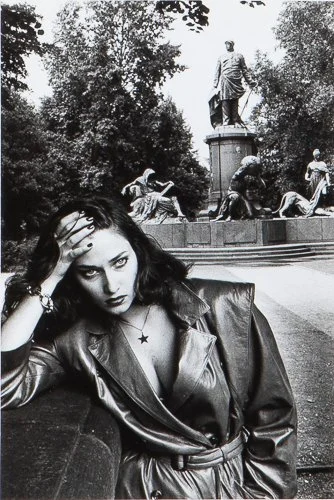
Newton's portraits are inseparable from his broader approach to fashion photography, which inverted the conventional grammar of glamour. Where the dominant tradition in fashion portraiture had presented women as objects of a male gaze — beautiful, available, decorative — Newton's images presented women as the subjects of their own power.
His female subjects are dominant, watchful, frequently dressed in male clothing or positioned in attitudes of command. The images are unambiguously erotic, but the eroticism is predatory in a direction that conventional fashion photography rarely explored. Whether this constitutes a feminist inversion of the male gaze or a more sophisticated version of the same objectification is a debate that Newton himself delighted in declining to resolve.
His Sumo (1999), a 70 × 68 cm monograph weighing thirty-five kilograms and designed by Marc Newson, was both a summary of his career and a monument to the proposition that a photography book could itself be a luxury object. Newton died in January 2004 when his car accelerated uncontrollably while leaving the Chateau Marmont in West Hollywood, striking a wall. He was eighty-three. His work remains as technically accomplished and as morally unresolved as it was during his lifetime.
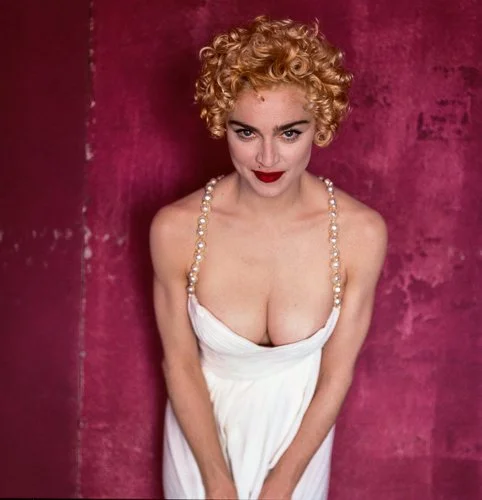
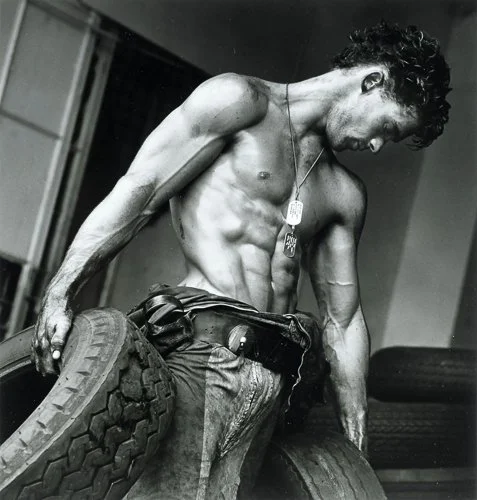
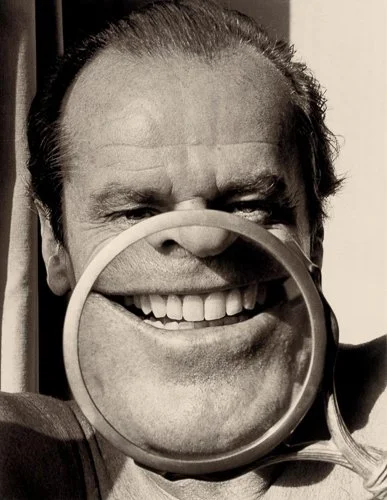
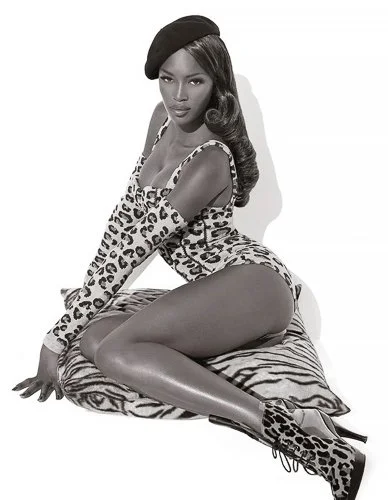
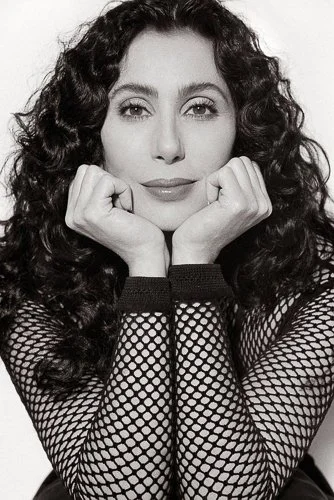
Herb Ritts (1952–2002) worked in a tradition of Californian classicism that was entirely his own in execution if not in concept. His portraits — of Madonna, Cindy Crawford, Richard Gere, Janet Jackson, and dozens of others — used the clear, shadowless light of the California afternoon and the sculptural possibilities of the human form to produce images that looked simultaneously ancient and contemporary: the bodies of Hollywood celebrities rendered with the formal attention one might give to Greek kouroi.
Ritts was largely self-taught, and his aesthetic, shaped by classical sculpture and the photography of Horst P. Horst and George Hoyningen-Huene, remained consistent across his career. He was also a committed HIV/AIDS activist, raising substantial funds through his work and his public platform during the epidemic's worst years.

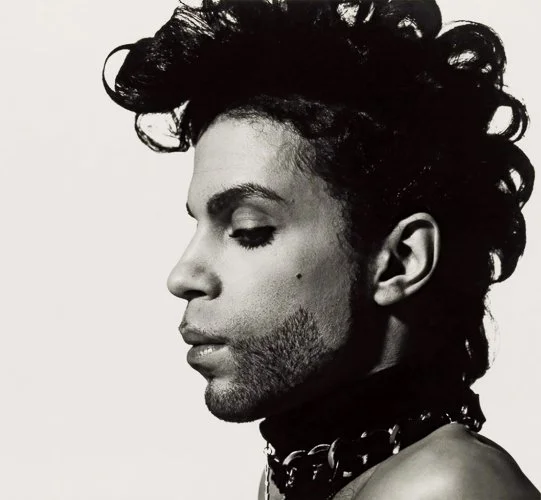
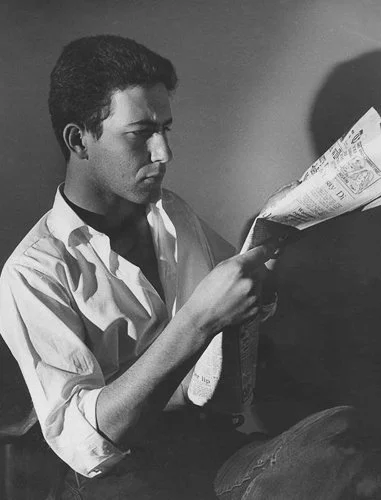
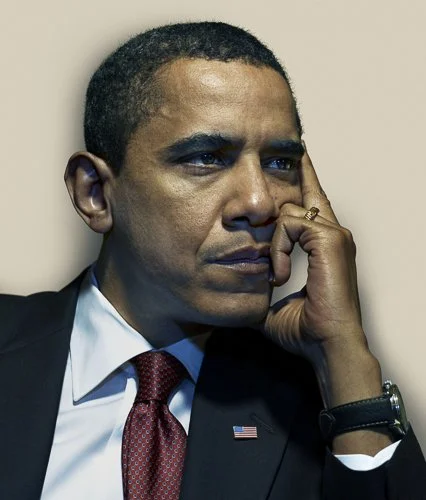

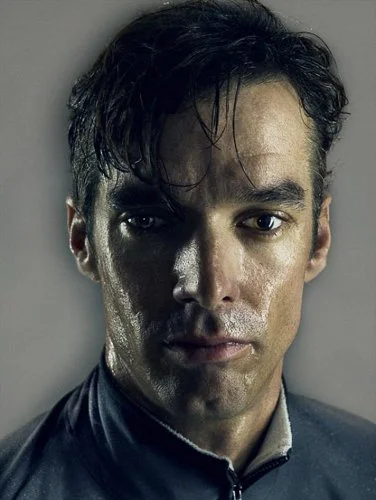
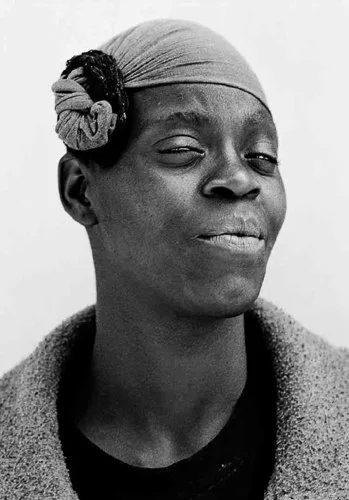
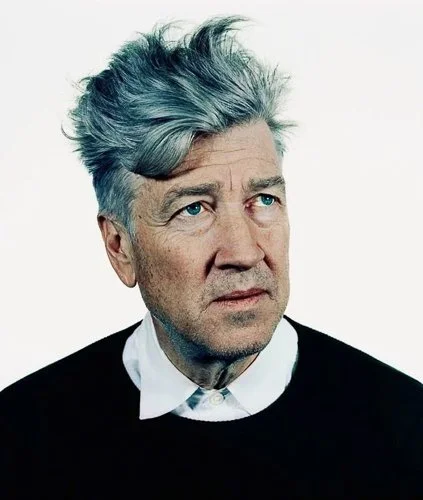
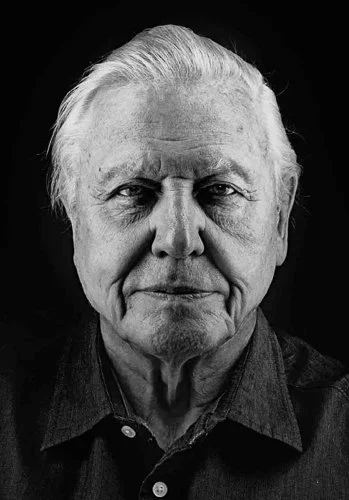
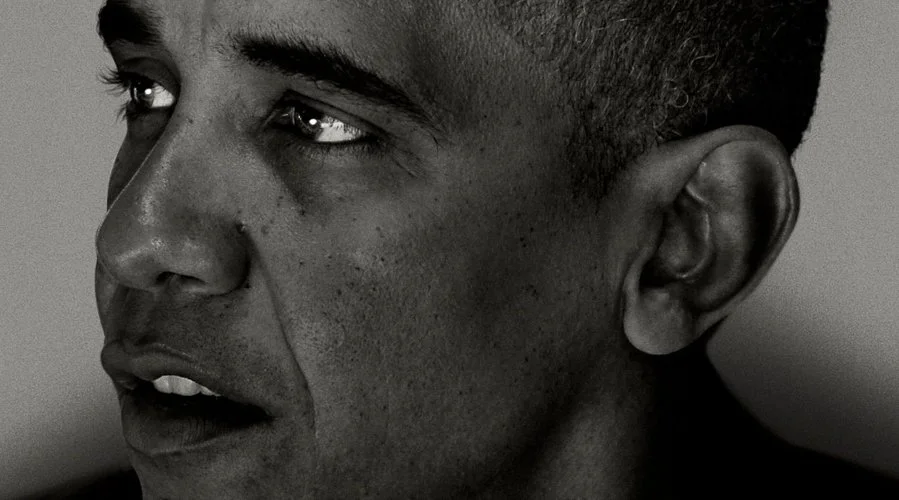
Nadav Kander (born 1961), born in Israel and based in London, represents one of the most significant British portrait photographers working in the early twenty-first century. His Obama's People series, commissioned by The New York Times Magazine in November 2008 in the weeks between the election and the inauguration, comprised fifty-two colour portraits of the incoming administration's key figures — cabinet secretaries-designate, advisers, senior aides, and the President-elect himself — made in a single week of intensive shooting in Washington. The series was published as a special issue of the magazine, with each portrait given a full page; the issue subsequently became a collector's item.
What distinguished the Obama's People portraits from comparable political commissions was their psychological quietude. Kander's subjects, caught in the brief interval between election triumph and the full weight of governance, appear simultaneously energised and, in some cases, not entirely certain what they have taken on.
The lighting is even and warm; the backgrounds are plain; the compositions are formal but not stiff. The series as a whole has the quality of a social document, recording a specific moment in American political history with a precision that individual portraits, however accomplished, cannot achieve.
Kander's earlier Yangtze — The Long River project (2006), which won the Deutsche Börse Photography Prize in 2009 (often referred to, somewhat informally, as the Turner Prize for Photography), documented the communities along the Yangtze River in China facing displacement by the Three Gorges Dam with large-scale photographs of comparable stillness and psychological space.
The relationship between his landscape and portrait work — his own stated view that he does not see a fundamental distinction between a portrait of a person and a landscape bearing the marks of human presence — is one of the distinctive conceptual features of his practice.
Self-Portraiture & Identity
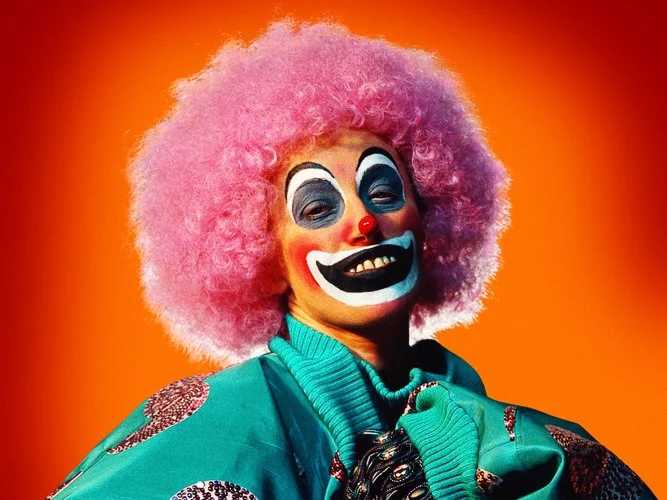
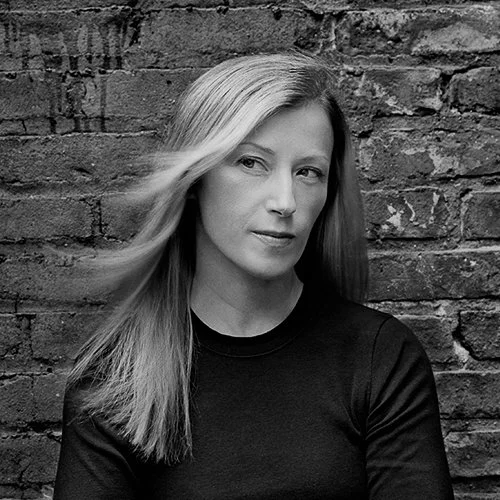
Cindy Sherman (born 1954) is, in the most technically accurate sense, the most self-photographed artist in the history of the medium. Every photograph she has made since 1975 has featured herself as its subject. Yet the claim that she makes self-portraits is one she has consistently complicated and resisted, because "Cindy Sherman" — the specific person, with specific history, specific relationships, specific opinions — is almost entirely absent from her images. What appears in them is not her: it is a succession of constructed personae, each built from costume, wig, prosthetics, makeup, setting, and the particular quality of attention she directs at herself in the lens.
Her Untitled Film Stills (1977–1980), a series of sixty-nine black-and-white photographs made in New York City and its outskirts over three years, shows Sherman as an unnamed woman in scenarios drawn from the visual grammar of late 1950s and early 1960s Hollywood B-movies and European art cinema.
The settings are generic — a kitchen, a library, a city street, a motel room — and so are the characters: the working girl, the housewife, the ingénue, the femme fatale. None of these characters is identifiable as a real person; all are recognisable as types.
The achievement of the series is to make the viewer aware, in a way that is difficult to articulate but impossible to ignore, that these types are constructions — that the femininity being portrayed is not natural but performed, assembled from a cultural repertoire of images and expectations that women learn to navigate from childhood. Sherman makes this argument not through commentary but through embodiment: she does not write about female stereotypes; she inhabits them and, in inhabiting them, exposes the machinery of their construction.
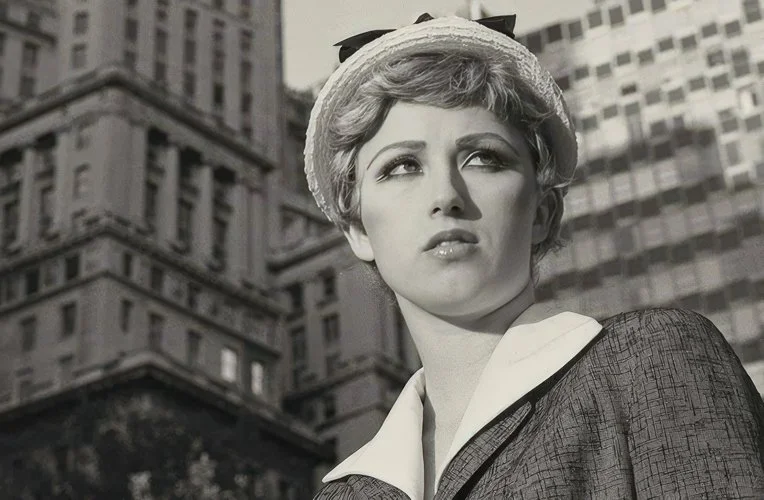
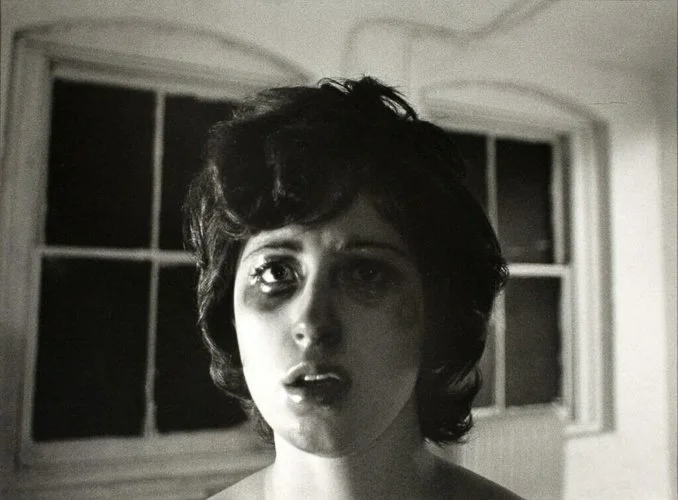
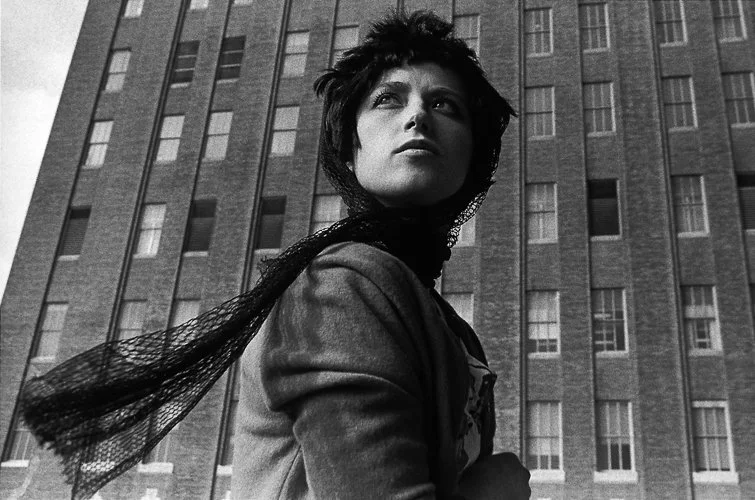
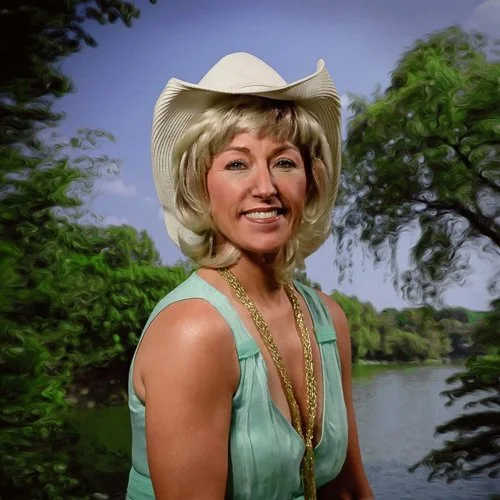
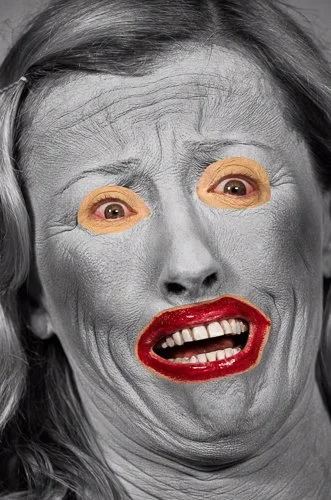
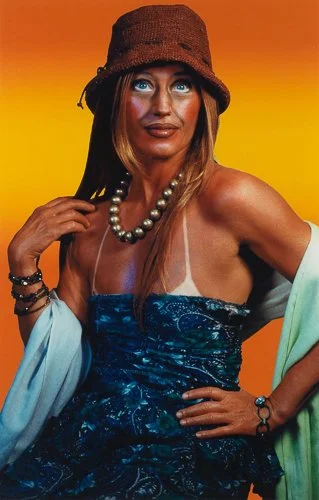
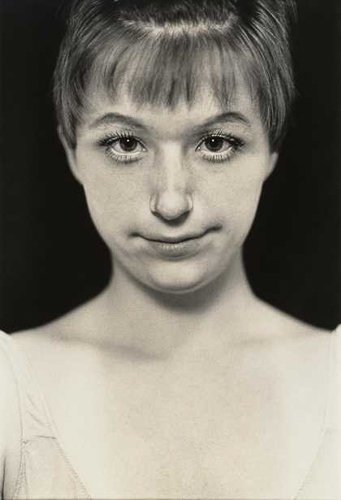
The Museum of Modern Art in New York bought the Untitled Film Stills in their entirety in 1995. The series is now one of the canonical works of late-twentieth-century art, cited in discussions of feminism, representation theory, postmodernism, and photography's relationship to cinema.
Sherman's subsequent series — Centerfolds (1981), History Portraits (1988–1990, in which she impersonated figures from Old Master paintings), Sex Pictures (1992), Clowns (2003–2004), Society Portraits (2008) — have extended the same fundamental inquiry into different registers of cultural representation, with a consistency of conceptual purpose and a range of technical and performative invention that marks her as one of the most serious artists working in the photographic medium.
The broader tradition of self-portraiture in photography — from Robert Cornelius's accidental invention of the form in 1839 through to the contemporary smartphone selfie — has remained structurally consistent even as its scale and accessibility have transformed beyond recognition.
What has changed is the friction: Cornelius needed fifteen minutes of stillness, a laboratory, and a set of chemicals to make his self-portrait; a contemporary smartphone user needs less than a second. What has not changed is the fundamental gesture — the turning of the recording apparatus on the self, and the complex mixture of self-examination, self-projection, and self-construction that the gesture implies.
The Close-Up & the Typological Survey
Martin Schoeller (born 1968) extended the typological logic of August Sander into the age of digital large-format photography with a system so precisely calibrated and so uniformly applied that the results amount to a kind of scientific protocol for the human face.
Schoeller works with a large-format camera — originally an analogue medium-format system, later high-resolution digital — and a fixed lighting arrangement of two large softboxes positioned to eliminate all directional shadow. The framing is always the same: a tight crop on the face, centred on the eyes, with no visible environment and minimal variation in expression. The subject is simply there, in full light, with nowhere to hide.
The effect is discomforting and democratic in equal measure. Printed at the scale Schoeller favours — sometimes 40 × 50 inches or larger — a face reveals things that ordinary photographic distances conceal: pores, asymmetries, the uneven distribution of pigment in the iris, the precise geometry of an individual's particular features.
Made at this scale and with this system, a portrait of Barack Obama and a portrait of a homeless man in the same city look, technically, identical. The difference between them is not in the photograph's approach to its subject; it is entirely in the subject. This enforced equality is the work's most significant quality, and its most uncomfortable one: confronted with faces treated identically regardless of their fame or social position, the viewer is denied the usual cues for differential engagement.
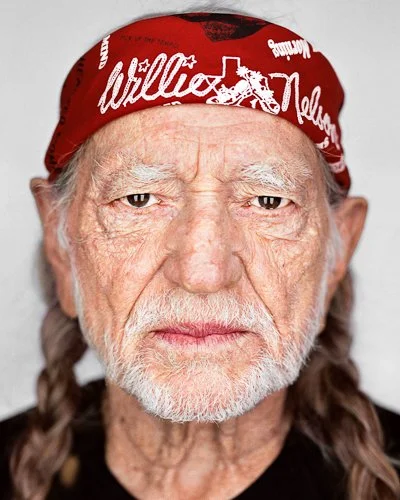
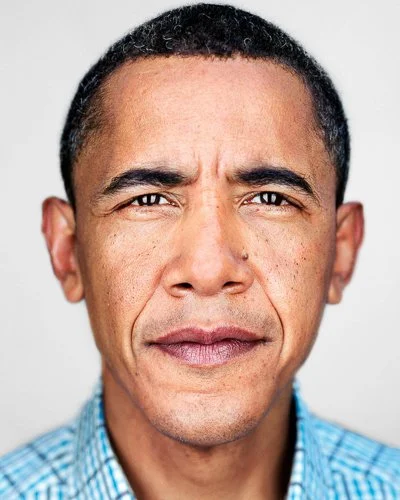
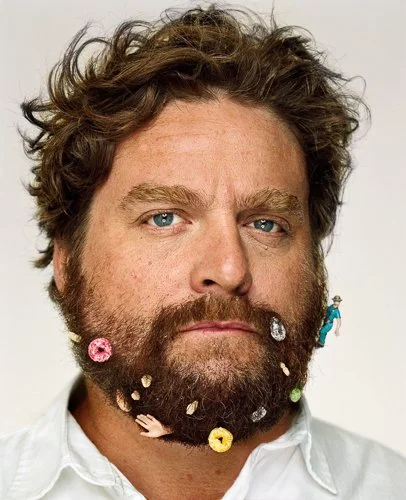
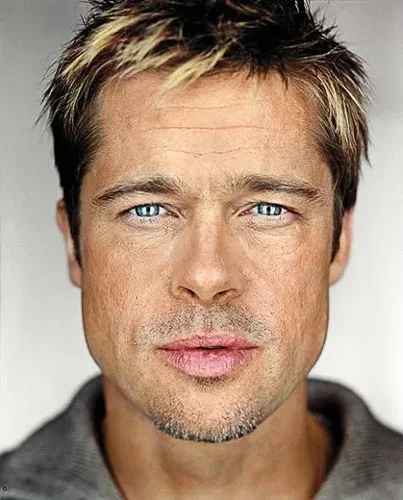
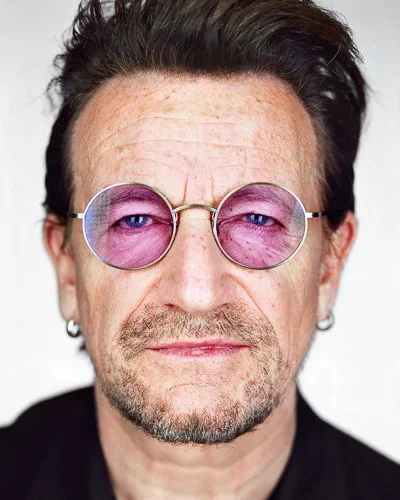
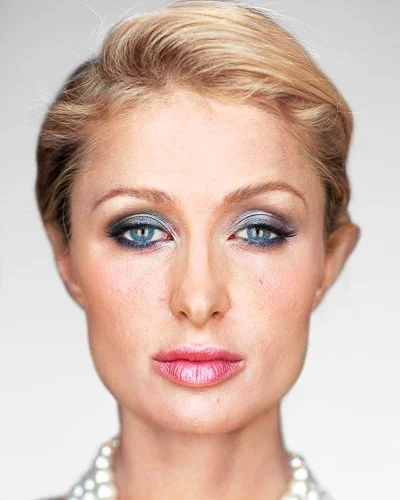
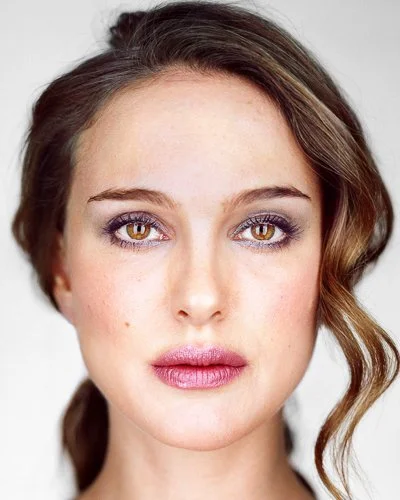
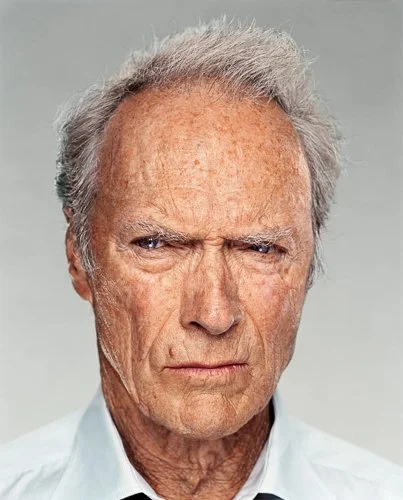
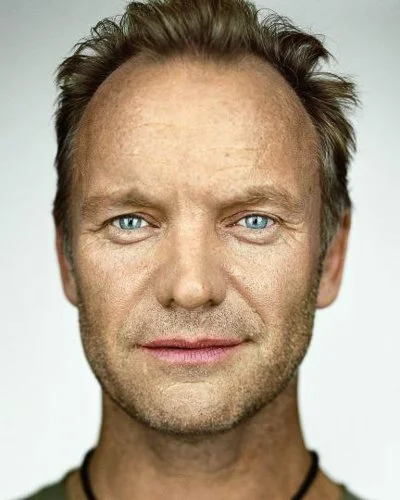
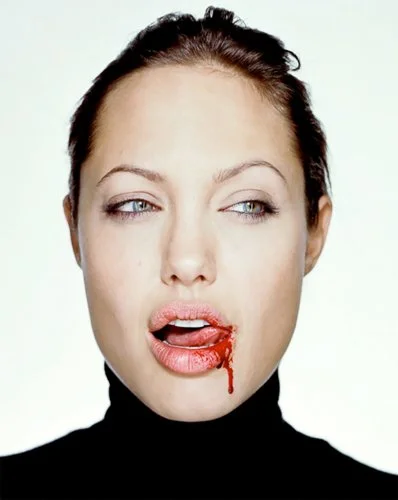
Schoeller's Close Up series and his Female Bodybuilders (2000) — in which the same system was applied to women whose bodies transgressed conventional gender expectations — are his most sustained bodies of typological work, but the approach informs all his portraiture, including his celebrity work for The New Yorker, Time, and other publications.
The typological survey tradition in which Schoeller's work participates descends from Sander through the Düsseldorf School — the photographic tradition associated with Bernd and Hilla Becher and their students at the Kunstakademie Düsseldorf, which included Andreas Gursky, Thomas Struth, and Thomas Ruff (born 1958).
Ruff's Porträts series (1986–1991) brought the serial logic of conceptual photography to the portrait in a particularly austere form: large-scale colour photographs made against neutral backgrounds with flat, even lighting, sized to approximately six feet high, that function as portrait photographs only in the most technically minimal sense.
They are the size of Old Master portraits, frontal and direct like passport photographs, devoid of psychological or environmental context. What they document is not character or interiority but the face's irreducible physical specificity — the fact that this arrangement of features, at this moment, existed. The Porträts are not portraits in the tradition of Cameron or Karsh or Avedon; they are arguments about what a portrait is, and about what, if anything, a face can be said to reveal.
The Humanist Documentary Portrait
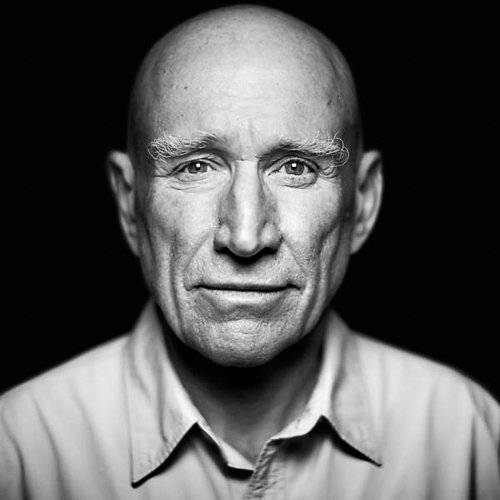
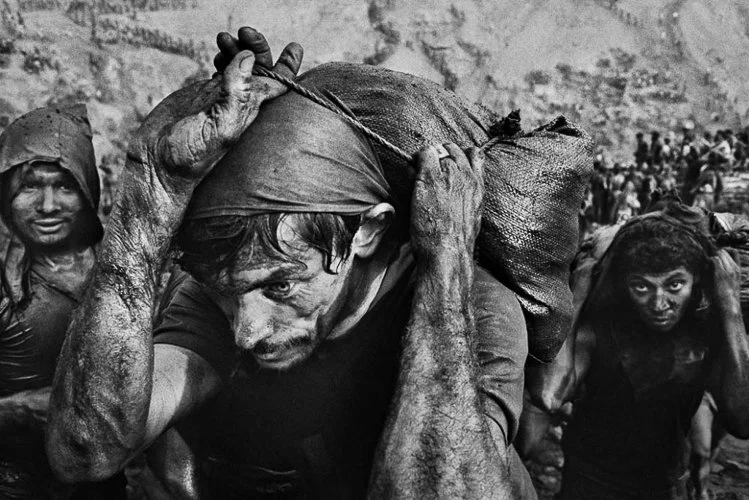
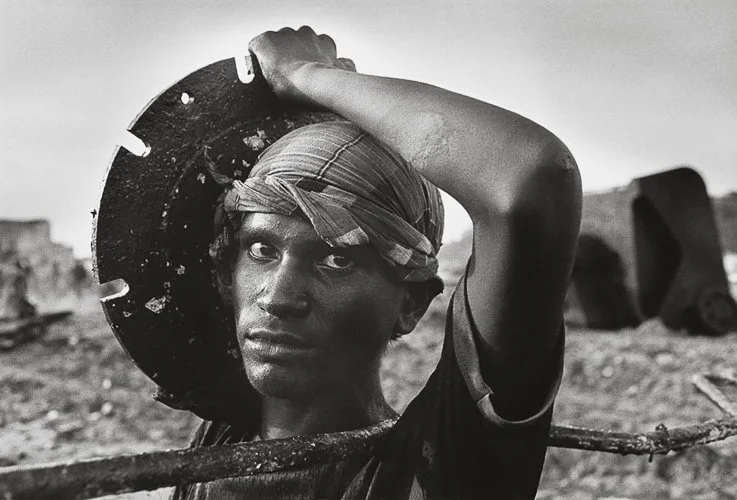
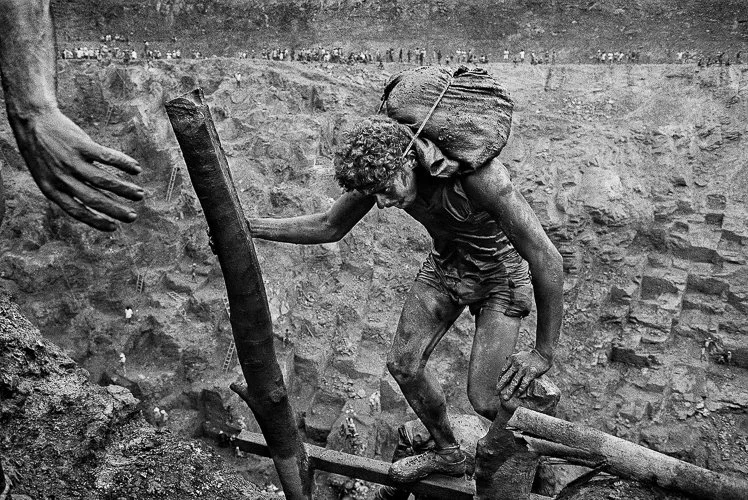
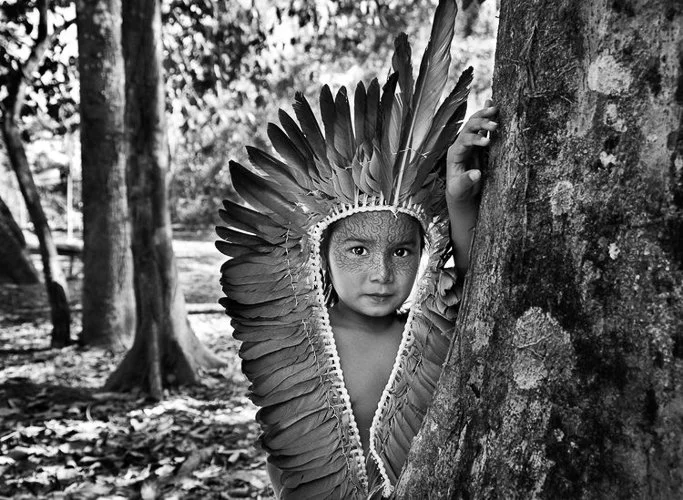
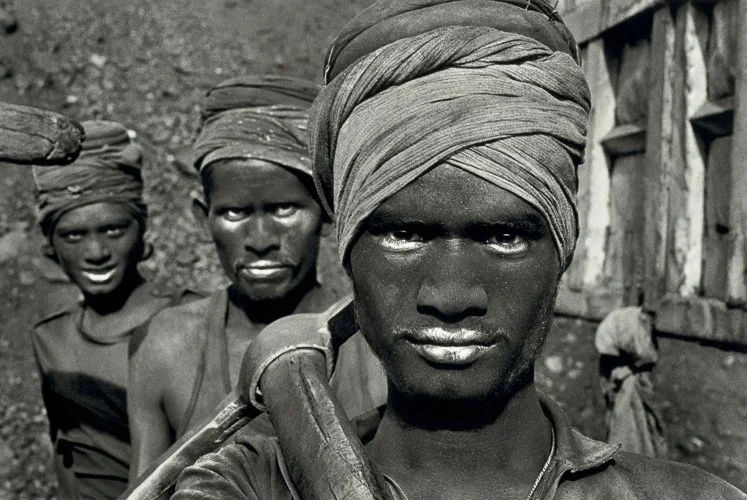
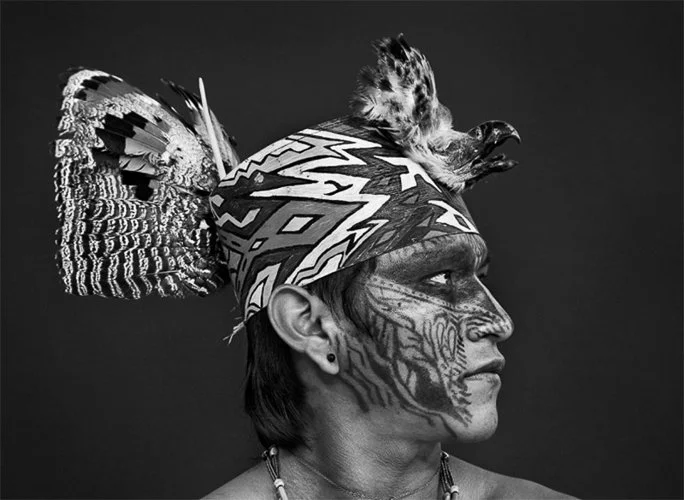
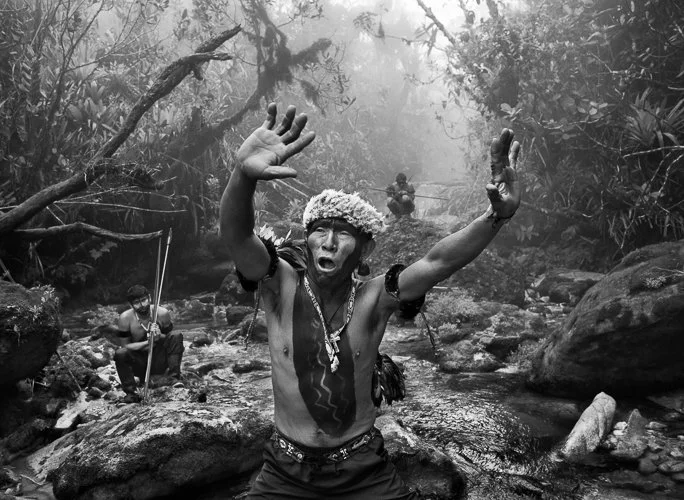
Sebastião Salgado (born 1944) trained as an economist at the University of São Paulo and worked for the Brazilian government and the International Coffee Organisation before taking up photography in the early 1970s. He became one of the most formally accomplished and emotionally powerful documentary photographers of the late twentieth century, and one of the most controversial.
His major projects are sustained, multi-year studies of global conditions: Workers (1986–1992), documenting the last generation of manual industrial labour worldwide, from Serra Pelada's gold mine in Brazil to the Siberian oilfields; Migrations (1993–1999), following the displacement of populations across Africa, Asia, and Latin America; Genesis (2004–2011), documenting landscapes and indigenous communities relatively untouched by industrialisation.
Each project required years of travel, of building trust with communities, of technical and editorial work. The resulting photographs are made in large-format black and white and processed to a tonal richness that gives them a quality of weight and permanence.
The controversy surrounding Salgado's work is not about his technique or his access, but about the relationship between the aesthetic beauty of his images and their documentary content. Susan Sontag, in Regarding the Pain of Others (2003), argued that aesthetically compelling photographs of suffering might produce a form of aesthetic pleasure that was at odds with — or even actively undermined — their intended moral engagement.
The argument is not without force: there is a real question about whether an image of mass suffering that is also, formally speaking, beautiful invites the viewer to contemplate its beauty rather than its subject. Salgado's response — that beauty and dignity are inseparable, that photographs that respect their subjects must also respect their formal qualities — is also not without force. The debate has not been, and probably cannot be, definitively resolved.
His commitment to environmental restoration through the Instituto Terra, the organisation he and his wife Lélia founded in 1998 to restore the Atlantic Forest on their family's former cattle farm in Minas Gerais, adds a biographical dimension to his work's themes: the photographer who has spent decades documenting the degradation of the world has spent the second half of his life attempting, on a small scale, to repair it.
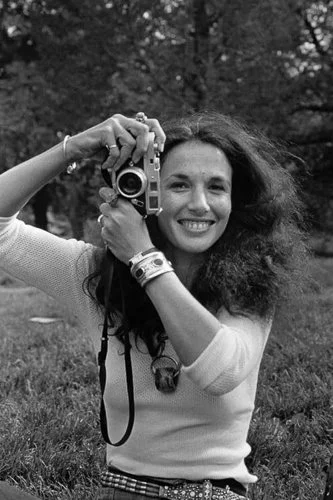
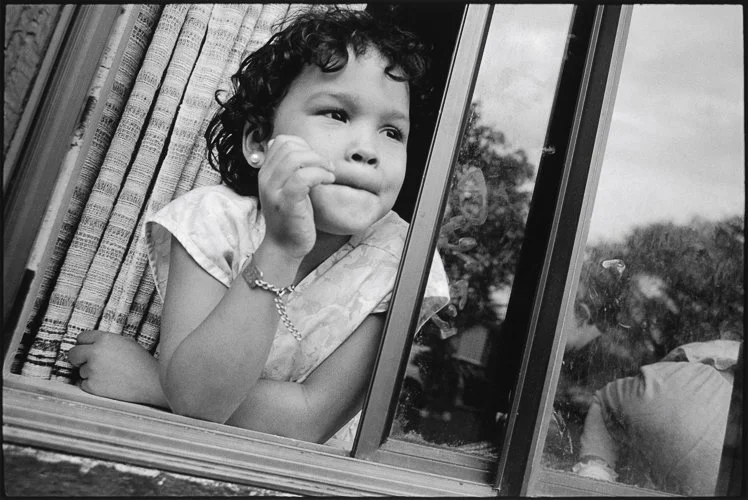
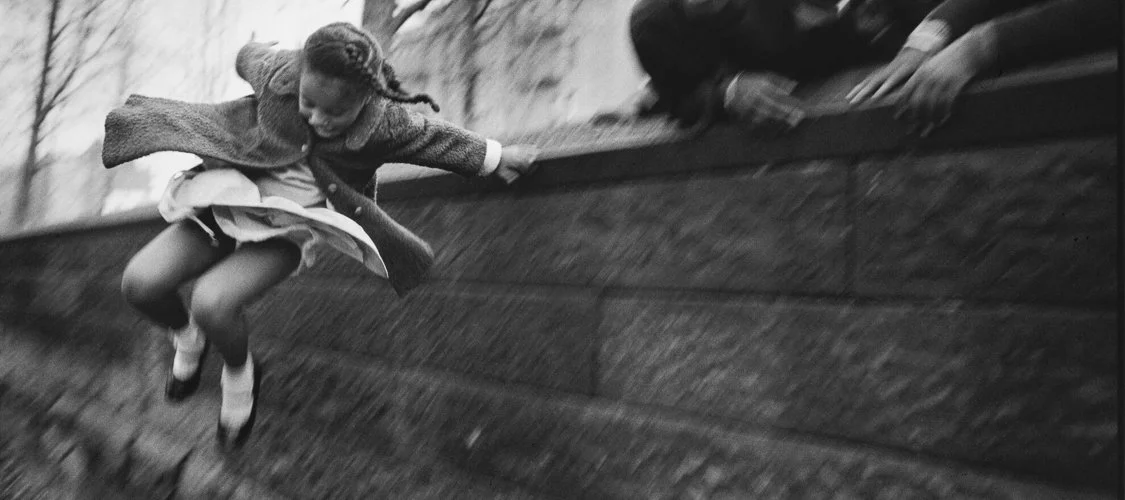
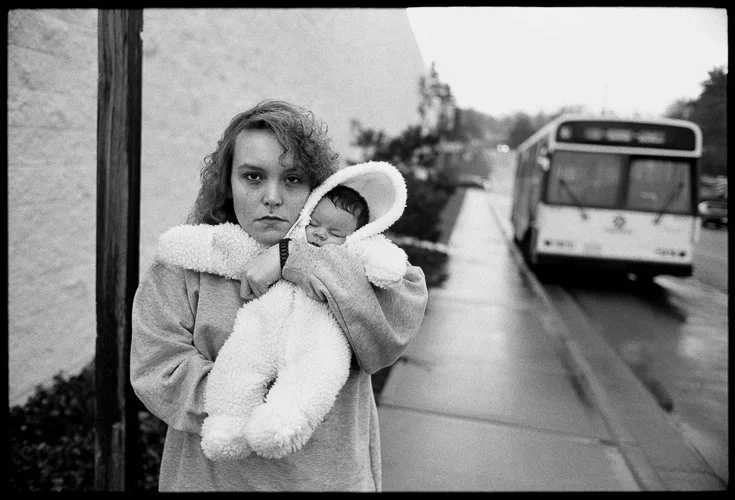
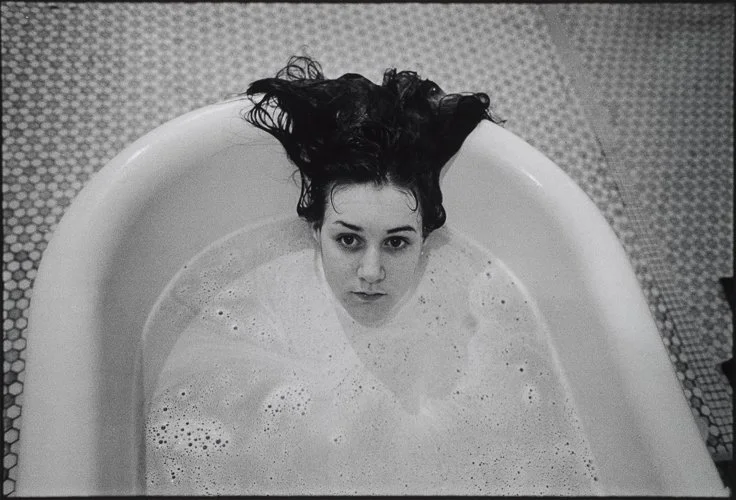
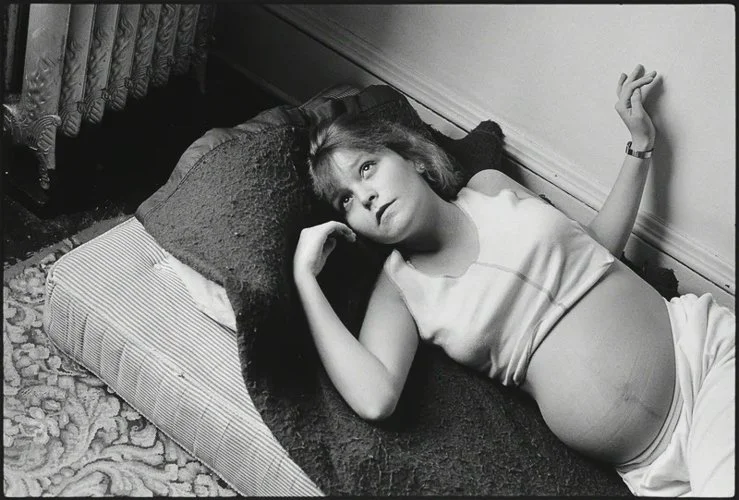
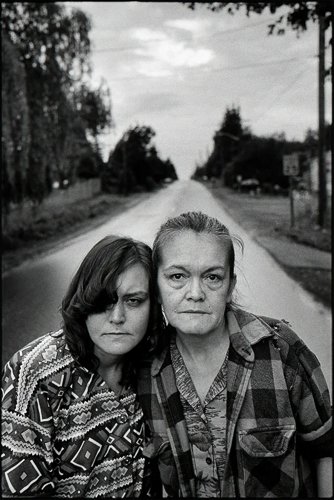
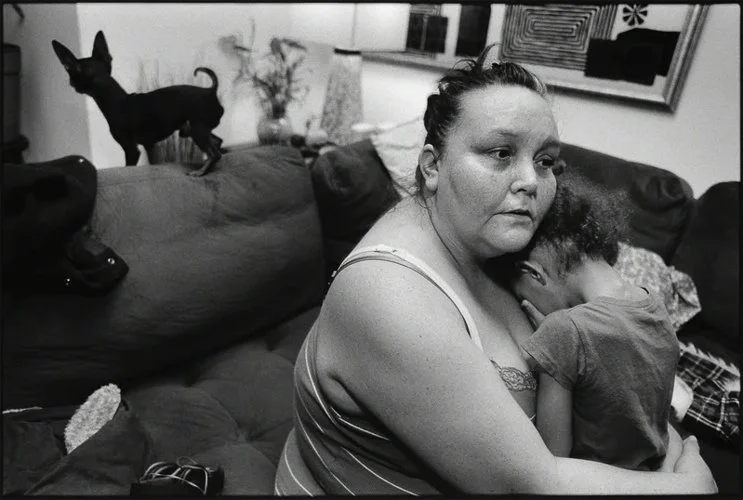
Mary Ellen Mark (1940–2015) was the heir to a tradition of sustained documentary portraiture whose methodological foundation was time. Mark did not make portraits of strangers; she made portraits of people she had spent months or years with, who had long since accustomed themselves to her presence, and for whom the camera was no longer a foreign object. This approach required patience and a willingness to be changed by the work, and it produced images of an intimacy that more rapid methods cannot achieve.
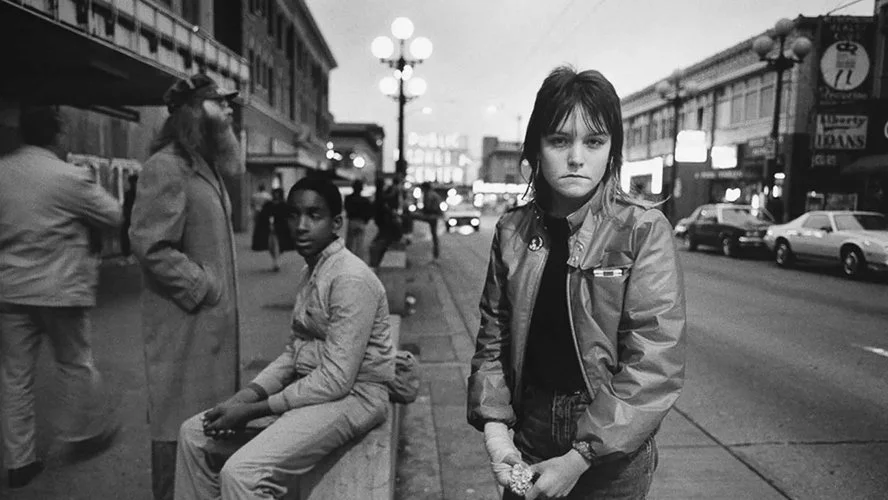
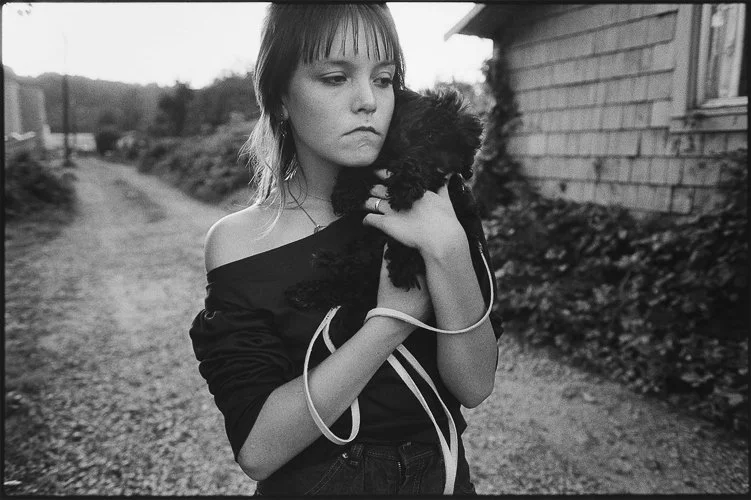
Her Ward 81 project (1976), made during a four-month residency in the locked women's ward at Oregon State Hospital, and her Falkland Road project (1981), documenting the prostitutes of a Bombay street over a sustained period of access, exemplify the method. Her Streetwise project (1983–1984), documenting homeless teenagers in Seattle, produced both a still photography series and a documentary film made with her husband, the director Martin Bell, that together constitute one of the most complete documentary accounts of urban youth homelessness ever made.
The emotional centre of Streetwise was a thirteen-year-old runaway named Erin Blackwell, known as Tiny, whom Mark photographed for the first time in 1983 and continued to photograph intermittently for over thirty years thereafter. The resulting body of work — Tiny at thirteen, running away; Tiny at twenty, pregnant; Tiny at forty, with her own children grown — is one of the most sustained single-subject documentary portrait series in the history of photography, and a document of the specific way in which a particular social failure shapes particular lives across time.
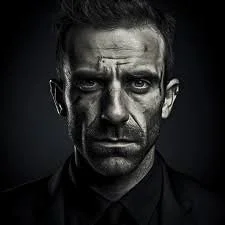
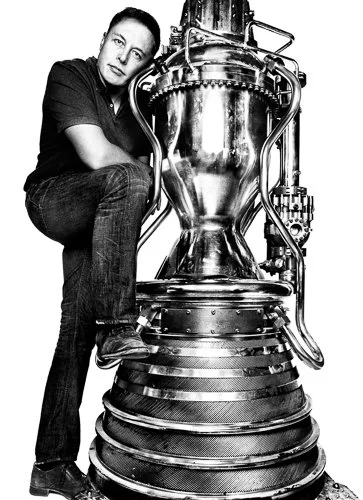
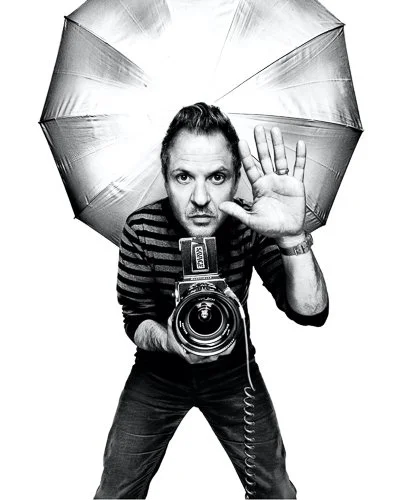
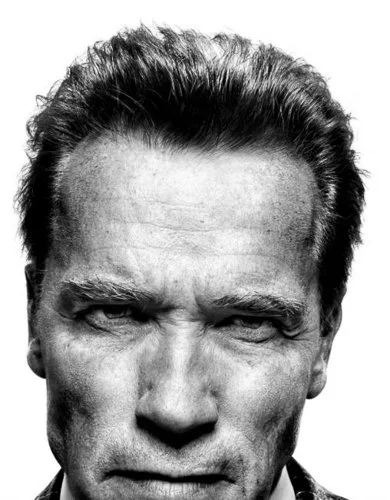
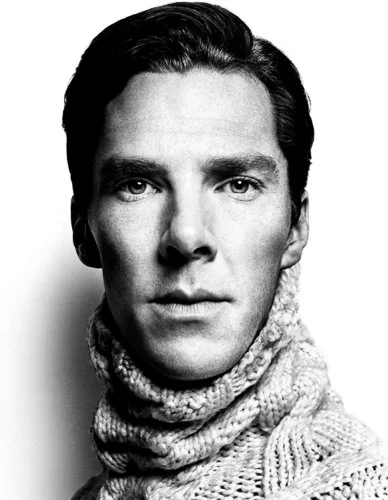
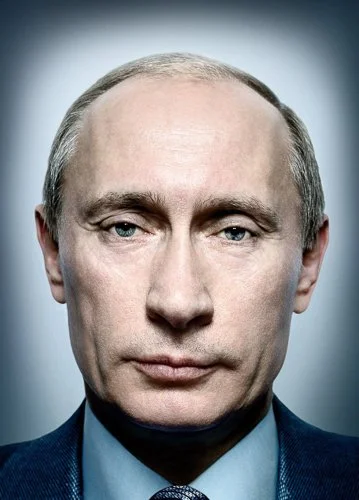
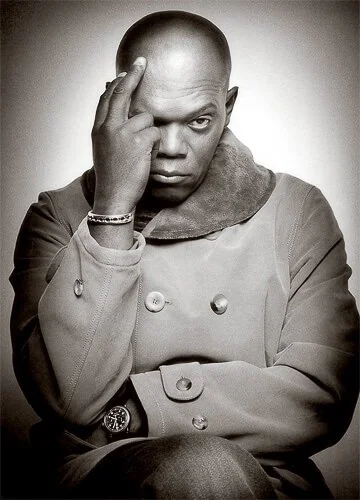
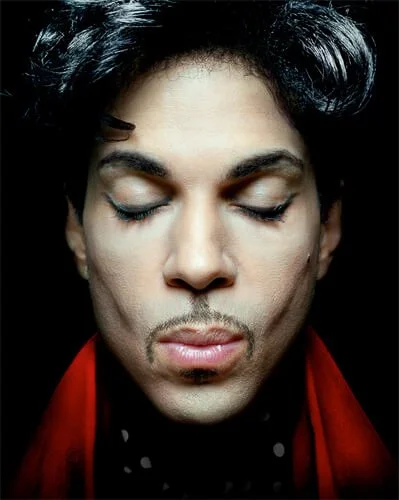
Platon (born 1968), born Platon Antoniou in London and educated at St Martin's School of Art, has built a career on the proposition that the portrait of a powerful person reveals something true about power. His work for The New Yorker, Rolling Stone, and Time magazine has given him access to a remarkable range of world leaders, and his approach to that access has been consistent: get physically close, use simple lighting and a plain background, and work very quickly to breach the wall of performed composure that political leaders inevitably present to cameras.
His portrait of Vladimir Putin, made for Time magazine's Person of the Year issue in 2007, is one of the most psychologically loaded photographs of any political leader in recent decades. Shot against a plain background with the direct lighting and tight framing that characterise all his work, Putin's face in the image is simultaneously composed and something else — something barely perceptible that Platon has described as a glimpse behind the performance.
Whether that reading is accurate or merely the viewer's projection onto a technically accomplished photograph is precisely the kind of question that all serious portraiture raises and rarely answers.
His People project — portraits of human rights activists, survivors, and witnesses from conflict zones around the world, made with the same formal rigour and the same physical proximity as his celebrity work — is an explicit statement about the egalitarianism of the portrait: that the same attention owed to a sitting president is owed to a refugee, and that the technical apparatus of the formal portrait can be made to serve both.
Closing Thoughts
The camera records a face; the portrait records a person. After nearly two centuries of practice, the technical dimensions of that challenge have been largely resolved. Any competent photographer working with a modern camera — or, for many purposes, a modern smartphone — can produce a technically acceptable photographic likeness of a human face. The depth of field can be controlled, the exposure corrected, the colour balanced, the noise reduced. The face can be recorded with a fidelity that would have astonished Cornelius and reduced Karsh to professional despair at the inadequacy of his equipment.
What has not been resolved — what the entire history described above represents successive attempts to address, from Cameron's soft-focus glass plates to Arbus's direct flash, from Avedon's white seamless paper to Schoeller's calibrated twin softboxes — is the harder problem: how to make a photograph that tells you something true about who is standing in front of the lens.
The technical problem has been solved; the human problem has not, because it is not, in the end, a technical problem. It is a problem of presence, of attention, of the willingness to remain in the discomfort of looking at a person rather than a face. Cameron knew this. Karsh knew this. Jane Bown, working in a hotel room with a 50mm lens and the light from a north-facing window, knew this with a particularly austere clarity.
Every photographer in this history worked out a different answer to the same question. None of them worked out the final answer, because there is no final answer. The portrait photograph is a negotiation — between what the camera can record and what the photographer perceives, between what the subject presents and what they conceal, between the frozen moment of the exposure and the moving life that surrounds it on all sides. The negotiation begins again with every sitting. That is both the limitation and the enduring interest of the form.