Say My Name
There is a photograph sitting somewhere on your hard drive right now. You know the one — the image you actually like, the one that surprised you, the one where everything came together. Next to it, in the filename field, is something like DSF2123-Edit-Edit-2.jpg.
That's not a title. That's a filing system.
Most photographers spend serious time thinking about composition, light, timing, and processing; then they spend roughly three seconds on the title, if they bother at all. This is a shame, because a title is not just a label. It is the first act of interpretation your image will ever receive — and in most cases, you get to choose whether that interpretation comes from you or from the viewer's unguided instincts.
What follows is an examination of what titles actually do, why some of the most iconic photographs in history derive much of their power from their names, and how you can develop a more deliberate practice around the words you attach to your pictures.
The Loading Screen
Before you enter a new zone in a video game, there is often a loading screen; it lasts only a few seconds. In some games it is purely functional — a progress bar and a logo. In others, it is an invitation: a piece of concept art, a fragment of lore, a hint at what you are about to encounter. When the action begins, you are already oriented. You have already begun to feel something about the world you are entering.
The same image, captioned differently, would tell a different story. That is not a quirk of videogames; it is a fundamental property of how human perception works. We do not see first and interpret afterwards. We interpret as we see, and language is one of the primary inputs into that process.
A photograph's title works in exactly the same way. Before the eye has begun its proper survey of the image — before it has found the light, noticed the expression, registered the texture of the background — the title has already laid the groundwork. It has set the emotional register. It has suggested what to look for, or what to feel.
The title is the photograph’s loading screen. You are in control of what displays before your viewer enters the zone.
What Roland Barthes Understood
If you want to understand what titles actually do, you could do worse than spend an evening with Roland Barthes. The French literary and cultural theorist was fascinated by images and by the way words interact with them.
His 1964 essay "Rhetoric of the Image" — collected in Image, Music, Text translated by Stephen Heath (Fontana Press, 1977). The essay is about 20 pages and reads more easily than its reputation suggests. Barthes is working from a pasta advertisement, which keeps things grounded. If you read only one piece of critical theory in your photographic life, this is a reasonable choice. The concepts of anchorage and relay are developed here in full and are directly applicable to photographic practice.
Anchorage
Barthes observed that every image is, in a sense, polysemous: it contains multiple possible meanings, multiple potential stories. The viewer arrives without instructions. What is the correct emotional register? What is the subject, really? What is this image about?
A title can answer those questions — or at least direct the viewer towards one answer rather than the others. Barthes called this function anchorage: the title "anchors" the floating meanings of the image, selecting from them, closing down some interpretations and opening others. It "directs the reader through the signifiers of the image, causing him to avoid some and receive others."
Anchorage is dominant in press photography and advertising, where the producer has a specific message to convey and ambiguity is a liability. "Child with a toy hand grenade in Central Park, N.Y.C." — Diane Arbus's characteristic style of almost clinical descriptive titling — anchors an image whose psychological complexity would otherwise be almost unbearably open. The title tells you what you are looking at. It does not tell you what to feel about it, but it plants its feet firmly on the factual ground and leaves the emotional terrain to you.
Relay
The second function is more dynamic and, for photographers in the business of storytelling, arguably more interesting. Barthes described relay as the relationship in which title and image are genuinely complementary — neither can be fully understood without the other, and the meaning emerges from their interaction rather than from either alone.
In a relay relationship, the title does not simply name what the image shows. It adds something the image cannot provide by itself: a dimension of time, a psychological subtext, a narrative frame. The image does not simply illustrate the title. The two advance together, each incomplete without the other.
Barthes associated relay most strongly with comic strips and cinema — forms where sequential images and text develop together into meaning. But it is increasingly relevant in multimedia photography storytelling, in photobook sequencing, in long-form documentary work. When you see a photograph titled not with what it depicts but with what it means, you are encountering relay.
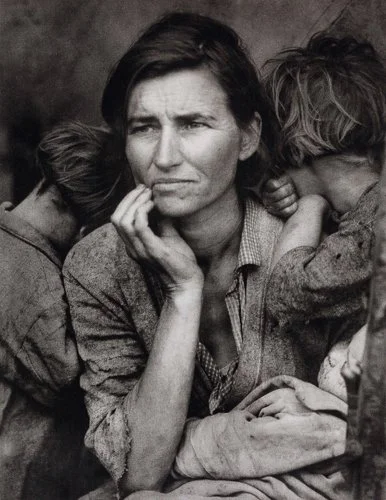
Consider Dorothea Lange's "Migrant Mother" (1936). The image shows a woman with her children in a labour camp. The title does not describe the scene in clinical terms — it compresses it into an emotional and social identity. The woman is not simply shown; she is named in her relationship to her condition. Title and image together produce something neither could achieve separately: an emblem of an entire era's suffering.
A brief detour : the punctum
Barthes returned to photography in Camera Lucida (1980), a more personal meditation on what photographs do to us. Here he introduced the notion of the punctum: the detail in an image — often small, often unintended by the photographer — that "pricks" or wounds the viewer, that catches and holds. The punctum is personal and unpredictable; what arrests one viewer leaves another unmoved.
What has this to do with titles? A title can function as a kind of directed punctum. It can point you towards the detail that carries the image's real emotional charge — the particular thing the photographer felt. Equally, a mismatched title can blunt the punctum entirely: directing your attention to the wrong element, closing off the very channel through which the image was intended to reach you. When you choose a title, you are, amongst other things, making a decision about where you want the viewer's attention to settle.
The Untitled Tradition
Before we go any further, we should address what is perhaps the most common approach to titling photographs: not doing it.
"Untitled" is not the same thing as "I couldn't be bothered." In certain traditions and for certain photographers, the absence of a title is an active, considered artistic decision — and it means something rather precise.
Cindy Sherman's Untitled Film Stills (1977–80) is one of the most celebrated photographic series in the history of the medium. Between 1977 and 1980, Sherman photographed herself in a series of 70 black-and-white images that mimic the publicity stills of 1950s and 1960s Hollywood. She poses as various archetypal female characters — the suburban housewife, the ingénue, the girl on the run, the vamp — from films that do not exist.
The series works precisely because it is untitled. Sherman deliberately preserved the images' ambiguity. The images are numbered — Untitled Film Still #21, Untitled Film Still #54 — but the numbers are cataloguing devices, assigned by her gallery. They carry no interpretive content whatsoever.
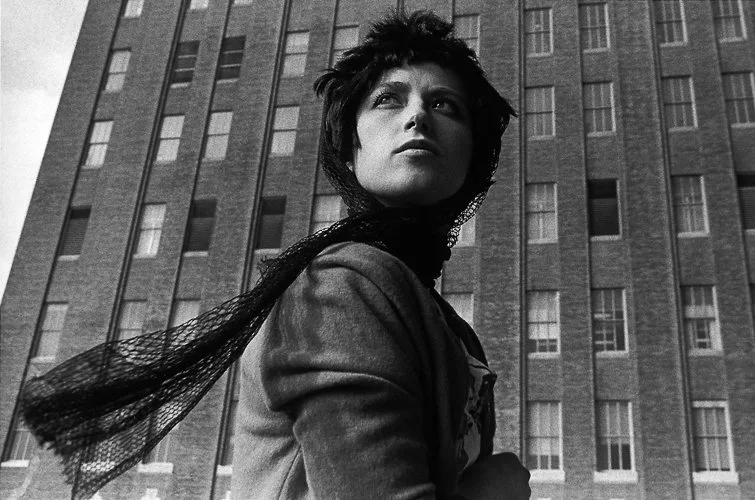
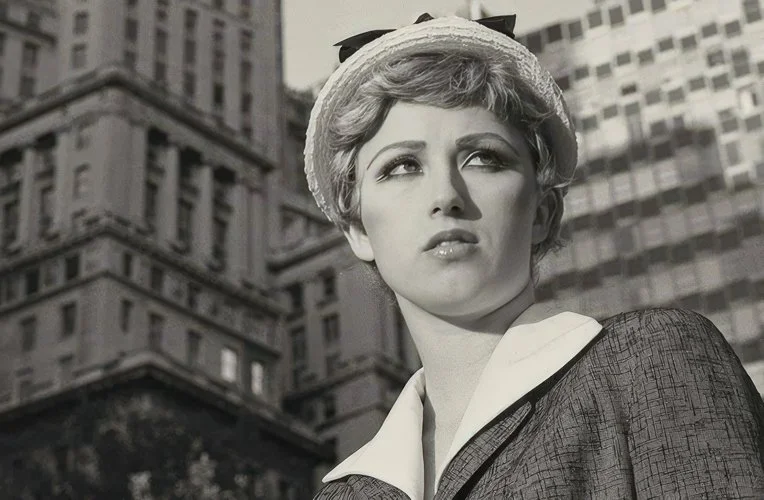
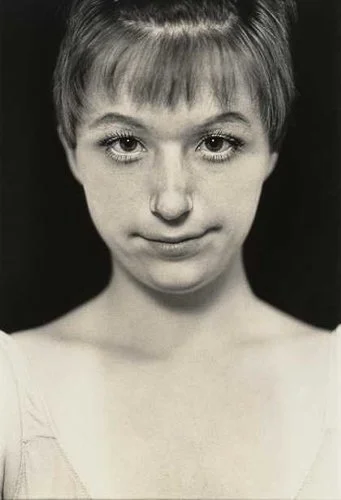
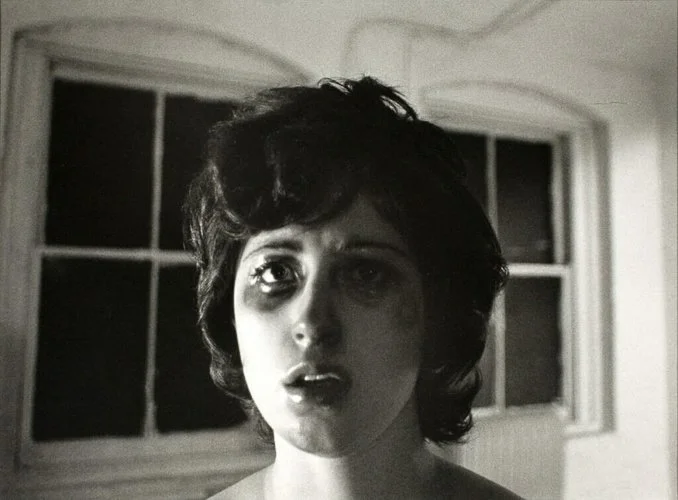
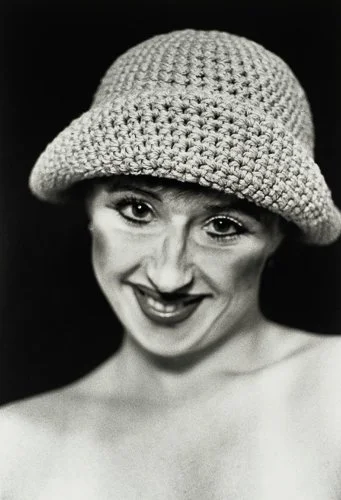
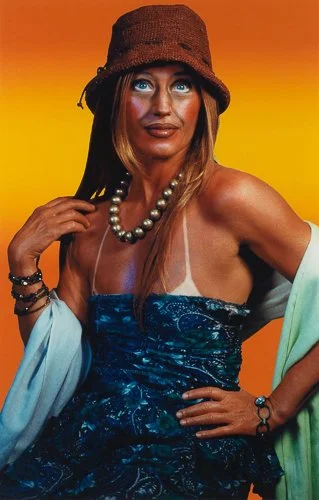
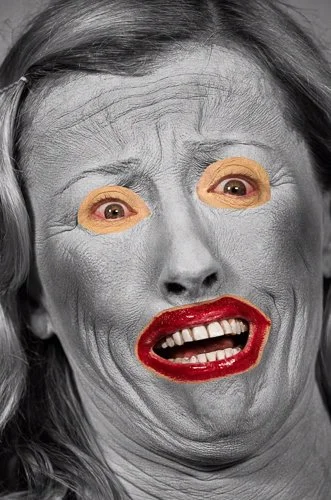

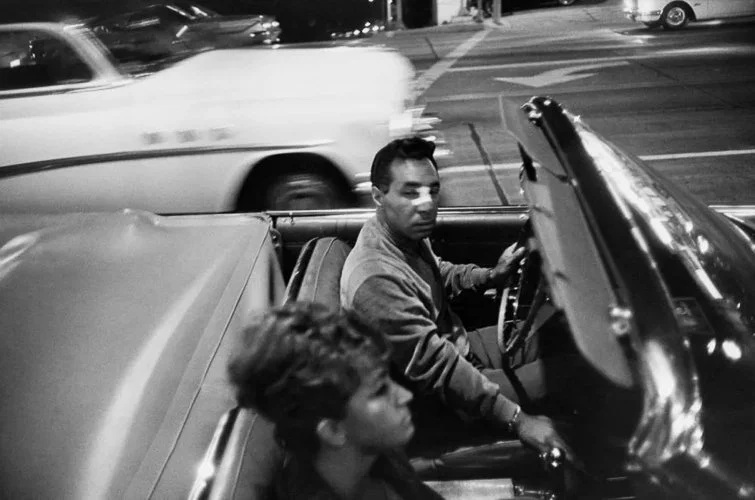
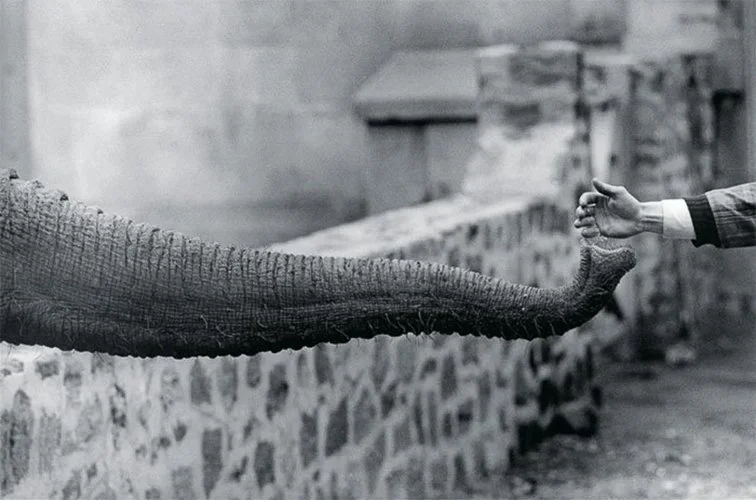
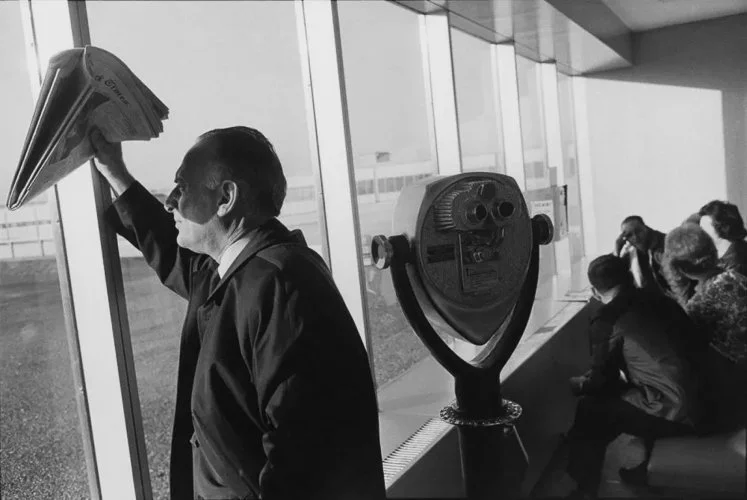
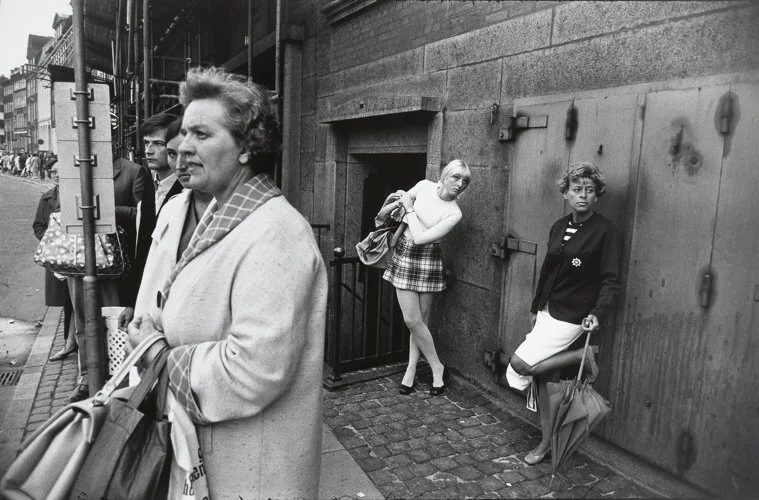
If these images had been titled — if the characters had been named, or the imaginary films identified — the work would collapse into illustration. The entire point is that these female types are so culturally pervasive, so deeply embedded in shared imagination, that they need no origin story. You recognise these women because they have always existed in the cultural wallpaper. Naming them would particularise them. Leaving them untitled is what makes them universal.
The untitling is the point.
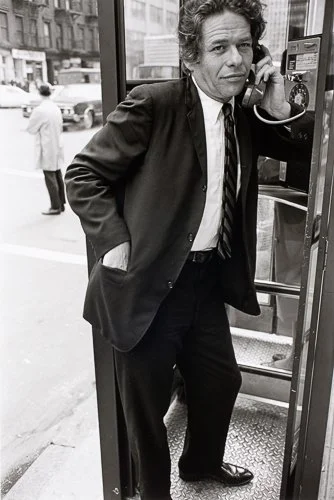
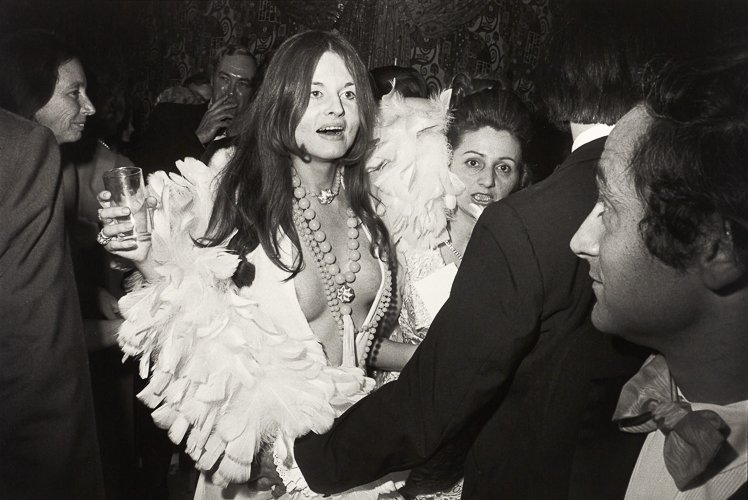
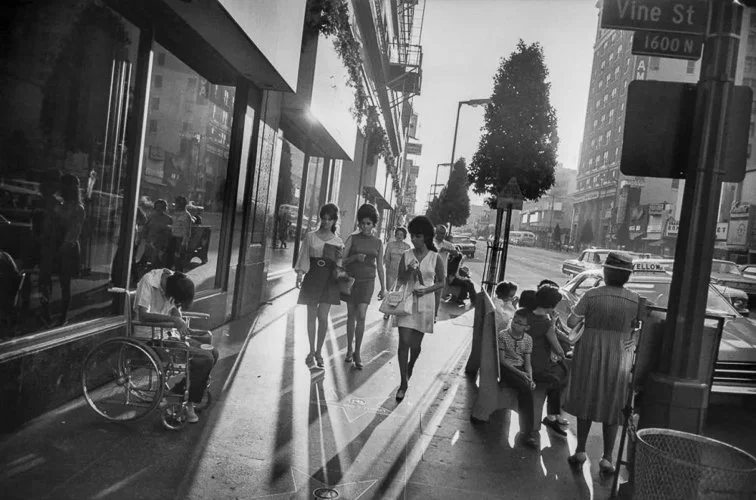
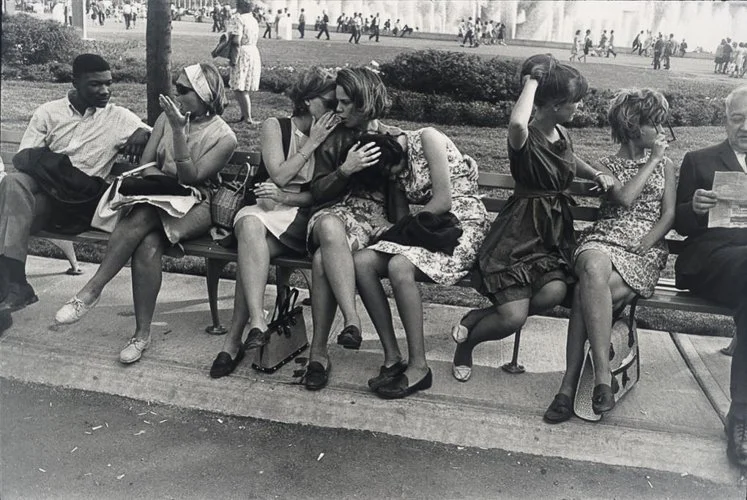
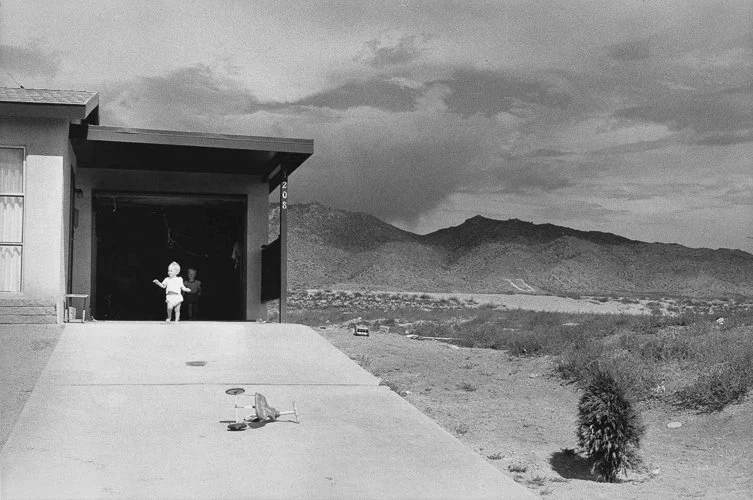
Garry Winogrand — one of the great street photographers of the twentieth century — was famously resistant to titling his work. He saw the title as an imposition on the image, a form of editorial control that presumed to tell the viewer what to think before they had had a chance to look. For Winogrand, the photograph should be sufficient unto itself; if it needed a caption to generate its meaning, something had gone wrong upstream.
This is a coherent philosophical position. It is also, of course, itself a position — an argument about what photographs are and what they should do.
Rauschenberg's Erased de Kooning Drawing
A brief detour into visual art is instructive here. In 1953, the American artist Robert Rauschenberg obtained a drawing from the Abstract Expressionist painter Willem de Kooning — one that de Kooning admitted he chose specifically because it would be difficult to erase — and spent roughly a month erasing it. The result is a sheet of paper with ghostly traces of marks, mounted in a gilt frame with a handwritten inscription by Jasper Johns: "Erased de Kooning Drawing, Robert Rauschenberg, 1953."
The title is the work. Without it, you have a smudged piece of paper in a frame. With it, you have a conceptual statement about authorship, erasure, homage, and the nature of art-making itself. The title does not describe the work; it constitutes it. This is an extreme example, but it illustrates something important: at the outer limit, the title can carry the entire conceptual weight of a piece.
Photography rarely operates at these extremes. But knowing they exist is useful when you are deciding how much work you want your title to do.
How Iconic Photographs Are Named
One of the most instructive ways to develop your thinking about titles is to look at how the photographs you already know — the ones that have become part of shared visual culture — were named. The naming is rarely accidental.
"Migrant Mother" (1936) — Dorothea Lange
Already mentioned above, but worth dwelling on. The title is an act of compression: two words that locate the subject in her social reality without describing the image's formal qualities at all. You would not know from the title alone that the woman's children are turning their faces away from the camera, that her expression is one of exhausted vigilance, that the composition is among the most perfectly constructed in documentary photography. The title tells you who she is in the world. The image tells you who she is as a human being.
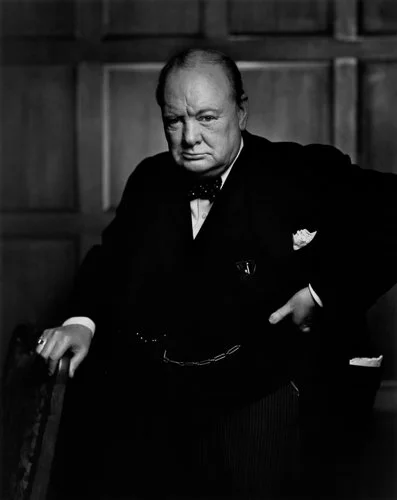
“The Roaring Lion” (1941) – Yousuf Karsh
This portrait of Winston Churchill was titled after Churchill’s expression, which Karsh provoked by removing his cigar. The title has contributed to the enduring image of Churchill’s wartime persona.
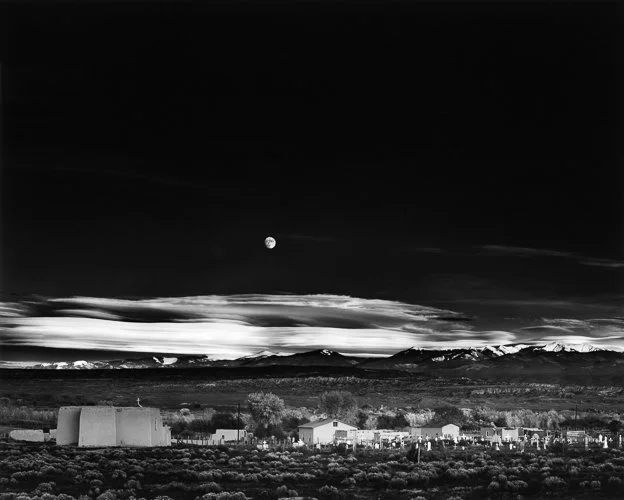
"Moonrise, Hernandez, New Mexico" (1941) — Ansel Adams
Ansel Adams's landscape titles follow a consistent logic: subject, location, sometimes date. The title of this perhaps-most-reproduced landscape photograph in American photography is pure anchorage — it plants the image in a specific geography and a specific moment. You know precisely where and roughly when. The title makes no emotional claim. It simply says: this place, this moment, these things were present. What you feel about them is your own affair.
Adams's approach is characteristic of landscape and documentary photography more broadly. The descriptive title locates, identifies, contextualises. It is not, in this tradition, a diminishment of the image to simply say what it shows. The emotional and aesthetic experience speaks for itself.
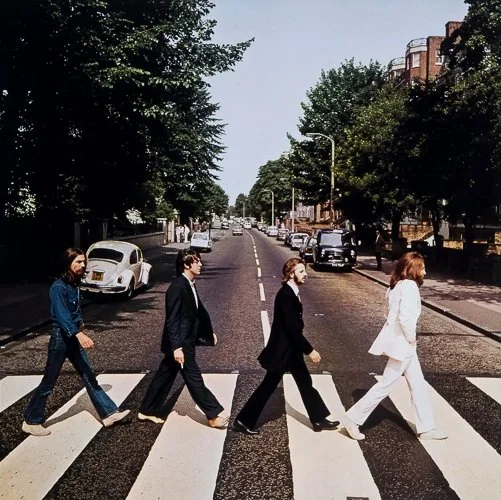
“Abbey Road” (1969) – Iain Macmillan
While not a documentary image, the title of this photograph of the Beatles' album cover has become iconic, turning a simple street crossing into a cultural landmark.
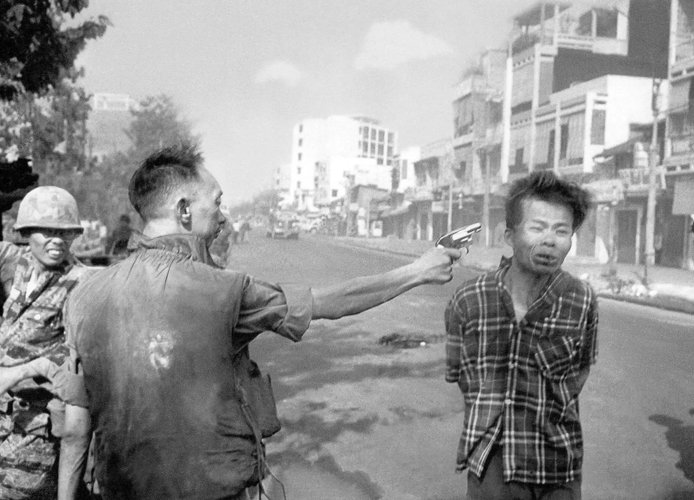
“Saigon Execution” (1968) – Eddie Adams
This blunt title leaves no ambiguity about the content: the summary execution of a Viet Cong prisoner during the Vietnam War. Its directness adds to the photograph’s shock and historical impact.
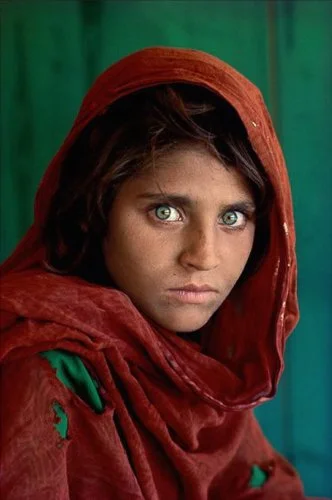
"Afghan Girl" (1984) — Steve McCurry / National Geographic
The photograph was taken by Steve McCurry in December 1984 at the Nasir Bagh refugee camp near Peshawar, Pakistan. It appeared on the cover of National Geographic in June 1985, and it became, in the magazine's own estimation, the most recognised photograph in its history.
The title — "Afghan Girl" — was, for 18 years, the only name the world knew her by. Sharbat Gula was not identified until 2002, when McCurry and a National Geographic team located her in Afghanistan and confirmed her identity through iris recognition technology. For those 18 years, "Afghan Girl" was not simply a title; it was her entire public identity. The title was the subject.
There is something deeply uncomfortable in that, of course. To be reduced to your nationality and gender as an anonymous representative of a conflict. But there is also something worth examining in the relationship between title and subject here. The title functions not merely as anchorage but as an act of identity — giving, or withholding, a name. When the caption finally changed to "Sharbat Gula," the image changed too, in ways that are hard to articulate but impossible to miss.
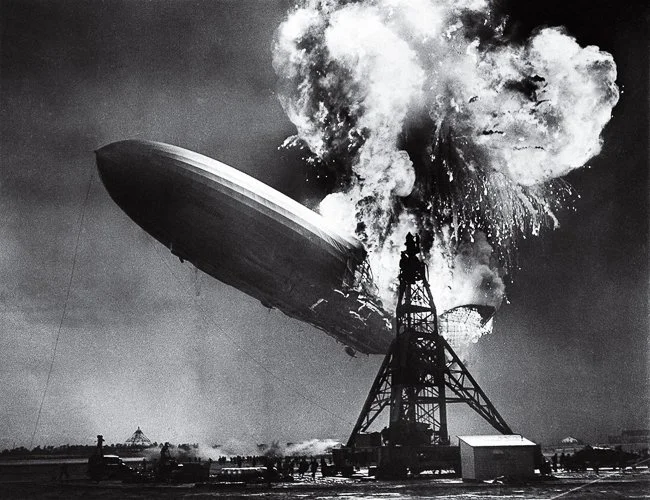
“The Hindenburg Disaster” (1937) – Sam Shere
This descriptive title conveys the tragedy of the airship Hindenburg’s explosion. The image and its title have become shorthand for disaster and the end of an era in air travel.
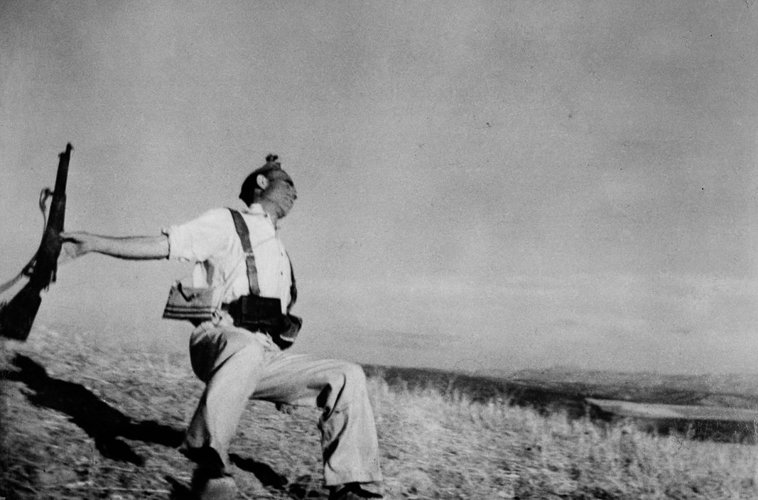
"The Falling Soldier" (1936) — Robert Capa
The full title given to this photograph is "Loyalist Militiaman at the Moment of Death, Cerro Muriano, September 5, 1936." It has become known colloquially simply as "The Falling Soldier." The title's stark, present-tense immediacy is central to its impact: not a soldier who fell, but a soldier falling, captured at the very instant.
It is important to note that the authenticity of this image has been disputed for decades. Research by journalist Philip Knightley (1975) and, more recently, by the Spanish academic José Manuel Susperregui — who established that the photograph was likely taken not at the front line of Cerro Muriano but near the town of Espejo, some 50 kilometres away, where no combat was taking place — has raised serious questions about whether the image depicts a man actually dying or a man posing. No definitive conclusion has been reached; the International Center of Photography, which holds the Capa archive, maintains the photograph's authenticity; Susperregui and others contest it. The debate continues.
What is remarkable, in the context of this article, is how the title contributes to the controversy. "At the Moment of Death" is an interpretive claim embedded in the title itself. It does not describe; it asserts. If the image were titled simply "Militiaman, Córdoba, 1936," the forensic arguments about staging would still matter — but the title's dramatic claim would not be part of the evidence. As it is, the title has become part of the image's contested truth.
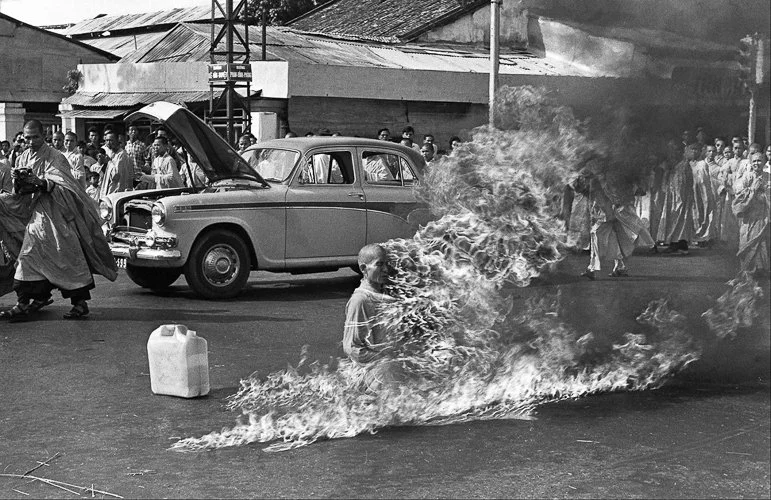
“Burning Monk” (1963) – Malcolm Browne
The title refers to the self-immolation of Buddhist monk Thich Quang Duc in protest against persecution in South Vietnam. The simplicity of the title belies the intensity of the event.
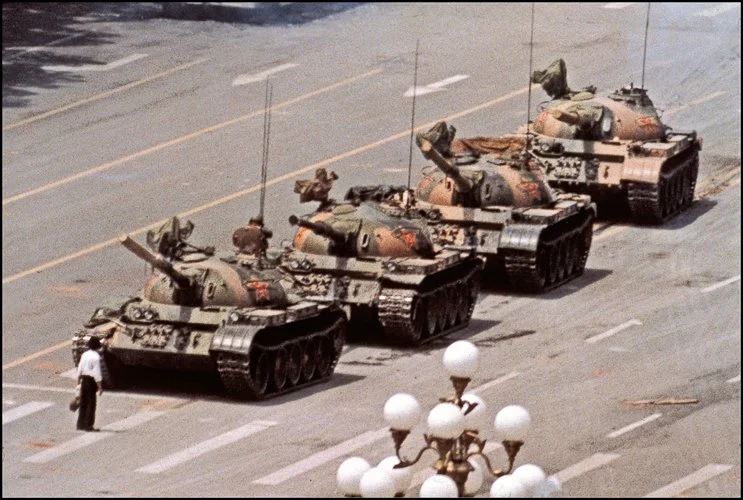
"Tank Man" (1989) — multiple photographers
The anonymity of the title matches the anonymity of the subject. The man who stood in front of a column of tanks in Tiananmen Square on 5 June 1989 has never been identified. Multiple photographers captured the moment from different angles and positions — among them Jeff Widener of the Associated Press, Stuart Franklin of Magnum Photos, and Charlie Cole of Newsweek. The image is collectively titled rather than attributed to a single correct name, and "Tank Man" is both the title and the only description of a person whose identity is still unknown.
The title, in this case, is a kind of ongoing refusal. To give the subject a name would be to resolve the anonymity that is part of the image's meaning. "Tank Man" says: we do not know who this person is, and that unknowing is part of the point.
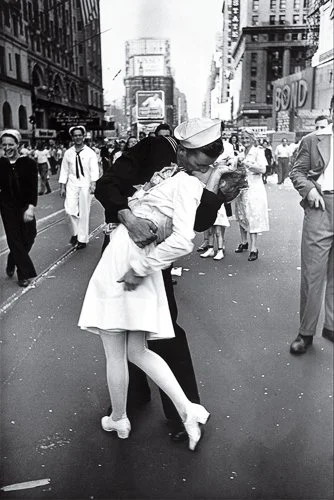
"V-J Day in Times Square" (1945) — Alfred Eisenstaedt
Straightforward descriptive titling at its most effective. The title places the viewer at the scene of celebration. It identifies the time (V-J Day — Victory over Japan, 14 August 1945) and place (Times Square). What it does not mention is the controversy that has followed the image: the question of whether the kiss was consensual, and the identities of its participants, which were disputed for decades. The title is entirely innocent of all of this — which is itself a form of editorial decision.
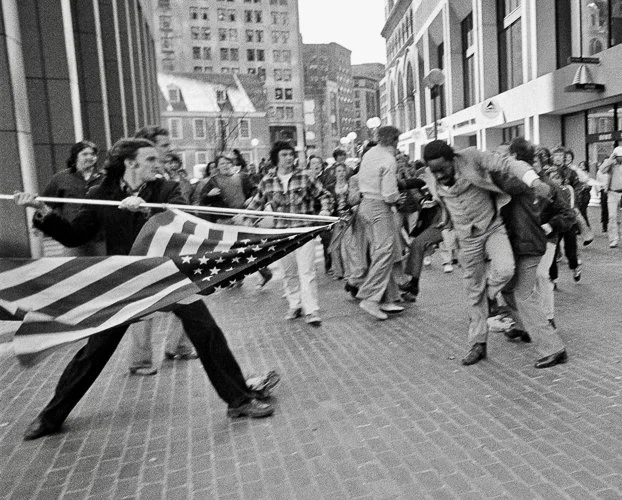
"The Soiling of Old Glory" (1976) — Stanley Forman
An instance where the title adds a layer of commentary that goes beyond description. The photograph shows a man attacking a Black lawyer, Ted Landsmark, with a flagpole bearing the American flag, during Boston's school busing riots. "Soiling" is not neutral language; it is a moral judgement. The title transforms the image from documentary record to argument.
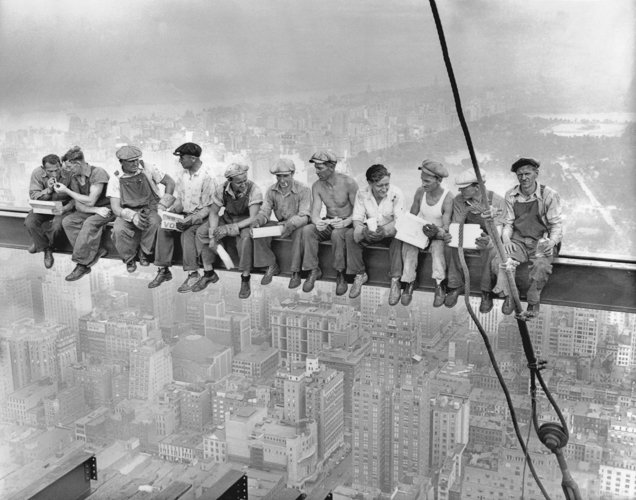
“Lunch atop a Skyscraper” (1932) – Charles Ebbets
The title captures the daring, yet everyday, nature of construction workers eating lunch on a steel beam high above New York City, highlighting both the danger and camaraderie of the era.
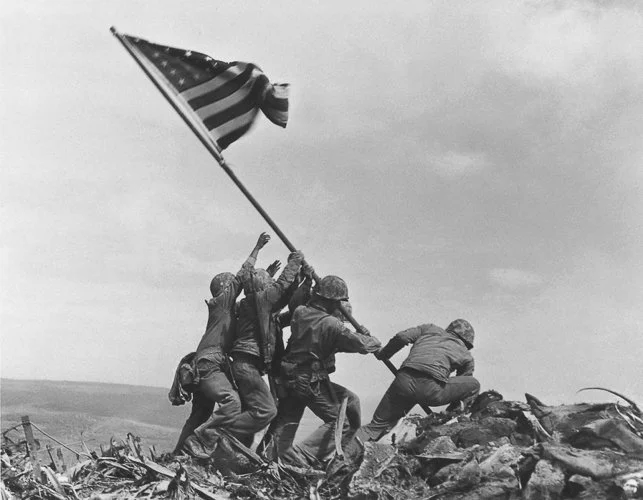
“Raising the Flag on Iwo Jima” (1945) – Joe Rosenthal
This title succinctly describes the event depicted: US Marines raising the American flag atop Mount Suribachi. The image and its title have come to symbolise American perseverance and sacrifice during World War II.
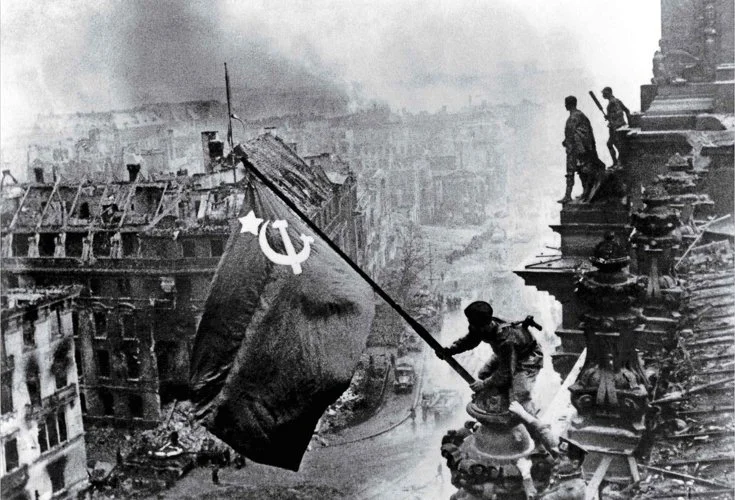
“Raising a Flag over the Reichstag” (1945) – Yevgeny Khaldei
Similarly, this title records a pivotal moment in World War II, as Soviet soldiers hoist their flag atop the Reichstag in Berlin, symbolising victory over Nazi Germany.
Alfred Stieglitz & the Conceptual Title
Alfred Stieglitz began photographing clouds in 1922 at his family estate on Lake George, New York. He eventually produced more than 200 images of clouds and sky — abstract, disorienting, nearly without horizon or reference — that he titled Equivalents.
The title is a statement of intent. These photographs are not about clouds; they are not landscape photographs in any conventional sense. They are, Stieglitz insisted, emotional equivalents — abstract expressions of his interior state at the moment of making each image. He wanted to show that the emotional content of a photograph was different from its subject.
"Equivalent" is a title that explicitly refuses to describe. It claims no ground in the visible world. It asserts instead a relationship between the image and the photographer's feeling — an equivalence, a correspondence, a metaphor. As a historical example of the conceptual title, it is remarkably early and remains remarkably radical.
Titles in the Age of Algorithms
There is a specific variety of contemporary indignity that photographers are increasingly familiar with: opening Google Photos and discovering that your carefully made image of a misty estuary at dawn has been automatically titled "Water view with fog." Or that your portrait of an elderly man in a Whitstable pub has been labelled "Person sitting indoors."
When an algorithm titles your image "Two people walking on a beach," it is describing pixel data, not meaning. The difference between description and interpretation is precisely what this article has been about. A computational process identifies objects, spatial relationships, lighting conditions. It does not ask what the image is for, what it means, what it feels like, or why anyone should care about it. The output is information without intention.
This is not a criticism of the technology. It is a useful reminder of what human titling actually does. When you sit with an image and choose its name, you are doing something no algorithm can do: you are asserting a relationship between the image and your intention as a maker. You are making a claim about meaning.
Instagram and the caption
The Instagram caption functions as a relay title — image and text working together in complementary fashion, each expanding the other's reach. A photograph of an empty seafront in winter means one thing as a standalone image; accompanied by the text "First morning back in Dover. Everything is closed and perfect." it means something quite different, and neither could achieve that particular effect alone.
#hashtags
Hashtags are a stranger beast altogether: a form of meta-titling that associates an image not with a meaning but with a collective visual conversation. #streetphotography is not a title; it is a filing system. It says where to put the image, not what the image is about. The two functions — categorisation and interpretation — are very different, and conflating them is how you end up with images that are technically findable but effectively unnamed.
Approaches to Titling
Having thought about what titles do, we can now consider the different kinds of title and what each offers you as a photographer.
The Descriptive Title
The most straightforward approach: identify the subject, the location, the date, or some combination of these. Ansel Adams's "Moonrise, Hernandez, New Mexico" is the canonical example. Diane Arbus's "Child with a toy hand grenade in Central Park, N.Y.C." is another.
The descriptive title prioritises clarity and context. It does not make emotional claims; it does not interpret. What it offers is specificity: this place, this moment, this thing. For landscape, wildlife, and documentary photography — work where the viewer's emotional relationship with the subject is direct and unmediated — the descriptive title is often the right choice. It gets out of the way.
The risk is that it undersells the image. A descriptive title for a photograph that works on a psychological or emotional level can feel like a mismatch — as if you were captioning a poem with a plot summary.
Quick examples:
"Autumn Reflections, Lake District, 2024" — subject, location, date
"Fisherman at Dawn, Dungeness" — occupation, activity, location
"Iron Gate, Folkestone, March" — subject, place, month
The Poetic or Conceptual Title
Here the title does not describe but interprets, metaphorises, or evokes. A photograph of a lone figure at a crossroads is titled not "Person at Road Junction" but "The Right Decision." A close-up of weathered hands becomes "What Is Left."
The conceptual title invites the viewer to hold image and title simultaneously and to allow meaning to emerge from their interaction — classic Barthesian relay. It is particularly appropriate for fine art photography, for work that operates at the level of feeling rather than fact.
The risk is pretension. There is a long tradition of photographic titles so opaque, so strenuously poetic, that they create a barrier rather than a bridge. The test is whether the title genuinely extends the image's meaning or merely substitutes for it.
The Single-Word Title
"Solitude." "Witness." "Return." A single word can carry extraordinary weight if chosen well. It functions as a kind of tuning fork: it sets a frequency, and the image resonates at that frequency (or reveals, interestingly, that it does not quite).
Single-word titles work best when the word chosen is genuinely unexpected — not the first word that comes to mind when you look at the image, but the word that names what the image is beneath its surface.
The Numerical or Series Title
Sherman's numbered Untitled Film Stills are the canonical example: Untitled Film Still #21, #54, and so on. The number is a cataloguing device that carries no interpretive content. This is appropriate for series work where the titles are meant to resist individual readings — where meaning emerges from the series as a whole rather than from each image separately.
The Deliberate "Untitled"
As discussed: not negligence, but a considered choice. Appropriate when the image's meaning depends on the viewer's unguided encounter, when any title would reduce rather than expand, when the ambiguity is the point.
If you choose "Untitled," choose it actively. Know why. "Because I couldn't think of anything" and "because the image works precisely without direction" are very different decisions that happen to arrive at the same three syllables.
Practical Guidance
A few principles worth keeping in mind when you sit down to title an image.
Match title to intent. If your work documents reality, descriptive titles are usually appropriate. If you are making conceptual or fine art photography, interpretive titles will serve you better. If your work sits between those poles — as most photography does — think about where, on the anchorage-to-relay spectrum, you want each particular image to sit.
Complement, don't explain. A good title adds something the image cannot provide by itself. A bad title restates what is already obvious. If a viewer could derive your title simply by looking carefully at the image, you may not have gone deep enough.
Consider your audience and context. Gallery work, competition entries, and printed portfolios will usually want titles that function at a contemplative register. Social media favours something more immediate. Neither is wrong; they are different registers for different contexts.
Be concise. Brevity carries more power than verbosity in almost every case. If you find yourself at five words or more, ask whether the same meaning can be achieved in two or three.
Test multiple options. For any image that matters, give it five titles — one descriptive, one conceptual, one single-word, one relay, one untitled — and see how each one changes your experience of the image. You are not obliged to keep any of them. The exercise itself is useful.
Consider multiple meanings. The best titles often work on several levels simultaneously. A title that can be read two ways — literally and metaphorically, for instance — rewards closer attention.
Avoid the cliché. "Golden hour," "the beauty of silence," "when words fail" — there is a register of photographic titling so thoroughly trodden that it has ceased to mean anything. If your instinctive title is one you have seen a hundred times, push further.
Resources
Matt Day is a working film photographer from Ohio whose YouTube channel covers practical photographic process as well as the thinking behind his personal work. His videos on reviewing and discussing his own images often engage with the question of how to talk about photographs — and, by extension, how to title them. A good resource for photographers who prefer their theory in conversational form.
A practical video survey of titling approaches across visual art, with useful examples drawn from contemporary practice. Covers the argument for and against "Untitled," the difference between descriptive and conceptual titling, and the question of consistency across a body of work. Worth watching alongside this article, as it approaches the same territory from a visual art rather than a photography perspective.
A short, well-made video that takes the untitled convention seriously as a philosophical choice rather than an oversight. Rothko is the central example — his decision to stop naming his colour field paintings came from a conviction that titles were directing viewers toward the wrong kind of attention, closing down the open emotional space his work was designed to create. The video also touches on Cindy Sherman's Untitled Film Stills, which the article discusses in some depth, making it a useful companion piece. The comment section is notably active, with viewers proposing their own titles for the Rothko works and debating whether naming helps or hinders — which is, of course, exactly the question the article is asking.
A public lecture by art historian Dr Louise R. Mayhew, recorded at the Queensland Art Gallery and Gallery of Modern Art. It is longer than the other resources here, but the first twenty minutes or so are more than worth the investment: Mayhew draws on a 2016 psychology study showing that viewers consistently report reduced comprehension and engagement when confronted with untitled works — which sets up a productive tension with the artistic arguments for withholding a title. She also notes that around five per cent of a major national collection carries no title at all, which quietly reframes "Untitled" from a fringe decision to a significant and recurring convention. A good resource for anyone who wants to sit with the question rather than reach a quick answer.
Give it a Try!
Three exercises. Do all three.
The Same Image, Three Titles
Take one of your existing photographs — ideally one you have never titled, or one with a placeholder title you have never really interrogated. Give it three different titles: one purely descriptive (subject, location, date), one conceptual or poetic (something that names what the image means rather than what it shows), and one deliberately "Untitled" (simply write the word). Show all three versions to someone else — a friend, a partner, a fellow photographer — without telling them which is which, and ask what they notice first in the image when they read each title. Ask whether each title makes them look at the same things.
Aim: to experience directly how a title frames a viewer's engagement with an image — and to notice that the same photograph is, in a real sense, a different photograph under each name.
The Retrospective Re-title
Go back through a body of work you have already titled — or a set of images you left untitled — and reconsider each one. For each image, ask: does the existing title (or its absence) anchor or relay? Does it close down interpretation or open it up? Does it describe or interpret? Does the title match the image's actual mood and intent, or the mood and intent you thought you were conveying when you made it? Re-title any images that feel mismatched, without deleting the original titles.
Aim: to develop a conscious critical practice around the relationship between your titles and your images, and to discover whether your titling habits are serving your work or simply naming your files.
The Title-First Shoot
Choose a title before you pick up your camera. It can be a line from a poem, a phrase that has stuck in your head, a single word that has been recurring lately, the name of something you cannot photograph directly. Then go out and shoot images that respond to it — not images that illustrate it literally, but images that feel, in some way, called into being by it.
Aim: to experience the generative potential of language on visual imagination. A title is not only an interpretation of an image already made; it can be a provocation towards images not yet made. Consider, afterwards, whether you want to keep the title, discard it, or whether the resulting images suggest a different title entirely — and what that tells you about the relationship between your intentions and your pictures.