Stodmarsh & Grove Ferry
Sunday 14 June 2026 · 09:09 · Stodmarsh, Kent
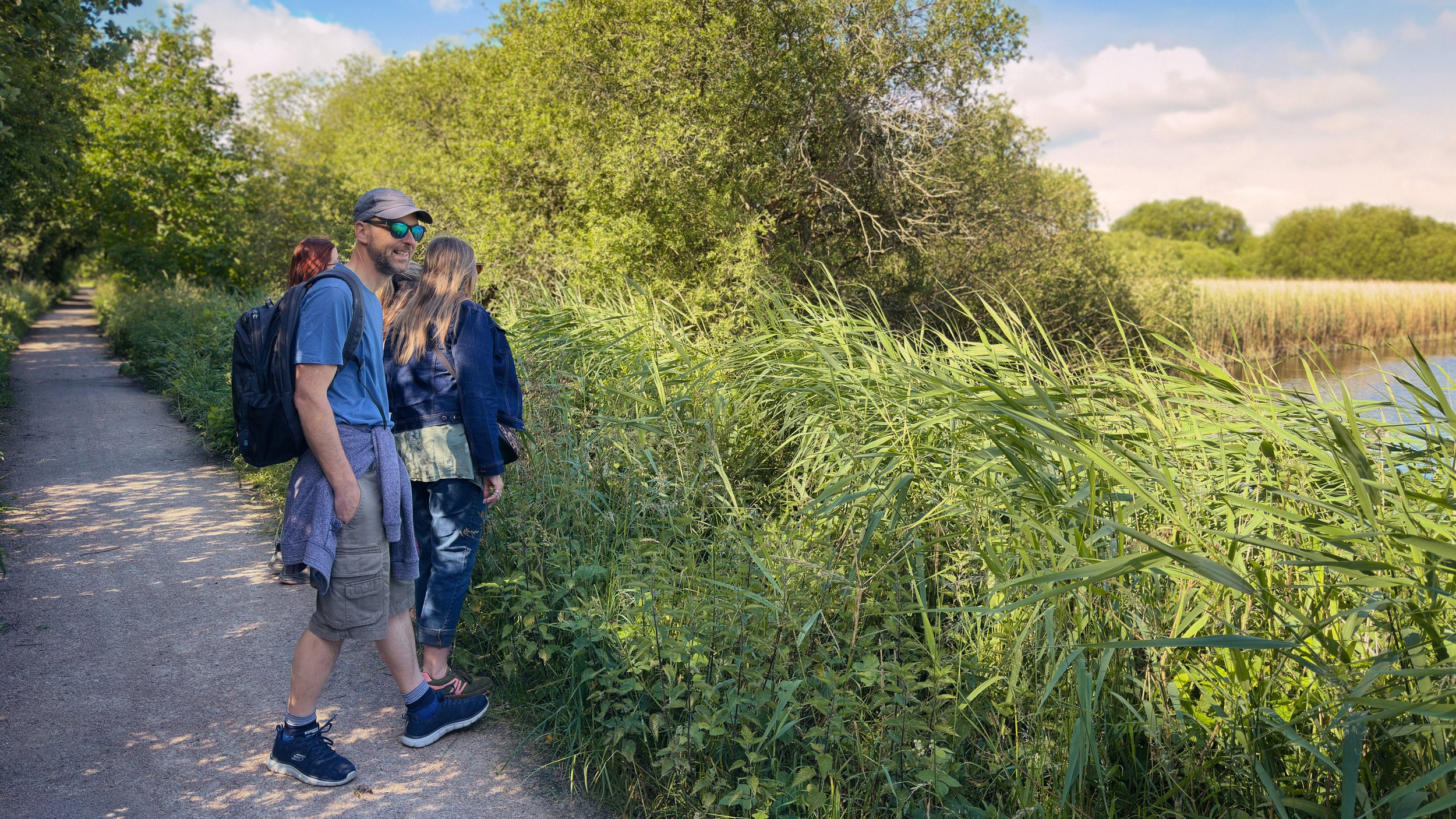
We parked along the lane near the Red Lion in Stodmarsh and set off as five: Caroline, Charlotte, Julia, Ben, and me. It was a fine Sunday morning in mid-June — blue sky, a mild north-westerly, and clear, crisp light that makes the landscape feel washed clean. The air temperature was already comfortable as we made our way down towards the National Nature Reserve, and there was every sign it would stay that way for the duration.
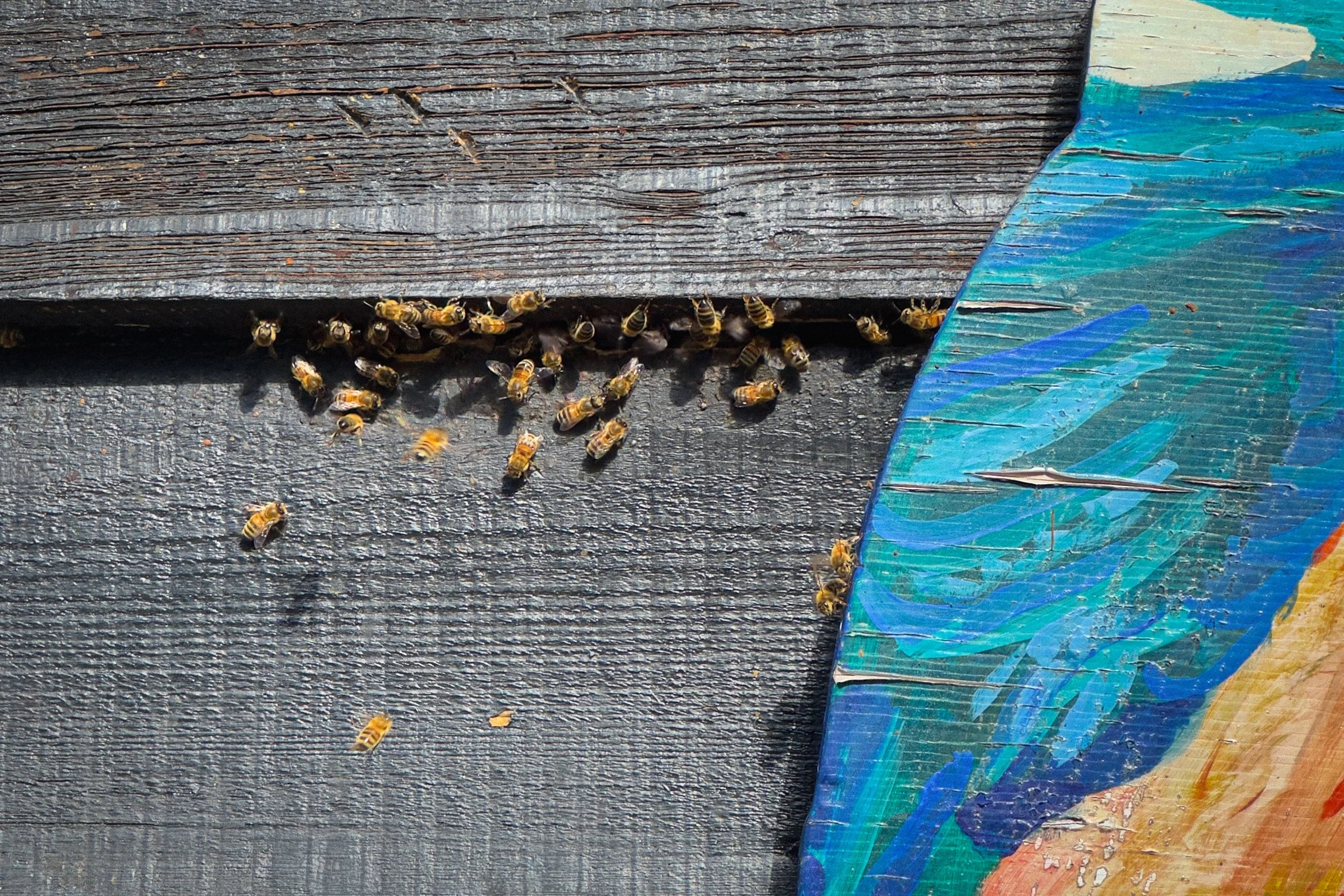
The route to the main trailhead passes a small car park serving the reserve, and it would be understating things to say it made an impression before we had even entered the reedbeds. The toilet building at the edge of the car park had a colony of bees nesting in the gaps between the painted wooden slats of its exterior wall — not a small number of bees, but a busy, purposeful mass of them going about their morning in complete indifference to a group of walkers craning their necks for a closer look. The building earned its nickname immediately, and for the rest of the day it was known only as the ‘Bee Wee’ car park.
The 8.84-kilometre route took us 2 hours 31 minutes of moving time, covering 11,342 steps with just 14 metres of elevation gain across the flat, open terrain of the Stour valley.
Stodmarsh National Nature Reserve was created not by deliberate design but by industrial accident. Coal mining beneath the Stour valley floor in the 1940s and 50s caused the land to subside, allowing the river and groundwater to flood the depressions left behind. Over the following decades, those subsidence lakes became one of the most important lowland wetland habitats in England.
The reserve now covers 241 hectares and holds Ramsar Convention status, the international designation for wetlands of global significance. It is managed by Natural England and provides habitat for an exceptional list of species: marsh harrier and great bittern nest among the reedbeds, bearded tits flick through the reed stems year-round, and Cetti's and Savi's warblers give away their presence with song long before they can be seen.
The reserve has also recorded some notable rarities over the years, including the first Pallid swift and first American coot seen in England. Among the aquatic flora, the greater bladderwort — a carnivorous plant that traps microscopic invertebrates in underwater bladders — grows in the open water alongside frogbit and greater spearwort.
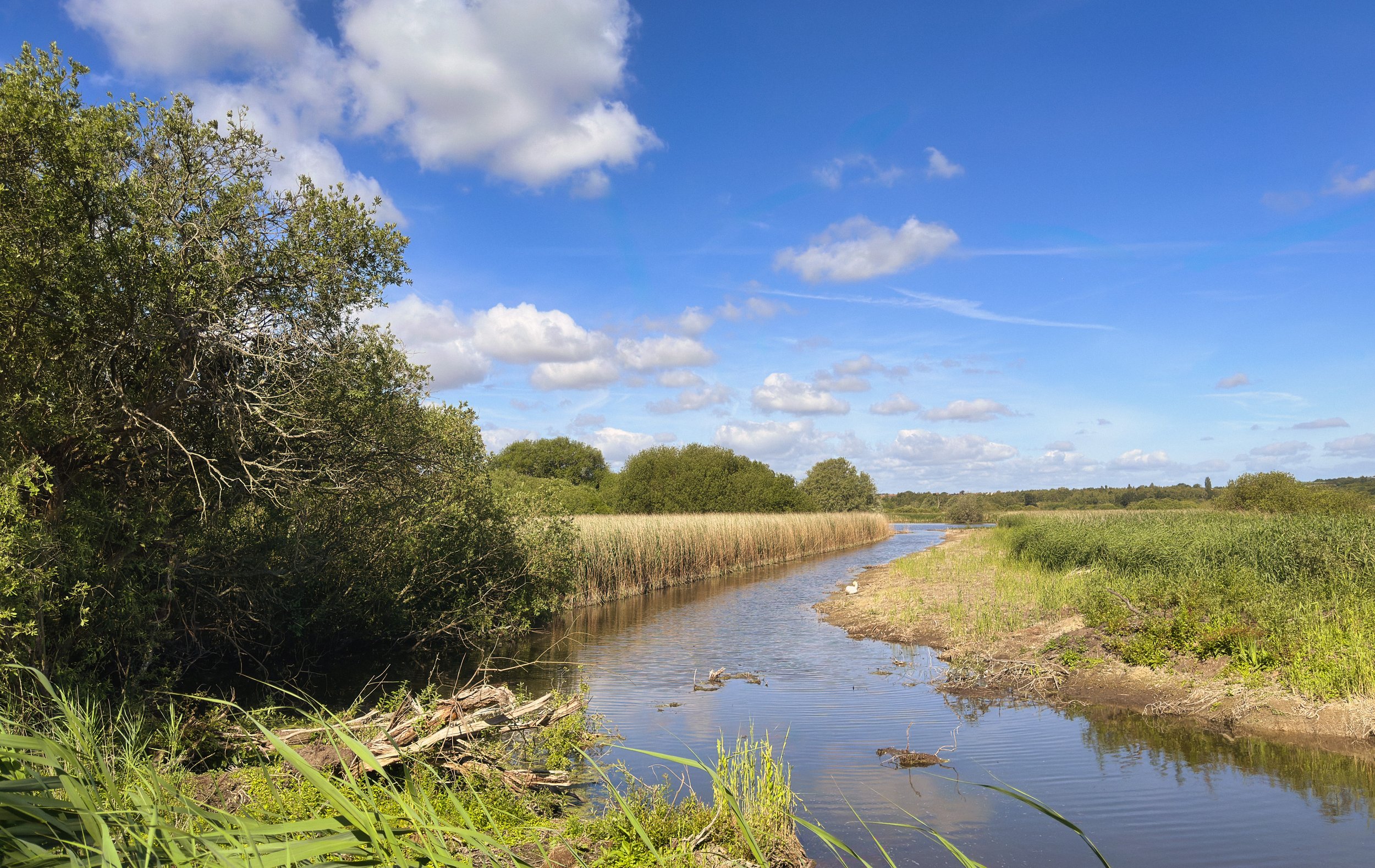
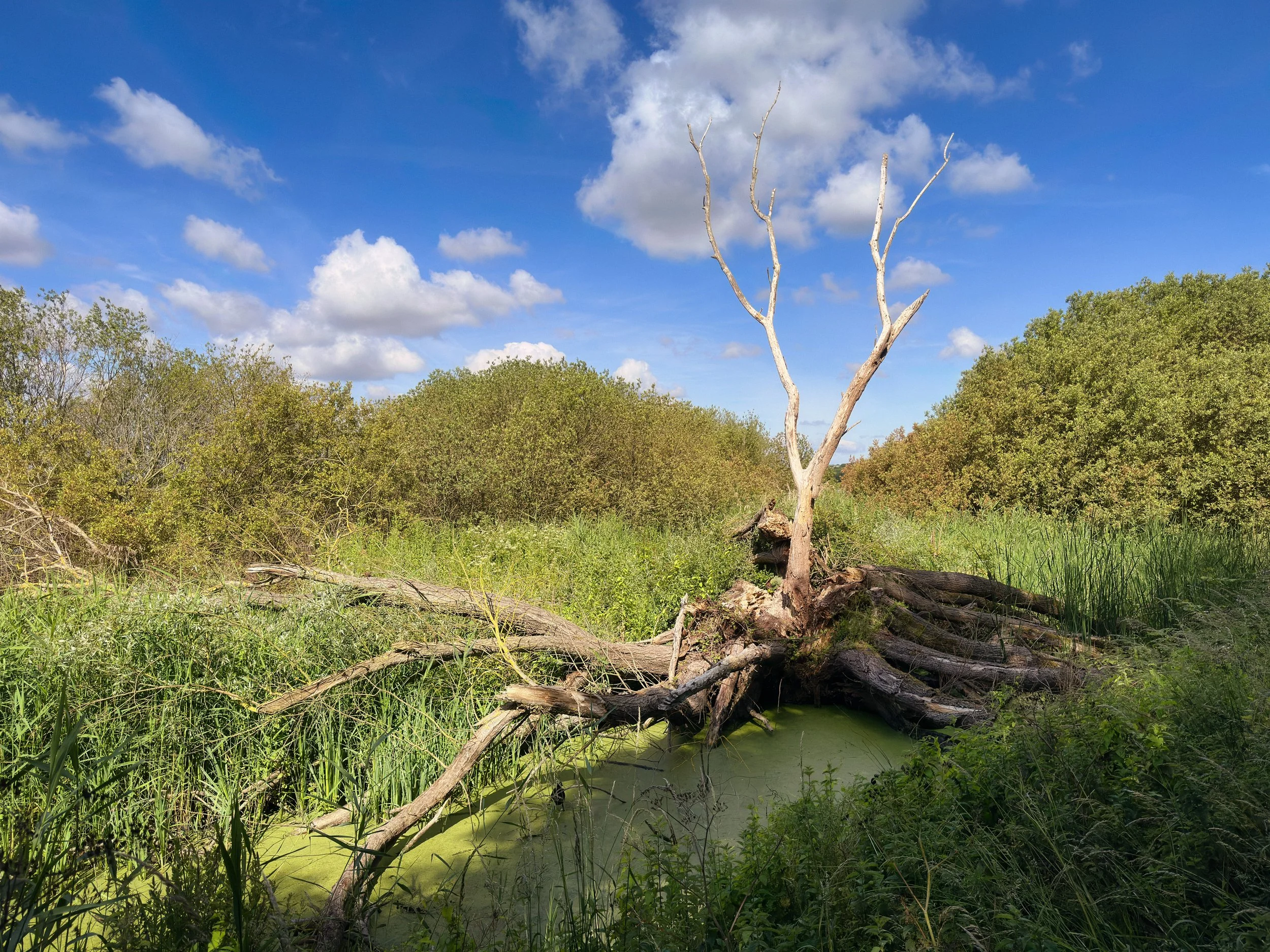
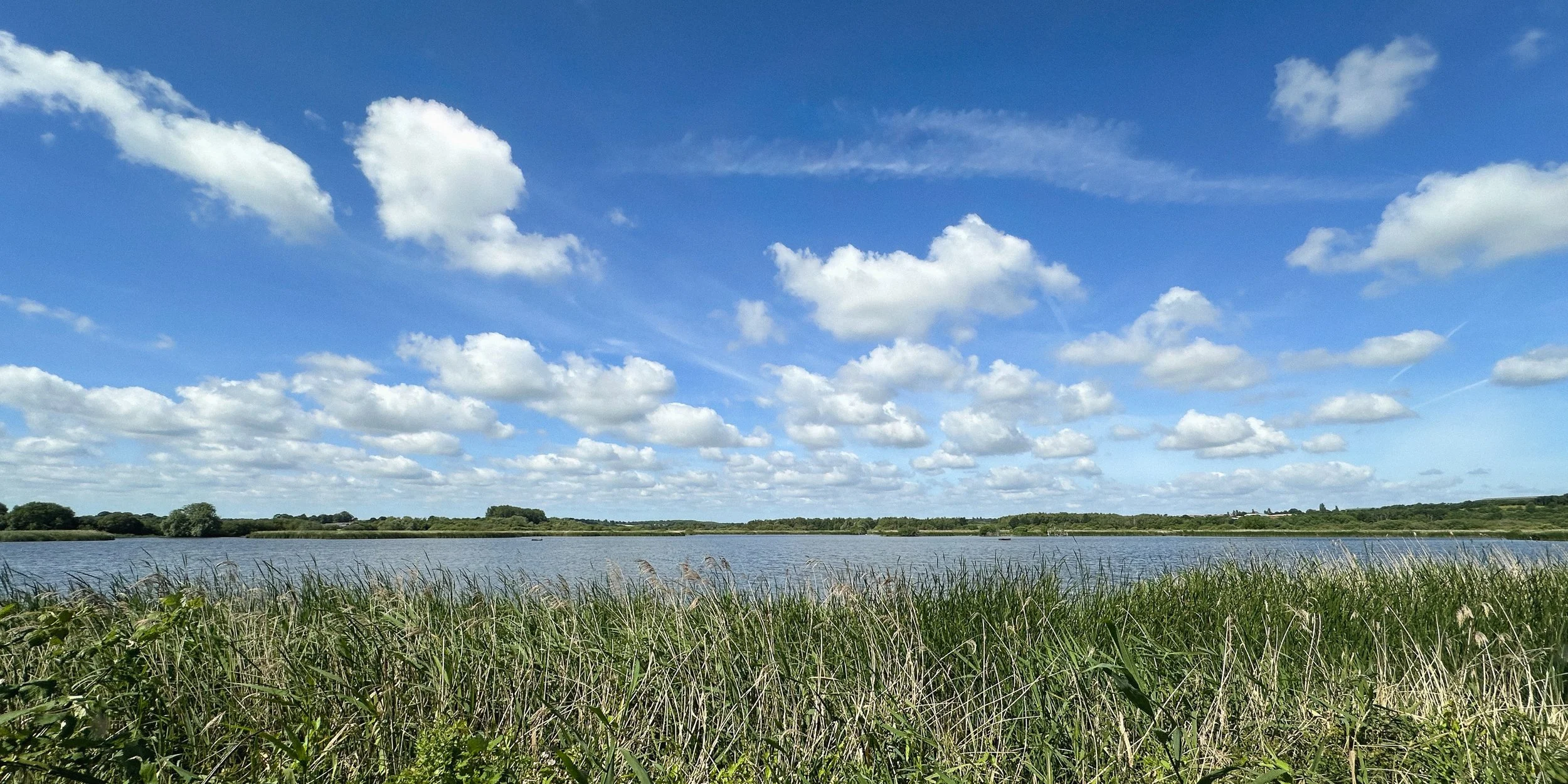
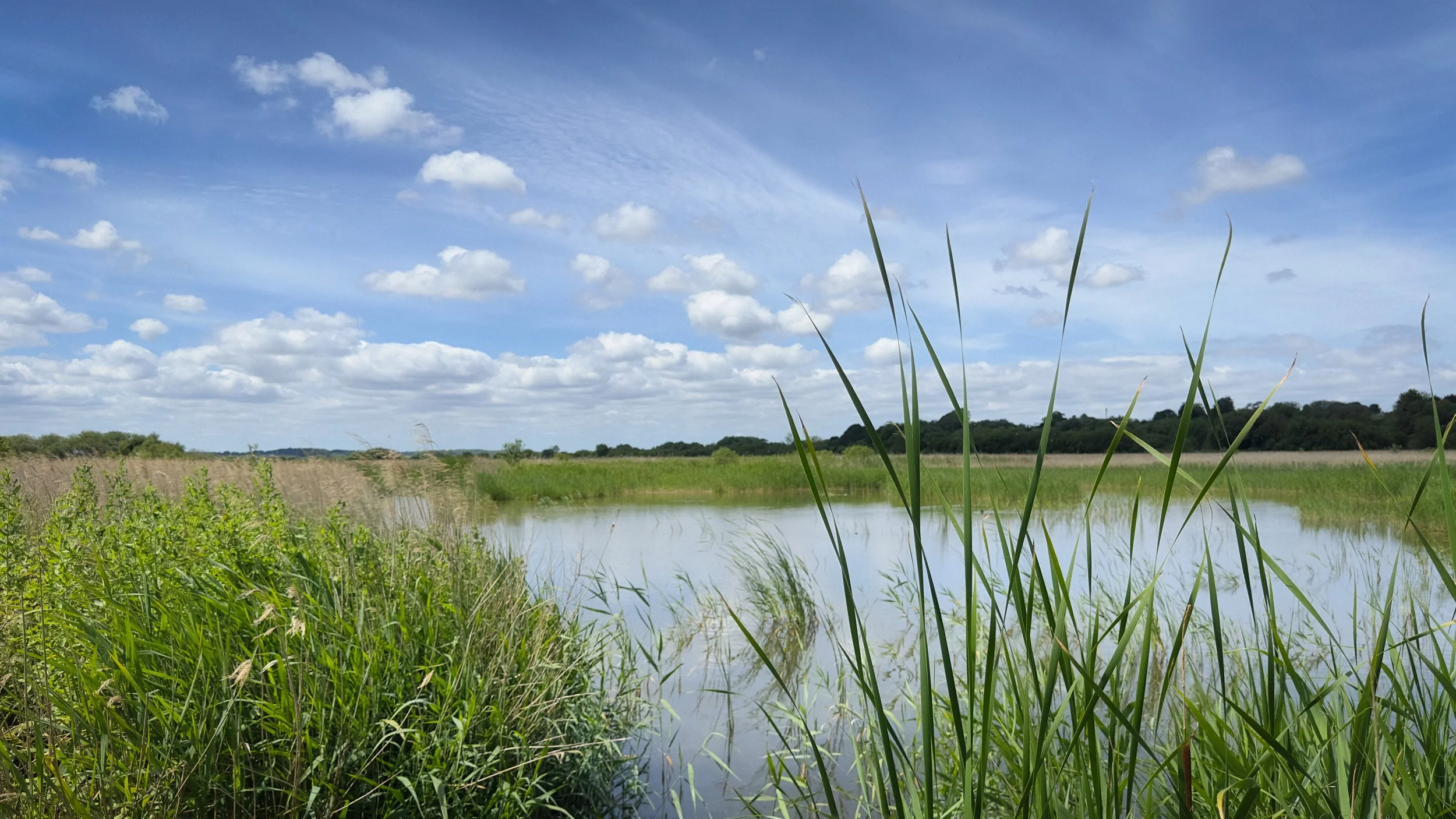
The path through the reserve runs broadly west to east along the northern edge of the lakes before turning down to follow the River Stour towards Grove Ferry. The reedbeds stretch away to either side, broken occasionally by open water and patches of willow scrub, and in some places the sky above is wide and uninterrupted in the way that only very flat land allows. In others, the trail passes through small patches of woodland, contrasting the open vistas with narrow leafy tunnels.
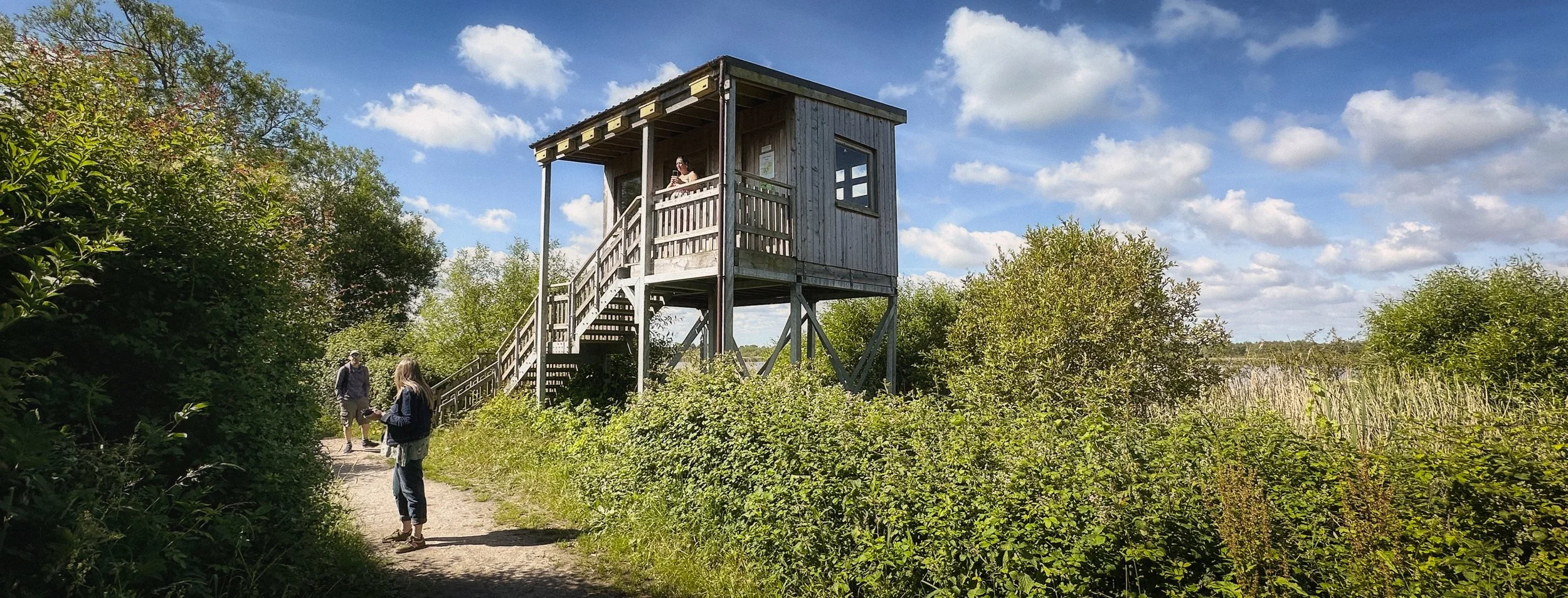
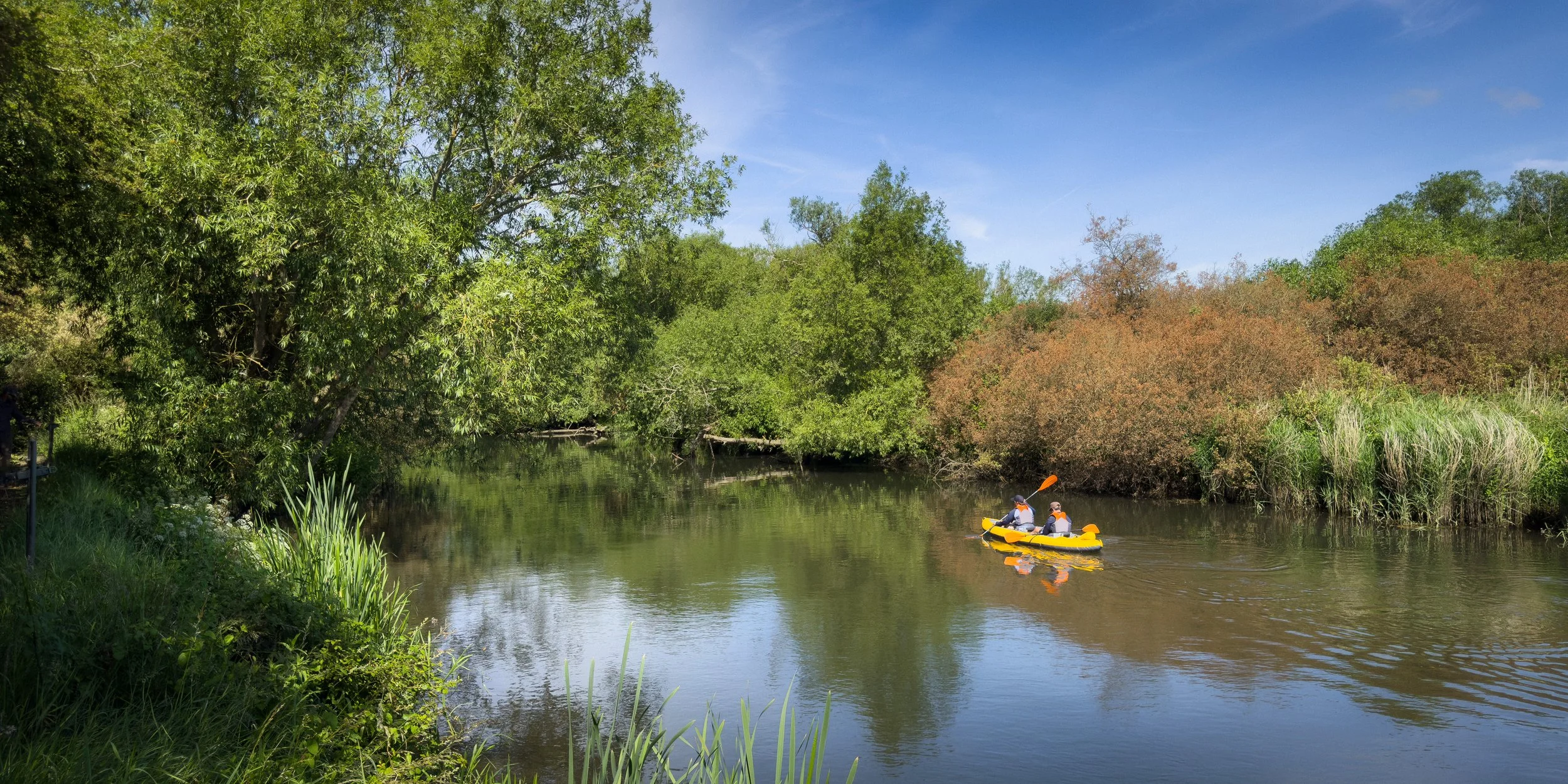
We passed an elevated wooden viewing hide partway along this section of the route — a structure on stilts that gives a longer view over the reserve and which proved predictably popular as a brief stopping point. By the time we reached the riverside stretch of the Stour, a pair of kayakers in a yellow boat were making their own unhurried progress downstream, which seemed a thoroughly civilised way to spend a Sunday morning.
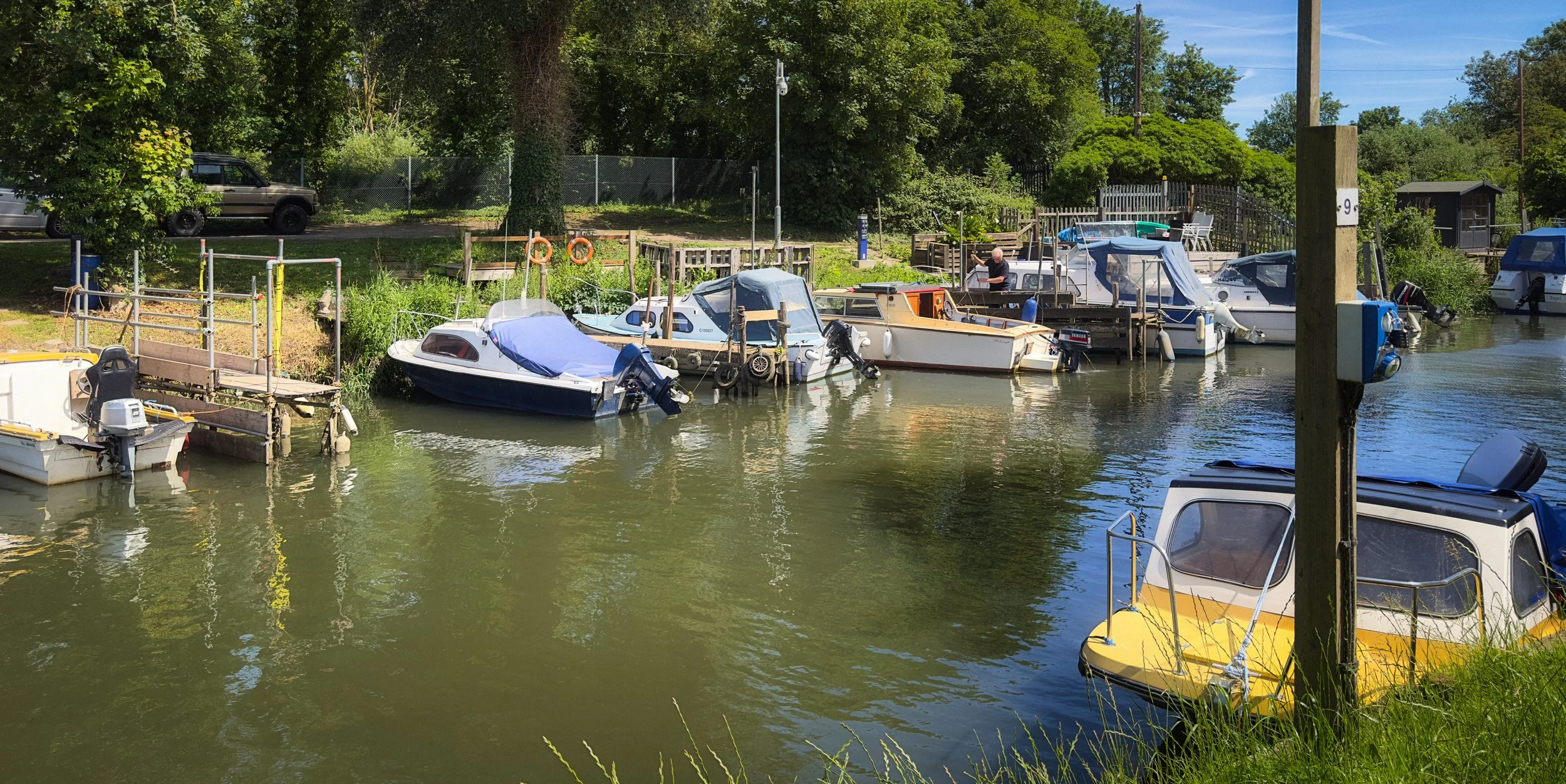
Grove Ferry is one of those place names that quietly announces its own history. For centuries, this was a crossing point on the River Stour on the main road between Canterbury and Thanet, served by a working ferry long before any bridge was built here. The name refers to the grove of trees that once marked the crossing point, and the inn at Grove Ferry has been serving travellers at this spot for several hundred years in one form or another. We arrived on the riverside terrace for the obvious purpose.
Two hot lattes, two iced lattes, and a bottle of orange pop arrived — the coffees in tall glass mugs. Charlotte pointed out that one glass had a small smiley face on the side, an accident of ice cubes and foam, but nonetheless, it made for a good photo. We sat on the terrace with the Stour running past and the moored leisure boats bobbing gently against the bank, and took stock of the morning. We even witnessed a paddle-boarding dachshund (with its owner) enjoying a sunny outing on the river. It was one of those coffee stops that justifies the existence of coffee stops.
From Grove Ferry the return route heads back across the marshland directly, rather than retracing the outward path along the reserve edge. This section of the walk has a different character — more open, more agricultural at the margins, with drainage channels and small streams crossing the path at intervals, and the occasional group of cows regarding proceedings with mild concern. We had the landscape largely to ourselves on the return, and the light remained good throughout. Walking the marshes in mid-June had the advantage of mostly mud-free terrain, at least along the trail itself.
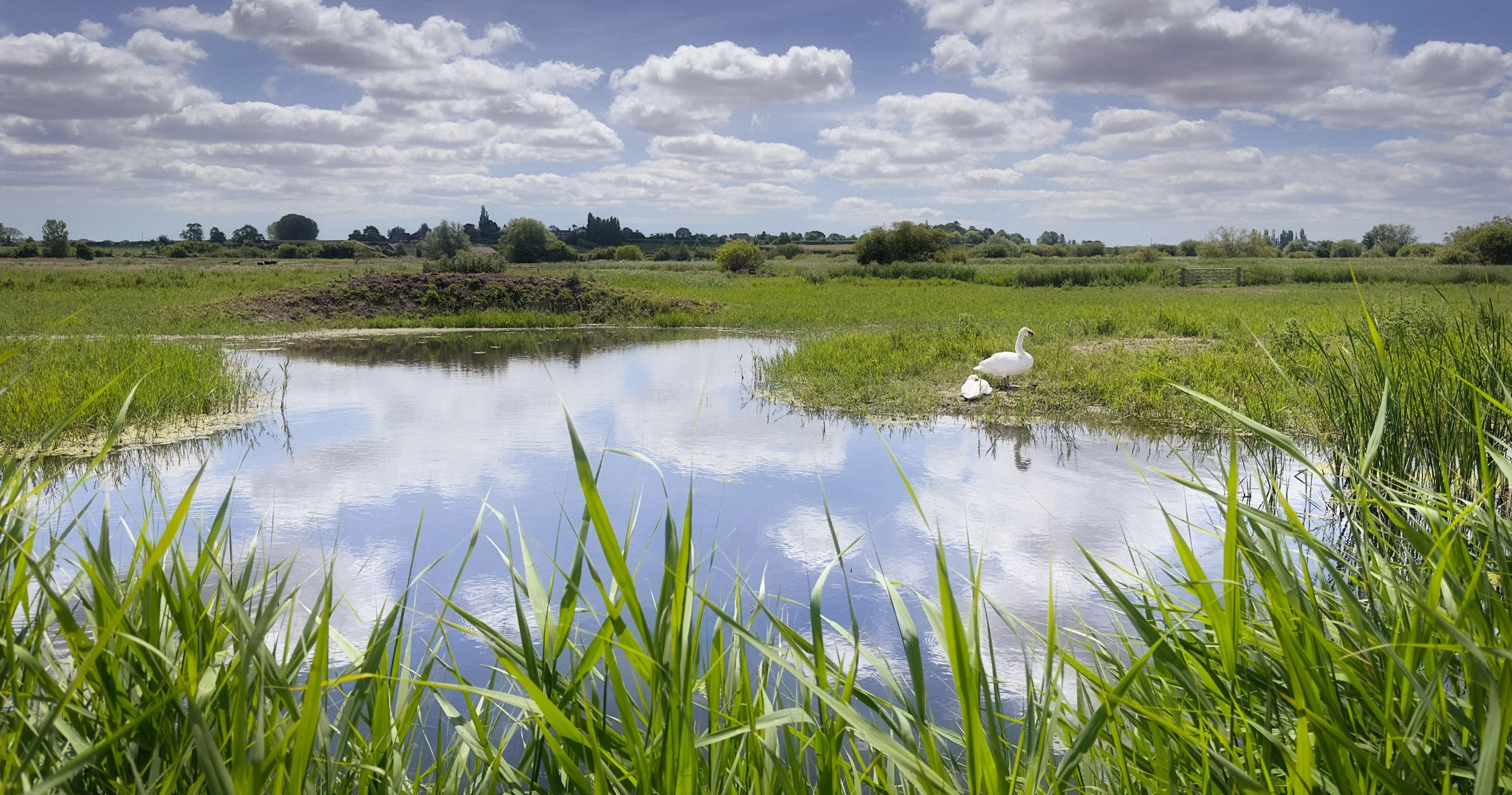
The highlight came somewhere along the reed-fringed pools on this stretch. A mute swan was leading a single cygnet across a small area of open water between patches of marsh vegetation, and both were visible in the still surface below them — sky, reeds, and birds reflected with the kind of clarity that only arrives when there is no wind at all on a small body of water. The shot required getting low, framing through the reeds at the edge, and hoping neither bird moved for long enough to get the composition right. It worked.
A short wooded section brought us back to Bee Wee Car Park, where the colony was still operating at full capacity. We headed back to Grove Ferry for lunch, just a 10-minute drive, which extended the morning very nicely.

The combination of the nature reserve, the riverbank terrace, and the return across open marshland made this one of the better walks we had done in the area for some time. Stodmarsh sits close enough to Dover and Canterbury to be entirely accessible, but its scale and the quality of the habitat give it a reach that belies that proximity. The flat terrain means the walking is easy, and the interest is all in what you are walking through rather than any effort involved in getting there.
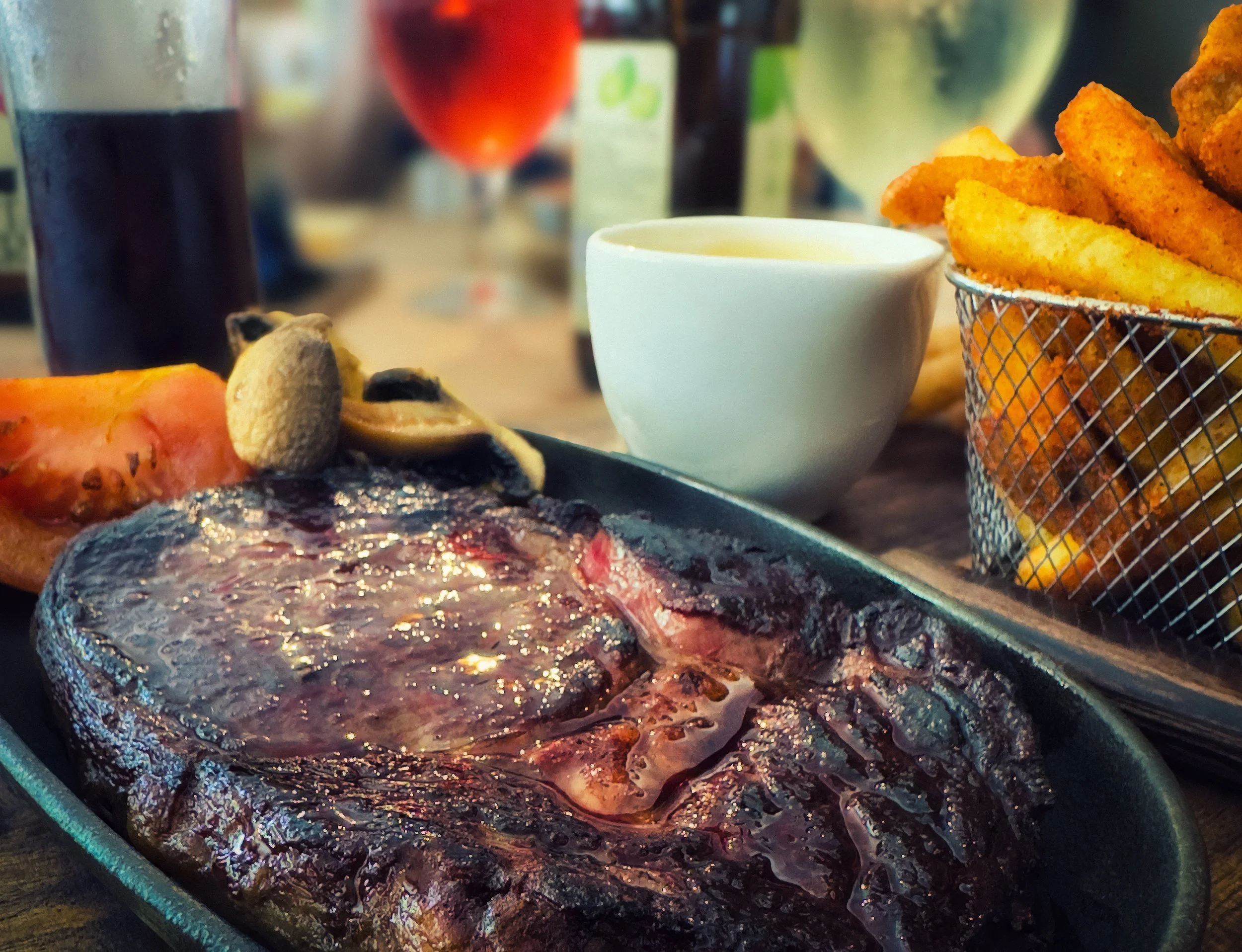
The Grove Ferry Inn does a straightforward pub menu very well — the kind of cooking that does not overcomplicate things. My delicious rib-eye steak came on a cast-iron oval dish, chips in a wire basket beside it, which is definitely the correct way to serve chips. The rest of the gang ordered Korean spicy chicken, a jackfruit burger, and chicken club sandwiches respectively. I heard no complaints, although everyone was so hungry that mouths were far too busy to talk.
8.84 km · 14 m elevation · 2:31:10 moving time · 11,342 steps
Thanks to Caroline, Charlotte, Julia and Ben for joining me on the walk today.
Stodmarsh Village
Postcode: CT3 4BA
From the A257 Canterbury–Sandwich road, turn north at Upstreet onto Grove Ferry Road, then turn right into Stodmarsh village. There’s a small car park in the village centre, and you can usually park along the roadside near the pub. Alternatively, park at the Grove Ferry Inn (CT3 4BP) on Grove Ferry Road and walk the short distance to the reserve entrance, starting the route at the other end. No practical public transport.