Lornar's Pass
Lornar’s Pass, a mid-level zone in Guild Wars 2, stretches north–south through the Shiverpeak Mountains as a link between Lion’s Arch and the higher, harsher peaks further north. It works as a hinge between coastal trade routes and the deeper Shiverpeaks, and carries a lot of inherited history from the original Guild Wars into the game’s current map. The mix of narrow valleys, hanging paths and tucked-away ruins gives the area a layered feel that rewards paying attention to where paths might lead.
The pass takes its name from Lornar, a legendary dwarf said to have held off a hill giant invasion single-handedly in 534 AE, and it once marked the southern edge of dwarven-held mountains. In the original Guild Wars it was a long, winding route between Kryta and the northern Shiverpeaks, with tricky navigation and an Underworld portal at a statue of Grenth. That older role still echoes through the sequel, but the zone now sits in a world reshaped by the Elder Dragons, with dwarven civilisation reduced to stone-bound survivors and memory.
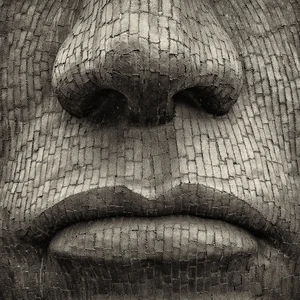
In Guild Wars 2, the dwarves are mostly gone from the surface, having taken on stone form to fight Primordus, but their presence lingers in crumbling fortifications, weathered statues and old mines reoccupied by others. The landscape shifts between green lower valleys, steep rocky walls and higher, snow-dusted ridges, with the route up towards the Durmand Priory passing through several distinct bands of terrain. It feels like a place where old structures have been adapted and overbuilt rather than simply abandoned, and where the recent past is constantly rubbing up against much older stories.
Several locations in Lornar’s Pass stand out as anchors. Dredge operations make use of abandoned dwarven tunnels and caverns, turning old works into extraction sites that players are repeatedly asked to disrupt or sabotage. The Durmand Priory Headquarters, a major base dug into the mountainside, acts as both a lore hub and a practical waypoint, with stories and events spilling out from its archives into nearby digs and expeditions. Gryphonrook Run, the zone’s best-known jumping puzzle, sends players clambering up cliffs and through ruined structures under time pressure, while norn steads such as Skyheight and Afgar’s give a glimpse of everyday norn life through hunting, feasting and the defence of homesteads.
Dynamic events are a large part of what keeps the pass busy. Dredge push against Priory interests and local settlements, bringing escort duties, counter-attacks and demolition work. Snow trolls and jotun raids threaten norn holdings, and Sons of Svanir cultists challenge shrines and villages, asking players to step in and shore up defences when things spill over. Priory scholars regularly call for help securing excavation sites, retrieving artefacts or protecting rituals, folding fragments of history into combat tasks in a way that suits a zone so closely tied to research and remembrance.
Visually, Lornar’s Pass alternates between severe and welcoming. High icefields and glacier-fed cliffs loom in the north, with blizzards and low visibility at times, while lower slopes open into pockets of grassland and forest where weather can clear to show long views down towards the Sea of Sorrows. Ruined dwarven crypts and shrines to the human gods, including a long-abandoned temple of Grenth in the south-east, sit half-buried in rock and snow, giving the sense that multiple cultures have passed through and left markers behind. Wildlife such as mountain goats, moas, ice wurms and alpine vegetation help fill in the quieter spaces between fights.
Exploration in Lornar’s Pass rarely runs in straight lines. Hidden caves, side tunnels and submerged passages sit off to the edges of obvious paths, and reaching certain vistas or points of interest demands a bit of route-finding rather than simply following the road. Chests and resource nodes appear in out-of-the-way places, encouraging detours up ledges or through enemy-held tunnels. Fights range from straightforward skirmishes with individual trolls or ettins to more demanding encounters with dredge machinery or elemental swarms, often with the terrain itself – narrow ledges, sudden drops, patches of ice – adding to the difficulty.
By folding dwarven ruins, active Priory work and present-day conflicts into a single stretch of mountain, Lornar’s Pass bridges the gap between Guild Wars and Guild Wars 2 without feeling like a museum piece. It keeps the memory of the old route and its stories alive while making space for new threats, new factions and updated mechanics, turning what could have been a simple transit corridor into a place worth lingering in for its own sake.