Abstract Photography
Abstract photography occupies a singular and philosophically charged position in the history of the medium. Every other genre of photography — landscape, portraiture, documentary, architecture — depends, at least nominally, on a relationship between the image and the visible world it represents. Abstract photography refuses or complicates that relationship. It asks the camera to produce images in which form, tone, texture, line, and light take precedence over subject matter; in which the viewer cannot, or is not meant to, readily identify what was in front of the lens.
This refusal is not incidental. It goes to the heart of what photography is. The medium was inaugurated in 1839, as a technology of record — a means of fixing what the world actually looked like, automatically and without the mediating hand of the artist. For photography to then become abstract, for it to dissolve or withhold its subjects rather than reveal them, is an act of considerable conceptual audacity. It is photography turning its own presumed nature against itself.
That paradox is what makes the history of abstract photography so rich. The story is not simply one of artists ignoring or abandoning their cameras in favour of darkroom experiments — though that is part of it. It is also the story of photographers who used the camera with absolute precision to find, within the world itself, forms and surfaces that resisted ordinary representation: Weston's peppers, Siskind's peeling paint, Sudek's labyrinthine glassware.
It is the story of movements — Dada, Constructivism, Bauhaus, Surrealism — that found in photography a uniquely modern instrument for challenging bourgeois rationalism and perceptual complacency. And it is the story of how the photogram, a technique as old as photography itself, became the site of some of the most radical experiments in twentieth-century art.
This article traces that history from its earliest premonitions in the 1840s through to the computational and digital extensions of the tradition in the twenty-first century. It is, inevitably, a selective account: the field is vast, the practitioners numerous, and the critical debates ongoing. What follows attempts to identify the main currents, the key figures, and the moments of rupture and transformation that have shaped abstract photography into the diverse and intellectually serious practice it remains today.
Pre-Photographic Abstraction
The impulse towards abstraction in visual art long predates the invention of photography. Islamic geometric decoration, medieval manuscript ornament, and the decorative arts of many cultures operated on principles of pattern, repetition, and formal organisation that had nothing to do with the representation of nature.
In Western painting, the tradition of the capriccio — fantastical, architecturally impossible compositions — offered one avenue of escape from mimesis, and the Romantic fascination with the sublime had begun to push landscape painting towards moods and atmospheres that mere topographic description could not convey.
By the early nineteenth century, painters such as J. M. W. Turner were dissolving form into light and atmosphere to a degree that anticipated the concerns of later abstract art. Turner's late canvases — Norham Castle, Sunrise (c. 1845), Light and Colour (Goethe's Theory) (1843) — reduced landscape to vortices of golden paint.
They were not intended as abstractions in any programmatic sense, but they prepared the critical vocabulary. Similarly, John Constable's cloud studies of the 1820s, his skying experiments made at Hampstead, established the meteorological observation of light and atmosphere as a legitimate artistic endeavour — a precedent that would return, with pointed significance, when Alfred Stieglitz turned his camera skyward at Lake George a century later.
The relevance of this pre-photographic context for abstract photography is double. First, it shows that photography did not invent the desire to image without meaning, to make form primary — that desire was already present in the culture into which photography was born.
Second, and more specifically, it explains why the Pictorialist photographers of the 1880s and 1890s looked to painting as their model and why, paradoxically, the reaction against Pictorialism would eventually generate the formal conditions in which genuine photographic abstraction became possible.
The painting–photography dialectic, conducted over several decades, forced photographers to ask what their medium could uniquely do — and in answering that question, abstraction was found.
Photography Without a Camera
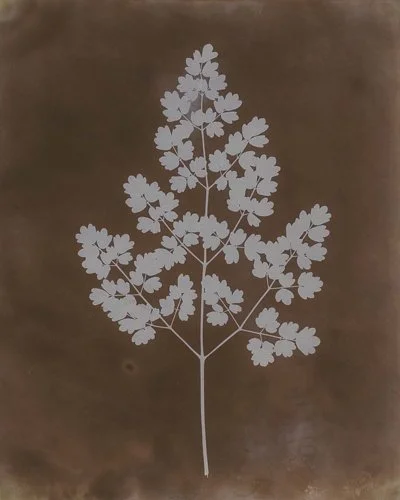
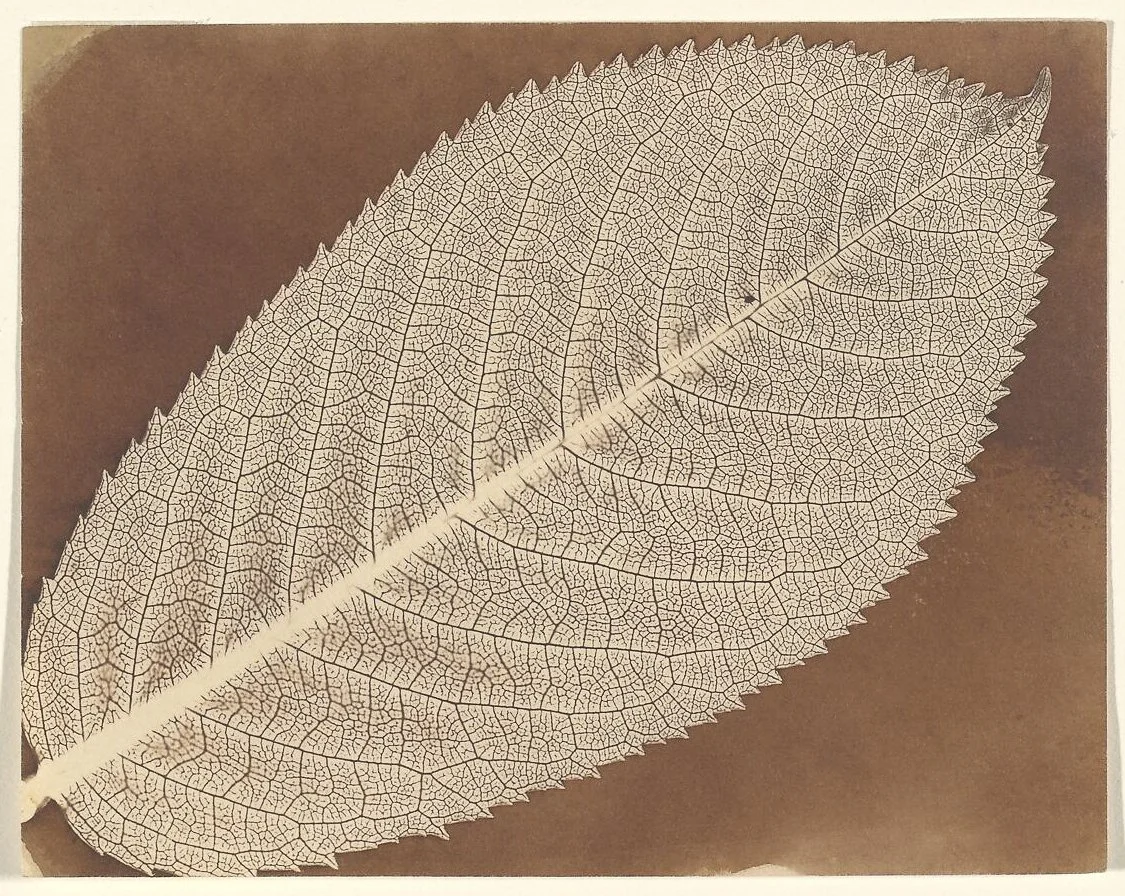
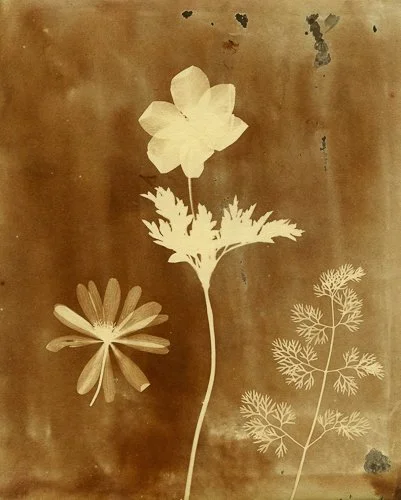
The photogram is the most radically anti-representational technique in photography's repertoire, and it is almost exactly as old as photography itself. In 1834, William Henry Fox Talbot placed botanical specimens directly on sensitised paper and exposed them to sunlight, producing what he called photogenic drawings — white silhouettes against darkened grounds.
These were not photographs in the camera-based sense, but they used the essential photographic process: light reacting with a chemically sensitised surface to produce a permanent image.
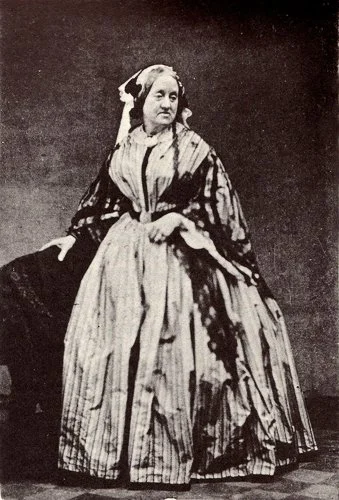
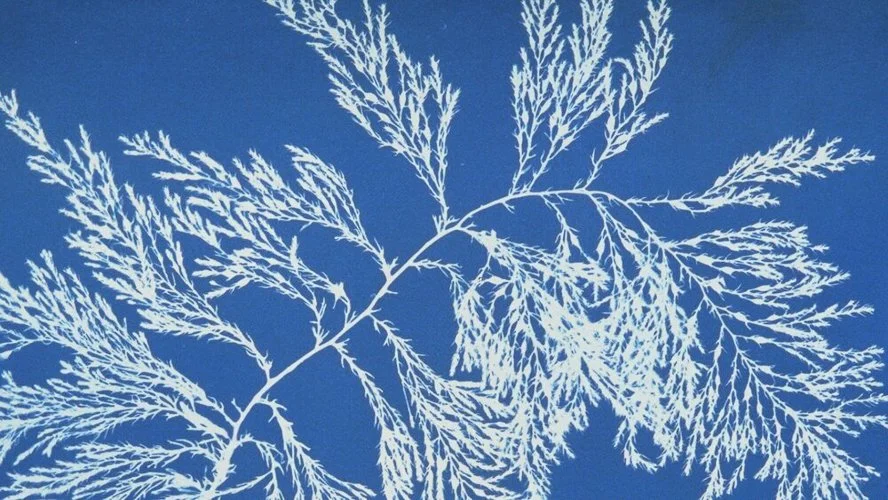
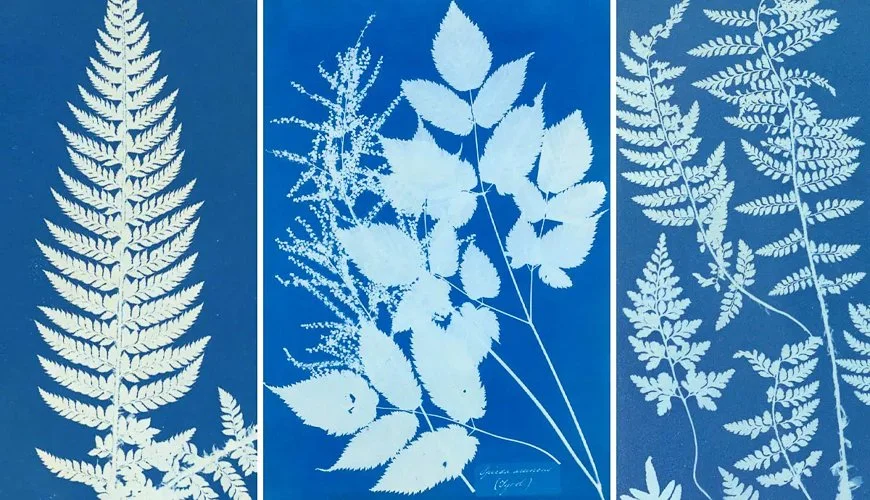
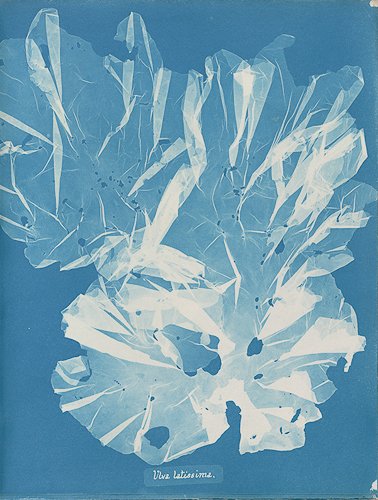
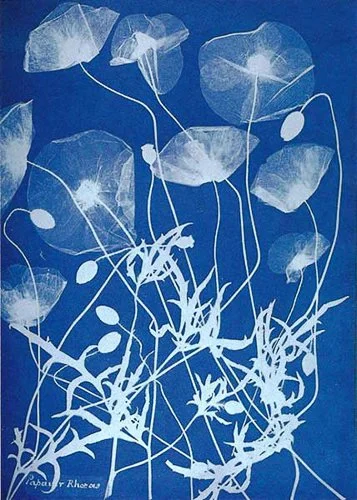
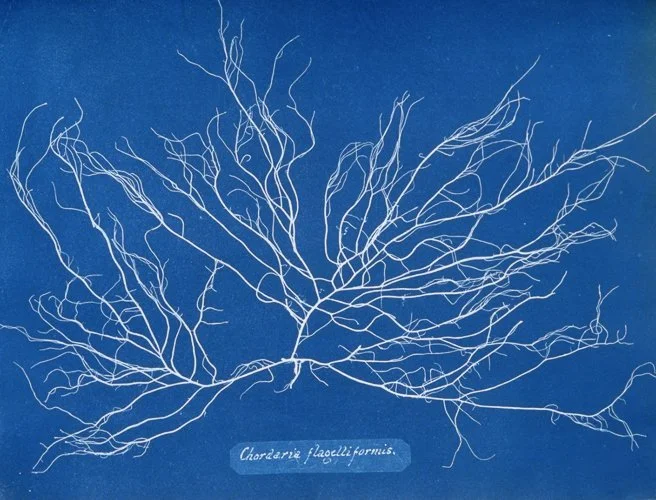
The technique acquired its most celebrated early application in the work of the English botanist and amateur photographer Anna Atkins (1799–1871). Beginning in October 1843, Atkins began self-publishing a series of cyanotype photograms of British algae under the title Photographs of British Algae: Cyanotype Impressions, continuing the project until 1853.
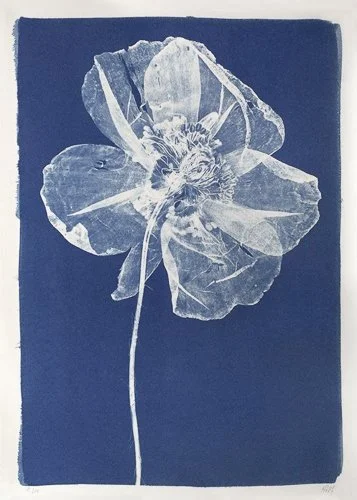
The cyanotype process, invented by Sir John Herschel in 1842, produced images in vivid Prussian blue: paper treated with ammonium ferric citrate and potassium ferricyanide turned blue on exposure to sunlight, while areas shielded by the specimen remained white. Atkins placed dried algae directly onto the sensitised paper, exposed it to sunlight, and fixed the result in water, producing ghostly white forms suspended against an intense blue ground.
Photographs of British Algae was emphatically a work of botanical science, not art — Atkins's primary intention was to provide visual accompaniment to William Harvey's Manual of British Algae (1841), which lacked illustrations. The aesthetic dimension was secondary and, in the contemporary understanding, largely incidental.
Yet the book, of which only about seventeen copies in various states of completeness are known to survive, is now widely recognised as one of the most beautiful objects in the history of photography. The cyanotypes possess a severe, abstract elegance entirely their own: the algal specimens, flattened and pressed against the page, become pure graphic form — branching, curling, feathery white shapes that bear the same relationship to the original plant as a brushstroke does to the thing it represents.
Atkins herself, according to her 1843 preface, spoke of the "difficulty of making accurate drawings of objects as minute as many of the Algae," but what she produced was something far stranger and more luminous than any drawing could have been.
It is important not to overstate the retrospective claim. Atkins was not making art in any self-conscious sense. The abstract quality of her photograms is a function of the technique, not a deliberate aesthetic programme.
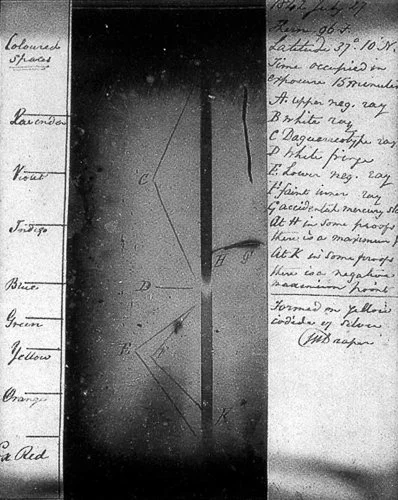
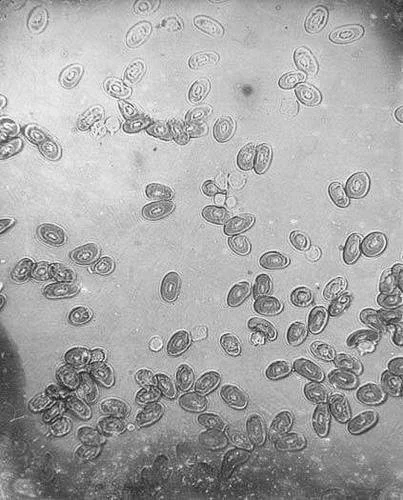
This observation applies with equal force to the work of John William Draper (1811–1882), whose photographic experiments of the 1840s occasionally produced images — spectroscopic recordings, microphotographs — whose visual character, viewed from the perspective of the twenty-first century, resembles abstract photography. The resemblance is genuinely retrospective. Draper was a scientist concerned with the photochemistry of light, not with visual aesthetics. That his work sometimes looks like abstract art is an accident of method rather than an exercise of intention.
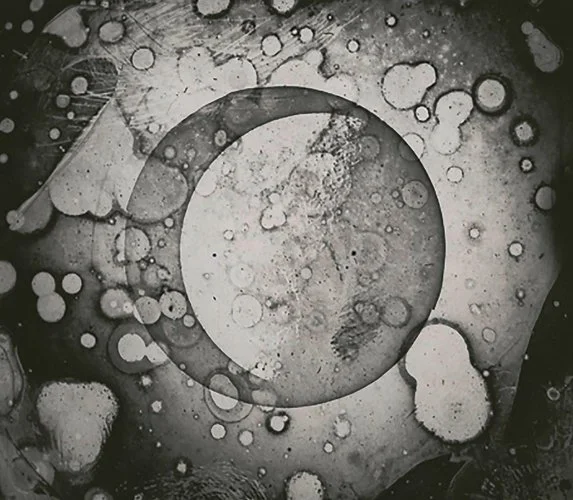
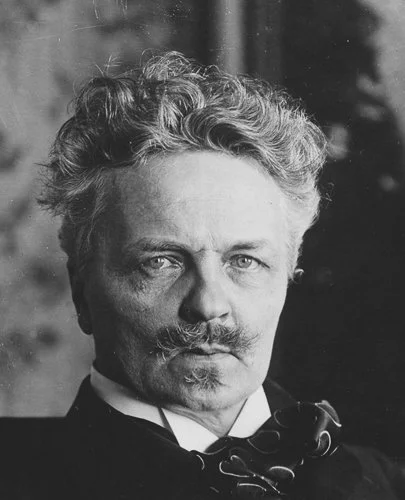
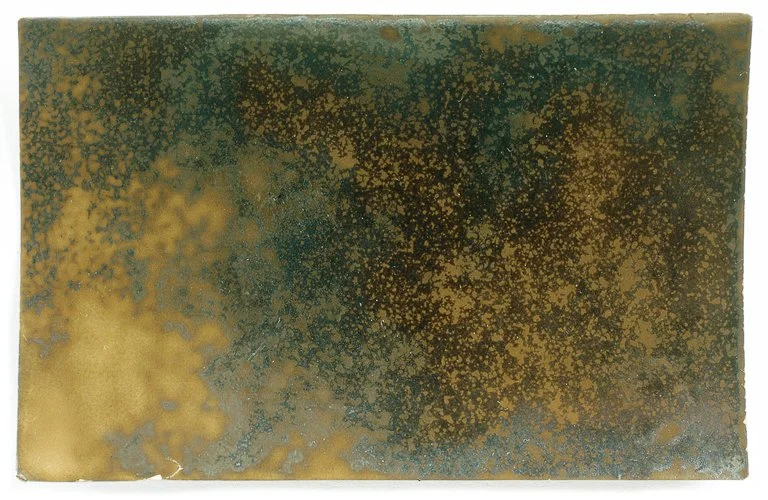
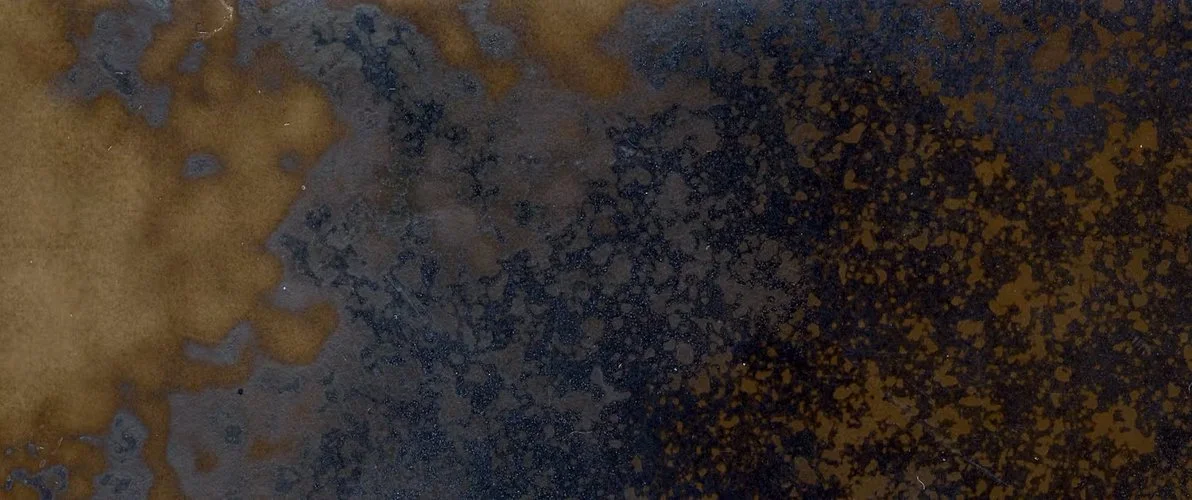
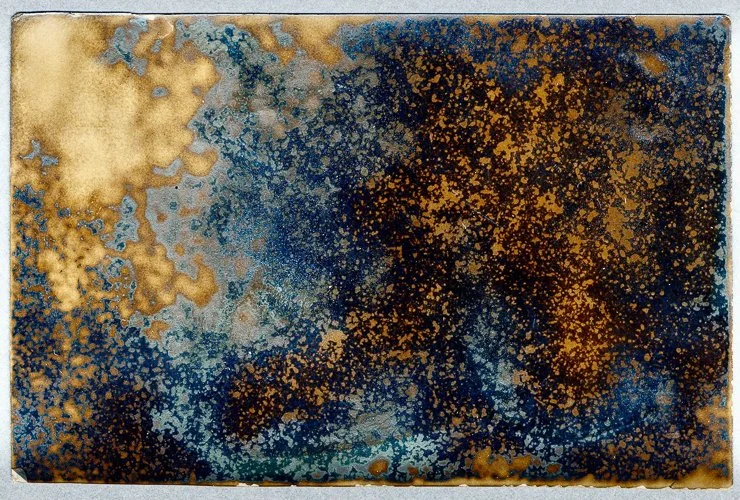
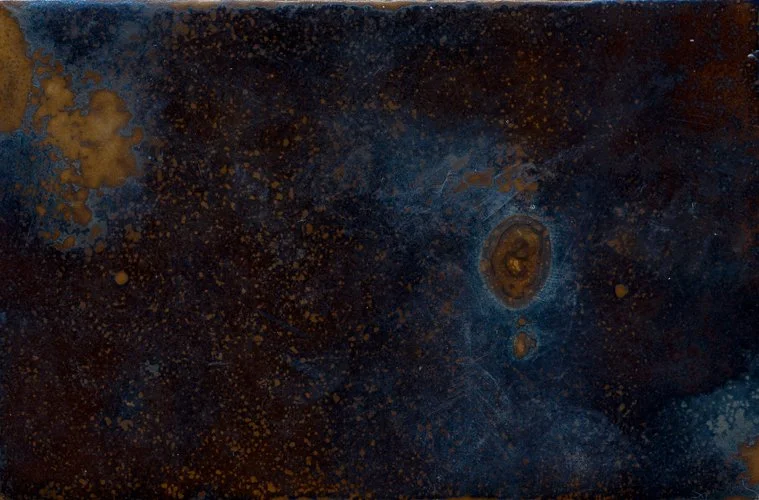
A more provocative case is that of the Swedish playwright and polymath August Strindberg (1849–1912), who in the early 1890s conducted a series of unusual photographic experiments. During a period of acute personal crisis — what he later called his Inferno — Strindberg attempted to photograph the night sky by placing photographic plates directly on the ground and exposing them to the open air without a camera, a lens, or any focusing mechanism.
He called the results celestographs, believing they recorded direct impressions of starlight. The images are mysterious, mottled, and entirely non-representational: they look less like photographs of stars than like early twentieth-century abstract prints. Whether Strindberg's celestographs actually recorded stellar light — or merely the chemical effects of moisture and contamination on the plate — remains a matter of debate.
What is clear is that his process, cameraless and entirely open to chance, anticipates the photogram experiments of the 1920s by roughly a quarter of a century. The connection to those later experiments was not direct — Strindberg's work was private and not widely known — but his instinct to use photosensitive materials as a canvas for mark-making independent of optical representation was, in retrospect, prophetic.
The photogram was not, of course, confined to these isolated instances. The technique surfaced periodically throughout the nineteenth century, employed by various photographers for scientific or pedagogical purposes. But it would not become a site of sustained artistic experiment until it was taken up, simultaneously and apparently independently, by three figures in the early 1920s: Christian Schad, Man Ray, and László Moholy-Nagy. Their contributions are considered in the relevant sections below.
The Search for Form
The decades between 1880 and 1930 constitute one of the most turbulent and productive periods in the history of photography. They witnessed the rise and decline of Pictorialism, the emergence of straight photography, the international diffusion of New Objectivity (Neue Sachlichkeit), and the formation of Group f/64 — four interconnected episodes whose combined effect was to establish, for the first time, a rigorous critical framework within which photographic form could be seriously considered.
Pictorialism emerged in the 1880s and reached its height in the decade before the First World War. Its advocates — among them Henry Peach Robinson, Robert Demachy, and the early Alfred Stieglitz — argued that photography could aspire to the condition of fine art only by adopting the techniques and values of painting: soft focus, tonal manipulation, printing processes such as gum bichromate that introduced the visible mark of the hand, and compositional principles borrowed from academic painting.
The gum bichromate process, introduced in 1894 by Alphonse Louis Poitevin and popularised by Demachy and others, was particularly useful in this regard: it allowed the photographer to apply pigment-loaded emulsion to paper, expose it through a negative, and then work into the resulting image with brushes, partially washing away and reworking areas of tone. The results looked unmistakably handmade, and that, for the Pictorialists, was the point.
The paradox of Pictorialism, from the standpoint of abstraction, is that in attempting to make photographs look like paintings, it inadvertently drew attention to those qualities of the photographic image — texture, surface, tonal graduation — that were most amenable to non-representational treatment.
A Pictorialist gum bichromate print, with its softened forms and heavily worked surface, was not an abstract photograph, but it demonstrated that the photographic image could sustain considerable formal manipulation without collapsing into incoherence. That was a significant discovery, even if the Pictorialists themselves had no ambition to take it in an abstract direction.
The reaction against Pictorialism was articulated most forcefully by Alfred Stieglitz, who moved decisively towards what came to be called straight photography in the years around 1910. The Stieglitz of The Steerage (1907) — sharp, direct, formally severe — was a very different figure from the Stieglitz who had produced softly manipulated Pictorialist prints a decade earlier.
The straight photography movement, consolidated in Britain by Frederick Evans and in the United States by Paul Strand, whose abstract close-ups of bowls and porch shadows produced in 1916 are among the earliest deliberate photographic abstractions by any major American photographer, insisted on the integrity of the photographic negative and the unique qualities of the photographic image.
It was in Germany, however, that the theoretical implications of straight photography were most systematically developed. The movement known as Neue Sachlichkeit (New Objectivity) emerged in the early 1920s as a response both to Expressionism and to the various avant-gardes, and its photographic wing produced some of the most influential work of the century.
Albert Renger-Patzsch (1897–1966) is its central figure. His 1928 book Die Welt ist schön (The World is Beautiful) — the title was chosen by his publisher against his own preference for the plainer Die Dinge ("The Things") — assembled one hundred photographs in which natural forms, industrial products, and mass-manufactured objects are presented with what Renger-Patzsch called the precision of scientific illustration.
His photographs of factory chimneys, plant structures, ceramic pots, and machine components are characterised by deep focus, even light, and a stripped-down formal austerity that reveals the structural beauty latent in ordinary things.
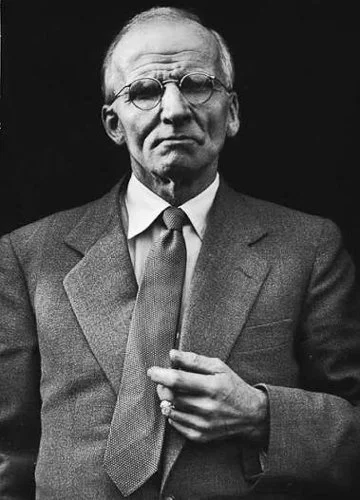
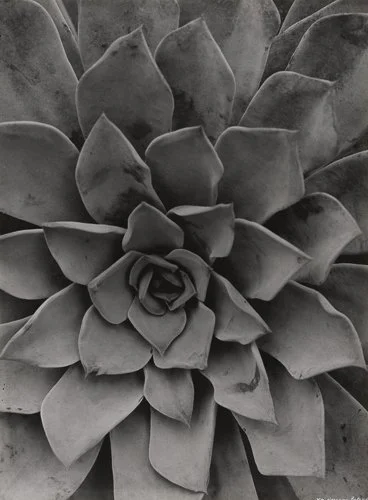
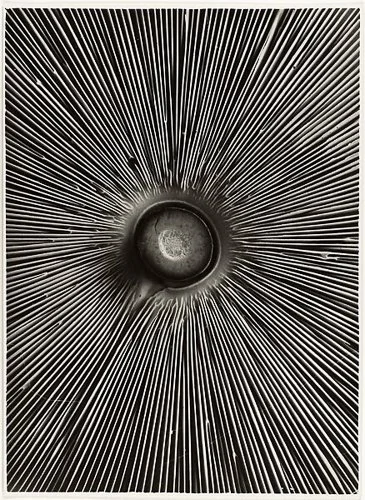
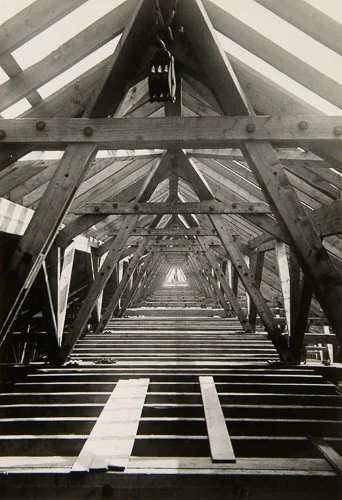
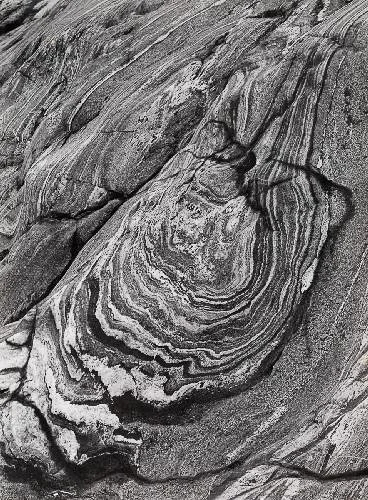
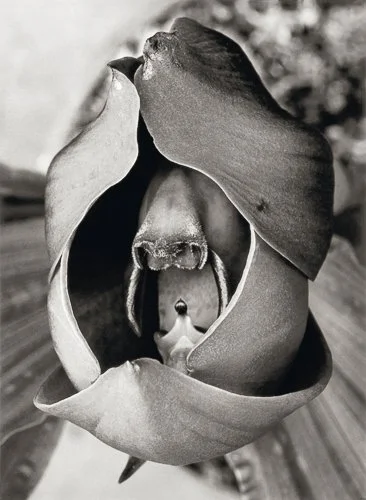
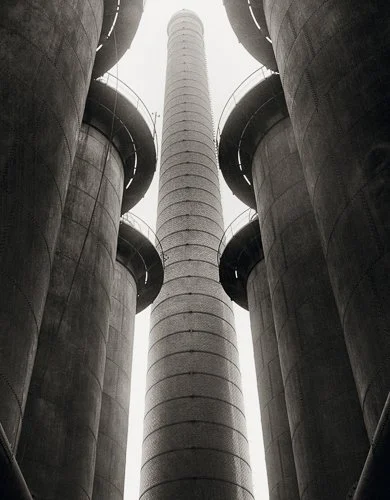
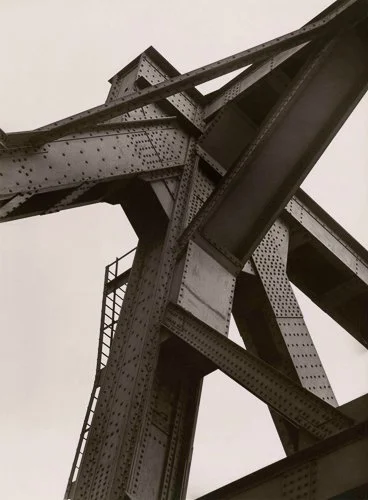
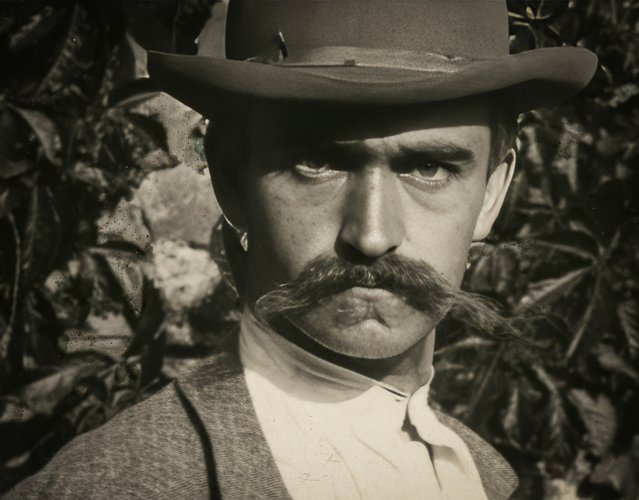

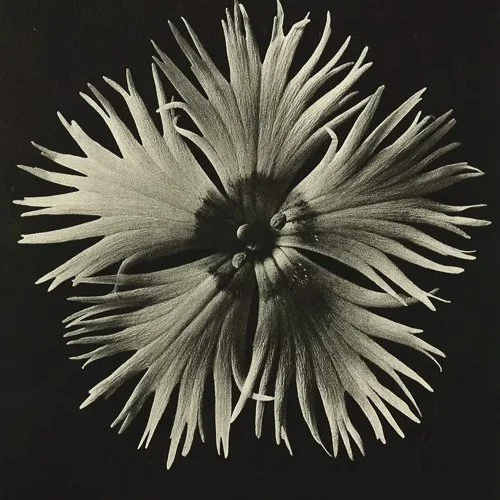
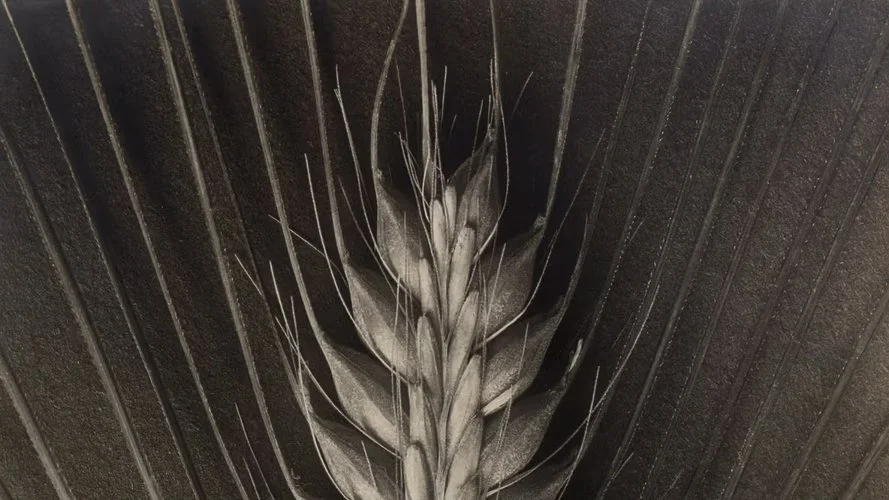
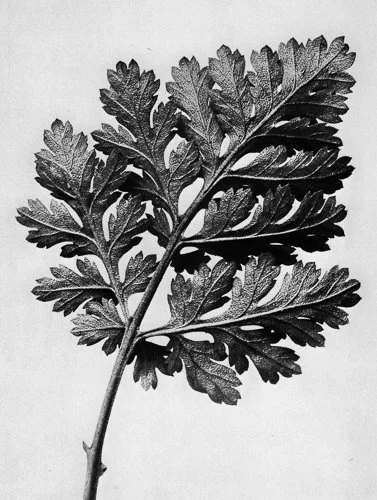
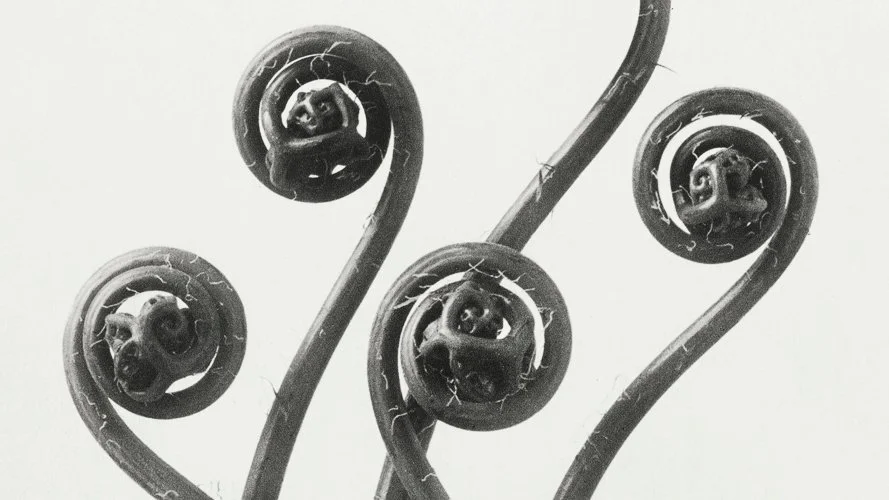
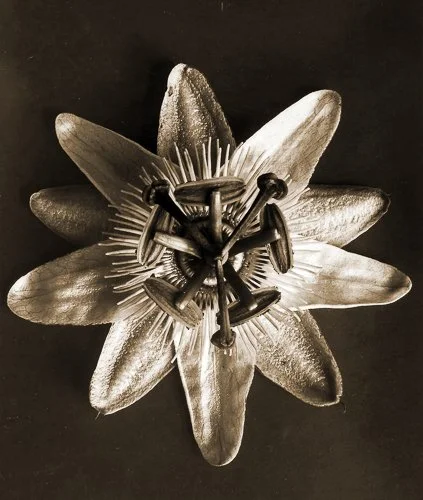
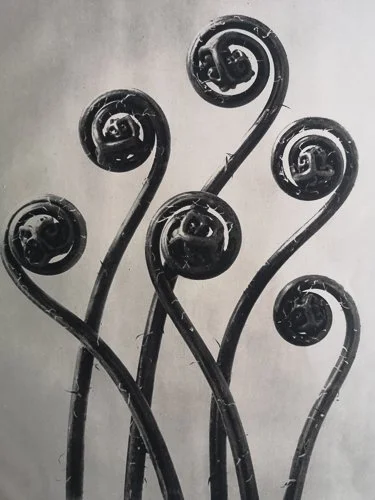
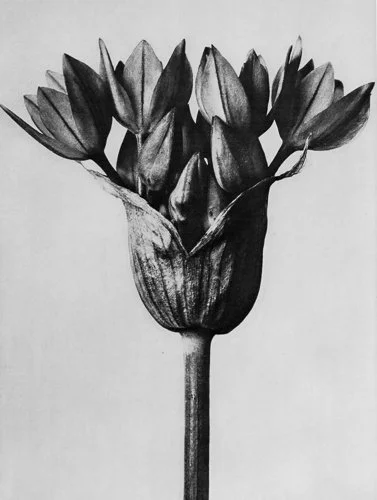
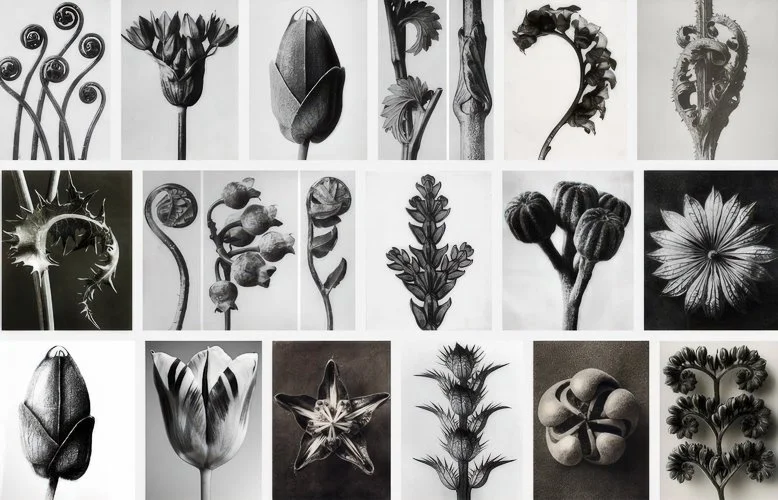
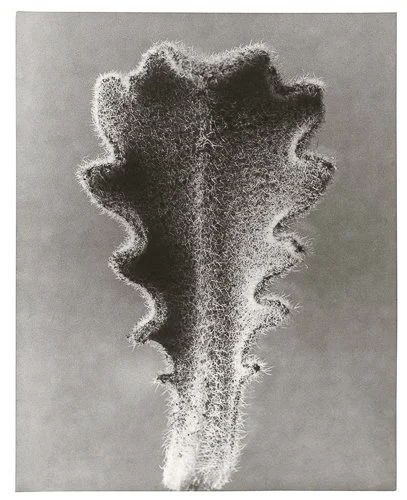
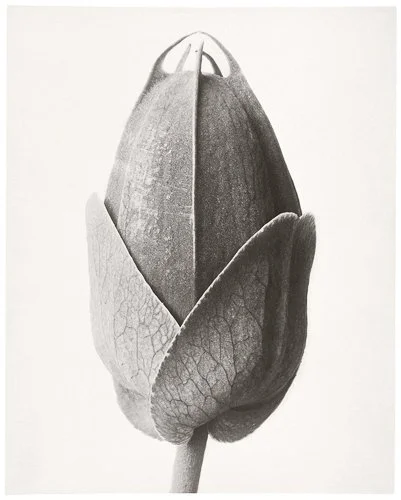
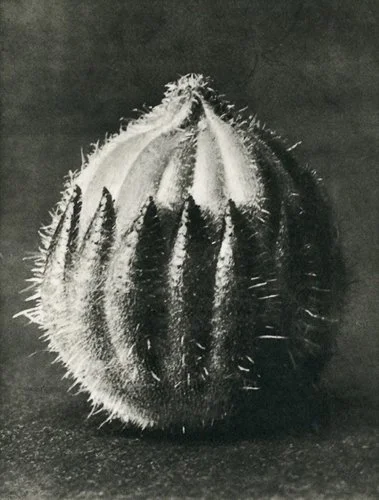
Renger-Patzsch's work sits at the boundary between representation and abstraction. His subjects remain recognisable, but his way of seeing them is purely formal: he pursues surface, structure, rhythm, and material, not narrative or meaning in any conventional sense.
His contemporary Karl Blossfeldt (1865–1932), who spent decades photographing plant forms at extreme magnification, arrived at a similar position from a different direction: his close-up images of seed pods, stamens, and dried stems, published in Urformen der Kunst (1928), transform botanical specimens into architectural and sculptural forms of striking visual power.
Neither photographer would have described himself as making abstract images. Both were, in practice, pushing photography towards a formal severity that made the distinction between representation and abstraction increasingly difficult to sustain.
In the United States, the f/64 group — founded in San Francisco in 1932 by Edward Weston, Ansel Adams, Willard Van Dyke, and others — took up the straight photography tradition and pushed it towards an extreme of technical refinement.
The group's name referred to the smallest aperture available on large-format cameras, which produced the maximum depth of field and the sharpest possible image across the entire frame. Its 1932 manifesto declared that "pure photography is defined as possessing no qualities of technique, composition or idea, derivative of any other art form."
The f/64 photographers rejected Pictorialist softness and post-production manipulation in favour of large-format cameras, glossy papers, and contact printing. Their images of rock, water, vegetation, and sky were representations in the conventional sense, but so formally intense, so concentrated on the visual essence of their subjects, that they opened photography onto something new.
The Avant-Garde Revolution
If straight photography and New Objectivity represented one path from Pictorialism towards abstraction — a path through formal rigour and the declaration of photographic specificity — the avant-gardes of the 1910s and 1920s represented another: a path through radical experiment, anti-bourgeois provocation, and a systematic dissolution of the boundary between photography and the other visual arts.
The first crucial figure is Alvin Langdon Coburn (1882–1966), an American-born photographer long resident in Britain who, in January 1917, created what are generally recognised as the first body of work to embrace total photographic abstraction: the Vortographs.
Coburn had close connections with the Vorticist movement — the British avant-garde formed around Wyndham Lewis and championed by Ezra Pound — whose jagged, fractured, energetic compositions had been working through the implications of Cubism and Futurism in paint and print since 1914. For his Vortograph series, exhibited at the London Camera Club in February 1917, Coburn devised an apparatus he called the Vortoscope: three mirrors clamped together in a triangular arrangement and fitted over the camera lens.
When objects — a studio skylight, a bicycle wheel, angular pieces of metal and glass — were photographed through this device, the mirrors reflected and multiplied their forms into a kaleidoscopic play of facets, planes, and light that bore no resemblance to the original subject. The results were, as Ezra Pound wrote in the exhibition catalogue, "freed from the material limitations of depicting recognisable natural objects."
Coburn himself later wrote: "It was in January 1917 that I created these first purely abstract photographs." This claim, though sometimes disputed, is broadly sustainable. His Vortographs predate the photogram experiments of Man Ray (1921) and Moholy-Nagy (1922) by several years, and they are distinguished from those experiments by their use of the camera itself as the image-forming instrument — refracted and multiplied, certainly, but still fundamentally an optical device.
The Vortographs are not photograms but camera-made images, and their abstraction is achieved not by eliminating the camera but by radically transforming what it produces. As such, they occupy a unique position: they are abstract photographs in the fullest sense, made with a camera, and they are the first.
The Vortographs were shown once, in 1917, and then largely forgotten for several decades. Their historical priority was obscured by the far greater critical visibility of the photogram experiments that followed. The photogram — the cameraless technique of placing objects directly on sensitised paper — was taken up simultaneously by three major figures working in different contexts.
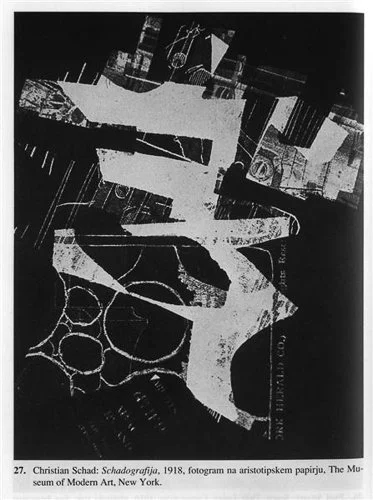
Christian Schad (1894–1982), a Swiss-born artist associated with the Zurich Dada movement, began making photograms in 1918 using small, flat objects — ticket stubs, pieces of gauze, plant material — arranged on photographic paper. He called them Schadographs. The results are intimate, quiet, and formally rigorous: small compositions in which overlapping shapes create intricate patterns of light and shadow. Tristan Tzara, the Dada poet, later published and promoted Schad's images, and they influenced Man Ray's subsequent development.
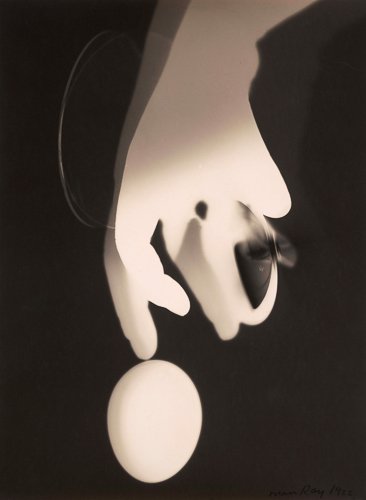
Man Ray (born Emmanuel Radnitzky, 1890–1976) arrived in Paris in 1921 and, shortly afterwards, rediscovered the photogram technique — apparently independently of Schad — in his darkroom. He called his versions Rayographs, a name that embedded his own identity in the technique.
Where Schad's Schadographs had been quietly formal, Man Ray's Rayographs were Dada provocations: he used three-dimensional objects, moved them during the exposure, varied the angle of the light, and produced images that seemed to make objects "move in fluid," as Sue Roe later wrote, "captured in the process of mutating." Man Ray quickly became associated with the Surrealist movement, which adopted photography — not as a documentary tool but as a medium capable of producing the uncanny, the oneiric, and the irrational.
His practice encompassed solarisation (partially reversing tonal values by re-exposing the print to light during development), multiple exposure, and photomontage. His most famous single image, Le Violon d'Ingres (1924), is not a photogram but a darkroom montage: a photograph of his model Kiki de Montparnasse, seen from behind in the pose of a classical odalisque, with the f-holes of a violin burned onto her back. The image is an act of visual wit, sexual provocation, and formal elegance simultaneously — a perfect demonstration of Surrealism's method of introducing the uncanny into the familiar.
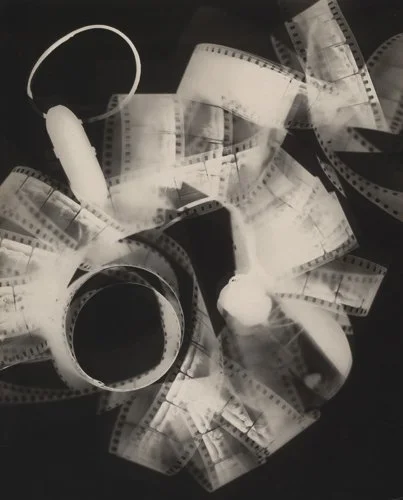
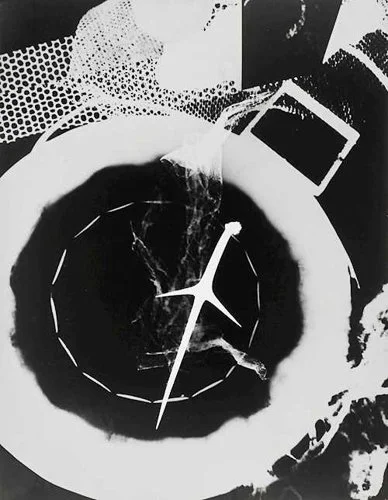
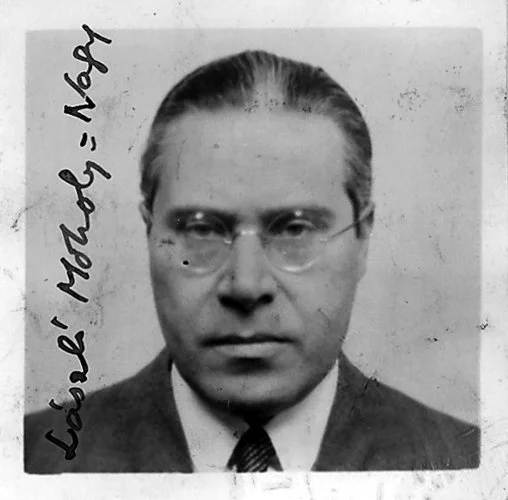
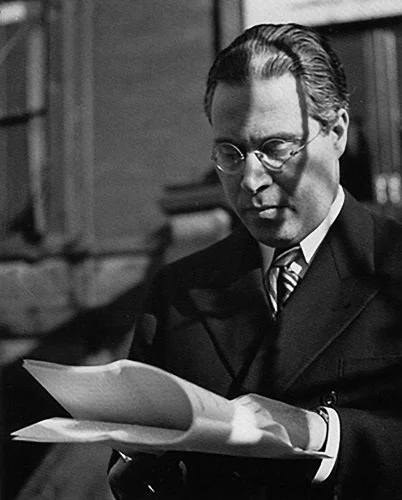
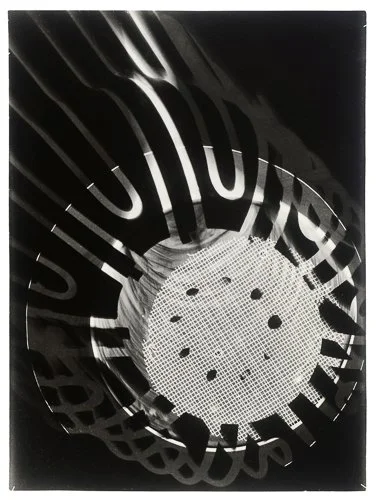
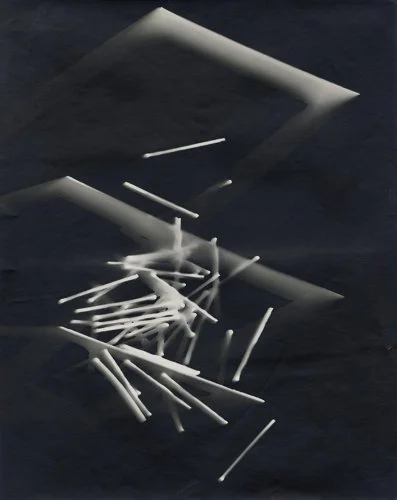
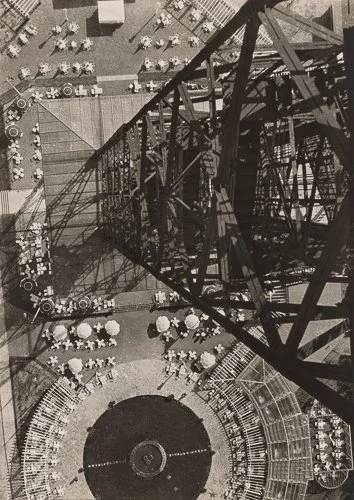
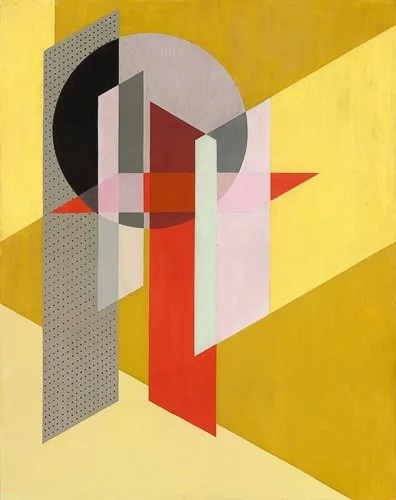
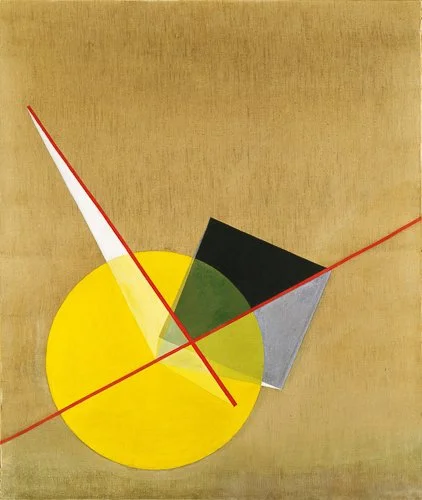
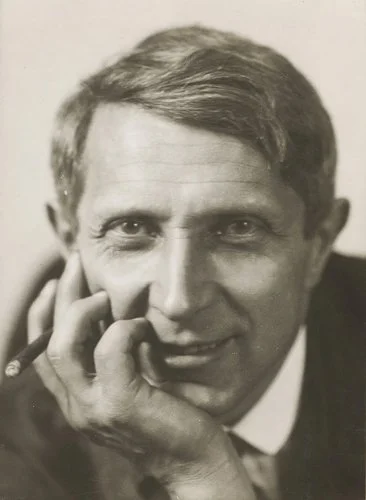
László Moholy-Nagy (1895–1946) was the most intellectually systematic of the three photogram makers, and the one who built the photogram into a comprehensive theory of modern photography. A Hungarian artist who joined the faculty of the Bauhaus in Weimar in 1923, Moholy-Nagy began making photograms in collaboration with his wife Lucia in 1922, producing images he titled Fotogramm.
For Moholy-Nagy, the photogram was not primarily an aesthetic exercise but a pedagogical instrument and a theoretical argument. As he wrote in his 1925 Bauhaus book Malerei, Photographie, Film (Painting, Photography, Film): "Whoever obtains a sense of writing with light by making photograms without a camera, will be able to work in the most subtle way with the camera as well."
The photogram was, for him, the essential basis of photographic literacy — because it stripped away everything except the fundamental material of photography, which is light acting on a sensitive surface. His own photograms are accordingly among the most formally complex and tonally rich of the period: multi-exposure compositions in which overlapping geometric forms create what he described as "the most delicate gradations of light values, both chiaroscuro and coloured."
Moholy-Nagy's wider photographic programme, articulated in Malerei, Photographie, Film and in his posthumous Vision in Motion (1947), called for a new relationship between the photographer and the medium — one based not on representation but on what he called the Neues Sehen (New Vision).
The New Vision encompassed not only photograms but bird's-eye views, worm's-eye views, extreme close-ups, long exposures that traced movement through light, and the exploitation of every optical property of the camera that ordinary picture-making tended to suppress or avoid. For Moholy-Nagy, photography's capacity to reveal the world in ways the naked eye could not was precisely what made it a modern medium, distinct from and equal to painting.
The Bauhaus photographic programme he established was enormously influential: among the students who worked under its influence were Herbert Bayer, László Péri, and the generation of photographers who would carry New Vision principles into the post-war period.
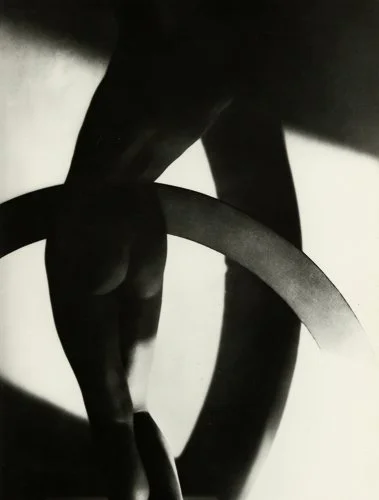
Also working within the orbit of Central European avant-gardism was the Czech photographer František Drtikol (1883–1961), whose work represents a different kind of synthesis. Working in Prague from the 1910s onwards, Drtikol was primarily a portraitist and nude photographer, but from the early 1920s he began incorporating geometrically shaped props — arcs, discs, wedges, stepped forms — into his nude compositions in a way that explicitly engaged with Cubism and Futurism.
His models were posed in relation to these forms so that the human body and the abstract shape entered into a visual dialogue, each reinforcing and complicating the other. By the late 1920s, in his Abstract Photo series (1927–29), Drtikol had moved to photographing purely geometric arrangements without the human figure, creating images that were entirely non-representational. From 1930, he replaced his living models with articulated cut-out figures made from plywood and cardboard, using them to create silhouetted compositions that further dematerialised the human form.
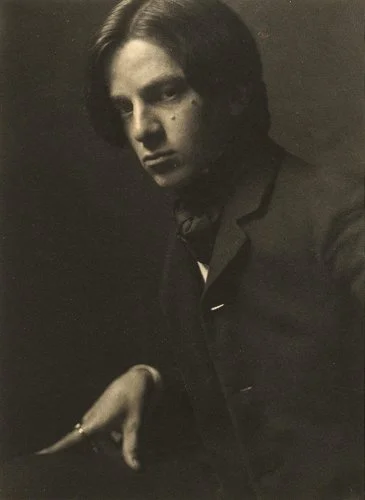
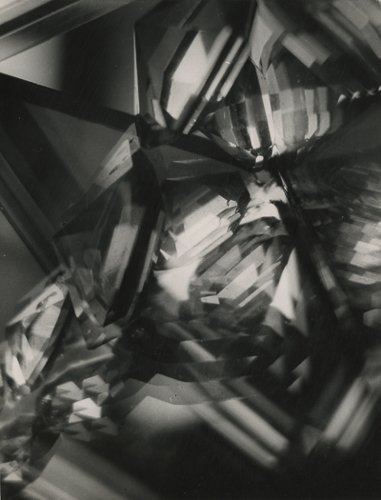
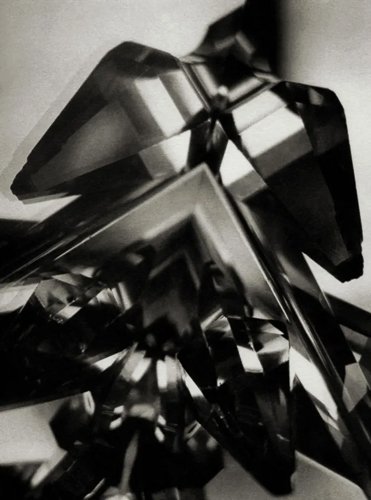
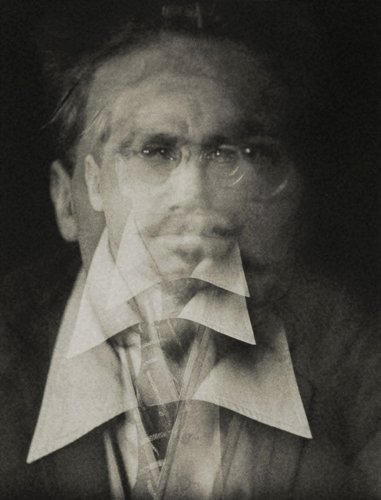
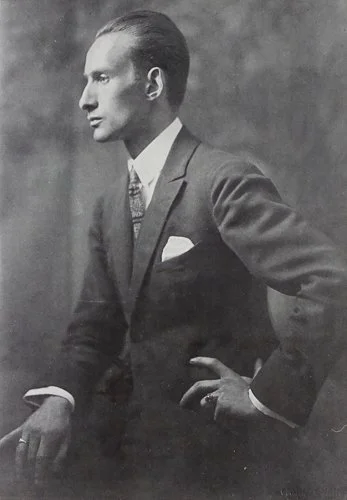
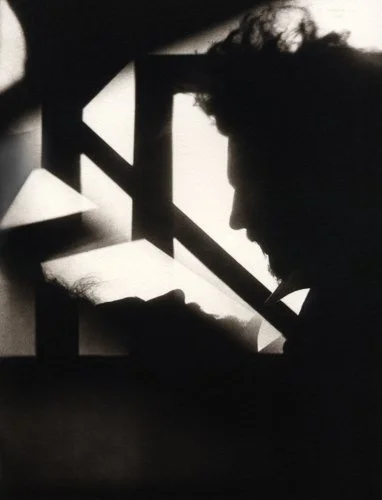
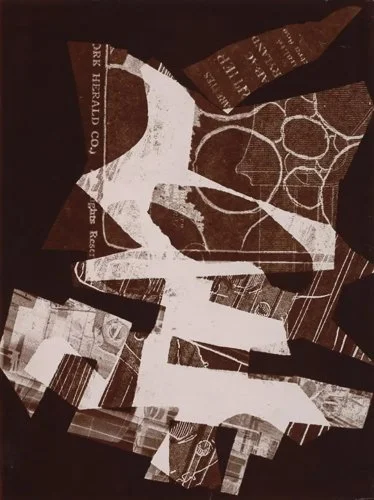
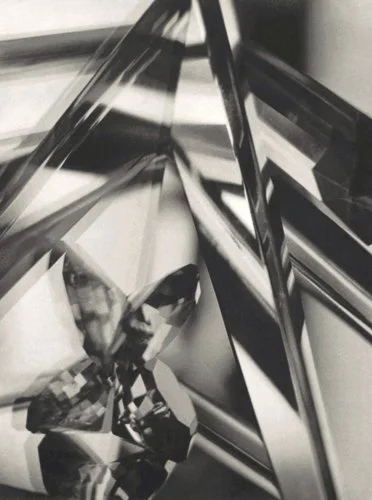
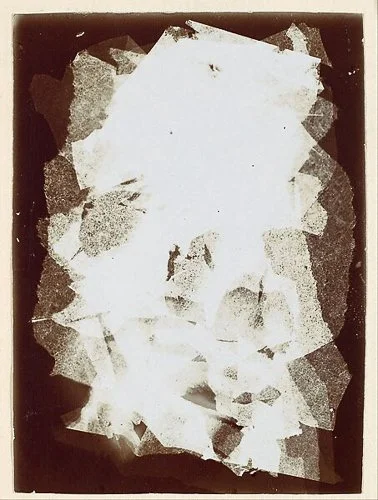
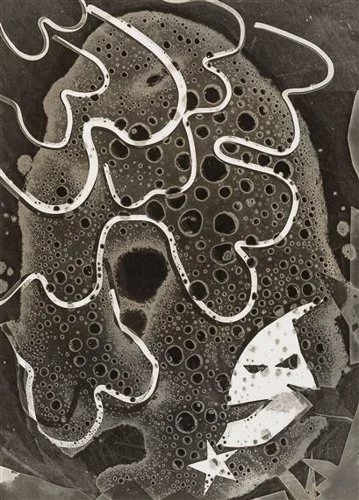
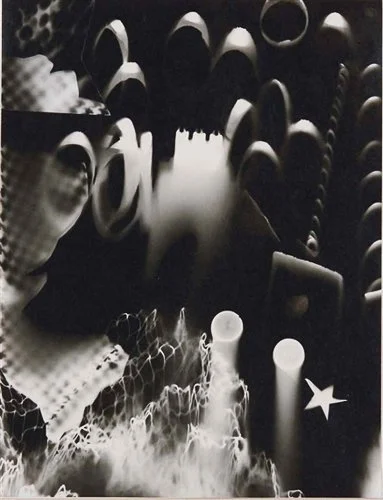
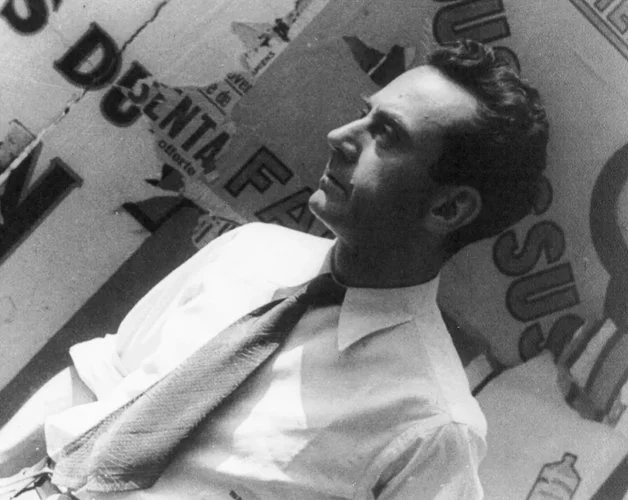
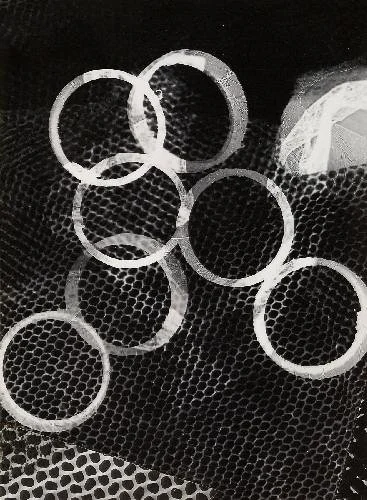
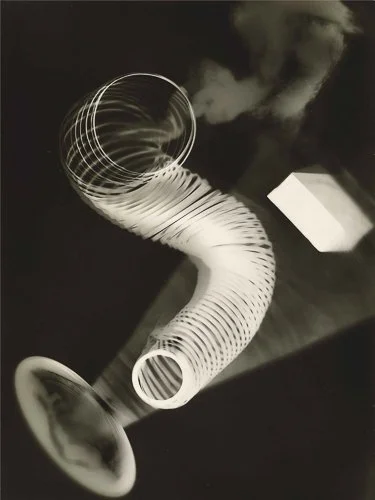
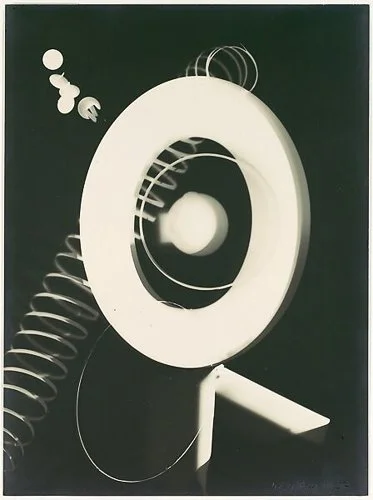
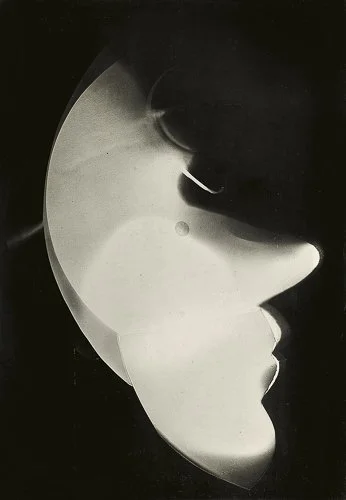
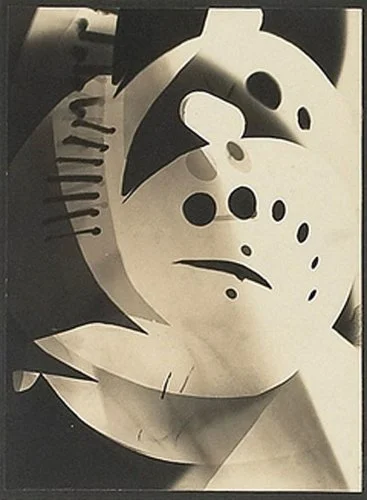
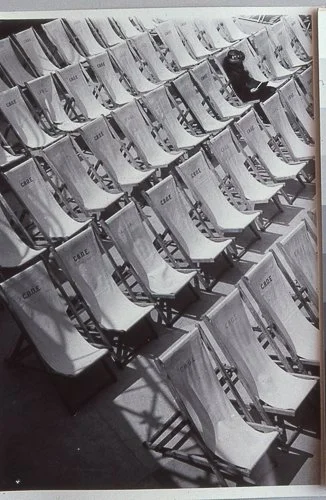
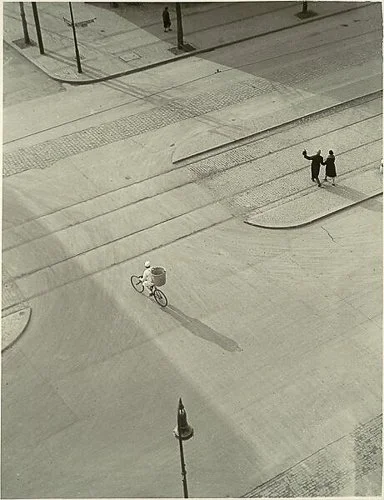
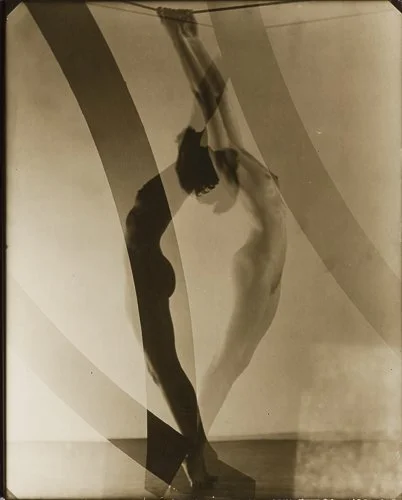
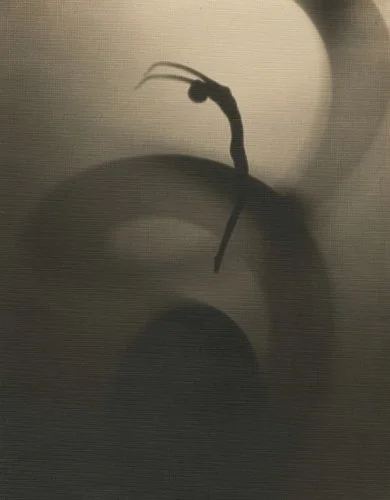
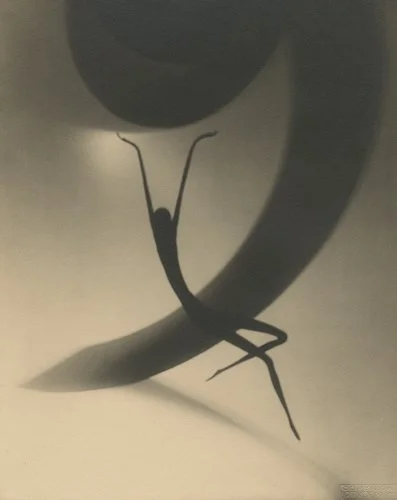
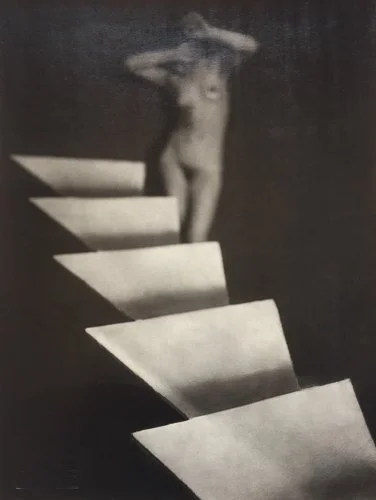
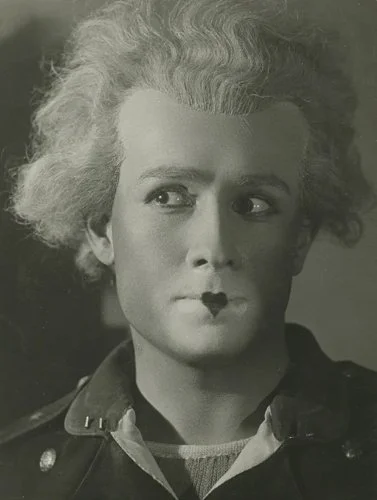
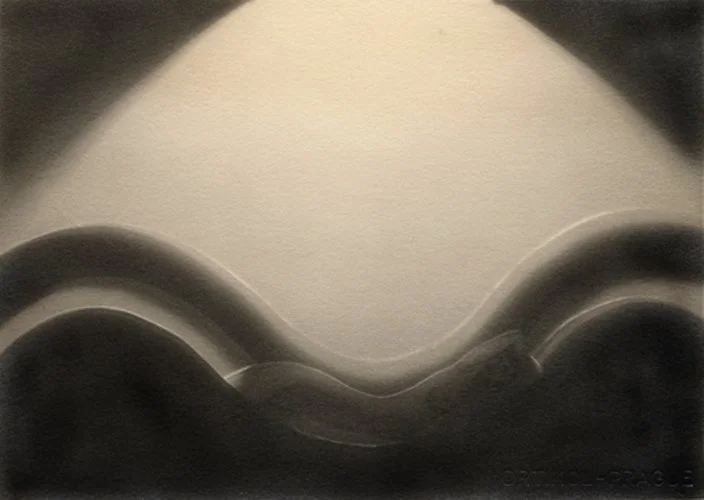
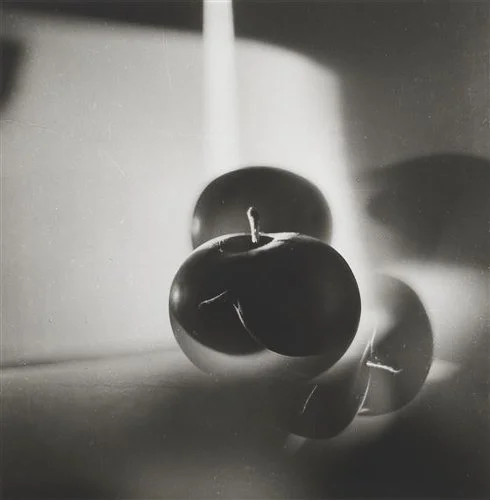
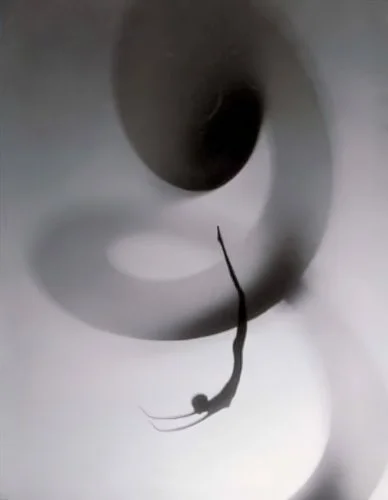
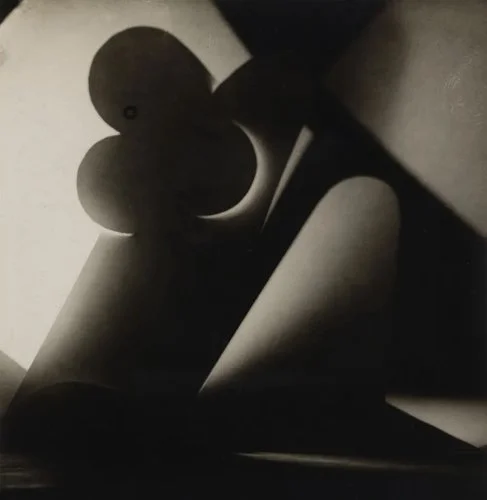
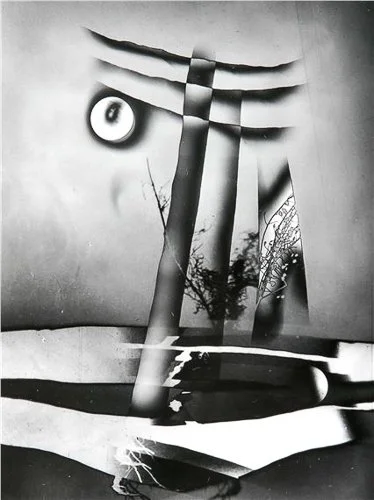
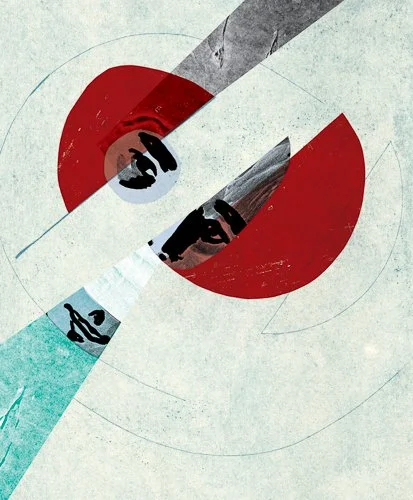

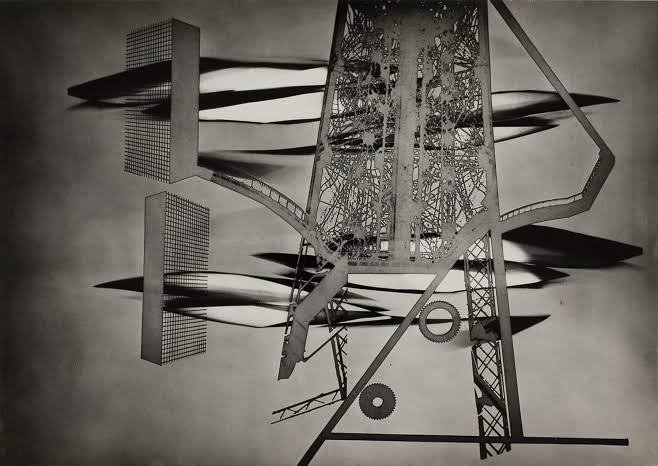
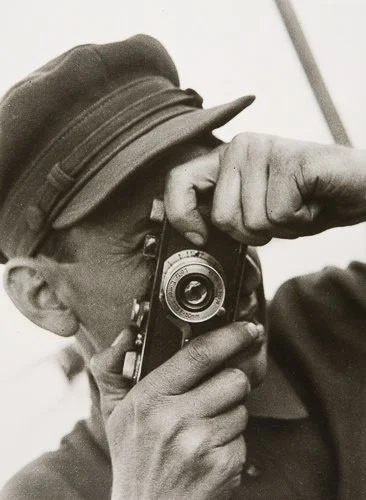
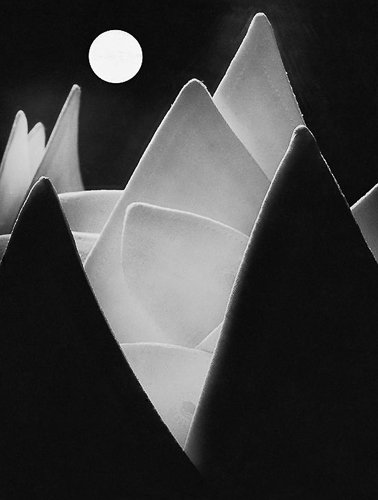
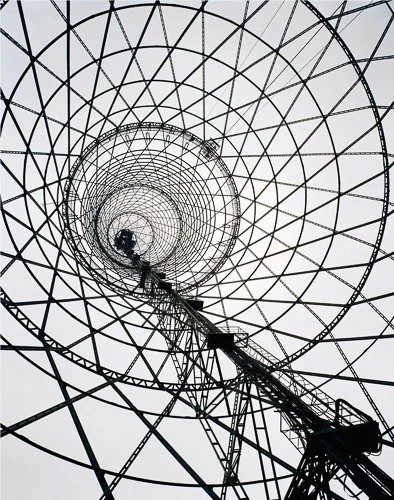
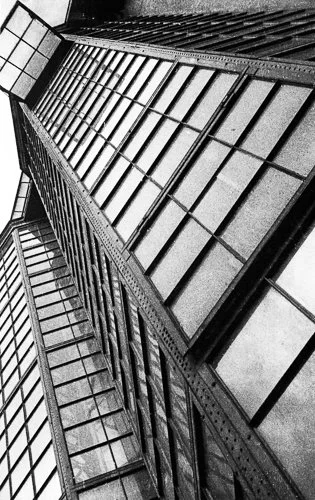
Alongside Drtikol, his compatriot Jaroslav Rössler (1902–1990) represents the Czech avant-garde's engagement with abstract photography. Rössler trained under Drtikol and went on to develop a distinctive approach informed by both Constructivism and Cubism. His photographs of the 1920s and early 1930s — geometric compositions, abstract close-ups of industrial and architectural subjects, multiple exposures — pursue a visual language of form and line that deliberately suppresses narrative and documentary content.
Rössler has sometimes been described as attempting the "dematerialisation of the subject" — a phrase that captures accurately his tendency to find in any subject, whether a human figure or a light fitting, the pure geometric armature beneath.
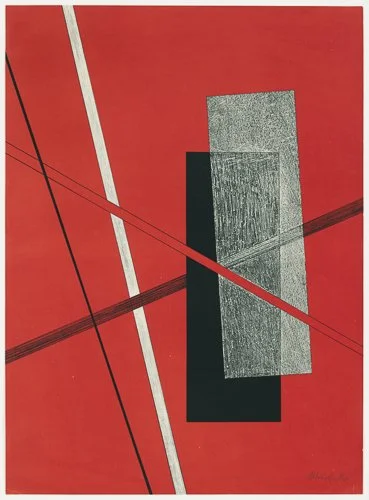
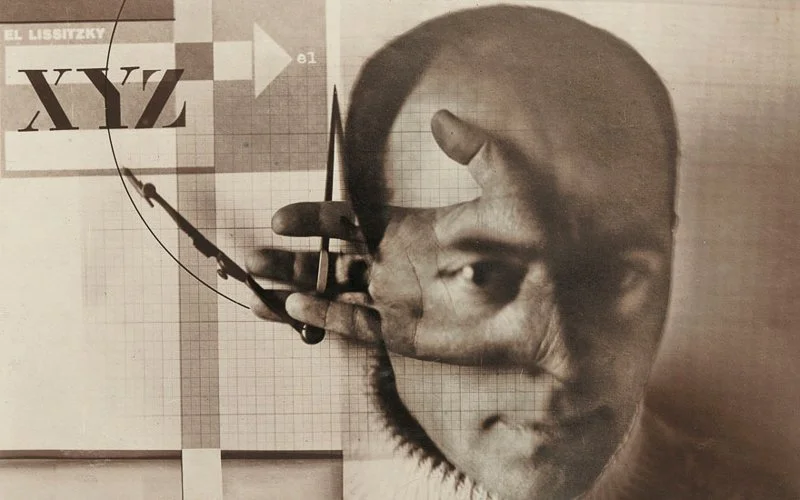
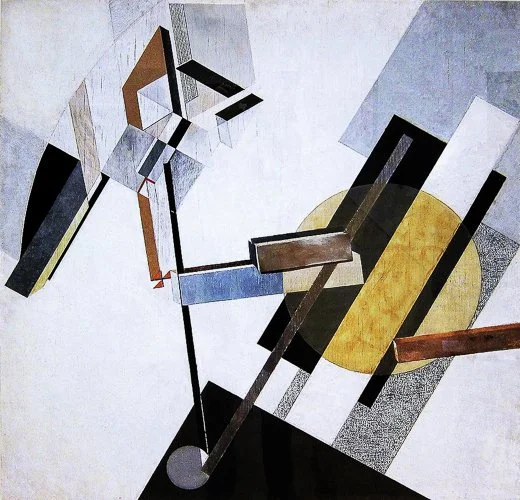
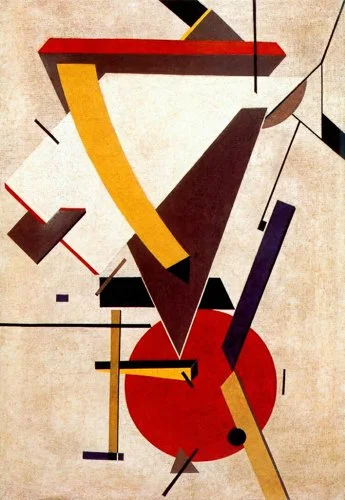
The political dimension of avant-garde abstract photography was most sharply defined in Soviet Russia, where Constructivism harnessed abstraction to the revolutionary project of transforming collective consciousness. El Lissitzky (1890–1941) — painter, typographer, architect, and photographer — used photomontage and photogram-like constructions to create propaganda and exhibition materials that fused formal abstraction with ideological purpose.
His Proun compositions, extended into photographic work, established the diagonal composition, the dynamic relationship between positive and negative space, and the visual language of Soviet modernism.
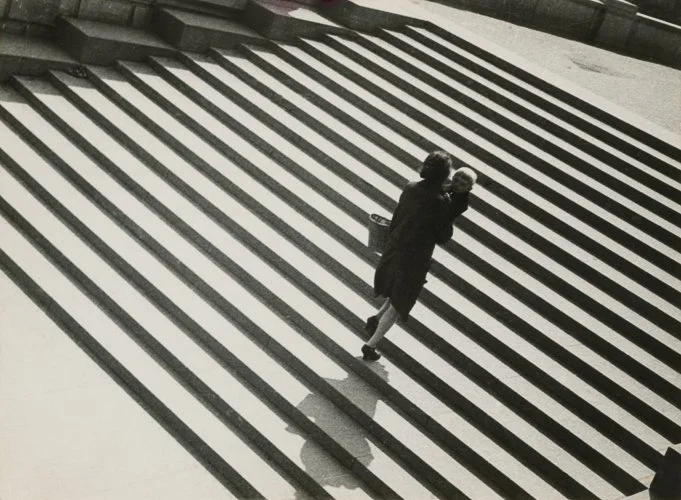
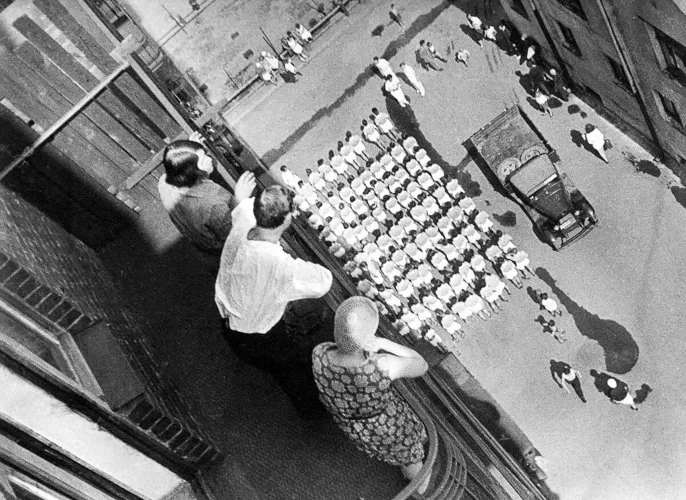
Alexander Rodchenko (1891–1956) took Soviet Constructivist photography in a more documentary direction, but one no less formally radical: his famous diagonal compositions — photographing subjects from extreme angles above and below, from perspectives that transformed familiar objects into pure pattern — declared that the camera's job was not to record the world as it appeared to the standing adult human eye, but to reveal its true geometric structure.
Rodchenko's staircase photographs, viewed from directly above, become pure abstract compositions; his photographs of a Pioneer camp, shot from extreme angles, transform human figures into formal elements.
The American Abstract Tradition
The American contribution to abstract photography in the mid-twentieth century is substantial and distinctive. It takes place not in the context of European avant-garde movements but in a more pragmatic, empirical engagement with the material world — with the forms latent in ordinary objects, and with the relationship between photographic seeing and the act of making art.
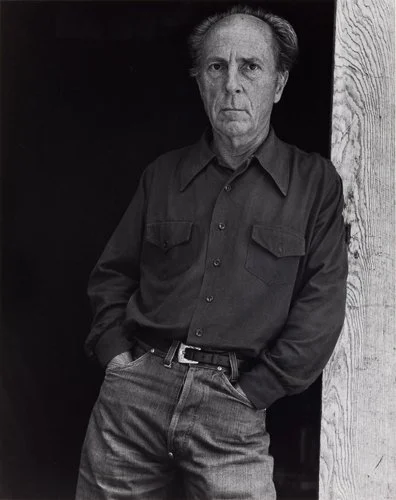
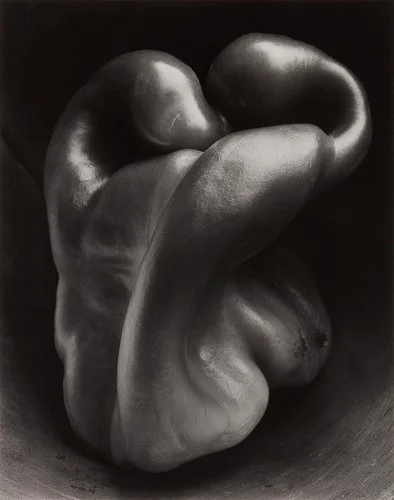
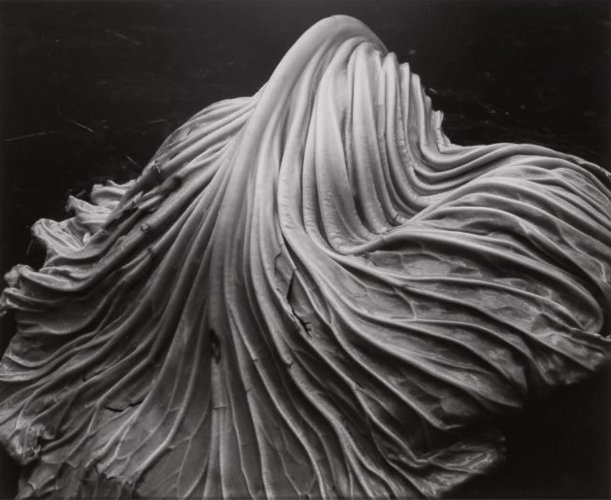
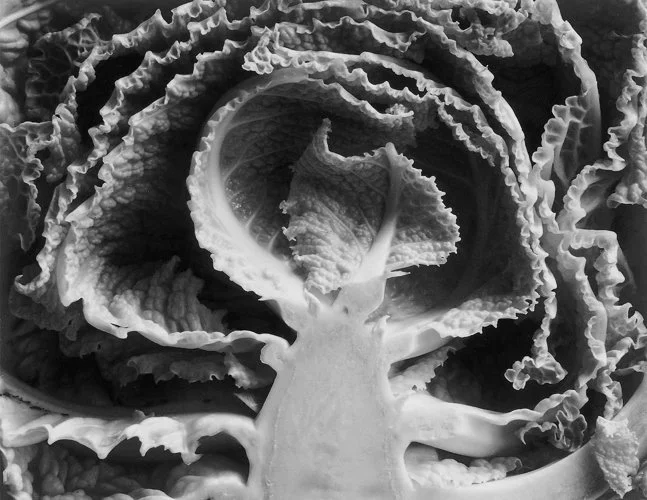
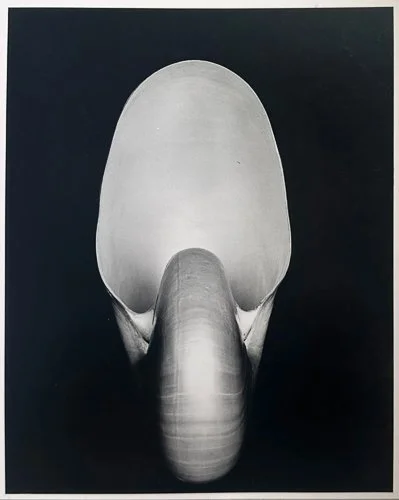
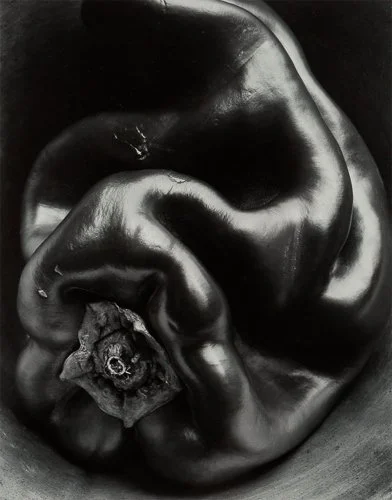
Edward Weston (1886–1958) is the key transitional figure. A co-founder of Group f/64, Weston was in one sense the quintessential straight photographer — technically immaculate, committed to the unmanipulated negative, deeply suspicious of darkroom artifice. But his close-up studies of peppers, shells, and nude torsos from the late 1920s and early 1930s are among the most formally radical images in the history of photography, and they constitute the most important American precedent for what would later be called abstract photography.
Pepper No. 30, made in August 1930 using an Ansco 8×10 view camera with the pepper placed inside a tin funnel to control the light, is the exemplary case. Weston himself described it as "classical, completely satisfying — a pepper — but more than a pepper; abstract, in that it is completely outside subject matter … This pepper takes one beyond the world we know in the conscious mind."
The photograph presents the pepper at such close range, with such precisely controlled light, that its skin becomes landscape, its folds and crevices become geological formations, its body becomes — to many viewers — the intertwined forms of two human figures. The viewer knows they are looking at a pepper and simultaneously cannot quite hold onto that knowledge. The image exists in a space between representation and abstraction, and it is precisely that ambiguity that makes it compelling.
Weston's shells, nudes, and kelp photographs of the same period pursue the same formal strategy. The nude torsos in particular — cropped to knees, thighs, or backs, shot against undifferentiated backgrounds — become purely volumetric forms. They are recognisably bodies, but they are also abstract sculptures, and it is the tension between those two identities that gives the images their power.
Weston was not making photographs in which subject matter is absent; he was making photographs in which the subject matter has been pushed so far towards formal abstraction that the gap between the two no longer seems navigable. This is arguably a more challenging achievement than outright abstraction: it retains the friction.
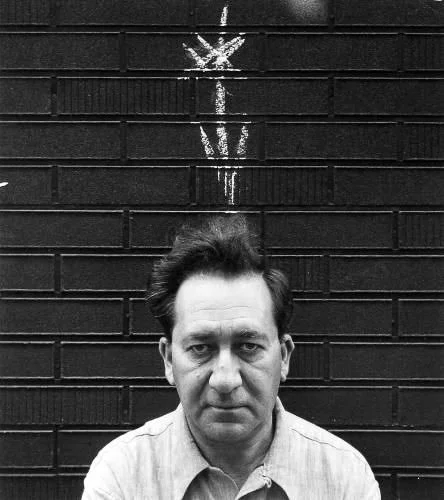
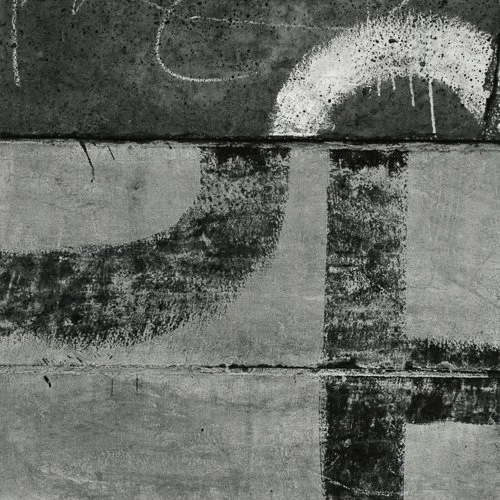
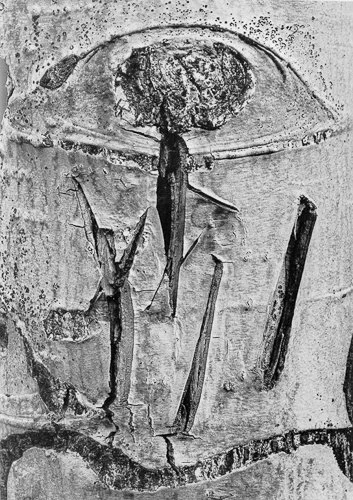
Where Weston found abstraction in nature and the organic world, Aaron Siskind (1903–1991) found it on the surfaces of the city. Siskind began his career in the 1930s as a documentary photographer, a member of the New York Photo League, producing socially engaged series such as The Harlem Document (1937–40).
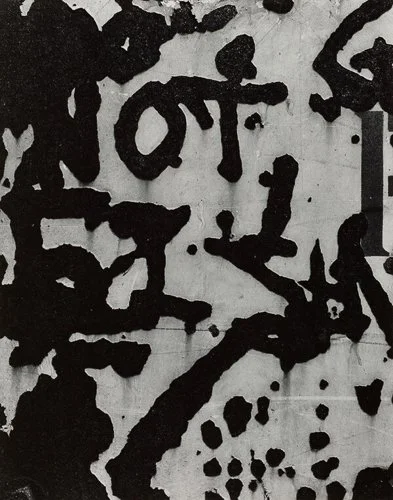
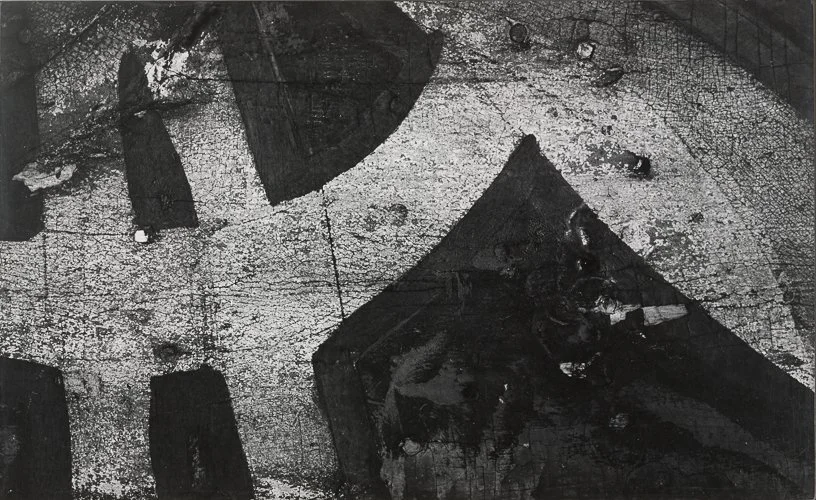
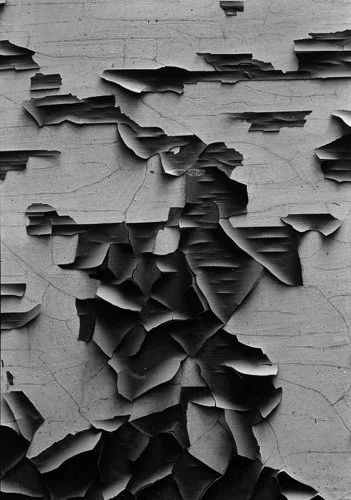
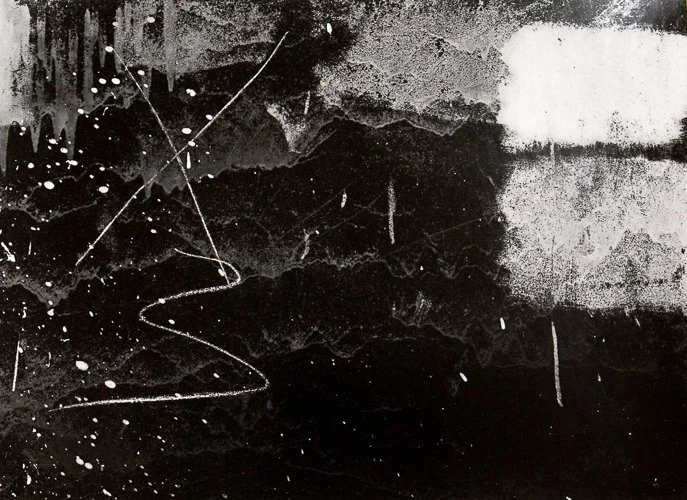
In the early 1940s, his attention shifted dramatically. He began photographing pavement, billboards, walls, and the weathered facades of buildings, not as records of place but as abstract visual fields: close-up images of peeling paint, stained plaster, worn signage, and eroded stone in which the surface becomes the subject and the original object recedes.
The timing was not coincidental. Siskind became closely associated with the emerging Abstract Expressionist movement in New York, developing personal friendships with Willem de Kooning, Franz Kline, Mark Rothko, and Barnett Newman. He was the only photographer to be included in the landmark "Ninth Street Show" of 1951, curated by Leo Castelli, which effectively defined Abstract Expressionism as an artistic movement.
The relationship between his work and that of the painters was reciprocal rather than one-directional: de Kooning displayed a Siskind print in his studio; Kline named a painting Siskind in 1958. Siskind later created a series of six photographic groups, each set in a different location, titled Homage to Franz Kline (1972–75).
The critical question about Siskind's work — whether it is properly abstract photography, given that his images are records of real surfaces with no darkroom manipulation, no double exposure, no physical interference with the photographic process — is one that he himself addressed. His photographs did not invent abstraction; they found it.
As he wrote in a 1956 Guggenheim application: "For my material I have gone to the 'commonplace,' the 'neglected,' the 'insignificant' — the walls, the pavement, the ironwork of New York City… the detritus of our world which I am combing for meaning." That search for meaning in the overlooked and the discarded is both a formal project and a deeply humanistic one, and it is what distinguishes Siskind's abstractions from those of Moholy-Nagy or Man Ray. His images are not experiments in pure light and form; they are documents of the world's capacity to produce, through entropy and weathering, compositions of extraordinary visual intelligence.
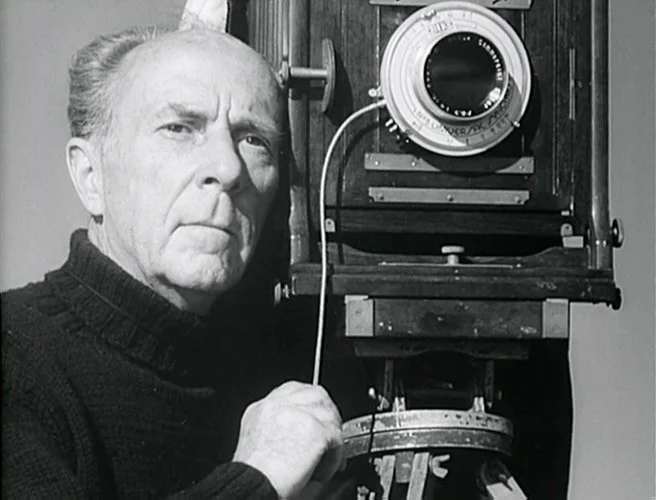
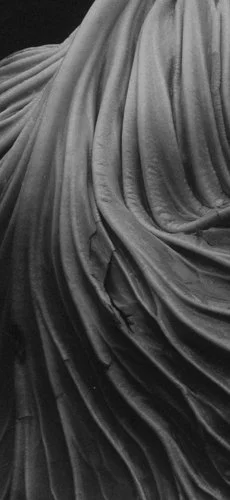
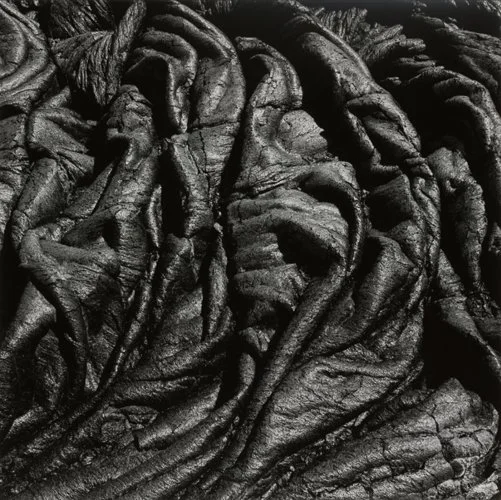
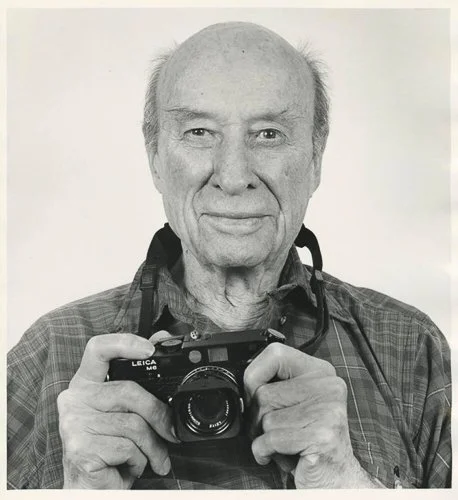

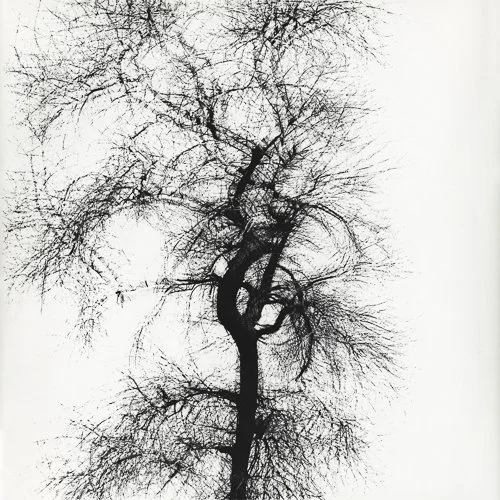
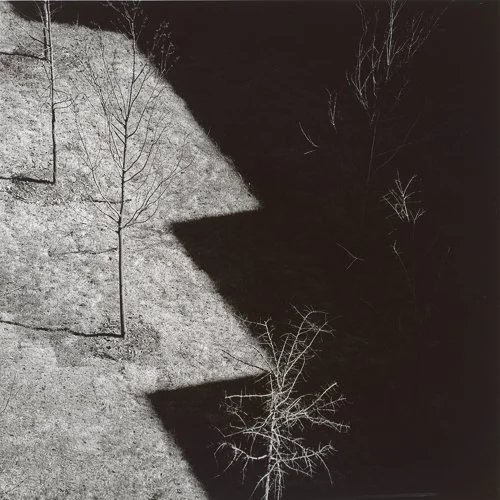
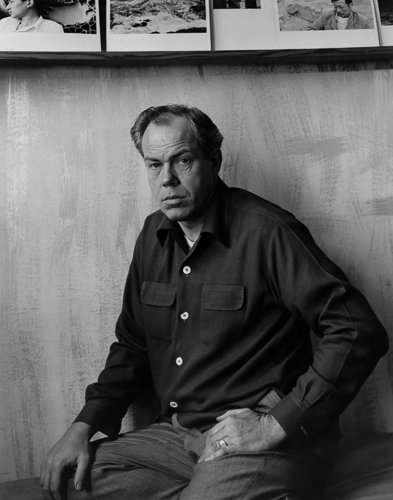
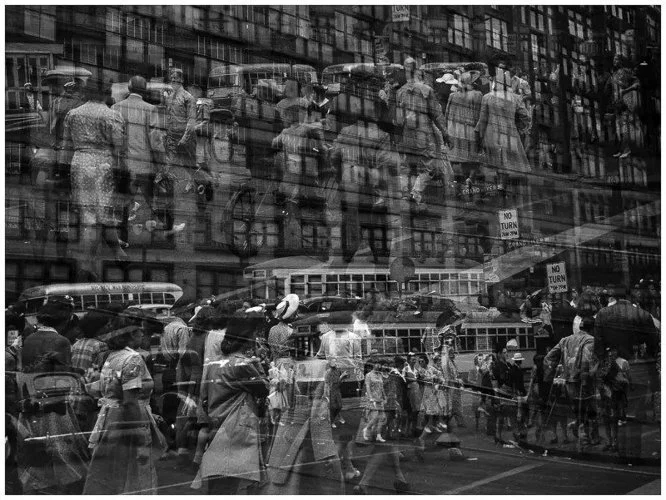
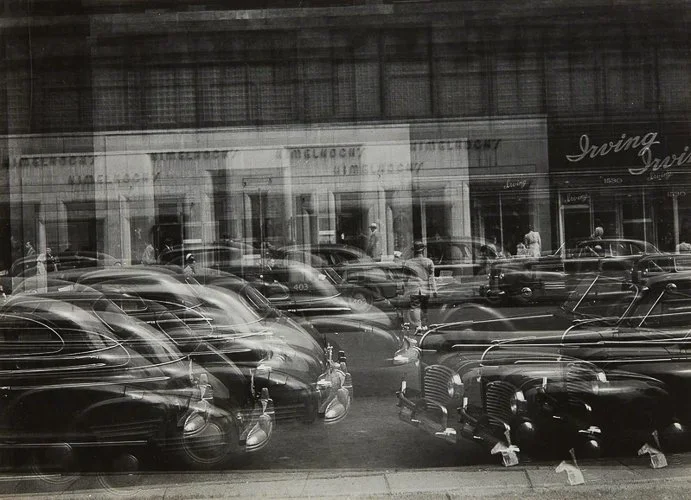
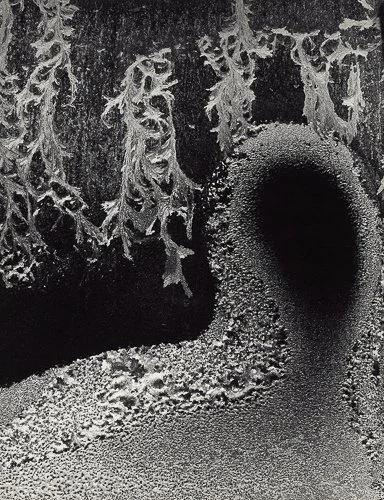
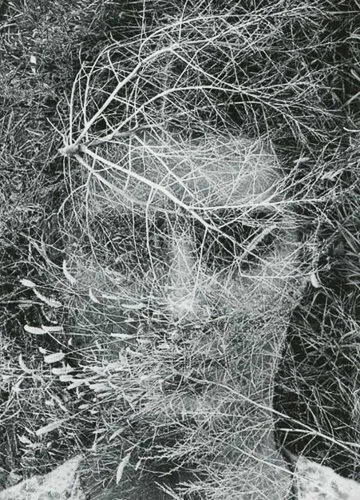
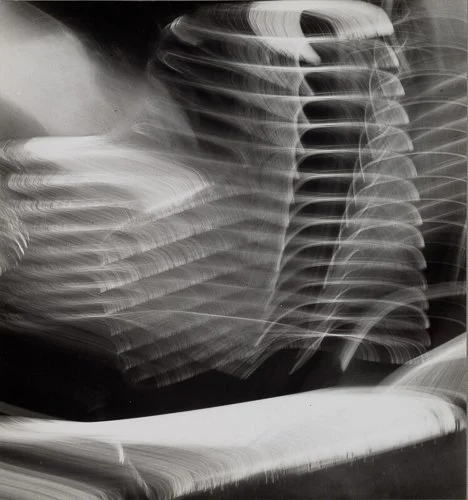
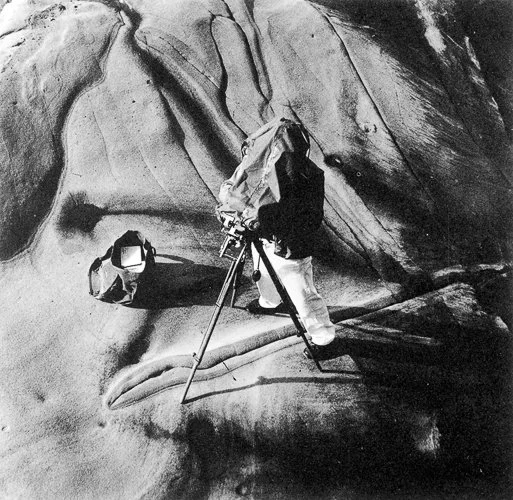
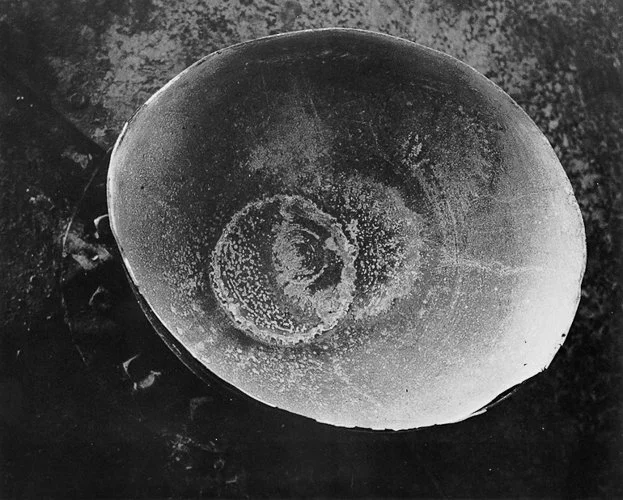
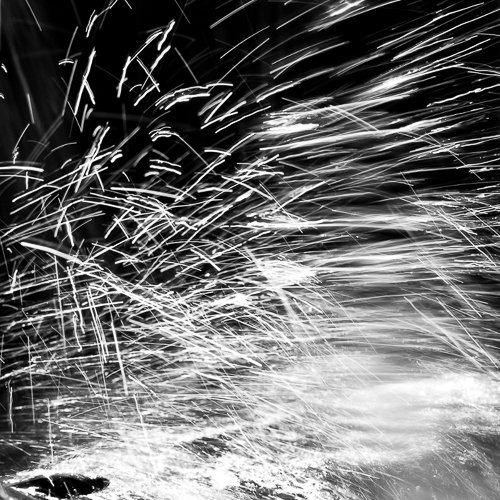
Harry Callahan (1912–1999) was a formal experimenter of a different kind. Largely self-taught until he encountered Moholy-Nagy's work and briefly the man himself in 1941, Callahan developed a practice that combined Bauhaus principles of form and experimentation with an unusually personal emotional range.
His most technically distinctive works are his multiple-exposure photographs — images made by exposing the same frame two or three times in the camera, producing layered, overlapping compositions in which city streets, nude figures in landscapes, and patterns of vegetation are superimposed into something that looks like neither pure representation nor pure abstraction but both simultaneously.
His weeds-in-snow series, begun in Detroit in the late 1940s, reduces organic form to high-contrast line drawings: the plants become calligraphic marks against white fields, simultaneously specific and universal. The compression that characterised his spatial sense — his tendency to flatten foreground and background into a single plane — brought everything towards abstraction by denying depth.
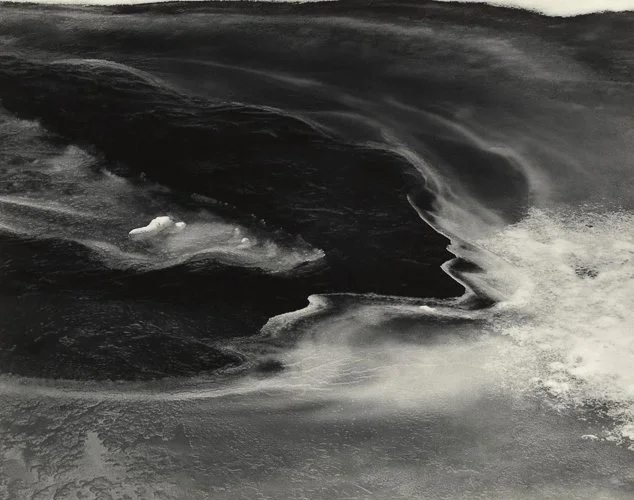
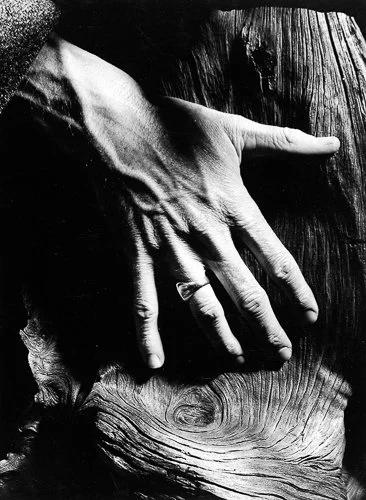
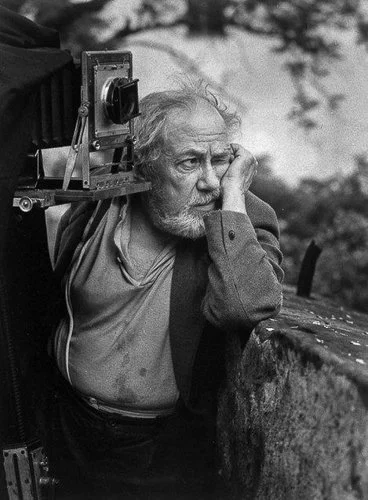
Minor White (1908–1976) approached abstraction from an entirely different direction: not through formal experiment or social engagement but through a framework of spiritual and psychological interpretation. White was influenced by Stieglitz's theory of equivalence — the idea that a photograph could serve as a metaphor for an internal state, that the external subject was a vehicle for expressing something beyond itself — and he extended this idea through his readings in Zen Buddhism, Jungian psychology, and the teachings of G. I. Gurdjieff.
His late close-up photographs of rocks, surf, wood, and natural forms are not merely formal abstractions; they are, in his framing, equivalents for states of consciousness, coded confessions, portals. The distinction matters not for formal reasons — his images can be appreciated purely as abstract compositions — but because it articulates a third route to photographic abstraction: neither the anti-representational programme of the avant-gardes nor the formal precision of the New Vision, but a mystical phenomenology of the natural world.
European Modernism & the Quiet Abstract
Alongside the more programmatic avant-garde movements, a quieter tradition of European photographic abstraction developed in the mid-twentieth century, less concerned with theory and manifestos than with the sustained exploration of specific visual problems: light through glass, form in shadow, the edge between clarity and dissolution.
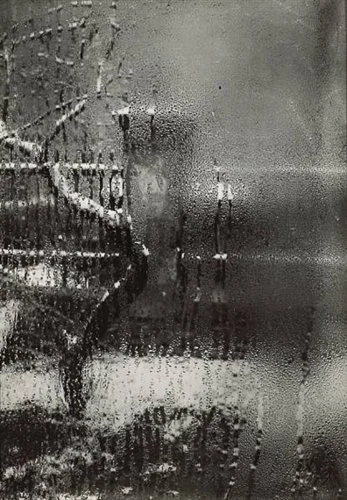
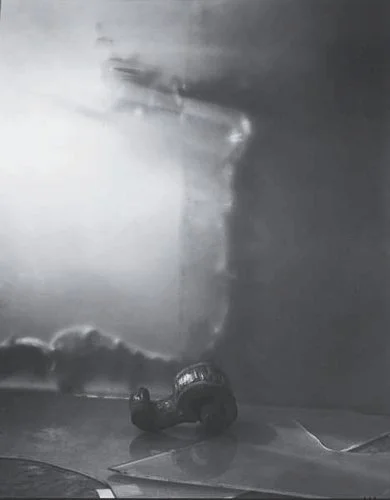
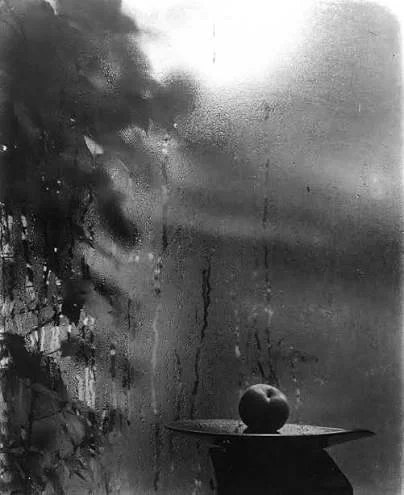
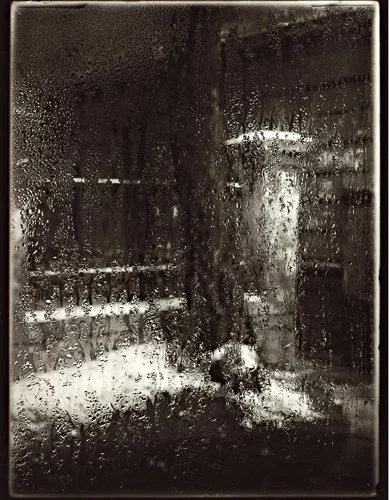
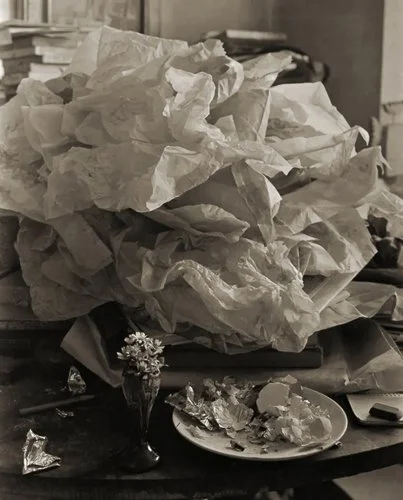
Josef Sudek (1896–1976) is its most important figure. Born in Kolín, Bohemia, Sudek lost his right arm in the First World War and turned to photography as a full-time career in the early 1920s. He worked almost exclusively in Prague, and his photography is inseparable from the city's particular light, its medieval geometry, and the intimate scale of its interiors and gardens. Sudek's early work was Pictorialist in manner, but by the late 1920s he had moved towards clarity and precision, co-founding the progressive Czech Photographic Society in 1924, which advocated the "integrity of the negative" and sharp focus.
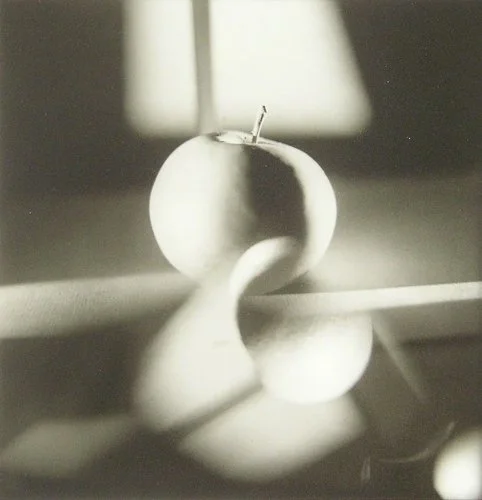
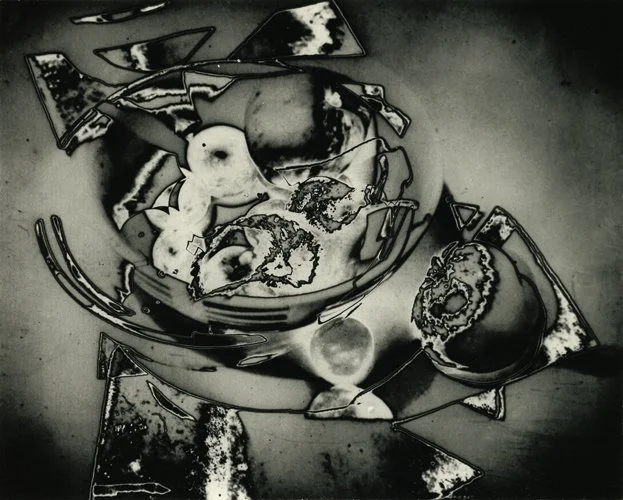
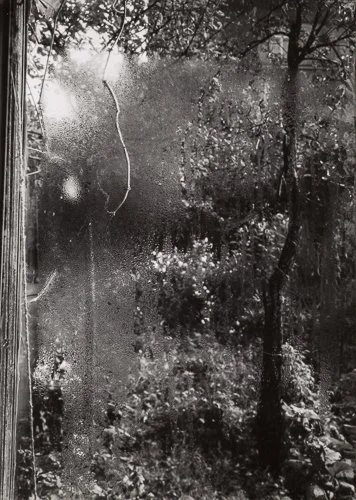
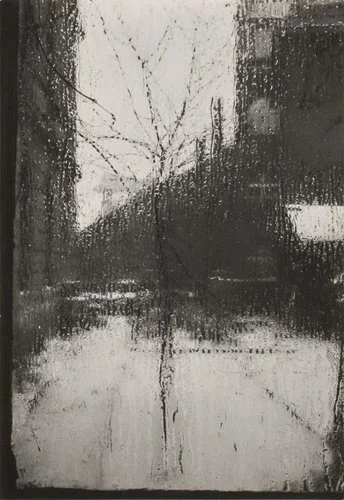
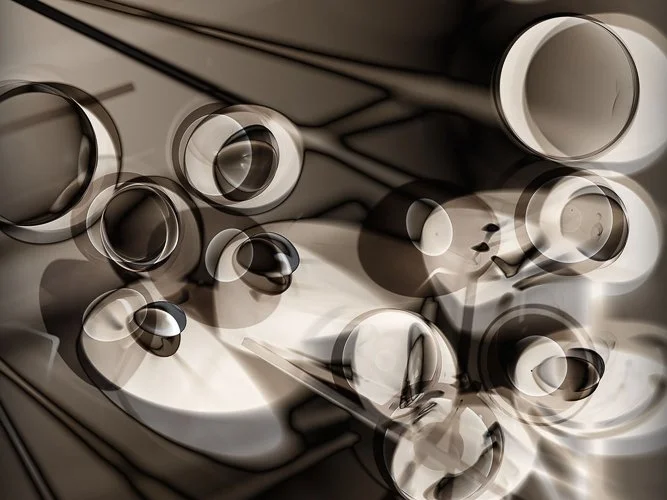
His most abstractly compelling work came in his still-life series of the 1940s, 1950s, and 1960s. His Window of My Studio series (1940–54), made during the German occupation of Prague, photographs the views through his studio window at every season and hour: rain and frost on the glass transform the world beyond into shifting patterns of light and refraction; condensation renders the outside world as pure texture.
The window pane functions both as the subject of the photograph and as a mediating surface that converts representation into something closer to pure visual sensation. Later, his Glass Labyrinths series (1963–72) took this further: arrangements of wine glasses, crystal prisms, mirrors, and tin foil on a studio table, photographed with controlled artificial light, produced compositions of extraordinary complexity in which reflections, refractions, and shadows created a visual space that had no referent in ordinary experience.
Sudek described these as explorations of light itself, and his editor Jan Řezáč observed that if a world history of light were ever written, it would require a chapter on Josef Sudek.
Sudek's abstraction is always achieved through patience and attention rather than through technical manipulation. He did not construct his still lifes to be abstract; he arranged objects and light until they revealed an abstract dimension he had sensed rather than planned. His publisher described the resulting photographs as "reality shrouded in mystery" — a formulation that captures the quality of a practice that remains, at every point, anchored in the visible world while reaching consistently beyond it.
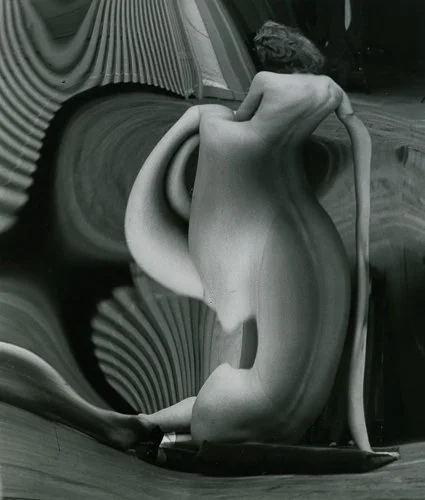
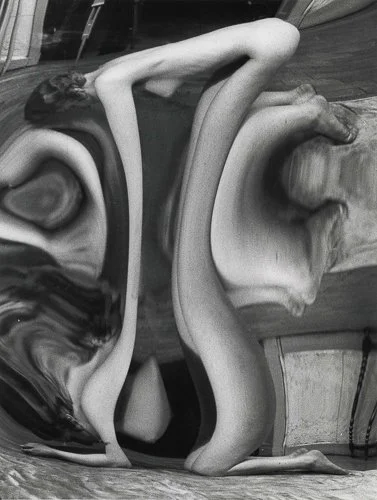
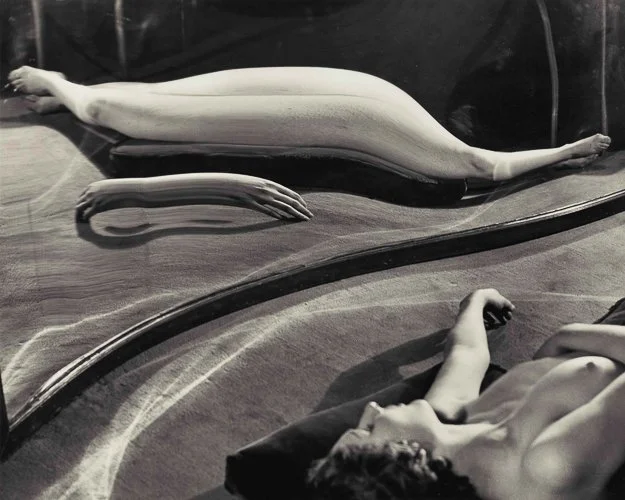
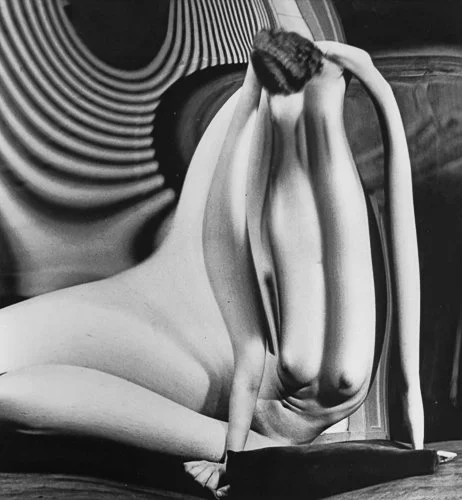
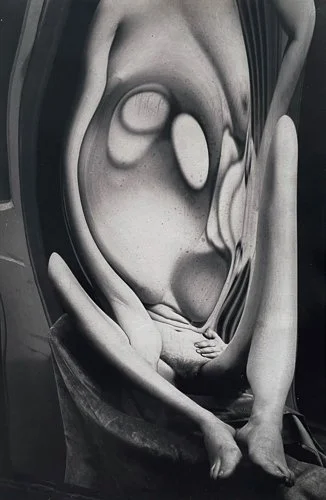
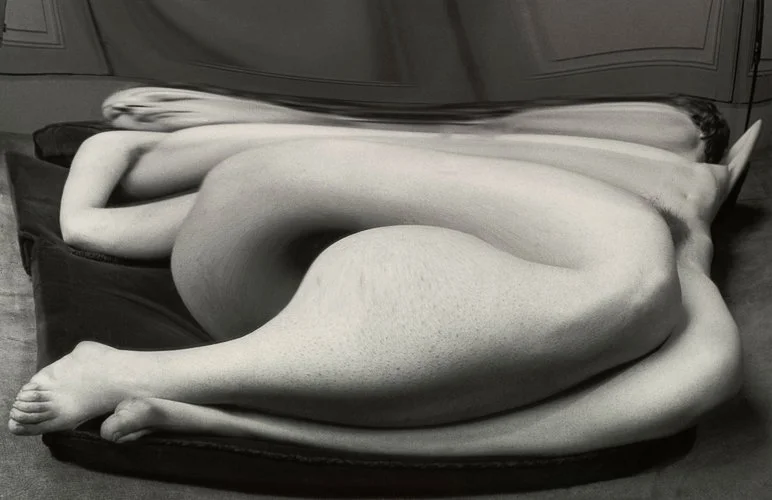
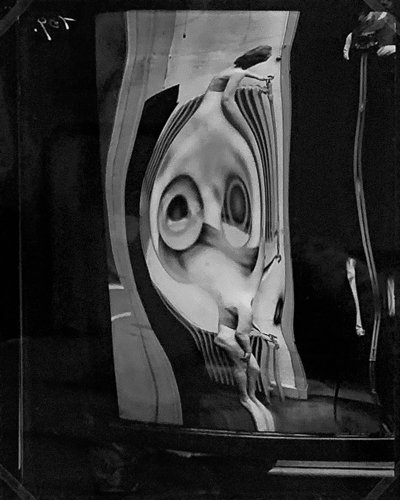
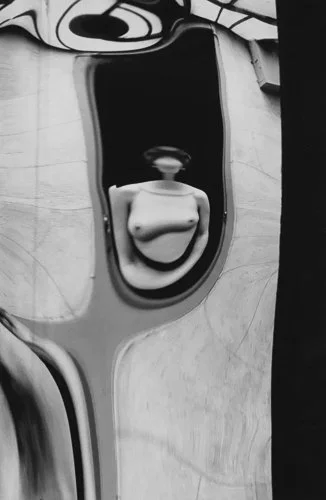
The Hungarian-born photographer André Kertész (1894–1985) contributed to the abstract tradition through his series Distortions (1933), in which female nudes were photographed reflected in a funfair mirror, distorting the body into shapes that alternated between the comical, the grotesque, and the genuinely abstract. Made for a French humour magazine but exhibited as fine art, the Distortions are an unusual work in Kertész's largely humanist oeuvre, but they demonstrate how easily the photographic nude could tip from representation into pure form.
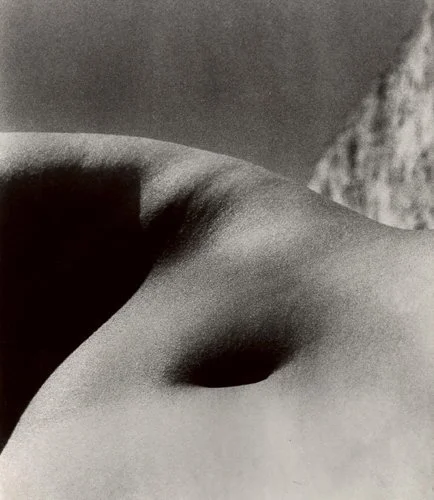
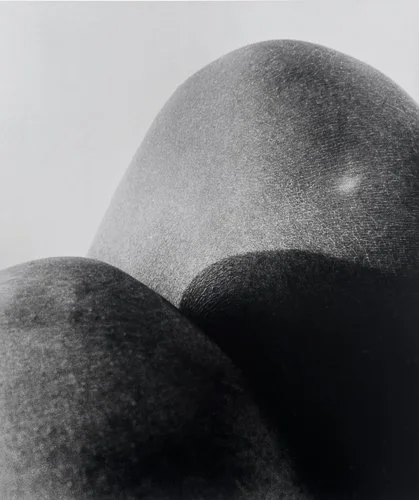
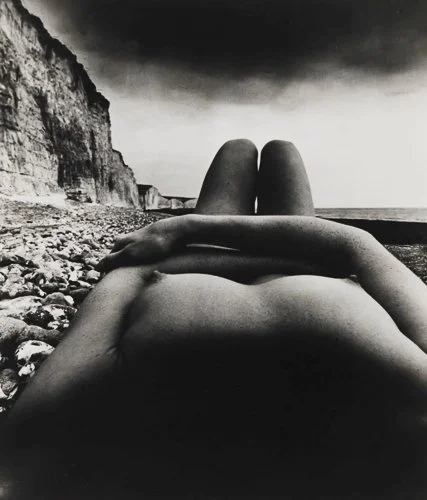
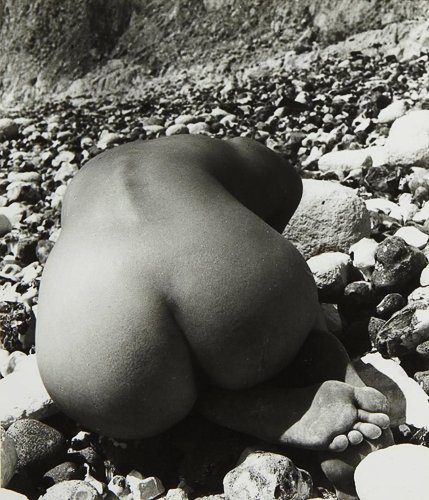
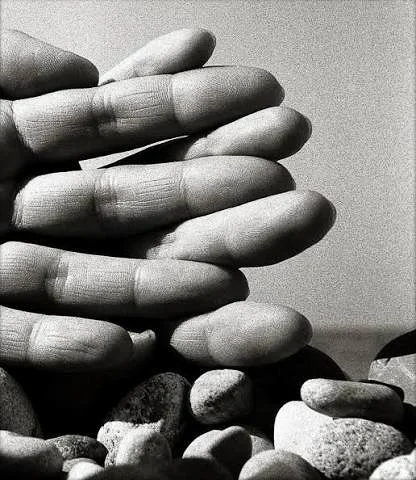
Bill Brandt (1904–1983) pursued the formal implications of the nude far more systematically. From the 1940s onwards, working with an ancient wide-angle Kodak camera with a fixed focus and minimal aperture, Brandt made a series of nude photographs in landscapes — on beaches, in rocks, in domestic interiors — in which the extreme wide-angle distortion of the lens transformed the human body into something barely recognisable as human.
The results, published in Perspective of Nudes (1961), are extraordinary: figures whose feet have swollen to the size of boulders while heads have shrunk to pebbles; bodies that seem to merge with the landscape they occupy; close-up torsos that read as rolling hills or rock formations. Brandt's nudes are simultaneously bodies and landscapes and abstractions.
His intention was precisely to reduce the figure to form, to make it anonymous, geological, vast. As the Museum of Modern Art's catalogue noted at his 1969 retrospective, "he placed his extremely wide-angle camera at close range to the human body; this caused distortion and transformed the human figure into a series of abstract designs."
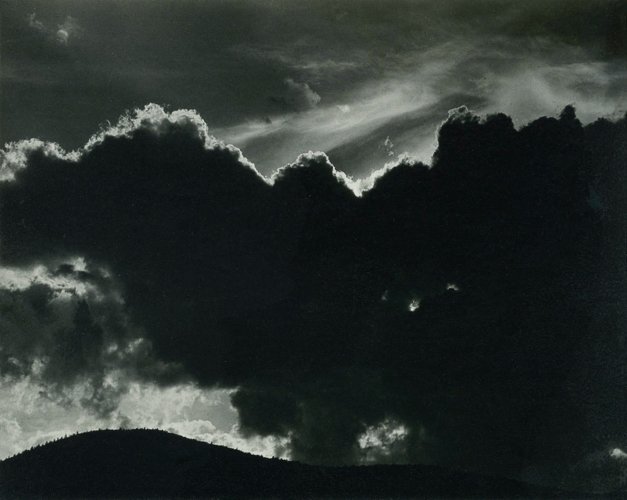
Alfred Stieglitz & the Cloud Photographs
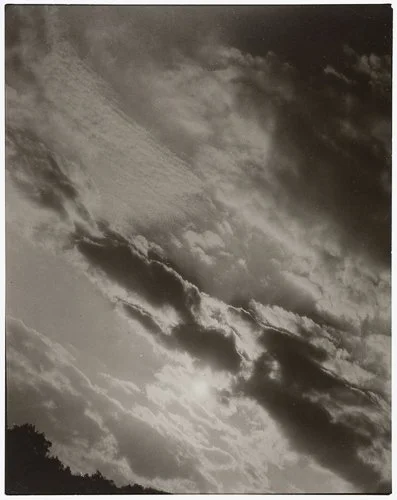
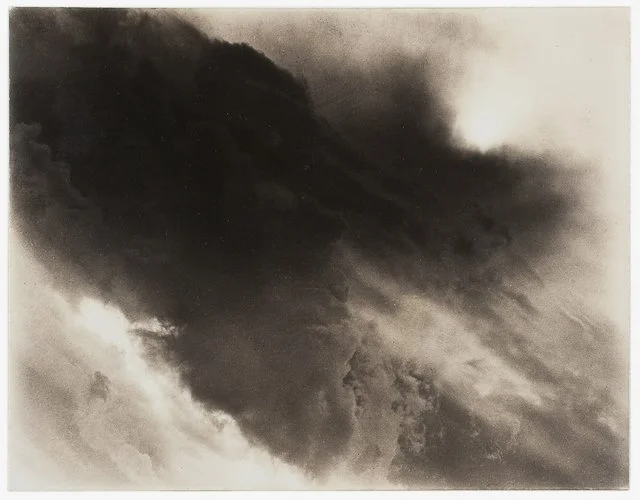
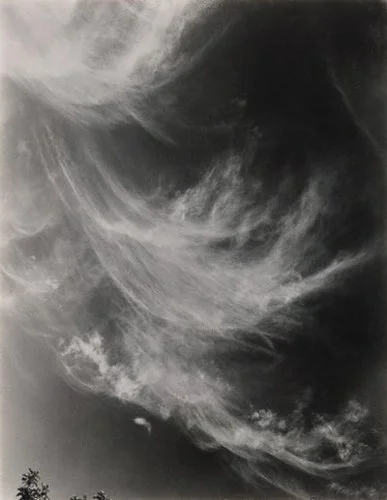
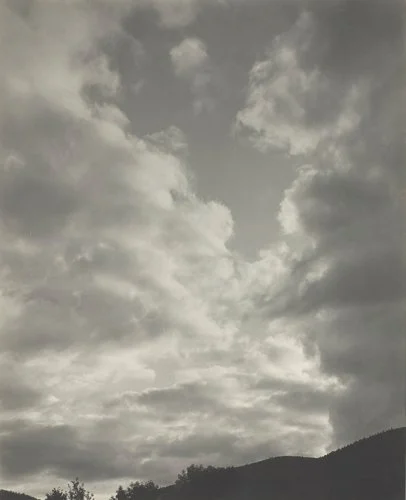
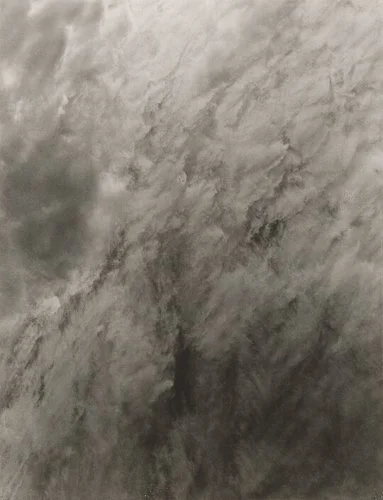
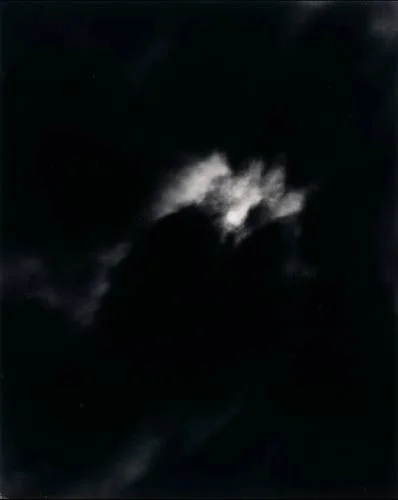
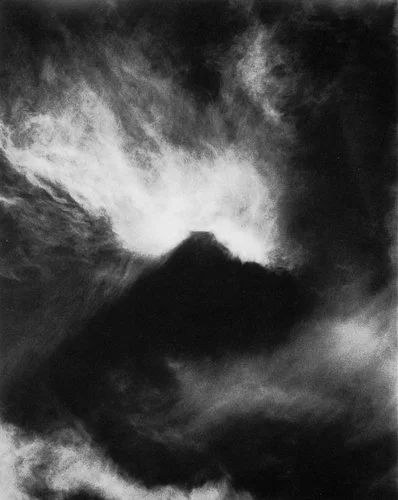
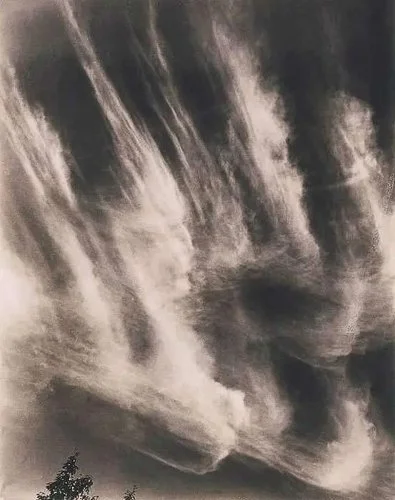
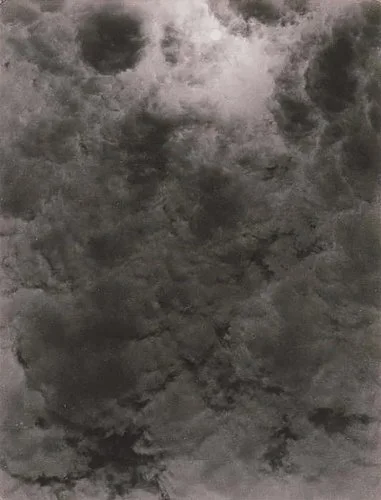
Alfred Stieglitz (1864–1946) deserves separate consideration because his cloud photographs, begun in 1922, are among the most contested works in the history of abstract photography — contested both in terms of their date and in terms of the claims that have been made for their priority.
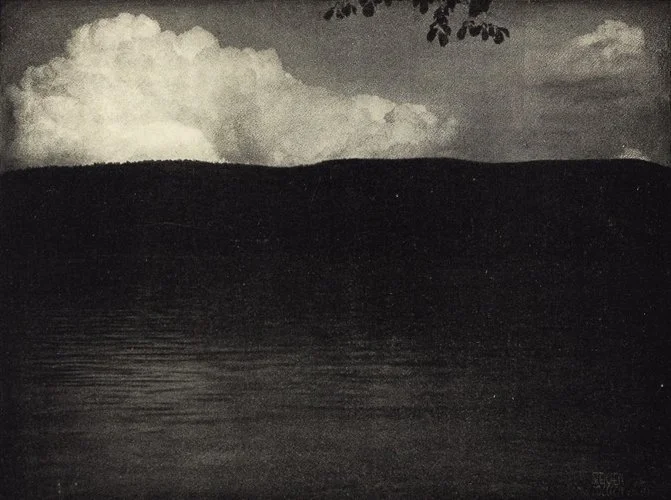
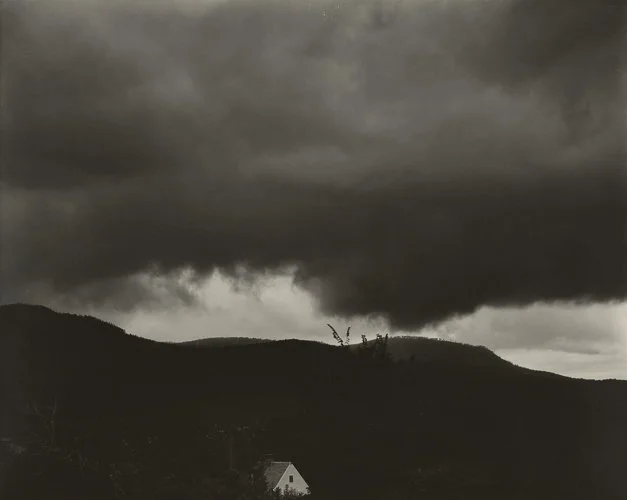
In the summer of 1922, Stieglitz began photographing clouds at his summer house at Lake George, New York, tilting his 8×10 view camera directly at the sky. He initially titled the series Music: A Sequence of Ten Cloud Photographs — a gesture towards the synaesthetic comparisons that his circle favoured.
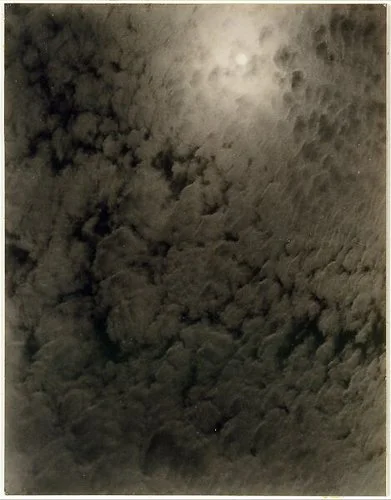
These photographs, first exhibited in 1923, are visually remarkable: close-cropped images of sky and cloud, with no horizon or ground reference, that are simultaneously documentary and disorienting, representational and abstract.
Stieglitz continued photographing clouds for most of the following decade, from 1925 onwards calling the images Songs of the Sky and then Equivalents — the last title being the definitive one, carrying the explicit theoretical claim that the images were equivalents of emotional and psychological states rather than records of meteorological conditions. The Equivalents series runs from 1925 to 1934 and comprises at least 220 photographs.
The claim that the 1922 Music series constitutes "the first intentional set of abstract photographs" — a claim that circulated in earlier photographic histories — is an overstatement that requires correction on two grounds.
First, Coburn's Vortographs (1917) predate them by five years and are both more technically radical and more unambiguously abstract: they have no subject matter that can be identified, whereas Stieglitz's clouds are, recognisably, clouds.
Second, the Equivalents as a sustained and theoretically coherent series belong to the period 1925–1934, not to 1922. The 1922 Music series is a remarkable early work, an important precursor to the Equivalents, but neither the earliest intentional photographic abstraction nor the most significant moment of Stieglitz's own cloud project.
What is undeniable is that the Equivalents represent a distinctive and hugely influential contribution: they assert the primacy of emotional content in photography, they use the most conventionally "natural" of subjects (clouds, sky) to make a claim for pure expressive non-representation, and they influenced generations of photographers — Minor White most directly — who wanted to use photography as a vehicle for inner states.
Note: The cloud photographs are discussed at greater length in the companion article on clouds and sky photography. They are treated briefly here in their specific relevance to the history of abstraction.
Post-War to Contemporary
The post-war decades brought a range of new approaches to abstract photography, some continuing the avant-garde traditions of the 1920s and 1930s, others responding to new cultural contexts — Abstract Expressionism in painting, minimalism, conceptual art, and eventually the digital transformation of the image.
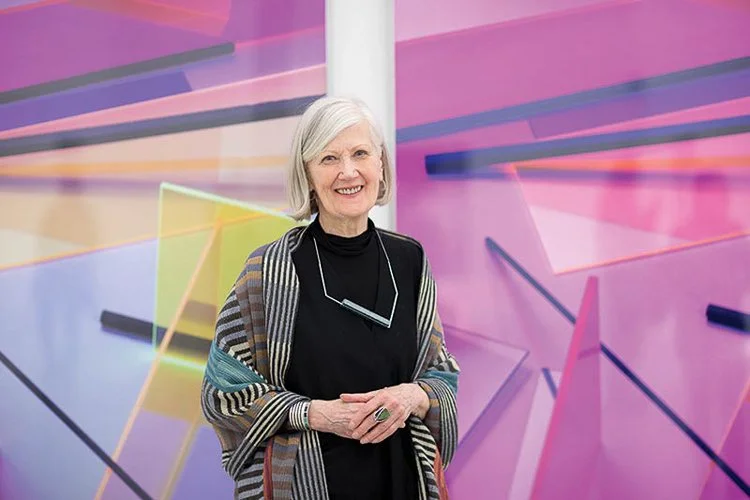
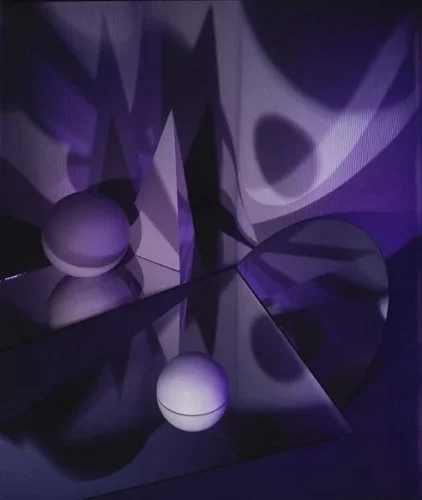
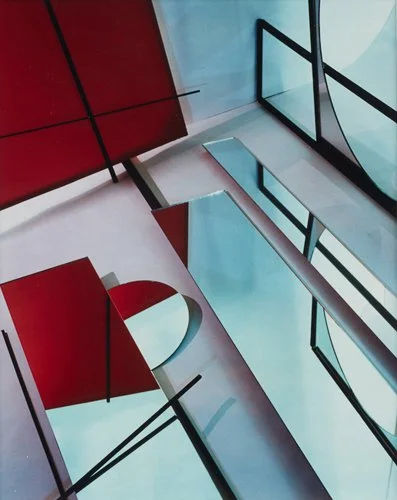
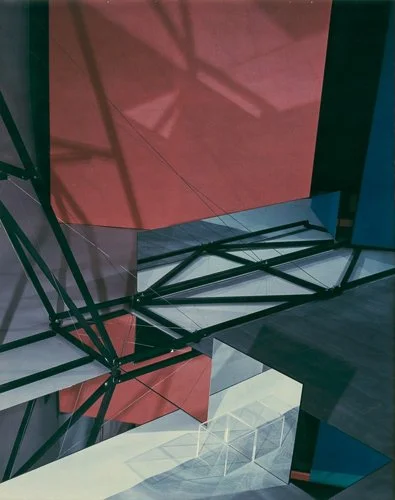
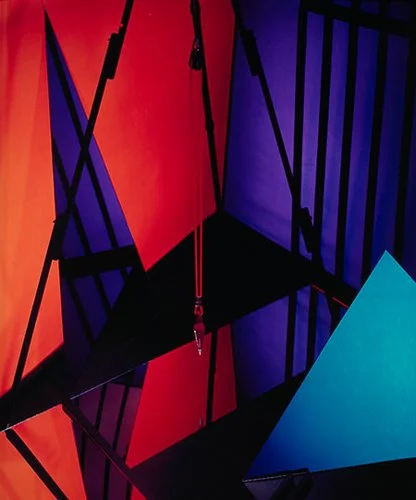
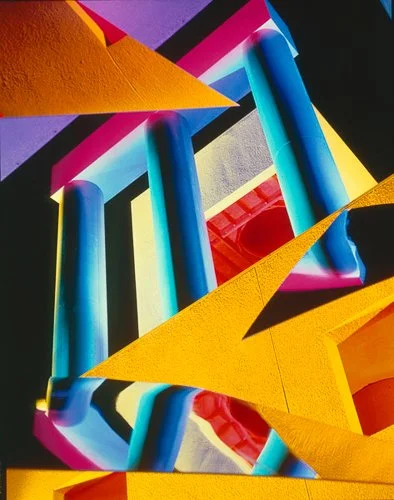
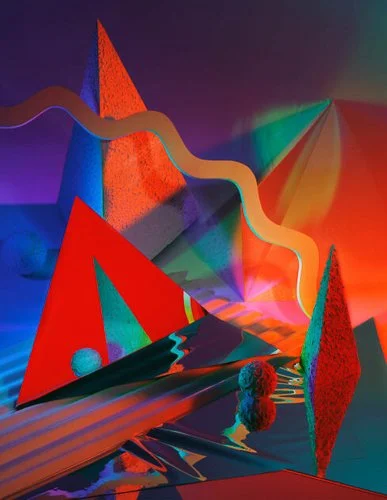
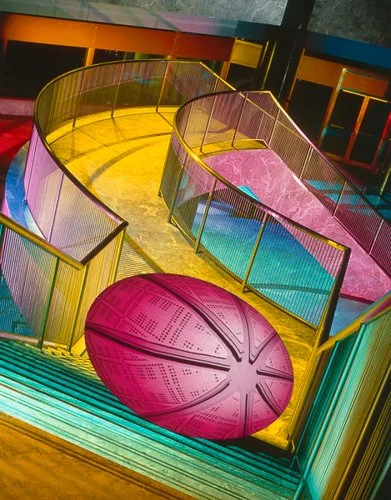
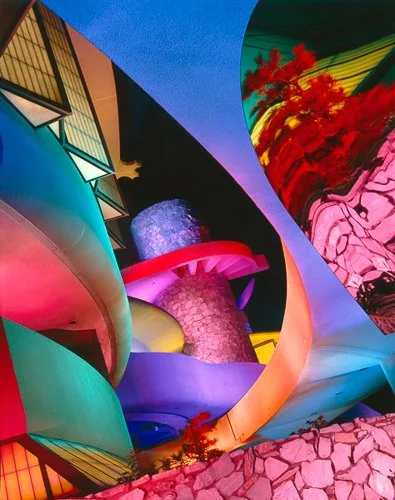
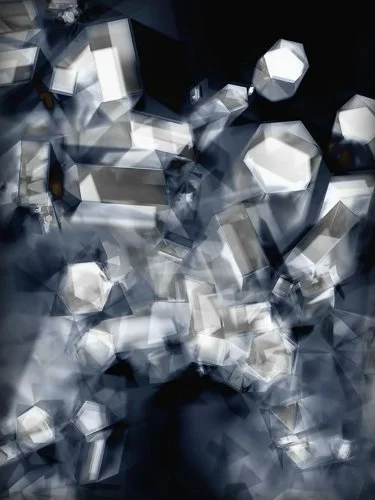
Barbara Kasten (born 1936) is the most direct inheritor of the Bauhaus photogram tradition in the post-war American context. After studying at the California College of Arts and Crafts, Kasten began in the early 1970s with cyanotype photograms, then moved in 1979 into her signature Constructs series — photographs of temporary studio installations built from mirrors, Plexiglas, wire, sheet metal, columns, and architectural glass blocks, illuminated by multiple strobes with coloured gels.
The Constructs are photographs of real, three-dimensional objects, but the objects were built only to be photographed and immediately dismantled. They have no existence except as images. The resulting photographs — large-scale, richly coloured, formally complex — invoke the geometries of Constructivism and the colour theories of the Bauhaus while anticipating the digitally generated abstractions of the following decade. Kasten has acknowledged the direct influence of Moholy-Nagy, and the lineage is visible in her commitment to light as the primary formal material. As she has stated: "There has to be an object, and there has to be light."
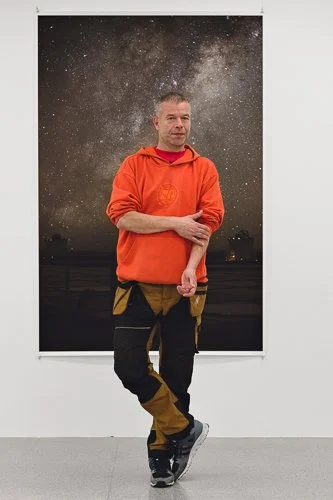
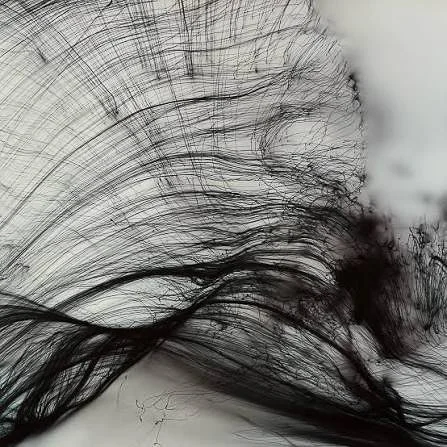
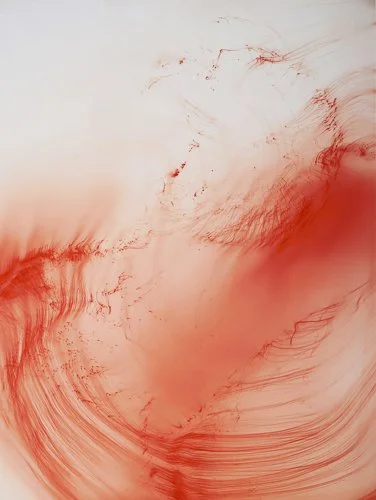
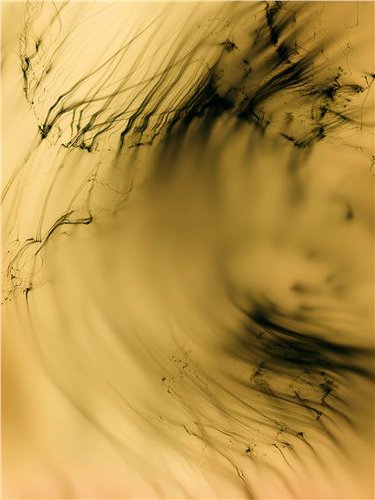
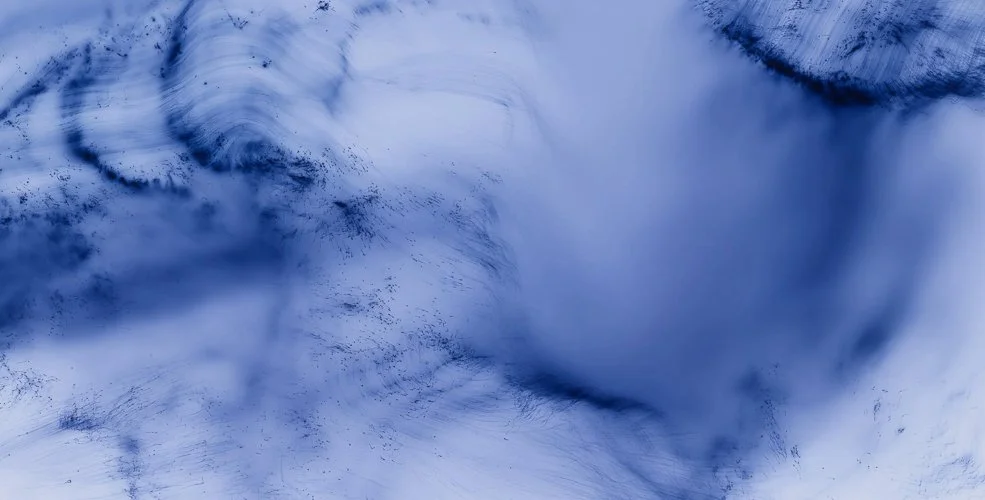
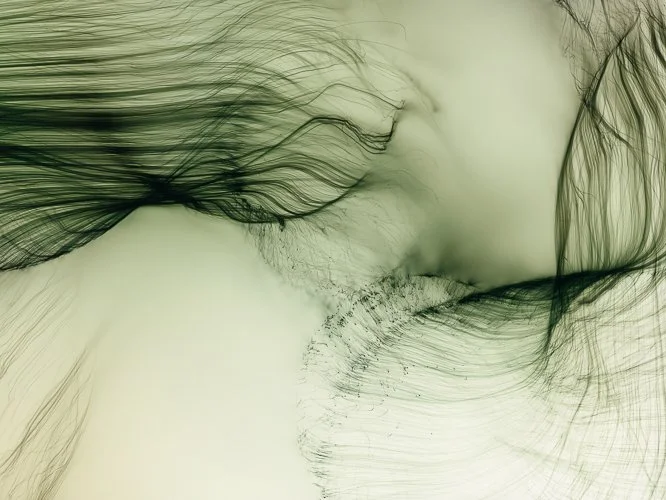
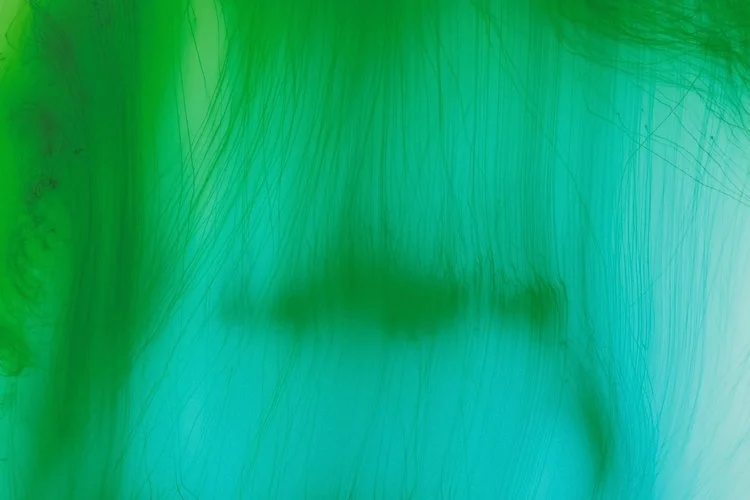
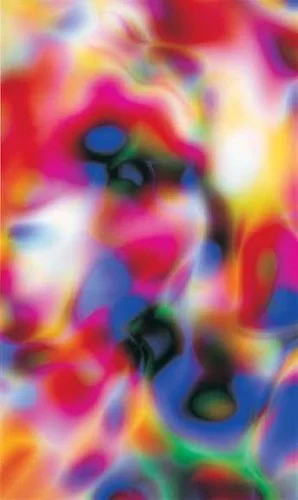
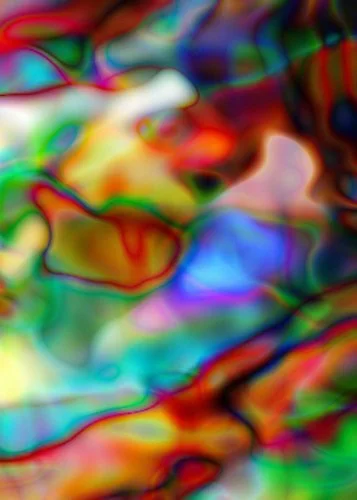
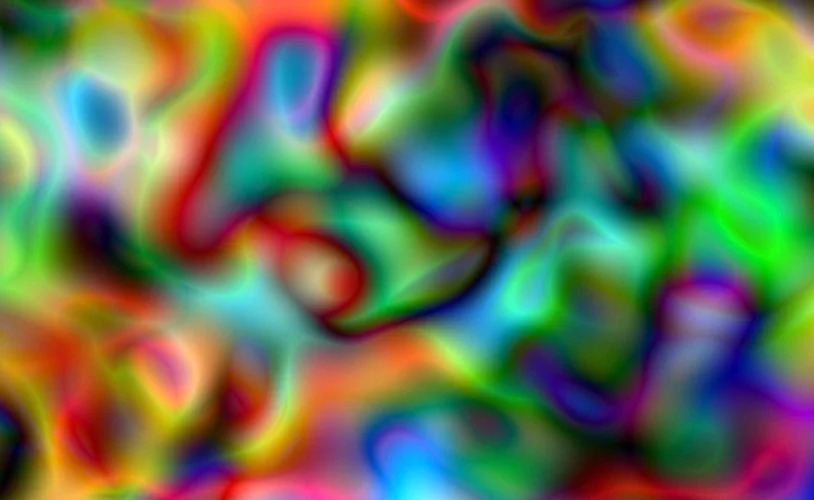
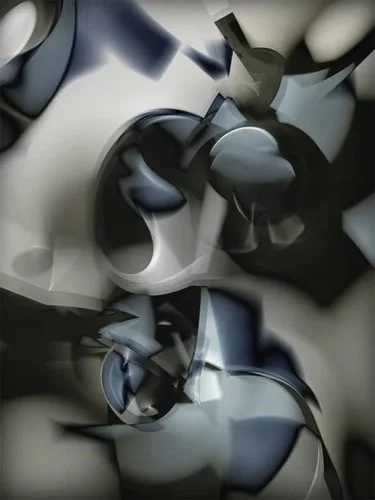
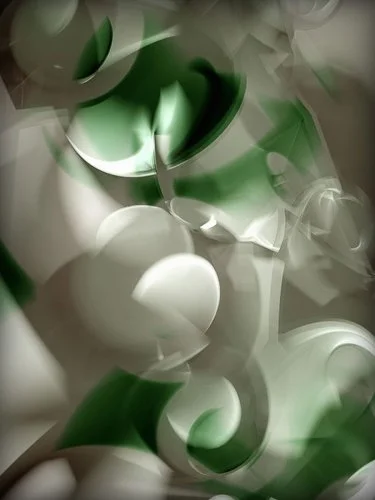
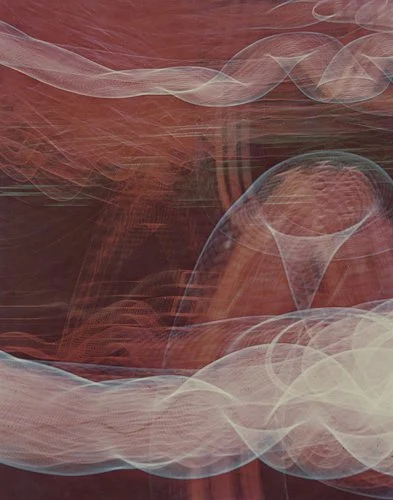
Wolfgang Tillmans (born 1968) has been the most prominent photographer to work at the boundary between representation and abstraction in the contemporary period. Best known for his candid documentary work, Tillmans from the late 1990s onwards produced a body of non-representational photographs that use the photographic process itself as the subject. His Freischwimmer series, begun in 2003, was made by placing light-sensitive paper in the darkroom and allowing it to be exposed to ambient light, to light bent around curved surfaces, and to accidental chemical reactions — processes that produced billowing, luminous shapes entirely unlike anything produced by a camera.
His later paper drop works, made by folding and curling photographic paper and exposing it to coloured light before development, produce fields of colour reminiscent of Mark Rothko's late canvases. Tillmans is explicit that these works use photography's own materials to make images that are not photographs in the conventional sense — and that this tension, between the medium's mechanics and its usual purpose, is precisely what he finds productive.
Thomas Ruff (born 1958), a former student of Bernd and Hilla Becher at the Düsseldorf Academy, has pursued a different strategy: the use of digital technology to interrogate photography's relationship with abstraction and with reality. His Substrats series (2001–03), made by enlarging low-resolution images downloaded from the internet until their pixellation was visually dominant, transformed media icons into near-abstract colour fields.
His photogram series, begun in 2012, takes the photogram tradition into the digital realm: using 3D computer modelling software, Ruff generates virtual objects and virtual light sources, simulates the interaction between them, and produces "photograms" that are entirely computer-generated but tonally and formally indistinguishable from analogue darkroom work.
These digital photograms directly engage with the Moholy-Nagy tradition, restaging its questions about light, form, and the photographic surface in a computational environment. The move is both homage and critique: by making photograms without photosensitive paper, Ruff demonstrates that the question the photogram asks — what is a photograph? — has not been settled by the transition to digital.
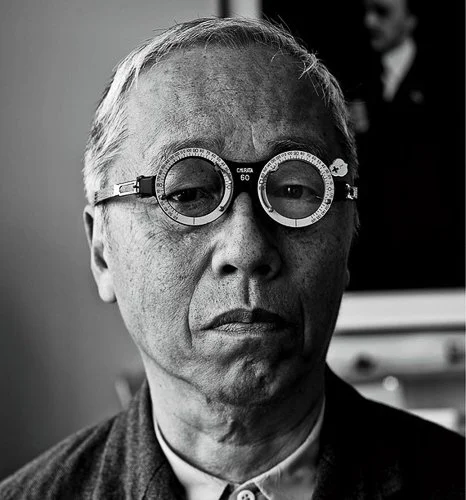
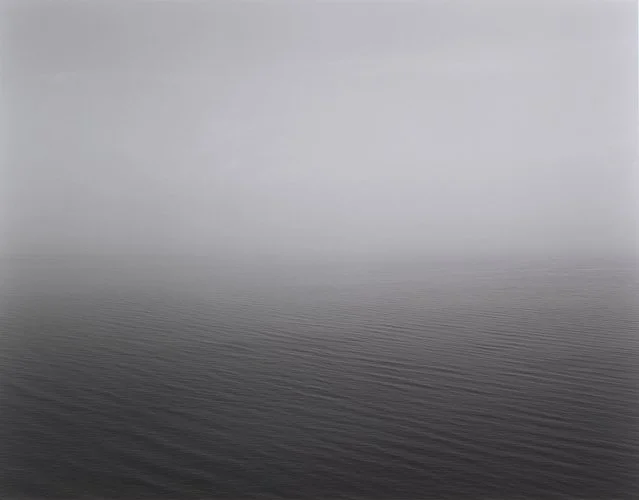
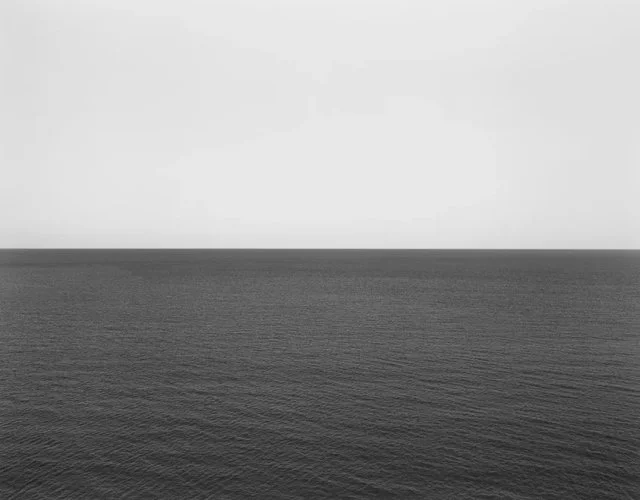
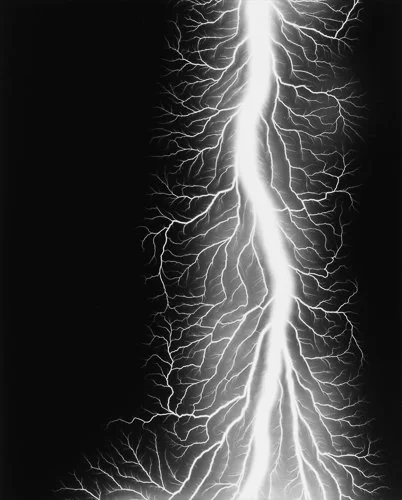
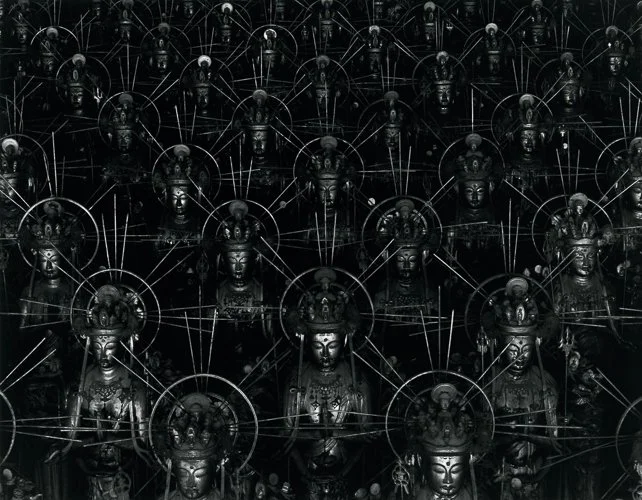
Hiroshi Sugimoto (born 1948) occupies a distinctive position in contemporary abstract photography, precisely because his most celebrated work maintains rigorous representational subject matter while achieving effects of near-total abstraction.
His Seascapes series, begun in 1980 and continued across more than forty years and 250 locations, uses a large-format camera to photograph the sea and sky in evenly divided, horizon-bisected compositions, stripped of all human reference. The images — in which sea and sky are distinguished only by tone and texture — suggest the Abstract Expressionist canvases of Mark Rothko, whom Sugimoto has cited as an influence, while remaining emphatically and precisely photographs of actual bodies of water.
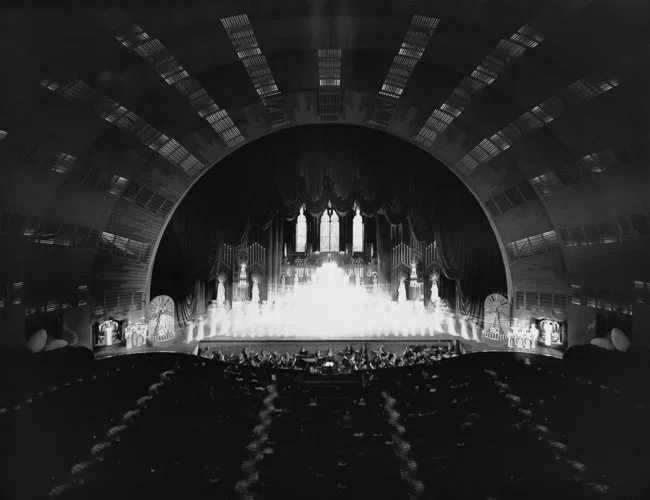
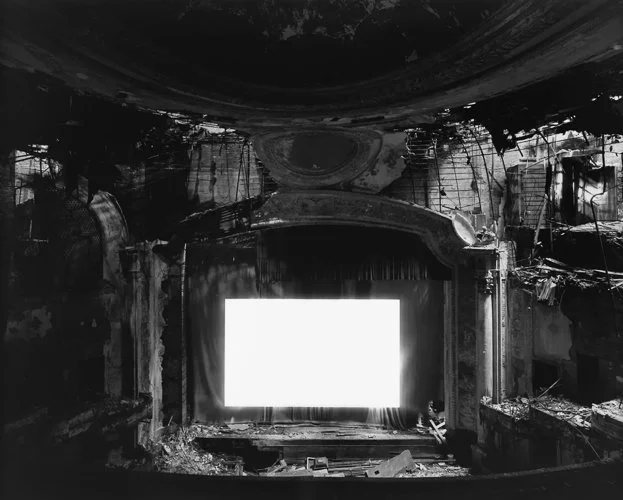
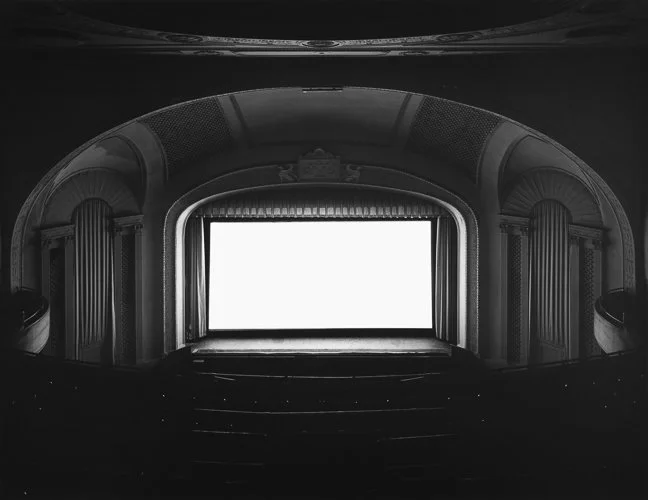
His Theaters series (1976–ongoing) achieves abstraction through duration: by exposing a single frame of film for the entire duration of a feature film in a movie theatre, with the projector as the only light source, Sugimoto compresses hours of moving image into a single rectangle of pure white light, the accumulated luminosity of the film's complete projection. The surrounding theatre architecture is rendered in sharp detail; the screen, the focus of the entire building, is a void.
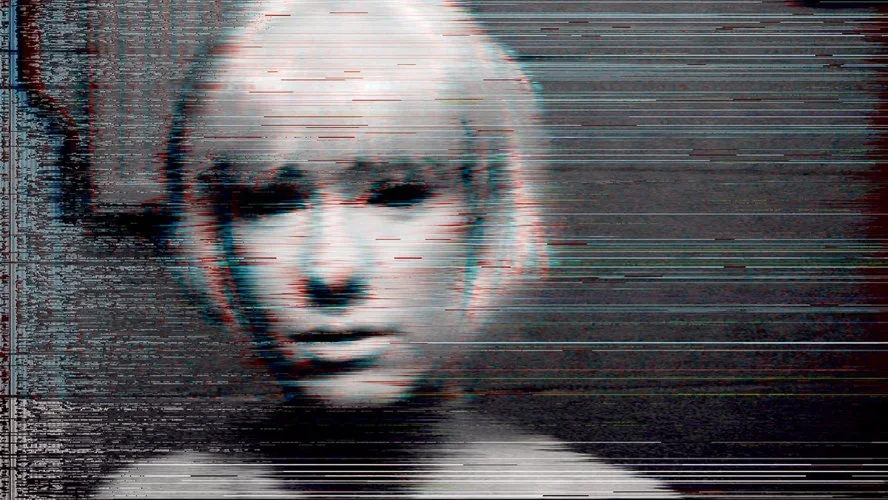
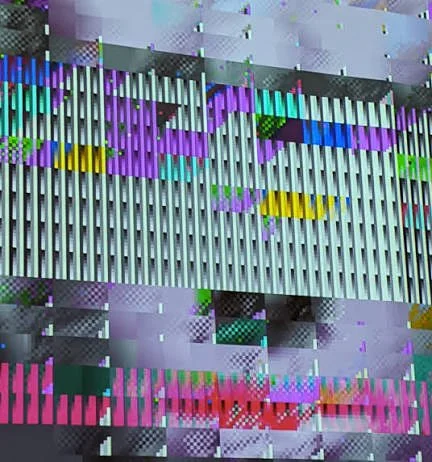
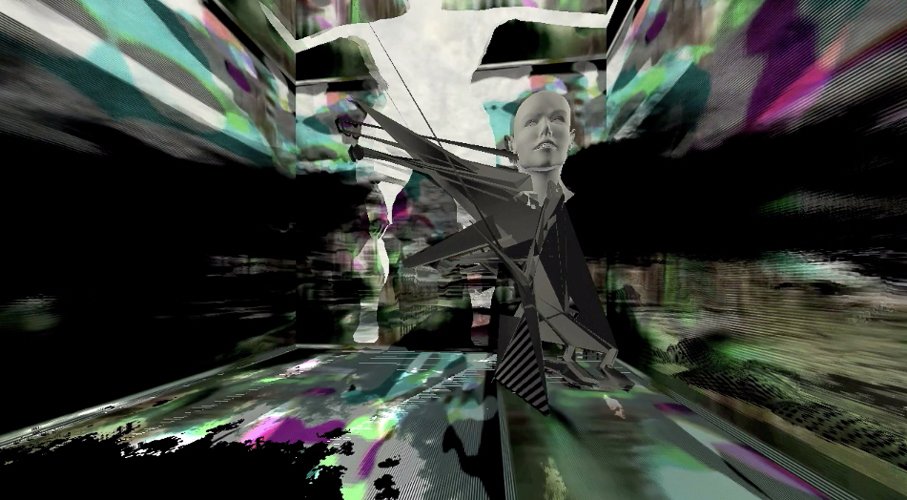
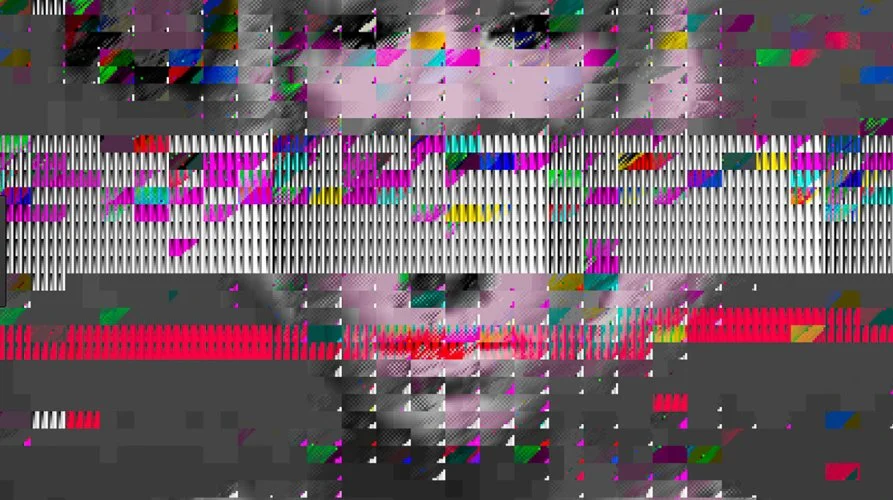
The digital and computational extension of abstract photography raises questions about what the term can still coherently mean. When Ruff's photograms are generated entirely by software, when glitch artists such as Rosa Menkman produce abstract images by deliberately corrupting digital image files, when AI-generated imagery creates photographic-seeming abstractions from statistical models of visual data with no photographic input at all, the category of "photography" becomes genuinely uncertain.
This is not a crisis for the practice, but it is a question worth sitting with: if abstract photography has always been, at its most radical, a challenge to what photography is, then the computational images of the twenty-first century are a natural continuation of that challenge. They are the photogram made algorithmic — the same fundamental question, asked in a new medium.
Closing Thoughts : The Enduring Appeal
The history of abstract photography is, in important respects, the history of photography thinking about itself. Every major development in the genre — from Atkins's cyanotypes to Coburn's Vortographs, from Moholy-Nagy's photograms to Siskind's peeling paint, from Sudek's glass labyrinths to Ruff's digital photograms — has been, at some level, an inquiry into the nature of the medium. What is a photograph? What must it contain? What can it leave out? What happens when the relationship between image and referent is weakened, denied, or destroyed?
These questions matter for photography in general, not just for abstract photography. The genre has consistently served as a laboratory for the medium's most searching formal and conceptual experiments, and the results of those experiments have consistently spread back into photography at large.
Moholy-Nagy's New Vision principles influenced commercial, documentary, and fashion photography as much as they influenced the avant-gardes. Siskind's attention to surface and texture opened ways of seeing that photographers across many genres subsequently adopted. The photogram, repeatedly rediscovered and reinvented from Atkins to Kasten to Ruff, remains one of the most productive sites of inquiry in the history of the medium.
There is also a simpler reason why abstract photography endures: it exploits, more fully than any other genre, the camera's unparalleled sensitivity to light, surface, and form.
The camera sees differently from the human eye — more precisely, at greater magnification, with greater tonal range — and that difference is most completely expressed when the camera is turned towards things that resist ordinary identification: the weathered wall, the refracted light, the close-cropped form that might be a body or a landscape or a geological formation.
In those images, what photography uniquely offers — its mechanical precision, its light-sensitivity, its capacity to make the world strange — becomes visible in its purest form. Abstract photography may justifiably be considered the point at which photography is most fully and honestly itself.