Danse Macabre
Thursday. A chilly start, with very changeable weather. It nearly managed sun and blue skies for the whole school run, but then pivoted hard into dark clouds and heavy rain. Dash had a heavy exam day with two papers, Maths and Psychology, so he was not feeling especially cheery either. Work was brief and civilised today, and when I picked Dash up later, he reported the exams had gone a lot better than he’d anticipated. My walking plans for the evening were scuppered by heavy downpours, and when I dug out the old indoor walking pad from under the sofa, that seems to have given up the ghost as well.
Today’s photo is another AI abstract — one which started life as a photograph of some graffiti, taken on Napchester Road as it passes under the A256. I thought it would make a good seed to run through an AI filter, and first I tried a few passes with Photoleap AI’s anime models. After that I used the following prompt in Nanobanana 2 to edit the original photo, using four of the anime derivatives for inspiration.
“Create a vibrant anime-inspired cartoon from the original photograph of graffiti, along the lines of the 4 examples also uploaded. Funky, devilish, deep blacks with vibrant reds, oranges and rich colours. Subtle horror, danse macabre themes, even a touch of cyberpunk.”
The finished piece feels like a fully realised, neon‑drenched reimagining of the original graffiti wall, pushing a scrappy roadside doodle into full anime spectacle. The numbers and skull that were only loosely implied in paint have been transformed into a bold, cartoonish danse macabre, glowing as if lit by street‑level neon and burning stage lights. The palette hits exactly the “deep blacks with vibrant reds, oranges and rich colours” I asked for: the background falls away into shadow, while the flames, tubing and lettering pulse with saturated colour, as if the whole mural has come alive at night on a rain‑slicked city street.
What I really like is how the AI has honoured the bones of the original piece. The looping arrow shape, the sequence of numbers, and the mischievous face all survive the journey, but they’re now sharpened into graphic, almost logo‑like forms. The skull inherits the spiral symbol from the graffiti and turns it into a kind of occult branding mark, echoed by the glowing glasses and the cable‑like details feeding into its jaw. Even the damp, stained concrete of the underpass is still there in spirit, now reworked as a darker, more cinematic wall that lets the colours sing instead of fighting with them.
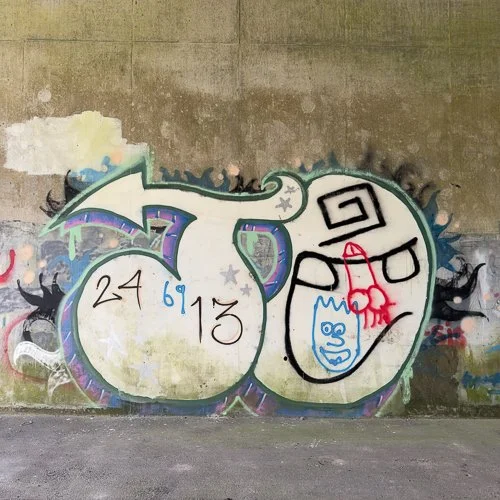
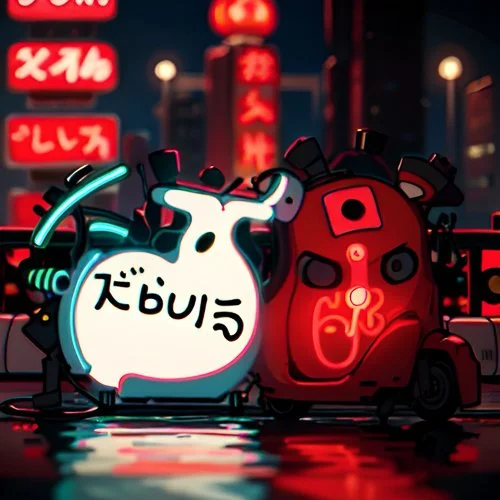
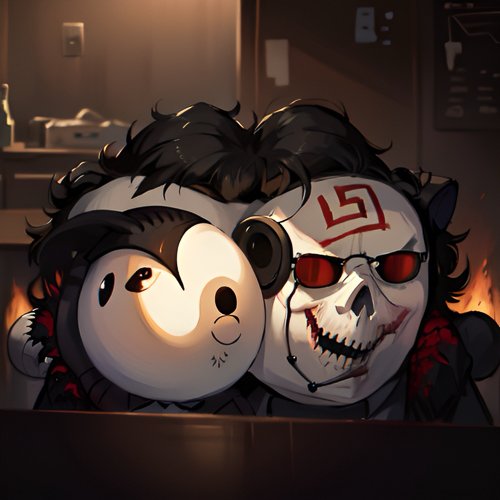
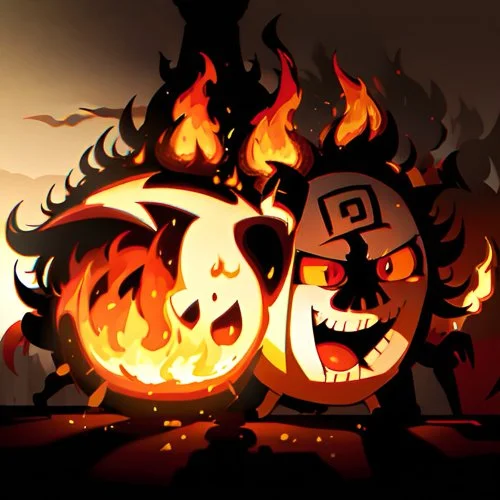
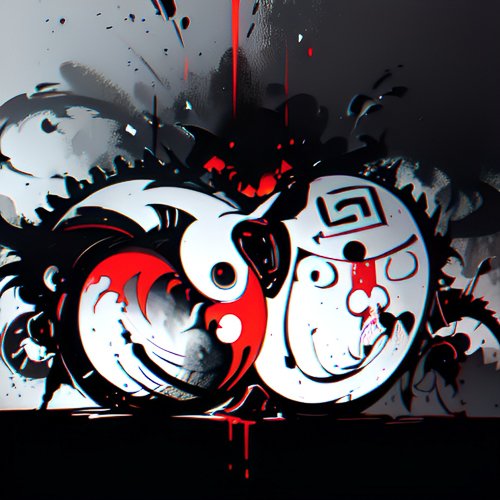
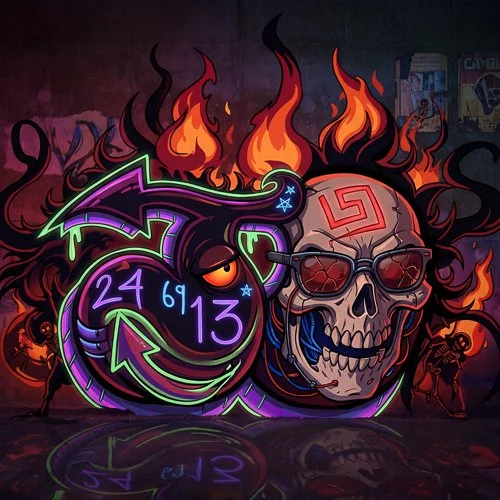
The four Photoleap variations did a lot of the heavy lifting in deciding what “anime‑inspired” should actually look like for this image. One leaned into chibi‑style characters and soft, rounded forms, which you can see in the way the numbered shape keeps its playful curves rather than turning into something grim or realistic. Another pushed the horror angle, exaggerating the skull and grin; that thread clearly carries through into the final, with a more menacing expression and sharper teeth, giving the image its subtle horror undertone without tipping into full gore. A more abstract, splattery version seems to have encouraged the dynamic flames and jagged edges, injecting motion and chaos around the central forms.
There’s also a clear cyberpunk echo from the Photoleap experiments: elements like backlit signage, exaggerated reflections and glowing outlines have found their way into the final piece as luminous piping and electric colour transitions. It feels as if the original wall has been relocated from a grey English underpass into a back alley in a futuristic anime city, where the graffiti has absorbed the ambient neon and started telling its own story. The whole process — from a flat, daylight snapshot to four stylised AI sketches, and finally into this Nanobanana 2 reinterpretation — reads like a collaborative sketchbook between the photographer and the models, refining the mood step by step until the “funky, devilish” character of the piece finally emerges in full.