Dover Cliffs Walk
Sunday. It was supposed to be a hot one today, but first thing, it was looking rather misty and cold. Another quiet morning; V was at work and the rest of the family were asleep. Time for another fortnightly outing with The Steely-Eyed Ninja Speed Walkers—this time a short trail along the White Cliffs of Dover. Pretty much in my back yard.
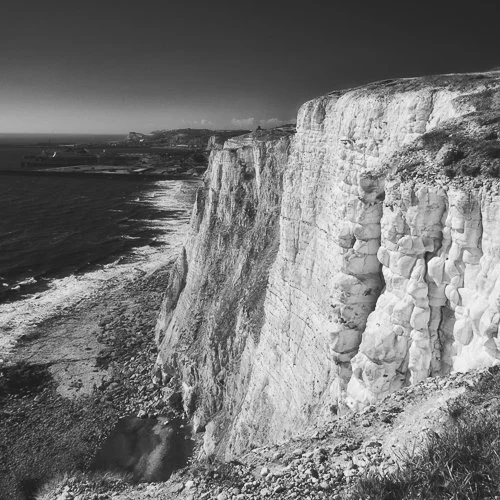
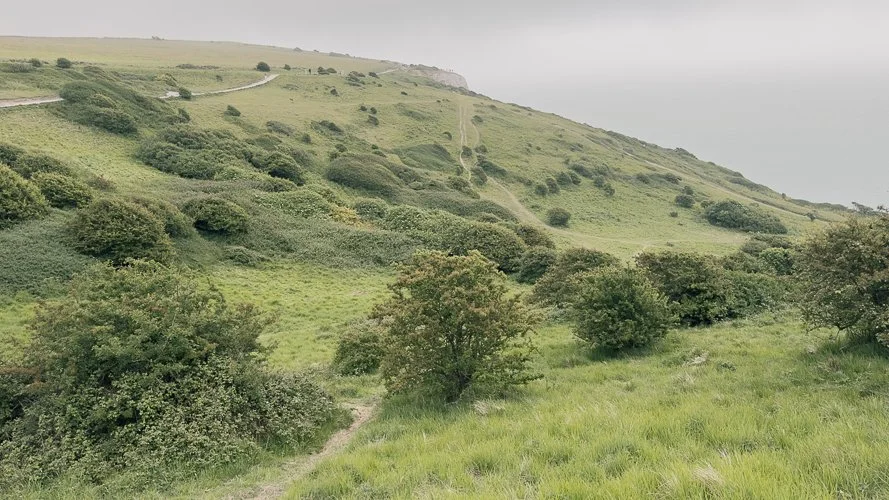
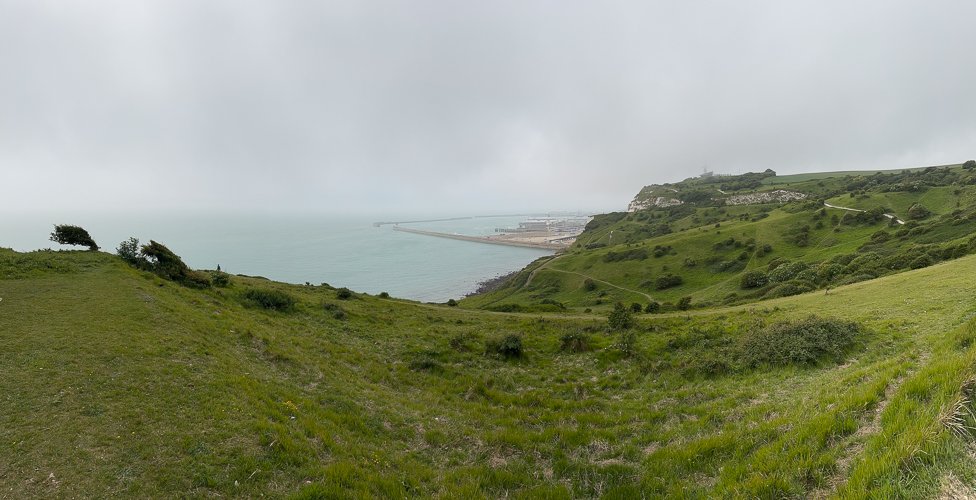
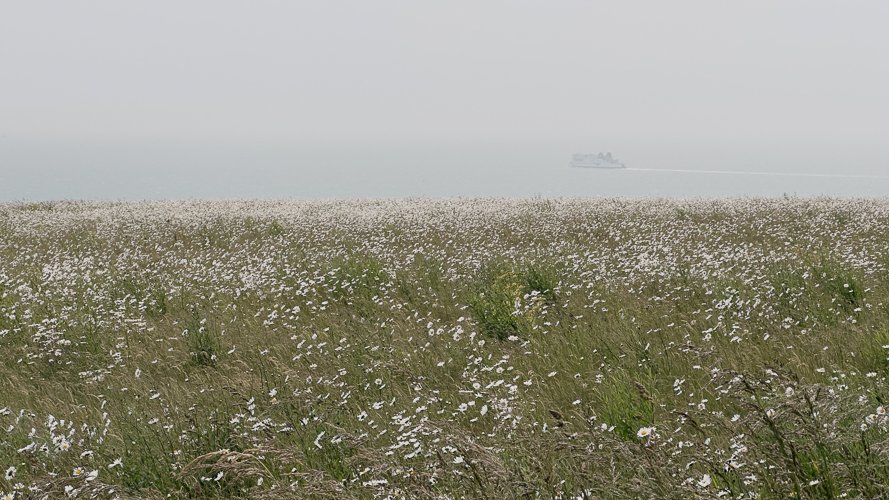
The walk east from the National Trust visitor centre at Langdon Cliffs follows the clifftop path for roughly three kilometres before arriving at South Foreland Lighthouse — about 5.6 kilometres in total for the return journey. The path traces the line of the King Charles III England Coast Path, passing through Langdon Hole and alongside the Fan Bay Deep Shelter, a Second World War tunnel complex set into the cliff face, before the lighthouse comes into view above the headland. The walking here is consistently exposed and open, with the English Channel visible throughout and, on the right day, the coastline above Calais visible across the Strait of Dover — a reminder that you are standing at one of the narrowest points in one of the world's busiest shipping lanes.
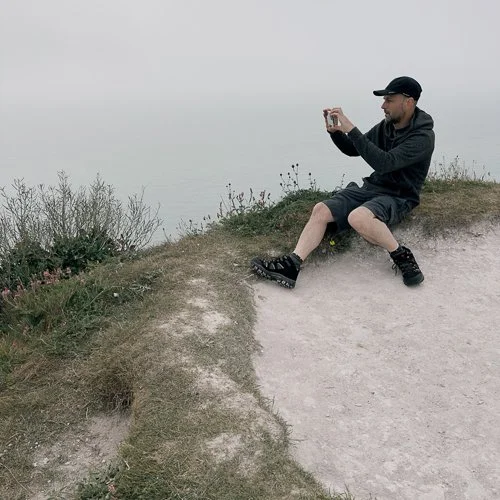
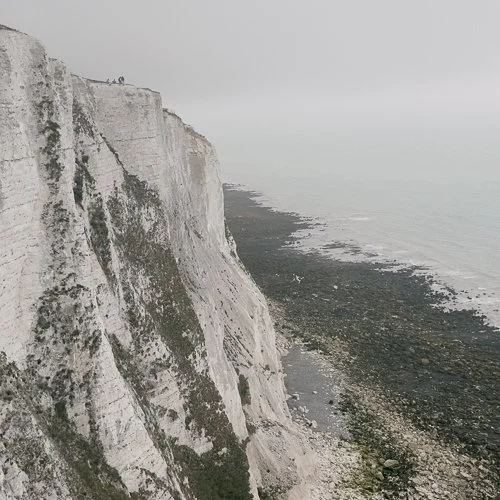
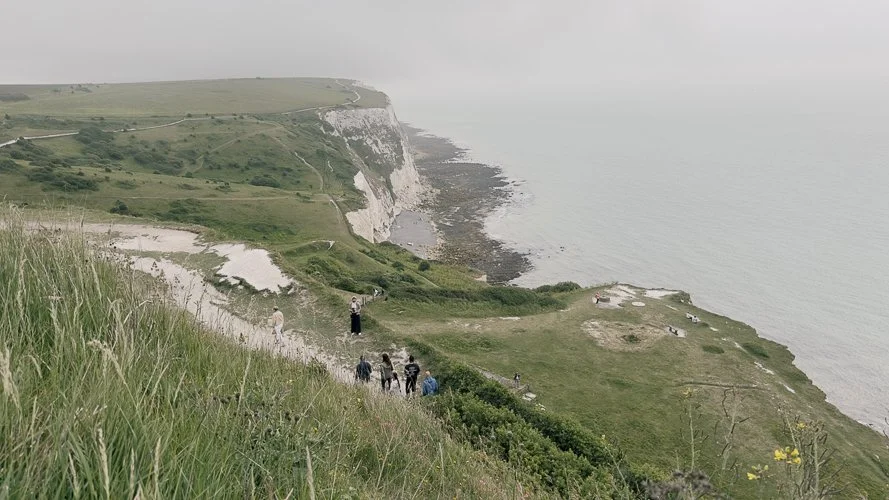
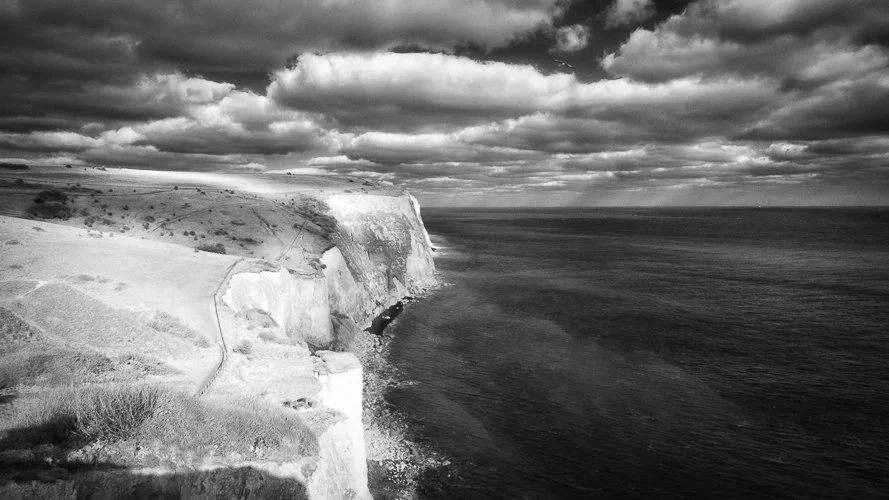
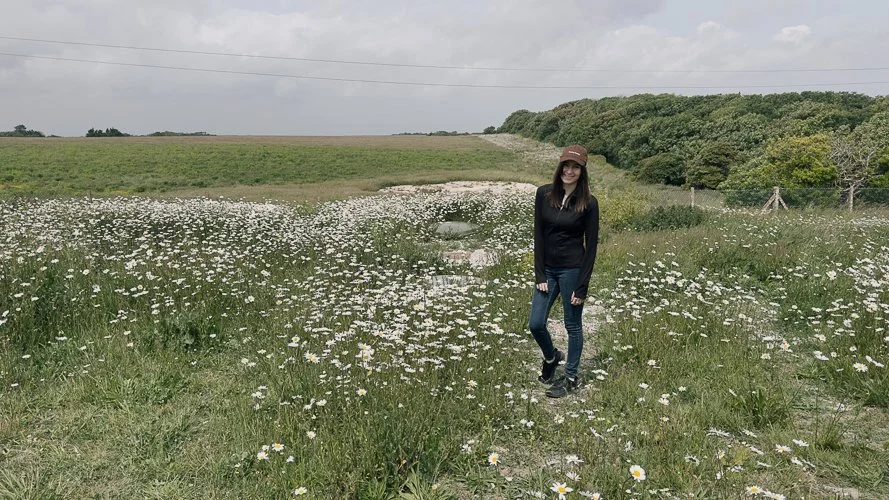
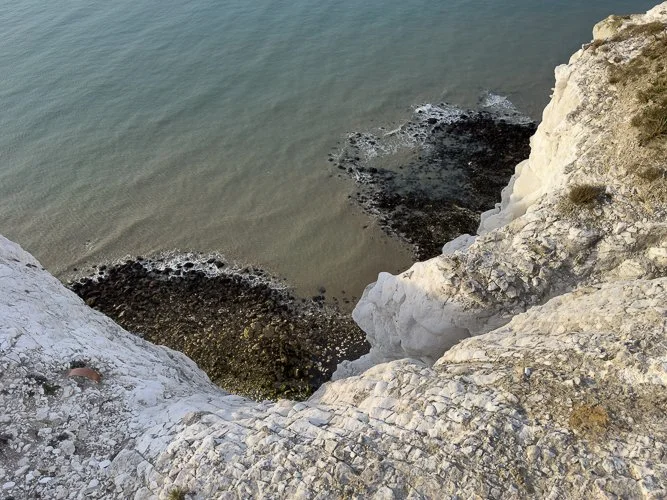
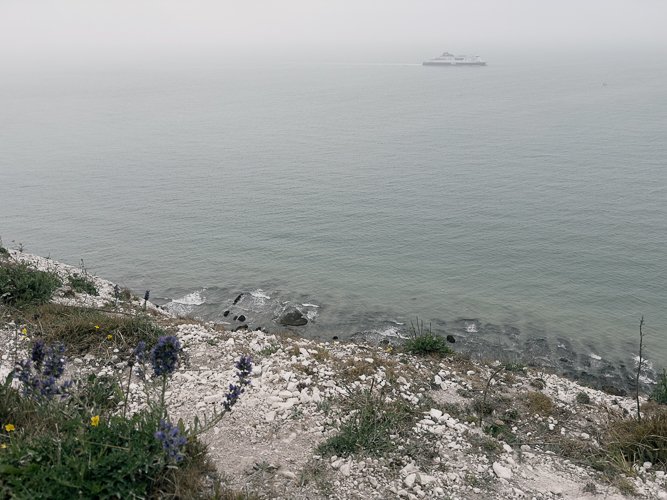
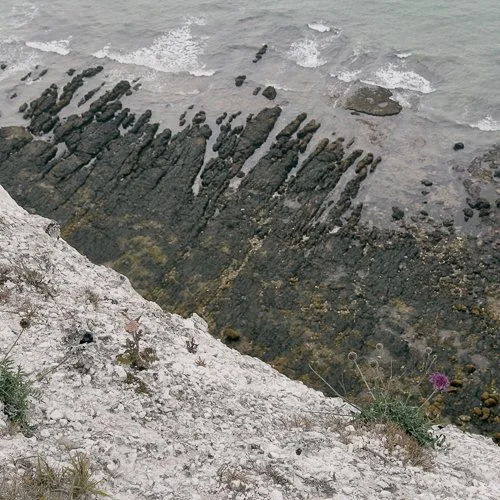
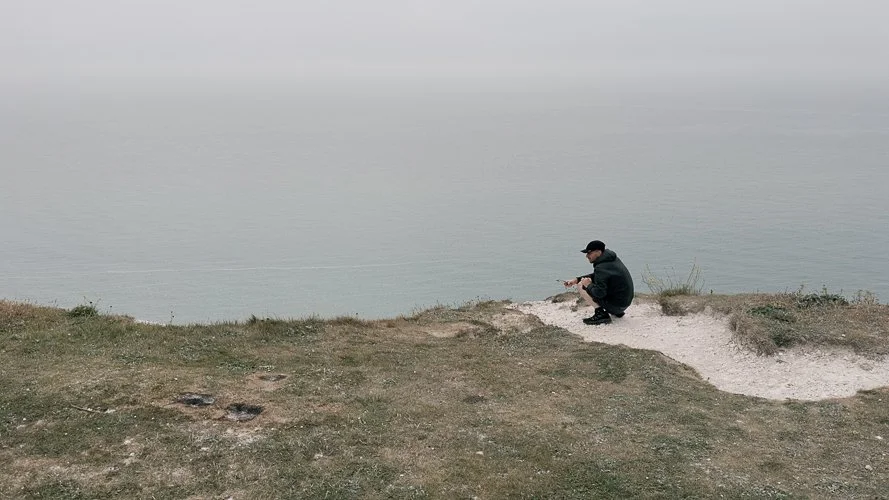
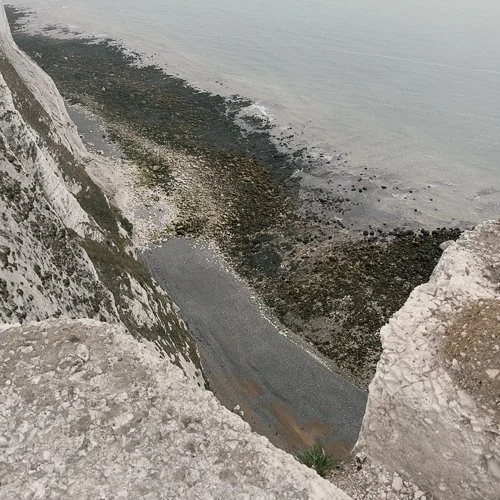
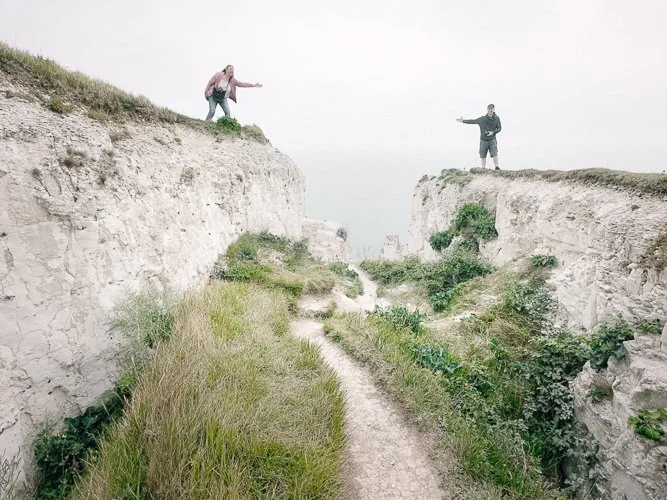
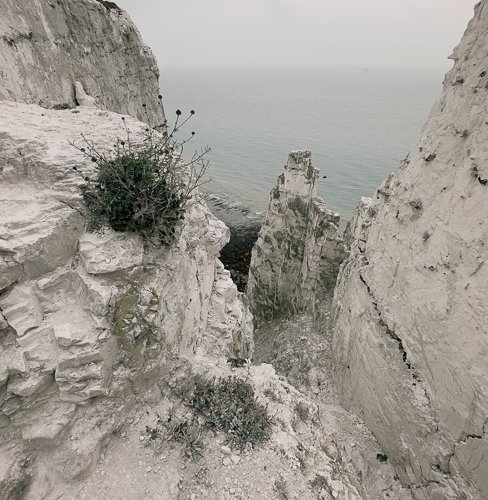
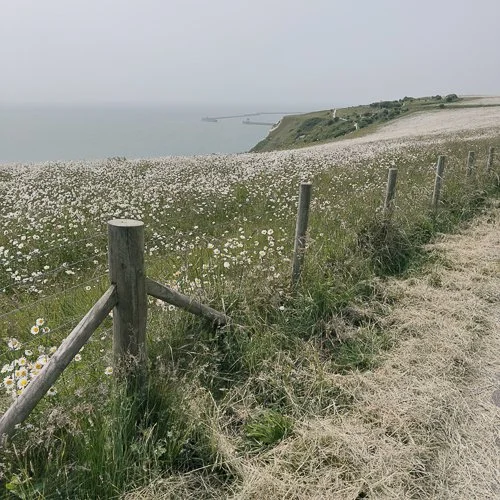
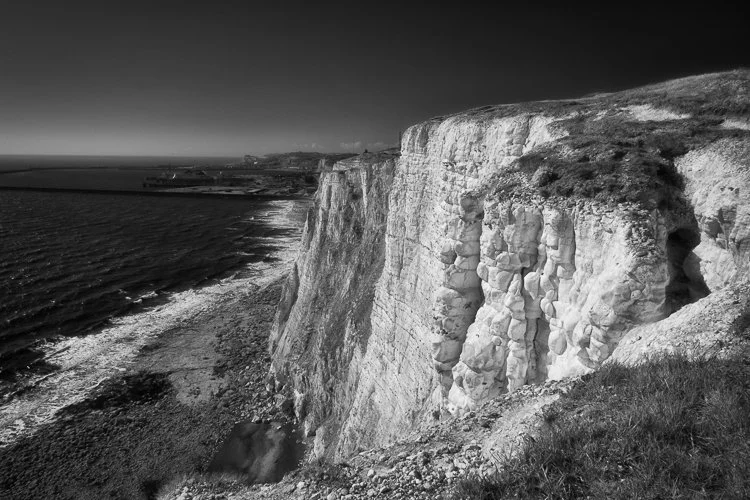
A thick sea mist cloaked the cliffs for the first part of the walk, from the visitors’ centre to South Forelands Lighthouse and Mrs Knott’s Tearooms; a great place to stop for lunch, cakes or a cream tea. There were plenty of places to stop for photographs along the way, and you can, with care, get close to the cliff’s edge where the best images are to be found. The mist had burned off by midday, and I caught the sun on the way back. Thanks to Julia, Ben, Charlotte and Caroline for joining us on the walk today!
South Foreland Lighthouse is a building with a history well out of proportion to its modest Victorian exterior. There has been some form of light on this headland since 1367, when a monk named Brother Nicholas de Legh hung a lantern from the cliff face as a warning to ships approaching the Goodwin Sands — the ten-mile sandbank that lies submerged to the east, and which has claimed an extraordinary number of ships and lives over the centuries. The first recognisable lighthouses, a pair of iron braziers, were erected here in 1635 by Sir John Meldrum.
The structure standing today was built in the 1840s to a design by the Scottish engineer James Walker for Trinity House, with the upper lighthouse refurbished in 1842 and the lower fully rebuilt in 1846. The two towers were used together as leading marks: mariners would align the upper and lower lights vertically to confirm they were steering safely past the southern tip of the Goodwin Sands. The lower lighthouse was decommissioned in 1904 as the sands shifted, and the upper continued in operation until 30 September 1988, when advances in navigation technology rendered it redundant.
The lighthouse's claims to scientific history are considerable. In 1858 it became the first lighthouse in the world to display an electric light, when the engineer Frederick Holmes began experimental use of his magneto-electric generator here for Trinity House. By 1872 a permanent electrical installation had been established, making South Foreland a working demonstration of what electricity could do at a time when the technology was still largely theoretical for most of the public. Then, on Christmas Eve 1898, the site entered the history of communications. Guglielmo Marconi had erected a large aerial on the cliffs beside the lighthouse, while his assistant George Kemp sailed out to the East Goodwin Lightship twelve miles away. The signal that passed between them that evening was the world's first ship-to-shore radio transmission. Three months later, on 27 March 1899, Marconi sent the first international wireless transmission across the Channel from Wimereux in northern France to South Foreland — a distance of 32 miles. The hut from which some of these experiments were conducted survives in the lighthouse grounds, now used as a small second-hand bookshop.
The National Trust took over the lighthouse in 1989 and it is open to visitors with guided tours running through the day, taking in the original Victorian clockwork mechanism that drove the rotating lens, the lamp room, and the balcony with its unobstructed views of the Strait. The tearoom occupying the former lighthouse keeper's cottage is named Mrs Knott's, after George and Catherine Knott, keepers here who raised thirteen children on the site. Five generations of the Knott family served at South Foreland over nearly 175 years, making them reportedly the longest dynasty of lighthouse keepers anywhere in the world. The tearoom leans into this history with a 1950s theme — bone china, a vintage record player, Vera Lynn — which might sound contrived but works rather better in practice than it has any right to. Cakes are baked at the National Trust's nearby White Cliffs kitchen and delivered daily. It is, in short, a very good reason to time your arrival at the lighthouse to coincide with lunch.
Thanks to Julia, Ben, Caroline, and Charlotte for joining the walk today.
National Trust White Cliffs Visitor Centre, Langdon Cliffs
Postcode: CT16 1HJ (note: satnav may direct to the Eastern Docks ferry terminal — follow brown National Trust signs and turn into the car park before reaching this point)
From the A2 Dover bypass, follow signs for the White Cliffs / National Trust. The visitor centre and car park are off Upper Road above the Eastern Docks. Parking is charged (free for National Trust members). No practical public transport to the car park itself; Dover Priory station is approximately 3 km away.