Photography has had domestic animals as its subjects almost from the moment the medium existed. This is not merely a historical curiosity: it reflects something persistent about the relationship between humans and the animals they keep, and about the impulse to fix that relationship in a permanent image.
The cat who appears in William Henry Fox Talbot's earliest experiments with the calotype process was not there because Talbot set out to make a portrait of it. It was there because it was present, because it was asleep and therefore still, and because the world Talbot was learning to photograph included the creatures who shared it with him.
From that first accidental domestic subject to the billions of pet photographs made annually on smartphones, the fundamental condition has not changed: the animal does not know it is being photographed, and it does not care.
This indifference is both the defining characteristic and the central problem of the genre. The portrait photographer — whether working with a human sitter in a studio, a model on a shoot, or a subject in a documentary context — has access, in varying degrees, to collaboration. The subject can be directed, positioned, asked to hold an expression or a posture.
The pet photographer has none of these options. The animal will do precisely what it intends to do, at the moment it intends to do it, and the camera must be ready. What this means in practice is that the genre tolerates no fakery. A mediocre portrait of a person may be rescued by a flattering light or a well-chosen angle; a mediocre photograph of an animal is simply a mediocre photograph — the animal's unperformative presence exposes every technical weakness and every failure of attention.
The best pet photography, conversely, achieves a kind of authenticity that is almost impossible to manufacture in other genres: it records an animal being itself, and the viewer senses this immediately.
The history of pet photography is therefore also a history of the technical conditions that made such records possible, of the cultural attitudes that made them desirable, and of the individual practitioners — often working at the margins of photographic respectability — who elevated the genre from domestic record-keeping to a legitimate and demanding form of visual art.
The Earliest Animal Photographs
William Henry Fox Talbot (1800–1877) stands at the beginning of any history of photography, and he stands at the beginning of pet photography as well, if one is willing to extend the category broadly. In the mid-1830s, Talbot was engaged in his foundational experiments with photogenic drawing and, subsequently, the calotype process — the negative/positive system he patented in 1841 that would become the basis of virtually all subsequent photography on paper.
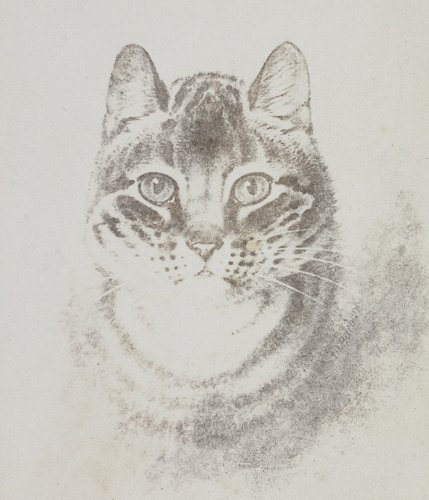
Among the subjects he turned his camera and his contact-printing frames towards was a cat. The resulting image, made at some point between 1840 and 1843 and associated in the historical record with the title Patience, is now held by the National Science and Media Museum in Bradford.
In its surviving form, it is technically a calotype reproduction of a drawing — a copy of a depiction of a cat by the animal artist J. M. Burbank, who exhibited such subjects in Britain during the 1830s. The photograph is thus at one remove from a live animal. This matters rather less than the broader irony: that the founder of the positive/negative photographic process, the man whose technical innovations made modern photography possible, found among his first domestic subjects a sleeping cat.
The name Patience — whether applied by Talbot or by subsequent cataloguers — is an apt one for an animal that would prove, across nearly two centuries of photographic history, to demand precisely that quality from anyone attempting to photograph it.
The technical conditions of the early medium imposed severe constraints on any attempt to photograph living animals. The calotype process required exposures measured in minutes rather than seconds; only an animal in deep sleep, or a dead specimen, or a stuffed and mounted subject, was capable of the absolute stillness the process demanded.
The daguerreotype, introduced publicly by Louis Daguerre in 1839 and developed in parallel with Talbot's process, presented similar difficulties. Early daguerreotype portraits of people required subjects to hold themselves rigid for periods of several minutes, sometimes aided by neck braces and head restraints.
No such apparatus was available for animals. The daguerreotype studios that operated across Europe and America from the 1840s onwards occasionally included pet dogs in their portraits — usually as props held on a sitter's lap, or positioned beside a standing subject as a marker of wealth and domestic respectability — but the results were frequently blurred, and the animals were a source of practical disruption as much as artistic opportunity.
A daguerreotype of a white poodle, known to the auction record as Poodle with Bow, on Table and dating from the 1850s, demonstrates what was achievable: the dog is still, the image is technically accomplished, and the fact that it sold for over £5,000 at Sotheby's in 2009 reflects both its rarity and its quality. It remains, however, an image of an unusually cooperative subject in unusually controlled circumstances.
Nicolaas Henneman (1813–1898) occupies a specific and often underappreciated position in this history. Born in Heemskerk in the Netherlands, Henneman came to England and entered Talbot's household, initially as a valet, before becoming his trusted photographic assistant.
In 1844, Talbot supported Henneman in establishing what is now considered the first commercial photographic printing firm, situated in Reading. It was at the Reading Establishment that the photographic prints for Talbot's The Pencil of Nature — the first book to be illustrated with actual photographic prints — were produced. Henneman was thus directly responsible for the first systematic commercial distribution of calotype photographs, a body of work that included animal subjects. His establishment closed in 1847, but his significance in the early history of photographic dissemination is considerable: he was, in effect, the medium's first professional printer, and he trained subsequent practitioners including Oscar Gustave Rejlander.
The celebrity author Mary Russell Mitford, visiting Henneman's studio in 1847, insisted on including her dog in the session; the dog, according to contemporaneous accounts, sat 'perfectly still for four minutes, as if he were dead', producing one of the earliest documented professional pet portraits. The dog's expression, if the accounts are reliable, suggested considerable boredom with the process.
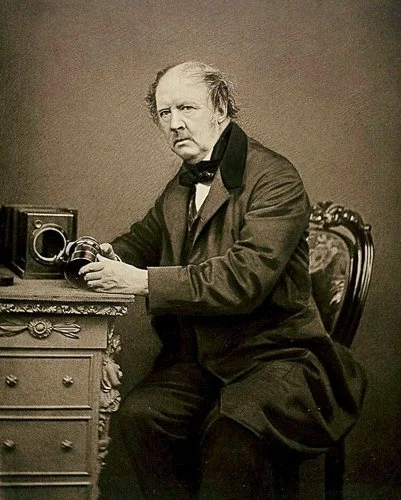
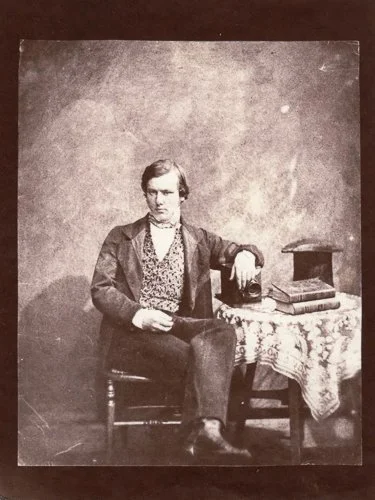
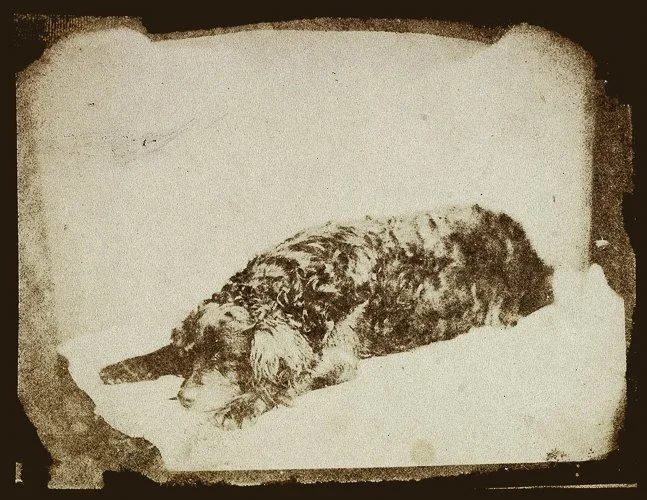
The transformation that made animal photography genuinely feasible came with Frederick Scott Archer's introduction of the wet-plate collodion process, which he published in The Chemist in March 1851. The collodion process reduced exposure times dramatically compared to the calotype — from minutes to seconds — and produced a glass negative of considerable sharpness and tonal richness.
It dominated professional photography for the following two decades. Although still demanding by later standards — the plate had to be coated, exposed, and developed whilst still wet, requiring the photographer to carry a portable darkroom into the field — the shorter exposure times meant that animals could, for the first time, be photographed in something approaching a natural pose.
A sleeping cat would no longer suffice; a relatively calm and cooperative animal, asked to remain broadly still for a few seconds, was now within the process's capabilities.
Anthropomorphism & the Comic Animal
The social conditions of Victorian Britain created both the demand for pet photography and the aesthetic framework within which it was initially understood. The keeping of cats and dogs as domestic companions — rather than as working animals serving a utilitarian function — became a widespread practice among the urban middle classes from the mid-nineteenth century onwards. The pet was a bourgeois institution, its presence in the household a marker of domestic prosperity and sentimental cultivation.
Cats and dogs appeared as subjects in paintings, illustrations, and sentimental prints, typically depicted in ways that emphasised their emotional relationships with human owners or, alternatively, their capacity for quasi-human behaviour. Edwin Landseer's paintings of dogs as noble, feeling creatures, and John Tenniel's humanised animal illustrations — most famously in Lewis Carroll's Alice in Wonderland — established a visual vocabulary of animal anthropomorphism that photographic practitioners would inherit and, in certain cases, take to extremes.
The cat and dog show, an institution that both reflected and reinforced the animal's status as a subject of aesthetic judgement and competitive display, formalised this sensibility: the first cat show in England was organised by Harrison Weir at Crystal Palace in July 1871, with Weir and his brother John Jenner Weir serving as judges. Dog shows had been established somewhat earlier.
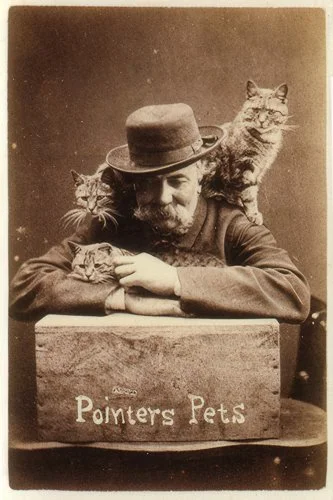
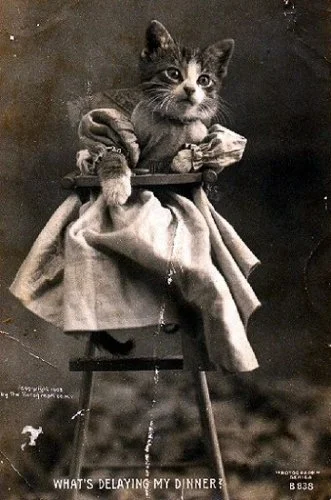
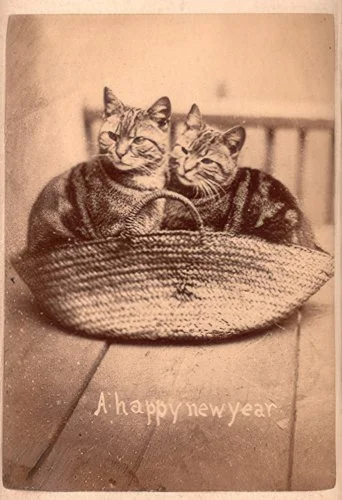
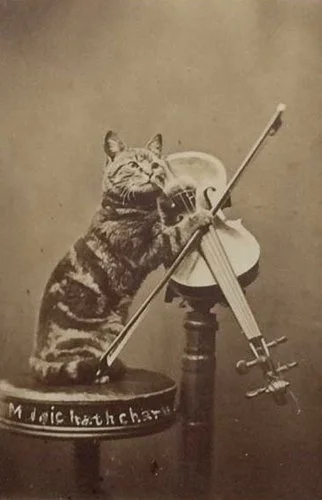
Harry Pointer (1822–1889) worked within this cultural context, but took it to a place that no painter could easily follow. The Brighton-based photographer became, in the 1870s, the most systematic and inventive practitioner of what might be called the theatrical animal photograph.
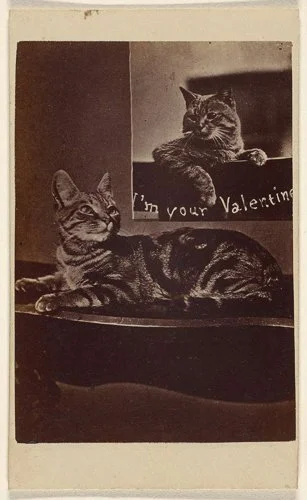
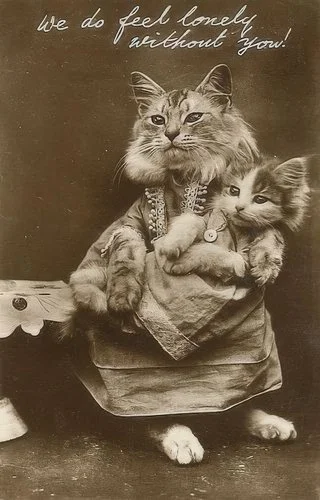
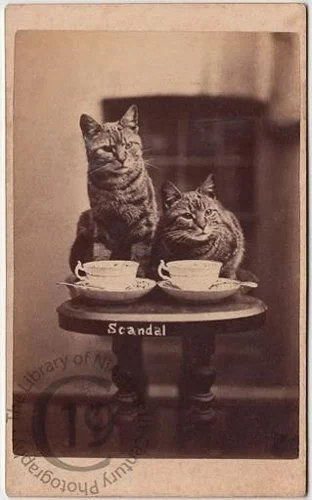
His Brighton Cats series — which he developed, by his own account, from a portfolio of more than one hundred captioned images by 1872 to approximately two hundred by 1884 — featured cats posed, costumed, and arranged in staged scenarios that depicted them engaged in recognisably human activities: attending tea parties, playing croquet, writing letters, and, in the image that has become the most reproduced of the series, roller-skating.
The photographs were sold as cartes de visite, the small visiting-card-format prints that constituted the dominant popular photographic format of the 1860s and 1870s, and they sold in substantial numbers.
Pointer added handwritten captions to many of his prints, frequently written in the first-person voice of the cat — a device that places him, without excessive anachronism, as the originator of a comic form that would not find its full cultural expression until the internet meme of the twenty-first century. His cats are, functionally, the first LOLcats, predating their digital descendants by more than a century.
Pointer's achievement rested on two technical and artistic premises. The first was his ability to arrange and briefly hold his cats in the required positions — an ability that the collodion process made possible by keeping exposure times short enough to capture a moment of stillness without weeks of training an animal to maintain a pose.
The second was his understanding that the comedy of the images derived precisely from the tension between the humanised scenario and the animal's evident uncooperativeness: the cats in Pointer's photographs are not performing their roles convincingly. They are positioned in costumes and props, and they are enduring the arrangement with various degrees of tolerance or distain.
This quality — the animal's indifference to the absurdity being constructed around it — is what makes the images funny rather than merely clever, and what distinguishes them from the Victorian tradition of humanised animal illustration, in which the artist could imagine any degree of animal participation. Pointer's camera could not lie about what the cat was actually doing, and what the cat was actually doing was, typically, very little.
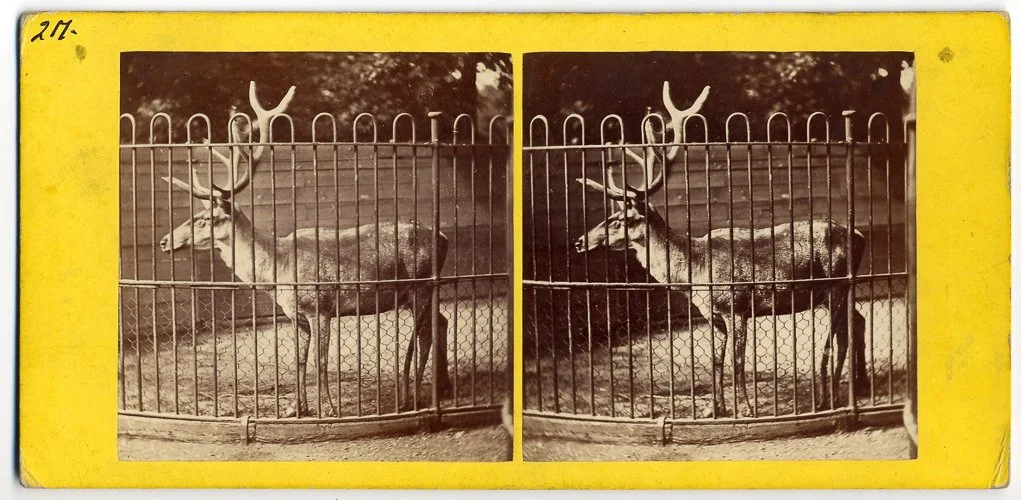
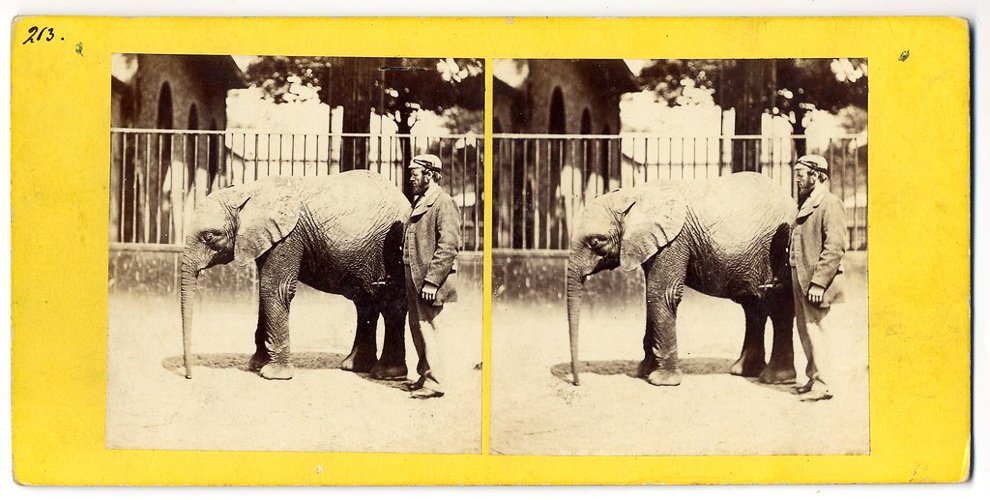
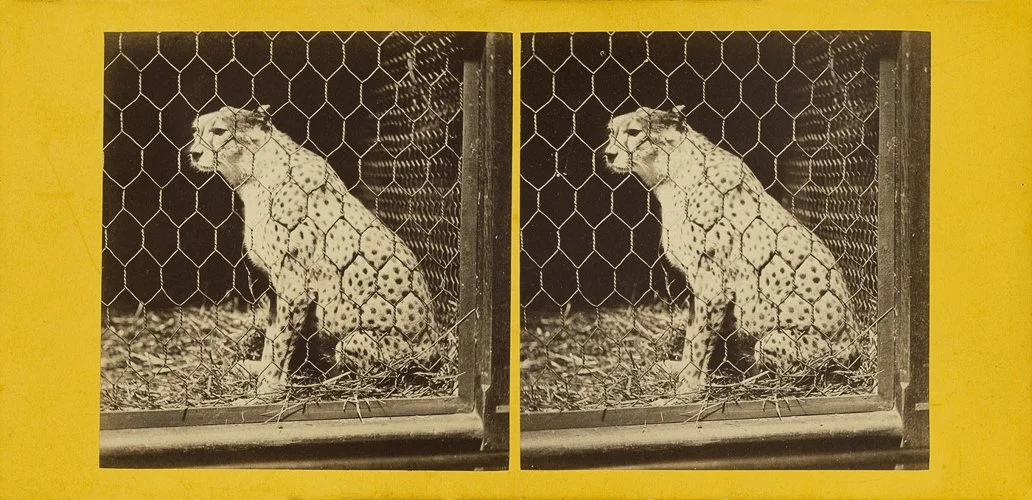
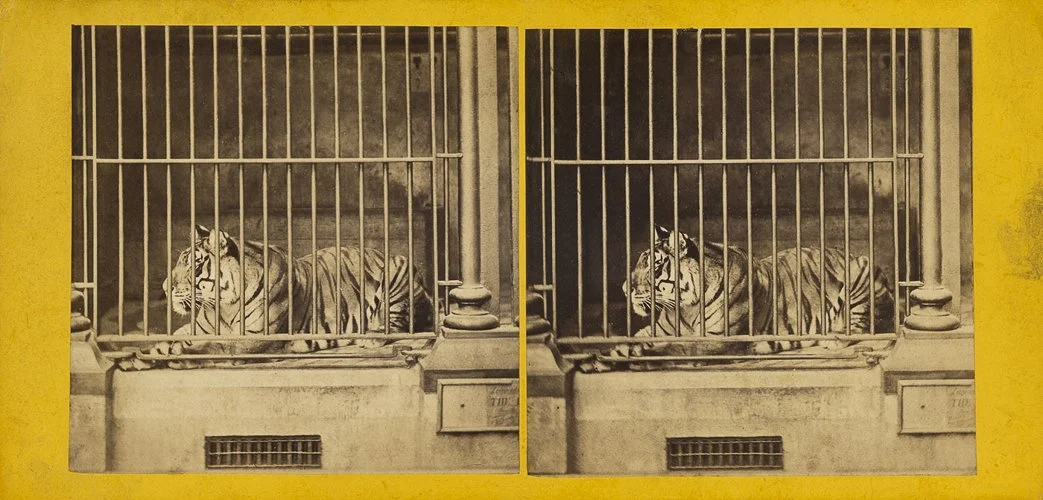
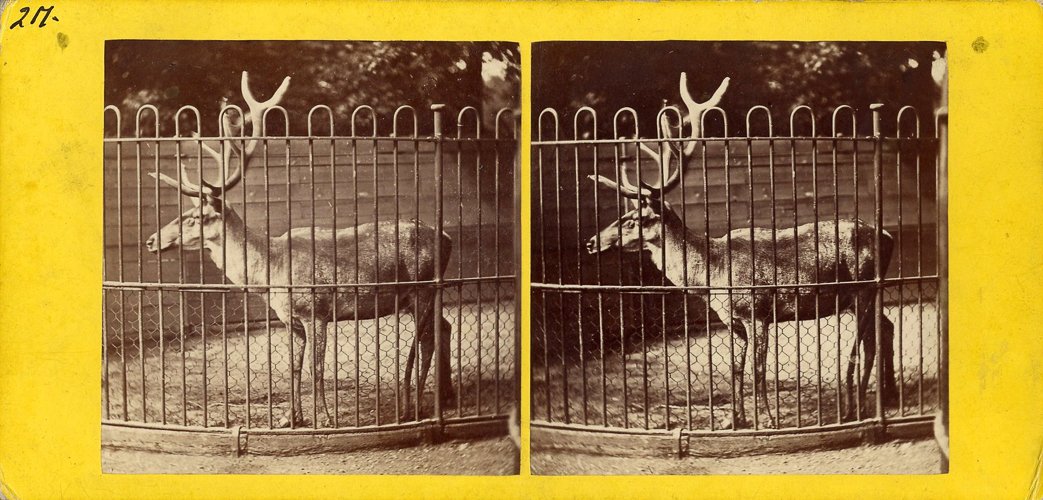
Frank Haes approached animal photography from an entirely different direction. Working at the London Zoo from the 1860s to the 1880s, Haes was commissioned by the Zoological Society of London in the summer of 1864 to produce a systematic photographic record of the Zoo's animal collection.
His method employed the stereographic process — pairs of nearly identical images taken with a twin-lens camera, designed to produce a three-dimensional effect when viewed through a stereoscope — and his fifty-five-photograph commission grew into a substantial body of work that documented species ranging across the Zoo's holdings.
Haes photographed the first known images of a living elephant in this context, as well as the now-extinct quagga and the thylacine. His relationship to pet photography is oblique: he was engaged in documentary and scientific work, not commercial portraiture or anthropomorphic comedy. But his systematic approach to photographing animals in captivity, combined with the stereographic technique that brought a new sense of depth and presence to animal subjects, established an important parallel tradition — the documentary animal photograph — that would eventually intersect with the more commercially driven genre of pet photography.
The distinction between Haes's approach and Pointer's is instructive. Haes was recording animals as natural-historical specimens; Pointer was exploiting animals as vehicles for human projection and comedy. Both approaches have descended into the present day, and the tension between them — between the animal as subject and the animal as prop — remains one of the defining questions of contemporary pet photography.
Dry-Plate & the Action Photograph
The introduction of the gelatin dry-plate process in the 1870s constituted the single most significant technological advance for animal photography before the digital era. Unlike the wet collodion process, which required plates to be coated, exposed, and developed within a matter of minutes whilst still wet, dry plates were factory-prepared and could be stored for extended periods. More crucially for animal photography, they were substantially more sensitive to light than their predecessors.
Exposure times fell from seconds to fractions of a second — the threshold at which a moving animal, rather than a stationary or sleeping one, could be photographed without significant blur. Dry plates became commercially available in the late 1870s, with George Eastman patenting a coating machine for their manufacture in 1880. By the middle of the following decade, the gelatin dry plate had superseded wet collodion as the dominant professional process. For the first time, a cat in motion, or a dog at play, was a feasible photographic subject.
Eadweard Muybridge (1830–1904) represents the most systematic exploitation of this new capability in relation to animal subjects. His Animal Locomotion study, the 781-plate collotype series published in 1887 under the auspices of the University of Pennsylvania, was conceived as a scientific investigation into the mechanics of movement, using a battery of cameras triggered in rapid sequence to capture animal and human motion as a series of discrete phases.
The study included domestic animals alongside its more celebrated subjects, and Plate 718 — Cat; Trotting, Changing to a Gallop — constitutes the first precise photographic analysis of feline locomotion. The plates of the Animal Locomotion study are not, by any stretch of definition, pet photography; they are physiological and biomechanical documents. But their significance for the subsequent development of animal photography was considerable: they demonstrated that moving animals could be photographed with technical precision, established the scientific value of animal motion studies as a photographic subject, and proved that the domestic cat and dog were as photogenic in action as in repose.
The democratisation of animal photography came with a different innovation: the introduction of the snapshot camera. George Eastman launched the first Kodak — a box-type camera loaded with a 100-exposure roll of flexible film, designed to be returned to the factory for processing — publicly in the summer of 1888.
The camera required no technical knowledge, no darkroom, and no prior photographic experience. Its slogan, 'You press the button, we do the rest', signalled a fundamental shift in the social meaning of photography: for the first time, making photographs was within the practical reach of anyone who could afford the initial cost.
The implications for pet photography were immediate and lasting. Amateur photographers could now capture their animals in natural, unstaged situations — running, playing, sleeping, eating — without professional equipment, professional expertise, or the formal conditions of the studio. The domestic pet photograph, as a genre of everyday family record-keeping, was born.
From Document to Art
The early twentieth century saw the gradual process by which pet photography moved from its twin positions as popular amateur pursuit and commercial novelty towards recognition as a legitimate subject for serious photographic practitioners. This was not a sudden shift, and it did not involve a repudiation of the genre's popular origins.
What changed was the arrival of photographers whose technical command and visual intelligence were sufficient to demonstrate that the genre's constraints — the uncooperative subject, the unpredictable moment, the absence of any possibility of direction — were not limitations to be regretted but conditions to be understood and exploited.
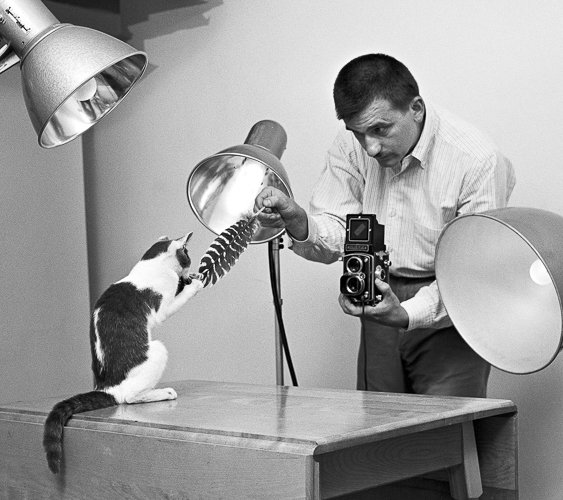
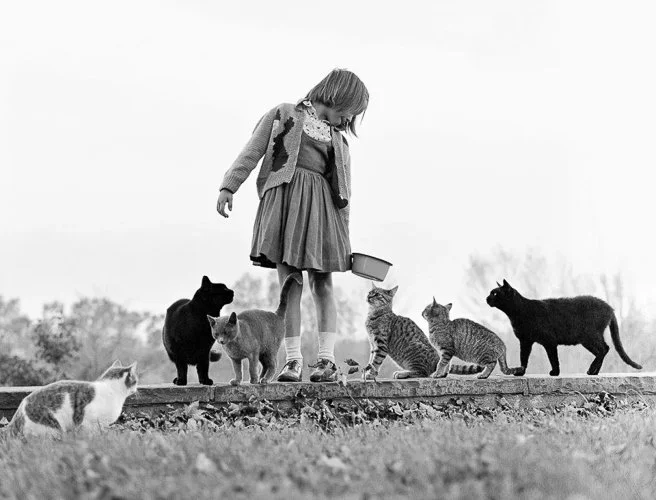
Walter Chandoha (1920–2019) is the central figure in any account of twentieth-century cat photography, and his position in the history of the genre is without close parallel. Born Walter George Chandoha on 30 November 1920, he was a veteran of the Second World War, serving as a combat photographer in the Pacific before returning to New York University on the GI Bill.
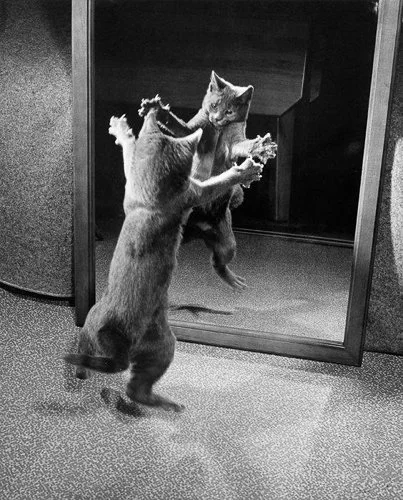
In the winter of 1949, walking home from his NYU classes one evening, he found a small grey kitten shivering in the snow of a New York alley. He bundled it into his coat, carried it home, and named it — after the energy with which it raced through the apartment — Loco. He photographed the cat.
The photographs, which showed Loco confronting his own reflection in a mirror, were published in newspapers and magazines across America and Europe: in This Week in the United States, in Picture Post in Britain, in Oggi in Italy. The response was sufficient to convince Chandoha that he had found his subject, and he abandoned his plans for a career in advertising.
Over the following seven decades, Chandoha built an archive of more than 90,000 cat photographs, a figure commonly cited and consistent with the scope of a career that ran, without significant interruption, from 1949 to the year of his death. His work appeared on more than 300 magazine covers and in thousands of advertising campaigns, as well as on greeting cards, calendars, food packaging, and jigsaw puzzles. He published at least thirty-four books, including Walter Chandoha's Book of Kittens and Cats (1963), which remains the most widely referenced of his published collections.
His images appeared in Life, Look, National Geographic, and virtually every major illustrated magazine of the mid-twentieth century. He maintained a farm in Annandale, New Jersey, which served as both his family home and his permanent photographic studio, with a rotating population of cats as constant subjects.
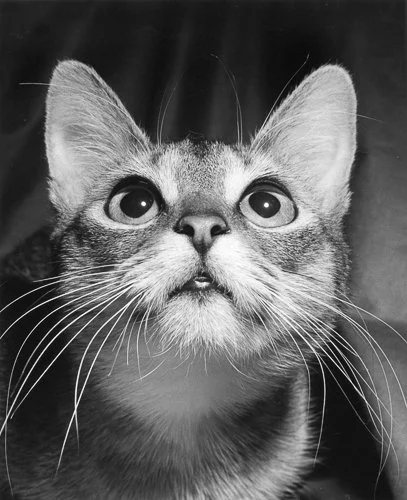
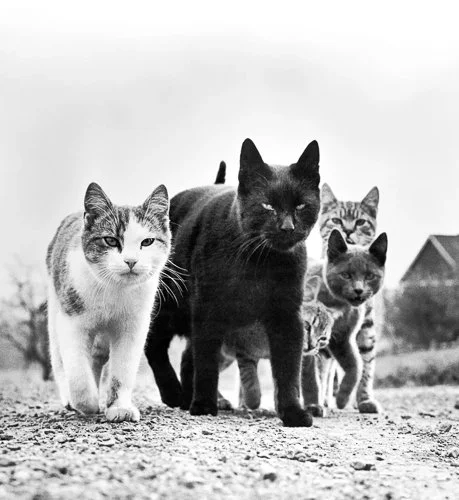
What distinguished Chandoha's work technically was a set of principles so consistent across his career as to constitute an aesthetic philosophy: natural light; eye level with the subject; patience as the primary working method; no tricks, no manipulation, no apparatus of control.
He photographed cats from the ground, at their eye level, because he understood that the downward angle of a standing human with a camera diminished the animal. He worked in available light because he understood that flash and artificial lighting disturbed the natural behaviour he was attempting to record.
He waited, sometimes for a long time, because he understood that a cat's expressive moments could not be manufactured or directed, only anticipated. The resulting photographs were technically accomplished, emotionally direct, and commercially enormously successful. Chandoha died on 11 January 2019, aged ninety-eight, having completed his final retrospective — Cats. Photographs 1942–2018, published posthumously by Taschen — in the last year of his life.
Elliott Erwitt (1928–2023) approached animal photography from a position of established documentary seriousness that Chandoha, who came to photography specifically through cats, never had to negotiate. Born Elio Romano Ervitz in Paris in 1928 to Russian-Jewish parents, Erwitt spent his childhood in Milan before emigrating to the United States in 1939 as fascism made Europe inhospitable to his family.
He joined Magnum Photos in 1953, the year he turned twenty-five, and spent the following seven decades as one of the agency's most prominent members, photographing Marilyn Monroe, Nikita Khrushchev, John F. Kennedy, and the social texture of post-war American life with a visual intelligence characterised by what the International Center of Photography described as 'benevolent irony'. He died on 29 November 2023 at his home in Manhattan, aged ninety-five.
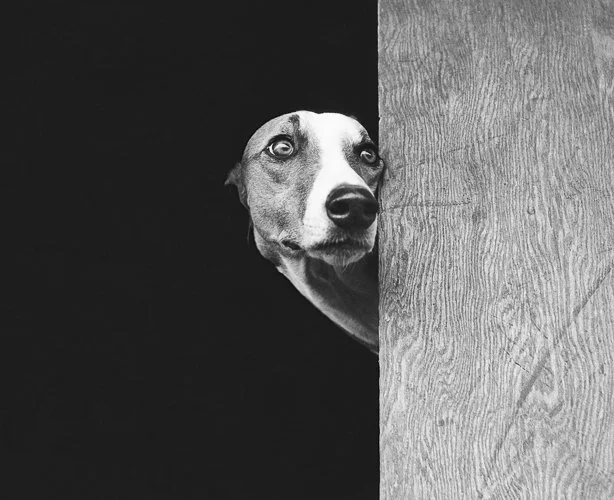
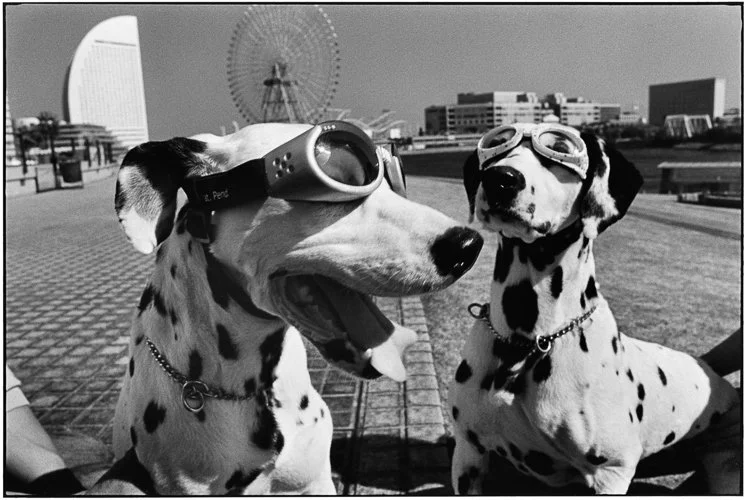
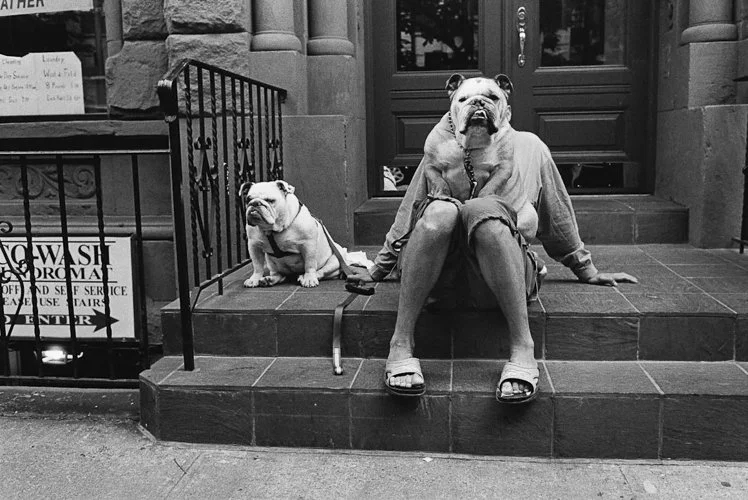
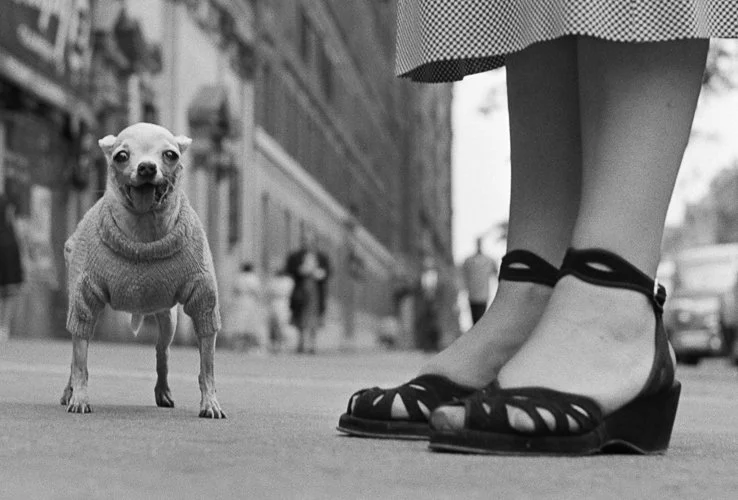
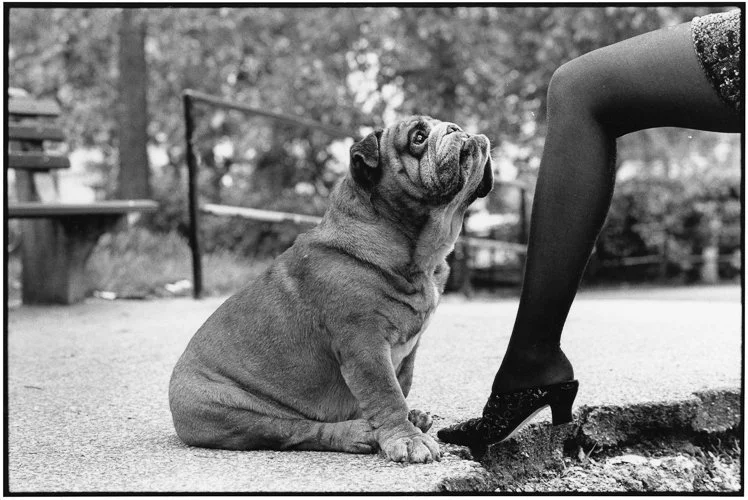
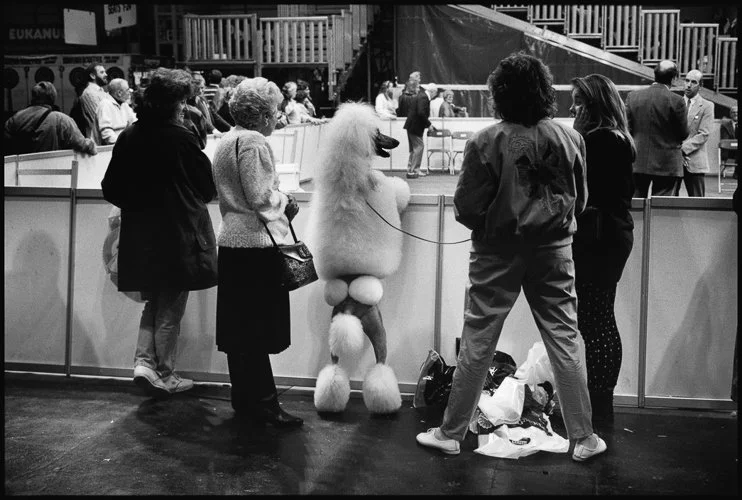
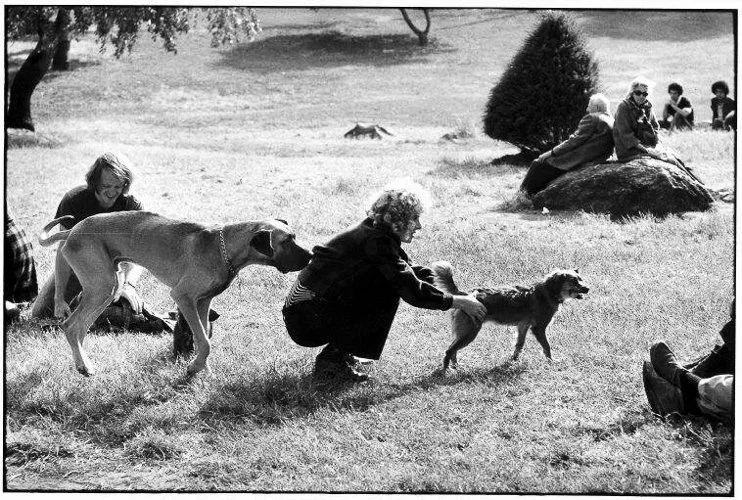
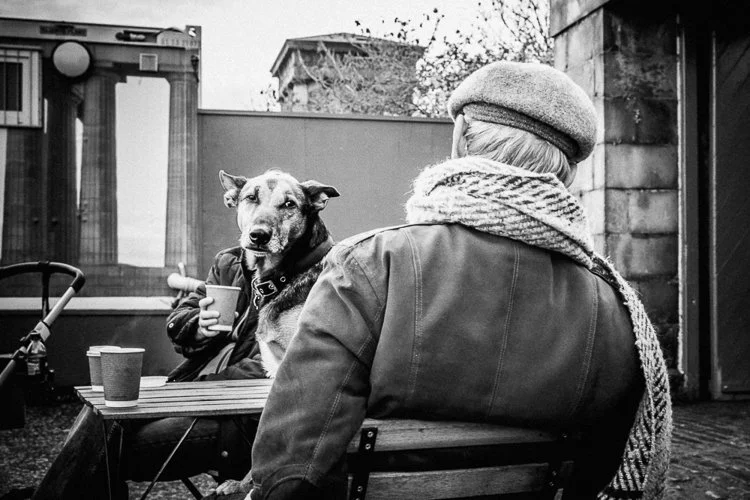
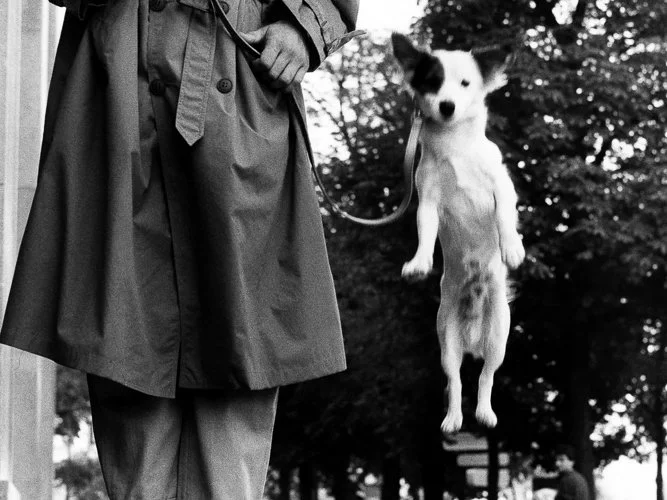
Erwitt's dog photographs are best understood as a component of his broader humanist documentary practice rather than as a separate speciality. When, reviewing his archive in the late 1980s for a retrospective, he found himself surprised by the number of dogs on his contact sheets, he was discovering a persistent sympathy that had expressed itself throughout his career without ever being consciously cultivated.
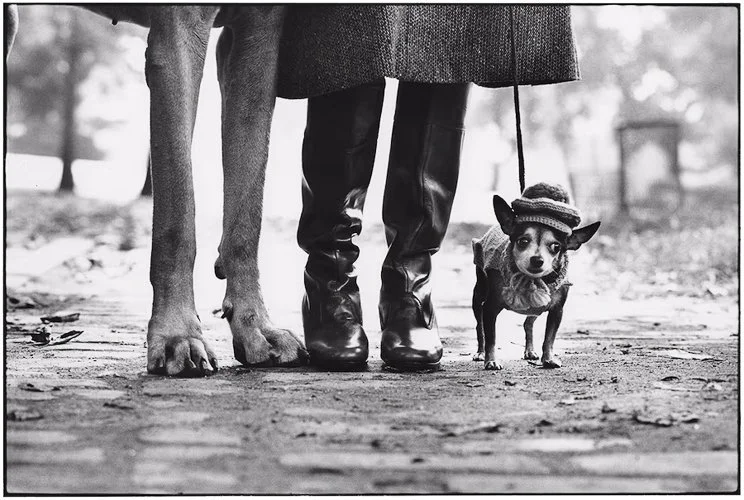
The dogs in Erwitt's images are rarely subjects in isolation; they are almost invariably photographed in relation to their human companions or their urban environments, and the interest of the images frequently lies in the comment the animal's presence makes on the human situation around it.
A dog photographed from ground level beside the legs of its owner and a larger dog makes a remark about scale and social hierarchy; a dog peering over the edge of a bed makes a remark about companionship and domestic arrangement. The wit is deadpan, the economy is absolute, and the animal is always a fully present participant in an observation about human life.
Erwitt published five books of dog photography between 1974 and 2008, including To the Dogs (1992) and Dog Dogs (1998); Snaps, his collected photographs, appeared in 2001. He noted, with characteristic lightness, that he appreciated dogs as photographic subjects partly because 'they don't object to being photographed and they also don't ask for prints'.
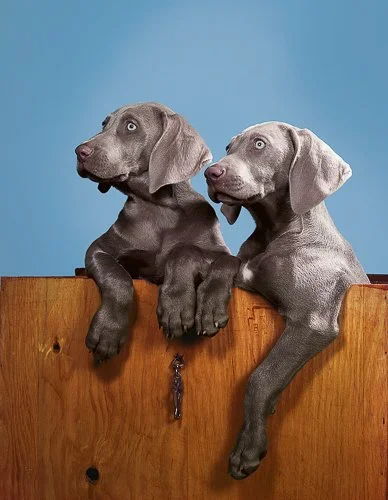
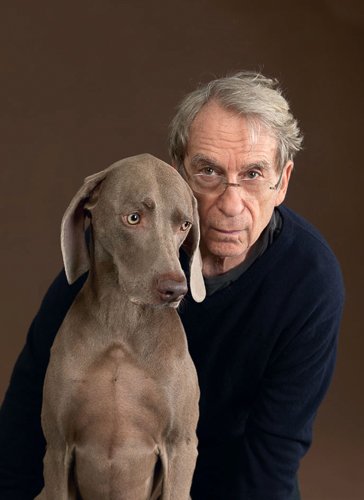
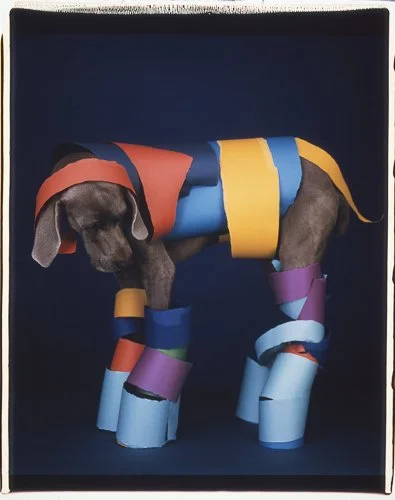
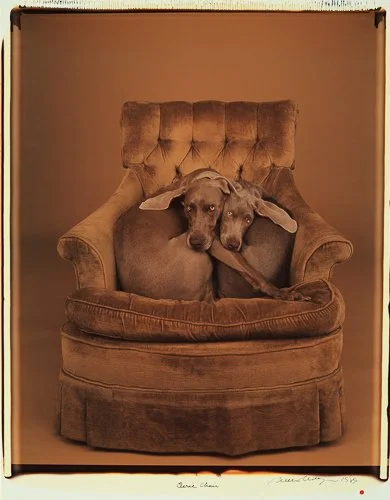
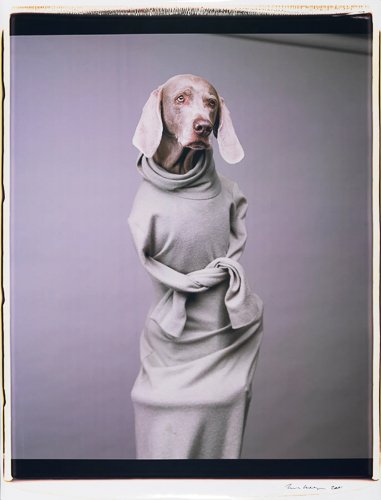
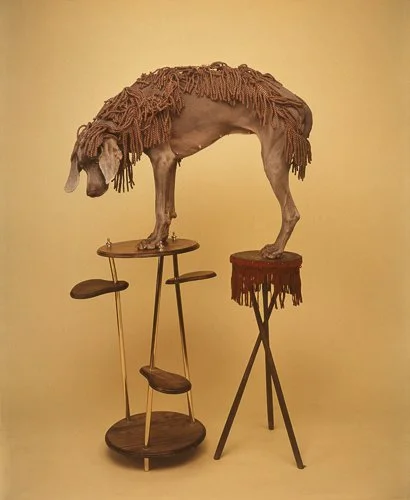
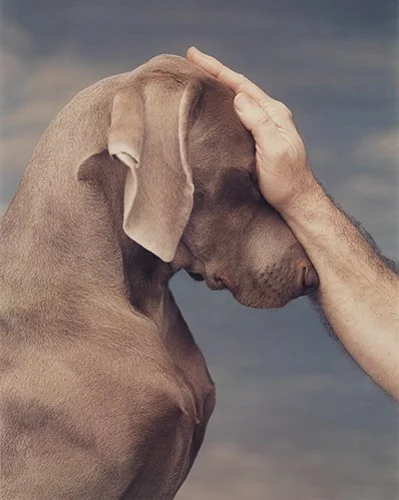
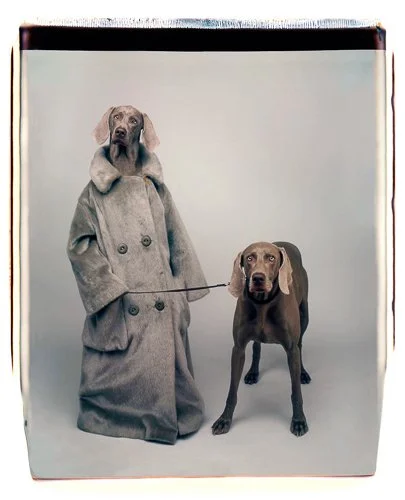
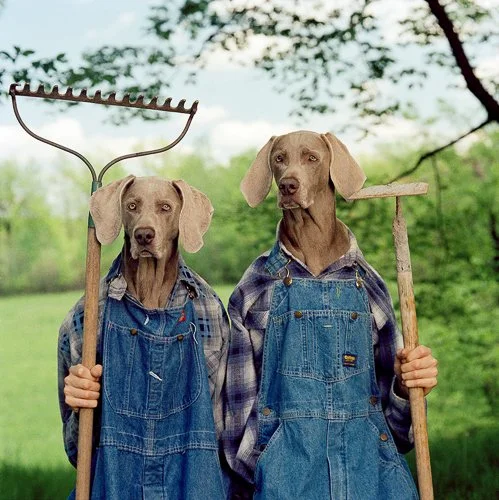
William Wegman (born 1943) occupies a position in pet photography that is genuinely difficult to classify, and that difficulty is, in part, the point. Born in Holyoke, Massachusetts in 1943, Wegman studied painting at the Massachusetts College of Art (BFA, 1965) and the University of Illinois (MFA, 1967) before beginning to exhibit work in museums and galleries internationally in the early 1970s.
His involvement with dogs as photographic and video subjects began around 1970, when he acquired his first Weimaraner — a dog he named Man Ray, after the Surrealist artist — while teaching at California State College, Long Beach. Man Ray became, over the following twelve years until his death from cancer in 1982, the central subject and, in Wegman's own characterisation, the central collaborator of his photographic and video practice. (Man Ray was named 'Man of the Year' by The Village Voice in 1982, the year of his death.)
Wegman's early work with Man Ray was made in video and in small-format photographs: conceptual pieces in which the dog's presence served as a deadpan foil to absurdist actions or verbal gags. From 1986, when Wegman acquired Fay Ray — named in joking tribute to her predecessor — his practice shifted towards the large-format 20×24 Polaroid camera, working in the Polaroid studio with printer John Reuter.
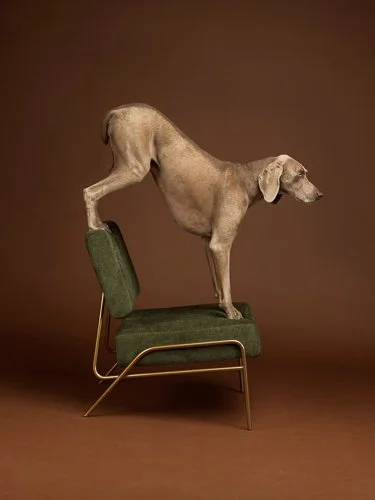
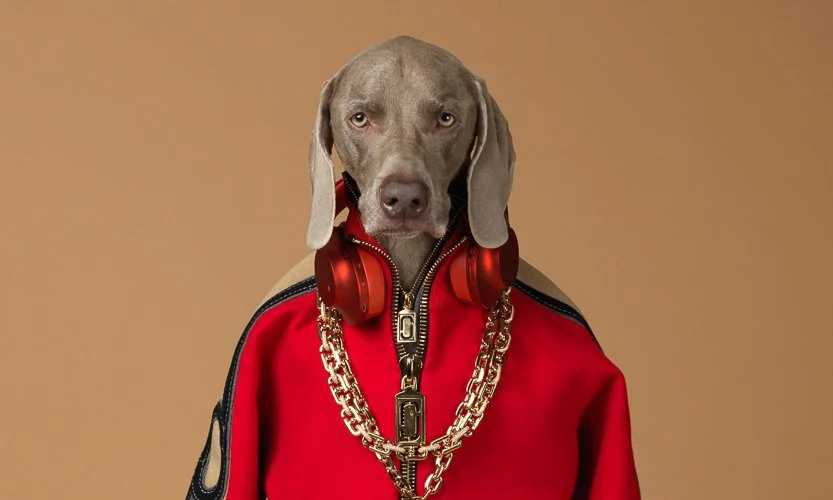
The resulting prints, made at a scale associated with fine-art painting, depicted Wegman's Weimaraners in human costumes and scenarios: dressed in period clothing, posed as characters from fairy tales and art history, arranged in tableaux that referenced everything from fashion photography to Old Master portraiture. Fay Ray's litter was born in 1989, and from that point Wegman worked with an extended family of Weimaraners — Battina, Crooky, Chundo, Chip, Bobbin, and eventually Flo, with whom he continues to work. The children's books that followed — Cinderella, Little Red Riding Hood, ABC, Mother Goose, and others — extended the work into new contexts and audiences.
The crucial distinction between Wegman's practice and Victorian anthropomorphism, or for that matter the earlier tradition of Harry Pointer's staged cats, is one of self-awareness.
Pointer's photographs pretended, however unsuccessfully, that the cats were actually doing what they appeared to be doing: roller-skating, writing letters, attending tea parties. The humour depended on the fiction, however transparent. Wegman's Weimaraners are clearly performing roles; the dogs wear costumes but they do not pretend to be human beings, and the comedy and the pathos of the images derive entirely from the dog's impassive dignity within the absurd scenario.
It is the dog's evident awareness that something unusual is being asked of it, combined with its apparent willingness to comply, that generates the affective quality of the work. The question of whether Wegman's practice constitutes fine art, commercial photography, children's illustration, or conceptual art is one that the work consistently refuses to answer, and this refusal is arguably its most sophisticated quality.
Wegman produced video work for Saturday Night Live in the 1970s and has created video segments for Sesame Street regularly since 1989. He lives in New York and Maine and continues to photograph with his current dog, Flo.
Contemporary Practice
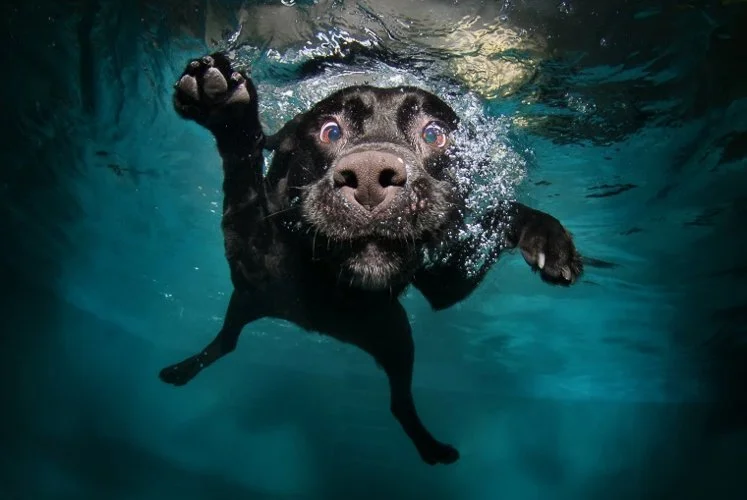
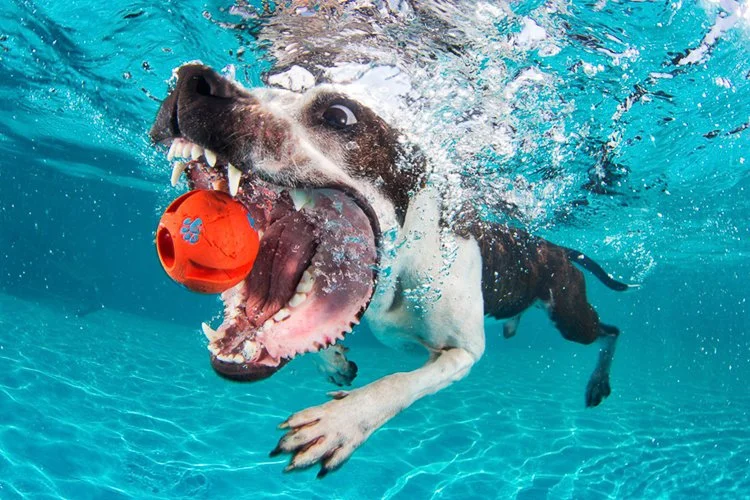
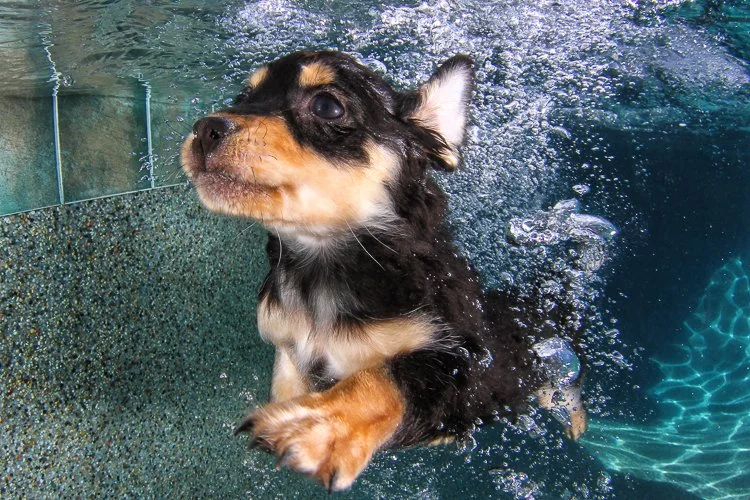
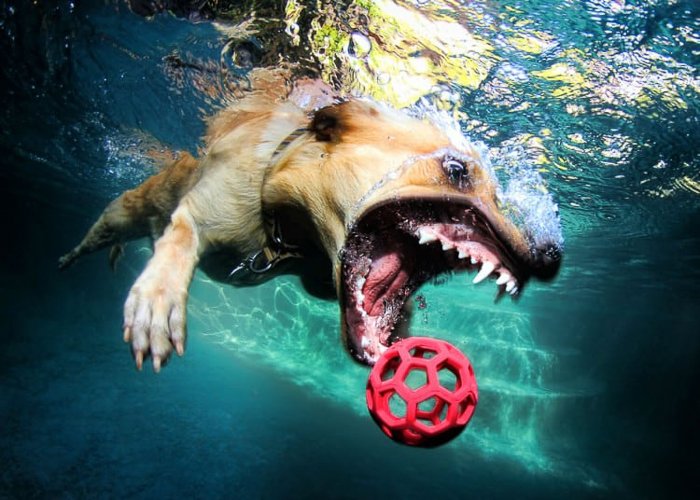
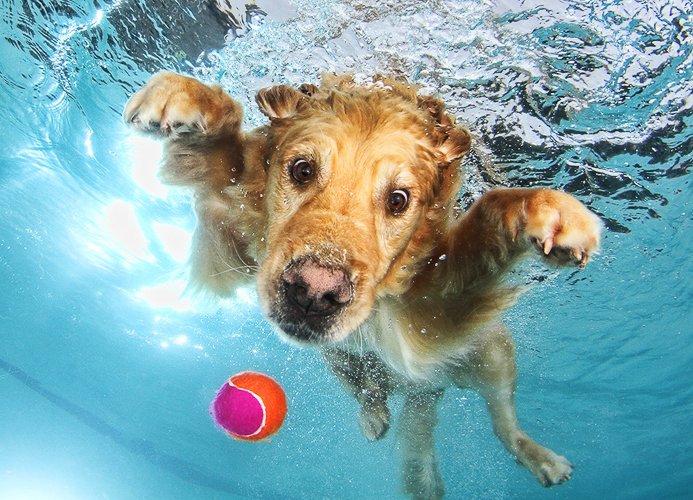
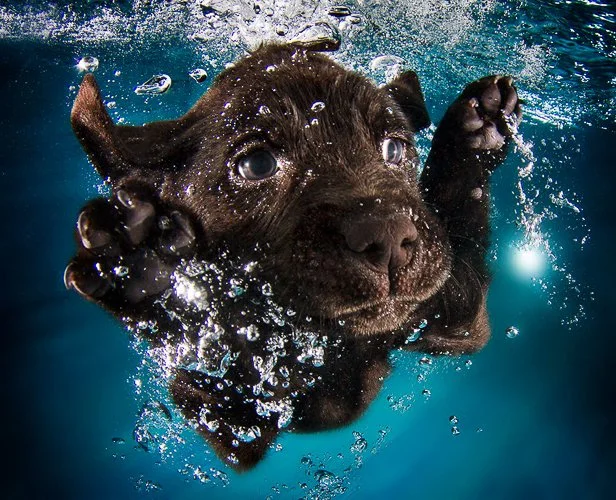
Seth Casteel is an American photographer whose Underwater Dogs series became one of the most widely circulated photography projects of the early social media era. The series originated in 2010 when Casteel was photographing a Cavalier King Charles Spaniel named Buster, who repeatedly threw himself into a swimming pool in pursuit of a ball.
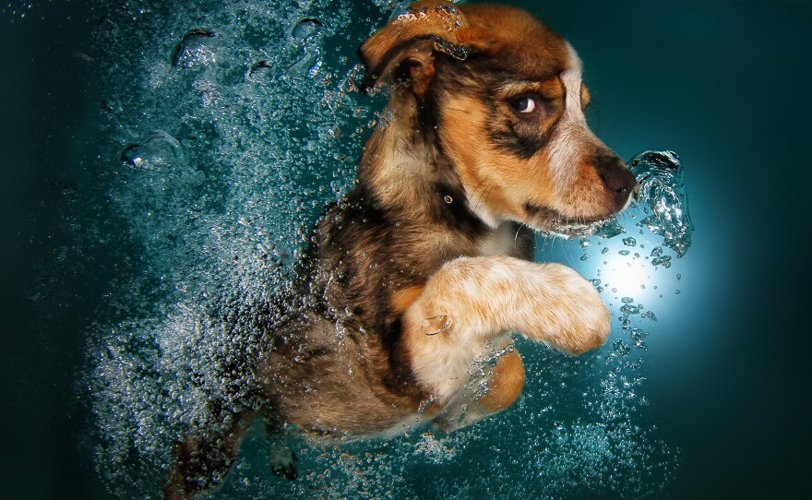
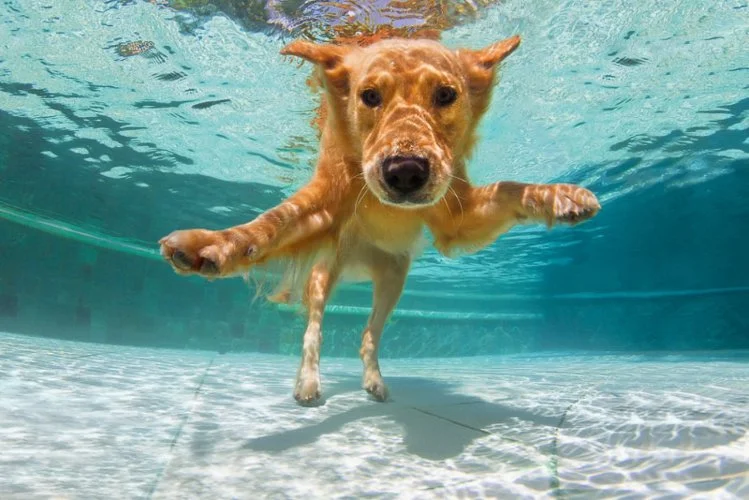
Intrigued by what the dog might look like beneath the surface, Casteel began photographing from below the water line, capturing dogs at the moment of entry — faces compressed by the pressure of the water, expressions contorted into concentrations of effort and joy, bodies in various states of mid-dive extension. The images combined the distorting effects of the water surface and the dogs' extraordinary expressions with the technical precision of underwater photography to produce something genuinely new: a perspective on familiar animals that no one had thought to seek before.
The book Underwater Dogs was published on 23 October 2012 by Little, Brown and Company, became the best-selling photography book of that year, and reached the New York Times bestseller list. Underwater Puppies followed in 2014 and Underwater Dogs: Fetch in 2020. Casteel's background in animal care — he had worked extensively in animal welfare before turning to photography — informed both his ability to work safely with dogs in water and the welfare-conscious approach he brought to sessions.
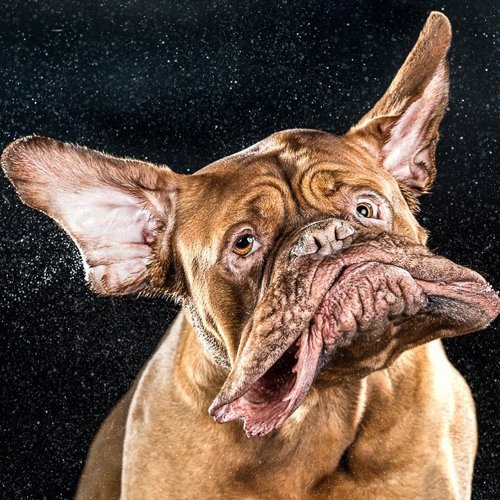
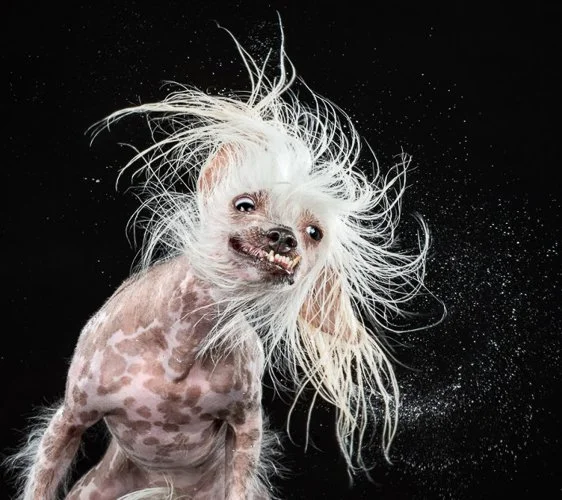
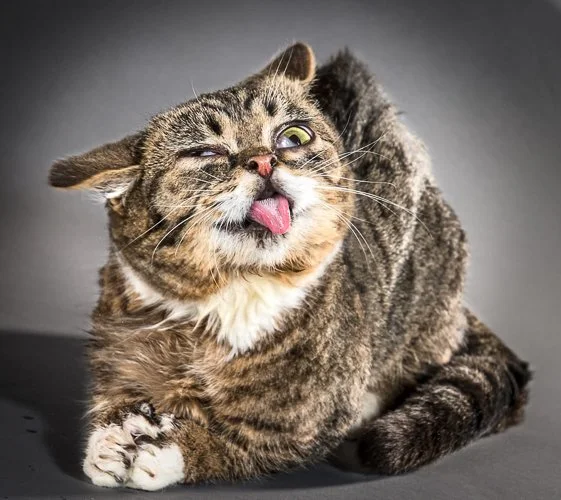
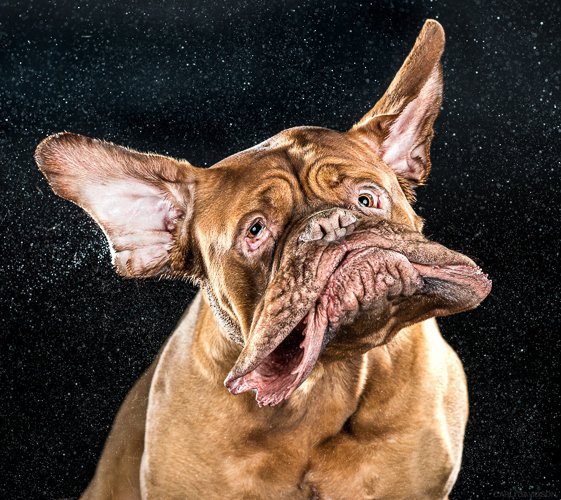
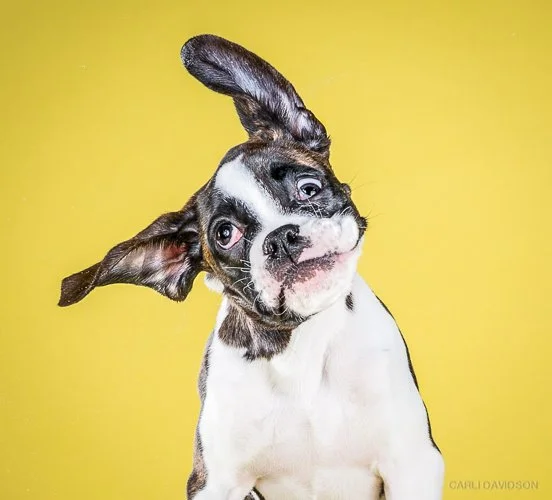
Carli Davidson is a Portland-based American photographer who became known internationally for the Shake series: dogs photographed at the precise moment of shaking water from their coats. The project originated from Davidson's observation of her own Dogue de Bordeaux, Norbert, who was in her description 'an epic shaker', and from her curiosity about what the motion looked like in frozen detail.
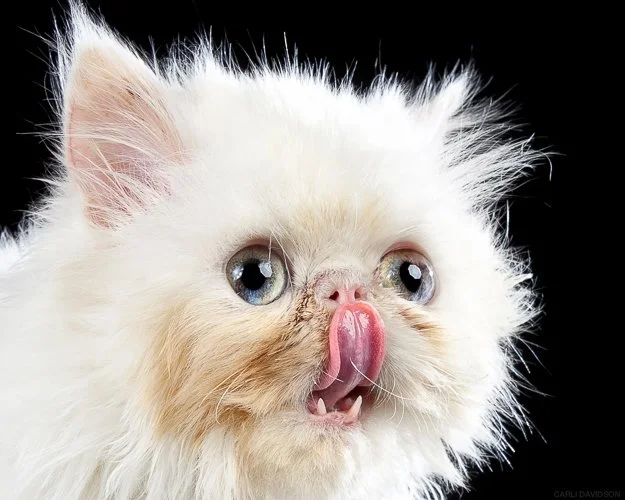
The technique required high-speed flash to arrest the motion at a moment of maximum jowl distortion — ears suspended horizontally, lips rippling outward, droplets scattered in arc patterns around the dog's head — producing images that are simultaneously accurate and wholly unlike any image of a dog that observation alone could yield. Davidson photographed over 120 dogs for the series and later applied the same technique to cats in a follow-up body of work, Shake Cats.
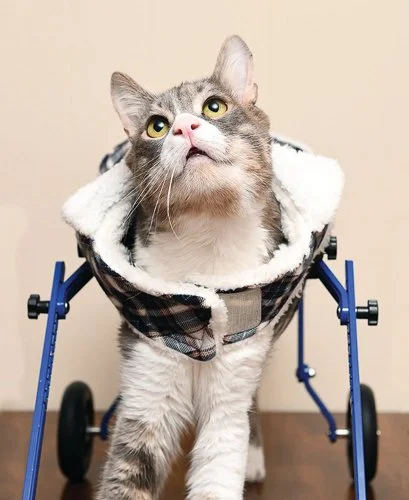
The series produced a book published as a New York Times bestseller. Davidson's technical precision was grounded in practical animal knowledge: she had spent seven years as an animal care technician and conservation educator at the Oregon Zoo before turning to photography, and she built an approach to sessions that factored thirty to forty-five minutes of relationship-building with each animal before any photographs were made. Her subsequent series Invincible examined disabled pets and their owners.
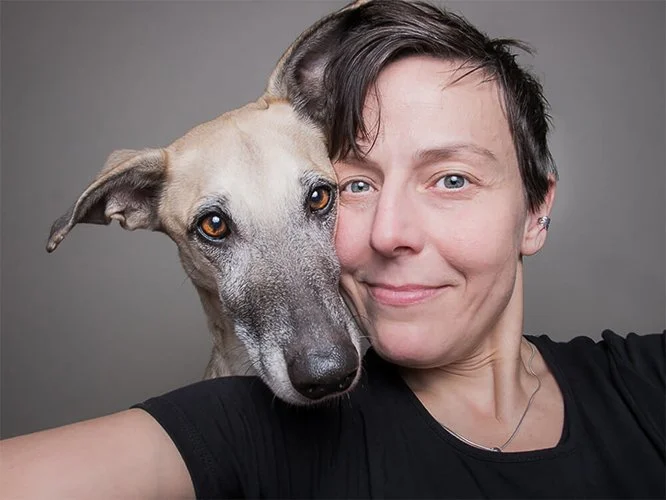
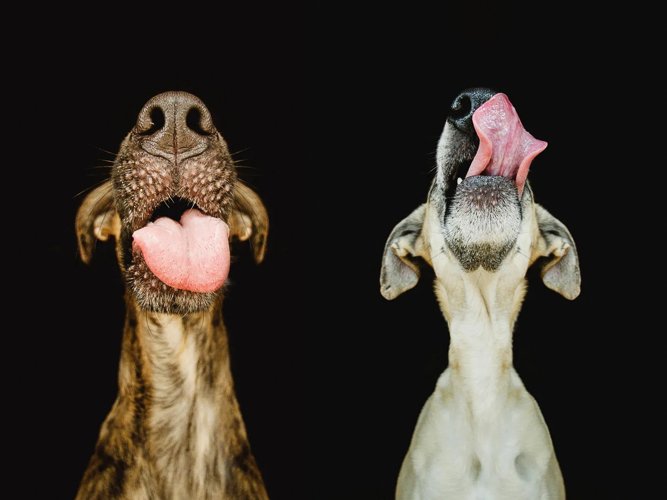
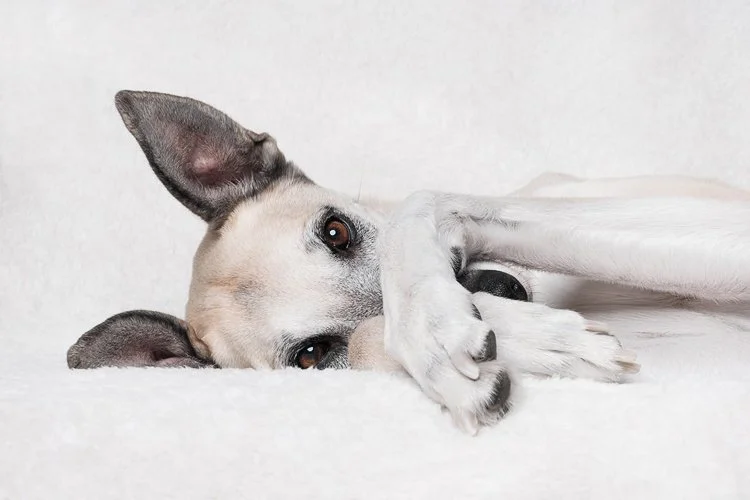
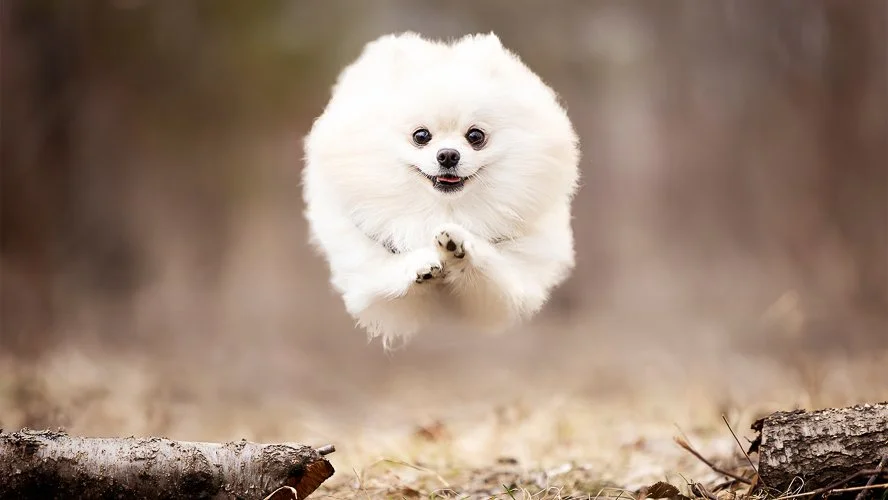
Elke Vogelsang is a German photographer, born in Hildesheim in 1972, who has become one of the most recognised practitioners of expressive dog portraiture. Her photographic career developed after acquiring her first dog, Noodles, and finding her existing technical skills inadequate to capture the animal's character.
The distinctive qualities of her work — shallow depth of field, muted colour tones, an unusually close working distance that gives her subjects a quality of direct address rarely achieved in animal portraiture — developed over the course of shooting more than one hundred breeds and assembling a portfolio of over 1,400 images.
Her approach is notably anti-spontaneous in its preparation, though entirely spontaneous in its execution: Vogelsang spends time with a dog before any photography begins, establishing sufficient familiarity for the animal to behave naturally in her presence. The resulting images frequently capture expressions of considerable emotional complexity.
Her work has appeared in National Geographic, The Daily Telegraph, and The Huffington Post, among many other publications, and she published the collection Nice Nosing You in 2015. Her commercial clients have included Pedigree, Fujifilm, and Medion.
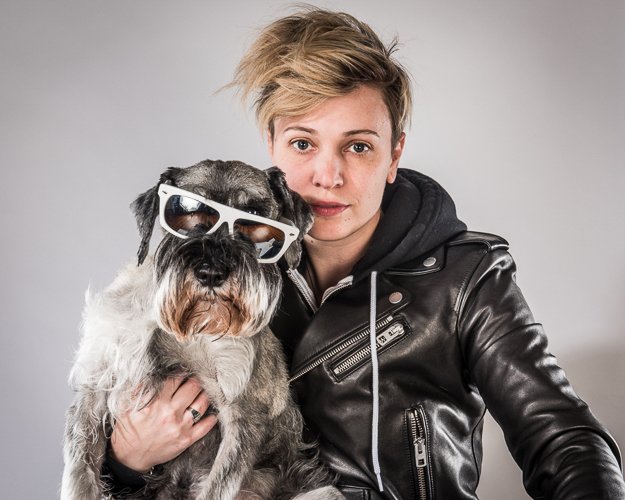
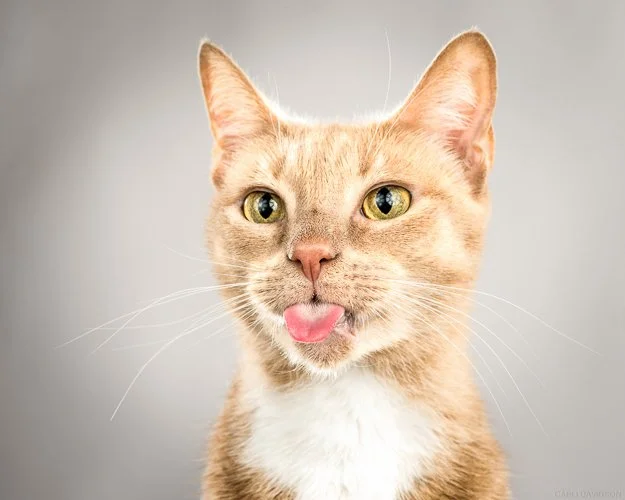
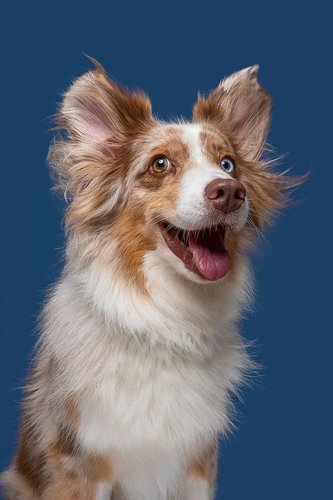
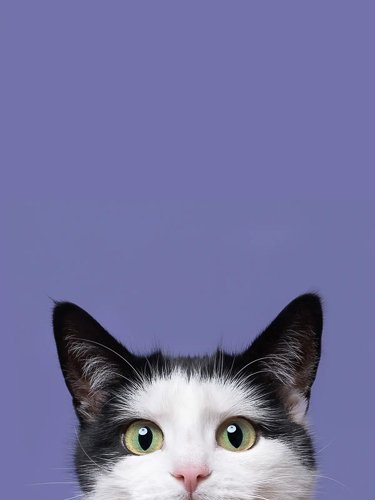
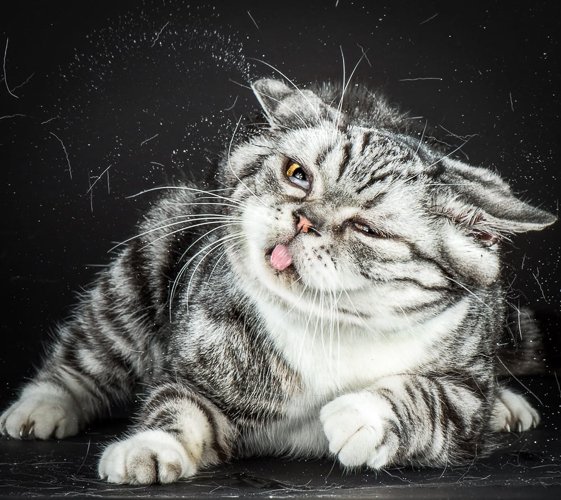
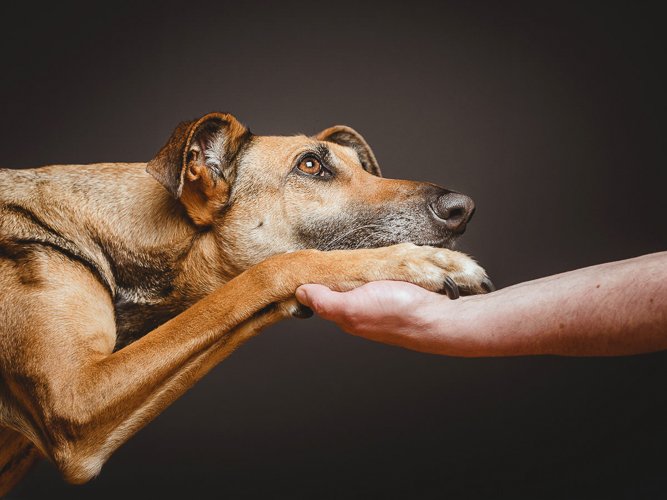
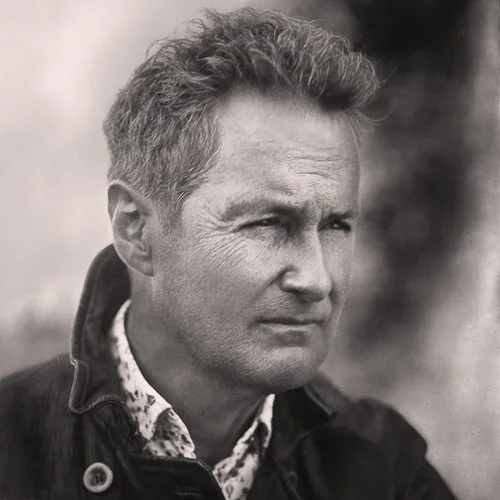

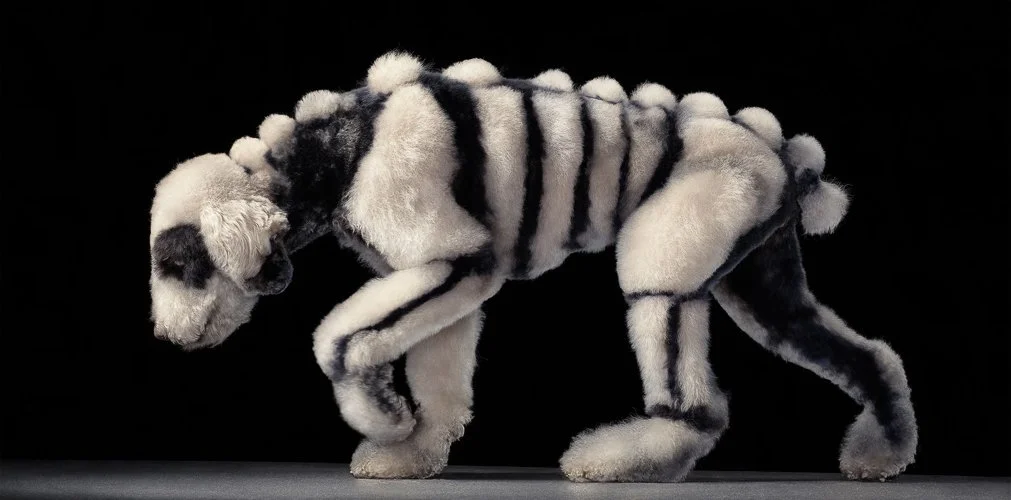
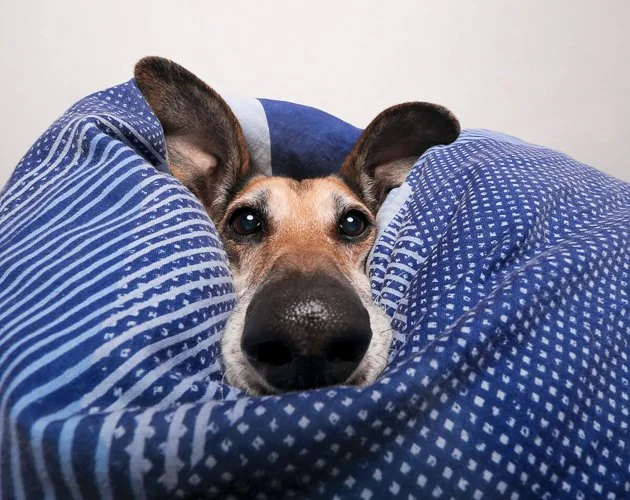
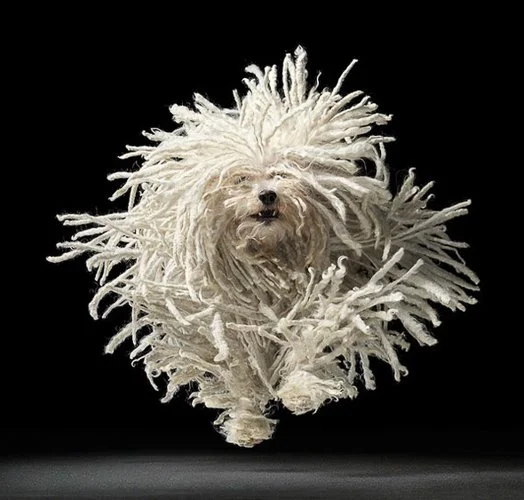
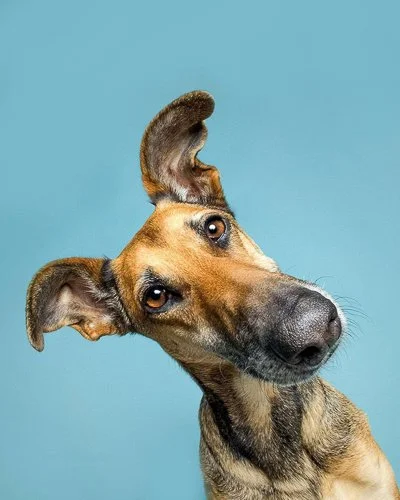
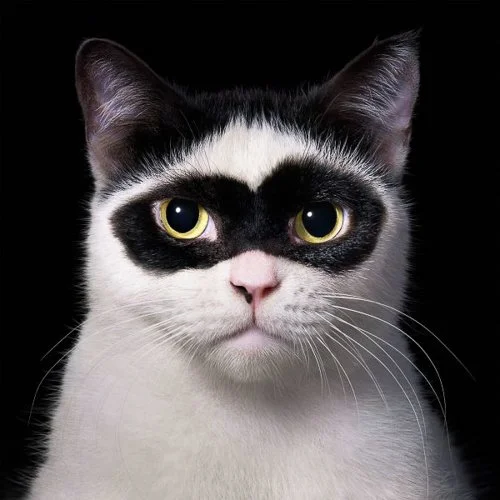
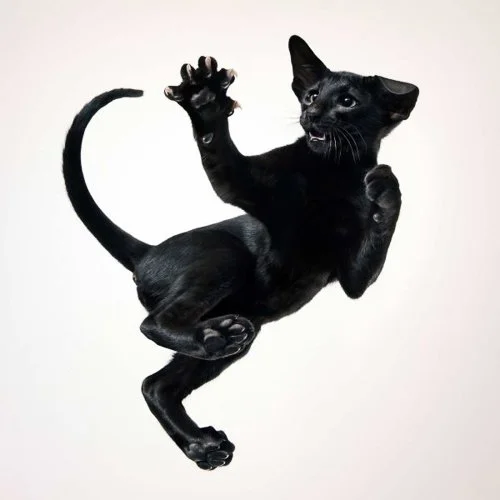
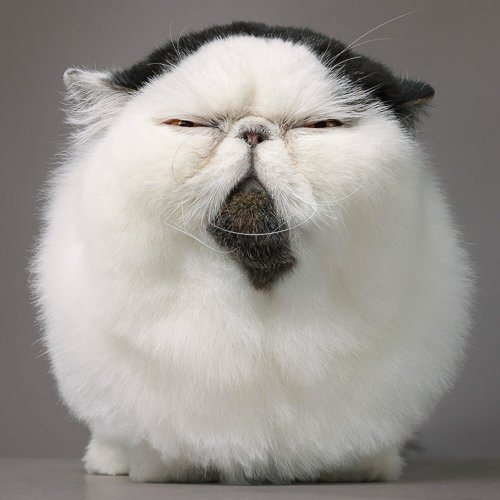
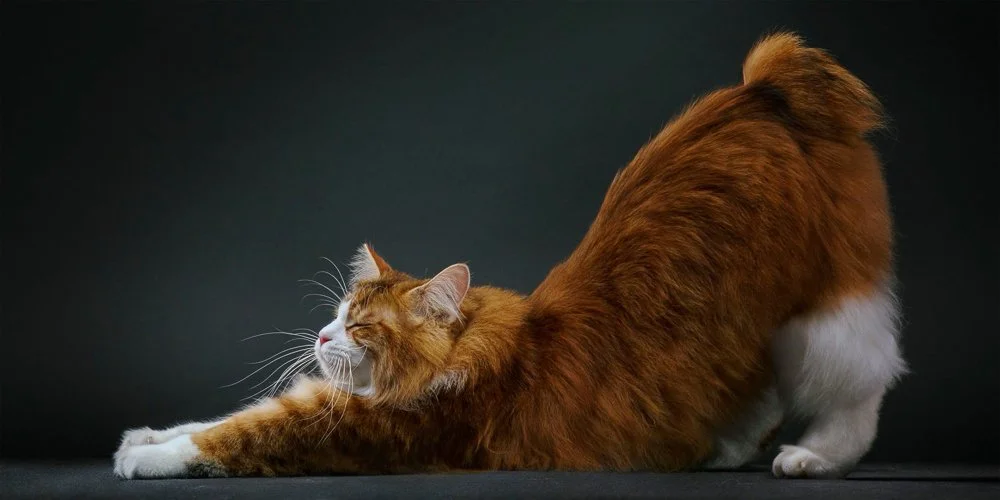
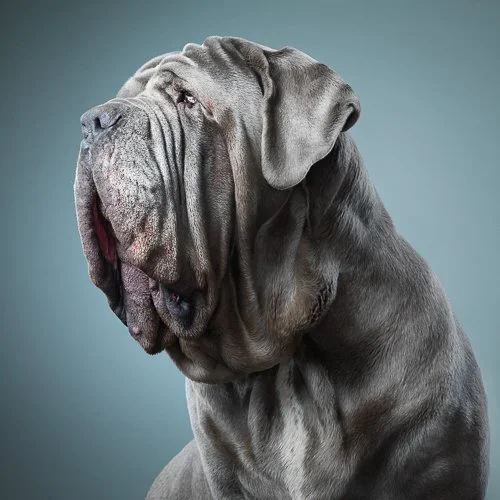
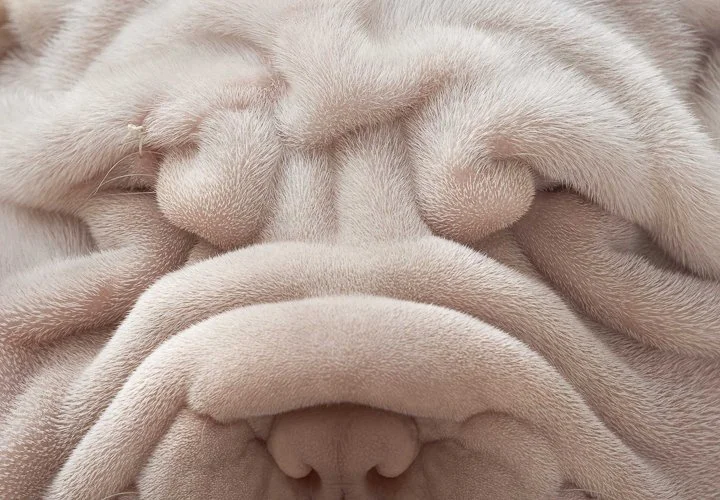
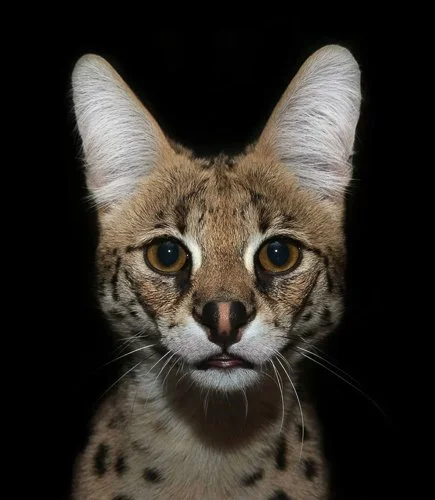
Tim Flach (born 1958) is a British photographer whose animal work differs from virtually every other practitioner in this survey in the rigour and formality of its studio method. Based in London, Flach photographs animals — domestic and otherwise — against controlled backgrounds, with precisely managed studio lighting and the full apparatus of production normally associated with high-end human portraiture.
The effect is to remove the animal from any context, environmental or narrative, and to present it as a formal subject demanding the same quality of visual attention one brings to a portrait by Karsh or Irving Penn. His book Dogs Gods (2010), the title a considered inversion that positions the dog as a subject of human reverence as much as human affection, examined canine diversity and the evolving relationship between human culture and the animals shaped by millennia of selective breeding. His book Cats (2013) applied the same formal approach to feline subjects.
More than Human (2012) and Endangered (2017) extended his practice to a wider range of species with increasing urgency about ecological loss. His work has been exhibited at major galleries and museums internationally and is held in permanent collections including the Victoria and Albert Museum and the Swedish Museum of Natural History.
Research has associated Flach's anthropomorphic animal portraits with measurable increases in viewer empathy towards animal subjects — a function that he takes seriously alongside the purely aesthetic aims of the work. His work consistently inhabits the overlap between commercial photography, fine art, and natural history, and is not satisfactorily categorised by any of those three terms alone.
Sophie Gamand (born 1977) is a French photographer based in New York who has worked systematically to use pet photography as an instrument of advocacy. Moving to New York in 2010, Gamand was confronted with the scale of animal suffering in the city's shelter system and began making portraits of shelter dogs designed to transform the conditions under which they were perceived by potential adopters.
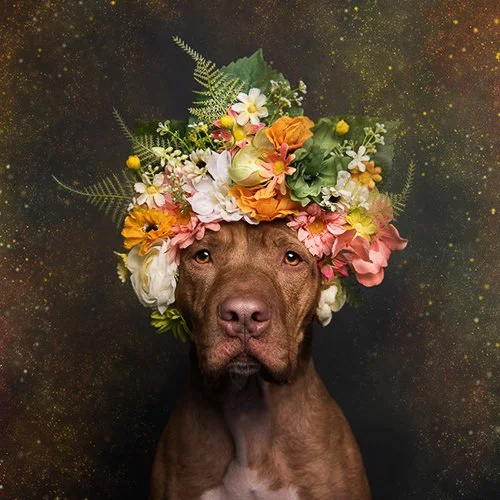
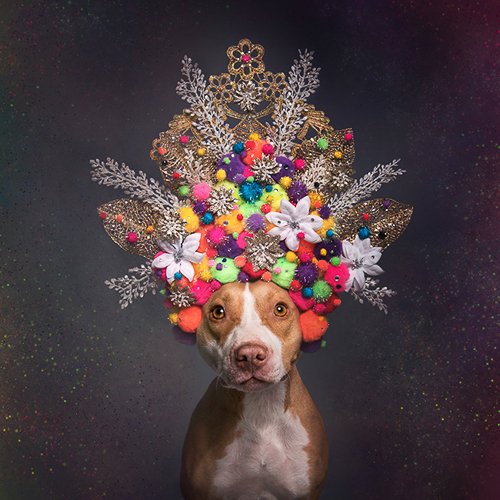
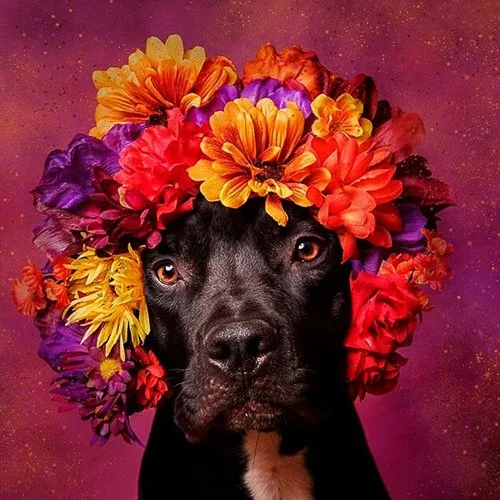
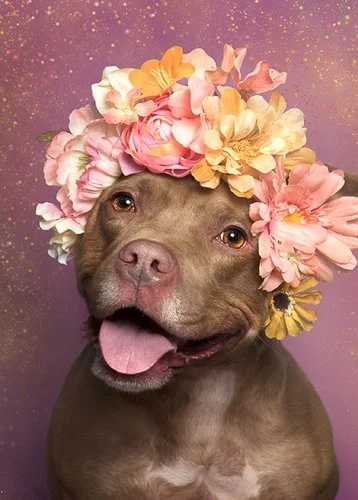
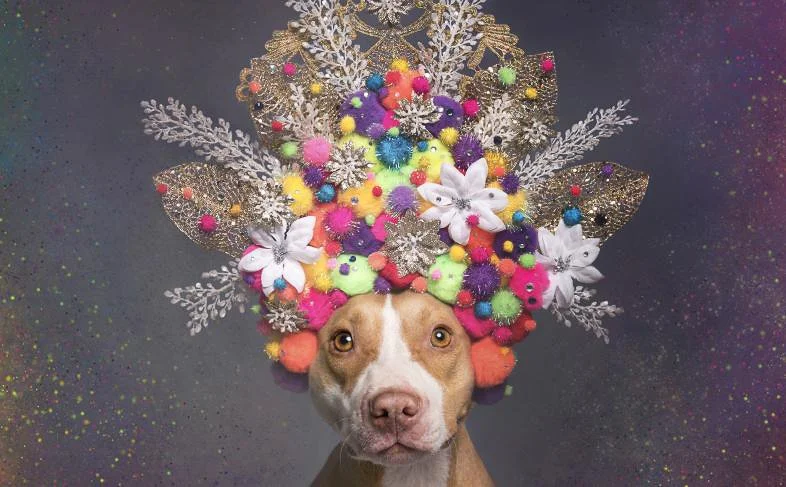
Her Flower Power series — shelter dogs photographed wearing crowns of fresh flowers, the visual vocabulary of innocence and beauty applied to animals typically depicted in the utilitarian language of the pound — went viral in 2014 and significantly raised the public profile of shelter adoption.
The series concentrated in particular on pit bulls and related breeds, which carry strongly negative public associations in many contexts; Gamand's portraits confronted those associations directly by presenting individual animals with the dignity and particularity of formal portraiture.
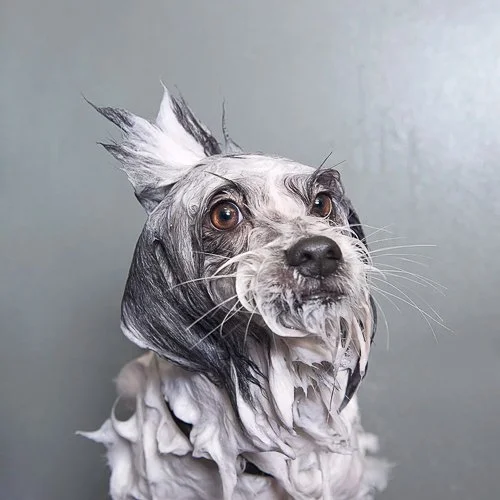
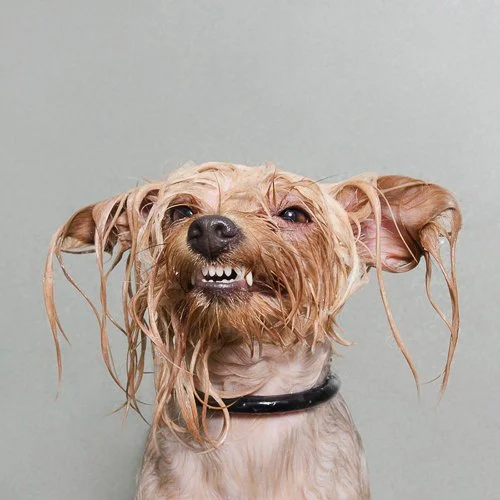
Her book Pit Bull Flower Power was published in 2018. Gamand describes her practice through an ecofeminist lens, examining the entanglement between dogs and humans as revealing of both species. She has raised substantial funds for animal welfare non-profits through her work, and has published a second collection, Wet Dog.
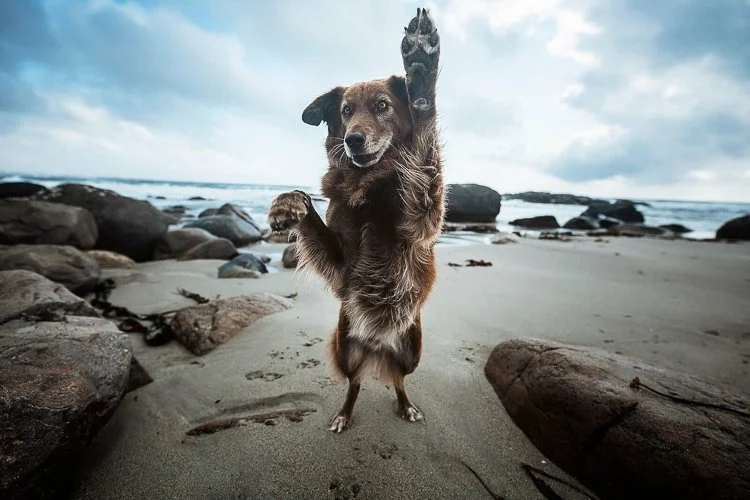
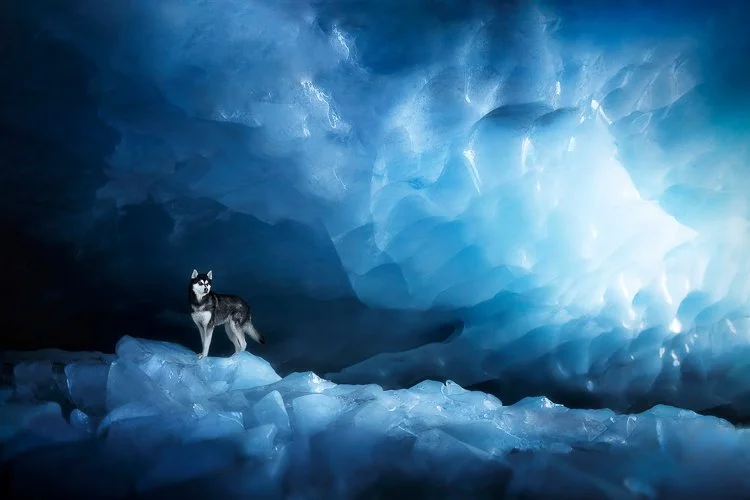
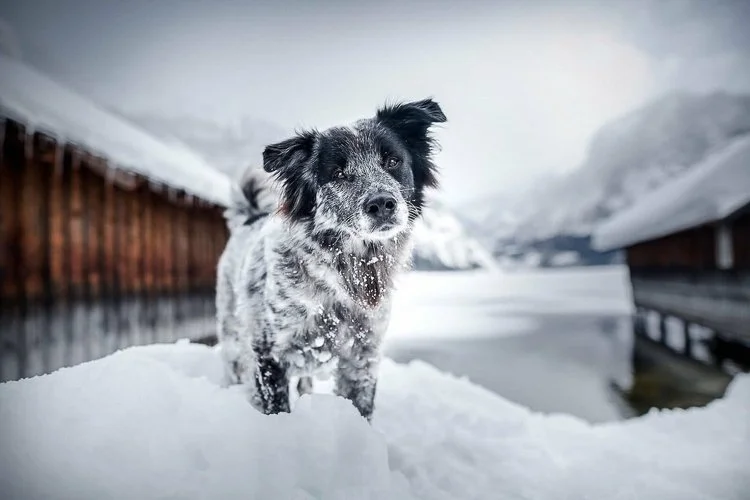
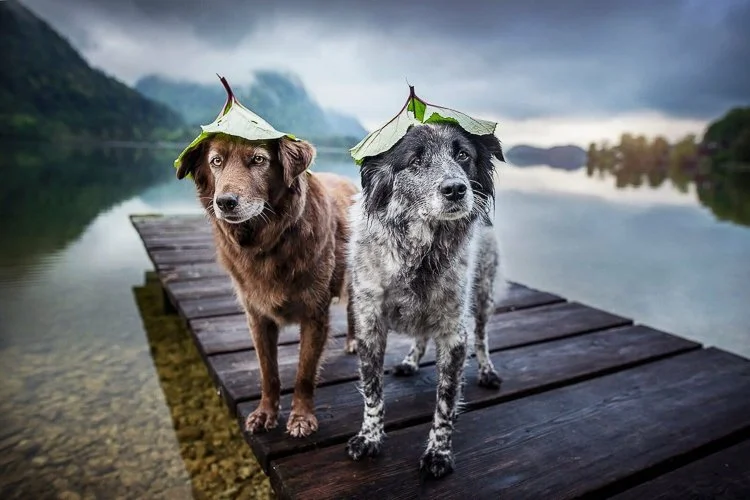
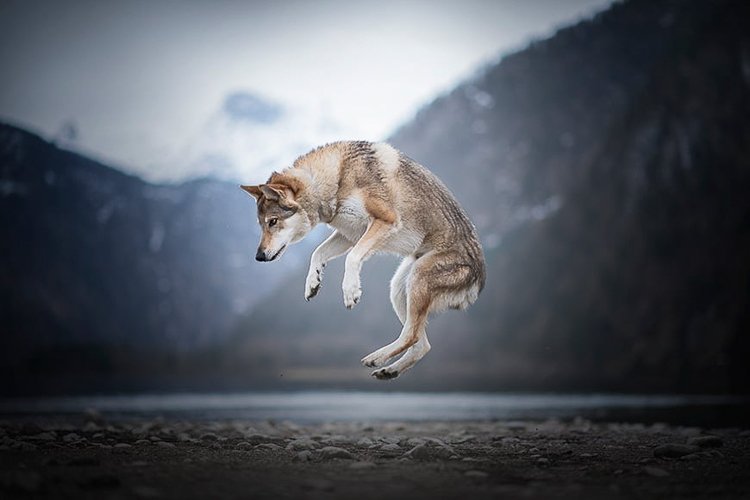
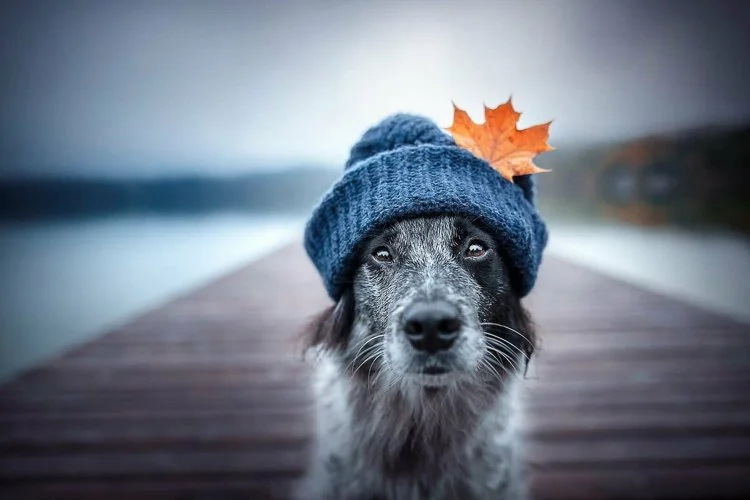
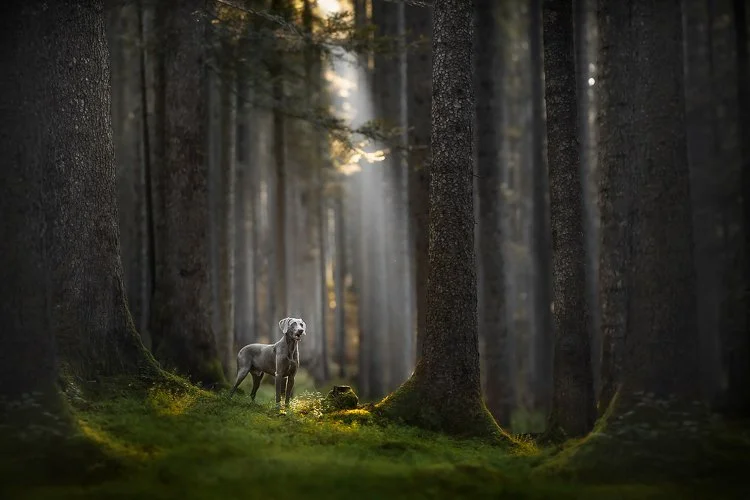
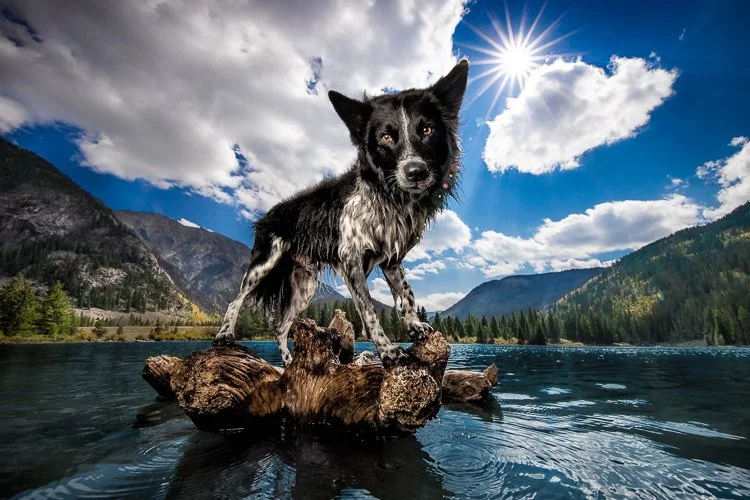
Anne Geier is an Austrian photographer whose Adventure Dogs series documents dogs as companions in outdoor recreation — hiking, mountaineering, wild swimming — across European landscapes. Her subjects, including her own dogs Finn and Yuri, are photographed in natural settings of considerable drama, including the Dolomites and alpine lake environments at significant altitude.
The series explores the contemporary role of dogs as adventure companions rather than working animals, and the emotional bond that outdoor shared experience produces between human and animal. Her work places the dog in landscape rather than the studio or the domestic interior, and the images are characterised by the scale of the natural environment against which the animal is set.
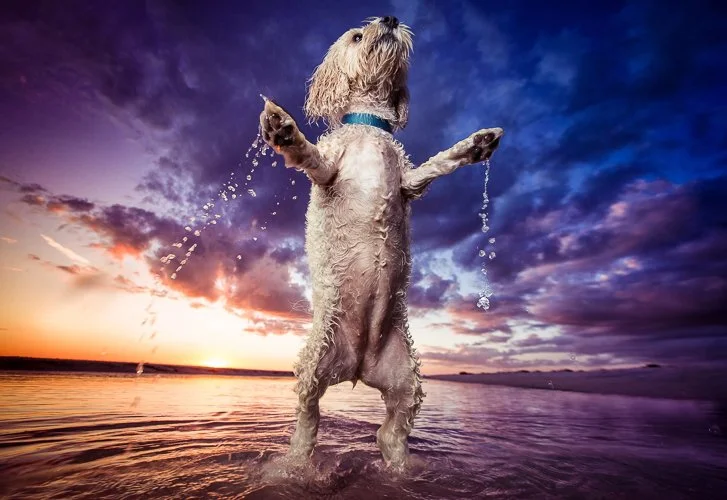
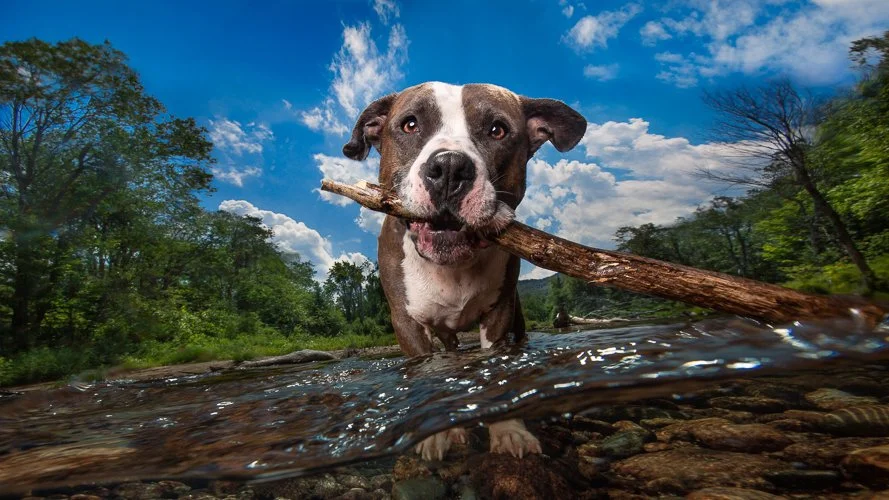
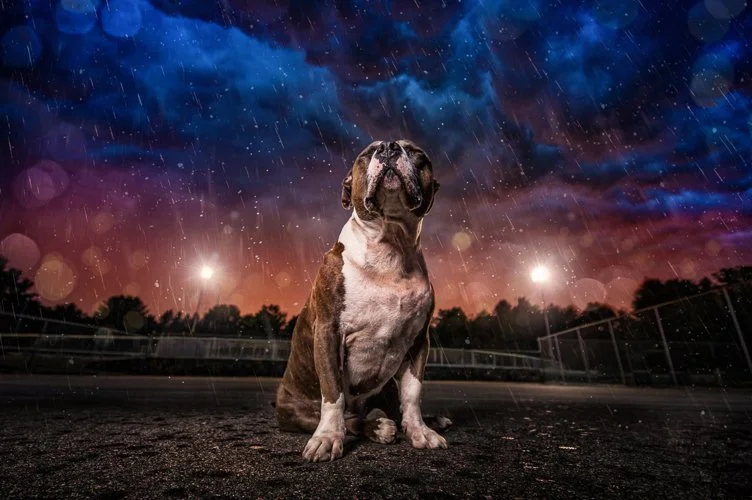
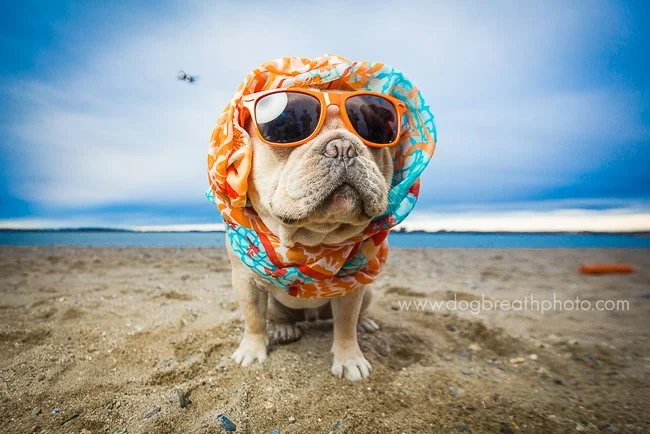
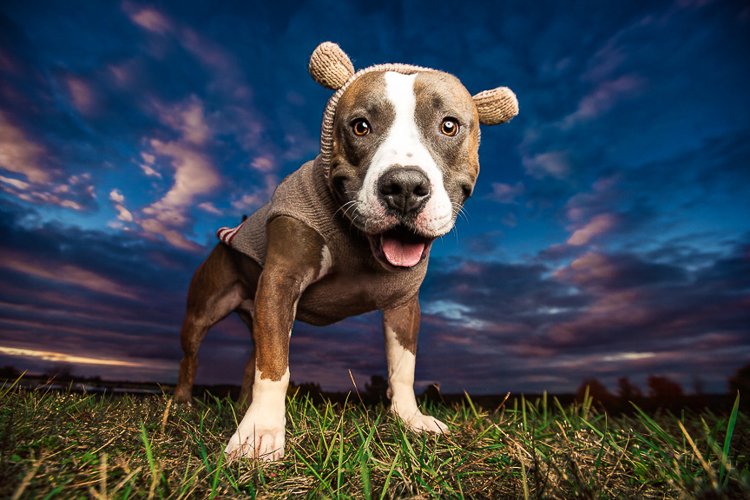
Kaylee Greer, working under the name Dog Breath Photography, is an American photographer who has established a substantial commercial and advocacy practice centred on dogs. Her signature style employs flash photography combined with high-saturation post-processing to produce images characterised by vivid colour and comedic expressiveness.
In 2018, National Geographic Wild featured Greer in the three-part television series Pupparazzi, following her work photographing shelter dogs across the United States. She founded the Dog Breath Foundation, a non-profit using photography to support shelter animal adoption, and published Dogtography: A Knock-Your-Socks-Off Guide to Capturing the Best Dog Photos on Earth in 2020.
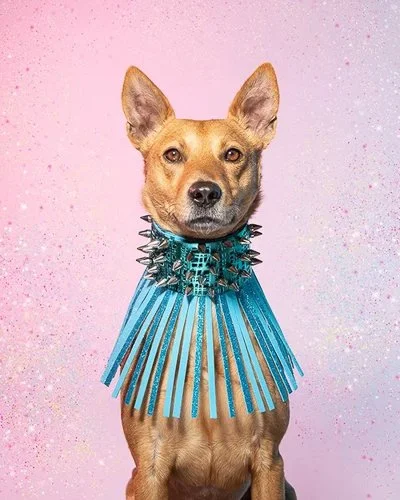
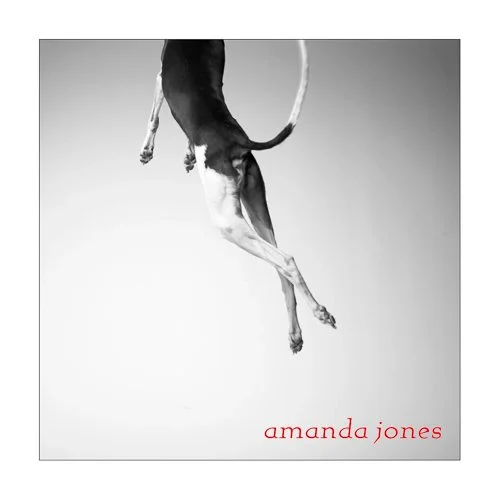
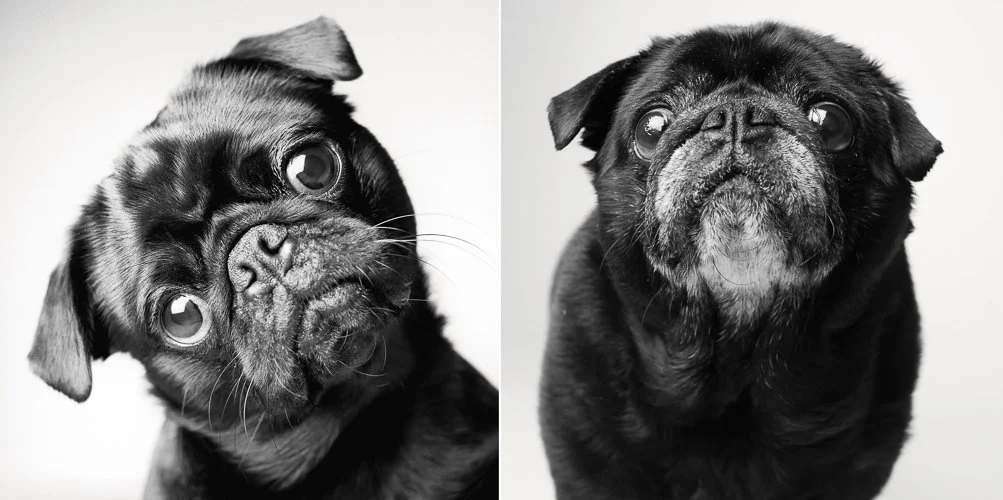
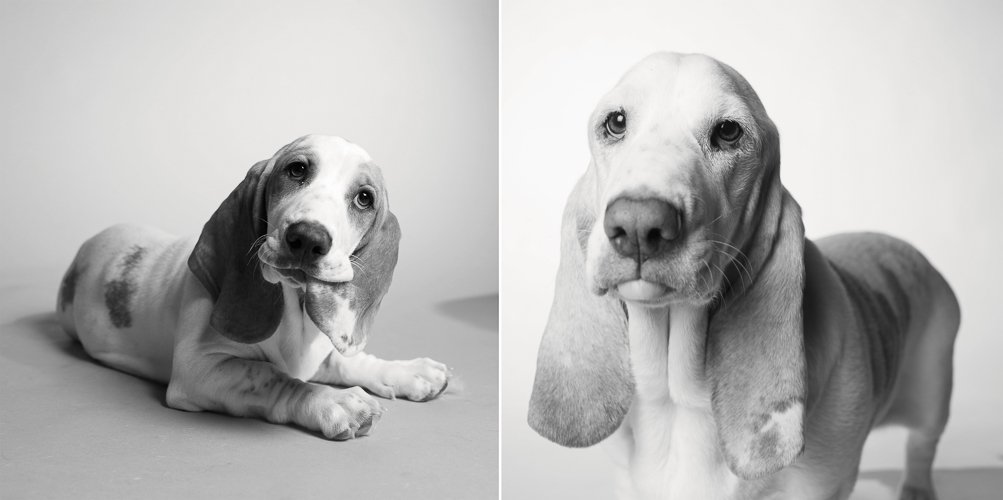
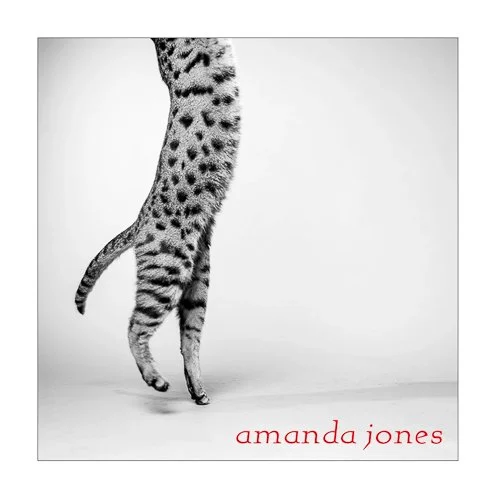
Amanda Jones is an American photographer who has operated a commercial dog photography practice — serving both private clients and major pet brands — for more than two decades from a studio in North Adams, Massachusetts. Her style emphasises simplicity and formal elegance, with particular attention to the individual expressiveness of each subject regardless of breed or scale.
She has published six books of photography with Chronicle Books, including Dog Years and Unleashed, and her commercial client list has included Pedigree, Eukanuba, Hills Science Diet, and PetPlan, among others.

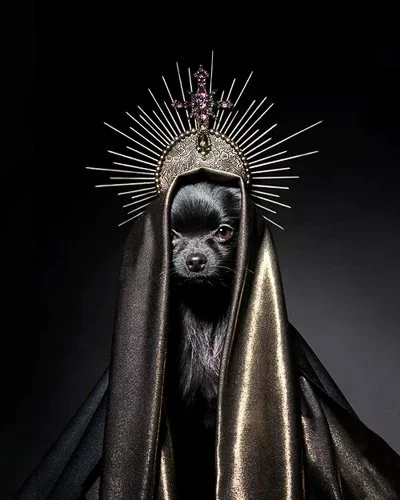
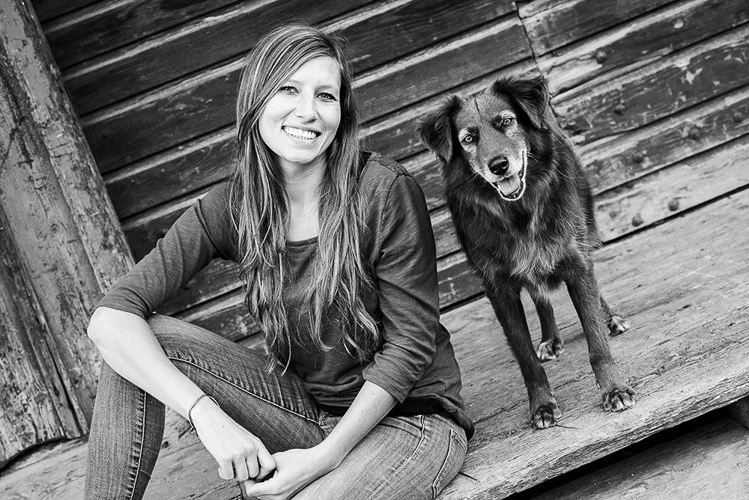

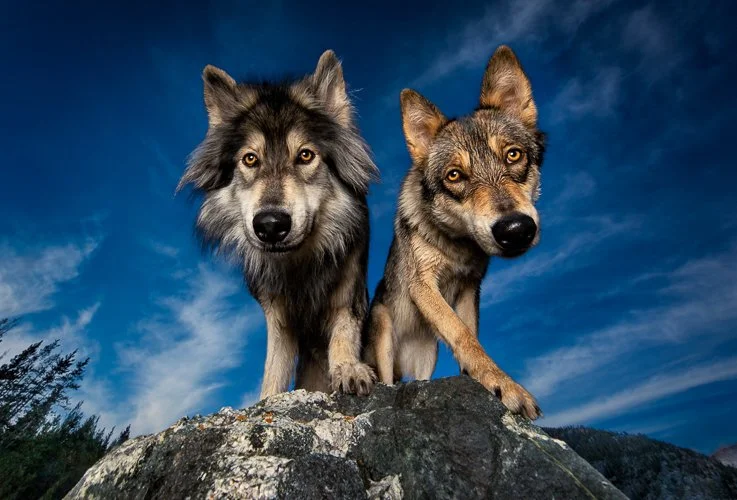
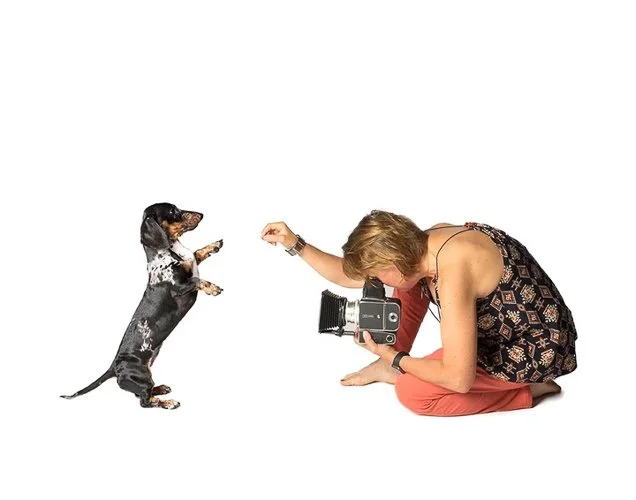
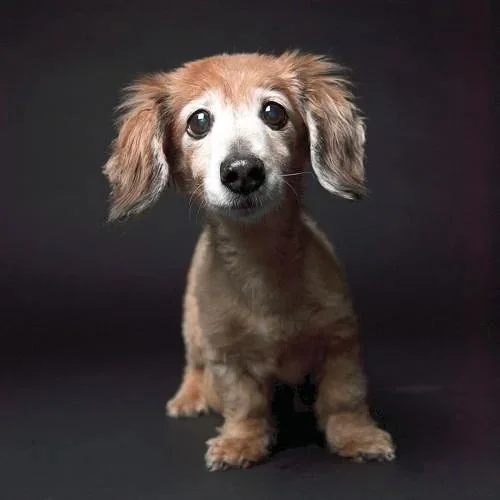
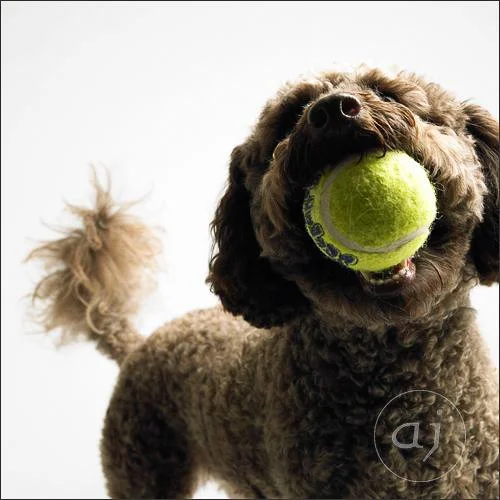

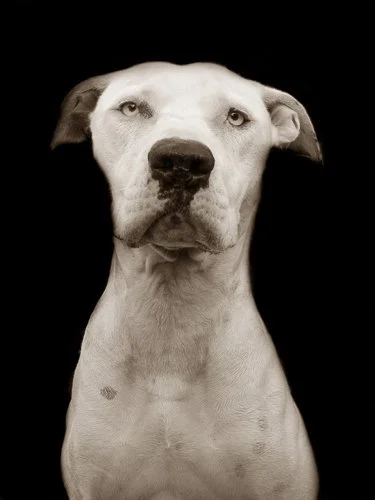
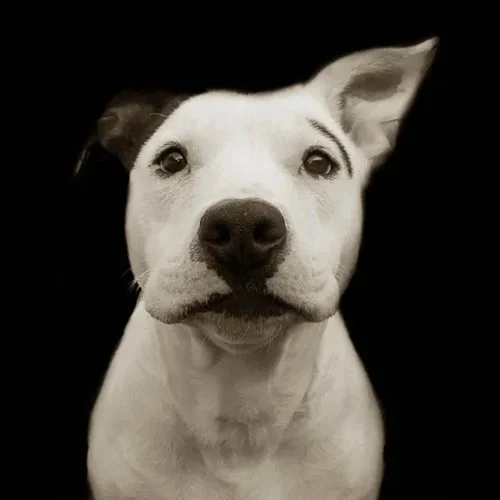
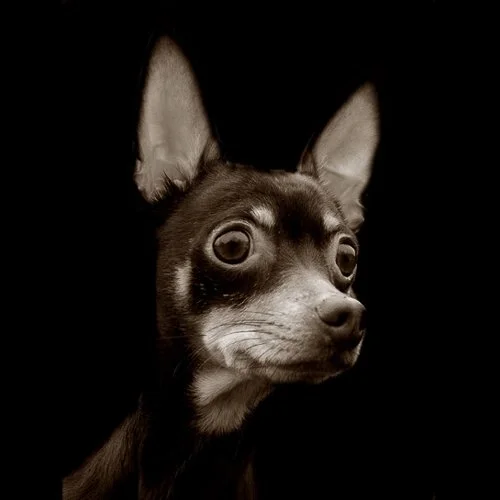
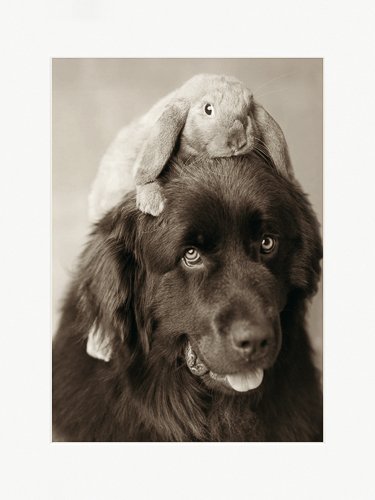
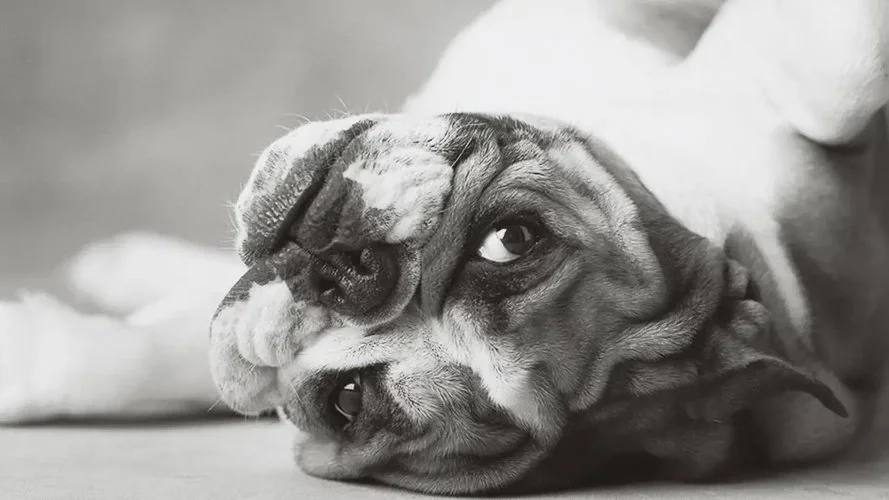
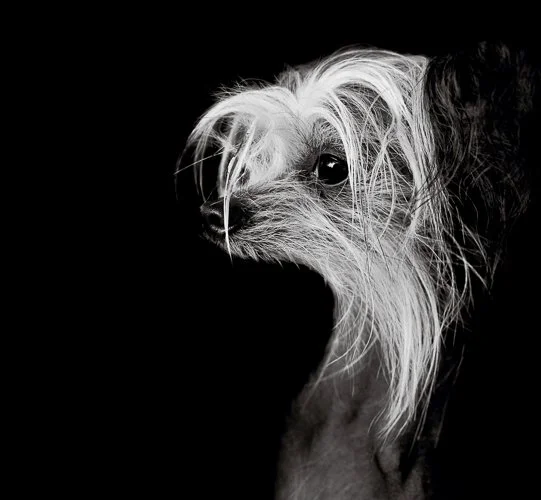
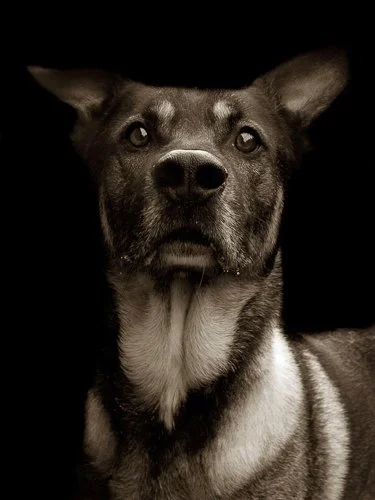
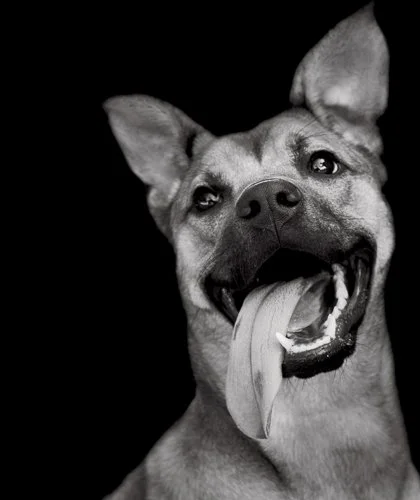
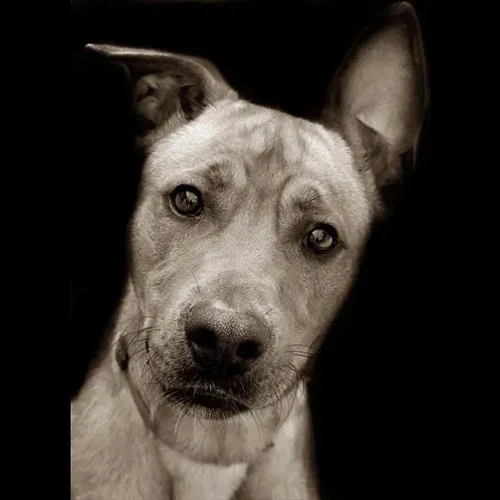
Traer Scott is an American photographer who works across fine art and commercial contexts. Her series Shelter Dogs, which documented dogs awaiting adoption in animal shelters, established both a model for advocacy-driven pet photography and a body of work with significant critical recognition; the series Natural History was the subject of three museum exhibitions between 2015 and 2019, at the University of Maine Museum of Art, the Griffin Museum of Photography, and the American Museum of the Americas.
Scott has published fourteen books and received recognition including two Rhode Island State Council for the Arts grants and the Helen Woodward Humane Award for animal welfare activism. Her work demonstrates the capacity of animal photography to operate simultaneously within fine art and social advocacy contexts without compromising the integrity of either.
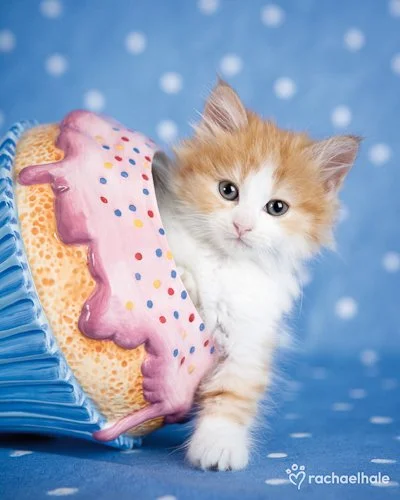
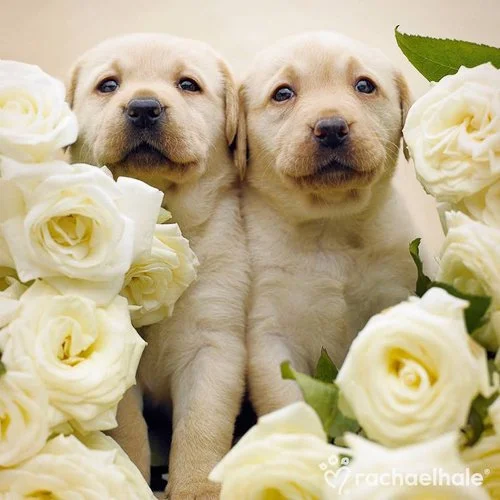
Rachel Hale is a New Zealand photographer who has, over approximately twenty-five years, built an internationally recognised commercial brand centred on domestic animal photography. Her images — widely licensed across a substantial range of product categories including home textiles, stationery, apparel, and giftware — are characterised by clarity, warmth, and careful attention to the individual personality of her subjects.
The Rachel Hale brand operates a worldwide licensing programme that has made her imagery among the most widely disseminated animal photography in commercial contexts globally. Hale's career represents a distinct trajectory within the genre: pet photography that has achieved its greatest reach not through fine art exhibition or editorial publication but through the commercial licensing of a recognisable visual sensibility.
The Culture of Care
The social media era has produced a transformation in pet photography that is quantitative rather than qualitative, but the scale of the quantitative change is sufficient to alter the cultural context of the entire genre. Instagram accounts maintained by and for individual cats and dogs have accumulated followings in the millions; the 'pet influencer' economy — in which animals and their owners are paid to endorse products and services in exchange for access to those audiences — has become a measurable commercial category.
The smartphone has made pet photography the most widely practised form of animal photography in human history, with an estimated volume of photographs made annually that would have been incomprehensible to any photographer working before the digital era.
What the social media context has not changed is the underlying condition of the genre: the animal is unperformative, and the camera records what is there. The difference between a photograph made by Chandoha — who waited, at eye level, with natural light and absolute patience, for the moment the cat's expression revealed something true about it — and a photograph made by a smartphone user who has arranged a cat in a prop or a costume and triggered the shutter, is not a difference of equipment or processing. It is a difference of attention.
The best pet photography, across its entire history, has been characterised by the quality of the photographer's engagement with the animal as a subject with its own character and behaviour — an engagement that requires time, observation, and a willingness to accept the limitations the animal imposes. The worst has treated the animal as a vehicle for projection, comedy, or sentiment that the animal itself neither produces nor endorses. This difference is always visible in the photographs.
Closing Thoughts
From Fox Talbot's sleeping cat — fixed in a calotype in the early 1840s, indifferent to the significance of the moment — to the billions of images made on smartphones every year, the fundamental appeal of pet photography has remained constant. The animal does not perform. It does not arrange its expression for the camera or manage its behaviour for the benefit of the viewer. What the photograph records, when the photographer is sufficiently skilled and sufficiently attentive to be in the right place at the right moment, is something genuinely unmediated: the animal simply being itself. This is the genre's greatest technical challenge, and also, its deepest appeal.