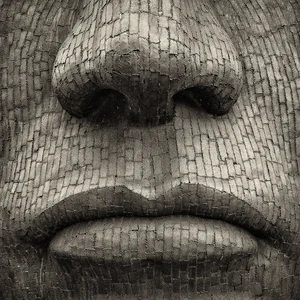
The Sigma FP2 is a modular, ultra-compact full-frame mirrorless and cinema camera released by Sigma UK with a body price of £1,899. It launches globally on November 11, 2026
Month of October 2026
October was a month of waiting lists. The OM System PEN began shipping and promptly became hard to find, Fujifilm launched more Instax cameras while the X-T6 stayed resolutely unannounced, and Sigma produced a second FP. The Natural History Museum named its winners, Tate Modern opened a Pictorialism show that reviews couldn't agree on, and Capture One taught its software to deal with stray hair.
Gear, Glass & Light
Sigma's second fp
Sigma announced the FP II on 23 October, with sales due to begin on 11 November. The original FP arrived in 2019, and the new camera keeps the idea: a very small L-Mount full-frame body that is more a platform than a finished object.
What changes is the engine. There is a 24.5-megapixel partially stacked sensor, which Sigma says cuts rolling shutter considerably, bursts of up to 20 frames a second, phase-detection autofocus that now recognises birds as well as people, dogs and cats, 6K open-gate video with ProRes RAW, about 70GB of internal storage and, at last, a tilting touchscreen.
Jabber lists the body at £1,899 or $2,199 (the Swiss site Fotointern gives €2,199), and notes that the original's rolling shutter, slow autofocus and fiddly handling were its main limitations.
Two details are worth a second look. The shutter is electronic only, and, according to Luminous Landscape, the body is 3.5mm slimmer than the FP but 6g heavier, which is an unusual way to describe a successor. The viewfinder, meanwhile, is an optional extra.
The more interesting Sigma announcement was the lens that arrived with it. The 50mm F1.4 CL DG Contemporary is a development announcement rather than a launch, with L-Mount and Sony E versions expected in early spring 2027 and no price yet. Luminous Landscape gives its size as 54mm long and 375g, against 109.5mm and 670g for Sigma's 50mm F1.4 Art.
It is a classic double-Gauss design, and chief executive Kazuto Yamaki said Sigma deliberately kept certain aberrations to produce "a gentle softness within the in-focus plane" while still controlling ghosting and flare. He added that it is not the fastest autofocus for video but that it achieves "practical AF". A lens designed to be a little less than perfect is a notable position for a maker whose reputation rests on measured sharpness. Yamaki says many photographers feel modern resolution has lost the softness of the film era and look for it in vintage lenses.
The OM System PEN is a compact, Micro Four Thirds camera built around a 20MP sensor and aimed at travel and everyday use. It’s not a like-for-like replacement for 2016’s PEN F, but it brings some of the ideas from that model to the more affordable end of the market.
The PEN: popular, therefore scarce
OM System announced the PEN on 9 September, and in the United States it reportedly began shipping on 14 October, according to PhotographyTalk, which is quoting 43 Rumors rather than OM. By its stock check on 16 October, the silver body at $999.99 was available from OM's own store and from B&H as a $1,099.99 kit with the 14-42mm lens, while the black body was backordered at OM's store to mid-November.
In Japan, the situation is more severe. OM Digital Solutions said on 7 October that the camera would go on sale on 30 October, and, as PetaPixel reports, that some customers who had already placed orders for the black and silver bodies, the 14-42mm kit and the Double Zoom kit might not receive them until "spring 2027 or later", because preorders far exceeded supply.
The French retail trade reports its own delays, according to Phototrend. PetaPixel's own summary asks whether the PEN will have an "X100VI moment", which tells you how thoroughly one small Fujifilm has taught everyone to expect a waiting list. No unit figures appear in the coverage cited here, so the demand is visible but unmeasured. The odd result is that a camera whose pitch is affordability is, for now, a camera you may have to queue for.
Fujifilm: busy, but not with an X-T6
The X-T6 has still not been announced, and everything about it remains rumour. Photo Rumors said on 22 October that the camera was reportedly delayed from September and is now expected in November, alongside a new XF 50-140mm f/2.8 II. The listed specifications, including a 40-megapixel sensor, 60 frames per second, and a price of €1,999 to €2,199, are unsourced, so read it as a wish list from the rumour mill.
FujiRumors separately reported on 31 October that a new Fujifilm camera registration, FF260004, had surfaced in China, but its own article speculates that this could be a higher-end model and does not identify it as the X-T6.
Digital Camera World's Gavin Stoker argued on 20 October that it has been almost exactly a year since the last new X-series camera, the X-T30 III, and that Fujifilm launched four Instax cameras in 2026. He presents the link between the two as his own wager, not as something Fujifilm has said, and it is a fair reading of a quiet year without being a proven one.
Smaller notes
Pixii, the French maker of Leica M-mount digital rangefinders, is in liquidation, which DPReview reported on 22 October after the court in Besançon converted its restructuring into liquidation on 22 July and authorised it to operate only until 31 July.
Pixii cameras were still listed for sale at the time, including the Max at $4,499 at B&H, but DPReview says warranty, repairs and firmware updates are not guaranteed and that no buyer has been announced. Anyone holding one should contact the liquidator, Selarl Guigon Associés, as DPReview advises.
At the edges of the market, TTartisan released new titanium and green versions of its AF 50mm f/1.8 Neo for $89 in E, Z and L mounts on 20 October, and Photo Rumors lists a 7Artisans AF 10mm f/4 APS-C pancake for E and X mounts as coming soon. Leica announced a licensing partnership with Formula 1 on 21 October and a Q3 43 Formula 1 Edition, with carbon-fibre parts, Microvelour and official branding.
The Photographic Arts
An elephant, a calf and a black-and-white year
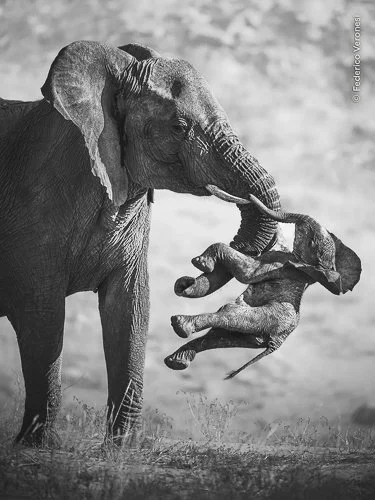
The Natural History Museum named Federico Veronesi of Italy as Wildlife Photographer of the Year 2026 on 13 October for The Aftermath. It shows a female elephant carrying a dead calf in Namibia's Huab River Valley, and the BBC reports that Veronesi followed unusual drag marks across a dry riverbed and found the calf's leg wedged between her tusk and trunk.
He described it as the most "heart-wrecking and fascinating and dramatic" encounter of his 20 years photographing animals. The BBC also notes that researchers were not certain she was the calf's mother, though they recognised her as a female who had lost a calf years earlier and had carried other females' dead calves. The caution seems right for a picture that already says a great deal on its own.
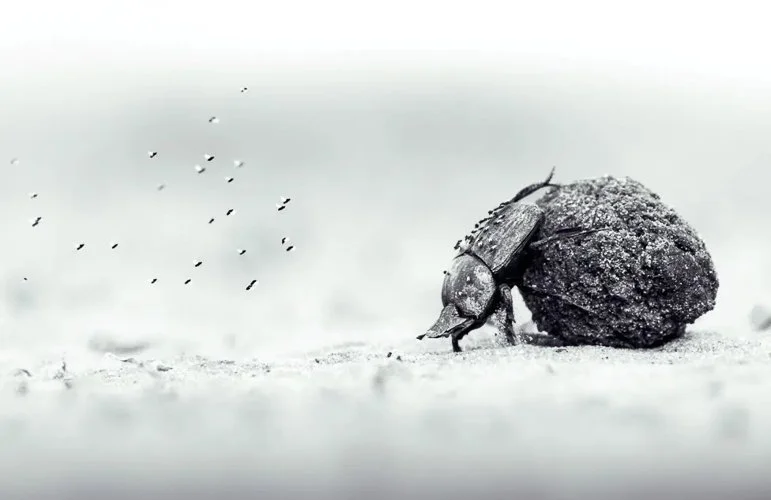
The Young Grand Title went to Oscar Whitfield, of Zimbabwe and the UK, in the 11 to 14 years category, for Labour of Love, a dung beetle pushing a ball of dung uphill through sand, shot from ground level during a family game drive near Victoria Falls.
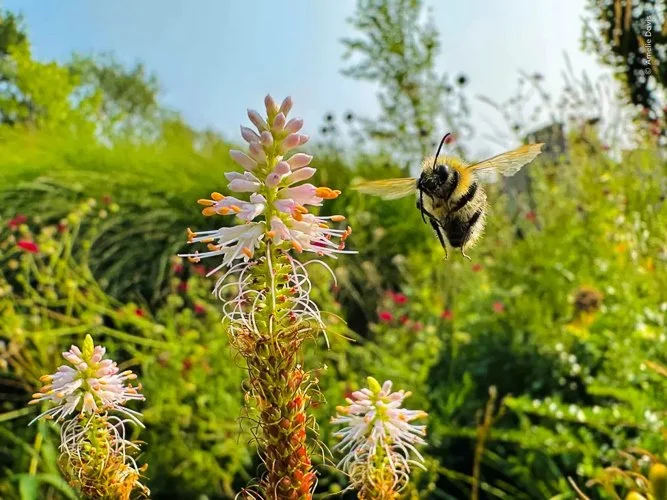
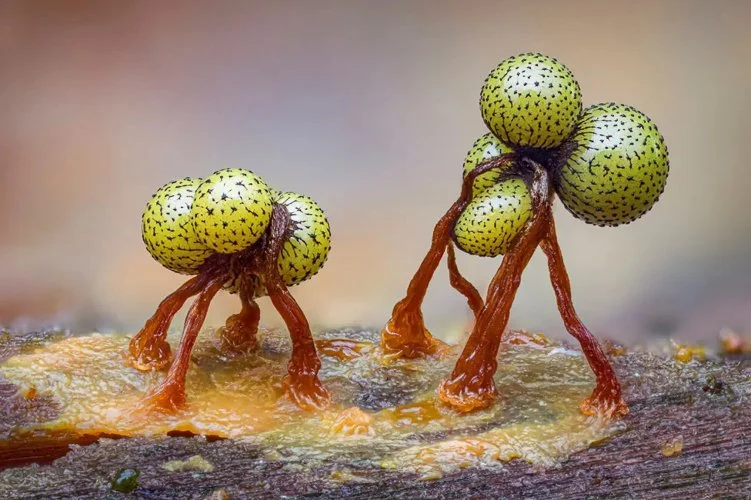
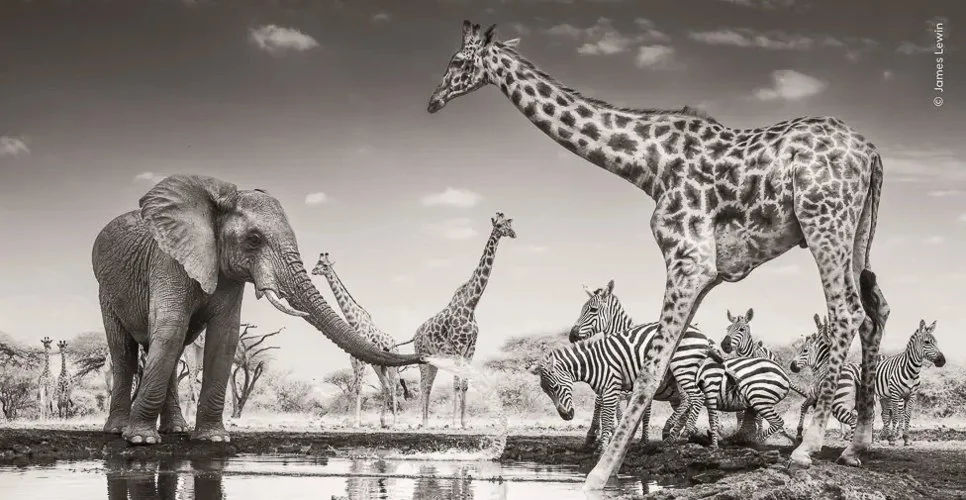
Amelie Davis took the top prize for the 10 years and under category, with a photo of a common carder bee in mid-flight. Amelie borrowed her dad's smartphone to snap the picture in her garden in Surrey. Kutub Uddin won the Portfolio Award with a stunning picture of slime moulds in his local woods in West Sussex and British photographer James Lewin won the ‘Animals in their Environment’ category with his image of a young bull elephant turning playful at a waterhole in Kenya, spraying zebras and giraffes with water from his trunk.
Condé Nast Traveller notes that for the first time both overall winners were recognised for black-and-white photography. The competition drew 65,403 entries from 121 countries and territories, per National Geographic. , which also lists Loren Elliott's coyote series as the Photojournalist Story Award winner. The exhibition opened at the Natural History Museum in South Kensington on 16 October and runs to 11 July 2027, with tickets from £17 off-peak to £21 at peak times.
Tate Modern and the Pictorialists
Light & Magic: The Birth of Art Photography opened at Tate Modern on 14 October and runs to 21 February 2027. It is billed as the first major show to treat Pictorialism as the global movement it was, with about 200 vintage prints by more than 80 artists, according to Scope Media Studios, which is repeating the museum's own figures.
The reviews have divided sharply. The Times gave it three stars and called the photographs hauntingly beautiful, singling out Long Chin-San's mist-and-mountain pictures that look like charcoal or watercolour. The Telegraph gave it two and called it dull and dusty, objecting to the "global narratives" framing and finding the best work in the Modernist pictures near the end.
Time Out also awarded three stars, and the Observer called it massive, miscellaneous and frequently marvellous but confusing. Pictorialism is the movement in which photographers spent a generation working to make photographs resemble charcoal drawings and watercolours, and the split among the critics suggests the question of whether that was a good idea has not been settled. It is at least a show about printing and craft, which gets rather less gallery space than it deserves, and the reviews suggest it is one to see before deciding.
Fan Ho Smoky World 1959, Hong Kong © Fan Ho Trust and Estate, courtesy of Blue Lotus Gallery Hong Kong.
Prizes, festivals and a reissue
The Leica Oskar Barnack Award went to Damir Faizulin for Preserving Nature as Preserving Ourselves, with a prize of €40,000 and €10,000 in Leica equipment, Leica announced on 8 October. Laila AnnMarie Stevens won the Newcomer Award for Clayton Sisterhood Project, and Valentina Sinis took the 2026/2027 LOBA Women Grant for The Last Butterflies, each with €10,000 and a Leica Q3.
The 17th Epson International Pano Awards reported 4,084 entries from 93 countries, about 20 per cent up on 2025, and Daniel Viñé Garcia of Spain took Open Photographer of the Year, along with the new Open Aerial category.
Brighton's Photoworks Festival, Un/Stable: Lands, Anxieties, Dreams, ends today, 1 November. It is the first full in-person festival since 2018, and 1854 lists work by Andreas Scholz at Brighton Museum and Alma Haser at Hove Museum of Creativity among its venues.
On the bookshelf, Damiani and the International Centre of Photography are reissuing Robert Capa's 1938 Death in the Making at €45. It reproduces André Kertész's original layout and adds an essay by Cynthia Young, a complete image checklist, and research identifying photographs in the original book that he took and that were unattributed at the time.
Paris Photo, in its 29th edition and themed around the bicentenary of photography, runs from 12 to 15 November at the Grand Palais.
The Fujifilm Instax Square 2 is a fully analogue instant camera designed for straightforward, point-and-shoot photography. Released in late October 2026, it serves as the direct successor to the popular Instax Square SQ1 from 2020, offering a modern, sculpted body design and new creative features.
Film & Analogue
Instax gets busier
Fujifilm announced the instax SQUARE 2 on 13 October in North America and 14 October in Europe, calling it the successor to the 2020 SQ1. Digital Camera World adds that it ends a three-year gap since the SQ40.
Its new feature is a Mood Filter: a switch beside the lens places a physical warm or cool filter in front of it. It also adds a new Landscape mode for distant subjects and a new SOFT HAZE film for the format. The expected price is $119.95, with instax.co.uk listing £94.99, and the SOFT HAZE film is expected at £9.99 a pack. A physical filter on an instant camera is a nicely stubborn choice in a year when most such cameras are adding screens.
Which makes the next announcement mildly ironic. On 27 October, Fujifilm announced the instax mini Evo 2 hybrid, due from 27 November, with a 4.5-inch touchscreen, a maximum resolution of 13 megapixels with a microSD card, 100 combinations of lens and film effects, and an Immersive Movie mode that records five seconds before the shutter release. The price is "open" in the release. The sensible reading is that Fujifilm is covering both ends of the market: one camera for people who want to avoid screens, and one for people who want a screen and a print.
This activity is driven by demand. Fujifilm announced a ¥3 billion investment in its Ashigara factory in Kanagawa, with new lines starting in spring 2027 and full operation in 2028, after what it describes as a fifth consecutive year of record Instax sales. Heise puts the combined effect at about 70 per cent more capacity than in the 2022 financial year. Polaroid went bankrupt in 2001 and again in 2008, so instant film has had a more uncertain history than this growth suggests.
Smaller items
Harman Technology, the maker of Ilford, Kentmere and Harman Phoenix films, added film cases for 35mm and 120 at £12.99, each holding five rolls, plus a £3.49 lens cloth and an A6 notebook. The Delta 400 Collector's Edition, released in mid-September, drew excited coverage for its clear base, which allows black-and-white slides.
Pellica points out that Ilford's own reversal guide does not recommend reversal processing Delta 400 because the results are likely to have unacceptably low contrast, and recommends Pan F Plus instead. The clear base removes one obstacle, but it does not change the film.
Polaroid's Mod, announced on 29 September at £149.99, was due in selected US shops from 6 October, with global retail arriving in early 2027.
Released on October 29, 2026, Capture One 16.9 introduces Stray Hair Retouching for cleaner portraits with just two sliders, Skin Tone Retouching to remove color casts and unify skin tone across your subject, and Body Skin Retouching, which brings Even Skin to the full body.
The Digital Darkroom
Capture One 16.9
Capture One 16.9 arrived on 29 October, free to existing users, according to DPReview, with the headline feature a Stray Hair Retouching tool that uses a trained model to remove flyaway hairs, controlled by sliders and a protection brush that leaves intended strands alone. DPReview describes it as a trained model rather than calling it AI, and Capture One's own page says the retouching tools run on your computer and nothing is uploaded to the cloud.
Alongside it come Skin Tone and Body Skin retouching, a redesigned Advanced Colour Editor with exact RGB and HSL targets and a Uniformity control, and Multi-User Sessions leaving beta. It also adds camera support for the OM System PEN, which suggests the software industry is moving faster than the supply chain.
ON1 and a quiet Adobe
ON1 Photo RAW 2027 is due on Monday 2 November. ON1 announced it on 8 September, with an all-new RAW processing engine, a redesigned masking experience, an AI Culling Assistant limited to the MAX tier, and NoNoise AI models that now include scanned film. It is sold as either a one-time purchase or a subscription, and the announcement did not include pricing. NoNoise AI 2027 shipped separately on 1 October with six models matched to subject types.
Adobe's Camera Raw and Lightroom Classic updates landed at the end of September, so October mostly brought scrutiny. Fstoppers pointed out that Lightroom's new Prompt to Edit shows the generative credits a request will use before it runs but offers no preview of the result and no way to recover credits if it disappoints, which is worth knowing before you hand it a favourite print.
A blog also notes the result is saved as a flat-pixel DNG, so the camera's own raw data is not carried over. Adobe MAX runs from 10 to 12 November in Miami Beach, with an online option.
DxO's October Field Notes listed 472 new DxO Modules and support for the OM System PEN and DJI's Lito drones. It also highlighted the direct export into Affinity that PhotoLab 10.1 added on 22 September, as a free update for PhotoLab 10 owners.
Looking Ahead
November is full of dates. ON1 Photo RAW 2027 is due on 2 November, Adobe MAX opens in Miami Beach on 10 November, and Sigma's fp II goes on sale on 11 November, the same day as the Paris Photo vernissage, ahead of its 12 to 15 November public run at the Grand Palais.
The Fujifilm instax mini Evo 2 follows on 27 November, and the X-T6 is rumoured to be somewhere in the month, though Fujifilm has said nothing. The Wildlife Photographer of the Year exhibition and Light & Magic both continue into 2027, and it is worth checking whether the PEN backorders have cleared before promising anyone one for Christmas.