Botanical Photography
Plants and flowers have been photographed almost continuously since photography was invented. That fact alone is worth pausing over. The medium was barely a decade old when experimenters began pointing their light-sensitive papers at petals and stems, and yet the motivations then were strikingly unlike what drives the millions of flower photographs made every day on smartphones today.
The history of flower photography is not a single story but several overlapping ones: science versus art, objectivity versus emotion, the specimen versus the symbol. At various moments in its roughly two-hundred-year span, the photographed flower has served as a botanical record, an architectural abstraction, an erotic metaphor, a commercial product, and an exercise in quiet personal attention. What it has never quite been is simple.
There is also a persistent tension at the heart of the genre between the camera's descriptive precision and the flower's capacity to resist it. A photograph of a rose can be ruthlessly exact about every vein in every petal and still fail to communicate what standing in front of a rose actually feels like. Photographers have spent two centuries wrestling with that gap — some trying to close it through technical virtuosity, others by abandoning representation altogether. The history of their attempts is, in miniature, much of the history of photography itself.
Science, Shadow & the First Botanical Eye
The relationship between flowers and photography began almost simultaneously with the medium's invention. William Henry Fox Talbot — scholar, mathematician, and member of parliament, working from his home at Lacock Abbey in Wiltshire — was making what he called photogenic drawings in the mid-1830s. The process involved placing objects directly onto paper treated with silver chloride and exposing them to sunlight, producing silhouetted impressions through the direct action of light on chemistry.
Among his earliest subjects were garden plants and pressed specimens from the grounds of Lacock. Talbot was under no illusions about the grandeur of the undertaking: "I do not claim to have perfected an art, but to have commenced one, the limits of which it is not possible at present exactly to ascertain." It is an admirably cautious statement from someone who had, in fact, invented something that would reshape visual culture entirely.
The photogenic drawing process, and the calotype negative process that followed it (patented by Talbot in February 1841), were technically constrained in ways that shaped their aesthetic results. Early photographic papers were sensitive primarily to violet and blue wavelengths of light, and required exposures measured in minutes rather than fractions of a second.
Moving subjects were useless; subjects that held still were ideal. Flowers, plants, and pressed specimens were consequently natural candidates. Their structural complexity — the intricate branching of a fern, the architectural geometry of a seed head — translated beautifully into the fine-grained records these early processes could produce. The images were crisp and detailed where they succeeded, the camera functioning as a kind of extended scientific eye.
Anna Atkins (1799–1871)
It was this understanding of photography as a tool for scientific accuracy that led to one of the most significant works in the history of the medium. Anna Atkins was the daughter of the prominent scientist John George Children, a fellow of the Royal Society and a friend of Talbot's. She was herself a skilled botanical illustrator, having contributed engravings to her father's translation of Lamarck's Genera of Shells (1823). When Talbot announced the invention of photography in 1839, and her friend Sir John Herschel developed the cyanotype process in 1842, Atkins saw immediately that the new technology offered something illustration could not: the ability to let specimens document themselves.
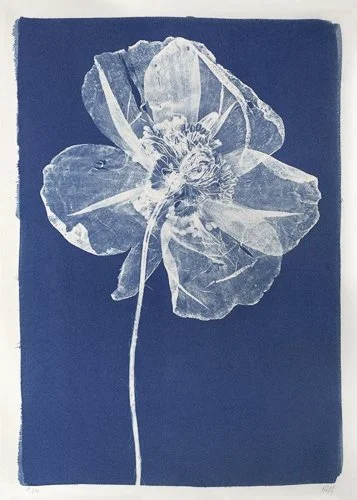
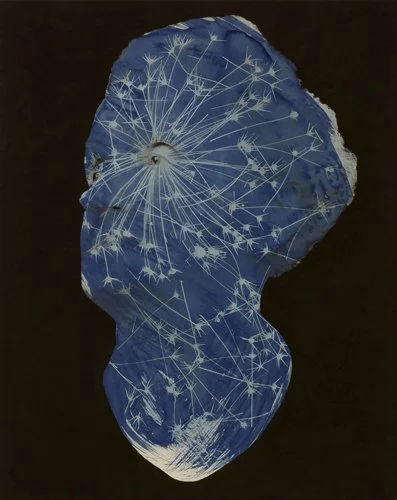
The cyanotype process works by coating paper or fabric with a solution of ferric ammonium citrate and potassium ferricyanide, then exposing it to ultraviolet light with an object placed directly on its surface. Where light strikes the treated paper, a chemical reaction produces a deep Prussian blue; where the object blocks the light, the paper remains white. The result is a white silhouette — exact in every detail — against an inky blue ground. The process required no negative, no darkroom of any complexity, and was relatively inexpensive to produce in volume. It was ideal for botanical documentation.
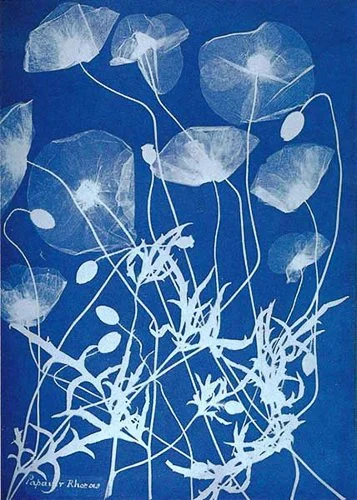
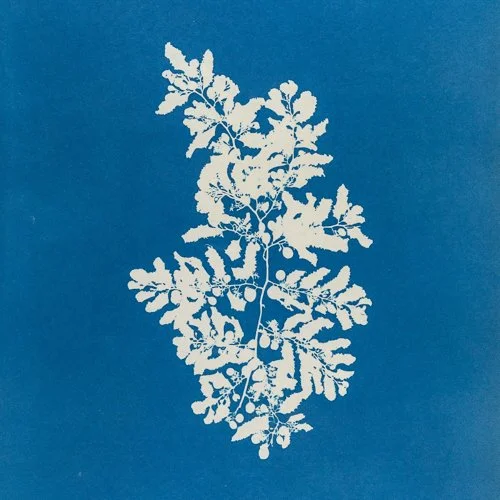
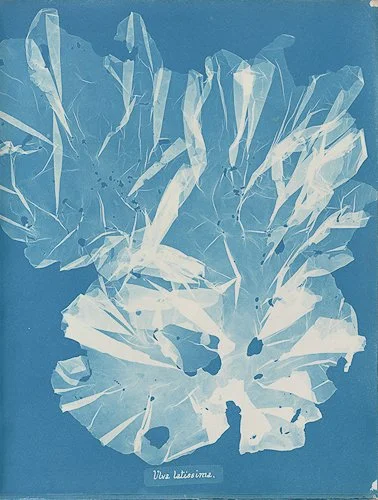
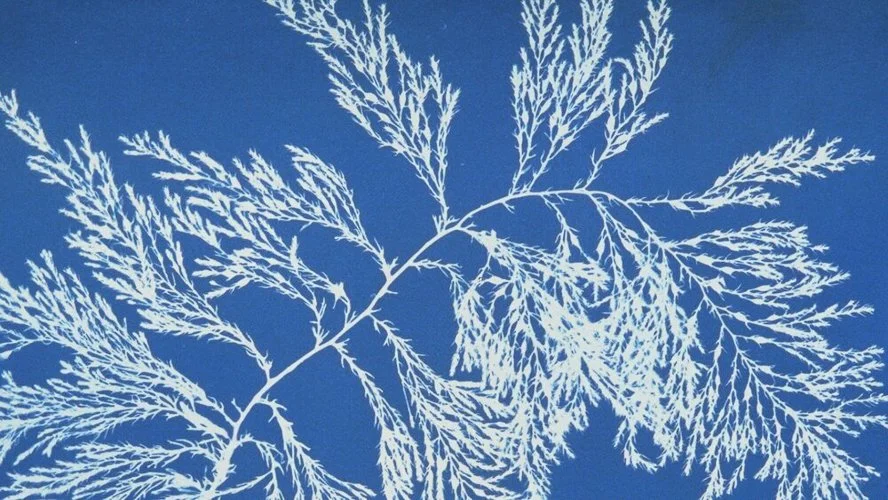
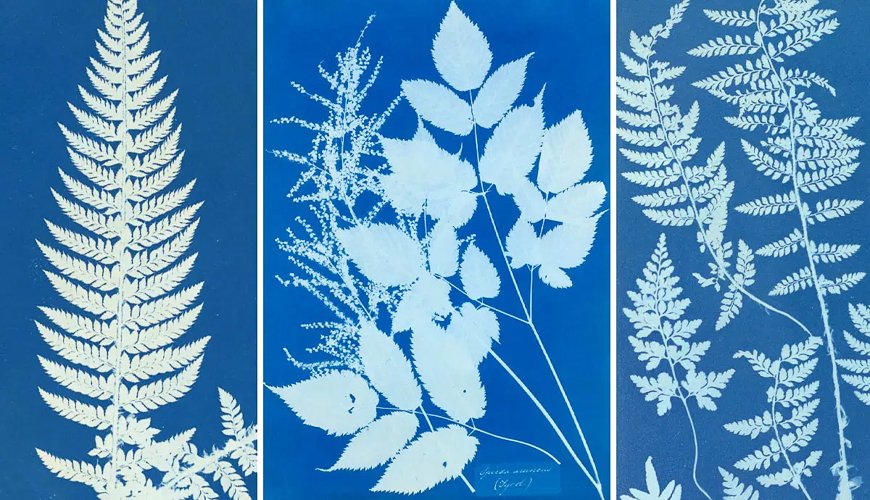
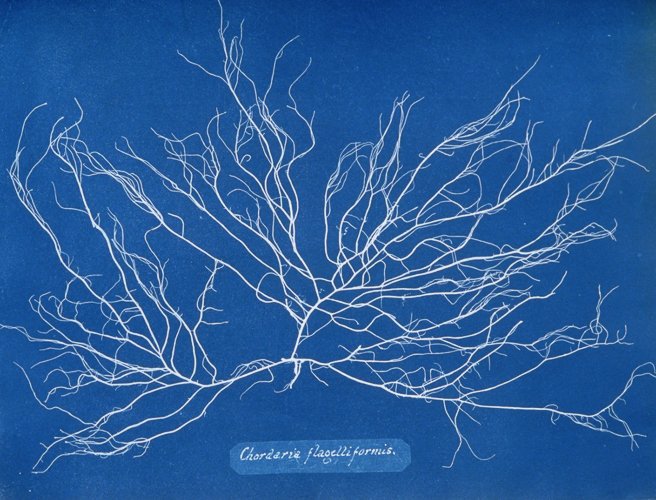
In 1843, Atkins began producing Photographs of British Algae: Cyanotype Impressions, a publication issued in hand-stitched fascicles over the following decade. Conceived initially as a supplement to William Henry Harvey's Manual of British Algae (1841), the work grew into something far more substantial: twelve volumes, distributed in a print run of perhaps twenty copies to her "botanical friends," and now recognised as the first book to be both printed and illustrated by photography.
Each plate was made by Atkins herself. There are thought to be only twenty substantially complete copies in existence. Atkins had explained her motivation plainly: "The difficulty of making accurate drawings of objects so minute as many of the Algae and Confervae has induced me to avail myself of [the] beautiful process of Cyanotype, to obtain impressions of the plants themselves."
The word "beautiful" is doing real work in that sentence. Atkins's stated aim was accuracy, but her results were also unmistakably lovely — the white tracery of algae suspended in deep cobalt blue, more like botanical drawings from some imagined dream than anything produced in a conventional laboratory.
The cyanotype's cool colour and the silhouette's demand for formal precision meant that even the most straightforwardly scientific of Atkins's plates carried an aesthetic charge. She was not trying to make art; she was making art anyway. That ambiguity — between scientific record and visual experience — would run through botanical photography for the next hundred and fifty years.
The broader context of botanical illustration in the nineteenth century is important here. Before photography, the documentation of plant species relied on skilled artists — many of them women — who produced hand-drawn and hand-coloured plates for publications such as Curtis's Botanical Magazine (founded 1787) and the great cataloguing projects of figures like Joseph Banks and William Hooker.
These illustrations were admired both for their scientific utility and for their beauty, but they were slow to produce, subject to human error, and dependent on a supply of talented draughtsmen. Photography appeared to promise a more reliable — and reproducible — alternative. In practice, the early technical limitations of the medium (its insensitivity to the full colour spectrum, the impossibility of capturing a living plant in flower without long-exposure blurring) meant that photography did not immediately displace botanical illustration. What it did do was create a new category of image: something between document and object, between evidence and experience.
From Document to Art
By the early years of the twentieth century, the scientific frame was no longer the only context in which botanical photography was being made. The Pictorialist movement, which flourished roughly from the 1880s through to the 1910s, had spent considerable energy arguing that photography was a legitimate fine art, and its practitioners had applied that argument to flowers as readily as to portraits and landscapes.
Pictorialist flower photographs tended towards the soft-focus and the atmospheric — influence from Whistler, from Japanese woodblock prints, from the general late-Victorian and Edwardian preoccupation with mood over fact. They were pretty, often sentimental, and concerned above all with demonstrating that photography could do what painting did. This was the wrong ambition, and it took a German teacher of arts and crafts to demonstrate why.
Karl Blossfeldt (1865–1932)
Karl Blossfeldt was born in 1865 in Schielo, a village in the Harz mountains of Germany. His first formal education was as a sculptor's apprentice at the Art Ironworks and Foundry in Mägdesprung, where he worked with wrought iron decorated with plant motifs — an early and formative engagement with the idea of nature as formal grammar. He subsequently studied at the School of the Museum of Decorative Arts (Kunstgewerbemuseum) in Berlin, and in 1890 received a scholarship to study in Rome under the decorative artist Moritz Meurer, assisting in the preparation of botanical specimens and casts for use in design education.
He worked with Meurer through 1896, travelling beyond Italy to North Africa and Greece to collect plant specimens. It was during this period that his interest in plant photography took hold.
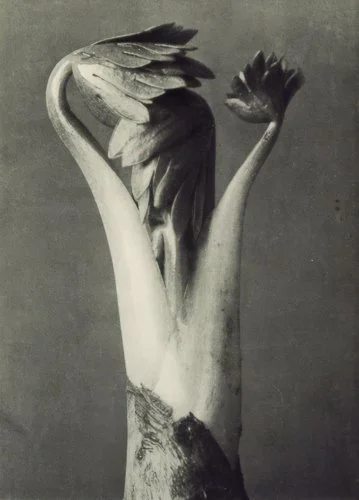
From 1898, and for the next thirty-three years, Blossfeldt taught design at the same Berlin school — by then reorganised and known eventually as the institution that became the Berlin University of the Arts. His method was distinctive. He built his own cameras with custom magnifying lenses, enabling him to photograph plant structures at magnifications of up to thirty times their actual size.
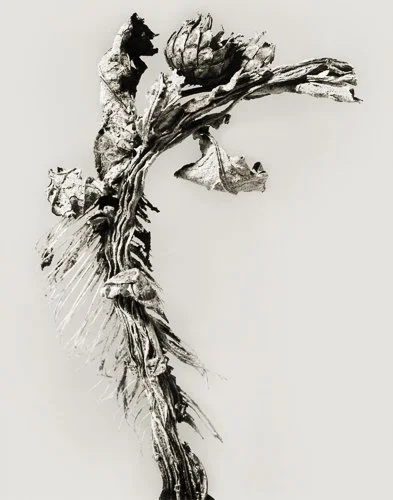
Seed pods, stamens, unfurling fronds, thorned stems: photographed at this scale, against the plain cardboard backgrounds Blossfeldt used as a matter of routine, they no longer looked like plants at all. They looked like columns, capitals, scrollwork, wrought-iron gates. They looked like architecture. They looked like the design vocabulary of Art Nouveau — and, at a moment when Art Nouveau was giving way to the stricter geometry of Modernism and the Bauhaus, they also looked like something older and more fundamental: Urformen, primal forms.
Urformen der Kunst — published in 1928 by Ernst Wasmuth and translated into English as Art Forms in Nature — was intended by Blossfeldt as a teaching aid for design students. It was recognised almost immediately as something rather more important. The critic Walter Benjamin, reviewing it in the same year, wrote of "an unsuspected wealth of forms" that the images revealed, describing Blossfeldt's project as a radical "inventory of perception."
The book placed Blossfeldt firmly within the Neue Sachlichkeit — New Objectivity — movement that had emerged in post-war Germany as a reaction against Expressionism's emotional excess. Neue Sachlichkeit sought documentary clarity, the unsentimental presentation of the world as it actually is. Blossfeldt's photographs were exemplary: sharp, frontal, stripped of context, devoid of decoration. Each plant stood for its own form and for no human feeling projected onto it.
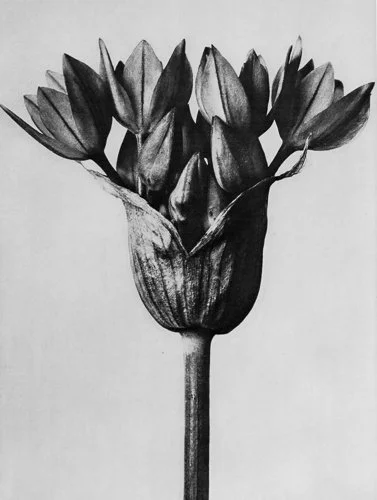
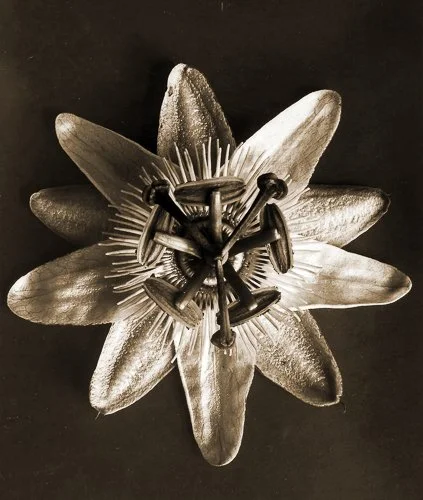
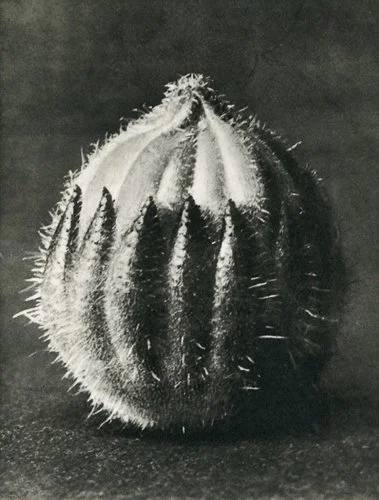
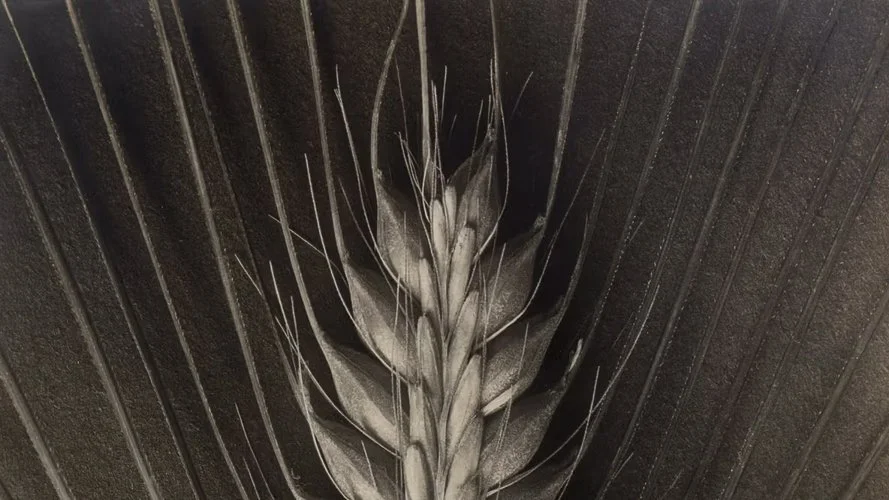
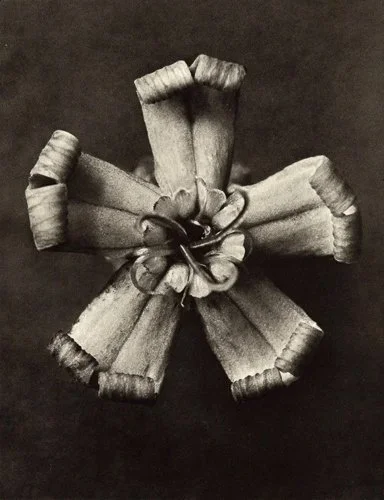
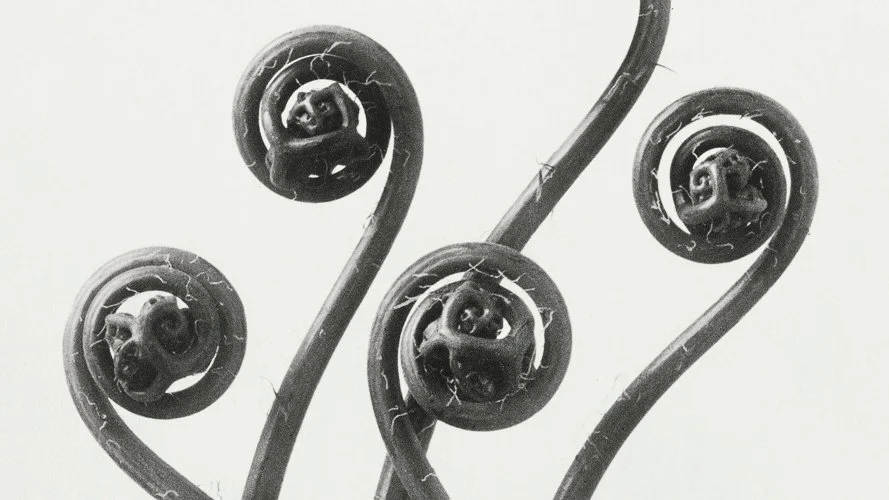

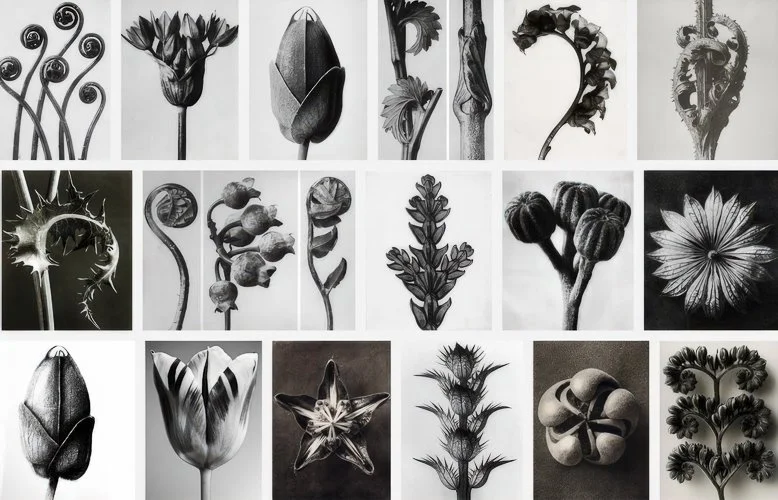
Yet the paradox of Blossfeldt's work is that its very objectivity produces a kind of wonder. By refusing to be picturesque, by insisting on the architectural and geometric properties of his subjects, he revealed something that softer, more conventional botanical photographs had obscured: that flowers and plants are already designed, already formal, already in possession of a structural logic that human art has spent centuries trying to borrow.
His influence on Modernist design was direct and documented — his images inspired practitioners of the Bauhaus, fed into Surrealist aesthetics, and anticipated the field of biomimicry, in which natural forms are studied as solutions to design problems. A self-portrait made in Rome around 1897, showing a young Blossfeldt at work during his years with Meurer, offers a glimpse of the man behind the impersonal photographs: serious, methodical, evidently absorbed in the practical business of getting the camera close enough.
The lasting impacts of Blossfeldt's approach are visible throughout modern botanical photography. His pioneering use of magnification established the standard for macro work in the genre. His formal rigour — the plain background, the frontal composition, the emphasis on structure over sentiment — remains a hallmark of serious botanical photography today. His work is still taught in art and design schools. And his fundamental proposition — that looking closely at a natural form is its own education, requiring no further commentary — has proved remarkably durable.
Imogen Cunningham (1883–1976)
While Blossfeldt was approaching botanical subjects from the direction of design education in Berlin, Imogen Cunningham was arriving at something similar from a very different starting point in the Pacific Northwest of America.
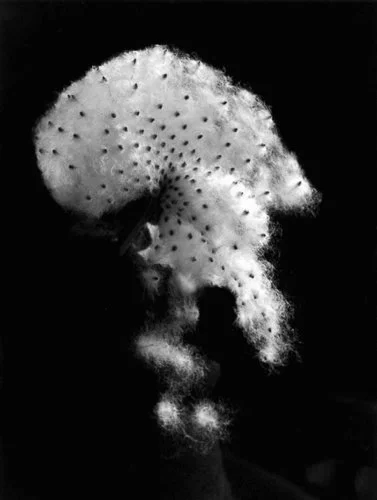
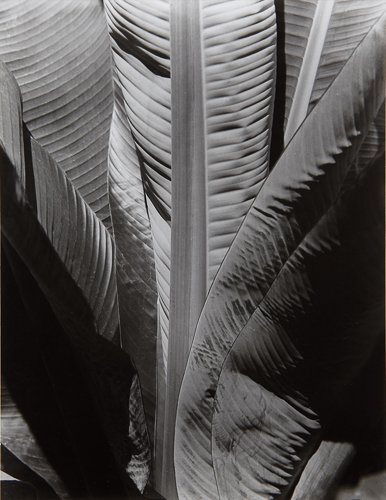
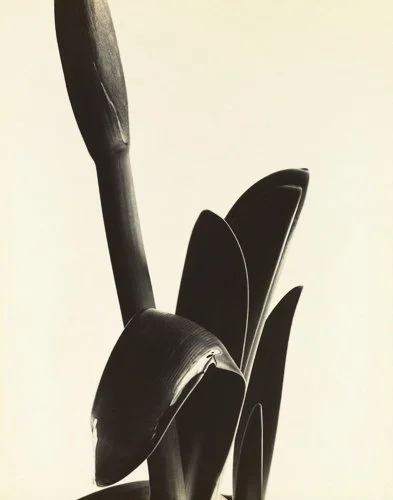
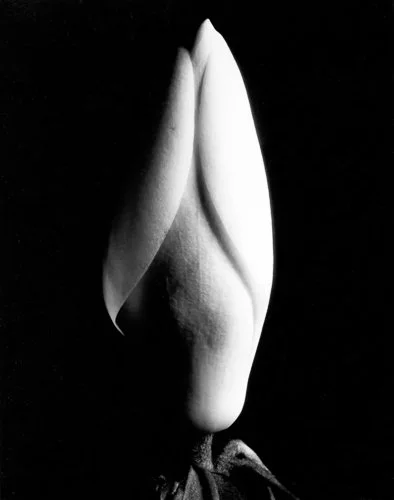
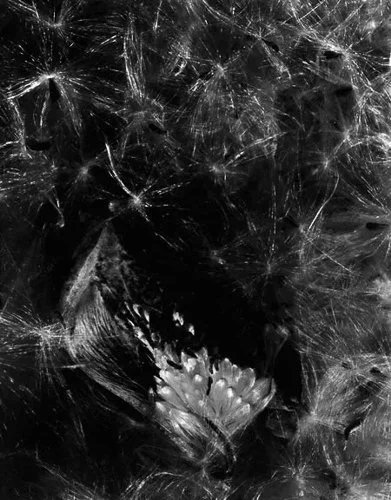
Cunningham had studied chemistry at the University of Washington and trained in portraiture before establishing her own studio in Seattle in the early 1910s, initially working in the soft-focus Pictorialist style that was then current. The turn came in the early 1920s. Unable to range widely while raising three young children, she turned her camera on the plants in her garden.
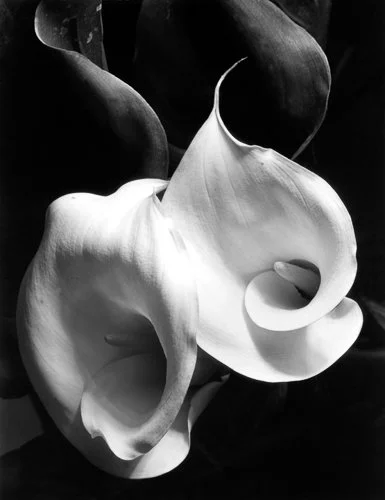
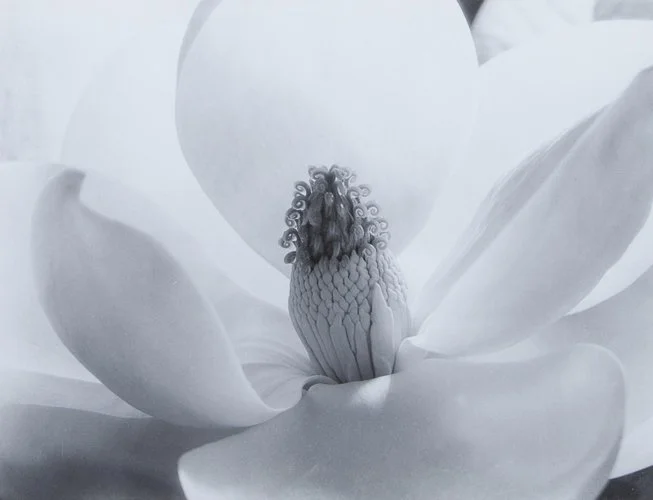
The photographs she made there between 1923 and 1925 — of magnolia blossoms, of calla lilies, of the agave plant — are among the finest botanical photographs ever made. Magnolia Blossom (1925) crops tightly into the flower's interior, revealing the cone of stamens and pistils at the centre in what her granddaughter Meg Partridge later described as "a beautifully sharp, focused, large-format image that is a simple subject, but it's very powerful."
The approach is the opposite of Pictorialism: no soft edges, no painterly haze, no attempt to invoke the mood of something else. It is the flower on its own terms, rendered with maximum precision.
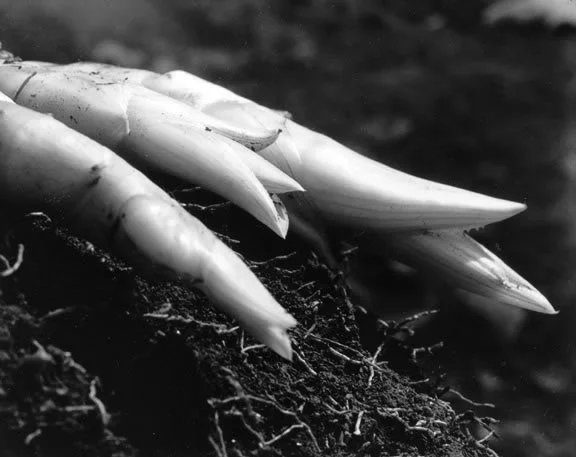
In 1932, Cunningham joined a group of San Francisco Bay Area photographers — including Ansel Adams, Edward Weston, Willard Van Dyke, and Sonya Noskowiak — who formalised their shared commitment to this approach under the name Group f/64.
The name referred to the smallest aperture setting on a large-format camera, which produces the maximum depth of field and the sharpest possible image: an aesthetic manifesto disguised as a technical specification. Weston's photographs of vegetables, nudes, and dunes were so tightly composed and sharply resolved that form and subject blurred together — a pepper became almost indistinguishable from a human torso, a shell from an abstract sculpture.
The botanical vision that had produced Cunningham's magnolias was not only about flowers; it was part of a broader Modernist renegotiation of what photography was for, and what it was capable of.
Symbolism, Sexuality & the Abstract Eye
The middle decades of the twentieth century brought a substantial shift in how flower photography was made and received. Colour photography, commercially available from the 1930s and increasingly widespread by the 1950s, changed the emotional register of botanical images. Where the tonal precision of monochrome had emphasised form, structure, and texture, colour introduced warmth, saturation, and a more immediate sensory appeal. It also introduced the possibility of kitsch.
Flower photography became commercially important — for greeting cards, for seed catalogues, for the nascent advertising industry — and commercial demands shaped a visual idiom of vivid, unambiguous prettiness that was the photographic equivalent of a florist's window.
Against this background, the artists who made the most significant contributions to flower photography in this period were those who refused the pretty. They were interested, instead, in what a flower might mean — or, more precisely, in what could be made to happen when a flower's formal properties were pushed past their comfortable associations.
Robert Mapplethorpe (1946–1989)
Robert Mapplethorpe was trained at the Pratt Institute in Brooklyn, where he studied drawing, painting, and graphic design. He came to photography in the early 1970s, initially making assemblages that incorporated photographic imagery before turning to the medium itself. By the late 1970s he had developed the approach — large-format, black-and-white, immaculately lit, faultlessly composed — that would define his career. He is best known for his portraits and for his explicit photographs of gay sadomasochistic sexual practice, but a substantial body of his work consists of flower studies, made throughout his career and exhibited repeatedly.
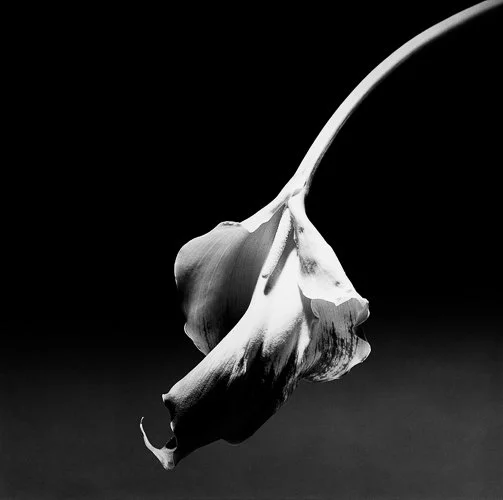
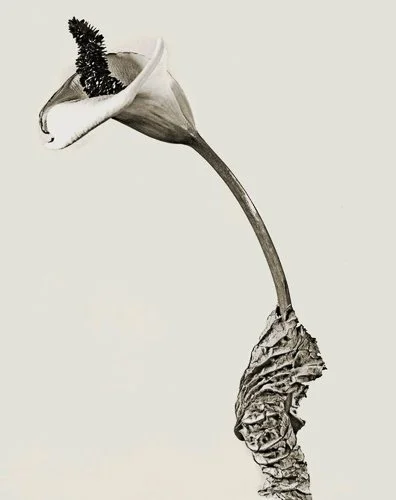
Mapplethorpe's relationship to his flower subjects was characteristically complicated. He once remarked, "I don't love flowers and I don't like having them," explaining that he disliked being responsible for their inevitable death. Yet his photographs of calla lilies, irises, orchids, and tulips demonstrate a sustained and meticulous attention to floral form that is difficult to reconcile with indifference.
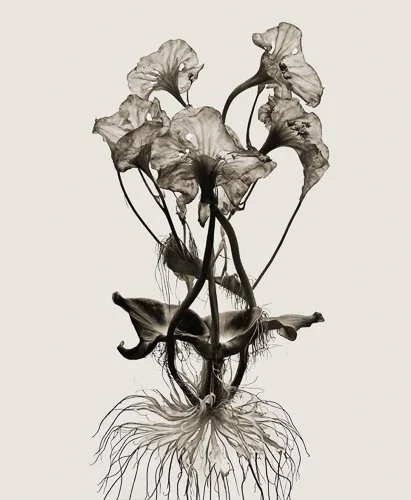
What he brought to the flower was his commitment to classical formal values — symmetry, tonal range, the elegant disposition of mass and line — and a refusal to sentimentalise. His calla lilies in particular have an Aristotelian purity: isolated, lit with surgical precision, their forms resolved into something that is simultaneously plant, sculpture, and body. Critics have noted the erotic charge of the work, and Mapplethorpe did not discourage that reading. The rigid pistil, the folding petal, the sensuous curve of a stem: these are available to any eye that is willing to see them.
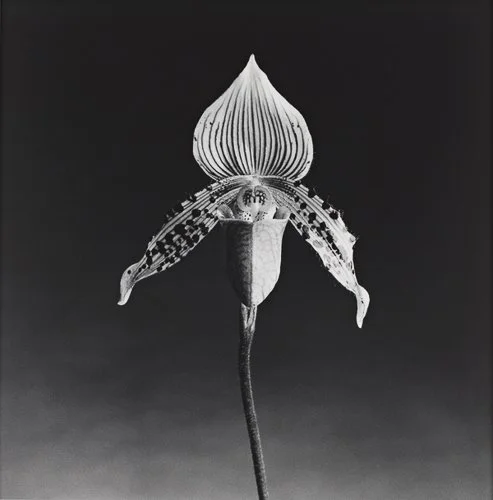
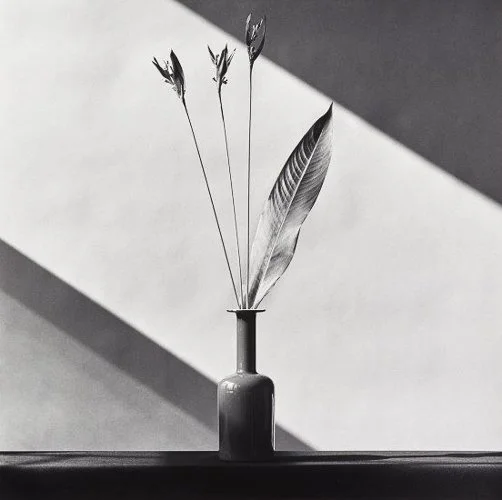
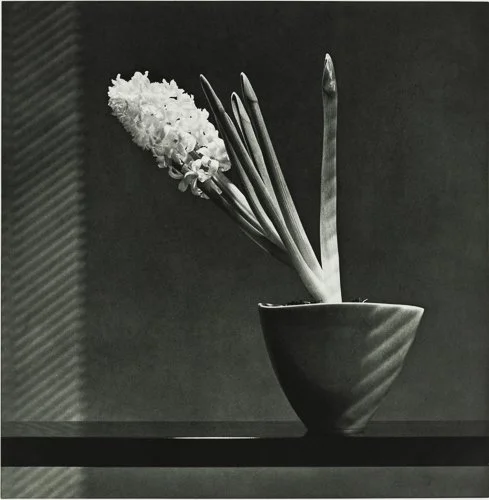
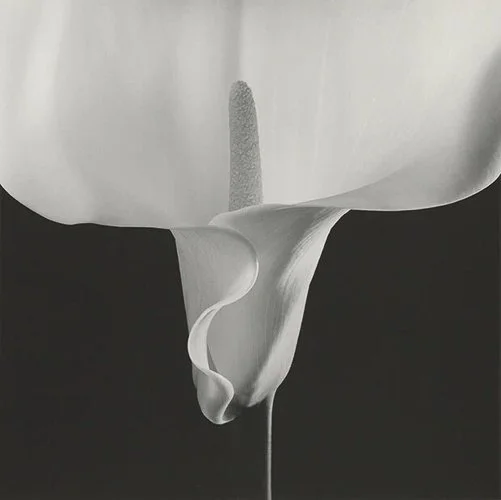
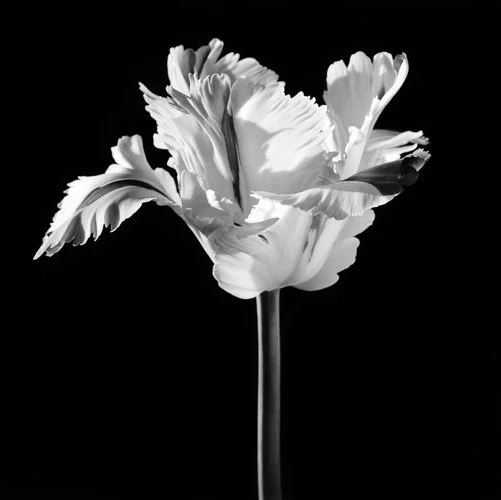
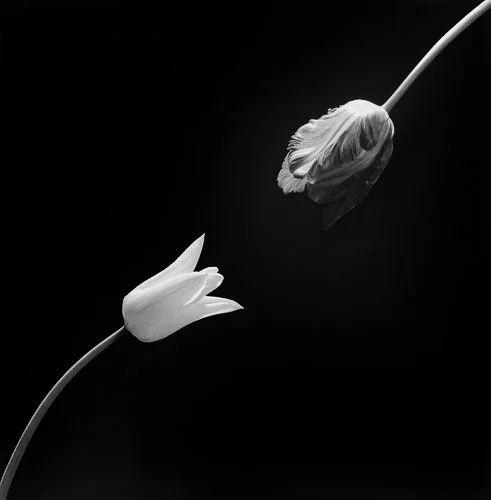
The formal rigour was inseparable from the cultural provocation. Mapplethorpe's career unfolded against a backdrop of increasingly intense conflict over public arts funding and the limits of what publicly supported institutions could display. The retrospective exhibition The Perfect Moment became the flashpoint. At the Corcoran Gallery of Art in Washington DC, the exhibition was cancelled under pressure from politicians — including Senator Jesse Helms — who objected to the NEA funding that had supported it.
When the Contemporary Arts Center in Cincinnati, Ohio, opened the exhibition in April 1990, its director Dennis Barrie was indicted on criminal obscenity charges. The trial ran from 24 September to 5 October 1990; the jury returned a not-guilty verdict on all charges after only two hours of deliberation.
The flower photographs were never the specific focus of the prosecution — which centred on explicit works and two photographs of nude children — but they were part of the same body of work, and the trial's eventual outcome was important for the principle that a photographer's entire oeuvre must be considered as a whole, not reduced to its most controversial components.
Mapplethorpe died of complications from AIDS in March 1989, several months before the Cincinnati trial began. He was forty-two.
The development of colour photography as an artistic medium, and its impact on flower photography more broadly, is a story of gradual emancipation from documentary function. Throughout the 1960s and 1970s, photographers increasingly used colour not for its fidelity to the appearance of the natural world but as an element in its own right — a compositional tool as loaded with meaning as line or tone.
The abstract possibilities of flower photography attracted practitioners who were less interested in the identifiable flower than in the forms it contained: the geometry of a cross-section, the translucency of a backlit petal, the rhythm of stamens. This approach had roots in Blossfeldt and Cunningham, but in the hands of photographers working with colour slide film in the 1970s and 1980s it acquired a new intensity and decorative richness.
Digital, Personal & Viral
The arrival of digital photography in the consumer market during the 1990s, and its rapid displacement of film through the early 2000s, changed flower photography in ways that are still being absorbed. The most immediate change was the elimination of the economic and temporal gap between making a photograph and seeing the result.
With film, a photographer might expose a roll and not develop it for days or weeks; the discipline this enforced was a particular kind of attention, a willingness to commit to a composition without the reassurance of an instant review.
Digital photography removed that friction entirely. The immediate feedback loop — take a photograph, see it, adjust, take another — made experimentation cheaper and more iterative. It also democratised macro photography: modern compact cameras and smartphones with dedicated macro modes could achieve results in flower photography that, a generation earlier, would have required expensive specialist lenses and careful darkroom work.
The smartphone is the most consequential development in the history of flower photography since the cyanotype. The camera that almost everyone now carries everywhere is, among other things, a botanical camera of remarkable capability. Its computational photography — the processing that happens after the shutter fires, in the phone's own software — can produce images of considerable quality from small sensors in imperfect light.
The automatic scene detection that identifies a flower and adjusts exposure accordingly is a form of specialisation that would have been unimaginable to Fox Talbot. The result has been an enormous expansion of the audience for flower photography, and an equally enormous expansion of its practitioners. Flower images are now made by people who would never describe themselves as photographers, in quantities that dwarf the entire output of the professional and fine-art tradition that preceded them.
Social media — and Instagram in particular, from its launch in 2010 — created both a mass audience for flower photography and a set of visual conventions that are already beginning to calcify into clichés.
The flat-lay composition, in which flowers are arranged on a white or marble surface and photographed directly from above, became ubiquitous in the early 2010s. So did the bokeh-saturated petal close-up, the pastel palette, the dewy bud against a blurred garden background.
These images are competently made and immediately pleasurable; they are also, taken in aggregate, remarkably similar to one another. The tension between the platform's algorithmic appetite for engagement and the photographer's desire for originality has produced a particular kind of flower image — pretty, well-lit, technically undemanding, and aesthetically conservative — that represents the genre's commercial mainstream.
Against this mainstream, a number of contemporary practitioners have pursued more demanding and unexpected approaches to the photographed flower.
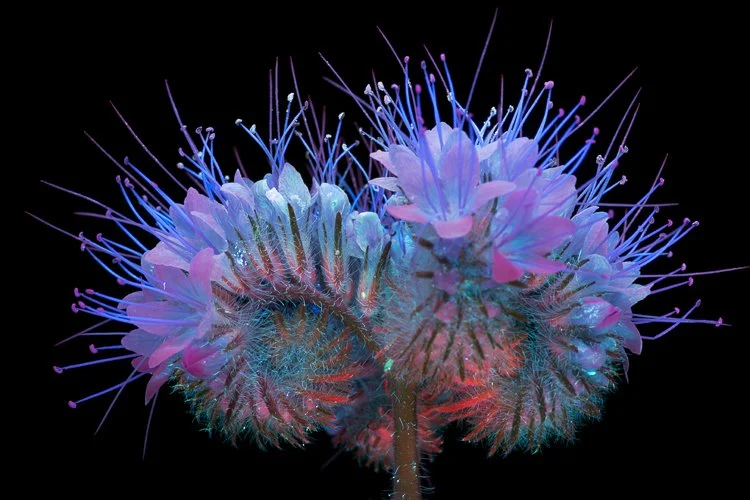
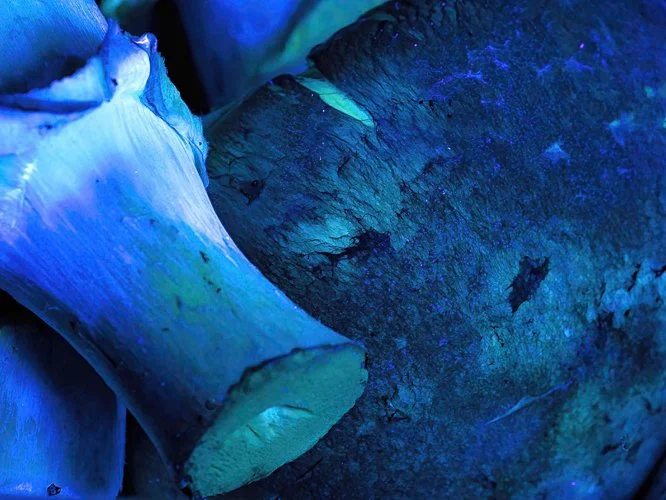
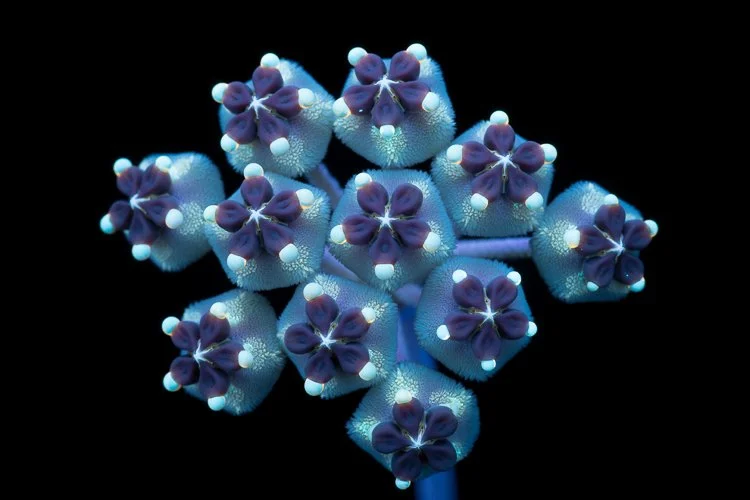
Craig Burrows works in a specialised branch of botanical photography known as UVIVF — ultraviolet-induced visible fluorescence. By illuminating flowers with high-intensity ultraviolet light in an otherwise dark environment, Burrows records the visible fluorescence emitted by the plant's own chemistry. The results are radically unlike any flower photograph made by visible light: blooms glow in vivid blues, pinks, and yellows against deep black, revealing patterns and structures invisible to the human eye under normal conditions.
Burrows, based in Southern California, has documented hundreds of species using this method and has noted the scientific dimension of the work: the fluorescent patterns he captures are often the same patterns that guide pollinators, particularly bees, which can perceive ultraviolet light directly. His photographs sit at the intersection of scientific inquiry and visual art in a way that would have been entirely recognisable to Anna Atkins.
Joan Fontcuberta, the Spanish photographer and theorist, has used flowers for explicitly conceptual purposes. In his Herbarium series (1984), Fontcuberta created and photographed fictional plant species — elaborate fabrications presented as authentic botanical specimens, complete with Latin taxonomic names and scientific annotations. The series interrogates the conventions of documentary photography and the cultural trust we extend to the photographic image. For Fontcuberta, the flower is a vehicle for epistemological mischief.
Barbara Ciurej and Lindsay Lochman, an American collaborative duo, approach botanical subjects through cultural commentary, using flowers as central motifs in photographic narratives that blend documentary and fine-art methods to examine the symbolic and cultural freight that flowers carry — across history, mythology, commerce, and popular culture.
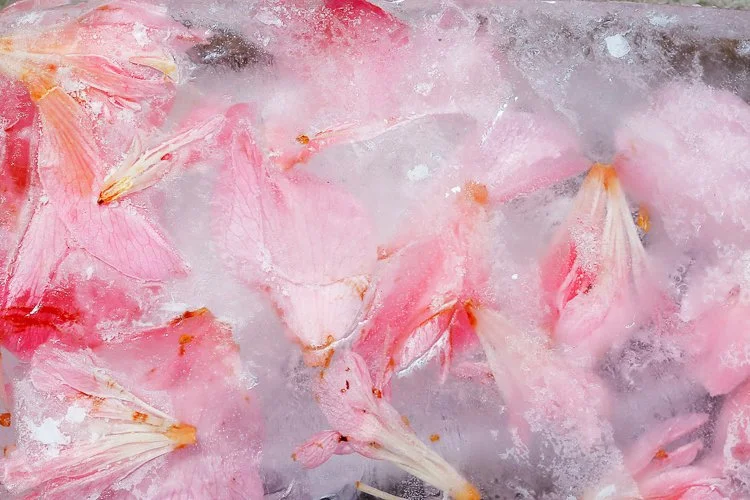
Joseph Horner, a UK-based photographer known informally as the flower block master, has developed a highly distinctive method: he encases cut flowers in blocks of ice and photographs them at intervals as the ice forms, holds, and thaws. The images that result are simultaneously preservations and deteriorations, the flower caught in a state of suspension that is also a form of slow destruction.
Horner uses natural light throughout, relying on its refraction through the ice to create complex internal luminosity that artificial lighting could not replicate. The work engages directly with questions about the balance between nature and artifice, and about photography's long-standing role as a technology for holding transient things still. His images have been exhibited internationally, including in the NFT art space, and have appeared in Vogue and Elle.
Julie Powell, an Australian artist, photographs flowers in complete darkness using a technique known as light painting — moving a handheld light source across her subjects during a long exposure so that the image is built up incrementally, entirely under her control.
The resulting photographs have an unusual quality: the blooms appear almost luminous, hovering against absolute black, with textures and three-dimensional forms emphasised by the directional raking of the painted light. The darkness is not merely a stylistic choice but a structural one: by removing all ambient light, Powell isolates the flower from any narrative context and forces attention onto its physical surface. The work sits in a tradition of studio botanical photography while departing from it entirely in method.
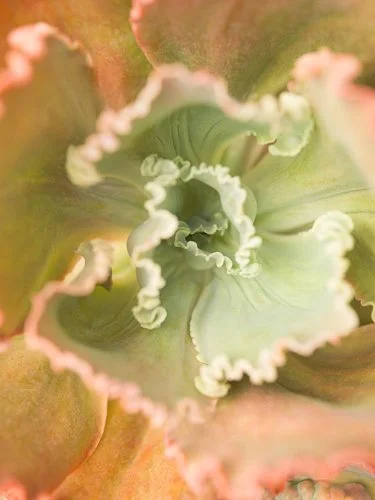
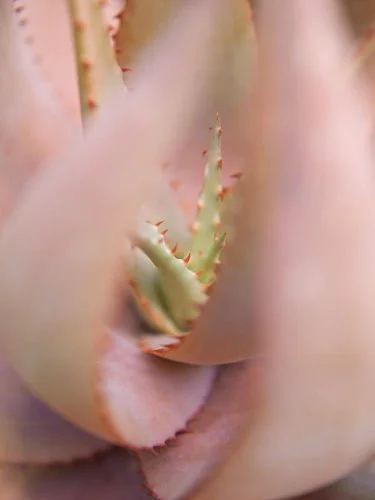
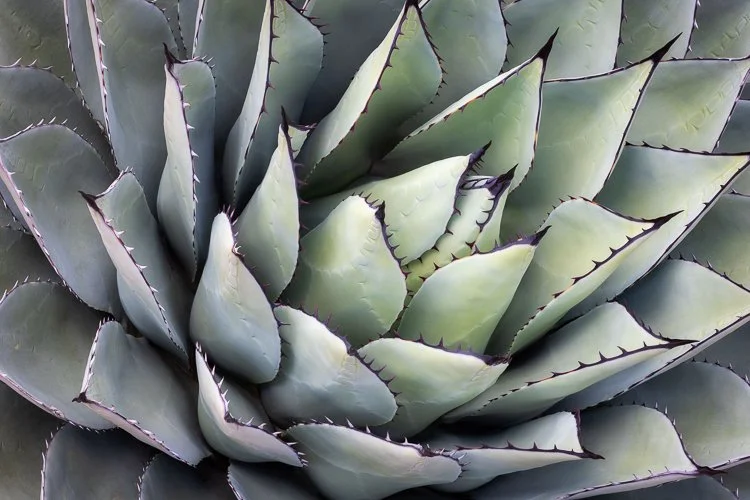
Mona Kuhn's project Bushes & Succulents pairs close-up botanical images with solarised photographs of human forms, placing the two in visual dialogue across the pages of the work. The botanical images are made at close range, emphasising the tactile and structural qualities of succulent plants and dense foliage; the human figures, rendered in the high-contrast reversal of the solarisation process, acquire something of the plant world's quality — fleshy, branching, formally ambiguous. The project does not offer a simple equivalence between the organic and the figurative but rather uses the proximity of the two to unsettle both: the plants become more bodily, the bodies more botanical.
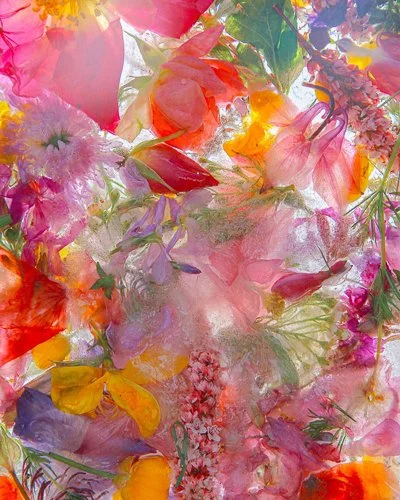
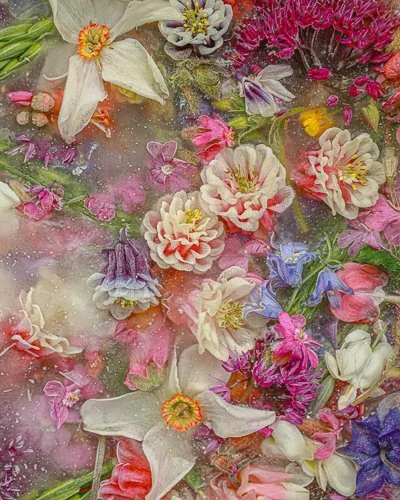
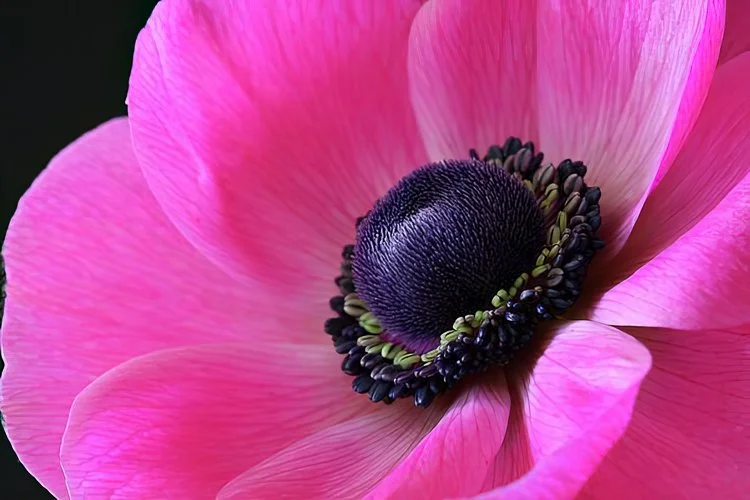
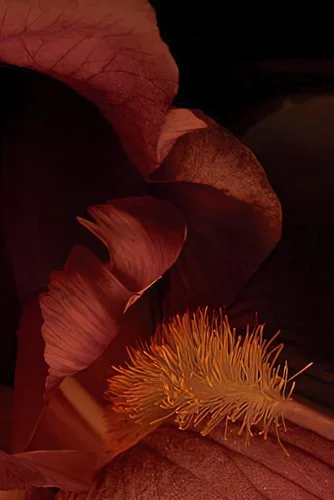
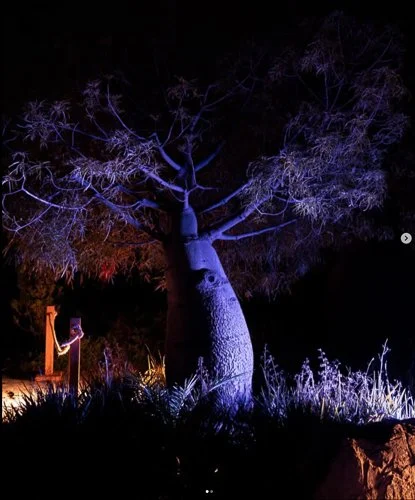
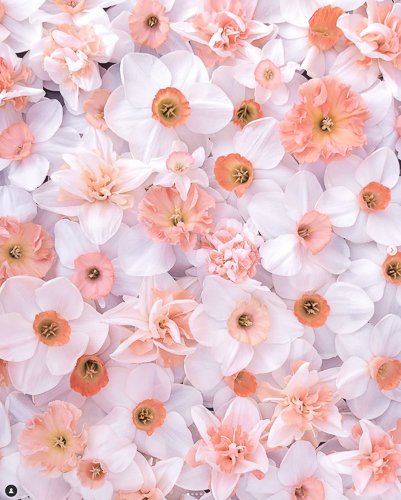
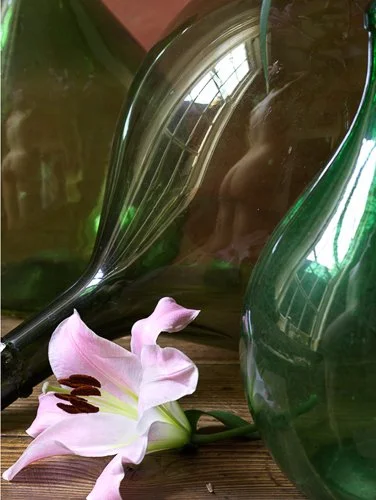
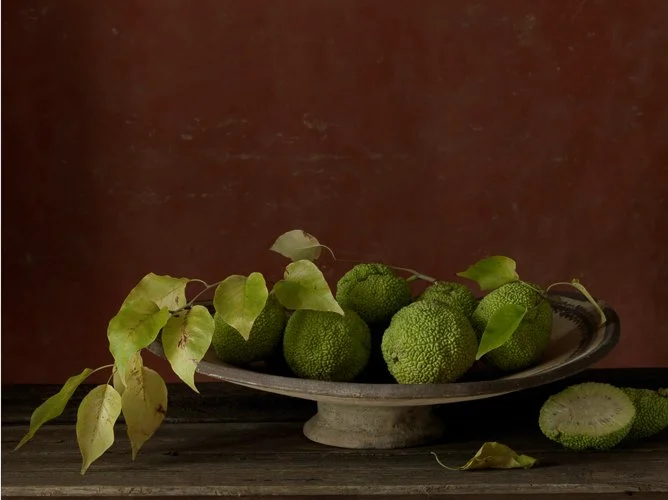
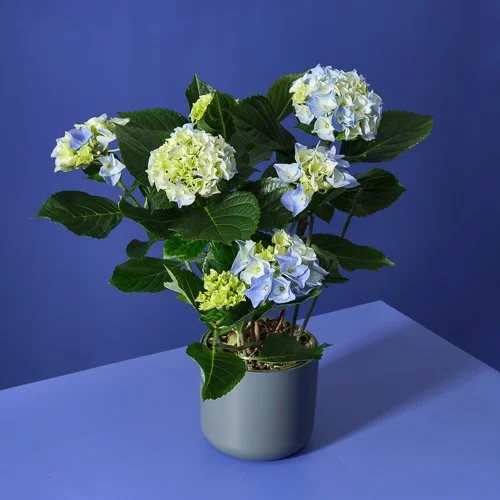
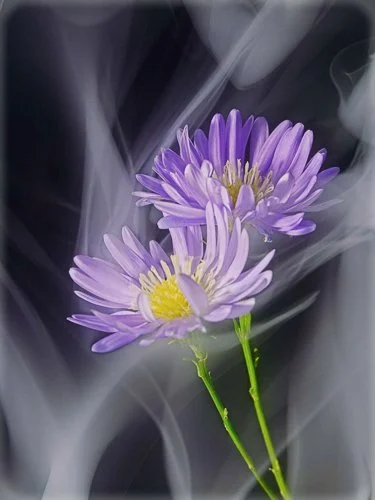
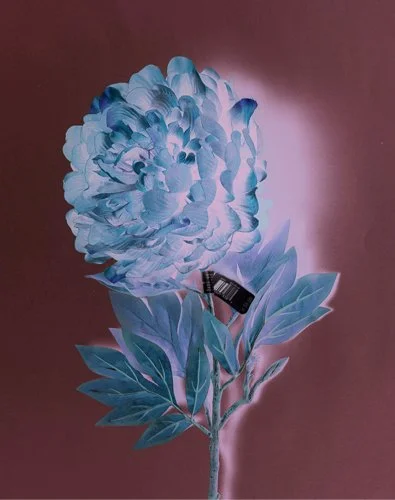
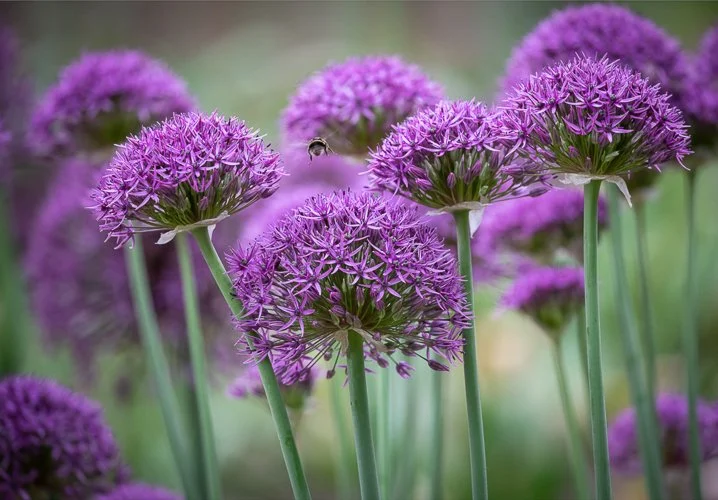
Georgianna Lane specialises in romantic, light-filled flower portraiture, working squarely within the tradition of botanical photography that stretches back through the nineteenth century but inflected with the sensibility of a contemporary practitioner. Her images are characterised by the careful management of natural light, which she uses to give flower subjects a warmth and intimacy more usually associated with portrait photography.
Where much contemporary flower photography pursues the abstract or the conceptual, Lane's work is a deliberate engagement with the established aesthetic of the genre — an argument, made through repeated practice, that the tradition itself retains expressive resources that have not yet been exhausted.
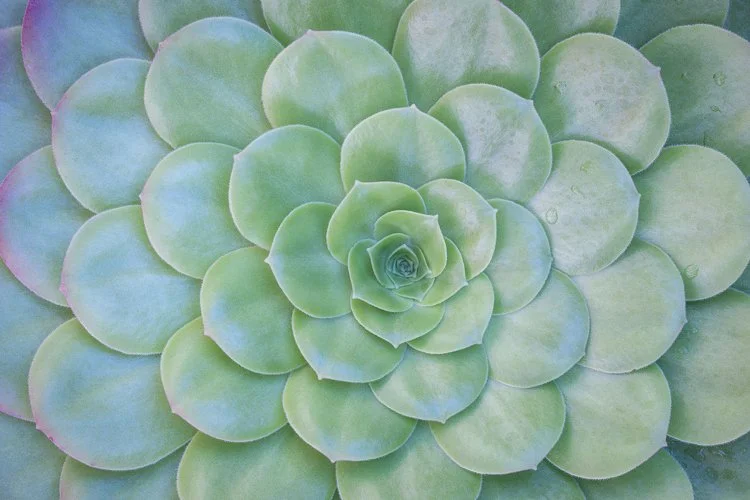
Sarah Marino, an American photographer, works primarily with close-up compositions that push flower photography towards abstraction without abandoning its documentary foundation. Her images are made at the threshold between representation and pattern — a petal surface becomes a landscape, a cluster of stamens resolves into a geometric field, the translucency of a backlit bloom reveals a vein structure that reads as drawing.
Marino is interested in the subtle forms that close attention discloses, and in the idea that the camera can reveal aspects of a subject that ordinary vision overlooks. She is also recognised as an educator and writer on flower photography, and her articulation of close-up practice has influenced a generation of practitioners in the field.
Frank van Driel is a Dutch photographic artist whose flower work is concerned primarily with the act of looking itself. His recent book to be frank extends this inquiry into autobiography, exploring the personal motivations and perceptual habits that shape how he encounters and photographs the world.
His flower images characteristically occupy an uncertain position between documentary and fine art: they are precise about what they show but resistant to being read as mere records, their formal qualities — light, depth of field, the relationship between subject and ground — handled with a deliberateness that draws attention to the frame as a constructed thing. Van Driel's interest is less in the flower as subject than in the flower as an occasion for examining the conditions of its own representation.
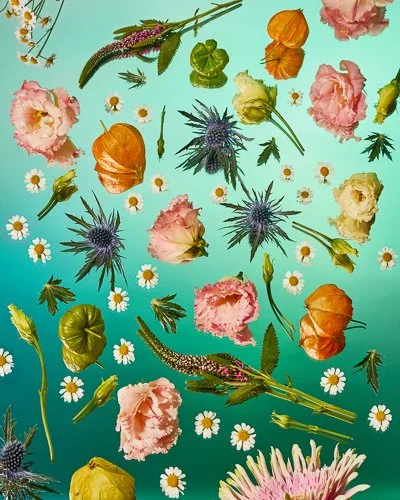
Alexis Ko, a commercial still-life photographer based in London, brings to flower photography a set of visual strategies developed in product and fashion work: meticulous control of light, rigorously considered colour palettes, and a compositional economy that makes every element of the image purposeful. Ko's flowers are often positioned against minimal backgrounds and lit to suggest otherworldly, artificially perfected versions of themselves — reimagined species rather than observed ones.
The work bridges fine art and commercial photography without being fully at home in either, its technical polish in the service of an aesthetic that is genuinely peculiar rather than merely decorative.
Cynthia Miller, based in the Bristol area, works primarily in a home studio using Micro Four Thirds cameras — a choice that reflects a considered position about accessible technology and its artistic potential. Her images concentrate on intricate botanical detail in controlled environments, using the studio setting to eliminate the variables of outdoor photography and focus attention on the surface qualities of individual blooms: the texture of a petal's inner face, the geometry of a seed structure, the way a flower's colour shifts across its depth. Miller's practice is a demonstration that photographic tools of modest specification, applied with care and intelligence, are capable of results that stand comparison with work made on more expensive systems.
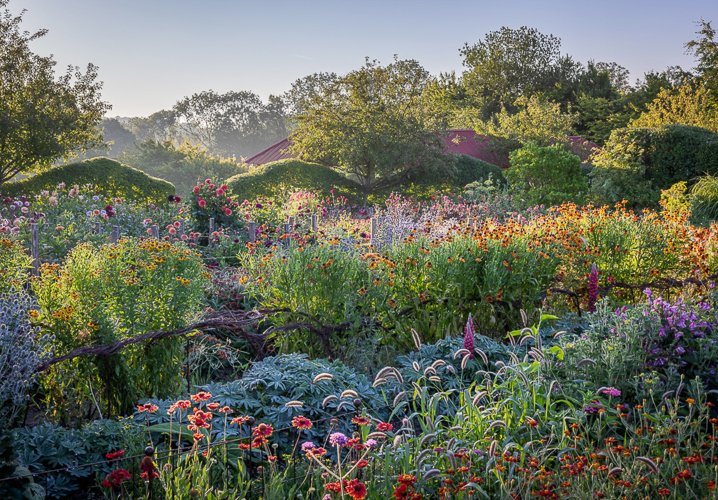
Jonathan Buckley is a UK-based photographer whose career has been built at the intersection of horticulture and editorial photography. He has collaborated with leading garden writers and contributed images to more than thirty books, alongside regular work for magazines and newspapers.
His photographs are characterised by vivid and accurate colour, close attention to botanical detail, and an ability to convey not just the appearance of a garden or a particular bloom but its atmosphere — the quality of the light at a particular hour, the density of planting, the sense of a place encountered rather than merely recorded. He has received multiple awards including the Garden Media Guild Garden Photographer of the Year, a recognition that locates his work firmly within the specialist tradition of horticultural photography while also acknowledging its broader visual ambition.
Closing Thoughts
What does this long history tell us? Perhaps most directly, it tells us that the photographed flower has never been only itself. From Anna Atkins's scientific silhouettes to Mapplethorpe's eroticised calla lilies, from Blossfeldt's architectural objectivity to Craig Burrows's fluorescent underworld, the flower has served as a screen onto which photographers project their particular concerns: about beauty, about knowledge, about the body, about nature and its relationship to human culture.
The flower is docile, available, formally extraordinary, and culturally overdetermined. It is an ideal subject for photography precisely because it accommodates almost any intention.
There is also something more fundamental at work: the desire to hold a thing that cannot be held. Flowers are, by their nature, transient. They exist at peak beauty for days, sometimes hours, before they decline.
Photography has always been, at least in part, a technology for making things last — for pressing time flat and keeping it there. The impulse to photograph a flower is not entirely different from the impulse to press one between the pages of a book, which is not entirely different from the impulse that drove Anna Atkins to lay her algae specimens on treated paper and expose them to the sun.
We photograph flowers because they are going to die, and because we are unwilling to let them go without some record that they were there, and that they were, in their brief moment, exactly as extraordinary as they appeared.