Reflections in Photography
Photography occupies a peculiar ontological position among the arts: it is a medium defined by its relationship to the real, yet every photograph is, in the strict sense, a representation — a two-dimensional trace of light, not the thing itself. When photography turns its lens toward a reflective surface, this inherent complexity is compounded. The reflection in a mirror, a window, or a rain-soaked pavement is itself already a representation of the world; it is not the street, but the street as it appears in a glass darkly. The photograph of a reflection is therefore a representation of a representation — a double remove from whatever actuality subtends the image. One might expect this doubling to dilute or exhaust the image's meaning, to produce something attenuated and indirect. In practice, the opposite has consistently been true. Across nearly two centuries of photographic practice, the reflected image has attracted some of the medium's most serious and philosophically adventurous practitioners precisely because that double remove, far from weakening the image, charges it with meaning unavailable in the direct photograph. To photograph a reflection is to photograph the act of seeing itself — to make visible the mediating surface through which the world is always, already, perceived.
The reasons for this are not merely formal. There is a deeper resonance between the nature of the photographic medium and the nature of reflection. Both are predicated on light; both produce an image that is simultaneously faithful and false — faithful to the geometry of light-paths, false to the density and tangibility of the thing depicted. Both arrest a moment that is, in the world, perpetually in motion. And both raise the question of what it means to look: to look at a puddle-reflection of a Paris street is to understand that looking is always already a kind of transformation, that the world does not simply enter the eye but is shaped and altered by the surfaces through which it passes. Photography understood this about itself long before its most articulate theorists were able to say so.
Early Photography & Reflective Surfaces
The history of photography's engagement with reflective surfaces begins, characteristically, not with artistic intention but with technical embarrassment. The daguerreotype, announced to the world by Louis-Jacques-Mandé Daguerre in 1839 and for the first decade of photography the dominant process, presented a paradoxical surface: it was itself a mirror. The silver-plated copper sheet that constituted the daguerreotype's support was highly polished before sensitisation, and the image it ultimately bore — tonally reversed, impossibly detailed, astonishing to contemporary eyes — was formed on a surface that, depending on the angle of view, still reflected the face of the person holding it. The daguerreotype was thus a mirror that remembered. It retained the image of what had stood before it while, at certain angles, continuing to function as a reflective surface. This double nature — the archival and the current, the fixed and the living — was not lost on early commentators, and it has haunted photographic theory ever since.
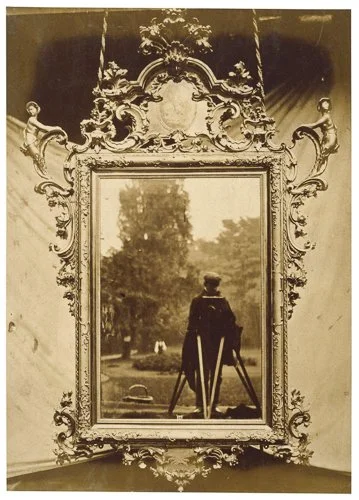
The challenge of photographing reflective objects, as distinct from the reflective nature of the photographic support itself, fell early and urgently on the shoulders of the medium's first professional practitioners. Among these, Charles Thurston Thompson (1816–1868) occupies an instructive position. Appointed in 1856 as the first official photographer of the South Kensington Museum — the institution that would become the Victoria and Albert Museum — Thompson was charged with the documentary photography of the museum's collections. His primary task was straightforward in conception but formidable in execution: to produce faithful photographic records of objects assembled precisely for their surface qualities. Silver, gilt bronze, polished wood, lacquer, enamelled metalwork, glazed ceramics — the South Kensington Museum's holdings were rich in exactly the surfaces that defeated the camera. A highly polished silver salver would reflect the arc lamp illuminating it; a gilt-bronze figure would produce hot spots that obliterated detail; a gilded frame around a painting would catch the light and blind the lens. Thompson's more than ten thousand negatives, preserved in the museum's collections, constitute a sustained and largely unpublicised engagement with the problem of photographing reflective surfaces for documentary ends.
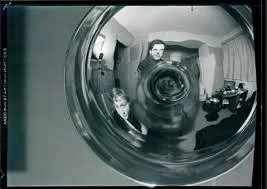
The inadvertent self-portrait — the photographer caught in the reflection of the very object being documented — was a recurrent hazard of this work, and examples appear scattered through early photographic archives. Thompson himself appears, draped in the black cloth of his camera, as a ghostly reflection in several of his photographs of polished objects. These accidental self-portraits are among photography's earliest examples of the meta-photographic image: the photograph that records, within itself, the act of its own making. What Thompson intended as a technical failure — the unwanted presence of the photographer's image in the document — later generations of photographers would pursue as a deliberate formal and philosophical strategy. The ghost in the silver is the photographer revealing that no image, however apparently objective, is made without a presence behind the lens.
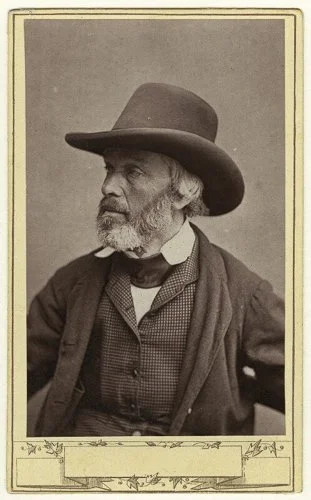
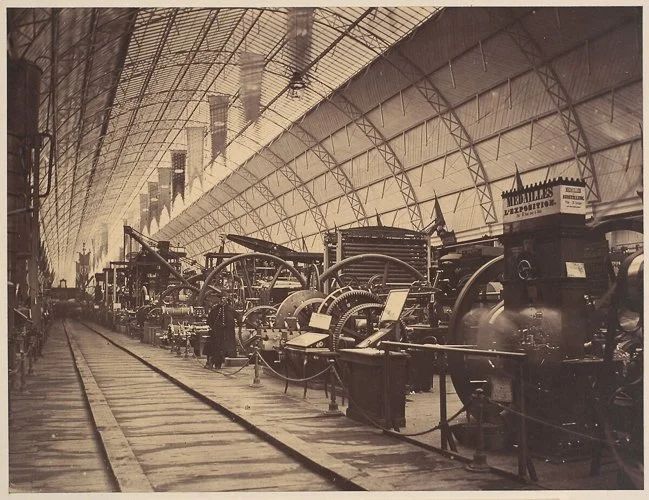
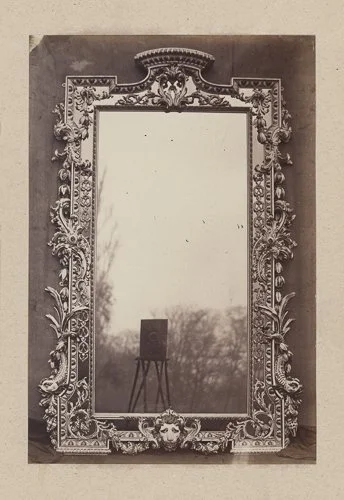
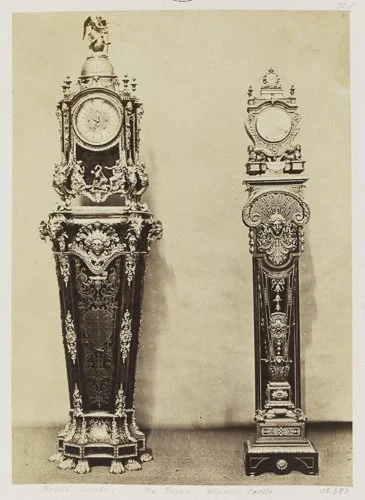
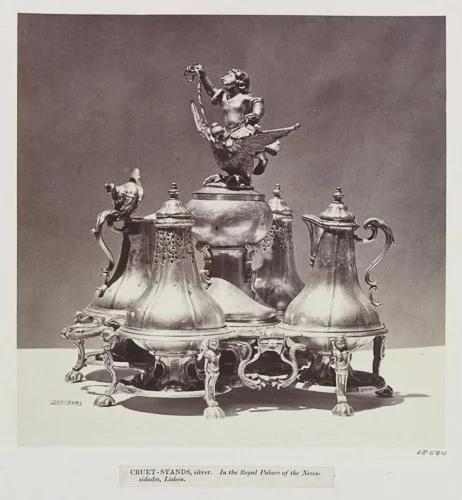
Thompson's career at the South Kensington Museum (from 1853 and officially from 1856 until his death in Paris in January 1868) coincided with the broader expansion of photography as an institutional tool. Henry Cole, the museum's first director and Thompson's brother-in-law, understood photography as an extension of the museum's educational mission, a means of disseminating images of its collections beyond the building's walls. Under Cole's direction, Thompson photographed not only the permanent collection but also loan exhibitions, architectural surveys, and objects in other institutions, including the Raphael Cartoons at Hampton Court (photographed 1858, the year before they were moved to the South Kensington Museum). In 1866, Thompson undertook an extensive tour of the Iberian Peninsula, documenting objects in the royal palaces in Lisbon and ecclesiastical architecture throughout Portugal and Spain.
The question of reflective surfaces as a category of photographic subject — rather than as a technical problem to be overcome — received attention from the Maryland Center for History and Culture in a 2019–2020 exhibition titled Reflections: A Brief History of Looking at Ourselves, organised to mark the 180th anniversary of photography's announcement. The exhibition, which drew on the Centre's historical photography archive, traced the evolution of self-representation in the photographic medium from the earliest daguerreotypes through to the contemporary digital selfie, situating the reflective self-portrait as a persistent thread in the medium's history. The exhibition was co-developed with photographer and educator Elena Volkova, who worked extensively with the Centre's photographic archives during its preparation.
André Kertész & the Poetic Puddle
If Charles Thurston Thompson represents photography's involuntary first encounter with the reflected image, André Kertész (1894–1985) represents its first deliberate embrace. Born in Budapest, Kertész bought his first camera in 1912 and photographed throughout his military service in the Austro-Hungarian army during the First World War, including a series of images made during his convalescence after being wounded — among them a photograph of a swimmer seen through the distorting surface of a pool, which curator Mirjam Kooiman has identified as an early articulation of the interest in distortion, mirroring, and reflective surfaces that would run through his entire career. The image, made around 1917, shows the swimmer's body dissolved and remade by the water's surface, recognisable yet unreal: a figure in both the physical and rhetorical sense.
Kertész arrived in Paris in 1925 with limited savings and no professional connections. Within three years, he had established himself as a major figure in modern art photography, his work published in the leading French picture magazines — Vu, Voilà, Le Matin, Frankfurter Illustrierte — and exhibited alongside Man Ray and Berenice Abbott. His Parisian work of the late 1920s and early 1930s is saturated with reflective surfaces: rain-drenched cobblestones that double the architecture above them, café windows in which the interior and the street conduct their perpetual argument, puddles in which the sky descends to street level. Kertész had, as a painter-influenced photographer, an acute sensitivity to the way a reflective surface reorganises pictorial space — compressing, inverting, superimposing — and his street photographs from this period exploit this reorganisation with extraordinary compositional intelligence.
The decisive development came in 1933, when Kertész was commissioned by the French humour and erotic magazine Le Sourire to create a series of figure studies. Returning to an interest he had harboured since at least 1930, when he had experimented with a distorting mirror with his fellow artist Carlo Rim, Kertész obtained a parabolic funhouse mirror — the kind found at Parisian amusement parks such as the Luna Park — and, over approximately four weeks in his studio, made some two hundred negatives of two female models, Najinskaya Verackhatz and Nadia Kasine, whose bodies the mirror contracted, elongated, compressed, and dissolved. Twelve of the resulting images were published in Le Sourire in March 1933, under the title Fenêtre ouverte sur l'au-delà (Window Open onto the Beyond) with a text by A. P. Barancy. Five further images appeared in the periodical Arts et Métiers Graphiques in September of the same year, under the title Kertész et son miroir.
The published reception was enthusiastic, but the full significance of the series — gathered under the collective title Distortions — only became apparent over subsequent decades. Kertész included a selection in his first solo New York exhibition at Gallery PM in 1937, grouped under the title Grotesque with other mirror-distorted objects. In 1936 they were exhibited at the Museum of Modern Art in New York. The book Distortions was not published until 1976 (by Alfred van der Marck Editions), long after the series had entered the canon. By then it was understood not merely as an exercise in Surrealist bodily transformation — though it is certainly that — but as a meditation on what a reflective surface does to the represented body and to the relationship between the photograph and the thing it purports to record.
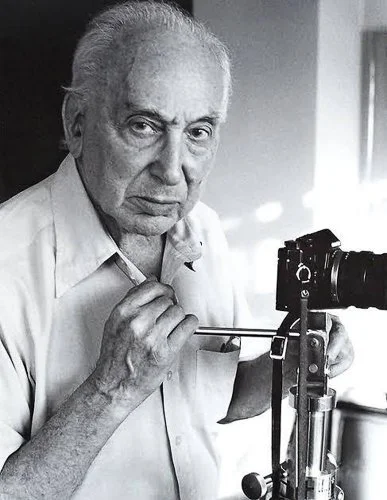
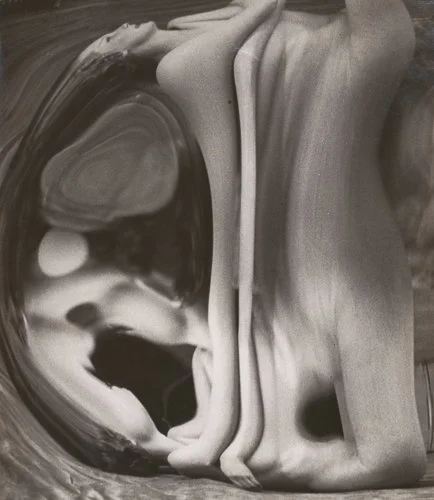
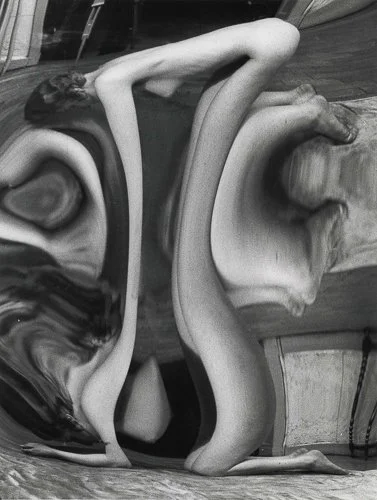
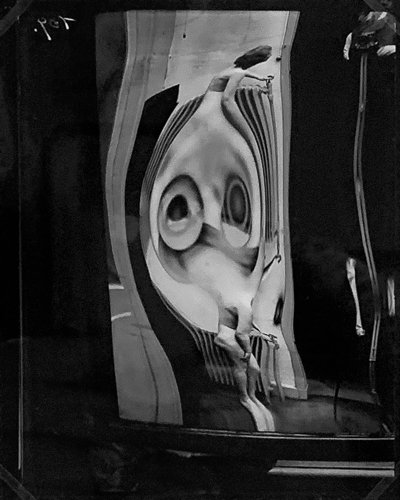
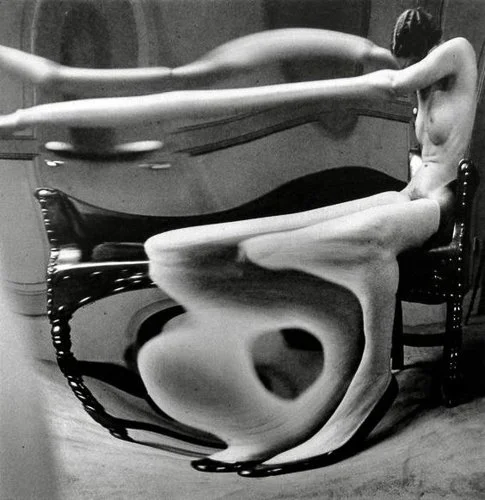
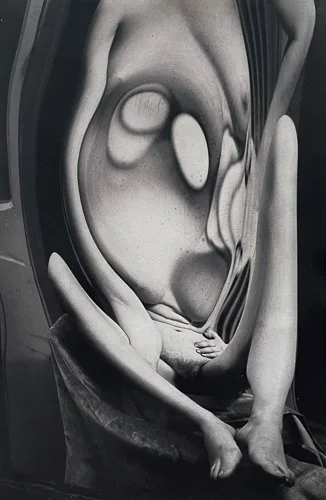
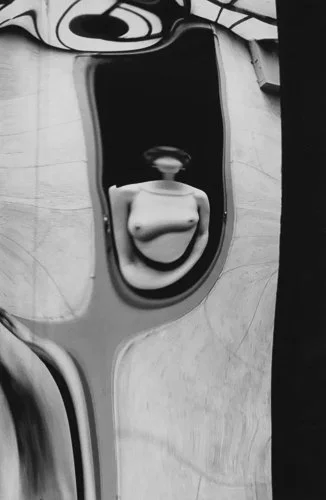
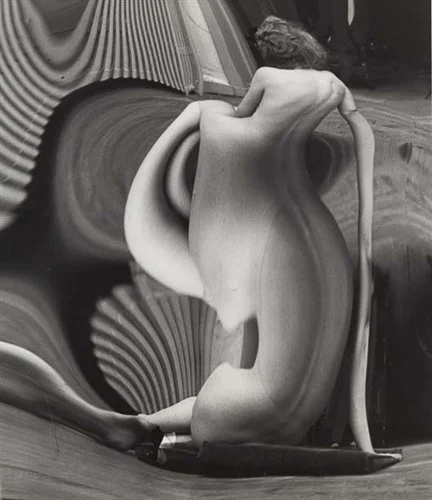
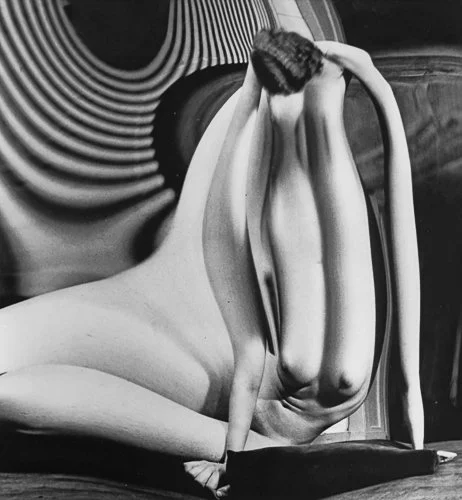
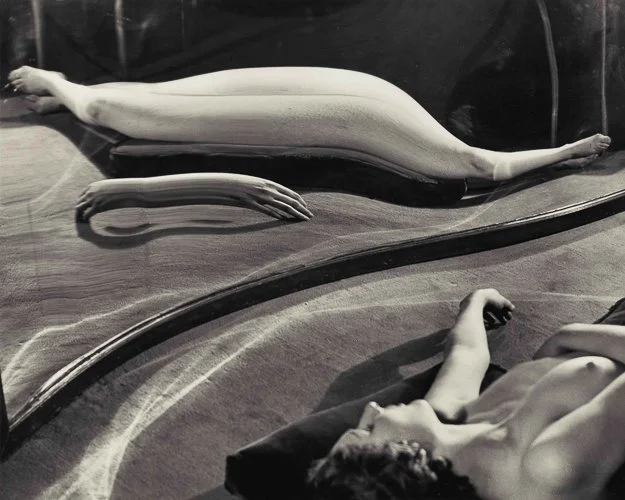
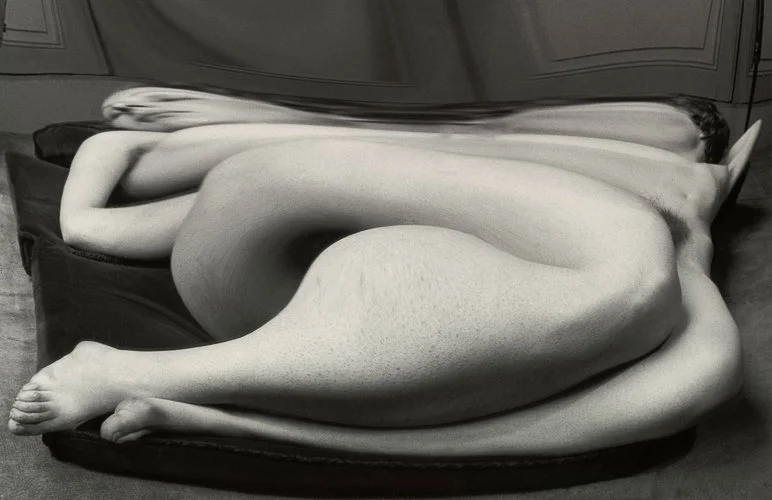
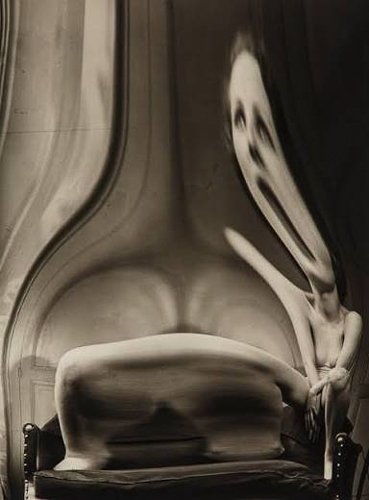
Kertész described the sessions as "absolute fun," and there is a spirit of play in the Distortions that distinguishes them from the more earnest body-distortion work of some of his contemporaries. But play, in the Kertész of this period, was never merely frivolous. "I do not document anything," he said, "I give an interpretation." The Distortions series is the most extreme statement of this interpretive stance in his work: the mirror does not distort the body so much as reveal that the body, under any photographic treatment, is already an interpretation, a construction, a thing shaped by the surface through which it is recorded. What the parabolic mirror makes explicit, Kertész's street photographs — with their puddle-inversions and window superimpositions — had been suggesting all along.
The influence of the Distortions was immediate and widespread. Within months of the first Le Sourire publication, other photographers were imitating the technique; the first use of the word "Distortions" as a title for the series dates to a 1939 article in the American periodical Minicam entitled "Paradox of a Distortionist." In 1937, MoMA's seminal exhibition History of Photography included images from the series. Kertész's approach established that reflective surfaces were not peripheral to photographic art but among its richest resources — that the mirror was not a device for trickery but a philosophical instrument for interrogating the nature of the photographic image.
The Philosophy of the Reflected Image
No account of photography's relationship to the reflected image can avoid Walter Benjamin (1892–1940), whose engagement with mirrors, Paris, photography, and the philosophy of the image produced some of the most productive intellectual frameworks for understanding what the camera does when it confronts a reflective surface. Benjamin's thought is dense and resistant to summary, and what follows attempts to do justice to its complexity rather than reduce it to a convenient set of quotable propositions.
Benjamin's concept of the aura — developed most fully in the essay "The Work of Art in the Age of Its Mechanical Reproducibility" (written 1935–36, first published posthumously) — is indispensable to any serious thinking about photographic reflection. The aura, for Benjamin, is "the unique apparition of a distance, however near it may be" — a formulation that captures something essential about the way reflective surfaces behave. The reflected image is simultaneously near (it is on the surface before us) and distant (it is of something that is elsewhere, or no longer present, or seen from an angle that transforms it). It is, in Benjamin's terms, an auratic image: it preserves, within its proximity, an irreducible remoteness.
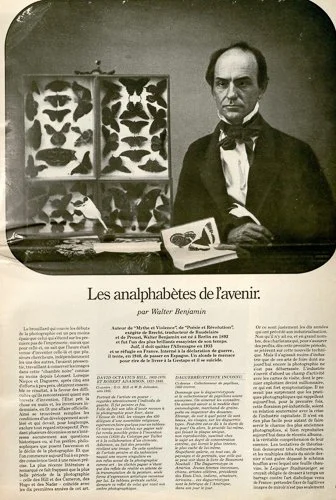
Benjamin defines aura through an analogy with nature: "If, while resting on a summer afternoon, you follow with your eyes a mountain range on the horizon or a branch which casts its shadow over you, you experience the aura of those mountains, of that branch." The aura is the experience of the object's returning your gaze — of being seen by the thing you see. This concept of the returned gaze is central to Benjamin's analysis of early portrait photography. He notes, in his essay "A Small History of Photography" (1931), that the sitters of the earliest daguerreotypes possessed "an aura" that was not merely a technical function of the long exposure times required but a genuinely auratic quality — the emanation of a human presence in which the subject's own gaze met and held the viewer's. As faster optical systems and shorter exposure times became available, this quality dissipated: the photographic portrait became a record of surfaces rather than an encounter with a presence.
Benjamin's discussion of Eugène Atget (1857–1927) is equally foundational. Atget spent nearly thirty years documenting old Paris — its courtyards, streets, shop fronts, staircases, and parks — in a vast archive of glass-plate negatives that he sold to artists, libraries, and archives under the designation Documents pour artistes. Benjamin saw in Atget's photographs something more than documentation: he saw the liquidation of aura. Atget's Paris streets, empty of human presence, are in Benjamin's reading "the scene of a crime" — places from which the subject of the conventional photograph (the human being, the auratic individual) has been removed, leaving behind an uncanny evidence-space in which every object seems to await interpretation. "He seeks the forgotten and the forsaken," Benjamin wrote of Atget, "and hence such pictures are directed against the exotic, ostentatious, romantic sound of city names; they suck the aura out of reality like water from a sinking ship."
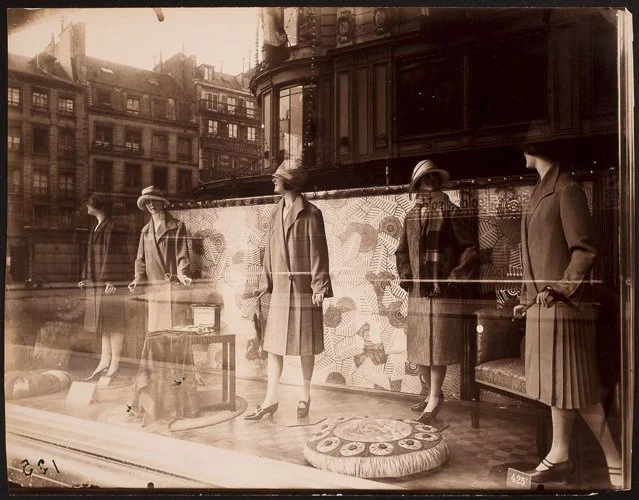
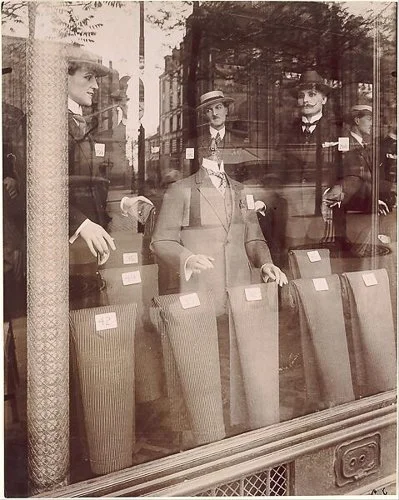
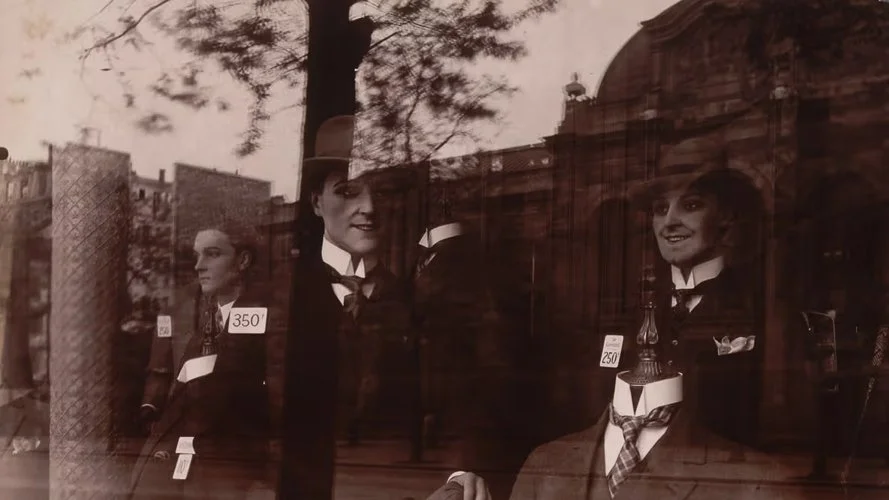
Less often noted is the frequency with which Atget's photographs are themselves reflections. His celebrated shop-window images — corsets, millinery, tableware, mannequins — are also, consistently, images of the street reflected in the glass, of the interior and exterior worlds interpenetrating. In several of Atget's photographs, the shadowy outline of the photographer himself is visible, caught in the glass of a door or window, a dark-draped figure with a lens at its centre. Atget's own shadow and reflection appear as what one scholar has called "a trace of his presence: in the reflective surface of a fire-screen we see a darkly shrouded being with a lens, like the symbol of a photographer — a game with reflections." In these images, the photographer who refused to call himself an artist inadvertently left some of the earliest deliberate-seeming meta-photographic images in the history of the medium: photographs in which the act of photography is itself recorded.
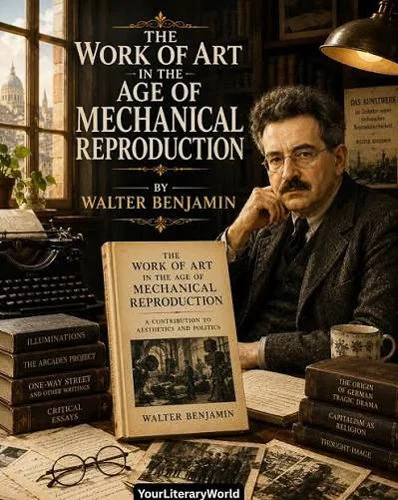
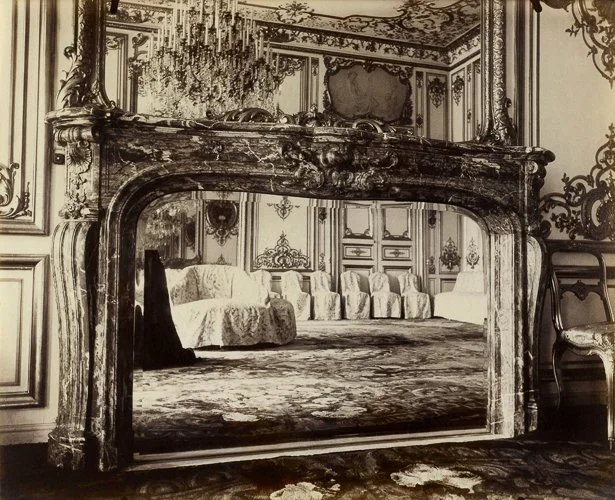
For Benjamin, the most philosophically charged formulation of the mirror's significance appears in Convolute R — the section of The Arcades Project dedicated to mirrors — of the monumental, posthumously published research compendium known as Das Passagen-Werk (published 1982; translated into English as The Arcades Project in 1999). It is here that Benjamin labels Paris a "city of mirrors" and offers his extended account of the mirror as a defining feature of its physiognomy: the cafés with their mirror walls creating "a fantastical magnitude by lamplight," the Parisienne multiply reflected as she passes the mirrored fronts of shops, the very sky above the Seine described as a "brothel-bed accessory hanging over the bed of the river." Benjamin builds toward a remarkable passage: "Let two mirrors reflect each other; then Satan plays his favourite trick and opens here in his way (as his partner does in lovers' gazes) the perspective on infinity. Be it now divine, now Satanic: Paris has a passion for mirror-like perspectives." This appears at [R1, 6] in the Arcades Project, and is Benjamin's own observation rather than a quotation from another source — part of his own commentary interpolated within the passages he was collecting. The Satan figure here is not merely decorative: the perspective on infinity opened by two facing mirrors is, for Benjamin, morally ambiguous — simultaneously the infinite regress of commodity capitalism's endless deferral of the real, and a genuine, if vertiginous, opening onto something beyond the immediate. Paris, he suggests, is the city that has made this ambiguity its architectural signature.
Benjamin's contribution to the philosophy of the reflected photographic image is not a single theory but a constellation of observations and concepts: aura as the experience of distance-in-proximity; the returned gaze as the mark of auratic presence; Atget's emptied streets as the scene of aura's liquidation; Paris as a city whose architecture is already a system of mirrors; the Satanic infinity of two facing mirrors as the figure of modernity's relation to the real. These ideas do not form a system but they illuminate each other, and they illuminate the photographs that are the subject of this essay with a philosophical precision that no simpler framework can match.
Surrealism & the Distorted Mirror
The Surrealist movement, which dominated Parisian intellectual and artistic life through the late 1920s and 1930s, was deeply drawn to mirrors and to doubled, reflected, distorted images. The movement's foundational interest in the unconscious, in dreams, in the uncanny irruption of the strange within the familiar — all of these found a natural expression in the mirror, which doubles the world while making it strange, which returns the gaze while transforming the gazer, which produces an image that is simultaneously faithful and unreliable. The Surrealist mirror is not merely a technical device but a psychological and philosophical instrument: it is the surface at which the self and its double confront each other, at which reality and its representation cannot be cleanly separated.
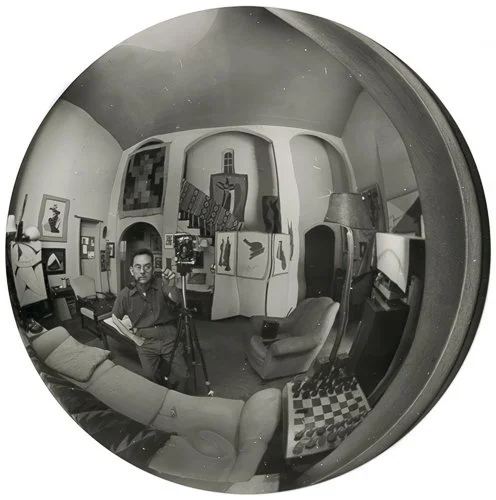
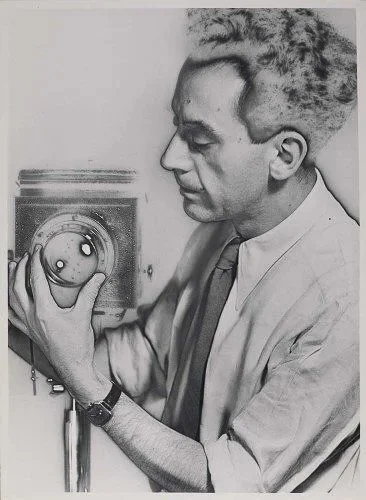
Man Ray (born Emmanuel Radnitzky, 1890–1976) was among the most inventive of the photographers associated with Surrealism, and his approach to the reflected image was characteristically oblique and technically experimental. His photographic practice encompassed solarisation (a darkroom technique that partially reverses tones, producing an image that appears to glow from within), multiple exposure, photograms, and various forms of optical manipulation that made the photographic surface itself an active participant in the production of meaning. His 1930 solarised self-portrait, held in the collection of the Jewish Museum in New York under the title Untitled (Self-Portrait with Camera), shows Man Ray in three-quarter view, holding a camera, with the solarisation process producing a luminous halo around his figure that is both a technical effect and a self-mythologising gesture. The image is knowing: Man Ray, who by the 1930s had achieved considerable professional standing in Paris, projects that standing through the auratic glow solarisation lends to his features. The camera he holds is both his tool and his identity.
Man Ray's photographic self-portraits constitute one of the first sustained investigations of the camera as a device for the multiplication and transformation of the self. By deploying solarisation, by photographing himself in mirrors, by compositing his image with other objects and bodies, he produced a series of works in which "Man Ray" is as much a construction as a person — a figure produced by the photographic process rather than merely recorded by it. This is photography engaging with the mirror not as a device for verisimilitude but as an instrument for the philosophical examination of identity and self-representation.
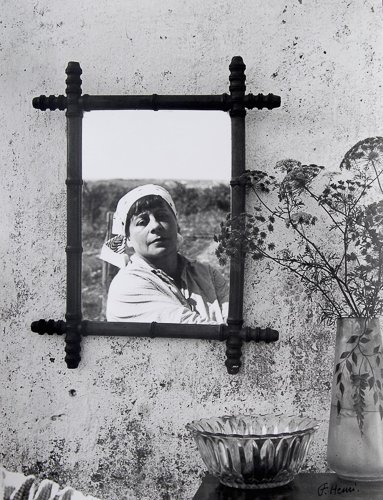
Florence Henri (1893–1982), American by birth, European by formation and conviction, approached the mirror with an equally systematic but quite different sensibility. Her route to photography passed through painting — she had studied in Berlin, Munich, Vienna, and Paris, working under Fernand Léger among others — and through the Bauhaus. In the summer of 1927, Henri enrolled as a guest student at the Bauhaus in Dessau, where she attended the preliminary course directed by László Moholy-Nagy and Josef Albers. Although photography was not, at this point, part of the official Bauhaus curriculum, it was practised intensively by teachers, including Moholy-Nagy and Georg Muche, and by students, including Walter Funkat and Edmund Collein. Henri moved into the Moholy-Nagy household and became close friends with his first wife, Lucia Moholy, who actively encouraged her to take up photography. From Moholy-Nagy, Henri learned both the basic technical principles of the medium and its theoretical possibilities: his concept of the Neues Sehen (New Vision) — the idea that photography could reveal the world from angles and through optical transformations inaccessible to the unaided human eye — became the foundation of her photographic practice.
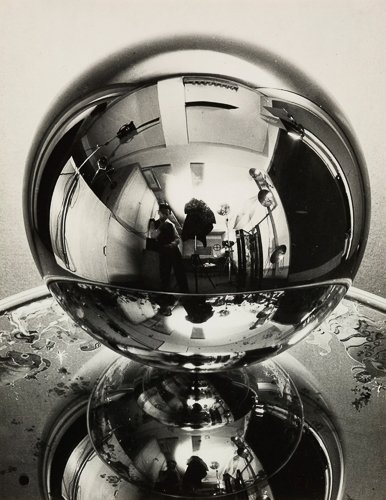
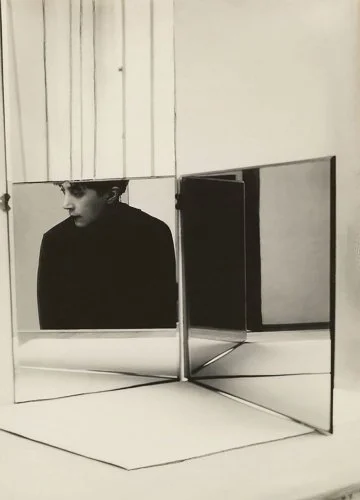
Returning to Paris at the end of 1927, Henri abandoned painting by early 1928 and devoted herself entirely to photography, with mirrors as her central formal device. Her procedure was systematic and compositionally rigorous: she would arrange mirrors, reflective balls, and other objects in her studio, adjusting their angles and orientations to produce multiply-reflected images in which spatial logic was simultaneously preserved and subverted. The mirror divided the pictorial space into zones that obeyed different perspectival regimes; the reflection offered a view of something outside the frame; the object reflected and the object reflecting occupied the same surface while, perceptually, belonging to different spaces.
Her Self-Portrait (1928) — made in the first year of her photographic practice and already a mature and considered work — shows her own image multiply reflected and divided, the mirror bisecting the frame and producing four composite parts that read simultaneously as a unified portrait and as a structural analysis of portraiture itself. This is a photograph that is also a meditation on what a photograph can do with a self: it refuses the conventional single-viewpoint portrait in favour of a cubist multiplication of perspectives that draws directly on both Constructivist spatial logic and Moholy-Nagy's theoretical framework. As Moholy-Nagy himself wrote when he published one of her unusual self-portraits in the journal i10. Internationale Revue in 1928: "Reflections and spatial relationships, overlapping and penetrations are examined from a new perspectival angle."
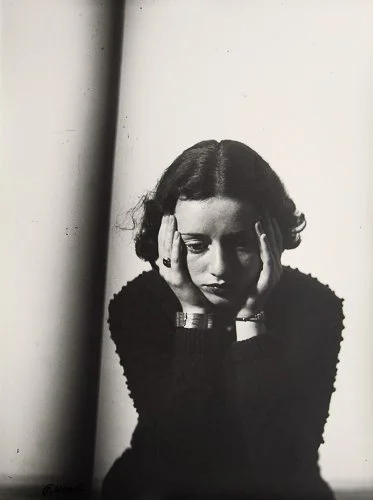
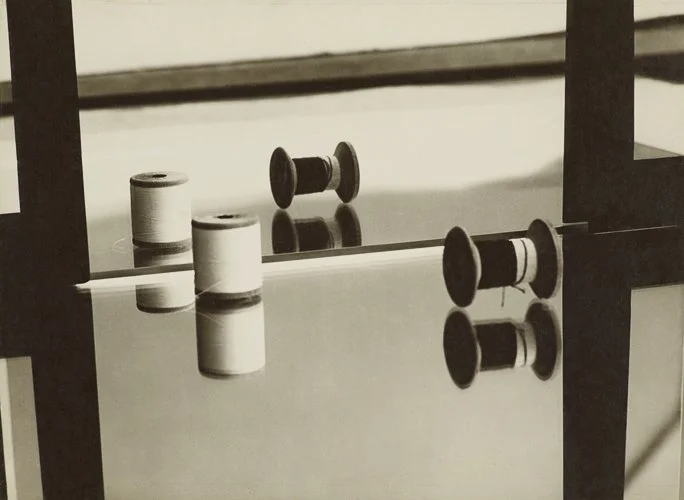
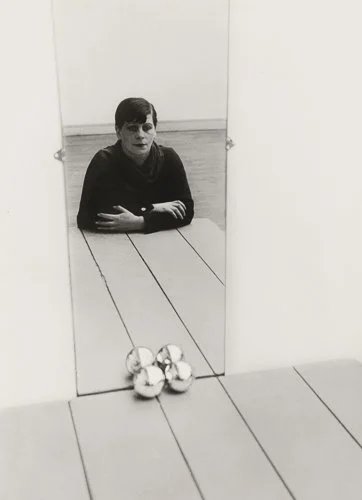
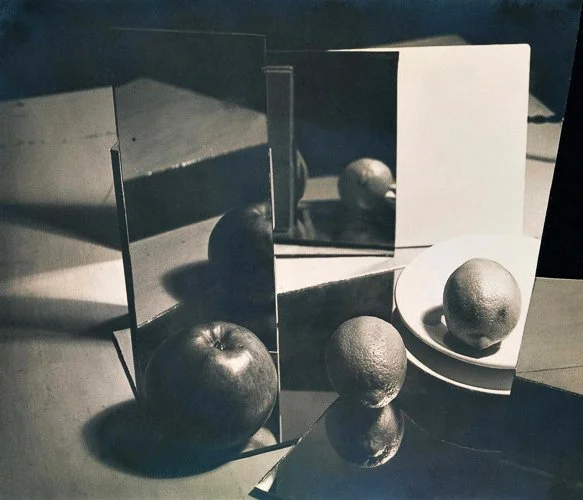
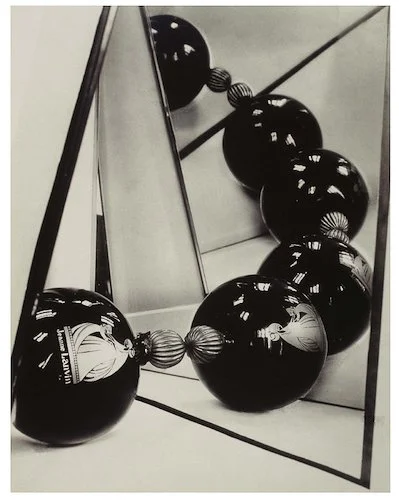
Moholy-Nagy's critical response to Henri's work was generous and precise. He saw in her mirror compositions "an important expansion of the entire problem of manual painting" — recognising that she had brought to photography the spatial and perceptual investigations that Cubism had conducted in paint, and had done so using the photographic medium's distinctive resources rather than merely borrowing Cubist aesthetics. Within three years of taking up the camera, Henri had established a Paris portrait studio that rivalled Man Ray's; she also opened a photography school where students including Lisette Model and Gisèle Freund received their early training.
Henri's mirror work operates across several registers simultaneously. At the formal level, it is an investigation of pictorial space and the limits of the photographic frame. At the psychological level, it deploys the mirror's traditional association with self-knowledge and self-scrutiny — the mirror as the instrument through which the self can observe itself observing. At the gender-political level, it stages a series of refusals: the woman photographer using the camera to construct her own image, to place herself at the centre of a visual investigation that had, in the tradition of the female nude in mirror compositions stretching back to Venus, typically placed women at the passive centre of a male gaze. Henri's mirrors return the gaze; her self-portraits are acts of self-determination rather than self-display.
Mid-20th Century Street Photography
The concerns that had preoccupied Kertész, Henri, and Man Ray in the context of avant-garde Parisian photography migrated, in the post-war decades, into the very different world of American street photography. Here, the mirror and the reflective surface found new uses and new meanings in the hands of three photographers whose approaches, while superficially similar, lead in quite different directions: Lee Friedlander, Saul Leiter, and Lisette Model.
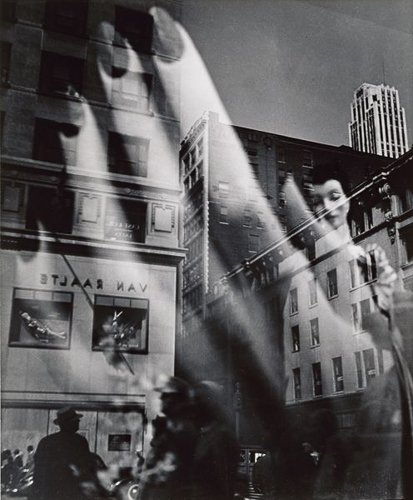
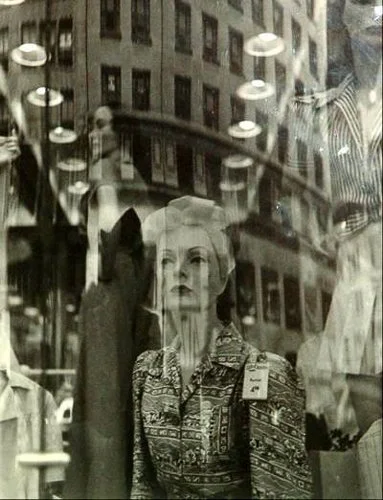
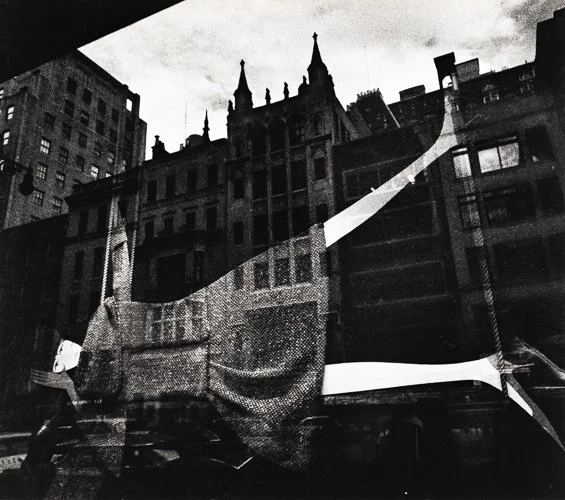
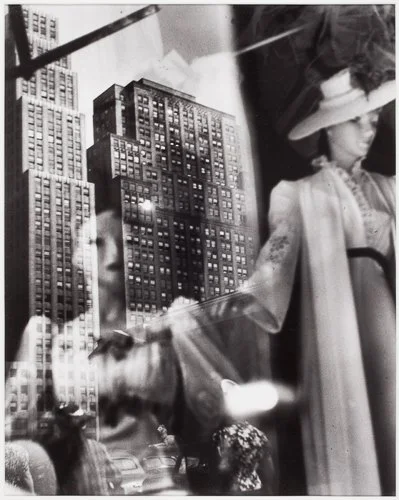
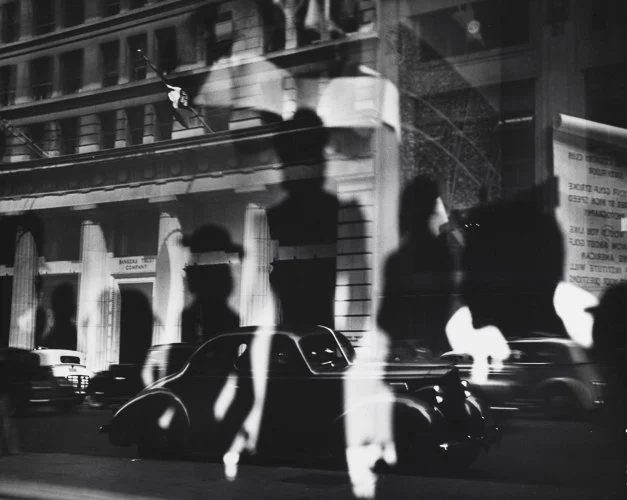
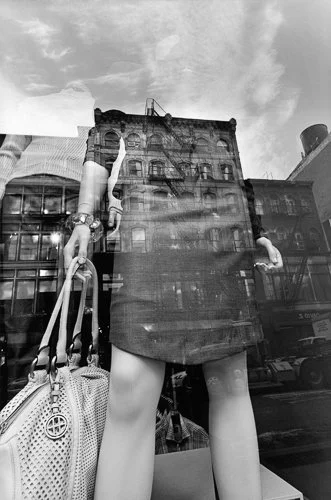
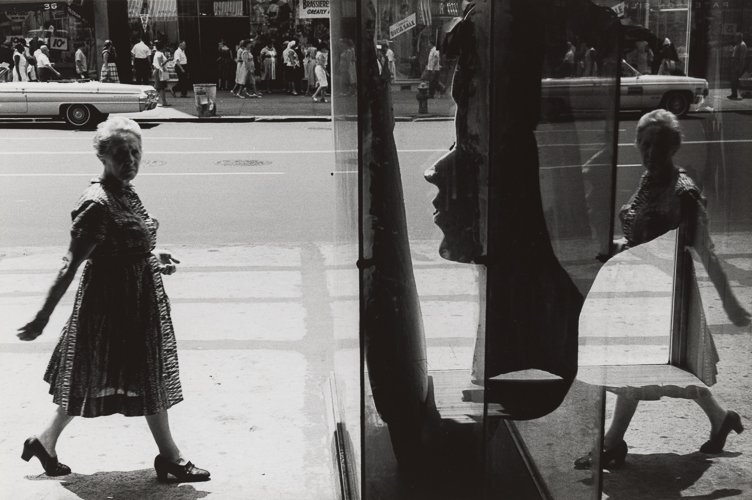
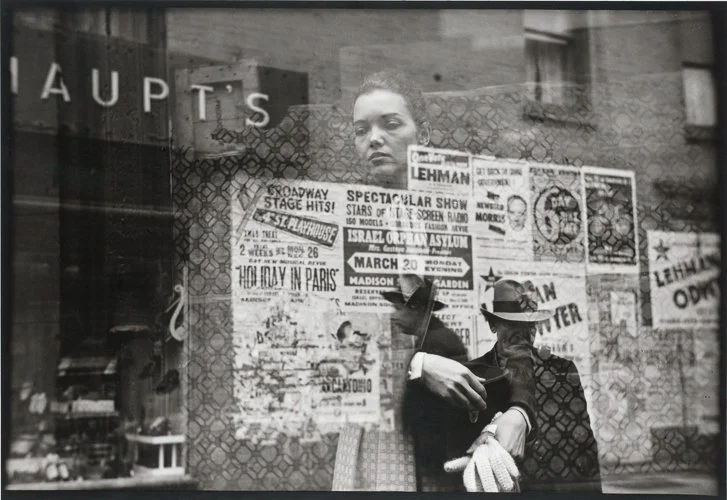
Lisette Model (born Elise Amelie Felice Stern, 1901–1983), Austrian by birth and training, arrived in New York in 1938. Her early New York work included a sustained engagement with the reflective surfaces of the city's shop windows, particularly along the Lower East Side and Fifth Avenue. Her Reflections series, made through the late 1930s and 1940s, deploys the shop window as a natural photomontage surface: the glass simultaneously reveals the window display within and reflects the street, the sky, and the pedestrians outside, layering incompatible spaces in a single image. As her friend Berenice Abbott observed of these photographs: "reflections are mirrored in a manner acutely visual and selective without being impressionistic. These images, whether double or triple, are indeed amusing, jog our ribs and suggest many related images."
In Reflection, Lower East Side, for example, a male figure's silhouette stands before a linen shop window, his image merged with the stacked fabrics behind the glass and the building façades reflected in it; a moon-like globe of a hanging light bulb mirrors itself at the image's upper edge. Model herself described the windows as producing images that "conjured natural photomontages." The compositional approach is related to Atget's shop-window studies — she acknowledged the Atget connection — but where Atget's empty windows are auratic in Benjamin's sense, Model's populated streets are energetic, urban, and tinged with the film-noir sensibility that was simultaneously developing in American cinema.
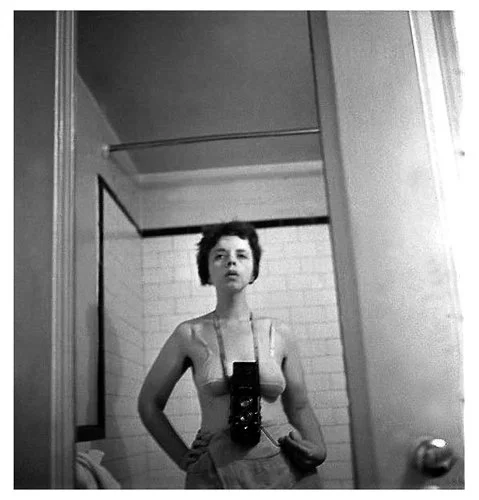
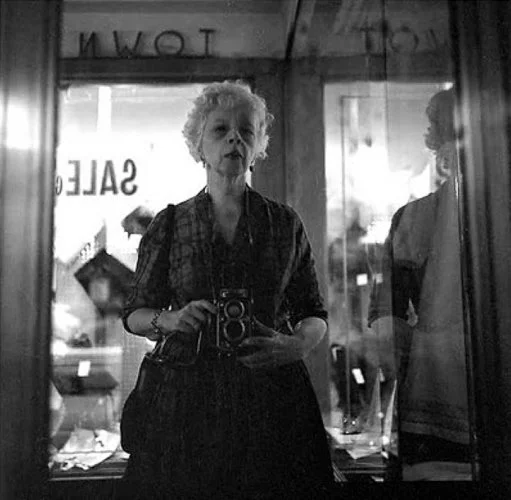
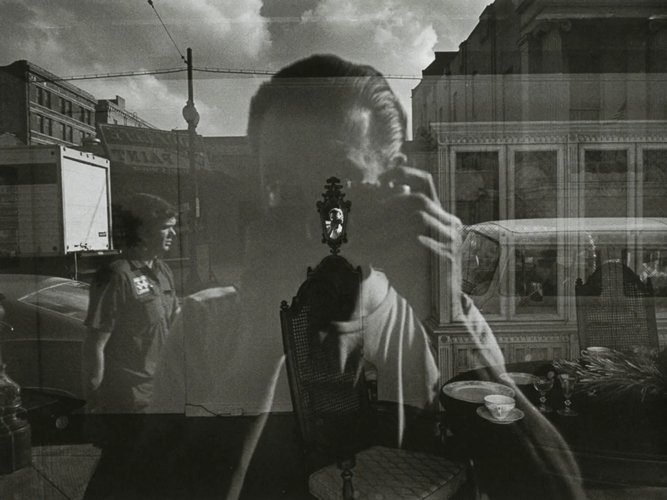
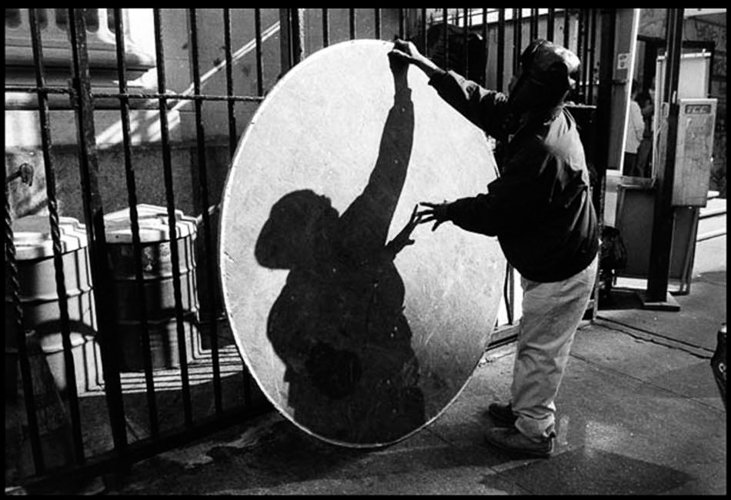
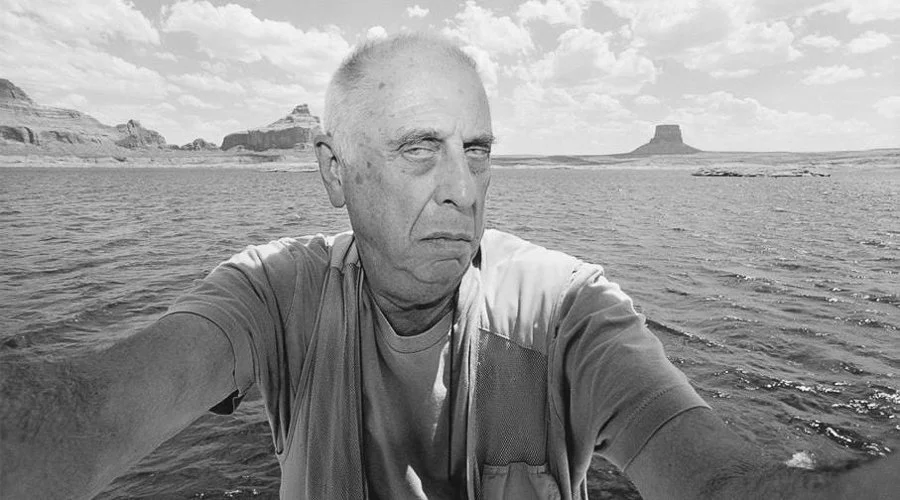
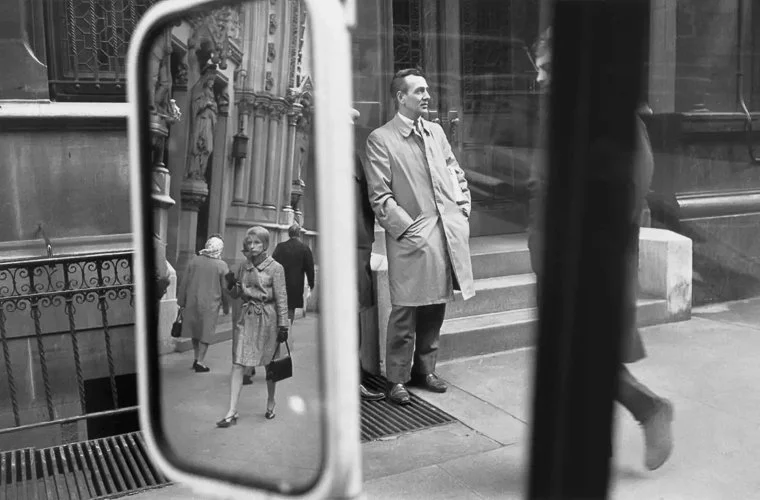
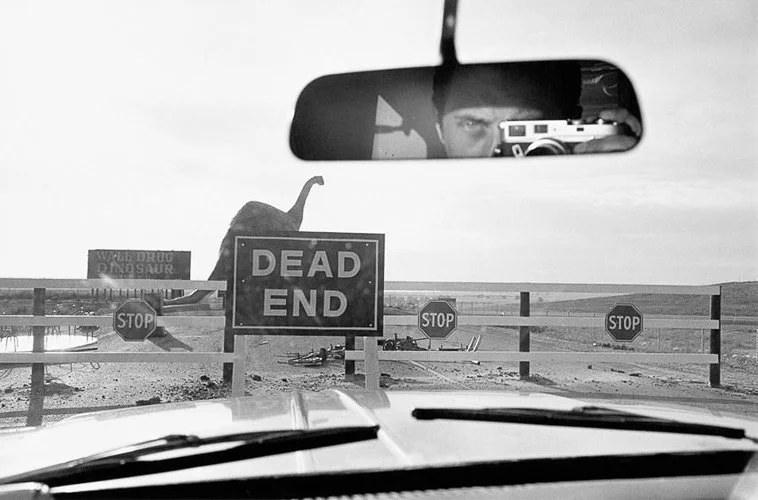
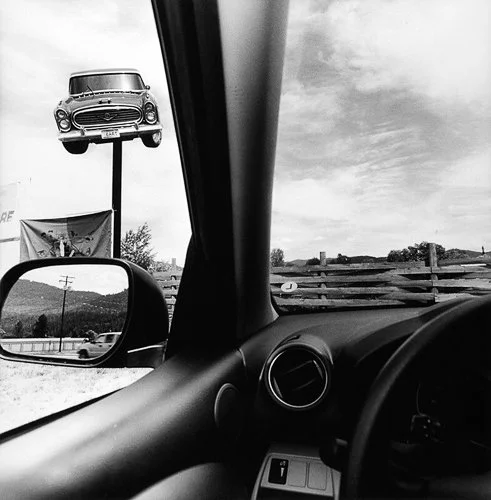
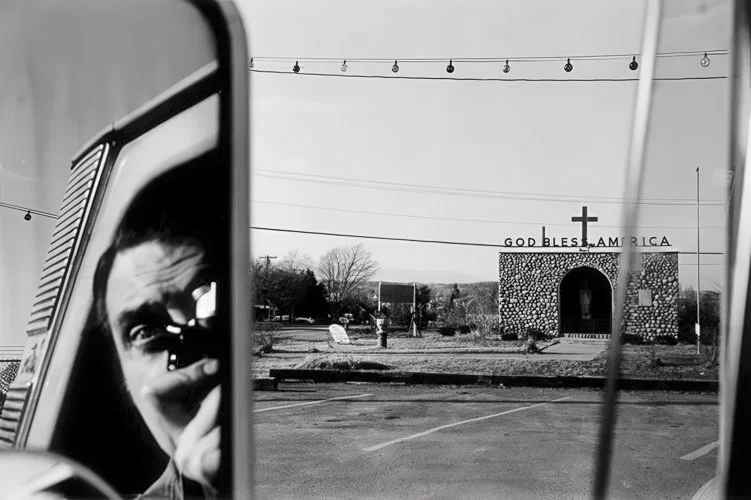
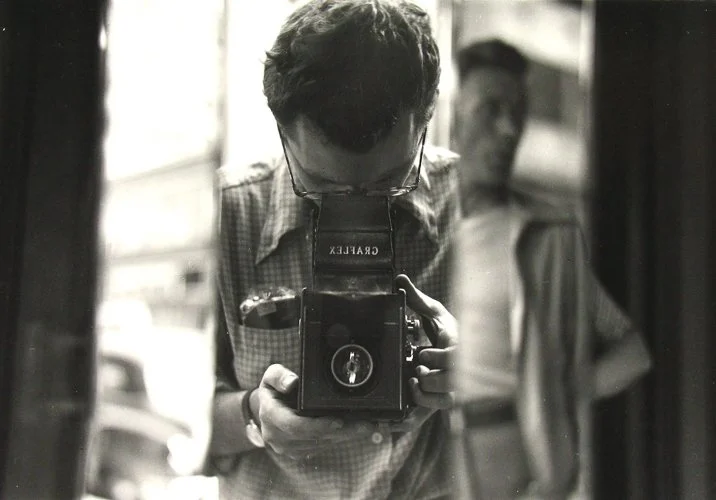
Lee Friedlander (born 1934) took the reflective self-portrait in a direction that was formally radical and, in retrospect, philosophically consequential. His Self Portrait book, published in 1970 by Haywire Press — the press he founded with his wife Maria de Paoli — collected approximately fifty self-portraits made over six years, with a text by John Szarkowski, then director of photography at MoMA. What is striking about these images is not their formal virtuosity, though that is considerable, but their ideological implication: by inserting himself into the street photographs — as a shadow falling across a pedestrian's back, as a reflection in a shop window, as a ghostly figure in the plate glass of a diner — Friedlander refused the conventional photographer's invisibility. He placed himself in the social landscape he was documenting, acknowledging that the documentary photographer is not a neutral observer but a presence in the world being observed. If his work is voyeuristic, as some critics have suggested, it is self-voyeuristic too: Friedlander is stalking himself as persistently as he stalks his other subjects.
The word "obscures" is essential to understanding what Friedlander does with reflections. His windows and mirrors do not clarify; they layer, interrupt, complicate, and sometimes defeat. A Friedlander street photograph might show a diner interior through a window covered in reflections of the street outside, so that the diner's customers are glimpsed through a scrim of reflected signage and pedestrians — the inside and the outside conducting a visual argument that neither wins. This is Friedlander's version of Benjamin's city of mirrors: not the grand architectural scale of the Arc de Triomphe at the end of a mirrored avenue, but the intimate, gritty, perpetually interrupted scale of the American urban vernacular.

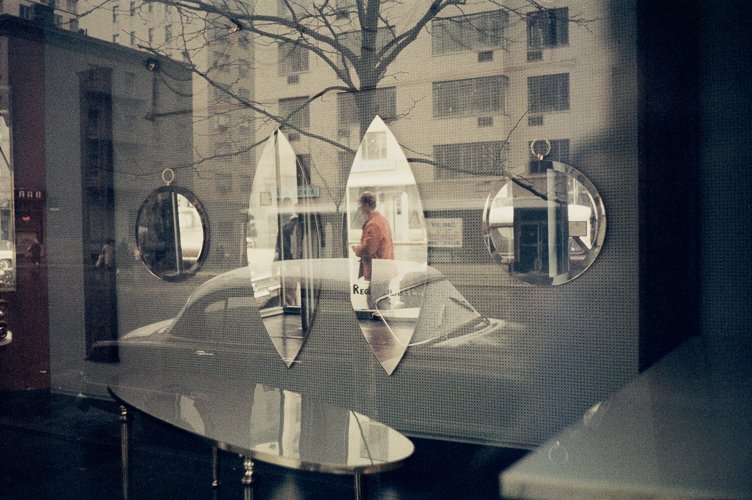
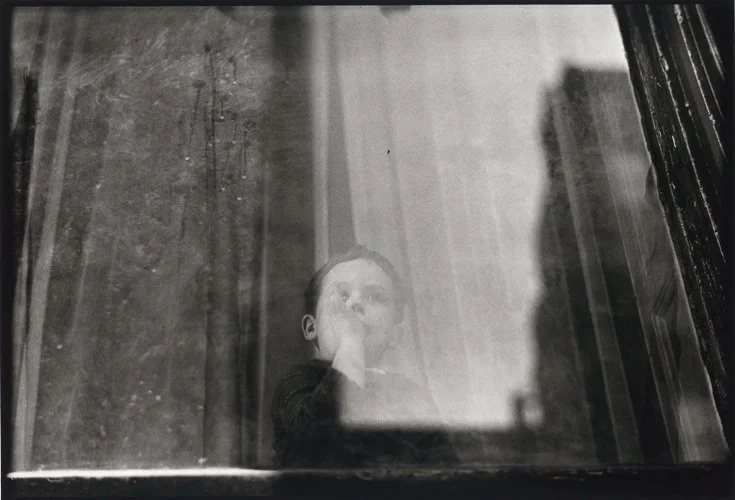
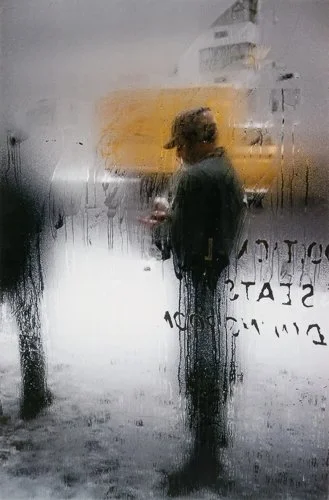
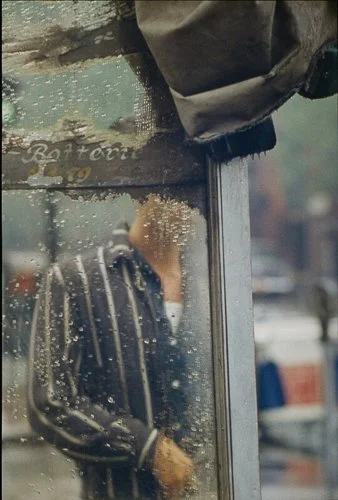
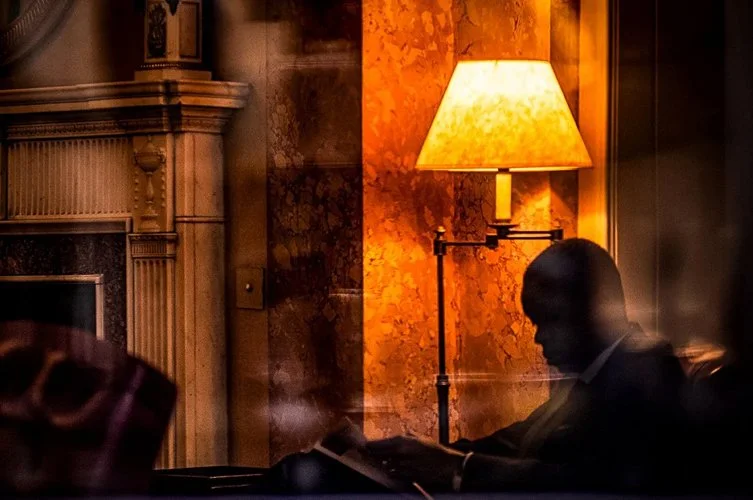
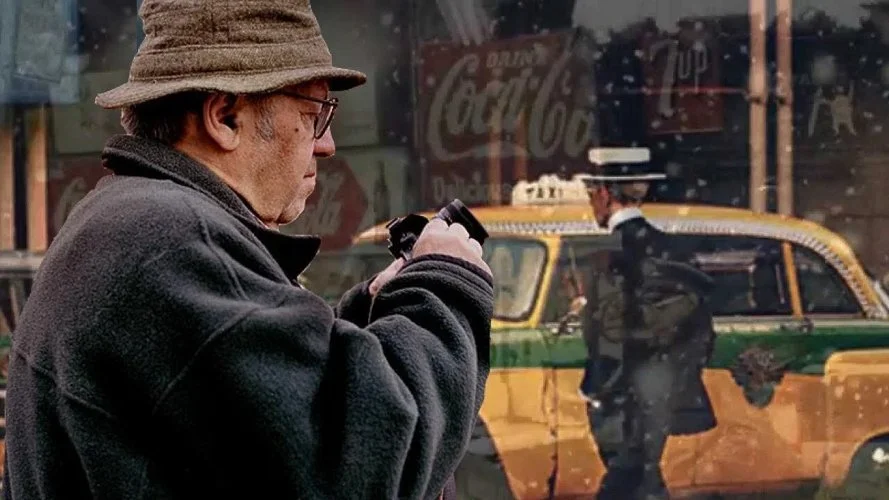
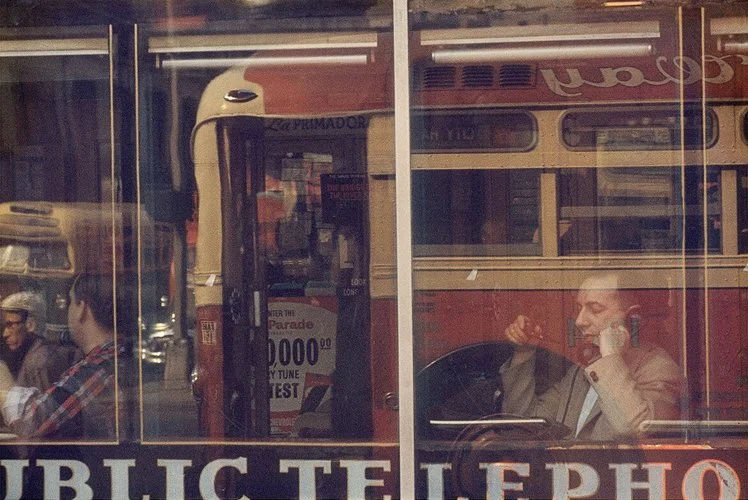
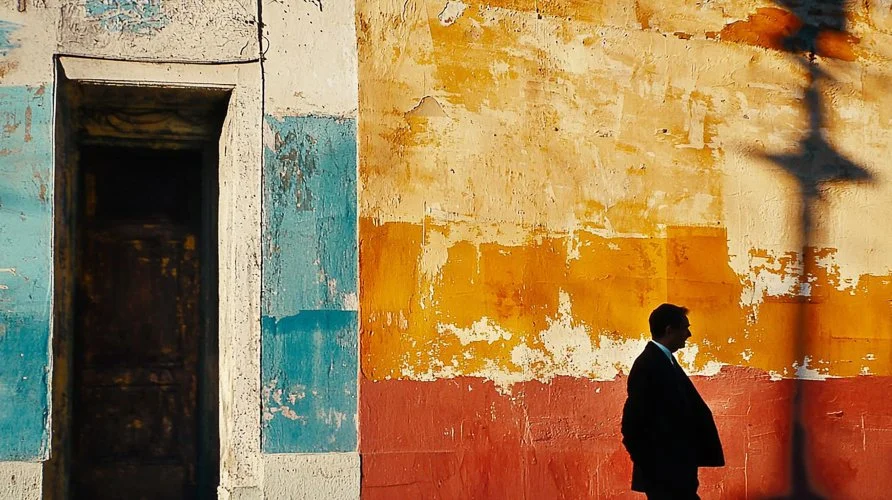
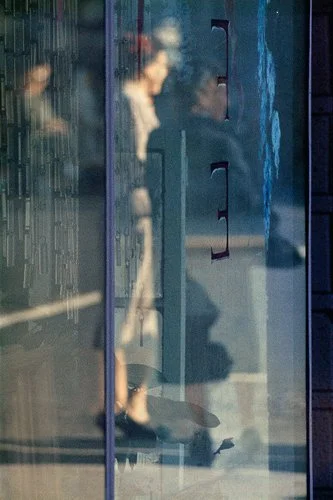
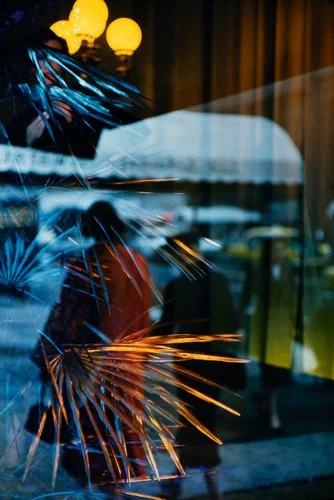
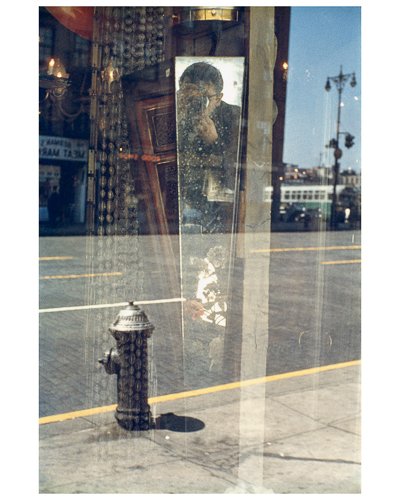
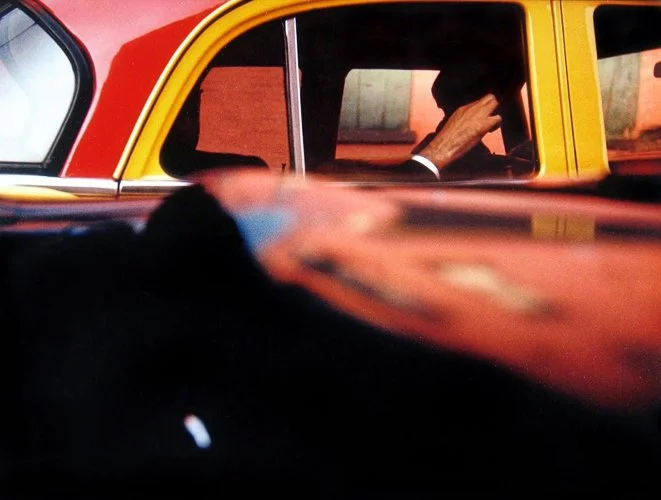
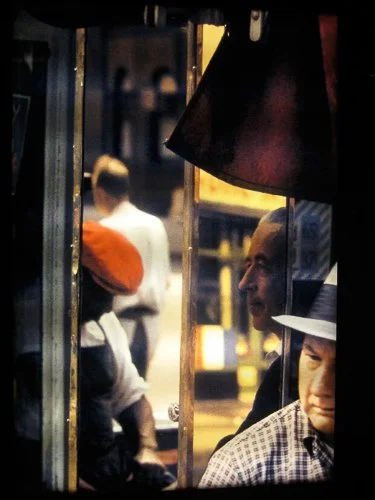
Saul Leiter (1923–2013) worked with reflective surfaces from the very beginning of his photographic practice, and his approach is the most painterly and the least explicitly theoretical of the three. Leiter began photographing in New York in the late 1940s, adopting colour at a time when serious photographers regarded it as a commercial rather than an artistic medium. His acknowledged influences were painters — he named Edgar Degas, Pierre Bonnard, and Édouard Vuillard, all three of whom he later discovered had also experimented with photography — and his photographs, particularly those shot through rain-streaked or condensation-fogged windows, have a quality that is closer to the Intimist painters of the 1890s than to the documentary tradition. His early colour work, photographed primarily between 1948 and 1960 but not widely published until the Steidl monograph Early Color (2006), entered the canon belatedly and changed the way many photographers understood what colour street photography could be.
The window, in Leiter's work, is both a physical surface and a philosophical proposition. He photographed through café windows smeared with condensation, through rain-streaked glass, through partially reflective plate glass that superimposed the street outside onto the interior. The result is a body of work in which "a window covered with raindrops interests me more than a photograph of a famous person" — his own formulation — and in which the human figures that appear are typically obscured, reduced to blurs of colour, glimpsed through a layer of visual material that insists on its own presence. Leiter's street is never transparently available; it is always mediated, always seen through something, always at one further remove. This is not a failure of clarity but a philosophical position: the world is not simply there to be taken; it must be received through the surfaces of perception, and those surfaces always transform what passes through them.
The differences between Friedlander, Leiter, and Model as users of reflective surfaces crystallise their different relationships to the fundamental question of what photography is for. Model uses the shop window to document the human comedy of urban life through the natural photomontage of glass; her reflections are layered documents of social reality. Friedlander uses the mirror to place himself within his documentary evidence; his reflections are self-implicating gestures that refuse the photographer's pretension to objectivity. Leiter uses the window as a painterly filter; his reflections are formal propositions about seeing, beauty, and the transformation of the real by the surfaces of perception.
Fashion & the Indirect Portrait
The Italian-born fashion photographer Paolo Roversi (born 1947, based in Paris since 1973) occupies a distinctive position in the history of photographic reflection. His work in fashion photography — a genre often accused of superficiality, of prioritising the surface at the expense of depth — consistently uses the mirror and the reflective surface as a means of pursuing exactly the opposite: a depth of encounter, an exchange between photographer and subject that goes beyond the merely visual.
Roversi works almost exclusively with large-format cameras — principally 8x10-inch view cameras — and with exposures measured in seconds or minutes rather than fractions of a second. This choice of working method is not technical nostalgia but a considered philosophical position. He traces it to his study of early photography: "The portraits looked much deeper. I can't explain technically why the look of the subject is more deep, more touching, more human if the photographer uses a long exposure for the shot, but it is." The long exposure requires the subject to be still; stillness requires a quality of presence and attention that the snapshot cannot demand; and the resulting image retains, in Roversi's view, something of the auratic quality — in Benjamin's sense — that Benjamin associated with early portrait photography and lamented the loss of in the era of faster optics.
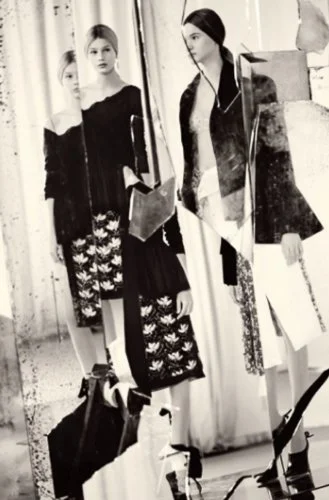
Roversi's use of mirrors in his fashion work is both technical and metaphorical. In his Paris studio, a mirror wall reflects the space, multiplying it and creating a zone in which the boundary between the photographed subject and her reflection is productively ambiguous. The mirror in a Roversi fashion photograph is not a device for showing the garment from multiple angles, as it might be in conventional fashion photography, but a surface that introduces a kind of temporal and spatial complexity into the image — a sense that what is being photographed is not simply a body in a dress but a relationship between the present moment and its reflection, between the subject and her own image, between the photographer and the world as it appears to him through the viewfinder of his 8x10 camera.
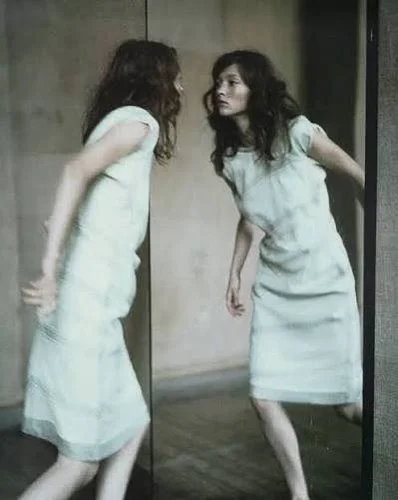
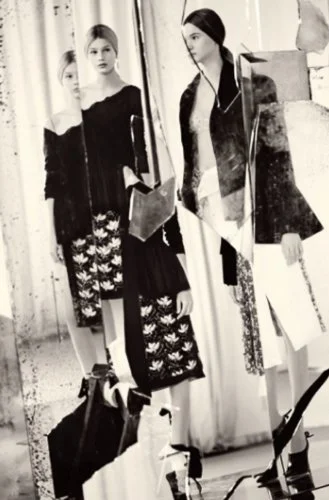
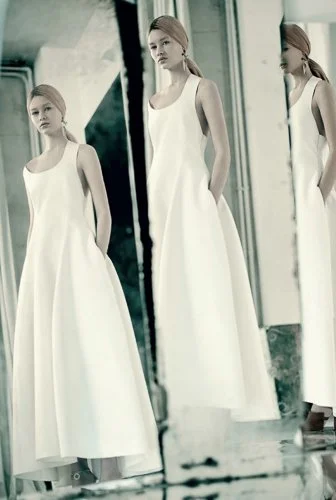
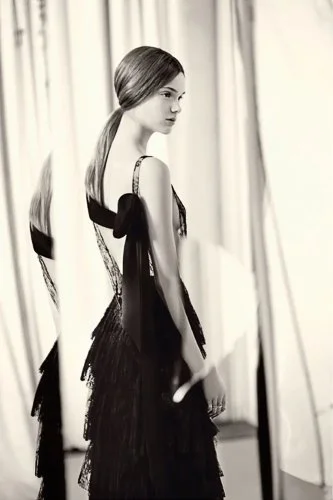
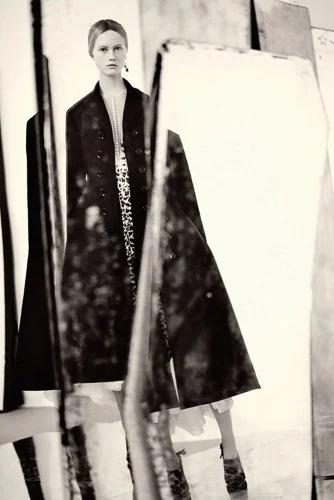
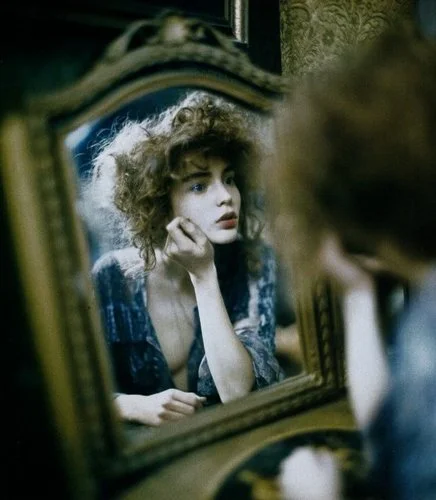
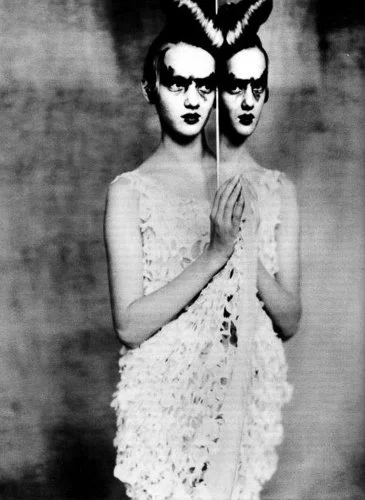
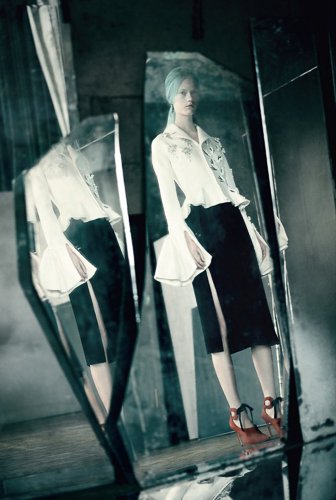
His use of Polaroid film — initially in 8x10 format, a material no longer commercially produced — is similarly connected to the question of surfaces. The Polaroid image is itself a kind of reflection: an image that develops in front of the photographer's eyes, that cannot be endlessly reproduced without loss, that has a particular material quality — the slightly waxy, occasionally streaked surface of the Polaroid print — that is both a document and an object. Roversi's fashion images are therefore reflective in the most literal sense: they are images made on a surface that is also, in some sense, a mirror of the moment of their making.
Roversi belongs, in the history of the indirect portrait in fashion photography, to a tradition that includes the use of gauze, frosted glass, and other partially transparent or reflective materials to mediate the relationship between the camera and the subject. This tradition — which encompasses figures as different as Sarah Moon and Albert Watson — shares a conviction that the direct, unmediated portrait is not necessarily the most truthful one; that the interposition of a surface between the lens and the subject can produce images that are more psychologically penetrating, more genuinely responsive to the inner life of the sitter, than any amount of technical clarity could achieve.
Contemporary & Conceptual Practice
The second half of the twentieth century and the opening decades of the twenty-first have seen the photographic mirror deployed across a wide range of conceptual and documentary practices, each using the reflected image for purposes that are historically legible but formally distinct. What unites the practitioners discussed here is their understanding of the mirror not as a formal convenience but as a vehicle for ideas — about identity, time, landscape, and the nature of the photographic act itself.
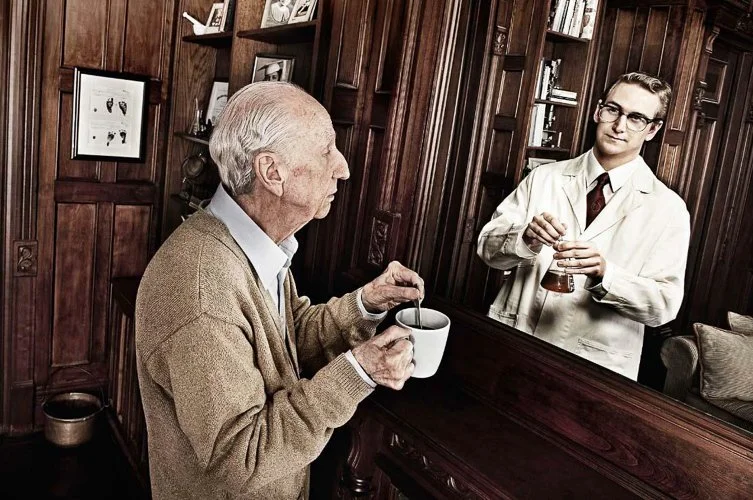
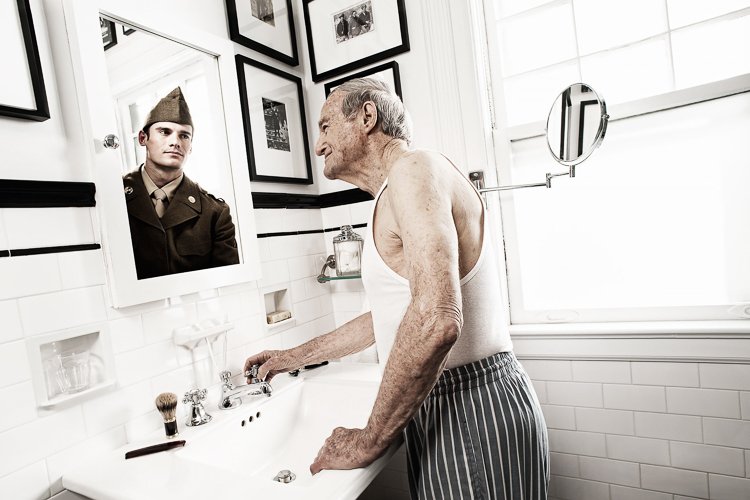
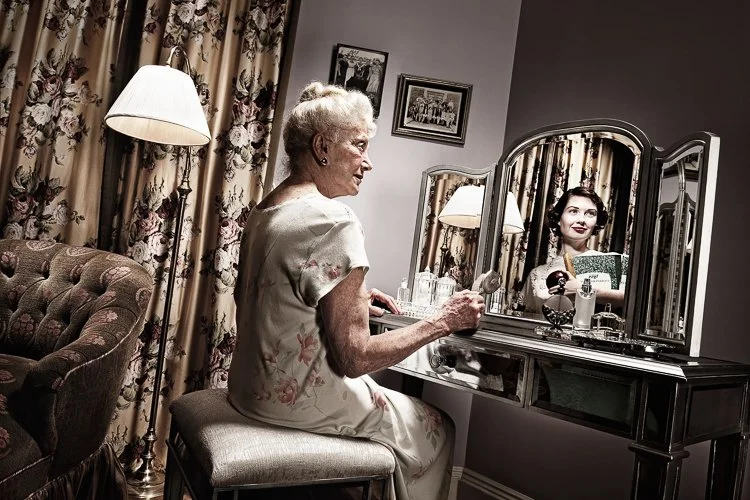
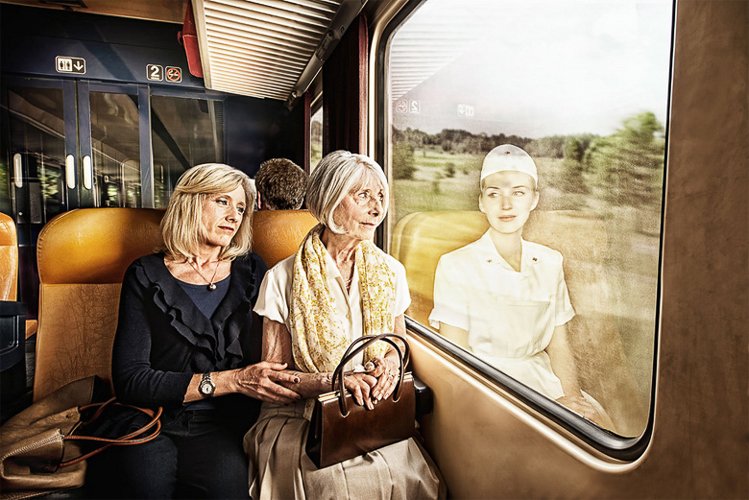
Tom Hussey, an American commercial advertising photographer, produced the series that brought him wide attention around 2008: Reflections of the Past (also known simply as Reflections), a campaign for Novartis's Exelon Patch, a treatment for mild-to-moderate Alzheimer's disease. The series shows elderly men and women looking into mirrors, but the reflections they see are of their younger selves: a naval officer in his wartime uniform, a young woman in her wedding dress, a child. The conceptual origin of the project was a remark by a World War II veteran who said, "I can't believe I'm going to be 80. I feel like I just came back from the war. I look in the mirror, and I see this old guy." Hussey's photographs take this phenomenological observation — the disjunction between the self as experienced from within and the self as seen in the mirror — and give it a visual form that is simultaneously sentimental and philosophically acute. The mirror in Hussey's images is not a surface that reflects the present but one that opens onto the past; the reflection is not an image of what is, but of what was, or what feels as though it were still. The campaign won a Gold Addy Award from the American Advertising Federation and was recognised in the Communication Arts Photography Annual for 2010.
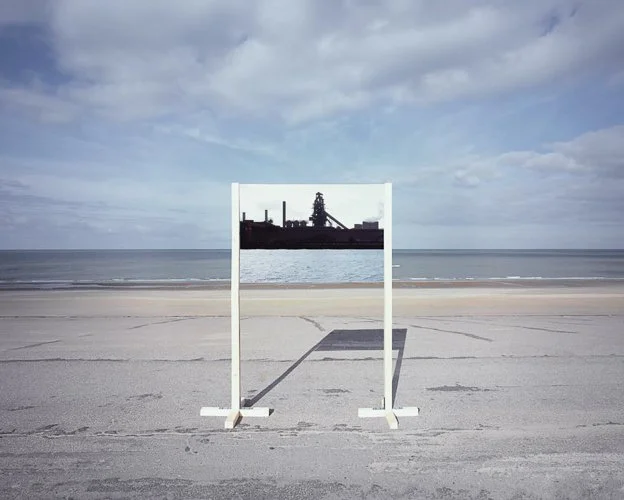
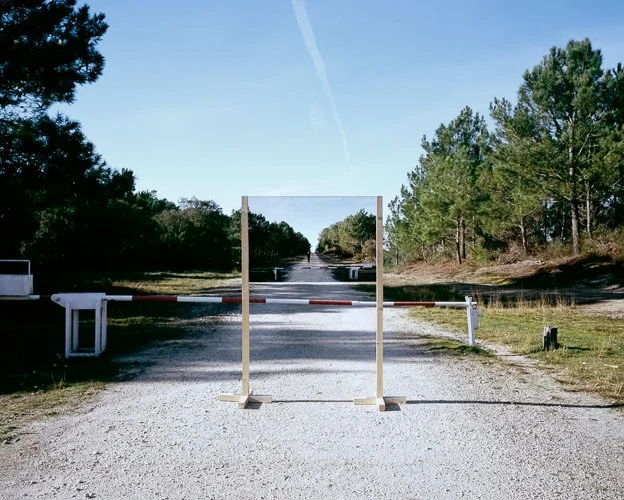
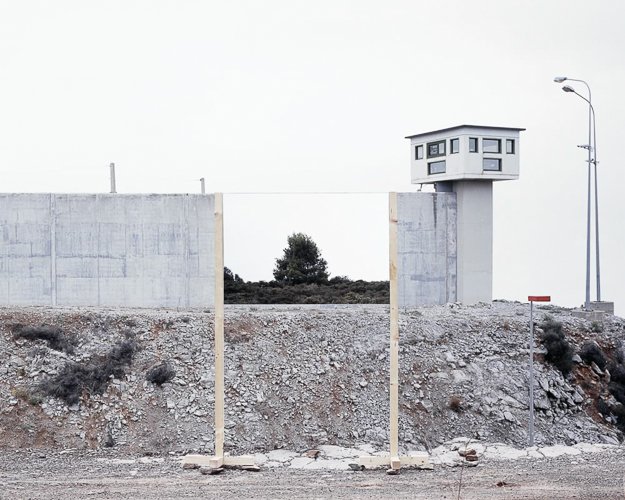
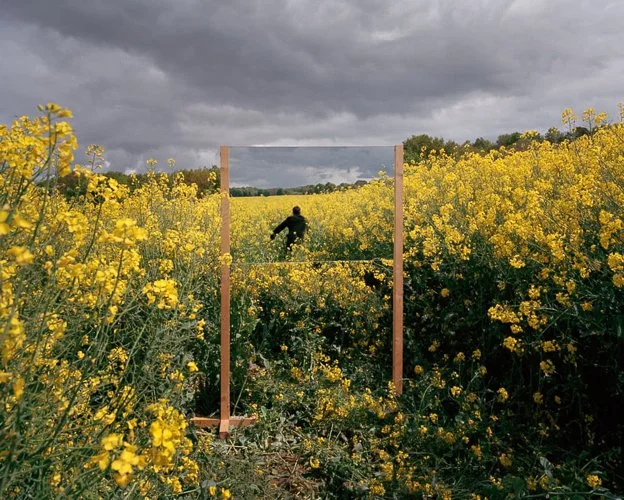
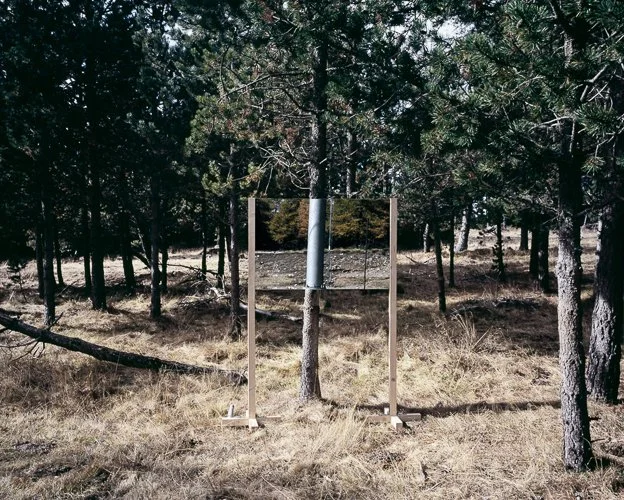
Guillaume Amat (born 1980), a Paris-based documentary photographer, engaged the mirror from a landscape rather than a portrait tradition in his Open Fields series. Working with a 4x5-inch camera and a large mirror — measuring approximately 80x120 centimetres — placed in situ within various industrial and natural landscapes, Amat constructed images in which the mirror reflects the environment behind and opposite the camera's primary viewpoint, introducing a doubled, dialectical space into the frame. The series was inspired, Amat has stated, by the Greek myth of Orpheus and Eurydice, the archetypal story of looking forward while being haunted by what lies behind. Independent curator and writer Paul Wombell characterised the series as photographs that "simultaneously look forward and backwards," creating "a strange dreamlike landscape where buildings and figures float in the centre of the picture" as though the photographer had "two sets of eyes, both at the front and back of his head." The mythological resonance is precise: Orpheus, who turned to look at Eurydice and lost her by looking, is the figure of the photographer who cannot resist the temptation of the reflected image — who turns to see what the mirror shows even at the cost of the real.
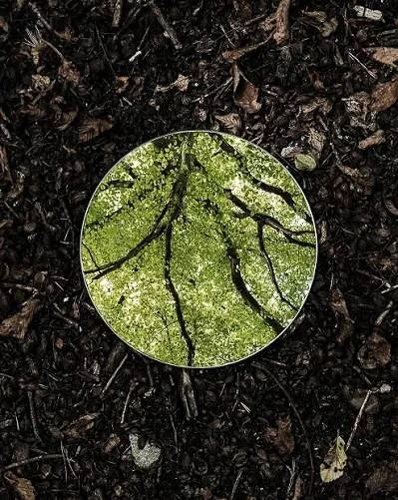
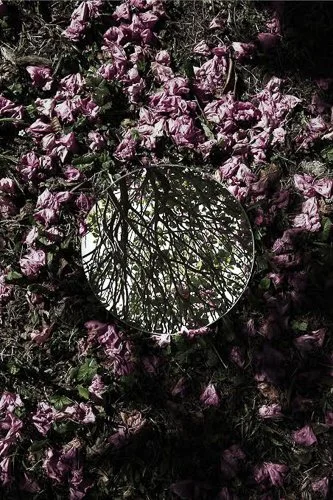
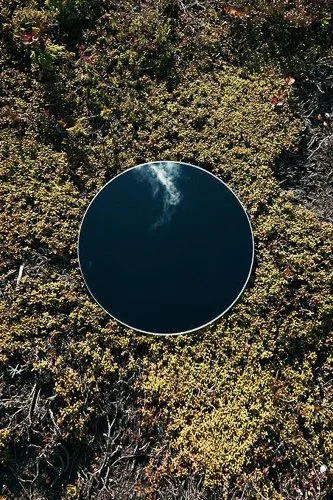
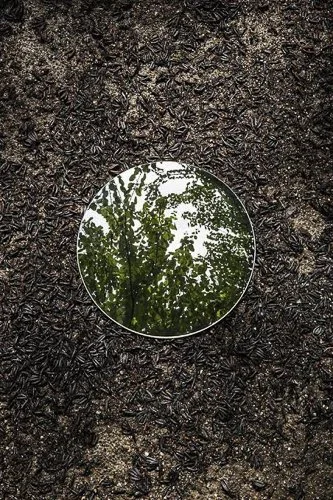
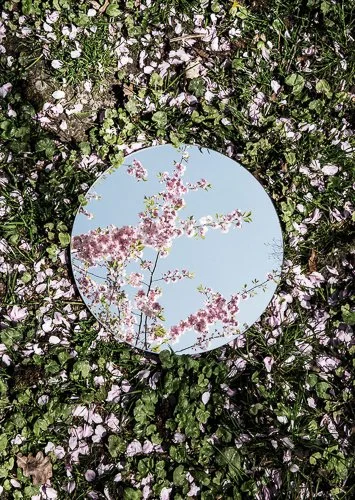
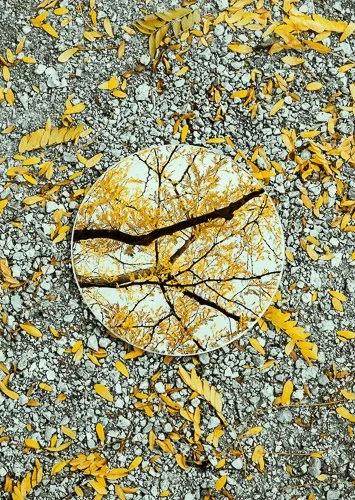
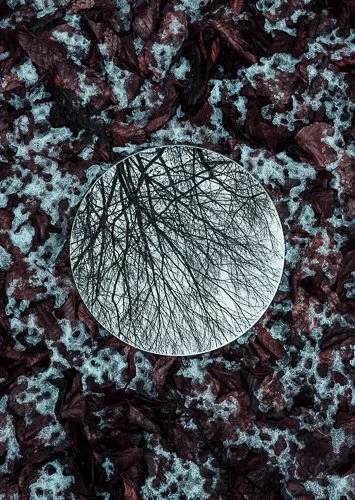
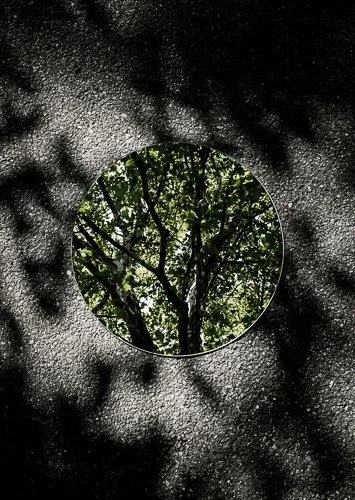
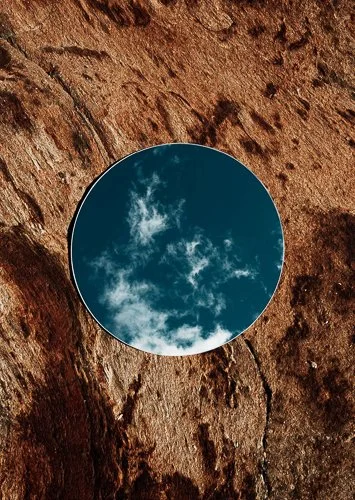
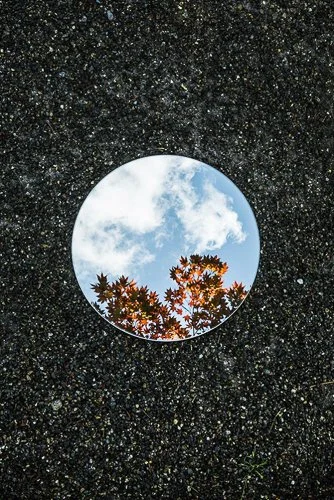
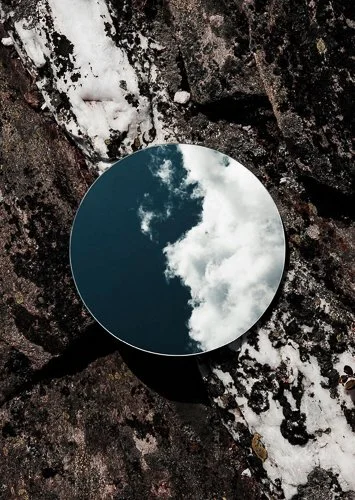
Sebastian Magnani (born 1985 in the canton of Valais, Switzerland) employs a round mirror — its circular frame minimised to the point where the image appears almost seamless — laid on the ground in natural landscapes, creating photographs in which the sky and treetops appear, via the mirror, as a kind of portal in the earth. The effect is vertiginous in a gentler register than Amat's dialectical landscapes: the round mirror creates a window into another world that is, simultaneously, this world viewed from an impossible angle. Magnani, who trained as a media designer before becoming a professional photographer and is based in Zurich, has described the project as an exploration of perception and the boundaries of the photographic frame.
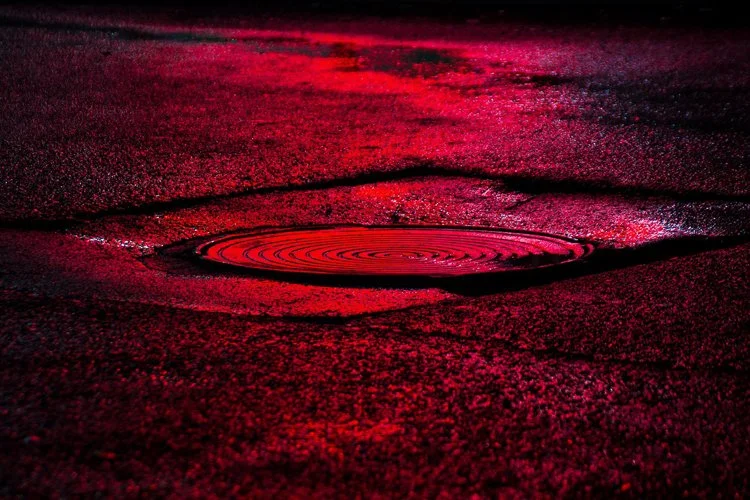
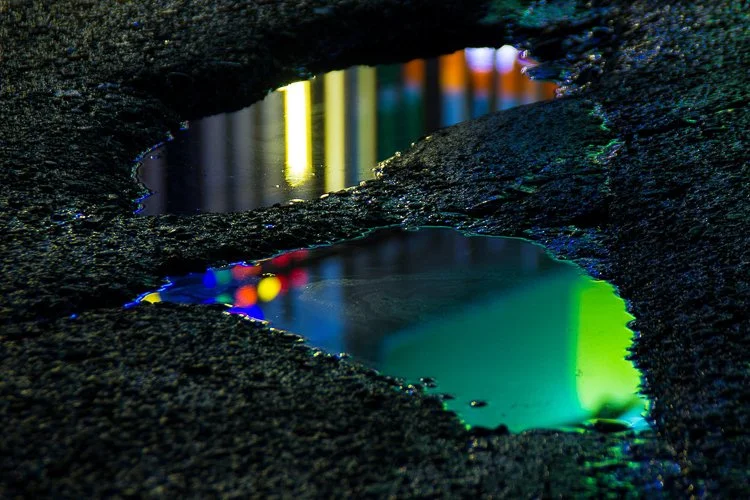
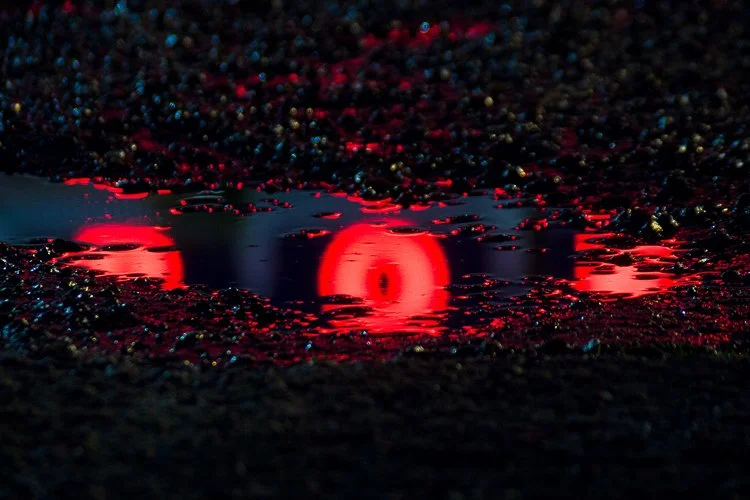
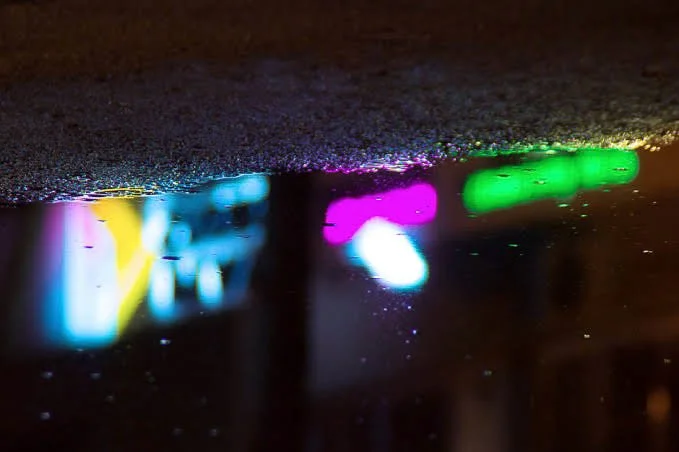
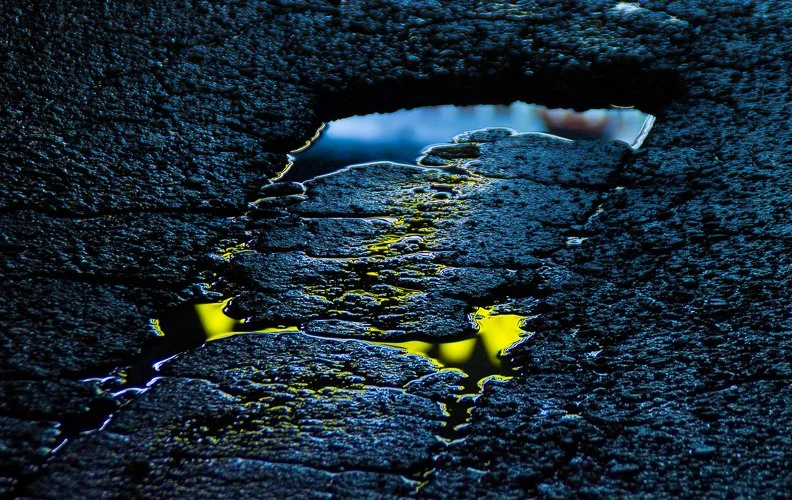
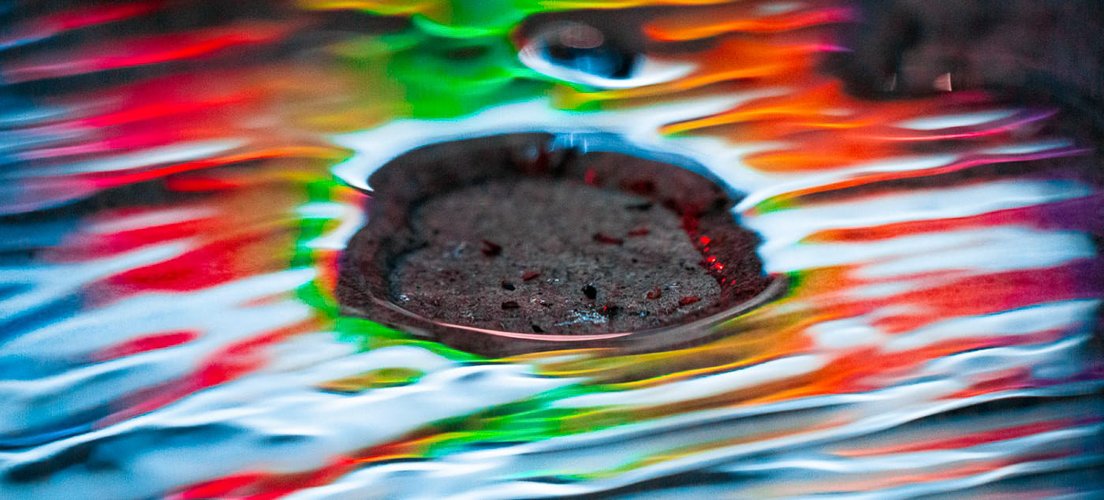
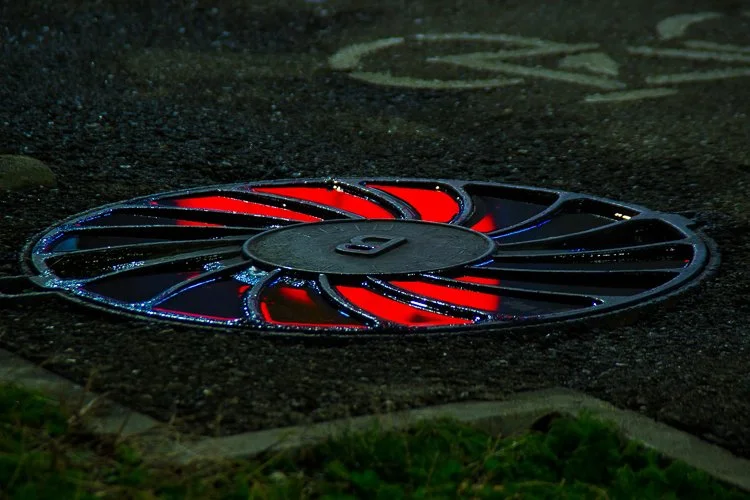
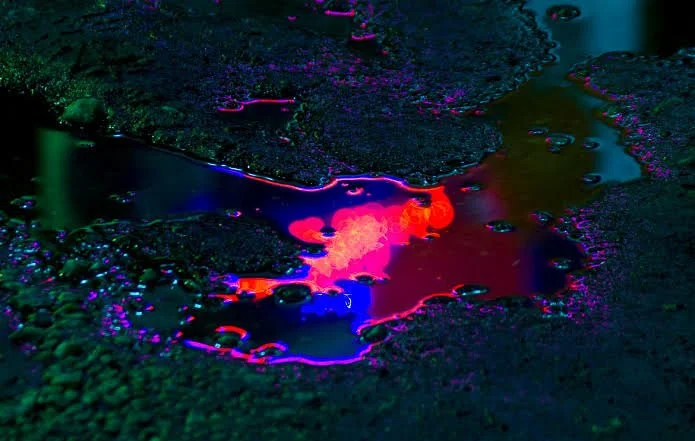
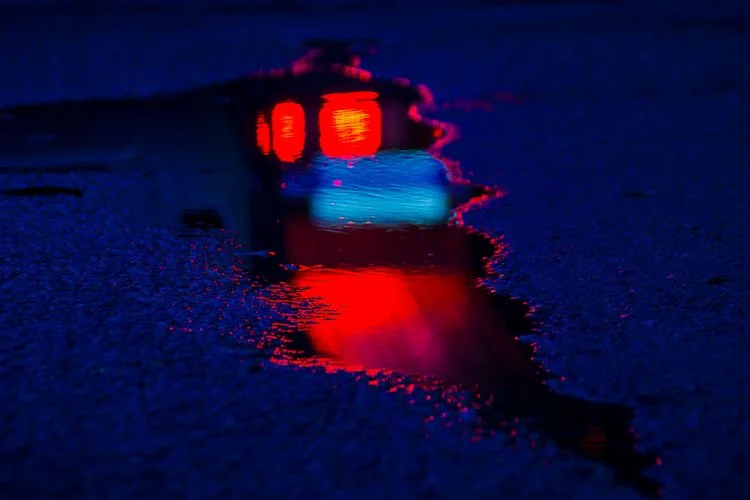
Slava Semeniuta, a Russian photographer based in Sochi, has made the nocturnal puddle his primary subject and medium. His Wet Neon series — photographs of neon shop-window signs reflected in rain-filled potholes and puddles — takes the most quotidian of reflective surfaces and, by photographing in darkness with careful attention to exposure, transforms it into a field of colour that appears entirely abstract until the logic of the reflection reasserts itself. The work is related, at some level, to Kertész's early Paris street photographs, which also found in the pavement puddle a surface capable of reorganising the city into something strange; but where Kertész's puddles were silver and monochromatic, Semeniuta's are saturated with the synthetic colours of urban commerce. The neon signs that populate the Wet Neon series are the late-twentieth-century successors to the gas lamps whose reflections in the cafés of Paris Benjamin described in the Arcades Project: artificial lights whose reflections on the city's wet surfaces create a phantasmagoria of colour and light.
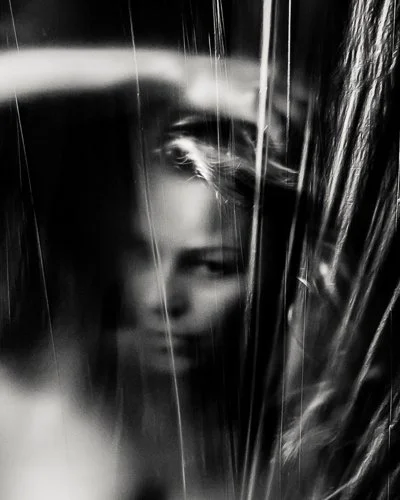
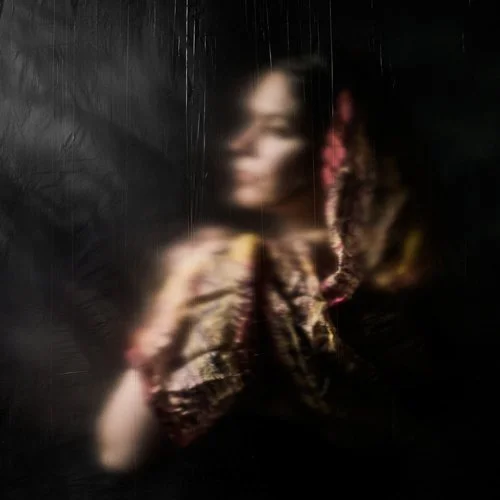
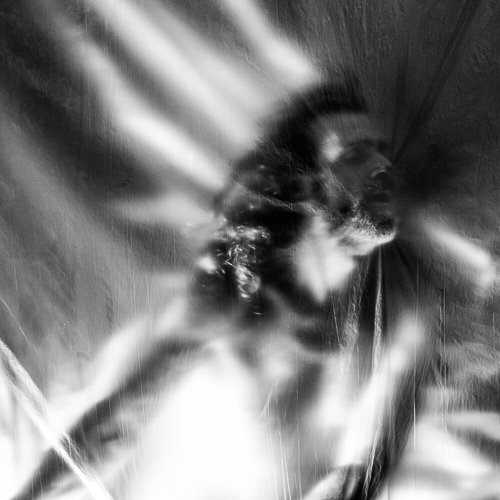
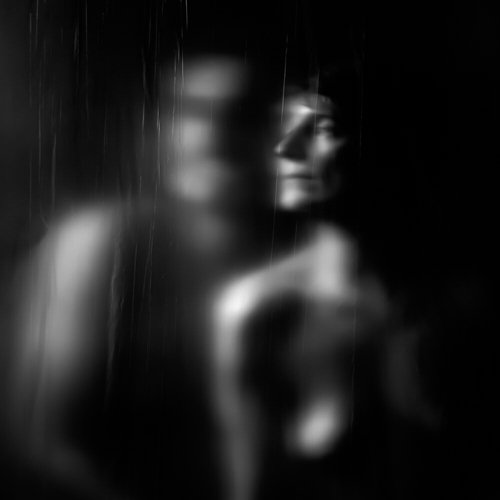
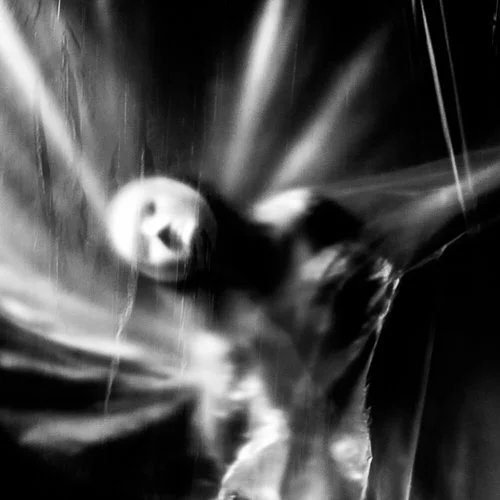
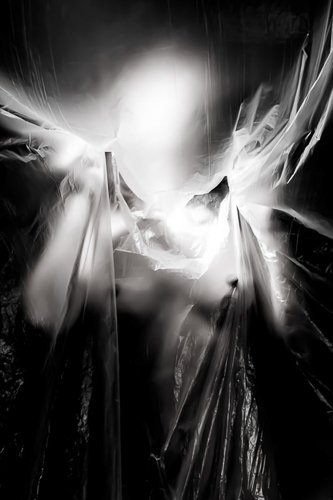
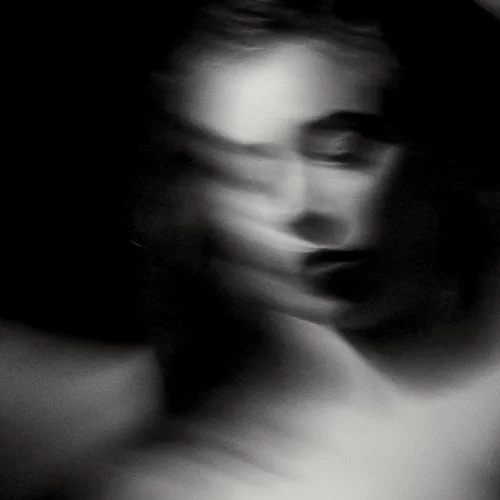
Andreas Theologitis, a Greek architect and urban planner who has photographed since the era of the darkroom, brings to his portrait series an architectural sensibility that is immediately legible in his formal structures. His work — including series such as Beyond Dark and Haunted Souls — employs studio conditions in which models are photographed through foggy membranes, reflective surfaces, and layered materials that distort and partially occlude their identities. The result is a body of work in which the human figure appears as though emerging from or retreating into a surface — neither fully present nor fully absent, caught at the threshold between visibility and concealment. Theologitis has described this as an investigation into "the nebulous landscape of human nature" and the relationship between the photographic image and "the inner world of the stressful feelings of his models." His architectural background is visible not only in the geometric rigour of his compositions but in his understanding of the surface as a mediating structure — as something that shapes what is seen by controlling the conditions of visibility.
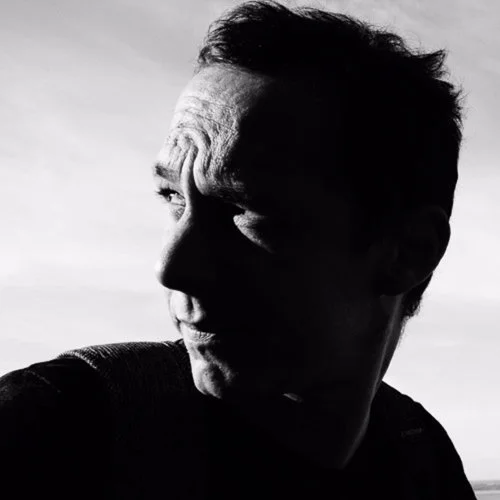

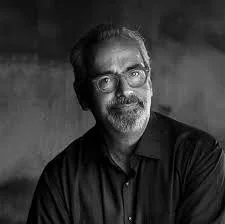
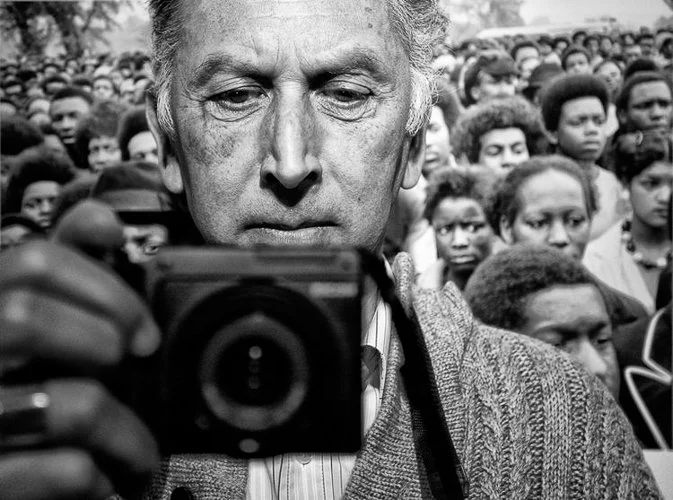
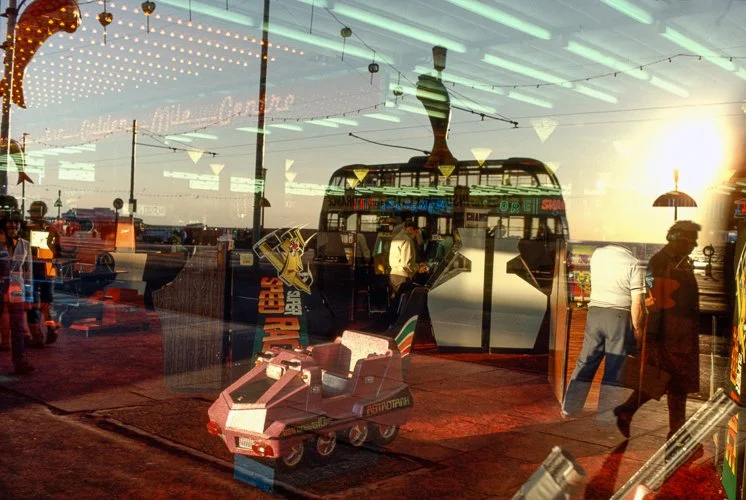
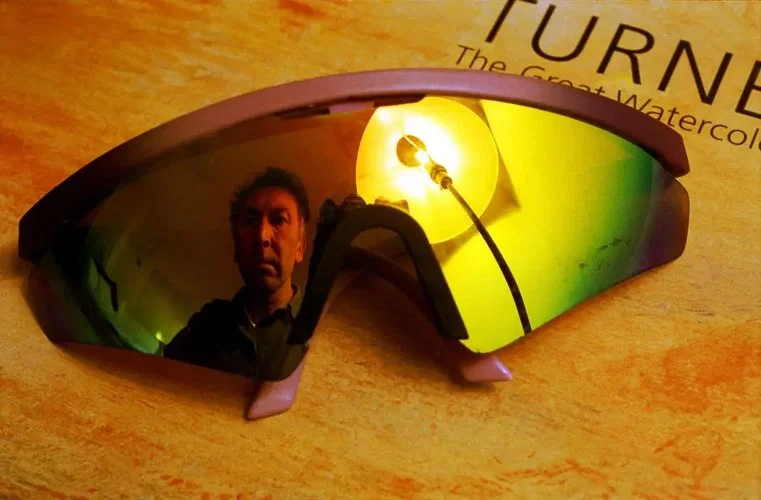
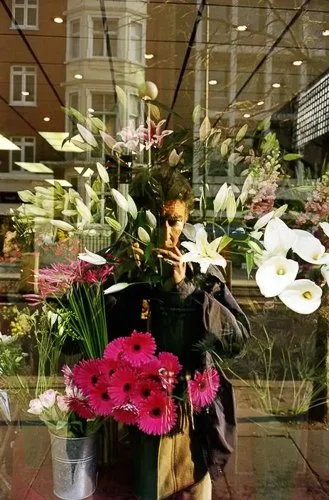
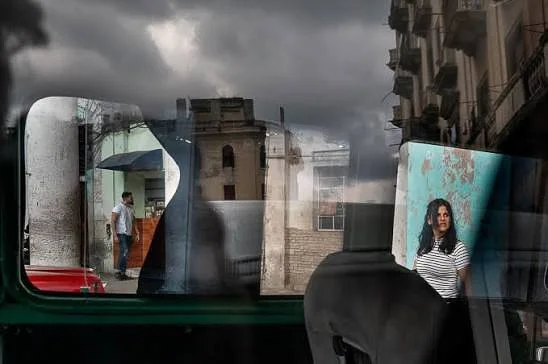
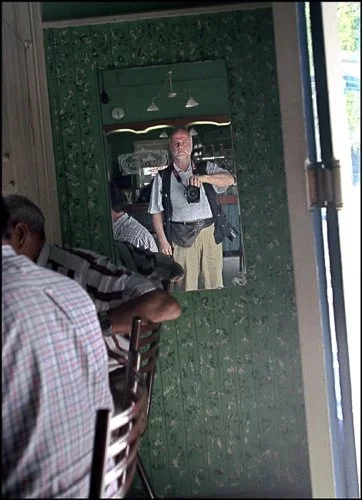
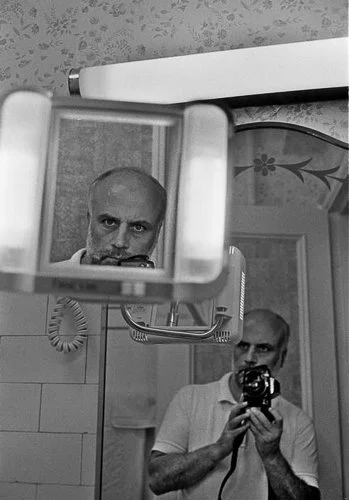
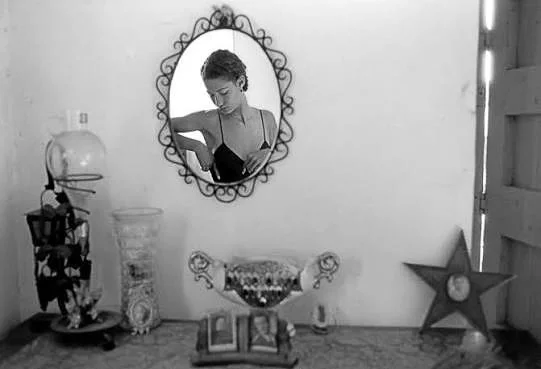
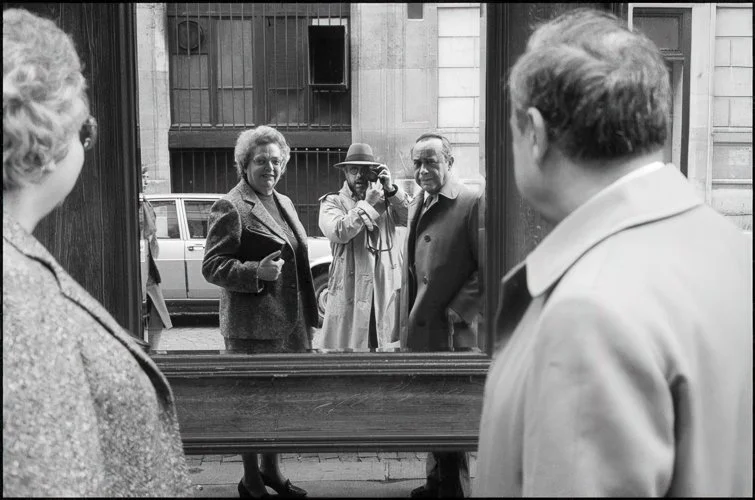
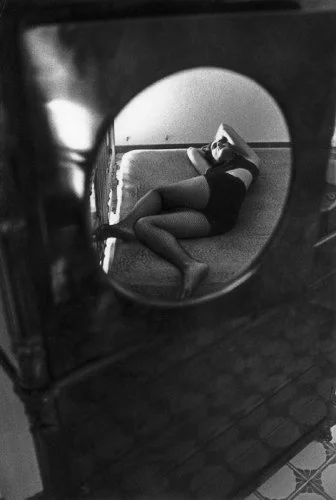
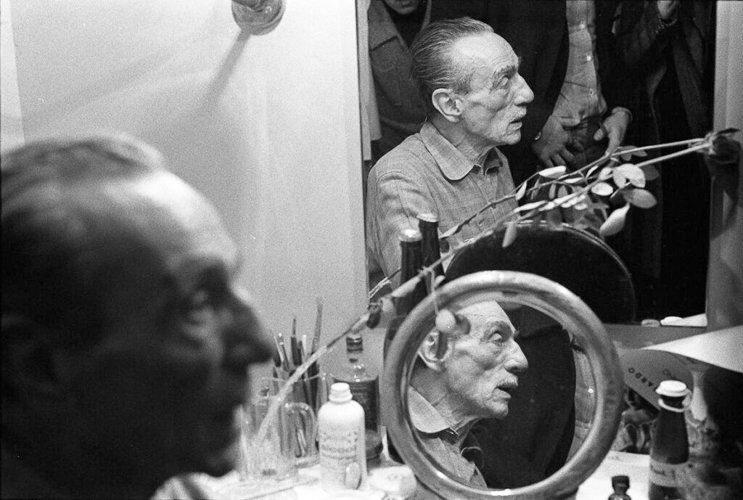
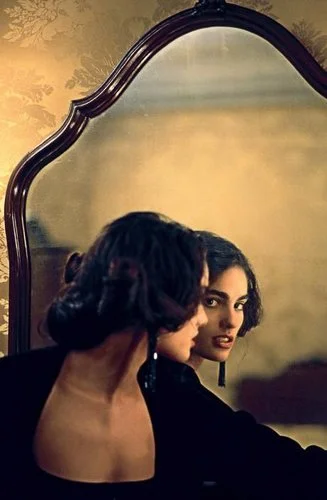
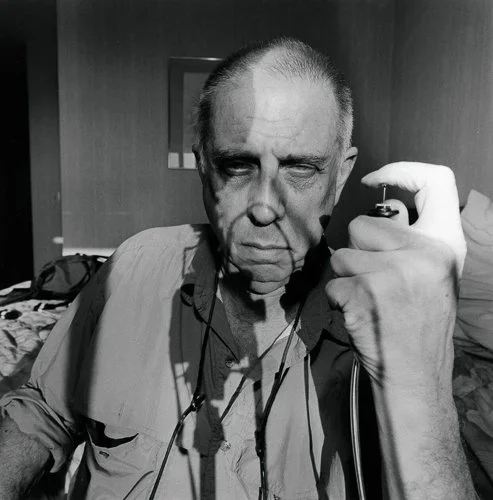
Chris Steele-Perkins (1947–2025), the British Magnum photographer best known for his documentary work across Africa, Afghanistan, Japan, and England, used the reflective self-portrait in a manner that is best understood as a photographer placing himself within the story he is telling. A member of Magnum Photos, Steele-Perkins was not primarily a self-portraitist; his reflective self-portraits appear scattered throughout a career dedicated to documenting others. What distinguishes his use of the mirror from Friedlander's is the primarily compositional rather than philosophical motivation: Steele-Perkins appears to have been drawn to particular combinations of light, colour, and layered visual information that the reflective surface made available, and to have added his own image to these compositions as a focal point and as a way of acknowledging the reporter's presence within the scene. His self-portrait from Bangladesh, 1972 — made on his first foreign assignment — and his self-portraits from Karamoja, Uganda and from London are, as it were, receipts: evidence that the photographer was there, placed within the documentary record in a spirit of journalistic honesty rather than artistic self-analysis.
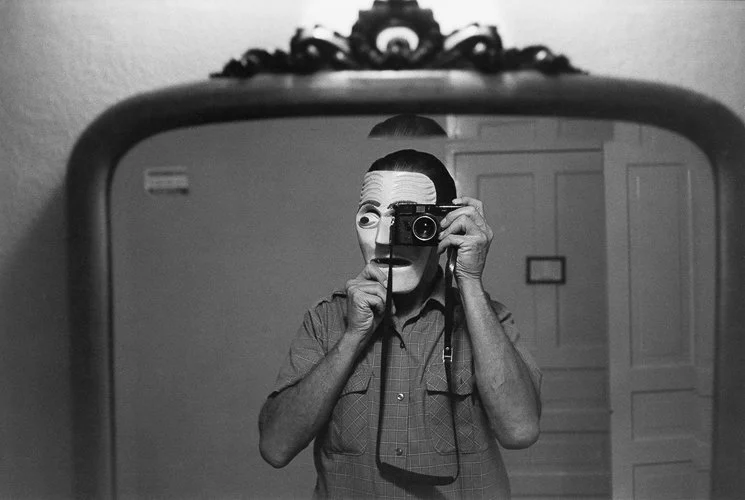
Ferdinando Scianna (born 1943), the Sicilian photojournalist and Magnum member, takes this approach a step further. Where Steele-Perkins's reflective self-portraits are primarily compositional, Scianna's are contextual: he places himself, via the mirror, within his reportage, acknowledging the reporter's role in constructing the story being told. His reflective self-portraits — found among the images made on assignments across Europe, Africa, and the Americas — are typically set within the visual and social landscape of his documentary work; they are not studio self-portraits but field self-portraits, images in which the reporter and the report occupy the same frame. This is a photojournalistic equivalent of the literary first-person voice: the narrator present within the narration, the observer visible within the observed.
New Surfaces, New Reflections
The transition from analogue to digital photography, and the subsequent rise of smartphone photography as the dominant form of image-making in the early twenty-first century, has transformed the practical conditions under which the photograph of a reflection is made without fundamentally altering the philosophical questions that such a photograph raises. The camera that is always with us — embedded in the telephone, carried in the pocket — means that the puddle in the aftermath of a rainstorm is no longer an opportunity that must be planned for, that requires the photographer to have anticipated the weather and packed a camera; it is an opportunity available to anyone who notices it. The democratisation of photographic equipment has democratised the reflected image.
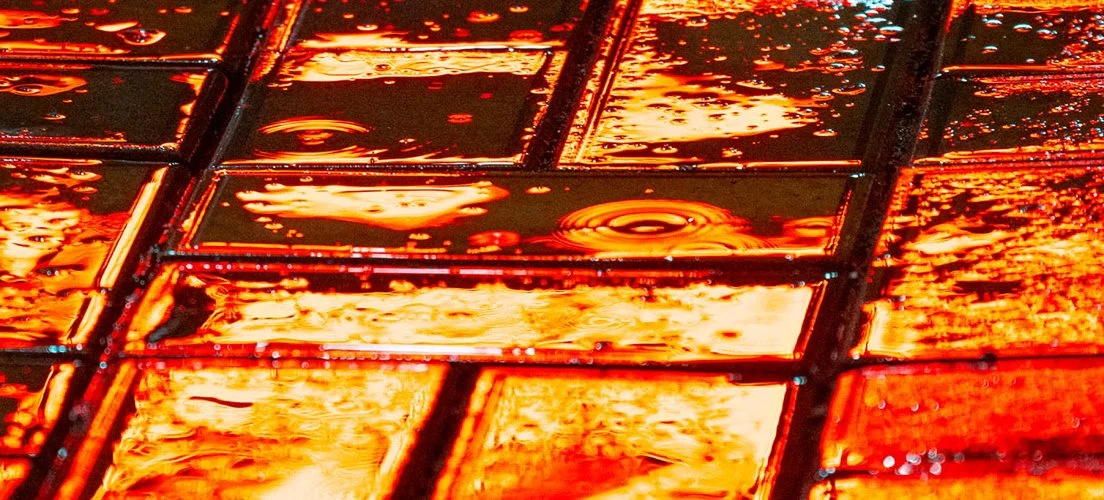
The results of this democratisation are visible on platforms such as Instagram, where the hashtags associated with puddle photography, glass-building reflections, and urban mirror imagery indicate communities of practice numbering in the millions. The term "puddlegram" — photographs of reflections in rain-puddles, typically captured with a smartphone held close to the water's surface or even turned upside down to bring the camera lens to pavement level — represents a vernacular tradition that is directly descended from Kertész's Paris street reflections and Semeniuta's neon-puddle photographs, though practitioners are seldom aware of these genealogies. The formal principles involved — inversion, doubling, the transformation of a familiar urban scene into something abstract and disorienting — are the same principles that have informed serious photographic reflection practice for a century.
The ubiquity of glass in contemporary urban architecture has also transformed the landscape within which reflection photography takes place. The glass-curtain-wall skyscraper, which became the dominant form of corporate architecture from the 1970s onwards, offers reflective surfaces of a scale and complexity unavailable to earlier photographers. These buildings do not merely reflect: they transform what they reflect, subjecting the surrounding city to distortions produced by the curvature and tinting of their glass panels, creating images of the cityscape that are simultaneously documentary and abstract, real and spectral. The photographer working with these surfaces has access to a range of reflective effects that the early experimenter with parabolic funhouse mirrors could only approximate.
The digital image has also introduced new forms of surface-based photography that extend the tradition of the reflected image into zones where it becomes unclear whether what is being photographed is a reflection at all. Screen photography — photographing images on screens, whether of televisions, computer monitors, or smartphones — introduces a further layer of mediation into the representational chain: the screen is showing an image of something that is no longer present; the photograph of the screen is a record of a record of an absence. This is the image at its furthest remove from the real — and yet, as with all photography of reflective surfaces, that furthest remove is often where the image's most concentrated meaning resides.
Augmented reality, in which digital information is overlaid on the visual field and can be photographed via the smartphone screen, introduces yet another kind of reflection: not the mirror's faithful inversion of the world, but a composite in which the real and the virtual are explicitly and programmatically merged. The photograph of an augmented reality overlay is a photograph of a surface that has been deliberately constructed to layer incompatible ontological registers — the physical world and the digital world — in a single image. This is, in one sense, an extreme technological development of what Kertész was doing with parabolic mirrors in 1933: making visible the fact that the photographic image is always a construction, always a composite of multiple realities, never a simple or unmediated record of what is.
The serious practice of reflection photography has not been dissolved by the democratisation of equipment or the proliferation of vernacular "puddlegrams." It has, if anything, been energised by the contrast: when millions of photographs of puddles and glass buildings are made every day by people with no theoretical framework for what they are doing, the photographer who brings such a framework to the same surfaces produces work whose relationship to the tradition — to Kertész, to Henri, to Leiter, to Benjamin — is more clearly defined by contrast than it would be in a world where the reflected image remained the preserve of specialists.
Closing Thoughts
The reflection in photography endures as a subject, a method, and a philosophical provocation because it gives formal expression to something that the medium contains but rarely makes explicit: the awareness that to photograph is to mediate. Photography reflects the world, and the reflection reflects the world back, and the photograph of a reflection reflects on all of this simultaneously — not as a trick, not as a formal exercise, but as an honest acknowledgement of what photography has always been. The camera has never given us the world; it has given us the world as it appears on a light-sensitive surface that has been held up, at a particular moment, by a particular person, toward a particular thing. The mirror makes this visible. It insists, in every puddle-reflected streetscape and every distorting-mirror nude, that between the world and our image of it there is always a surface — always something that receives, transforms, and returns — and that the photograph of this surface is the one that tells the truth about photography itself.