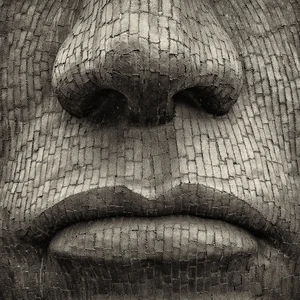
Samphire Hoe
It was a clear, bright, and crisp Sunday morning - perfect weather for a walk, although the clouds did roll in by midday. Monty, Ken, Raff, Dash, Milo & Vanessa headed out to Samphire Hoe—a gorgeous country park on the outskirts of Dover, just a 15-minute drive from home. It’s great for a stroll along the coast, with spectacular views of the white cliffs. Samphire Hoe has quite a fascinating history, so out of interest, I asked Perplexity to do a little research:
Samphire Hoe occupies a remarkable place in the Kent coast's landscape, being one of the few pieces of land in Britain created entirely from scratch in modern times. This 30-hectare nature reserve, situated approximately two miles west of Dover at the base of the White Cliffs, owes its existence to one of the most ambitious engineering projects of the late 20th century: the Channel Tunnel.
The story of how this coastal platform came into being begins with a significant challenge faced during the construction of the tunnel. When work commenced in the late 1980s, planners needed to find a suitable location for disposing of approximately 4.9 million cubic metres of chalk marl that would be excavated from beneath the English Channel. After considerable deliberation involving around 60 proposed sites, the location at the base of Shakespeare Cliff emerged as the most environmentally sound option. The site offered several practical advantages: it could be accessed via the Dover to Folkestone railway line and through a tunnel in the cliff remaining from an abandoned 1974 Channel Tunnel attempt. Crucially, it eliminated the need to transport spoil to another location.
Construction of Samphire Hoe began in 1988 with the building of substantial sea walls in the English Channel to create an artificial lagoon. These walls, stretching 1.7 kilometres in length, were constructed using sheet piling to enclose five sequential lagoons. As the tunnel boring machines cut through the chalk marl some 40 metres below the seabed, the excavated material was loaded onto rail tipper wagons, transported back through the tunnel, and moved to the surface by conveyor belt. The site operated continuously, 24 hours a day, seven days a week, serving both as a disposal area and as a vital marshalling and work area for the tunnel construction itself.
When the Channel Tunnel reached completion in 1994, it was formally opened by Queen Elizabeth II and French President François Mitterrand on 6 May of that year. The contractors' buildings at Samphire Hoe were then removed, and final landscaping was undertaken. The earthworks were designed to create an undulating topography with some low-lying wetlands, and 31 species of wildflowers and grasses were originally sown across the site. The park officially opened to the public in 1997, transforming what had been industrial spoil into a haven for wildlife and recreation.
The name Samphire Hoe emerged from a public competition held in 1994. The winning entry, suggested by retired schoolteacher Gillian Janaway, combines two elements of local significance. "Samphire" refers to rock samphire (Crithmum maritimum), a wild coastal plant once collected from the Dover cliffs and pickled in barrels to be sent to London, where it was served as a side dish to meat. "Hoe" is an old term for a piece of land jutting into the sea. The name also honours a passage from Shakespeare's King Lear, in which Edgar describes the cliffs of Dover: "There is a cliff whose high and bending head looks fearfully in the confined deep... halfway down hangs one that gathers samphire, dreadful trade!". Shakespeare was said to have travelled regularly through Dover whilst writing the play, and his familiarity with these cliffs likely inspired his vivid descriptions. The first cliff on the western side of Dover remains known as Shakespeare Cliff.
The cliffs that tower above Samphire Hoe have witnessed centuries of industrial and engineering history. In January 1843, an enormous section of Round Down Cliff was blown up using 18,500 pounds of gunpowder, creating a platform for the construction of the Dover to Folkestone railway line and preventing the sea from directly eroding the cliffs. The railway line was completed and opened by February 1844.
The site's industrial heritage continued with several attempts to tunnel beneath the English Channel. In 1880, Colonel Beaumont began excavating from Shakespeare Cliff using his compressed air boring machine, eventually driving a tunnel 897 yards parallel to the cliffs before the enterprise was halted in 1882. Some accounts attribute the cessation to lack of funds, whilst others cite concerns from the War Department that the French might invade through such a tunnel. Another attempt commenced in 1974, with the construction of a 300-metre experimental tunnel. However, the Labour government withdrew its support in January 1975, citing difficulties in reaching acceptable agreements with the construction companies. This 1974 access tunnel, however, proved valuable when work began on the successful Channel Tunnel project a decade later, providing the route through which construction materials and spoil would pass.
Between these tunnel attempts, the site served as a colliery. Shakespeare Colliery, also known as Dover Colliery, was Kent's first coal mine, with the sinking of the No. 1 pit (The Brady) beginning in June 1896. The enterprise proved ill-fated from the outset. The first shaft encountered water at 366 feet and flooded. Work on a second shaft, the Simpson Pit, commenced in November 1897, but at 303 feet it too struck water with catastrophic consequences. On 6 March 1897, water burst into the shaft so rapidly that eight of the fourteen workers at the bottom were drowned, whilst the six survivors escaped by climbing the shaft sides to reach the hoist bucket. The colliery struggled on until 1921, having extracted only around 120 tonnes of coal throughout its troubled existence, never achieving commercial viability.
Samphire Hoe's geological foundation consists of chalk marl from the Lower Chalk formation, dating back to the Cretaceous period. This highly fossiliferous material has made the site popular with fossil hunters. The cliffs and boulders regularly yield brachiopods, which are the most commonly found fossils, along with corals, sea urchins, ammonites, sharks' teeth, and abundant microfossils that can be extracted from rock samples. The chalk itself was deposited extraordinarily slowly, at a rate of approximately half a millimetre per year, equivalent to about 180 microscopic coccoliths stacked one on top of another. Over millions of years, up to 500 metres of sediments accumulated in some areas, eventually becoming consolidated into the chalk visible today through the weight of overlying deposits.
Since its opening, Samphire Hoe has developed a remarkably rich biodiversity that has exceeded the expectations of many ecologists. The site now supports over 200 species of plants and wildflowers, which have colonised from the 31 original species sown after construction. These include several thousand orchids, among them some of Britain's rarest specimens. The early spider orchid (Ophrys sphegodes), classified as a Red Data Book species, has found an ideal habitat here. Numbers peaked at 11,500 plants in 2012, though the population has since stabilised at around 5,000 as the site matures and competition increases. The orchids employ remarkable sexual deception for pollination: the flowers mimic not only their appearance but also their scent and possibly their pheromones, enticing males to attempt mating with the flower and thus inadvertently transferring pollen. The site also hosts common spotted orchids, pyramidal orchids, bee orchids, and the occasional fragrant orchid.
The flora extends beyond orchids to include coltsfoot, pink restharrow, yellow wort, rock sea lavender, sea aster, buddleia, wild carrot, sea buckthorn, and sainfoin, creating a diverse chalk grassland and meadowland habitat. Sea buckthorn (Hippophae rhamnoides) was one of the first shrubs to colonise the Hoe and is widely planted to stabilise dunes, its long thorns protecting it from grazing animals. The site offers a diverse range of habitats, including chalk grassland, sea buckthorn scrub, ponds, rock pools, and a pebble beach.
The diverse habitats support an impressive array of wildlife. More than 220 species of birds have been recorded at Samphire Hoe, including residents, migrants, and summer and winter visitors. The site's coastal location, just across the Channel from mainland Europe, makes it particularly important for migrant species. Approximately 30 species hold territories in the Samphire Hoe area. Notable residents include peregrine falcons, Britain's largest and fastest falcons, capable of reaching speeds exceeding 200 miles per hour when diving from height. The cliffs provide nesting sites for these magnificent birds, which have successfully bred at both the eastern and western ends of the Hoe. Black redstarts (Phoenicurus ochruros), considered rare in Britain, are regular visitors and occasional breeders at the site. Other notable species include more than 300 red-throated divers that feed on fish caught by diving near the Hoe, as well as lesser whitethroats and fieldfares.
The invertebrate life at Samphire Hoe is equally impressive. Thirty species of butterflies have been recorded since the site opened. The suite of species is typical of chalk grassland, with several notable specimens now occurring regularly. The marbled white butterfly has established colonies in sheltered areas at the base of the cliff and at the eastern and western ends, whilst the clouded yellow (Colias croceus), a migrant from North Africa that usually appears in small numbers, has been recorded breeding at the Hoe since 2009. Each year, this striking butterfly spreads northwards from North Africa, recolonising Britain, and Samphire Hoe has become an important stopover. Other species include the orange tip, marbled white, green hairstreak, and Adonis blue.
Moths are even more abundant, with 380 species recorded, including five featured in the UK Biodiversity Action Plan. Moths play a crucial yet often overlooked ecological role, dispersing pollen over large distances under the cover of darkness. Regular moth-trapping sessions at the Hoe can record 30 different species in just a couple of hours. The site also hosts 13 species of dragonflies and damselflies, including the distinctive ruddy darter with its bright red colouring and yellow patches, and the blue damselfly with its thick blue stripe on the thorax. Rose chafer beetles, with their metallic, coppery-green wing cases, can be found in grasslands and scrub.
To encourage the development of maritime chalk grassland, a scarce habitat, livestock have been introduced to the site regularly since 2014. Depending on the season and year, between 30 and 80 Romney sheep and between 5 and 12 cattle (either Shetland, pure Highland, or Highland Angus mix) graze within large wooden-fenced enclosures. This grazing management helps to control vegetation, maintain open areas of disturbed soil, and prevent the early spider orchids and other pioneer species from being outcompeted as the site matures.
Samphire Hoe is owned by Getlink (formerly Groupe Eurotunnel) and managed in partnership with the White Cliffs Countryside Project. The site attracts over 100,000 visitors annually. Access is via a traffic-light-controlled single-lane tunnel through the cliff, a unique entrance that adds to the site's distinctive character. The tunnel, which is 4.8 metres tall, leads visitors down to a car park with pay-and-display facilities. From here, a network of footpaths and a two-kilometre circular walking trail allow for the exploration of the site, with paths comprising a mixture of tarmac and hard, coarse surfaces. The seawall path, made of smooth concrete, offers excellent views of the sea and is easily accessible. The North Downs Way, a long-distance walking trail, runs along the clifftop above, linking the site to Folkestone Warren Local Nature Reserve to the west.
The site offers various recreational opportunities. Angling is permitted along the 1.5-mile seawall, which has become popular for fishing, particularly for species such as wrasse. Birdwatching is another major draw, with the White Cliffs Countryside Partnership offering guided birdwatching experiences led by knowledgeable rangers. Rock pooling provides opportunities to discover crabs, shrimps, and shells in the intertidal zone. The site also hosts educational programmes for schools, offering activities ranging from pond dipping and invertebrate surveys to fossil hunts and habitat comparisons. An education centre with a 60-square-metre classroom and 40-square-metre exhibition space enables large school groups to learn about the unique ecology and history of Samphire Hoe.
The park has garnered considerable recognition for its exceptional environmental quality and its significant contributions to local communities. Samphire Hoe has been awarded the Green Flag Award 15 times since its creation in 2005, a distinction recognising the most outstanding green spaces in England and Wales. In October 2025, the site received a Gold award. It was crowned Category Winner at the South & South East in Bloom Awards, recognised for its exceptional chalk grassland habitat, support for rare species, and inclusive community programming, including volunteering and outdoor education.